



What is the Size of Chloropyridine Market?
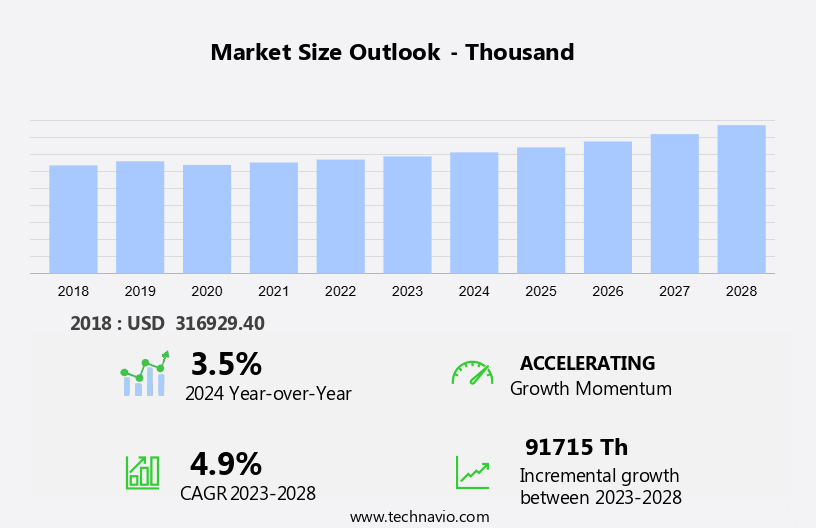
The chloropyridine market size is estimated to increase by USD 91715 the, at a CAGR of 4.9% between 2024 and 2028. The chloropyridine market is witnessing significant growth due to the increasing investment in the pharmaceutical industry and advancements in the synthesis processes of chloropyridines. With the molecular formula C5H4ClN, this aromatic chloride plays a vital role in the manufacture of agrochemicals, pharmaceuticals, and organic intermediates. These compounds are widely used in various applications, including the production of pharmaceuticals for treating eyes, mucous membranes, and the upper respiratory tract. Despite their benefits, chloropyridines pose acute and chronic hazards, including being fatal if swallowed. The high cost associated with these compounds is a major challenge for market growth. However, the potential for new applications and the ongoing research to mitigate their hazards are expected to provide opportunities for market expansion.
Request Free Chloropyridine Market Sample
Market Segment
The market research report provides comprehensive data (region-wise segment analysis), with forecasts and estimates in "USD thousand" for the period 2024-2028, as well as historical data from 2018 - 2022 for the following segments.
- Type
- 2-chloropyridine
- 4-chloropyridine
- 3-chloropyridine
- Others
- Application
- Agriculture
- Pharmaceuticals
- Chemicals
- Geography
- APAC
- China
- India
- Japan
- South Korea
- North America
- Canada
- US
- Europe
- Germany
- UK
- France
- South America
- Middle East and Africa
- APAC
Which is the Largest Segment Driving Market Growth?
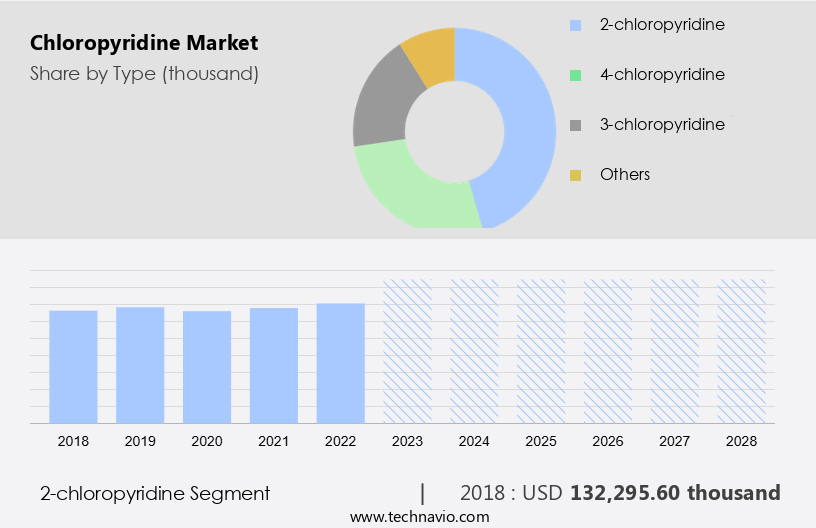
The 2-chloropyridine segment is estimated to witness significant growth during the forecast period. Two-chloropyridine, a significant member of the chloropyridine family, is extensively utilized in numerous industries due to its valuable properties and reactivity. In the agricultural sector, 2-chloropyridine functions as a crucial intermediate in producing fungicides and insecticides. Its incorporation into agrochemical formulations strengthens crop protection and pest management methods by enabling the synthesis of active ingredients.
Get a glance at the market share of various regions Download the PDF Sample
The 2-chloropyridine segment was valued at USD 132,295.60 thousand in 2018. By addressing agricultural challenges and encouraging sustainable farming practices, 2-chloropyridine is indispensable in the creation of a wide array of products and applications. The synthesis of 2-chloropyridine involves various chemical reactions. For instance, in the presence of Phenylboronic acid, Triphenylphosphine, and Palladium acetate, the reaction occurs under reflux conditions in an aqueous phase. Following this, the product is extracted using ethyl acetate, and the solvent is removed through bulb-to-bulb distillation. This process ensures the purity and high yield of 2-chloropyridine, making it an essential building block in the chemical industry.
Which Region is Leading the Market?
For more insights on the market share of various regions Request Free Sample
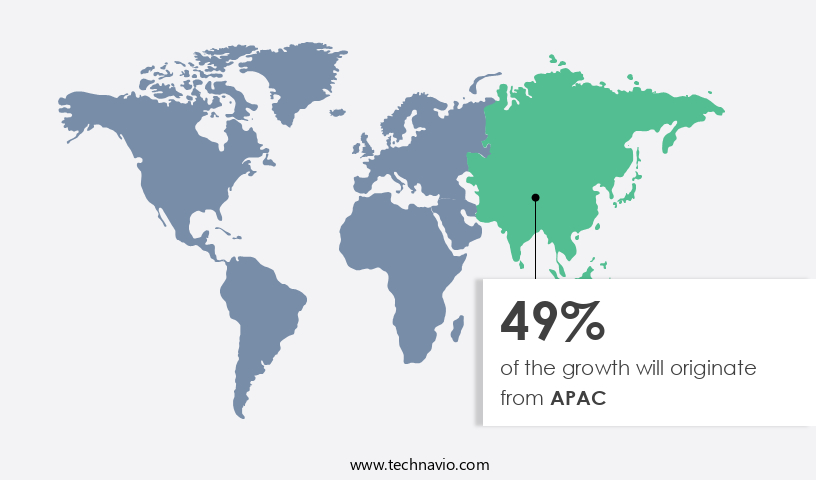
APAC is estimated to contribute 49% to the growth of the global market during the forecast period. Technavio's analysts have elaborately explained the regional trends and drivers that shape the market during the forecast period.
The Asia Pacific region is a significant contributor to the global chloropyridine market due to the thriving growth in the pharmaceutical and agricultural industries. The economic landscape in this region is marked by increasing investments and high demand for advanced products, making it a key player in the chloropyridine market. India, in particular, is a major player in the Asia Pacific pharmaceutical sector. In 2023, India solidified its position as the third largest producer of pharmaceuticals by volume and the 14th largest by value. The Indian pharmaceutical market is projected to reach approximately USD100 billion by 2025, fueled by a growing workforce and substantial government support. Chloropyridine, a corrosive and flammable compound, is used in the polymerization of explosives and the production of certain metals. It generates flammable hydrogen gas during the reaction process and must be carefully contained to prevent explosions. The increasing demand for chloropyridine in the pharmaceutical and agricultural sectors in the Asia Pacific region underscores the importance of implementing stringent safety measures and regulations to mitigate potential risks.
How do Technavio's company ranking index and market positioning come to your aid?
Companies are implementing various strategies, such as strategic alliances, partnerships, mergers and acquisitions, geographical expansion, and product/service launches, to enhance their presence in the market.
Central Drug House Pvt. Ltd. - The company offers chloropyridine such as 2,3-diaminopyridine, 2-fluoro-4-chloropyridine, 2-amino-3,5- dichloropyridine and others.
Technavio provides the ranking index for the top 20 companies along with insights on the market positioning of:
- Central Drug House Pvt. Ltd.
- Clinivex Enterprises Inc.
- Henan Alfa Chemical Co. Ltd.
- Jubilant Ingrevia Ltd.
- KOEI CHEMICAL CO. LTD.
- NSJ Prayog Life Science
- Otto Chemie Pvt. Ltd.
- S D Fine Chem Ltd.
- Shandong Luyuan Chemical Technology Co. Ltd.
- Sigma Aldrich Chemicals Pvt. Ltd.
- Simson Pharma Ltd.
- Sriven Pharmachem India Pvt. Ltd.
- Thermo Fisher Scientific Inc.
- Tokyo Chemical Industry Co. Ltd.
- TRIOWN CHEMIE
- Xiamen Hisunny Chemical Co. Ltd.
- Zodiac Life Sciences
Explore our company rankings and market positioning Request Free Sample
How can Technavio Assist you in Making Critical Decisions?
What is the Market Structure and Year-over-Year growth of the Chloropyridine Market?
|
Market structure |
Fragmented |
|
YoY growth 2023-2024 |
3.5 |
Market Dynamic
The 2-chloropyridine market has witnessed significant advancements in the realm of organic synthesis, particularly in the production of phenylboronic acids, which are essential intermediates in the palladium-catalyzed cross-coupling reactions. These reactions are crucial in the synthesis of various pharmaceuticals and agrochemicals. One of the primary methods for producing 2-chloropyridine involves the use of triphenylphosphine and palladium acetate in the presence of phenylboronic acid. This process typically occurs under reflux conditions in the aqueous phase, with ethyl acetate serving as an organic solvent. Subsequently, the reaction mixture undergoes bulb-to-bulb distillation to separate the desired product from the reaction by-products.
Moreover, another significant development in the 2-chloropyridine synthesis industry is the emergence of 2-phenylpyridine as a potential alternative to 2-chloropyridine. This compound can be synthesized through palladium-catalyzed cross-coupling reactions, which offer advantages such as improved yields, reduced reaction times, and enhanced selectivity. Moreover, continuous flow techniques and ligand-free methods have gained traction in the 2-chloropyridine synthesis industry due to their potential to increase efficiency and reduce waste. Green chemistry methods, such as silica assistance, are also being explored to minimize the use of hazardous reagents and solvents.
However, it is essential to note that handling 2-chloropyridine and its derivatives requires caution due to their potential hazards. These compounds can ignite readily when heated and form explosive mixtures with air or other oxidizing agents. Furthermore, they are corrosive and can cause burns upon contact with skin or eyes. Therefore, appropriate safety measures should be taken when handling these substances. In conclusion, the 2-chloropyridine market is experiencing continuous innovation and development, with a focus on improving efficiency, reducing waste, and enhancing safety. The emergence of new catalytic systems, alternative intermediates, and advanced synthesis techniques is expected to drive growth in this industry. However, it is crucial to prioritize safety measures when handling these compounds due to their potential hazards.
Our researchers analyzed the data with 2023 as the base year, along with the key drivers, trends, and challenges. A holistic analysis of drivers will help companies refine their marketing strategies to gain a competitive advantage.
What are the Primary Factors Driving the Market Growth?
The growing investment in pharmaceutical industry is notably driving market growth. The Chloropyridine market is experiencing notable growth due to the escalating investments in the pharmaceutical sector. Chloropyridines play a pivotal role in the synthesis of numerous pharmaceutical compounds, such as antihistamines like pheniramine and antiarrhythmic drugs such as disopyramide. Beyond pharmaceuticals, these compounds are also utilized in the production of fungicides, herbicides, and biocides. The pharmaceutical industry's significant investment trend is fueling the demand for chloropyridines. For instance, Pharmaceutical Research and Manufacturers of America (PhRMA) member companies invested approximately USD96 billion in research and development globally in 2023. This substantial investment underscores the industry's dedication to advancing drug development and innovation, thereby increasing the requirement for essential chemical intermediates like chloropyridines.
However, it is essential to acknowledge the potential hazards associated with chloropyridines. These chemicals can pollute waterways if not disposed of properly, posing a threat to aquatic life. In their molten form, they can cause skin irritation and, when vaporized or released as a mist, can lead to respiratory symptoms. Therefore, stringent regulations and safety measures are crucial to mitigate the health risks and environmental impact of chloropyridine use. Thus, such factors are driving the growth of the market during the forecast period.
What are the Significant Trends being Witnessed in the Market?
The innovations in synthesis processes of chloropyridines is the key trend in the market. The Chloropyridine market holds importance in various industries such as pharmaceuticals, agrochemicals, and materials science. Recent developments in the synthesis of chloropyridines have led to significant progress in this field. One groundbreaking innovation is the utilization of pyridine-N-oxides as starting materials for the production of 2-chloropyridines. This method offers several advantages, including increased efficiency, sustainability, and versatility.
By employing pyridine-N-oxides, chemists have created a more eco-friendly and sustainable synthesis process, minimizing the need for traditional methods that typically involve harsh reagents and conditions. Another promising strategy in chloropyridine synthesis is the application of transition metal-catalyzed C-H functionalization reactions. These advancements contribute to the enhancement of chloropyridine production processes, reducing the generation of toxic fumes like carbon monoxide, carbon dioxide, and hydrogen chloride gas during production. Thus, such trends will shape the growth of the market during the forecast period.
What are the Major Market Challenges?
The high cost associated with chloropyridines is the major challenge that affects the growth of the market. Chloropyridines are essential chemical compounds used in various industries, including pharmaceuticals, agrochemicals, and materials science. These industries rely on chloropyridines to produce active pharmaceutical ingredients, pesticides, and specialty chemicals. However, the high cost of manufacturing chloropyridines poses a significant challenge. The complex, multi-step synthesis process and stringent quality control measures increase production costs. Other factors, such as raw material sourcing, energy consumption, and environmental compliance, also contribute to the overall expense. Despite their importance, the high cost of chloropyridines can impact product pricing, profit margins, and competitiveness in these sectors.
For instance, the price of 2-chloropyridine can range from USD7 to USD10 per kilogram. The eyes, mucous membranes, and upper respiratory tract can be exposed to acute hazards when handling chloropyridines. Long-term exposure can lead to chronic hazards, including potential fatalities if swallowed. Therefore, it is crucial to follow safety protocols when handling these chemicals. Manufacturers must balance the benefits of using chloropyridines with the costs and risks associated with their production. Hence, the above factors will impede the growth of the market during the forecast period.
Exclusive Customer Landscape
The market forecasting report includes the adoption lifecycle of the market, covering from the innovator's stage to the laggard's stage. It focuses on adoption rates in different regions based on penetration. Furthermore, the report also includes key purchase criteria and drivers of price sensitivity to help companies evaluate and develop their market growth analysis strategies.
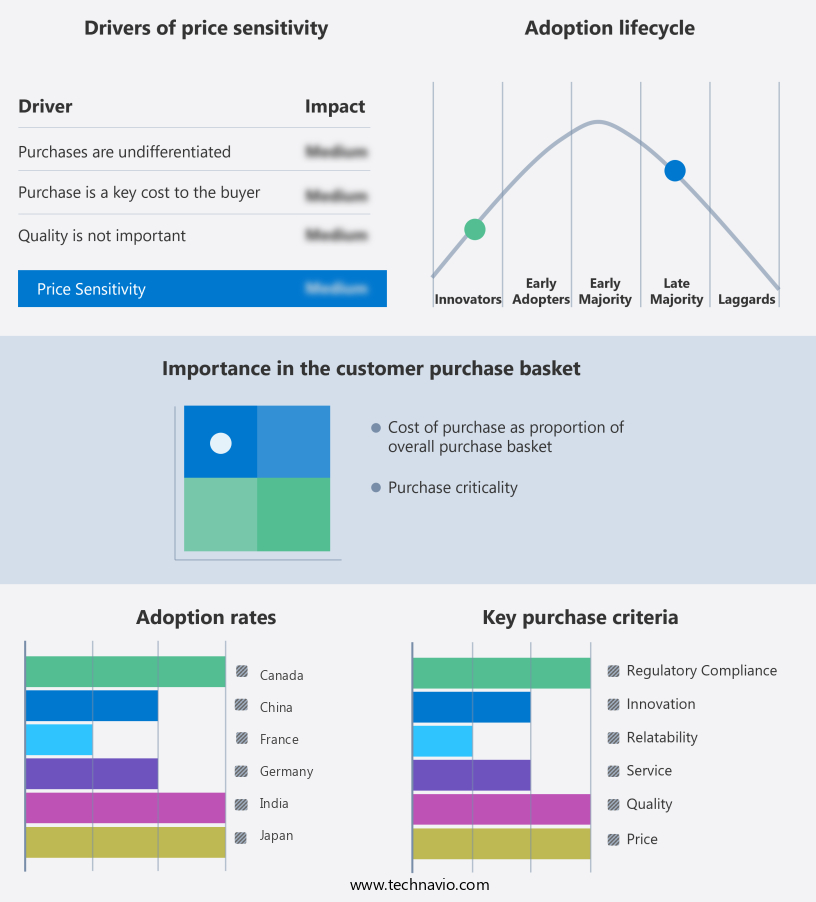
Customer Landscape
Market Analyst Overview
Chloropyridine is an essential intermediate in the synthesis of various pharmaceuticals and agrochemicals. The production process involves the use of phenylboronic acid, triphenylphosphine, and palladium acetate in a palladium-catalysed cross-coupling reaction in the aqueous phase. The reaction is typically carried out under reflux conditions, with ethyl acetate used as an organic solvent. The catalytic systems used in this process require careful handling due to potential explosion hazards. The vapors of chloropyridine and its reactants ignite readily when heated and can form explosive mixtures. Moreover, the corrosive nature of the reactants and the production of flammable hydrogen gas during the reaction pose significant safety risks.
The Chloropyridine market refers to the trade of this versatile organic compound, which is known for its unique reactivity and potential hazards. Chloropyridine, with the molecular formula C5H3ClN, is a derivative of pyridine, featuring a chlorine atom attached to the pyridine ring. New ligands, such as chloropyridine, are increasingly being explored in various applications due to their unique properties. For instance, chloropyridine plays a crucial role in the synthesis of pharmaceuticals, agrochemicals, and polymers. However, its reactivity under oxygen under aqueous conditions can lead to unwanted side reactions and even explosive polymerization. Arylboronic acids are often used in the synthesis of chloropyridine. The reaction between arylboronic acids and chloropyridine involves the formation of a boron-nitrogen bond. However, this process can be hazardous, as the reaction may runoff and heat up, leading to the containers' explosion.
Chloropyridine is classified as a corrosive substance and a health hazard. It can burn the skin and eyes, and inhaling or absorbing its vapors can cause respiratory irritation. In case of decomposition, it can release toxic gases, including phosgene, which is a known lung irritant and a lethal poison. Therefore, handling chloropyridine requires utmost care and safety measures. It is essential to store it in suitable containers and prevent exposure to oxygen and water. Proper ventilation and protective equipment are necessary when working with this compound to minimize the risks associated with its use.
To mitigate these hazards, continuous flow techniques and ligand-free methods have gained popularity in recent years. Green chemistry methods, such as silica assistance, are also being explored to minimize the use of hazardous reagents and solvents. Despite these challenges, the demand for chloropyridine continues to grow due to its importance in the production of various high-value chemicals. However, the production process poses significant health hazards. Exposure to chloropyridine can cause skin irritation, eye irritation, and upper respiratory tract symptoms. Ingestion or inhalation of toxic fumes, including carbon monoxide, carbon dioxide, and hydrogen chloride gas, can lead to acute and chronic health effects, including fatalities. Proper handling and disposal of chloropyridine and its reactants are crucial to ensure safety and minimize environmental impact.
|
Market Scope |
|
|
Report Coverage |
Details |
|
Page number |
205 |
|
Base year |
2023 |
|
Historic period |
2018 - 2022 |
|
Forecast period |
2024-2028 |
|
Growth momentum & CAGR |
Accelerate at a CAGR of 4.9% |
|
Market growth 2024-2028 |
USD 91715 thousand |
|
Regional analysis |
APAC, North America, Europe, South America, and Middle East and Africa |
|
Performing market contribution |
APAC at 49% |
|
Key countries |
China, US, Japan, Germany, India, Canada, UK, South Korea, France, and Russia |
|
Competitive landscape |
Leading Companies, Market Positioning of Companies, Competitive Strategies, and Industry Risks |
|
Key companies profiled |
Central Drug House Pvt. Ltd., Clinivex Enterprises Inc., Henan Alfa Chemical Co. Ltd., Jubilant Ingrevia Ltd., KOEI CHEMICAL CO. LTD., NSJ Prayog Life Science, Otto Chemie Pvt. Ltd., S D Fine Chem Ltd., Shandong Luyuan Chemical Technology Co. Ltd., Sigma Aldrich Chemicals Pvt. Ltd., Simson Pharma Ltd., Sriven Pharmachem India Pvt. Ltd., Thermo Fisher Scientific Inc., Tokyo Chemical Industry Co. Ltd., TRIOWN CHEMIE, Xiamen Hisunny Chemical Co. Ltd., and Zodiac Life Sciences |
|
Market dynamics |
Parent market analysis, market growth inducers and obstacles, fast-growing and slow-growing segment analysis, market research and growth, AI impact on market trends, COVID -19 impact and recovery analysis and future consumer dynamics, market condition analysis for the market forecast period |
|
Customization purview |
If our market report has not included the data that you are looking for, you can reach out to our analysts and get segments customized. |
What are the Key Data Covered in this Market Research Report?
- CAGR of the market during the forecast period
- Detailed information on factors that will drive the market growth and forecasting between 2024 and 2028
- Precise estimation of the size of the market and its contribution of the market in focus to the parent market
- Accurate predictions about upcoming market growth and trends and changes in consumer behaviour
- Growth of the market across APAC, North America, Europe, South America, and Middle East and Africa
- Thorough analysis of the market's competitive landscape and detailed information about companies
- Comprehensive analysis of factors that will challenge the growth of market companies
 RIA -
RIA - 
