



E-Brokerage Market Size 2025-2029
The e-brokerage market size is forecast to increase by USD 7.39 billion, at a CAGR of 7.9% between 2024 and 2029.
- The market is experiencing significant growth, driven by the increasing proliferation of internet access worldwide. This expansion is fueled by the convenience and accessibility that e-brokerage platforms offer, enabling investors to manage their portfolios remotely and execute trades in real-time. Another key trend shaping the market is the rising demand for customization and personalization in e-brokerage solutions. As investors seek more tailored services to meet their unique needs, e-brokerage providers are responding by offering personalized investment advice, customizable interfaces, and a wide range of financial instruments. However, the market also faces notable challenges. With the increasing popularity of e-brokerage platforms, cybersecurity risks have become a significant concern.
- As more investors turn to digital channels for their financial needs, the threat of data breaches, hacking, and other cyber attacks grows. E-brokerage providers must invest heavily in robust cybersecurity measures to protect their platforms and their clients' sensitive information. Additionally, regulatory compliance remains a complex and ever-evolving challenge for e-brokerage firms, requiring significant resources and expertise to navigate the intricacies of various financial regulations. These challenges, while daunting, present opportunities for e-brokerage providers that can effectively address these issues and provide a secure, reliable, and personalized platform for their clients.
What will be the Size of the E-Brokerage Market during the forecast period?
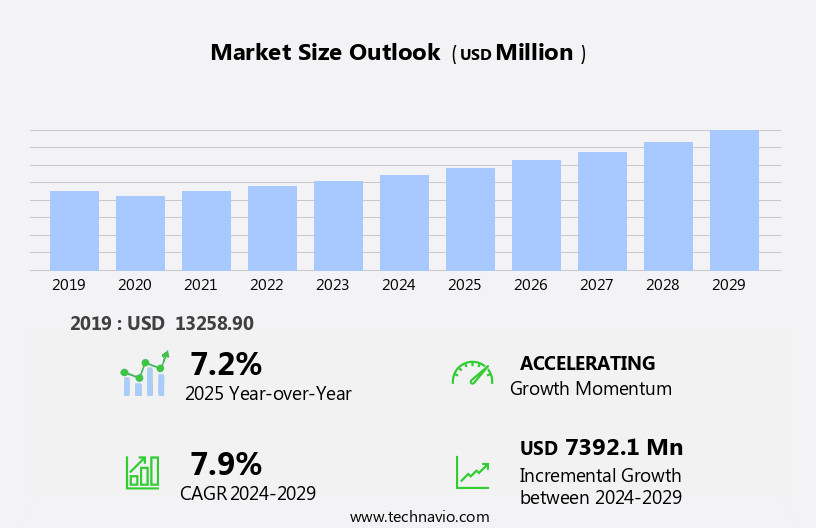
Explore in-depth regional segment analysis with market size data - historical 2019-2023 and forecasts 2025-2029 - in the full report.
Request Free Sample
The market continues to evolve, with dynamic market dynamics shaping its various sectors. Investment products and services are increasingly integrated, offering users a comprehensive platform for financial management. Mobile app development is a key focus, enabling seamless trading and real-time data access. Cryptocurrency trading is gaining popularity, requiring advanced technology and robust security protocols. Market data and educational resources are essential components, empowering users with the tools for fundamental analysis and financial modeling. User experience is paramount, with customer support, account management, and portfolio optimization ensuring client satisfaction. Order routing and management systems facilitate efficient trade execution, while fractional shares and commission structures cater to diverse investment strategies.
Data analytics and technical analysis provide valuable insights, driving informed decisions. High-frequency trading and algorithmic trading require advanced API integration and direct market access. Risk management and tax optimization are crucial, with real-time data and automated trading offering enhanced control. Client onboarding and account minimums are essential considerations, with various brokerage services catering to different customer segments. Wealth management and retirement planning require a holistic approach, incorporating estate planning and dividend reinvestment. Security breaches and data encryption are ongoing concerns, with robust security protocols essential for safeguarding sensitive information. Investment products and trading platforms continue to expand, offering users a wide range of options, including futures trading and forex trading.
Charting tools and social trading provide additional resources for informed decision-making. The market's continuous dynamism ensures a constantly evolving landscape, requiring adaptability and innovation.
How is this E-Brokerage Industry segmented?
The e-brokerage industry research report provides comprehensive data (region-wise segment analysis), with forecasts and estimates in "USD million" for the period 2025-2029, as well as historical data from 2019-2023 for the following segments.
- Service Type
- Full time broker
- Discounted broker
- Application
- Individual investor
- Institutional investor
- Ownership
- Privately held
- Publicly held
- Platform
- Web-based
- Mobile apps
- Desktop
- Assest Type
- Equities
- Bonds
- Derivatives
- Cryptocurrencies
- Geography
- North America
- US
- Canada
- Mexico
- Europe
- France
- Germany
- The Netherlands
- UK
- Middle East and Africa
- UAE
- APAC
- Australia
- China
- India
- Japan
- South Korea
- South America
- Brazil
- Rest of World (ROW)
- North America
By Service Type Insights
The full time broker segment is estimated to witness significant growth during the forecast period.
In the dynamic world of E-brokerage, full-time brokers play a pivotal role in facilitating the trade of various financial securities for clients. These licensed professionals, regulated by bodies like the SEC and FCA, work closely with individuals, institutions, and corporations to understand their investment objectives, risk tolerance, and financial goals. They provide personalized service, fostering long-term relationships built on trust and transparency. E-brokerage services encompass real-time data access, efficient trade execution, algorithmic trading, financial planning, and various brokerage tools. These include fundamental and technical analysis, fractional shares, account management, risk management, desktop trading, charting tools, estate planning, retirement planning, and more.
Wealth management services, such as tax optimization, client onboarding, and portfolio management, are also essential. Brokers employ advanced technologies like API integration, customer support, and research reports to enhance the user experience. Mobile trading, cryptocurrency trading, and mobile app development are increasingly popular. Direct market access, order routing, and customer segmentation enable tailored investment strategies. Historical data, educational resources, and market data are vital for informed decision-making. Investment products span from traditional stocks, bonds, and mutual funds to complex derivatives like futures, options, and automated trading. Security protocols ensure data encryption and protect against potential security breaches. Brokers offer various commission structures and margin requirements, catering to different investment strategies.
E-brokerage continues to evolve, with a focus on user interface, quantitative analysis, financial modeling, and trading platforms. The integration of advanced technologies and personalized services enables brokers to cater to diverse client needs effectively.
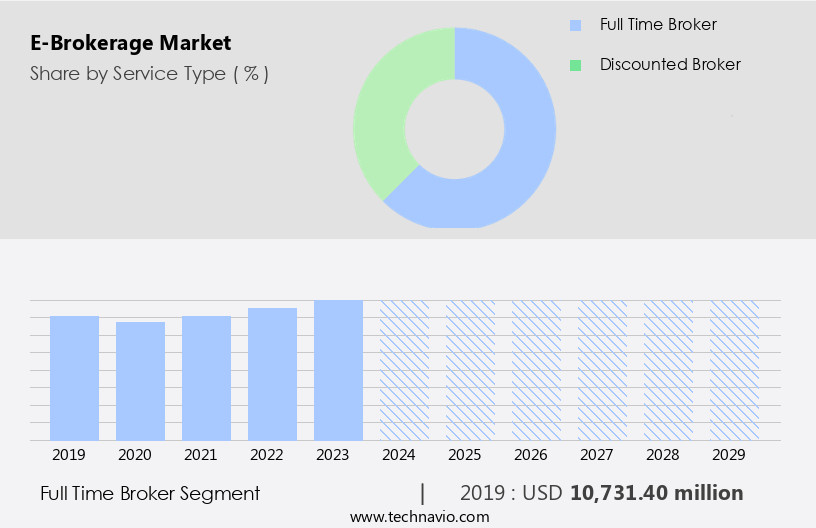
The Full time broker segment was valued at USD 10.73 billion in 2019 and showed a gradual increase during the forecast period.
Regional Analysis
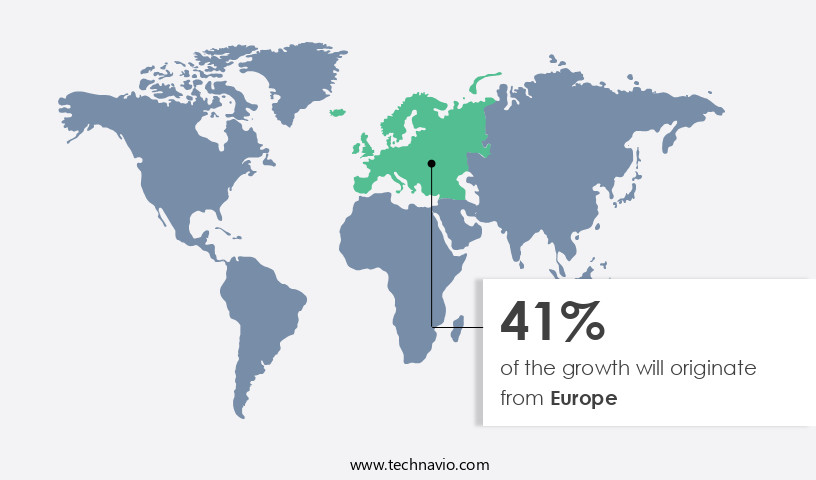
Europe is estimated to contribute 41% to the growth of the global market during the forecast period.Technavio’s analysts have elaborately explained the regional trends and drivers that shape the market during the forecast period.
In North America, particularly in the US and Canada, the financial markets, including the New York Stock Exchange (NYSE) and the National Association of Securities Dealers Automated Quotations (NASDAQ), represent some of the world's largest and most liquid trading venues. The size and depth of these markets draw a significant number of investors, both domestic and international, to engage in trading activities via e-brokerage platforms. The region's technological hubs, such as Silicon Valley, foster the development of leading e-brokerage firms that utilize advanced technologies, including mobile apps, algorithmic trading, and real-time data, to deliver innovative and user-friendly trading experiences. E-brokerage platforms in North America provide various services, such as fundamental analysis, financial modeling, high-frequency trading, news feeds, investment education, customer support, dividend reinvestment, estate planning, account management, copy trading, risk management, API integration, client onboarding, portfolio optimization, options trading, trading platforms, retirement planning, tax optimization, real-time data, automated trading, account minimums, margin requirements, data encryption, trade execution, desktop trading, transaction fees, customer segmentation, web trading, wealth management, research reports, futures trading, quantitative analysis, asset allocation, investment strategies, brokerage services, historical data, security protocols, algorithmic trading, direct market access, forex trading, charting tools, security breaches, portfolio management, social trading, investment products, mobile app development, cryptocurrency trading, market data, and educational resources.
These services cater to diverse investor needs and preferences, enabling them to make informed decisions and optimize their investment portfolios effectively. E-brokerage platforms prioritize user experience, offering intuitive interfaces, seamless navigation, and customizable features to cater to individual investor requirements. They also provide essential tools, such as technical analysis, risk management, and order routing, to help investors make informed trading decisions and manage their portfolios efficiently. Additionally, they offer various order management systems, fractional shares, and commission structures to accommodate different investment strategies and budgets. The market in North America continues to evolve, with a focus on enhancing the user experience, expanding service offerings, and incorporating emerging technologies, such as artificial intelligence and machine learning, to provide more personalized and data-driven investment advice.
Overall, the North American the market represents a dynamic and competitive landscape, driven by technological innovation, investor demand, and regulatory compliance.
Market Dynamics
Our researchers analyzed the data with 2024 as the base year, along with the key drivers, trends, and challenges. A holistic analysis of drivers will help companies refine their marketing strategies to gain a competitive advantage.
In the dynamic and technological world of finance, the market continues to thrive, offering investors a convenient and accessible platform for buying and selling securities. This marketplace, driven by advanced technology, enables real-time trading, robust research tools, and user-friendly interfaces. Online brokers provide various account types, including individual and joint accounts, catering to diverse investment needs. They offer a wide range of securities, from stocks and bonds to mutual funds and exchange-traded funds. Additionally, e-brokerages facilitate automated investment services, such as robo-advisors, and margin trading, allowing for leverage and increased potential returns. Furthermore, they prioritize security with multi-factor authentication, encryption, and regulatory compliance. The market empowers investors to make informed decisions through educational resources and customizable alerts. It's a powerful tool for those seeking financial growth and independence in the digital age.
What are the key market drivers leading to the rise in the adoption of E-Brokerage Industry?
- The expansion of internet access significantly drives the market growth by fueling the proliferation of e-brokerage services.
- The market growth is driven by increased internet access, enabling investors from diverse locations to engage with digital trading platforms. This expansion reaches previously inaccessible markets, providing e-brokerage firms with a broader customer base. The internet's availability around the clock allows investors to trade securities and manage portfolios at any time, offering unparalleled convenience and flexibility. E-brokerage firms benefit from internet-based operations by streamlining processes, automating tasks, and reducing costs related to physical locations and manual transactions. These savings are passed on to clients through lower fees and commissions, making e-brokerage services more affordable and appealing.
- Advanced features, such as quantitative analysis, algorithmic trading, direct market access, futures trading, forex trading, charting tools, and social trading, cater to various investment strategies and asset allocation needs. Security protocols ensure the protection of investors' financial data, mitigating risks associated with potential security breaches. In summary, the market thrives on the convenience, flexibility, and cost savings offered by internet-based trading platforms, making it an attractive option for investors worldwide.
What are the market trends shaping the E-Brokerage Industry?
- Customization and personalization are increasingly in demand in the e-brokerage industry, representing an emerging market trend. E-brokerage solutions that cater to individual preferences and needs are gaining popularity among investors.
- E-brokerage platforms offer investors a personalized investment experience with access to various investment products, including stocks, bonds, mutual funds, exchange-traded funds (ETFs), and even cryptocurrency trading. Advanced mobile app development enables users to access real-time market data, educational resources, and user-friendly mobile trading interfaces from anywhere. E-brokerage platforms employ order routing and order management systems to execute trades efficiently and manage portfolios effectively. Algorithmic trading tools enable investors to create and execute customized strategies based on market data and predefined parameters. These tools automate trading decisions, optimize portfolio performance, and adapt to changing market dynamics in real-time. Many e-brokerage platforms integrate robo-advisors, which use data analytics and machine learning to offer personalized investment advice and portfolio management based on investors' financial profiles and objectives.
- Fractional shares allow investors to purchase portions of stocks and ETFs that may otherwise be out of reach. Data analytics and commission structures help investors make informed decisions and manage their investments efficiently. Overall, e-brokerage platforms provide a harmonious blend of technology, user experience, and financial planning tools to cater to diverse investor needs.
What challenges does the E-Brokerage Industry face during its growth?
- The escalating cybersecurity risks in e-brokerage platforms pose a significant challenge to the industry's growth, necessitating robust security measures to safeguard sensitive financial data and maintain client trust.
- E-brokerage platforms offer users a convenient and accessible way to engage in financial markets through user-friendly interfaces. However, the digital nature of these services also makes them vulnerable to cybersecurity threats, such as data breaches and hacking incidents. Such breaches pose significant risks to both e-brokerage firms and their customers. The compromise of sensitive customer information, including personal and financial data, can result in a loss of trust and confidence, leading to a decrease in customers and potential revenue. Reputational damage from negative publicity surrounding security breaches can deter new customers and drive existing ones to competitors.
- The costs associated with investigating and remedying security incidents, regulatory fines, legal fees, and potential settlements can be substantial for e-brokerage firms. In addition to cybersecurity, e-brokerage platforms provide various features to facilitate investment, including fundamental analysis, financial modeling, high-frequency trading, news feeds, investment education, customer support, dividend reinvestment, estate planning, account management, copy trading, risk management, API integration, client onboarding, and portfolio optimization. These tools empower users to make informed investment decisions and effectively manage their portfolios.
Exclusive Customer Landscape
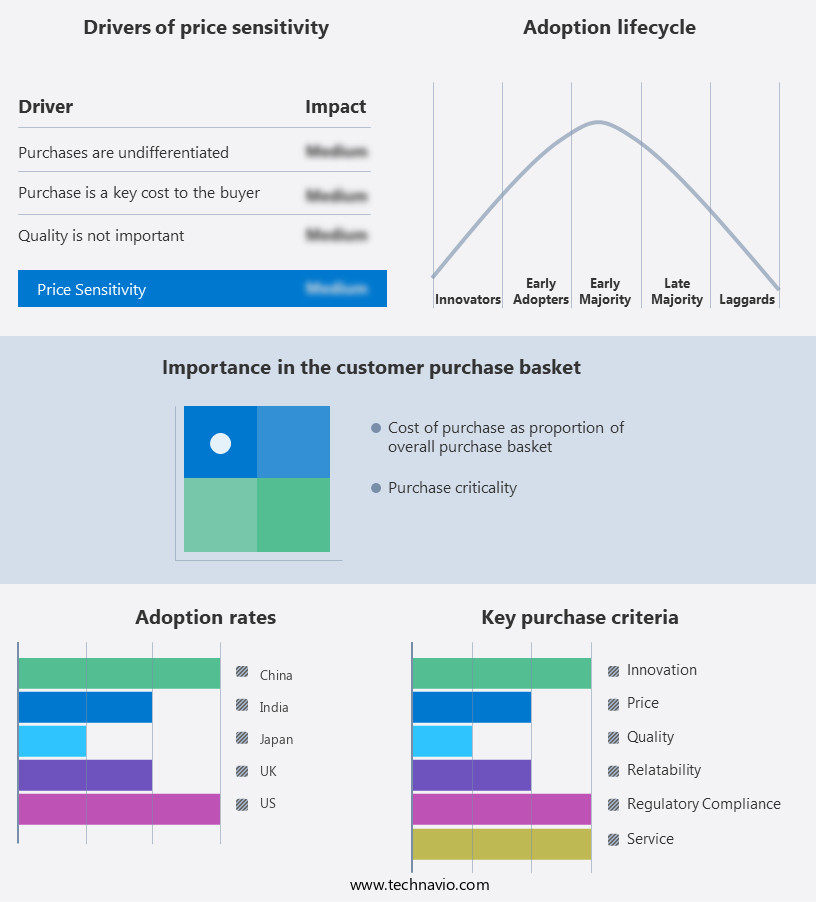
The e-brokerage market forecasting report includes the adoption lifecycle of the market, covering from the innovator’s stage to the laggard’s stage. It focuses on adoption rates in different regions based on penetration. Furthermore, the e-brokerage market report also includes key purchase criteria and drivers of price sensitivity to help companies evaluate and develop their market growth analysis strategies.
Customer Landscape
Key Companies & Market Insights
Companies are implementing various strategies, such as strategic alliances, e-brokerage market forecast, partnerships, mergers and acquisitions, geographical expansion, and product/service launches, to enhance their presence in the industry.
5Paisa Capital Ltd. - The company provides e-trading services via Sharekhan TradeTiger platform, enabling access to equity, derivatives, commodity, and currency markets. This innovative solution empowers users to make informed investment decisions with real-time market data and advanced analytical tools.
The industry research and growth report includes detailed analyses of the competitive landscape of the market and information about key companies, including:
- 5Paisa Capital Ltd.
- Angel One Ltd.
- BNP Paribas SA
- eToro
- FMR LLC
- FP Markets LLC
- HDFC Bank Ltd.
- Huatai Securities Co. Ltd.
- IG Group Holdings Plc
- Interactive Brokers LLC
- Kotak Mahindra Bank Ltd.
- Morgan Stanley
- Motilal Oswal Financial Services Ltd.
- Regal Securities Inc.
- Saxo Bank AS
- The Charles Schwab Corp.
- Trading 212 Ltd.
- VNS
- XTB S.A.
- Zerodha Broking Ltd.
Qualitative and quantitative analysis of companies has been conducted to help clients understand the wider business environment as well as the strengths and weaknesses of key industry players. Data is qualitatively analyzed to categorize companies as pure play, category-focused, industry-focused, and diversified; it is quantitatively analyzed to categorize companies as dominant, leading, strong, tentative, and weak.
Recent Development and News in E-Brokerage Market
- In January 2024, leading E-brokerage platform, TradeHub, announced the launch of its advanced AI-driven trading assistant, "SmartTrade," designed to provide personalized investment recommendations to users based on their financial goals and risk tolerance. (TradeHub Press Release)
- In March 2024, E-Trade and Charles Schwab, two major players in the E-brokerage industry, announced a strategic partnership to co-brand and offer joint promotions, aiming to attract a larger customer base and strengthen their market position. (Charles Schwab Press Release)
- In May 2024, Robinhood, the disruptive E-brokerage startup, raised a USD323 million funding round led by Sequoia Capital and DST Global, bringing its valuation to USD22.1 billion. The funds will be used for product development and international expansion. (Robinhood Securities Filing)
- In January 2025, the Securities and Exchange Commission (SEC) approved the use of digital assets as collateral for margin trading on E-brokerage platforms, paving the way for broader adoption of cryptocurrencies in the E-trading space. (SEC Press Release)
Research Analyst Overview
- In the dynamic the market, investors employ various strategies and investment vehicles to meet their unique investment goals. Exchange-traded funds (ETFs) and index funds have gained popularity among passive investors, allowing for diversified portfolios and lower costs. Order types, including market orders, limit orders, stop-limit orders, trailing stops, take-profit orders, and stop-loss orders, enable investors to manage risk and optimize returns. Trading psychology plays a crucial role in successful investing, with income investing, position sizing, and risk tolerance being essential factors. Mutual funds and private equity offer active management opportunities for those seeking to outperform the market.
- Alternative investments, such as hedge funds and trusts and estates, provide diversification and potential tax benefits. Factor investing, value investing, and growth investing cater to different investment styles, while retirement accounts, education savings plans, and tax-advantaged accounts offer tax advantages for long-term investors. Financial literacy and financial education are essential components of effective investment strategies, with financial education resources readily available to US business readers. Short-term investors employ strategies like day trading and swing trading, while long-term investors focus on buy-and-hold strategies. Understanding order types, investment goals, and risk tolerance is essential for making informed decisions in the market.
Dive into Technavio’s robust research methodology, blending expert interviews, extensive data synthesis, and validated models for unparalleled E-Brokerage Market insights. See full methodology.
|
Market Scope |
|
|
Report Coverage |
Details |
|
Page number |
213 |
|
Base year |
2024 |
|
Historic period |
2019-2023 |
|
Forecast period |
2025-2029 |
|
Growth momentum & CAGR |
Accelerate at a CAGR of 7.9% |
|
Market growth 2025-2029 |
USD 7392.1 million |
|
Market structure |
Fragmented |
|
YoY growth 2024-2025(%) |
7.2 |
|
Key countries |
US, China, Germany, Japan, UK, Australia, India, France, Brazil, Canada, UAE, Rest of World (ROW), Saudi Arabia, France, South Korea, Mexico, and The Netherlands |
|
Competitive landscape |
Leading Companies, Market Positioning of Companies, Competitive Strategies, and Industry Risks |
What are the Key Data Covered in this E-Brokerage Market Research and Growth Report?
- CAGR of the E-Brokerage industry during the forecast period
- Detailed information on factors that will drive the growth and forecasting between 2025 and 2029
- Precise estimation of the size of the market and its contribution of the industry in focus to the parent market
- Accurate predictions about upcoming growth and trends and changes in consumer behaviour
- Growth of the market across North America, Europe, APAC, South America, and Middle East and Africa
- Thorough analysis of the market’s competitive landscape and detailed information about companies
- Comprehensive analysis of factors that will challenge the e-brokerage market growth of industry companies
We can help! Our analysts can customize this e-brokerage market research report to meet your requirements.
 RIA -
RIA - 
