



Egg Packaging Market Size 2026-2030
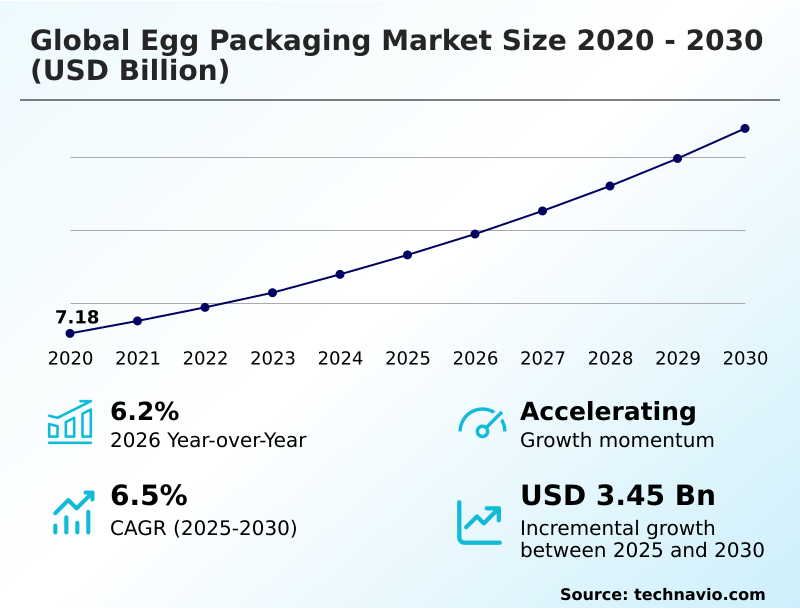
The egg packaging market size is valued to increase by USD 3.45 billion, at a CAGR of 6.5% from 2025 to 2030. Growing egg production will drive the egg packaging market.
Major Market Trends & Insights
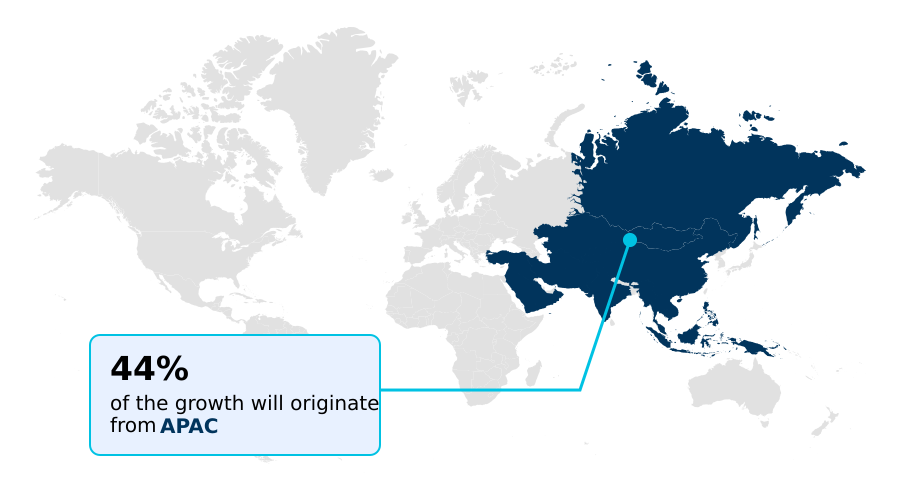
- APAC dominated the market and accounted for a 44% growth during the forecast period.
- By Product - Egg cartons segment was valued at USD 6.86 billion in 2024
- By Type - Regular eggs segment accounted for the largest market revenue share in 2024
Market Size & Forecast
- Market Opportunities: USD 5.59 billion
- Market Future Opportunities: USD 3.45 billion
- CAGR from 2025 to 2030 : 6.5%
Market Summary
- The egg packaging market is essential for ensuring product safety and quality from farm to consumer, underpinned by continuous innovation in materials and design. The industry focuses on providing shelf-ready solutions with high structural integrity to minimize breakage, a critical factor for profitability.
- A key dynamic is the shift toward sustainable egg containers made from molded fiber pulp and compostable materials, driven by plastic-free packaging mandates and consumer preference. For example, a large poultry producer can significantly reduce operational cost reduction by adopting a lightweighting design for its cartons. This not only lowers shipping expenses but also improves supply chain efficiency.
- Concurrently, smart packaging technologies, including time-temperature indicators and material traceability systems, are enhancing supply chain transparency and cold chain integrity. This allows for better inventory management and a reduction in food waste, demonstrating the market's role in addressing broader logistical and environmental challenges. This focus on cushioning performance and eco-friendly packaging alternatives defines the competitive landscape.
What will be the Size of the Egg Packaging Market during the forecast period?
Get Key Insights on Market Forecast (PDF) Get Free Sample
How is the Egg Packaging Market Segmented?
The egg packaging industry research report provides comprehensive data (region-wise segment analysis), with forecasts and estimates in "USD million" for the period 2026-2030, as well as historical data from 2020-2024 for the following segments.
- Product
- Egg cartons
- Egg trays
- Type
- Regular eggs
- Organic and free-range eggs
- Material
- Molded fiber
- Plastic
- Foam
- Geography
- APAC
- China
- India
- Japan
- North America
- US
- Canada
- Mexico
- Europe
- Germany
- UK
- France
- South America
- Brazil
- Argentina
- Middle East and Africa
- Saudi Arabia
- Turkey
- South Africa
- Rest of World (ROW)
- APAC
By Product Insights
The egg cartons segment is estimated to witness significant growth during the forecast period.
The egg cartons segment is a primary component of the market, driven by retail consumer demand for convenient, protective containers. These cartons are engineered with advanced shock absorption properties and structural integrity to minimize breakage during transit.
Innovations focus on enhancing cushioning performance and stacking strength for supply chain efficiency. This segment, representing over 77% of the market by revenue, is a key area for premiumization strategy and brand differentiation tactics.
Manufacturers are increasingly using molded fiber pulp and recycled PET (rPET) to meet demand for sustainable egg containers and align with circular economy principles.
The evolution of ergonomic carton design and high-fidelity printing also plays a crucial role in influencing consumer purchasing decisions at the point of sale.
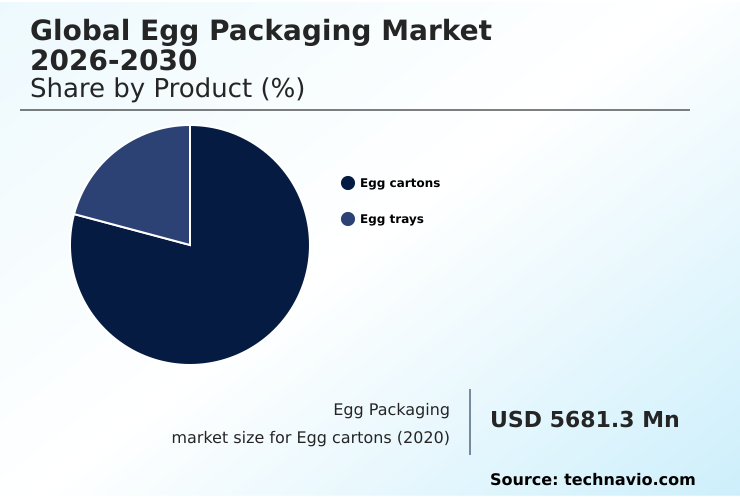
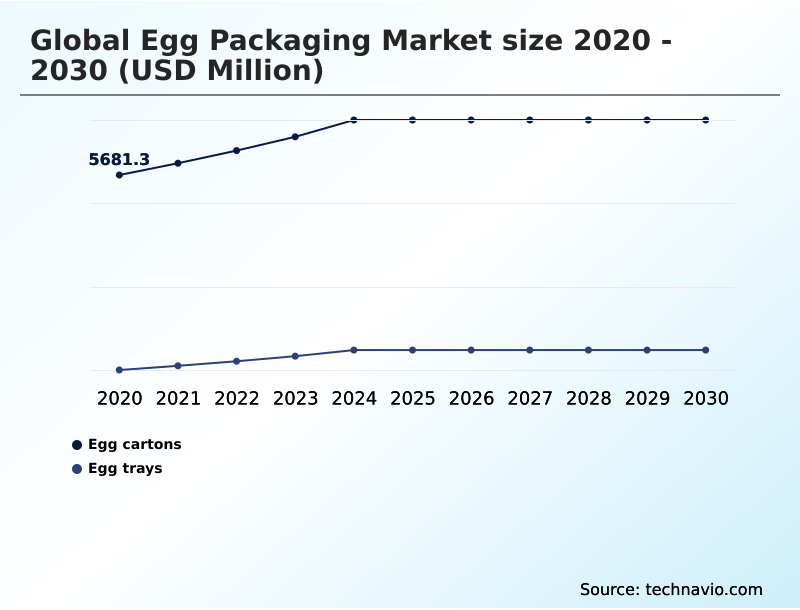
The Egg cartons segment was valued at USD 6.86 billion in 2024 and showed a gradual increase during the forecast period.
Regional Analysis
APAC is estimated to contribute 44% to the growth of the global market during the forecast period.Technavio’s analysts have elaborately explained the regional trends and drivers that shape the market during the forecast period.
See How Egg Packaging Market Demand is Rising in APAC Get Free Sample
The geographic landscape of the egg packaging market is characterized by varied regional dynamics and growth trajectories.
APAC is the largest region, accounting for nearly 44% of the incremental growth, driven by rapid urbanization and the expansion of organized retail in countries like China and India.
In North America, which holds over 26% of the market opportunity, the focus is on premiumization strategy and sustainable egg containers, with a strong push for recycled PET (rPET) and compostable materials.
European markets are defined by stringent regulations favoring circular economy principles and plastic-free packaging mandates. The adoption of lightweighting design in Europe has led to a 10% reduction in transport-related emissions for some operators.
These regional differences require manufacturers to adapt their secondary packaging systems and material choices to local consumer preferences and regulatory environments.
Market Dynamics
Our researchers analyzed the data with 2025 as the base year, along with the key drivers, trends, and challenges. A holistic analysis of drivers will help companies refine their marketing strategies to gain a competitive advantage.
- A comprehensive cost analysis of molded fiber versus plastic cartons reveals a complex trade-off between upfront expense and long-term sustainability benefits, influencing purchasing decisions across the industry. Producers are increasingly improving shelf appeal with egg carton design, recognizing it as a critical tool for brand differentiation in a crowded retail space.
- Concurrently, innovations in biodegradable egg trays for bulk transport are addressing the needs of the food service sector, focusing on durability and automating the egg packing process with compatible trays.
- The negative environmental impact of expanded polystyrene foam packaging has accelerated the search for sustainable alternatives to plastic egg packaging, with a strong focus on materials that are both renewable and compostable. A key concern remains the challenges in recycling food-contaminated egg cartons, which hinders circularity efforts.
- The role of smart packaging in ensuring egg freshness is becoming more prominent, with technologies that offer better use of QR codes for farm-to-fork traceability. This trend addresses the growing consumer perception of eco-friendly egg containers.
- Brands leverage custom branding opportunities on premium egg cartons to capture the high-value organic market, where the impact of packaging on organic egg market growth is significant. The benefits of clear recycled PET for egg visibility are weighed against plastic reduction goals. Ultimately, understanding how packaging design reduces egg breakage rates remains a core engineering focus.
- Firms leveraging advancements in moisture-resistant coatings for fiber pulp report up to 15% lower spoilage rates compared to those using standard fiber. This is balanced against regulatory hurdles for new food contact materials and the need for efficient supply chain benefits of high-density stacking trays to manage logistics.
- Lightweighting strategies for reducing shipping costs and designing egg packaging for e-commerce home delivery are critical for modernizing distribution networks.
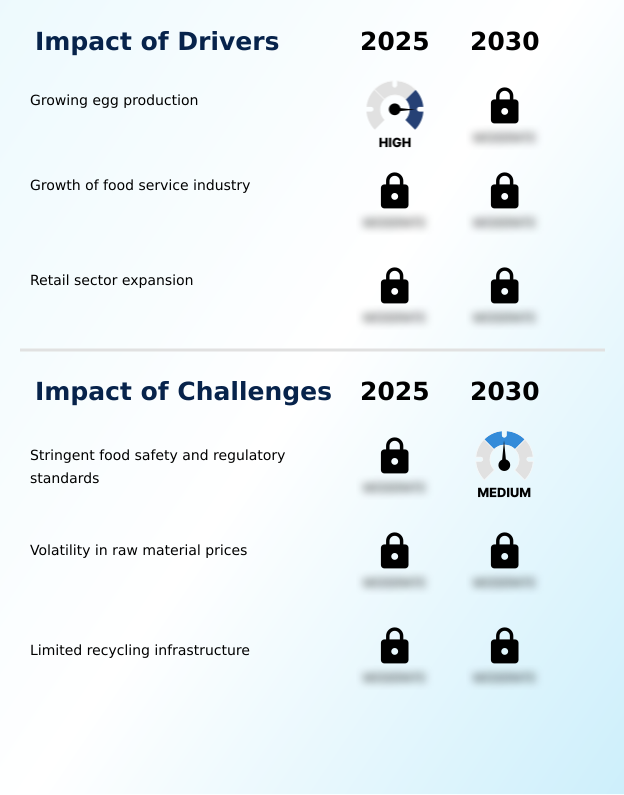
What are the key market drivers leading to the rise in the adoption of Egg Packaging Industry?
- Growing egg production is the key driver for market expansion, fueled by rising global demand for affordable, high-quality protein.
- Market growth is fundamentally driven by rising global egg production and the expansion of the food service and retail sectors.
- The growing demand for protein has increased poultry operations, which in turn boosts the need for bulk egg transport solutions and protective egg shippers.
- The food service industry's expansion has led to a 30% increase in demand for high-density, stackable trays that improve logistical efficiency improvement.
- Concurrently, the proliferation of supermarkets has transformed the retail landscape, creating demand for shelf-ready solutions that enhance retail shelf appeal.
- Packaging designed for automated packing compatibility can increase processing speeds by over 20%, a critical factor for large-scale producers focused on operational cost reduction and maintaining supply chain resilience.
What are the market trends shaping the Egg Packaging Industry?
- The development of sustainable packaging solutions is a dominant trend redefining the industry. This is driven by consumer and regulatory demands for alternatives to non-biodegradable materials.
- The market is increasingly shaped by the trend toward sustainability, with a significant shift toward eco-friendly packaging alternatives. The use of molded fiber pulp and compostable materials is on the rise, with some companies reporting a 25% increase in consumer engagement after switching to plastic-free packaging mandates.
- Smart packaging technologies are also gaining traction; the integration of time-temperature indicators has been shown to reduce spoilage by up to 15%. This enhances farm-to-fork traceability and builds consumer trust. Furthermore, customized carton branding and high-fidelity printing enable brand differentiation tactics, allowing producers to achieve a premium positioning.
- This premiumization strategy has helped certain brands increase their average selling price by 10% without impacting volume.
What challenges does the Egg Packaging Industry face during its growth?
- Stringent food safety and regulatory standards present a key challenge, requiring manufacturers to meet high hygiene and material safety benchmarks.
- Key challenges constrain the market, including stringent food safety regulations and raw material price volatility. Adhering to food contact materials standards requires significant investment in chemical migration testing, increasing operational costs by as much as 10% for manufacturers. The unpredictable cost of molded fiber pulp and recycled PET (rPET) can erode profit margins, making long-term financial planning difficult.
- Furthermore, recycling infrastructure challenges limit the effectiveness of closed-loop recycling systems. In many regions, the lack of proper facilities means that over 40% of theoretically recyclable cartons end up in landfills. This gap between material innovation and waste management infrastructure poses a significant hurdle to achieving true circularity and sustainability.
Exclusive Technavio Analysis on Customer Landscape
The egg packaging market forecasting report includes the adoption lifecycle of the market, covering from the innovator’s stage to the laggard’s stage. It focuses on adoption rates in different regions based on penetration. Furthermore, the egg packaging market report also includes key purchase criteria and drivers of price sensitivity to help companies evaluate and develop their market growth analysis strategies.
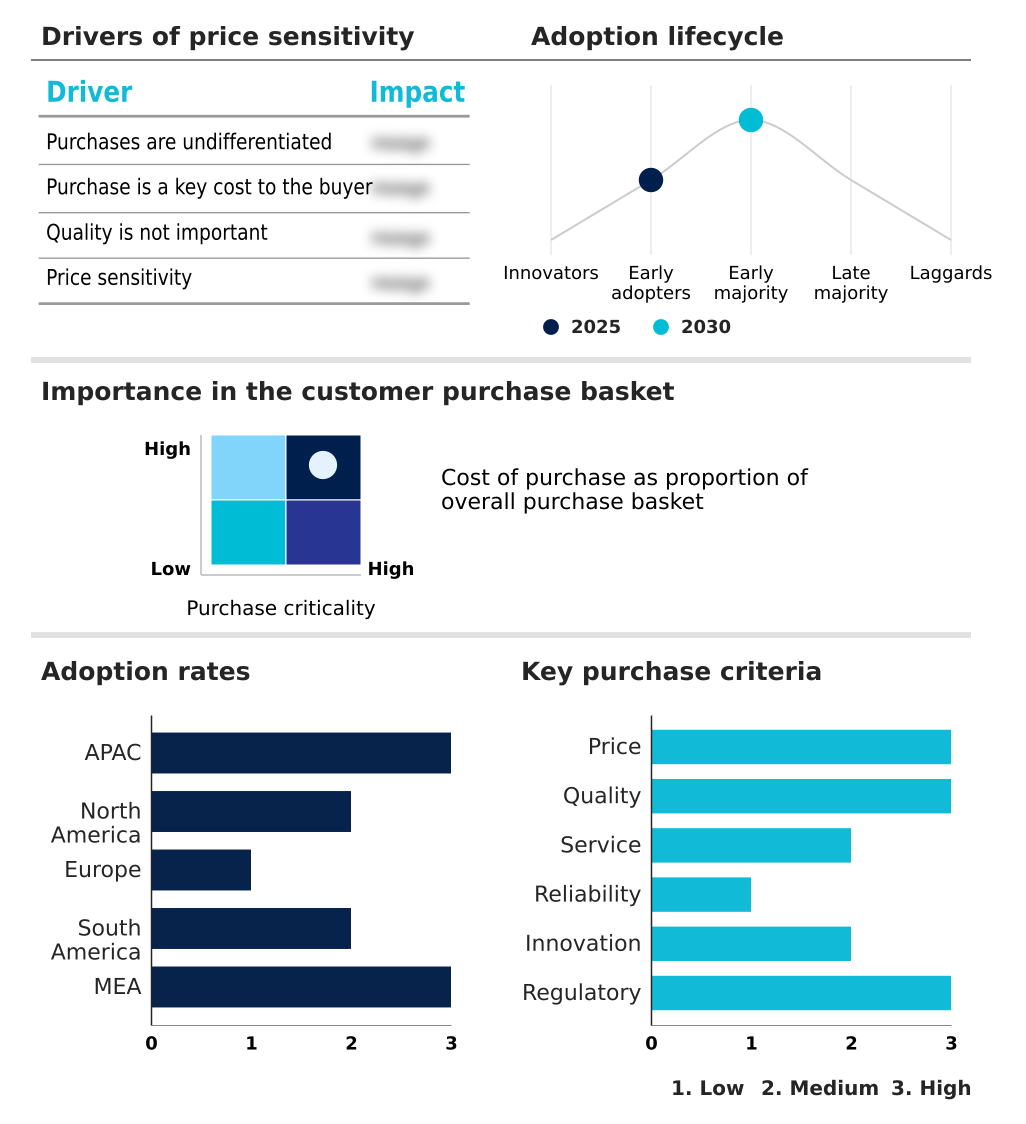
Customer Landscape of Egg Packaging Industry
Competitive Landscape
Companies are implementing various strategies, such as strategic alliances, egg packaging market forecast, partnerships, mergers and acquisitions, geographical expansion, and product/service launches, to enhance their presence in the industry.
Billerud AB - Delivering specialized and sustainable packaging, including molded fiber and paperboard solutions, designed to protect and market eggs effectively.
The industry research and growth report includes detailed analyses of the competitive landscape of the market and information about key companies, including:
- Billerud AB
- Brodrene Hartmann AS
- Cascades Inc.
- CKF Inc.
- Falcon Pack
- Georgia Pacific LLC
- Graphic Packaging Holding Co.
- Huhtamaki Oyj
- International Paper Co.
- Keyes Packaging Group
- Mondi Plc
- Ovotherm International Handels
- Packaging Corp. of America
- Pactiv Evergreen Inc.
- Pratt Industries Inc.
- Smurfit Westrock plc
- Sonoco Products Co.
- Stora Enso Oyj
- Tekni Plex Inc.
Qualitative and quantitative analysis of companies has been conducted to help clients understand the wider business environment as well as the strengths and weaknesses of key industry players. Data is qualitatively analyzed to categorize companies as pure play, category-focused, industry-focused, and diversified; it is quantitatively analyzed to categorize companies as dominant, leading, strong, tentative, and weak.
Recent Development and News in Egg packaging market
- In January 2025, Huhtamaki announced the successful upgrade of its manufacturing protocols to comply with new European Union food contact material regulations, which involved removing specific PFAS chemicals from its fiber-based product lines.
- In February 2025, Hartmann Group revealed a new proprietary bio-based coating technology that significantly improves the durability and surface finish of its molded fiber cartons, making them comparable to plastic alternatives.
- In March 2025, Pactiv Evergreen reported a significant increase in operational overhead due to rising costs of industrial energy and recycled fiber, leading to a tactical price adjustment across its North American distribution network.
- In May 2025, Hartmann Group announced a strategic partnership with a major European catering conglomerate to supply a new line of high-strength industrial trays designed for automated handling in central production units.
Dive into Technavio’s robust research methodology, blending expert interviews, extensive data synthesis, and validated models for unparalleled Egg Packaging Market insights. See full methodology.
| Market Scope | |
|---|---|
| Page number | 295 |
| Base year | 2025 |
| Historic period | 2020-2024 |
| Forecast period | 2026-2030 |
| Growth momentum & CAGR | Accelerate at a CAGR of 6.5% |
| Market growth 2026-2030 | USD 3449.5 million |
| Market structure | Fragmented |
| YoY growth 2025-2026(%) | 6.2% |
| Key countries | China, India, Japan, South Korea, Australia, Indonesia, US, Canada, Mexico, Germany, UK, France, Italy, Spain, The Netherlands, Brazil, Argentina, Chile, Saudi Arabia, Turkey, South Africa, UAE and Israel |
| Competitive landscape | Leading Companies, Market Positioning of Companies, Competitive Strategies, and Industry Risks |
Research Analyst Overview
- The egg packaging market is defined by a strategic focus on supply chain efficiency and material science. Key developments revolve around balancing cushioning performance and stacking strength with sustainability goals, driving the adoption of molded fiber pulp, recycled PET (rPET), and biodegradable polymers over expanded polystyrene foam. Innovations in thermoformed plastic and high-barrier films are also creating new opportunities.
- Boardroom decisions are increasingly influenced by circular economy principles, with a push towards lightweighting design and compostable materials. Advanced bio-based coatings and anti-fog coatings enhance moisture resistance and product visibility, supporting premiumization strategy goals. For instance, the implementation of optimized ergonomic carton design has been shown to reduce in-transit breakage by over 5%, directly impacting bottom-line profitability.
- Automated packing compatibility is essential for large-scale operations, requiring precise pulp molding process control. Supply chain transparency is being achieved through material traceability and time-temperature indicators, ensuring cold chain integrity and compliance with food contact materials standards, which are verified through chemical migration testing.
- High-fidelity printing on shelf-ready solutions with good nesting capability further aids marketability, while secondary packaging systems address the unique demands of e-commerce, ensuring vibrational stress resistance. Technologies like antimicrobial packaging and modified atmosphere packaging are also emerging.
What are the Key Data Covered in this Egg Packaging Market Research and Growth Report?
-
What is the expected growth of the Egg Packaging Market between 2026 and 2030?
-
USD 3.45 billion, at a CAGR of 6.5%
-
-
What segmentation does the market report cover?
-
The report is segmented by Product (Egg cartons, and Egg trays), Type (Regular eggs, and Organic and free-range eggs), Material (Molded fiber, Plastic, and Foam) and Geography (APAC, North America, Europe, South America, Middle East and Africa)
-
-
Which regions are analyzed in the report?
-
APAC, North America, Europe, South America and Middle East and Africa
-
-
What are the key growth drivers and market challenges?
-
Growing egg production, Stringent food safety and regulatory standards
-
-
Who are the major players in the Egg Packaging Market?
-
Billerud AB, Brodrene Hartmann AS, Cascades Inc., CKF Inc., Falcon Pack, Georgia Pacific LLC, Graphic Packaging Holding Co., Huhtamaki Oyj, International Paper Co., Keyes Packaging Group, Mondi Plc, Ovotherm International Handels, Packaging Corp. of America, Pactiv Evergreen Inc., Pratt Industries Inc., Smurfit Westrock plc, Sonoco Products Co., Stora Enso Oyj and Tekni Plex Inc.
-
Market Research Insights
- Consumer preference analysis indicates a clear shift towards sustainable egg containers, driving packaging innovation trends. This has led to the development of eco-friendly packaging alternatives to meet new plastic-free packaging mandates. For producers, brand differentiation tactics are critical, with customized carton branding and digital printing on packaging enhancing retail shelf appeal.
- In the poultry industry logistics, protective egg shippers and bulk egg transport solutions are essential for egg breakage reduction, with some new designs improving logistical efficiency improvement by up to 20%. Supply chain resilience is bolstered by farm-to-fork traceability via smart packaging technologies, addressing food safety regulations.
- However, raw material price volatility and recycling infrastructure challenges necessitate operational cost reduction strategies and regulatory compliance management, with closed-loop recycling systems offering a path to mitigate costs by over 15%. This complex interplay shapes direct-to-consumer packaging and private label packaging strategies.
We can help! Our analysts can customize this egg packaging market research report to meet your requirements.
 RIA -
RIA - 
