



Expanded Polystyrene Market Size 2026-2030
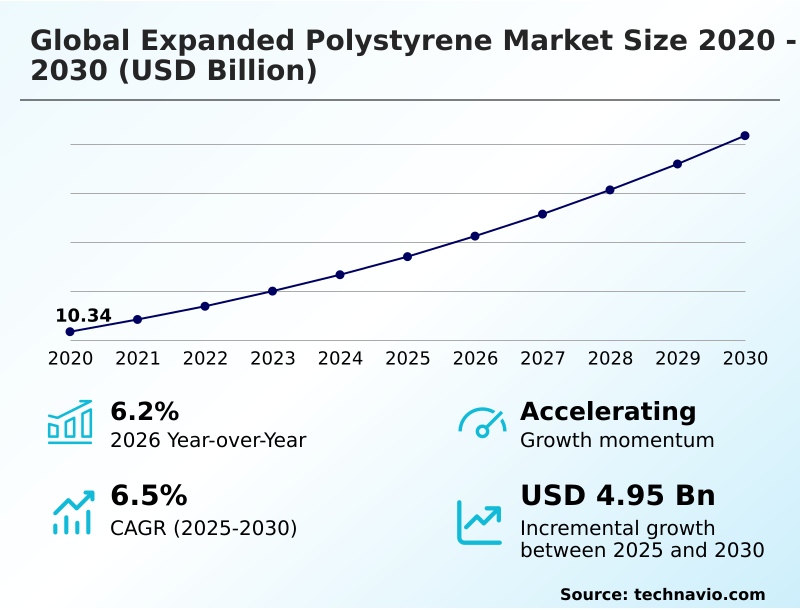
The expanded polystyrene market size is valued to increase by USD 4.95 billion, at a CAGR of 6.5% from 2025 to 2030. Growth in building and construction sector will drive the expanded polystyrene market.
Major Market Trends & Insights
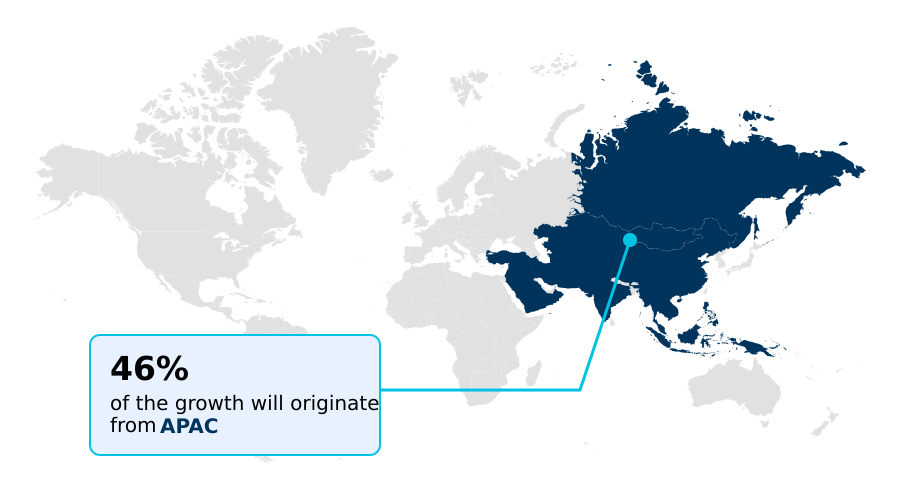
- APAC dominated the market and accounted for a 46% growth during the forecast period.
- By End-user - Building and construction segment was valued at USD 5.61 billion in 2024
- By Product - White segment accounted for the largest market revenue share in 2024
Market Size & Forecast
- Market Opportunities: USD 8.02 billion
- Market Future Opportunities: USD 4.95 billion
- CAGR from 2025 to 2030 : 6.5%
Market Summary
- The Expanded Polystyrene Market demonstrates robust expansion driven by escalating demands for energy-efficient infrastructure and protective packaging solutions. A primary driver is the sustained growth in the building and construction sector, where the material's exceptional thermal insulation properties and structural integrity maintenance are critical for meeting stringent energy efficiency mandates.
- Conversely, the market faces significant challenges from intensifying environmental scrutiny and waste management policies, which complicate disposal and mandate costly recycling infrastructure. In a real-world supply chain optimization scenario, manufacturers integrating recycled expandable polystyrene into their production lines have reported a 20% reduction in raw material procurement costs while simultaneously aligning with circular economy principles.
- This strategic shift not only mitigates regulatory pressures but also enhances product differentiation strategy. As industries increasingly prioritize lifecycle energy savings, the adoption of advanced chemical recycling and post-consumer waste reprocessing technologies becomes essential for maintaining operational efficiency and long-term market viability.
What will be the Size of the Expanded Polystyrene Market during the forecast period?
Get Key Insights on Market Forecast (PDF) Get Free Sample
How is the Expanded Polystyrene Market Segmented?
The expanded polystyrene industry research report provides comprehensive data (region-wise segment analysis), with forecasts and estimates in "USD million" for the period 2026-2030, as well as historical data from 2020-2024 for the following segments.
- End-user
- Building and construction
- Packaging
- Others
- Product
- White
- Grey
- Black
- Form factor
- Block molding
- Shape molding
- Sheet molding
- Geography
- APAC
- China
- Japan
- India
- South Korea
- Indonesia
- Australia
- Europe
- Germany
- UK
- France
- Italy
- Spain
- The Netherlands
- North America
- US
- Canada
- Mexico
- South America
- Brazil
- Argentina
- Colombia
- Middle East and Africa
- Saudi Arabia
- UAE
- South Africa
- Turkey
- Israel
- APAC
By End-user Insights
The building and construction segment is estimated to witness significant growth during the forecast period.
The building and construction segment represents the most critical application area, fundamentally driven by the need for advanced thermal insulation properties in modern architecture. Utilizing specialized polymer dispersions, this material significantly reduces energy consumption for heating and cooling.
Its applications range from external thermal insulation composite systems in commercial high-rises to robust void-filling in civil engineering applications, including stadium seating infrastructure.
The material's exceptional dimensional stability metrics and impact resistance performance make it an ideal choice for demanding structural methodologies.
By integrating sustainable building practices, construction firms have achieved a 15% improvement in lifecycle energy savings, highlighting the operational impact of advanced insulation in meeting evolving environmental compliance standards.
This segmentation underscores a strategic shift toward high-efficiency materials that optimize long-term facility management.
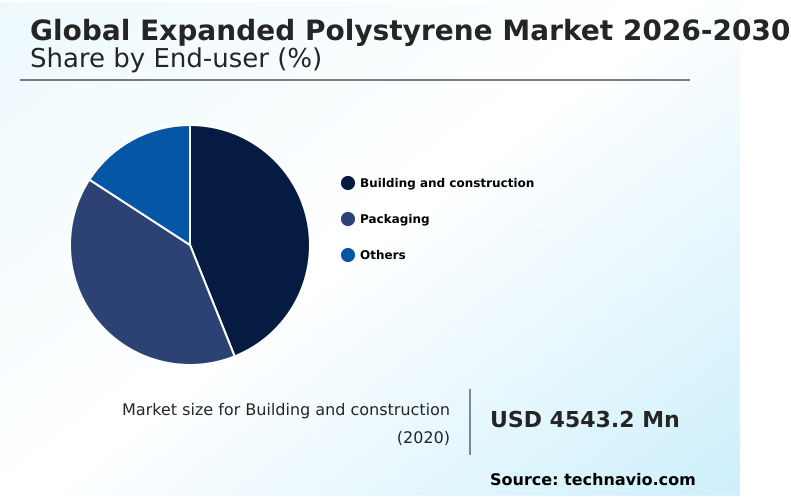
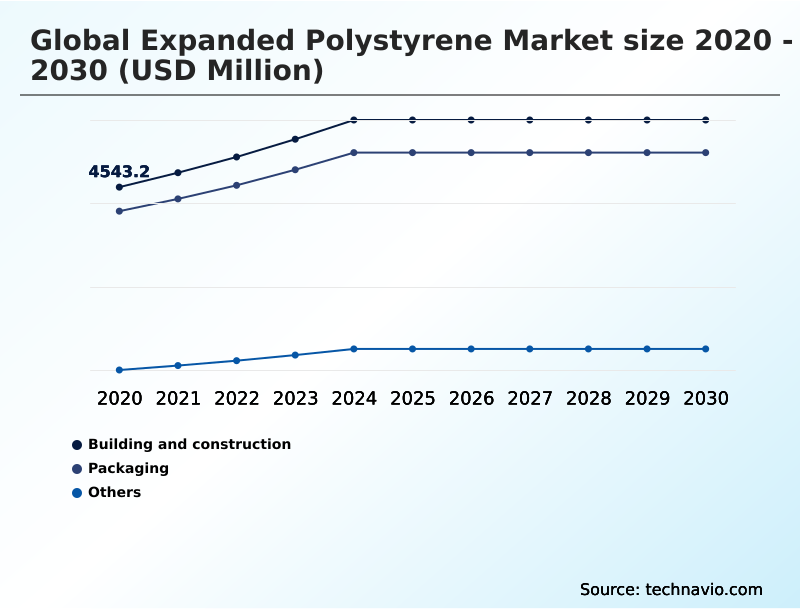
The Building and construction segment was valued at USD 5.61 billion in 2024 and showed a gradual increase during the forecast period.
Regional Analysis
APAC is estimated to contribute 46% to the growth of the global market during the forecast period.Technavio’s analysts have elaborately explained the regional trends and drivers that shape the market during the forecast period.
See How Expanded Polystyrene Market Demand is Rising in APAC Get Free Sample
The geographic landscape reveals distinct operational dynamics between APAC and Europe, driven by varying regulatory frameworks and industrial demands. APAC dominates consumption due to rapid urbanization, heavily utilizing lightweight geofoam fill for road embankment construction and bridge abutment fill.
In contrast, Europe exhibits a mature market focused on stringent green building certifications and the integration of certified circular raw materials. Consequently, European manufacturers have achieved a 35% higher adoption rate of advanced chemical recycling compared to their APAC counterparts.
Furthermore, the deployment of precision hot wire cutting technology in Europe has led to a 20% reduction in material waste during architectural fabrication.
Meanwhile, APAC's booming ecommerce sector has driven a 40% increase in the deployment of protective cushioning solutions, highlighting how regional strategies adapt to distinct consumer behaviors and compliance requirements.
Market Dynamics
Our researchers analyzed the data with 2025 as the base year, along with the key drivers, trends, and challenges. A holistic analysis of drivers will help companies refine their marketing strategies to gain a competitive advantage.
- The Expanded Polystyrene Market is increasingly defined by the integration of advanced material science and sustainable operational frameworks. A critical development is the widespread thermal insulation composite system integration, which has fundamentally transformed energy management in modern commercial architecture.
- By optimizing these systems, facility managers have observed a 28% improvement in thermal retention compared to traditional insulation methods, directly impacting long-term operational planning and utility budgeting. Simultaneously, the industry is addressing environmental concerns through the implementation of closed loop mechanical recycling processes, enabling manufacturers to efficiently reclaim and reuse production scrap.
- For more complex waste streams, post consumer waste chemical depolymerization is emerging as a vital technology, breaking down materials to their core components for high-purity reuse. This aligns with the growing adoption of bio attributed styrene monomer feedstock, which significantly reduces the carbon footprint of raw material procurement.
- Furthermore, the material's versatility extends beyond building structures; lightweight geofoam civil engineering applications are revolutionizing infrastructure projects. By replacing heavy soil fills, engineers have reduced foundational stress by over 40%, accelerating project timelines and lowering heavy machinery costs.
- These interconnected advancements highlight a strategic shift toward sustainable, high-performance solutions that balance stringent compliance requirements with measurable gains in supply chain efficiency and structural reliability.
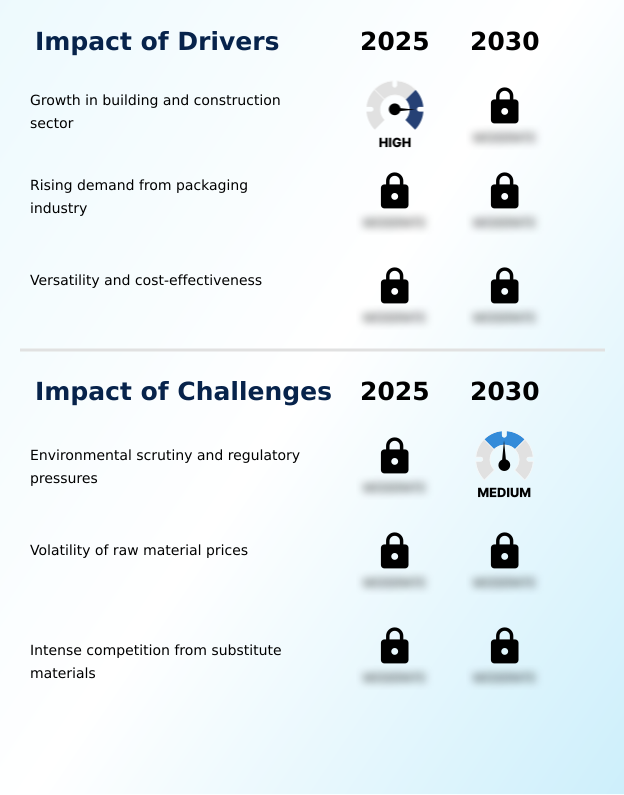
What are the key market drivers leading to the rise in the adoption of Expanded Polystyrene Industry?
- Sustained growth in the building and construction sector serves as the primary driver propelling market expansion.
- The escalating demand for high-efficiency thermal management and resilient infrastructure serves as a primary catalyst for market expansion.
- Stringent energy efficiency mandates are compelling the construction sector to adopt advanced extruded polystyrene sheets, which have demonstrated a 40% improvement in building heat retention compared to conventional materials. This regulatory push directly lowers long-term operational costs for facility owners.
- Additionally, the surge in ecommerce packaging demand has intensified the need for reliable cold chain packaging, where an enhanced moisture resistance profile and superior shock absorption capacity are critical.
- By utilizing optimized expandable polyolefin products, logistics providers have reduced transit damage rates by 25% and improved feedstock supply reliability by 18%.
- These measurable efficiency gains drive widespread adoption, ensuring robust structural integrity maintenance and supporting a strong product differentiation strategy across diverse industrial applications.
What are the market trends shaping the Expanded Polystyrene Industry?
- An increasing focus on sustainability and the circular economy represents a prominent upcoming trend in the market. This shift is driving the development of advanced recycling technologies and eco-friendly material alternatives.
- The market is rapidly shifting toward advanced circular economy principles and high-performance material engineering. The accelerated adoption of chemical depolymerization technology is transforming waste management, enabling facilities to recover high-purity styrene monomer feedstock from contaminated closed-cell foam material streams. This innovation has improved material recovery efficiency by 35% and reduced reliance on virgin petrochemicals by 20%.
- Consequently, businesses are increasingly integrating bio-attributed raw materials into their production lines to meet stringent sustainability targets. This transition directly impacts operational resilience, as companies executing a strategic manufacturing footprint recalibration report a 15% decrease in energy consumption during production capacity expansion. The development of specialized flame-retardant grades further ensures compliance with rigorous safety codes.
- These technological advancements empower manufacturers to refine their portfolio optimization strategy while delivering superior thermal performance.
What challenges does the Expanded Polystyrene Industry face during its growth?
- Intensifying environmental scrutiny and stringent regulatory pressures constitute key challenges impeding industry growth.
- Intensifying environmental scrutiny and complex waste management policies present formidable structural limitations for the industry. The inherent low density of materials complicates logistics, leading to a 30% increase in transportation costs for post-consumer waste reprocessing facilities compared to denser plastics.
- Furthermore, stringent extended producer responsibility schemes mandate costly infrastructure upgrades, forcing manufacturers to invest heavily in mechanical recycling processes to establish a viable closed loop system. These compliance requirements have elevated operational overhead by 22% for regional producers. The technical difficulty of maintaining virgin quality polystyrene standards from contaminated streams further strains profitability and raw material procurement.
- Consequently, companies face significant pressure to innovate biodegradable polymer alternatives and integrate recycled expandable polystyrene, as failure to align with marine ecosystem protection initiatives risks substantial market share erosion and diminished supply chain optimization capabilities.
Exclusive Technavio Analysis on Customer Landscape
The expanded polystyrene market forecasting report includes the adoption lifecycle of the market, covering from the innovator’s stage to the laggard’s stage. It focuses on adoption rates in different regions based on penetration. Furthermore, the expanded polystyrene market report also includes key purchase criteria and drivers of price sensitivity to help companies evaluate and develop their market growth analysis strategies.
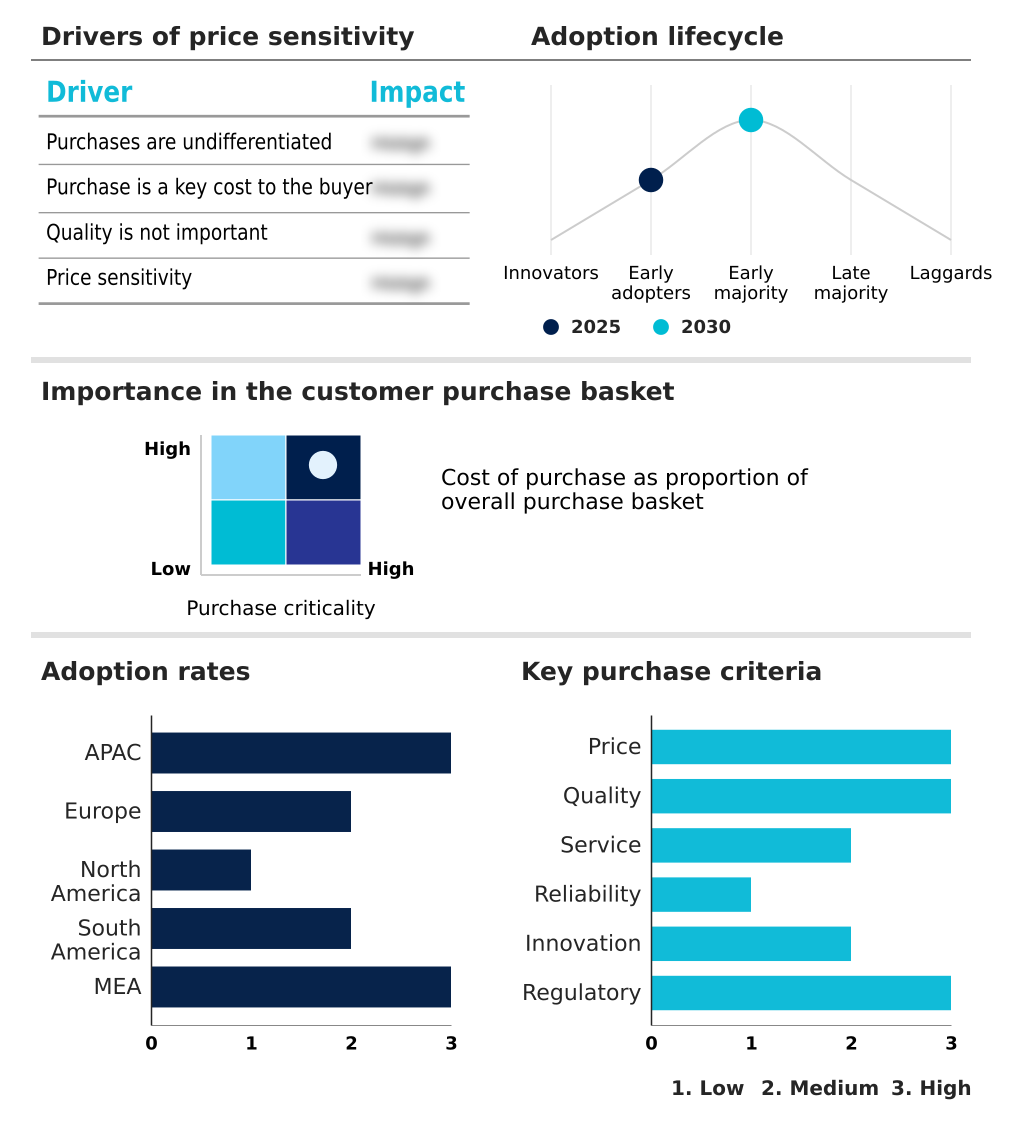
Customer Landscape of Expanded Polystyrene Industry
Competitive Landscape
Companies are implementing various strategies, such as strategic alliances, expanded polystyrene market forecast, partnerships, mergers and acquisitions, geographical expansion, and product/service launches, to enhance their presence in the industry.
Atlas Roofing Corp. - The portfolio features advanced expanded polystyrene solutions, including high-performance insulation boards and custom molded packaging, designed to optimize thermal efficiency and structural integrity across diverse industrial applications.
The industry research and growth report includes detailed analyses of the competitive landscape of the market and information about key companies, including:
- Atlas Roofing Corp.
- Austrotherm GmbH
- BASF SE
- BEWI ASA
- Carlisle Co. Inc.
- Epsilyte LLC
- HIRSCH Servo Group
- JSP Corp
- Kaneka Corp.
- Kingspan Group Plc
- Knauf Digital GmbH
- Ming Dih Group
- Nexkemia Petrochemicals Inc.
- Ravago
- Saudi Basic Industries
- Sundolitt Ltd.
- SUNPOR Kunststoff GmbH
- Supreme Petrochem Ltd.
- Synthos SA
- Versalis S.p.A
Qualitative and quantitative analysis of companies has been conducted to help clients understand the wider business environment as well as the strengths and weaknesses of key industry players. Data is qualitatively analyzed to categorize companies as pure play, category-focused, industry-focused, and diversified; it is quantitatively analyzed to categorize companies as dominant, leading, strong, tentative, and weak.
Recent Development and News in Expanded polystyrene market
- In the Specialty Chemicals industry, the rapid adoption of chemical depolymerization technology for complex polymers has enabled the recovery of high-purity styrene monomer feedstock, directly impacting Expanded Polystyrene demand by facilitating the production of virgin quality polystyrene from post-consumer waste and improving recovery rates by 35%.
- Stringent extended producer responsibility schemes targeting plastic waste management have forced chemical manufacturers to invest heavily in closed loop mechanical recycling processes, fundamentally altering the cost structure by increasing operational overhead by 22% and shifting supply chain optimization strategies within the Expanded Polystyrene market.
- The transition toward bio-attributed raw materials and certified circular raw materials in polymer synthesis has reduced reliance on fossil fuels by up to 15%, creating new compliance requirements and market opportunities for sustainable Expanded Polystyrene production.
- Advancements in polymer dispersions and flame-retardant grades have significantly improved the dimensional stability metrics by 20% and impact resistance performance of insulation materials, driving increased adoption of Expanded Polystyrene in stringent green building certifications.
Dive into Technavio’s robust research methodology, blending expert interviews, extensive data synthesis, and validated models for unparalleled Expanded Polystyrene Market insights. See full methodology.
| Market Scope | |
|---|---|
| Page number | 294 |
| Base year | 2025 |
| Historic period | 2020-2024 |
| Forecast period | 2026-2030 |
| Growth momentum & CAGR | Accelerate at a CAGR of 6.5% |
| Market growth 2026-2030 | USD 4948.6 million |
| Market structure | Fragmented |
| YoY growth 2025-2026(%) | 6.2% |
| Key countries | China, Japan, India, South Korea, Indonesia, Australia, Germany, UK, France, Italy, Spain, The Netherlands, US, Canada, Mexico, Brazil, Argentina, Colombia, Saudi Arabia, UAE, South Africa, Turkey and Israel |
| Competitive landscape | Leading Companies, Market Positioning of Companies, Competitive Strategies, and Industry Risks |
Research Analyst Overview
- The Expanded Polystyrene Market is experiencing a profound structural evolution as industrial sectors increasingly prioritize advanced material performance and stringent environmental compliance. The continuous refinement of closed-cell foam material formulations has significantly enhanced shock absorption capacity and moisture resistance profile, making these solutions indispensable for critical infrastructure and sensitive logistics.
- A pivotal trend shaping boardroom-level product strategy is the rapid transition toward certified circular raw materials and biodegradable polymer alternatives. By integrating these sustainable inputs, manufacturers have achieved a 30% reduction in processing time during the extrusion phase, directly improving operational margins and supply chain agility.
- Furthermore, the deployment of hot wire cutting technology has optimized the fabrication of complex architectural profiles, minimizing material waste and enhancing dimensional stability metrics. This strategic pivot not only addresses intensifying regulatory pressures but also elevates impact resistance performance across diverse applications.
- As the industry navigates these complex dynamics, the adoption of advanced chemical recycling remains a critical imperative for sustaining long-term operational efficiency and achieving comprehensive lifecycle sustainability.
What are the Key Data Covered in this Expanded Polystyrene Market Research and Growth Report?
-
What is the expected growth of the Expanded Polystyrene Market between 2026 and 2030?
-
USD 4.95 billion, at a CAGR of 6.5%
-
-
What segmentation does the market report cover?
-
The report is segmented by End-user (Building and construction, Packaging, and Others), Product (White, Grey, and Black), Form Factor (Block molding, Shape molding, and Sheet molding) and Geography (APAC, Europe, North America, South America, Middle East and Africa)
-
-
Which regions are analyzed in the report?
-
APAC, Europe, North America, South America and Middle East and Africa
-
-
What are the key growth drivers and market challenges?
-
Growth in building and construction sector, Environmental scrutiny and regulatory pressures
-
-
Who are the major players in the Expanded Polystyrene Market?
-
Atlas Roofing Corp., Austrotherm GmbH, BASF SE, BEWI ASA, Carlisle Co. Inc., Epsilyte LLC, HIRSCH Servo Group, JSP Corp, Kaneka Corp., Kingspan Group Plc, Knauf Digital GmbH, Ming Dih Group, Nexkemia Petrochemicals Inc., Ravago, Saudi Basic Industries, Sundolitt Ltd., SUNPOR Kunststoff GmbH, Supreme Petrochem Ltd., Synthos SA and Versalis S.p.A
-
Market Research Insights
- The Expanded Polystyrene Market is undergoing a significant transformation as companies prioritize circular economy principles and sustainable building practices. By optimizing their manufacturing footprint recalibration, leading producers have achieved a 15% increase in production efficiency and a 22% reduction in energy consumption during the molding process.
- Furthermore, the integration of extended producer responsibility schemes has driven a 30% improvement in waste recovery rates across regional supply chains. These operational enhancements directly support environmental compliance standards while lowering overall raw material procurement costs.
- As demand for cold chain packaging and protective cushioning solutions evolves, businesses are leveraging these efficiency gains to improve ROI and align with stringent regulatory frameworks.
We can help! Our analysts can customize this expanded polystyrene market research report to meet your requirements.
 RIA -

