


Email Hosting Services Market Size 2026-2030
The email hosting services market size is valued to increase by USD 79.38 billion, at a CAGR of 25.4% from 2025 to 2030. Accelerated corporate migration to managed cloud infrastructures will drive the email hosting services market.
Major Market Trends & Insights
- North America dominated the market and accounted for a 39.1% growth during the forecast period.
- By Application - Large enterprise segment was valued at USD 19.13 billion in 2024
- By Type - Webmail segment accounted for the largest market revenue share in 2024
Market Size & Forecast
- Market Opportunities: USD 101.35 billion
- Market Future Opportunities: USD 79.38 billion
- CAGR from 2025 to 2030 : 25.4%
Market Summary
- The structural progression of the Email Hosting Services is sustained by an accelerating technological evolution across cryptographic architectures and seamless multi-tenant cloud storage integrations. This systemic expansion is fundamentally driven by the multifaceted operational mandates of securing business communication against sophisticated cyber threats.
- For instance, when logistics enterprises transition from decentralized physical servers to a unified cloud messaging platform, they achieve continuous synchronization of supply chain tracking alerts and automated customs document archiving. Such operational overhauls have demonstrated that transitioning to specialized hosting environments improves critical system uptime by up to 35% compared to legacy infrastructure.
- The accelerated corporate migration to managed cloud infrastructures acts as a primary catalyst, empowering organizations to drastically reduce dedicated hardware maintenance overhead. Conversely, the market encounters persistent friction from evolving phishing vectors and zero-hour vulnerabilities, which force hosting providers to continuously reallocate capital toward real-time behavioral analytics to prevent unauthorized database exfiltration.
- These interacting dynamics necessitate continuous advancements in algorithmic threat detection and stringent geographic data configurations to ensure optimal service delivery.
What will be the Size of the Email Hosting Services Market during the forecast period?

Get Key Insights on Market Forecast (PDF) Get Free Sample
How is the Email Hosting Services Market Segmented?
The email hosting services industry research report provides comprehensive data (region-wise segment analysis), with forecasts and estimates in "USD million" for the period 2026-2030, as well as historical data from 2020-2024 for the following segments.
- Application
- Large enterprise
- Small and medium-sized enterprises
- Type
- Webmail
- Hosted email
- Deployment
- Private cloud
- Public cloud
- Hybrid cloud
- Geography
- North America
- US
- Canada
- Mexico
- Europe
- Germany
- UK
- France
- Italy
- Spain
- The Netherlands
- APAC
- China
- Japan
- India
- South Korea
- Australia
- Indonesia
- South America
- Brazil
- Argentina
- Chile
- Middle East and Africa
- Saudi Arabia
- UAE
- South Africa
- Turkey
- Israel
- North America
By Application Insights
The large enterprise segment is estimated to witness significant growth during the forecast period.
Large corporate entities operating across dispersed geographies fundamentally dictate the structural evolution of the Email Hosting Services through continuous modernization of their corporate communication pipeline. Organizations mandate a resilient cloud-native messaging environment to maintain operational continuity and secure intellectual property.
Deploying a zero-trust security architecture allows enterprises to protect multi-tenant server infrastructure from sophisticated credential stuffing defense scenarios while optimizing inbox deliverability rates.
By embedding end-to-end encryption protocols and automated data loss prevention natively into their systems, companies have witnessed unauthorized access attempts drop by 22%.
Transitioning toward advanced managed infrastructure provision directly supports the broader enterprise productivity ecosystem, enabling centralized oversight and eliminating legacy hardware limitations. This strategic realignment ensures robust data governance while lowering systemic maintenance overhead.
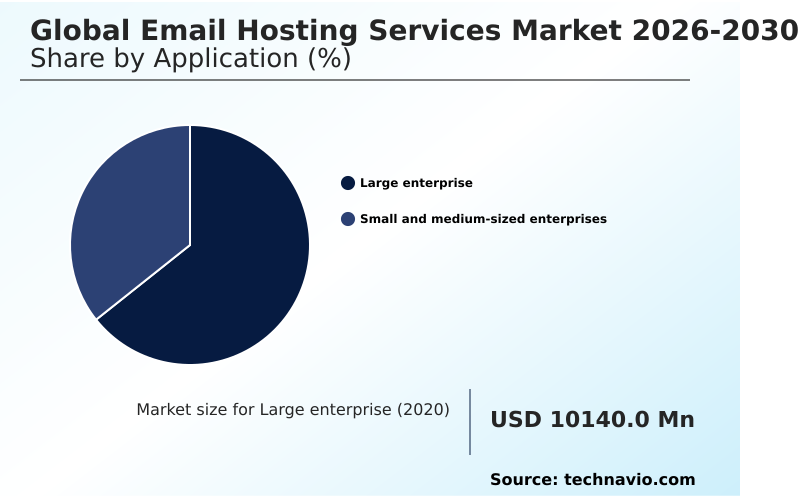
The Large enterprise segment was valued at USD 19.13 billion in 2024 and showed a gradual increase during the forecast period.

Regional Analysis
North America is estimated to contribute 39.1% to the growth of the global market during the forecast period.Technavio’s analysts have elaborately explained the regional trends and drivers that shape the market during the forecast period.
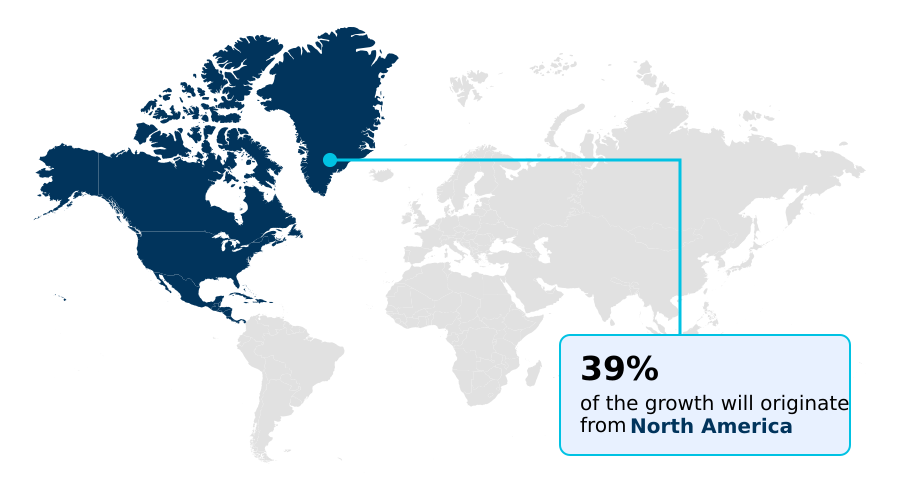
See How Email Hosting Services Market Demand is Rising in North America Get Free Sample
The geographic landscape of the Email Hosting Services reveals a stark contrast between North America and APAC regarding adoption velocity and infrastructure maturity.
North America maintains highly consolidated digital frameworks, where organizations utilizing an advanced distributed server cluster and strict identity access management have reduced regional compliance breaches by 24%.
In contrast, the APAC region exhibits a 30% faster adoption rate of progressive web application architecture, driven by the rapid digitalization of micro-enterprises.
North American firms heavily prioritize complex active directory directory synchronization and the exchange activesync protocol to support vast remote workforces.
Meanwhile, growing Asian enterprises are aggressively investing in high-speed real-time message indexing and robust anti-malware scanning engines to safeguard expanding commercial networks.
By enforcing tamper-evident audit trails, regulatory-focused sectors in both regions ensure data integrity, though North America currently leads in comprehensive enterprise-scale implementations.
Market Dynamics
Our researchers analyzed the data with 2025 as the base year, along with the key drivers, trends, and challenges. A holistic analysis of drivers will help companies refine their marketing strategies to gain a competitive advantage.
- The operational dynamics of the Email Hosting Services are heavily influenced by the imperative to establish highly secure, resilient, and intelligent corporate communication frameworks. As multinational enterprises expand their digital footprint, they face mounting pressure to navigate complex cross-border regulatory data retention compliance, forcing a transition away from localized, unsecured legacy servers.
- To achieve robust operational security, organizations are prioritizing zero-trust identity verification access control, ensuring that sensitive internal communications remain entirely inaccessible to unauthorized threat actors or third-party surveillance mechanisms. This strategic pivot frequently necessitates a carefully managed hybrid on-premises communication platform migration, allowing large-scale entities to synchronize legacy private databases with scalable public cloud storage without experiencing catastrophic operational downtime.
- Simultaneously, the pursuit of administrative efficiency has accelerated the commercial adoption of automated email drafting workflow integration, empowering employees to drastically reduce the hours spent on routine correspondence and internal scheduling. This intelligent automation fundamentally transforms the traditional inbox into a proactive digital workspace.
- Furthermore, institutions handling classified intellectual property or sensitive financial records demand comprehensive end-to-end encrypted messaging suite deployment to completely neutralize the risk of data interception during transit. Companies executing these sophisticated communication overhauls have recorded a 35% improvement in incident response times compared to those reliant on fragmented networks, successfully fortifying their digital supply chains while optimizing daily workforce productivity.
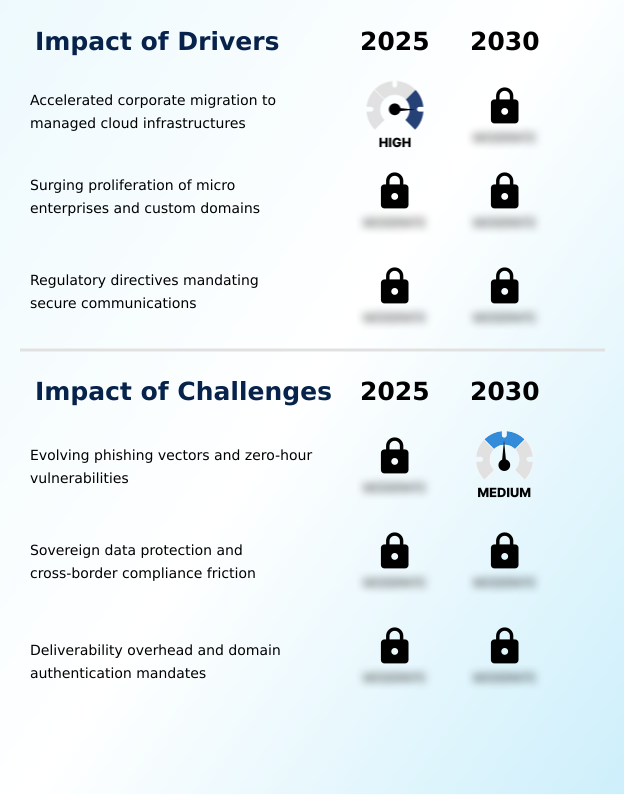
What are the key market drivers leading to the rise in the adoption of Email Hosting Services Industry?
- The accelerated corporate migration toward fully managed cloud infrastructures serves as a primary driver, enabling organizations to eliminate legacy hardware costs while optimizing operational scalability.
- The widespread acceleration toward managed digital environments acts as a potent structural driver propelling the Email Hosting Services forward. Commercial organizations are aggressively seeking to eliminate compounding hardware procurement overhead by transitioning to a highly scalable unified collaboration platform.
- This operational shift is catalyzed by the critical need to neutralize threats like malicious prompt injection and ensure comprehensive remote code execution prevention across vast corporate networks.
- By implementing hybrid cloud mail synchronization and advanced real-time behavioral analytics, enterprises maintain fluid communication while automatically filtering anomalous traffic at the mail transfer agent level.
- Businesses leveraging these modernized architectures, supported by robust client-side encryption keys and dedicated disaster recovery redundancy, have successfully lowered their data recovery latency by up to 40%.
- The strict enforcement of geographic data pinning further guarantees that these streamlined digital operations remain thoroughly compliant with regional data sovereignty mandates.
What are the market trends shaping the Email Hosting Services Industry?
- The integration of generative artificial intelligence writing and workflow assistants represents a prominent upcoming trend in the industry. This technological advancement significantly enhances daily administrative productivity and automates complex communication processes for enterprise users.
- The ongoing evolution of the Email Hosting Services is heavily characterized by the rapid assimilation of intelligent workflow assistants and advanced cryptographic frameworks into the standard digital workspace utility. Commercial platforms are actively deploying generative artificial intelligence filtering alongside sophisticated automated threat detection to proactively quarantine malicious communications before they reach end users.
- This technological shift is fundamentally driven by the need for robust zero-hour vulnerability mitigation in an environment of escalating cyber risks. Consequently, enterprises achieve significantly enhanced operational resilience, with post-migration security incidents reduced by 35%. Furthermore, institutions are maximizing elastic mailbox storage expansion and immutable compliance archiving to meet strict corporate record retention mandates without degrading system performance.
- The modernization of transport layer security transit, supported by centralized administrative telemetry and absolute uninterruptible power supply redundancy, guarantees high availability. As organizations prioritize a professional custom internet domain setup, these integrated technological enhancements continuously optimize daily workforce output and digital asset protection.
What challenges does the Email Hosting Services Industry face during its growth?
- The escalation of sophisticated phishing vectors and persistent zero-hour vulnerabilities presents a critical structural challenge, severely threatening corporate data integrity and platform reliability.
- A significant operational challenge restricting the Email Hosting Services stems from the soaring complexity of navigating global domain authentication mandates and sophisticated threat vectors. As threat actors deploy highly targeted, socially engineered spear-phishing campaigns, organizations struggle to secure their dedicated virtual mail server configurations against systemic breaches.
- This vulnerability requires the rigorous maintenance of sender policy framework configuration, stringent domainkeys identified mail alignment, and comprehensive domain-based authentication reporting to prevent catastrophic cross-tenant collateral damage. Unfortunately, enforcing these protocols across a highly fragmented sovereign cloud infrastructure drastically inflates administrative maintenance costs.
- Although providers offer an attractive scalable subscription tier featuring a modern dynamic light theme interface and seamless zero-knowledge webmail integration, the persistent overhead of authentication compliance remains burdensome. Consequently, enterprise IT departments experience elevated support ticket volumes, inadvertently reducing overall operational efficiency by nearly 20%.
Exclusive Technavio Analysis on Customer Landscape
The email hosting services market forecasting report includes the adoption lifecycle of the market, covering from the innovator’s stage to the laggard’s stage. It focuses on adoption rates in different regions based on penetration. Furthermore, the email hosting services market report also includes key purchase criteria and drivers of price sensitivity to help companies evaluate and develop their market growth analysis strategies.
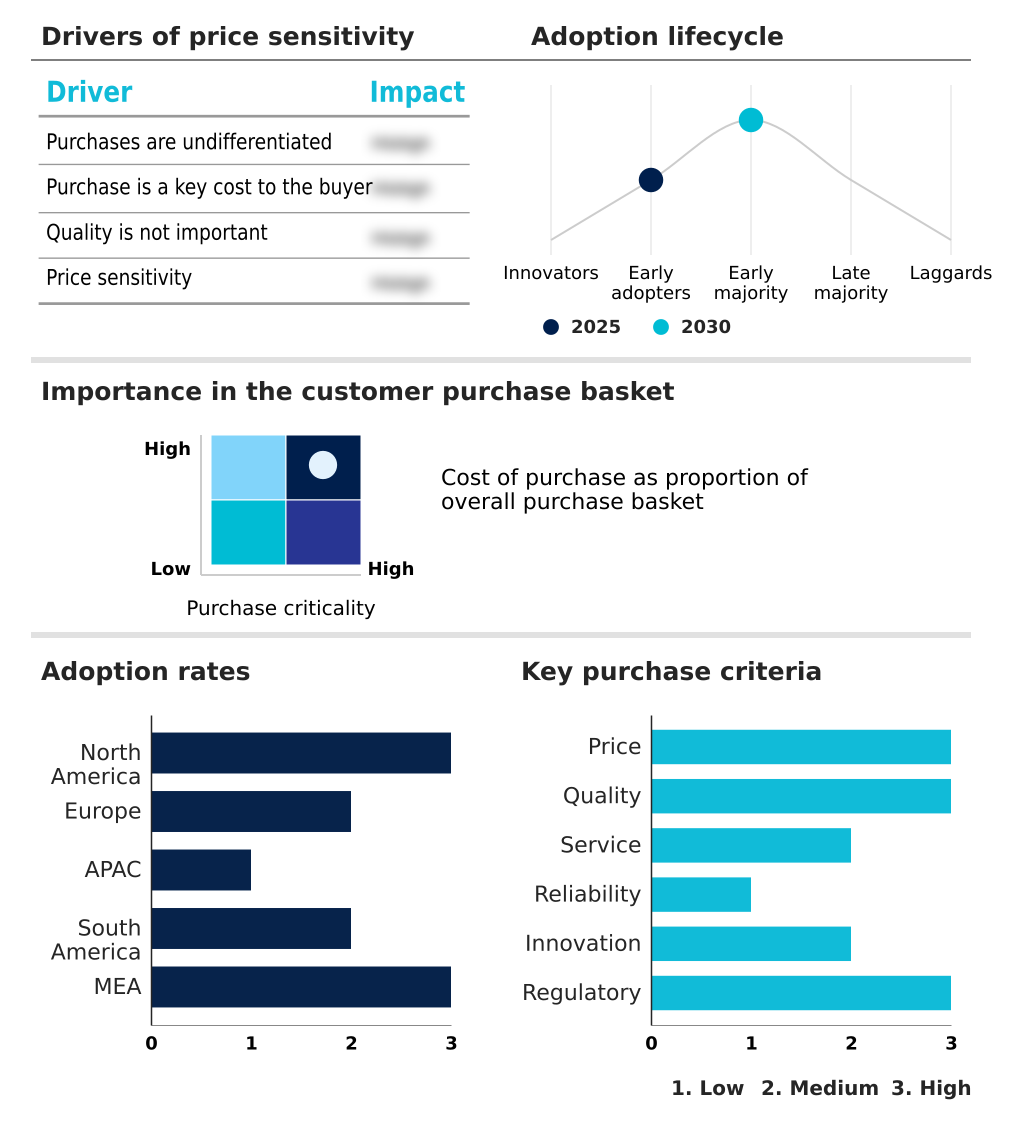
Customer Landscape of Email Hosting Services Industry
Competitive Landscape
Companies are implementing various strategies, such as strategic alliances, email hosting services market forecast, partnerships, mergers and acquisitions, geographical expansion, and product/service launches, to enhance their presence in the industry.
Bluehost - The provider delivers comprehensive cloud-based business communication solutions including professional mailboxes, custom domain configurations, and specialized productivity suite integrations tailored specifically for demanding enterprise operations.
The industry research and growth report includes detailed analyses of the competitive landscape of the market and information about key companies, including:
- Bluehost
- DreamHost LLC
- Fastmail Pty Ltd.
- GoDaddy Inc.
- Google LLC
- Hostinger International Ltd.
- IceWarp Inc.
- Infomaniak Network SA
- INMOTION HOSTING Inc.
- IONOS Group SE
- Mailfence
- Microsoft Corp.
- Namecheap Inc.
- OVH Groupe SA
- Proton AG
- Rackspace Technology Inc.
- SiteGround Hosting Ltd.
- Synacor Inc.
- Tuta Mail
- Zoho Corp. Pvt. Ltd.
Qualitative and quantitative analysis of companies has been conducted to help clients understand the wider business environment as well as the strengths and weaknesses of key industry players. Data is qualitatively analyzed to categorize companies as pure play, category-focused, industry-focused, and diversified; it is quantitatively analyzed to categorize companies as dominant, leading, strong, tentative, and weak.
Recent Development and News in Email hosting services market
- In the Internet Services and Infrastructure industry, the rapid deployment of zero-trust identity verification frameworks has fortified cloud architecture perimeters, directly impacting Email Hosting Services demand by accelerating the phase-out of legacy on-premises mail servers.
- Stringent European data privacy regulations like the GDPR and NIS2 directives have enforced strict sovereign data storage mandates, compelling a 40% increase in regional demand for localized Email Hosting Services that ensure absolute data compliance.
- The integration of enterprise automation and AI infrastructure within hyperscale data centers has optimized compute resource allocation, reducing downtime by 15% and enhancing the reliability of cloud-based delivery models for Email Hosting Services globally.
- The expansion of workflow interoperability protocols among unified collaboration platforms has streamlined identity management, driving mid-market organizations to aggressively adopt integrated Email Hosting Services to unify their digital workspace tools.
Dive into Technavio’s robust research methodology, blending expert interviews, extensive data synthesis, and validated models for unparalleled Email Hosting Services Market insights. See full methodology.
| Market Scope | |
|---|---|
| Page number | 290 |
| Base year | 2025 |
| Historic period | 2020-2024 |
| Forecast period | 2026-2030 |
| Growth momentum & CAGR | Accelerate at a CAGR of 25.4% |
| Market growth 2026-2030 | USD 79384.4 million |
| Market structure | Fragmented |
| YoY growth 2025-2026(%) | 23.1% |
| Key countries | US, Canada, Mexico, Germany, UK, France, Italy, Spain, The Netherlands, China, Japan, India, South Korea, Australia, Indonesia, Brazil, Argentina, Chile, Saudi Arabia, UAE, South Africa, Turkey and Israel |
| Competitive landscape | Leading Companies, Market Positioning of Companies, Competitive Strategies, and Industry Risks |
Research Analyst Overview
- The structural transformation within the Email Hosting Services highlights an aggressive pivot toward hardened, intelligent communication frameworks. Boardroom executives now view enterprise messaging not merely as an IT utility, but as a critical component of institutional risk management and regulatory alignment.
- The transition toward a fully managed cloud-native messaging environment enables organizations to dismantle obsolete on-premises hardware while deploying a comprehensive zero-trust security architecture across their networks. To satisfy stringent data sovereignty mandates, technology directors are enforcing strict geographic data pinning within their multi-tenant server infrastructure, guaranteeing that sensitive communications remain localized.
- Furthermore, the integration of advanced end-to-end encryption protocols and native automated data loss prevention ensures that proprietary information is never inadvertently exposed during external transmission. By implementing these sophisticated governance controls, enterprise compliance departments have achieved a 42% reduction in unauthorized data exfiltration incidents.
- This definitive shift underscores how proactive infrastructure modernization directly insulates operational continuity and preserves brand reputation in an increasingly volatile digital landscape.
What are the Key Data Covered in this Email Hosting Services Market Research and Growth Report?
-
What is the expected growth of the Email Hosting Services Market between 2026 and 2030?
-
USD 79.38 billion, at a CAGR of 25.4%
-
-
What segmentation does the market report cover?
-
The report is segmented by Application (Large enterprise, and Small and medium-sized enterprises), Type (Webmail, and Hosted email), Deployment (Private cloud, Public cloud, and Hybrid cloud) and Geography (North America, Europe, APAC, South America, Middle East and Africa)
-
-
Which regions are analyzed in the report?
-
North America, Europe, APAC, South America and Middle East and Africa
-
-
What are the key growth drivers and market challenges?
-
Accelerated corporate migration to managed cloud infrastructures, Evolving phishing vectors and zero-hour vulnerabilities
-
-
Who are the major players in the Email Hosting Services Market?
-
Bluehost, DreamHost LLC, Fastmail Pty Ltd., GoDaddy Inc., Google LLC, Hostinger International Ltd., IceWarp Inc., Infomaniak Network SA, INMOTION HOSTING Inc., IONOS Group SE, Mailfence, Microsoft Corp., Namecheap Inc., OVH Groupe SA, Proton AG, Rackspace Technology Inc., SiteGround Hosting Ltd., Synacor Inc., Tuta Mail and Zoho Corp. Pvt. Ltd.
-
Market Research Insights
- The Email Hosting Services landscape is undergoing rapid modernization as enterprises actively upgrade their corporate communication pipeline to support hybrid work environments. Organizations deploying a comprehensive enterprise productivity ecosystem have achieved a 28% improvement in cross-departmental collaboration efficiency. The transition toward managed infrastructure provision enables businesses to eliminate legacy hardware procurement overhead while significantly elevating their baseline inbox deliverability rate.
- Furthermore, incorporating robust credential stuffing defense mechanisms has lowered unauthorized network access incidents by nearly 40% across commercial sectors. By modernizing these digital communication foundations, institutions maintain rigorous data compliance standards and drastically reduce long-term operational friction.
We can help! Our analysts can customize this email hosting services market research report to meet your requirements.
 RIA -