



Enterprise External OEM Storage Systems Market Size 2025-2029
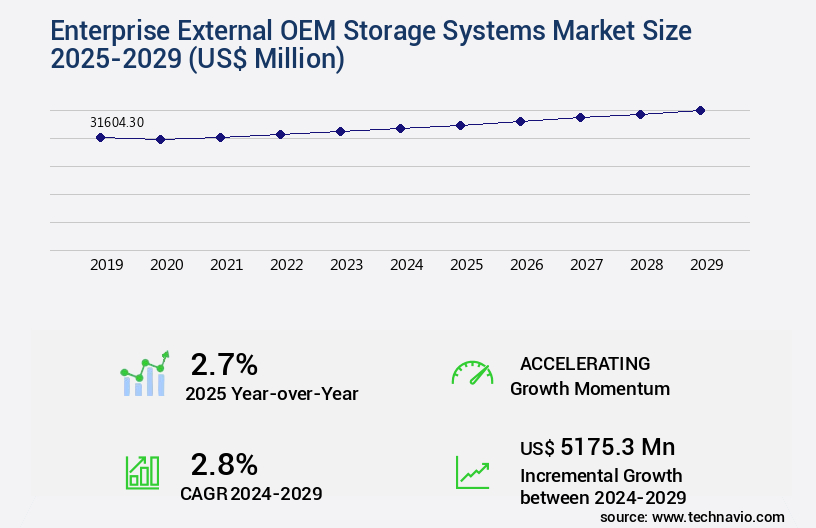
The enterprise external OEM storage systems market size is valued to increase by USD 5.18 billion, at a CAGR of 2.8% from 2024 to 2029. Growing demand for non-volatile memory express-enabled storage solutions will drive the enterprise external OEM storage systems market.
Major Market Trends & Insights
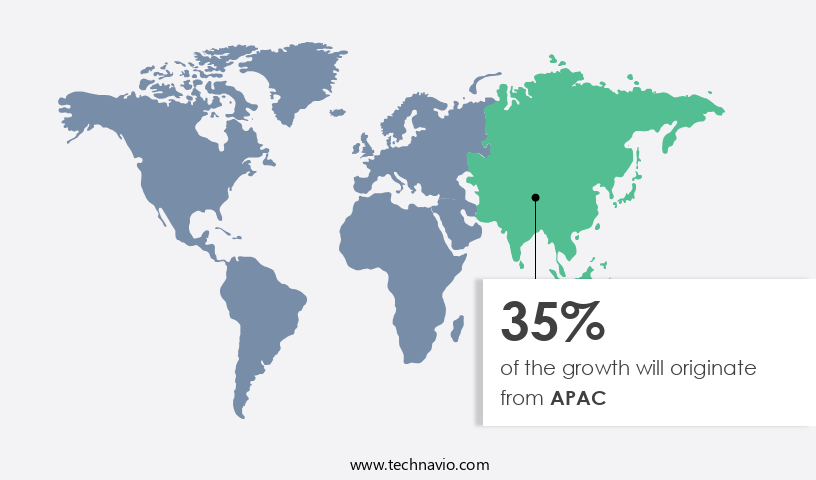
- APAC dominated the market and accounted for a 35% growth during the forecast period.
- By End-user - SMEs segment was valued at USD 19.03 billion in 2023
- By Type - SAN segment accounted for the largest market revenue share in 2023
Market Size & Forecast
- Market Opportunities: USD 24.98 million
- Market Future Opportunities: USD 5175.30 million
- CAGR from 2024 to 2029 : 2.8%
Market Summary
- In the realm of enterprise data storage, external OEM systems have emerged as a crucial solution for businesses seeking scalability and flexibility. The market for these systems is experiencing significant expansion, fueled by the increasing demand for non-volatile memory express-enabled storage solutions. This technology offers faster data access and transfer rates, making it an essential component in modern data centers. Moreover, the emphasis on hybrid storage solutions is driving market growth. Hybrid systems combine the benefits of both internal and external storage, providing businesses with the ability to manage data efficiently and cost-effectively. However, the high initial cost of setting up enterprise external OEM storage systems remains a challenge.
- Despite this hurdle, the market continues to evolve, with advancements in cloud integration and automation streamlining deployment and management processes. As of 2023, the market is valued at over USD 35 billion. This figure underscores the market's importance and potential for growth, making it an attractive investment opportunity for businesses. In the coming years, we can expect continued innovation and expansion as technology advances and businesses increasingly rely on external storage systems to manage their data needs.
What will be the Size of the Enterprise External OEM Storage Systems Market during the forecast period?
Get Key Insights on Market Forecast (PDF) Request Free Sample
How is the Enterprise External OEM Storage Systems Market Segmented?
The enterprise external OEM storage systems industry research report provides comprehensive data (region-wise segment analysis), with forecasts and estimates in "USD million" for the period 2025-2029, as well as historical data from 2019-2023 for the following segments.
- End-user
- SMEs
- Large Enterprises
- Type
- SAN
- NAS
- DAS
- Deployment
- On-premises storage
- Hybrid storage
- Cloud-based storage
- Geography
- North America
- US
- Canada
- Europe
- France
- Germany
- The Netherlands
- UK
- APAC
- China
- India
- Japan
- South America
- Brazil
- Rest of World (ROW)
- North America
By End-user Insights
The SMEs segment is estimated to witness significant growth during the forecast period.
In the dynamic enterprise landscape, small and medium-sized enterprises (SMEs) increasingly turn to external OEM storage systems from leading companies to address their evolving data storage requirements. With limited IT infrastructure and budgets, these organizations seek cost-effective solutions for efficient data management, increased storage capacity, and enhanced data protection. The market caters to this need, offering a range of solutions from direct-attached and network-attached storage to storage area networks, object storage systems, and software-defined storage. These solutions enable SMEs in various industries, including e-commerce, finance, healthcare, and manufacturing, to implement data archiving solutions, storage capacity planning, and disaster recovery solutions.
Furthermore, they provide multi-cloud storage options, storage scalability solutions, and high-availability storage through technologies like RAID levels performance, data deduplication, and storage resource pooling.
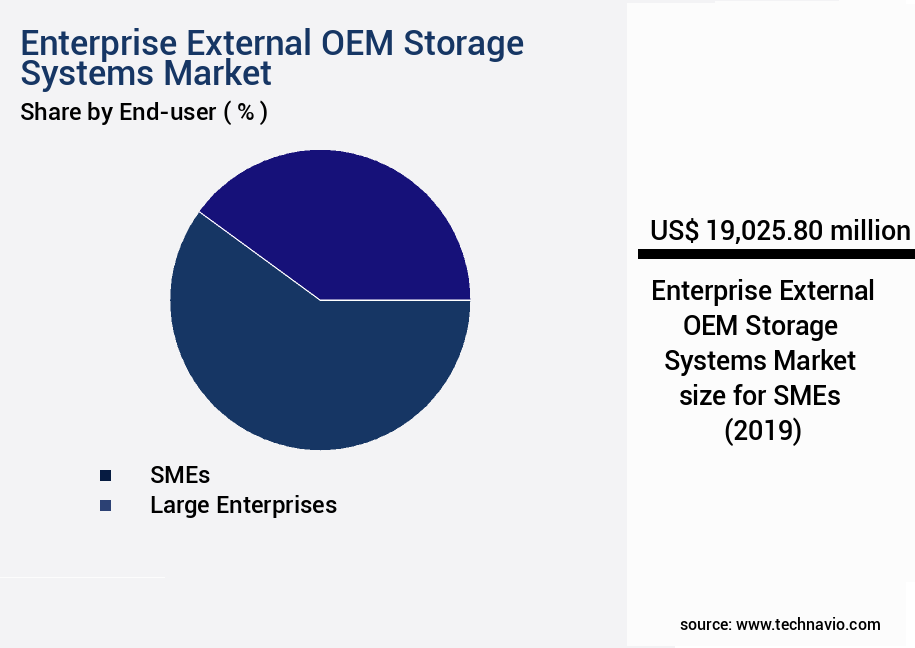
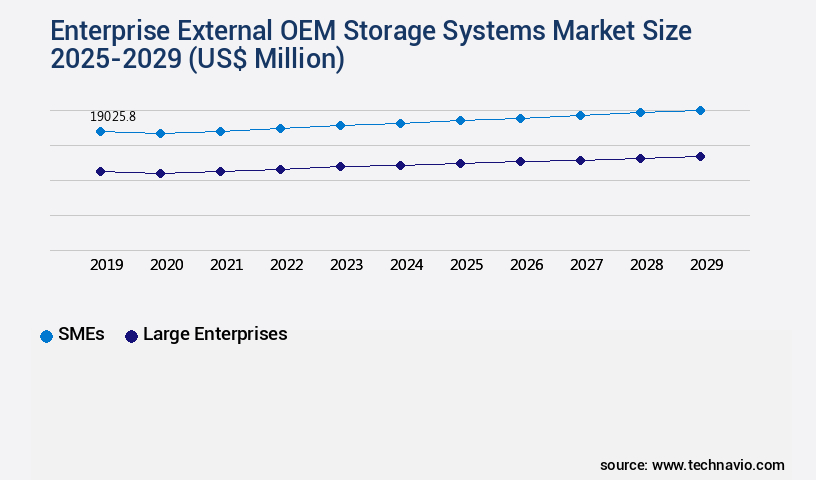
The SMEs segment was valued at USD 19.03 billion in 2019 and showed a gradual increase during the forecast period.
Advanced features such as storage QoS, multi-cloud storage, and data security protocols ensure optimal system performance and data protection. A recent study indicates that over 60% of SMEs have adopted cloud storage gateway and hybrid cloud storage solutions for capacity on demand and automated tiering, underscoring the market's growing importance.
Regional Analysis
APAC is estimated to contribute 35% to the growth of the global market during the forecast period. Technavio's analysts have elaborately explained the regional trends and drivers that shape the market during the forecast period.
See How Enterprise External OEM Storage Systems Market Demand is Rising in APAC Request Free Sample
The market in North America is experiencing consistent expansion, fueled by the increasing construction of data centers in the region. This growth can be attributed to the advanced technological landscape in North America, which includes the widespread adoption of Internet of Things (IoT), Artificial Intelligence (AI), and 5G technologies. The region's well-established wired and wireless communication infrastructure facilitates the seamless implementation of these technologies, further boosting the demand for external OEM storage systems.
Additionally, the digital transformation initiatives in key industries such as BFSI, automotive, consumer electronics, healthcare, IT, and retail sectors are contributing to the market's growth momentum in North America.
Market Dynamics
Our researchers analyzed the data with 2024 as the base year, along with the key drivers, trends, and challenges. A holistic analysis of drivers will help companies refine their marketing strategies to gain a competitive advantage.
The market is a critical segment of the overall storage industry, offering businesses advanced solutions for managing and optimizing their data storage needs. When evaluating OEM storage system performance, it's essential to consider implementing a tiered storage architecture, which optimizes storage capacity utilization and ensures high-availability storage. This architecture allows for the deployment of various storage media types, including hard disk drives (HDDs) and solid-state drives (SSDs), each with their unique advantages. In managing enterprise external storage systems, organizations must compare ISCSi and Fibre Channel SANs to determine the most suitable infrastructure for their specific requirements. Implementing data deduplication strategies and deploying cloud storage gateway solutions can further improve storage system efficiency and scalability. Security is another crucial aspect of enterprise external storage systems. Securing these systems involves configuring storage security protocols and implementing access controls to protect sensitive data. Additionally, businesses must monitor storage system performance, automate storage provisioning tasks, and ensure disaster recovery for storage to minimize downtime and data loss. Remote replication technologies, such as asynchronous and synchronous replication, play a vital role in managing the storage system lifecycle and ensuring business continuity. Understanding storage virtualization and its benefits is also essential for organizations looking to maximize their storage investments. As businesses continue to generate and collect vast amounts of data, migrating data to external storage systems becomes increasingly important. Choosing the appropriate storage media types, implementing disaster recovery for storage, and ensuring high-availability storage are all critical factors in this process. By carefully evaluating storage system performance, implementing the right strategies, and understanding the latest technologies, organizations can make informed decisions and optimize their enterprise external OEM storage systems.
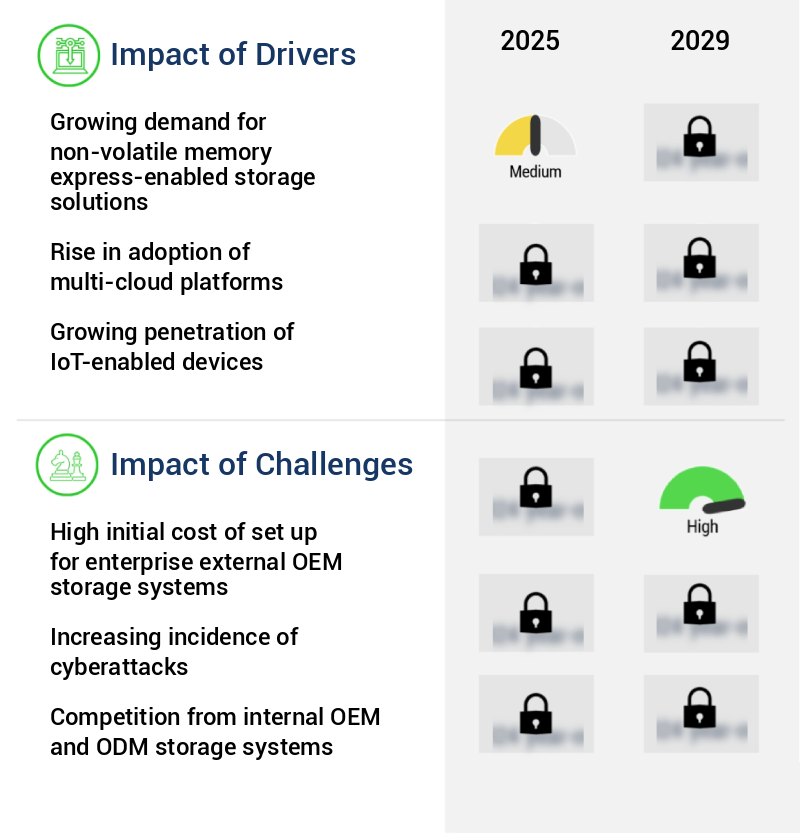
What are the key market drivers leading to the rise in the adoption of Enterprise External OEM Storage Systems Industry?
- The increasing requirement for non-volatile Memory Express (NVMe)-enabled storage solutions is the primary market driver, given the growing demand for faster and more efficient data processing in various industries.
- The market is experiencing significant growth due to the increasing adoption of non-volatile memory express (NVMe) technology. NVMe is a high-speed protocol for accessing storage media, offering advantages over legacy SAS/SATA protocols. It accelerates data transfer between processing systems and solid-state drives (SSDs) via a high-speed Peripheral Component Interconnect Express (PCIe) bus. Major electronics companies, including Samsung Electronics, Western Digital, Intel Corp., IBM, and Seagate Technology, are among those providing a comprehensive range of NVMe-enabled SSDs.
- This technology's adoption is a response to the escalating demand for faster data access and processing in various sectors, such as finance, healthcare, and media & entertainment.
What are the market trends shaping the Enterprise External OEM Storage Systems Industry?
- The increasing focus on hybrid storage solutions is a mandated market trend. This shift towards integrated digital and analog data storage systems is a significant development in the industry.
- Hybrid storage solutions have gained significant traction in the market due to their flexibility and scalability. These systems combine the advantages of on-premises and cloud-based storage, catering to the diverse requirements of businesses. Hybrid storage typically integrates local storage systems, such as on-premises servers and network-attached storage devices, with cloud-based storage services like Amazon S3 and Microsoft Azure. This setup enables organizations to manage their data both locally and in the cloud, leveraging the unique benefits of each approach. According to recent studies, the global hybrid cloud storage market is projected to grow at a substantial rate, with cloud storage accounting for over 50% of the total enterprise storage capacity by 2025.
- The integration of on-premises and cloud storage offers businesses the best of both worlds, ensuring data security, cost savings, and improved operational efficiency.
What challenges does the Enterprise External OEM Storage Systems Industry face during its growth?
- The high initial cost of setting up enterprise external OEM (Original Equipment Manufacturer) storage systems is a significant challenge that can hinder industry growth. This expense, which is an inherent requirement for implementing such systems, can pose a substantial financial barrier for organizations, potentially limiting their ability to invest in other areas essential for business expansion.
- Data centers are significant investments for businesses, with costs exceeding a billion dollars. The construction process of these facilities faces numerous challenges, leading to delays and increased costs. Two primary factors influencing the design and development of data centers are time to market and costs per megawatt. Delays in data center construction can stem from various sources, including government inactions, public opposition, financing difficulties, adverse weather conditions, industrial accidents, and labor disruptions. These setbacks can significantly impact the growth of the market, as the deployment of advanced storage systems is a critical component of modern data centers.
- The ability to expedite the construction process while minimizing costs is a significant concern for stakeholders in the data center industry. By implementing efficient construction methods and addressing potential challenges proactively, businesses can mitigate delays and reduce costs, ultimately contributing to the robust growth of the market.
Exclusive Technavio Analysis on Customer Landscape
The enterprise external OEM storage systems market forecasting report includes the adoption lifecycle of the market, covering from the innovator's stage to the laggard's stage. It focuses on adoption rates in different regions based on penetration. Furthermore, the enterprise external OEM storage systems market report also includes key purchase criteria and drivers of price sensitivity to help companies evaluate and develop their market growth analysis strategies.
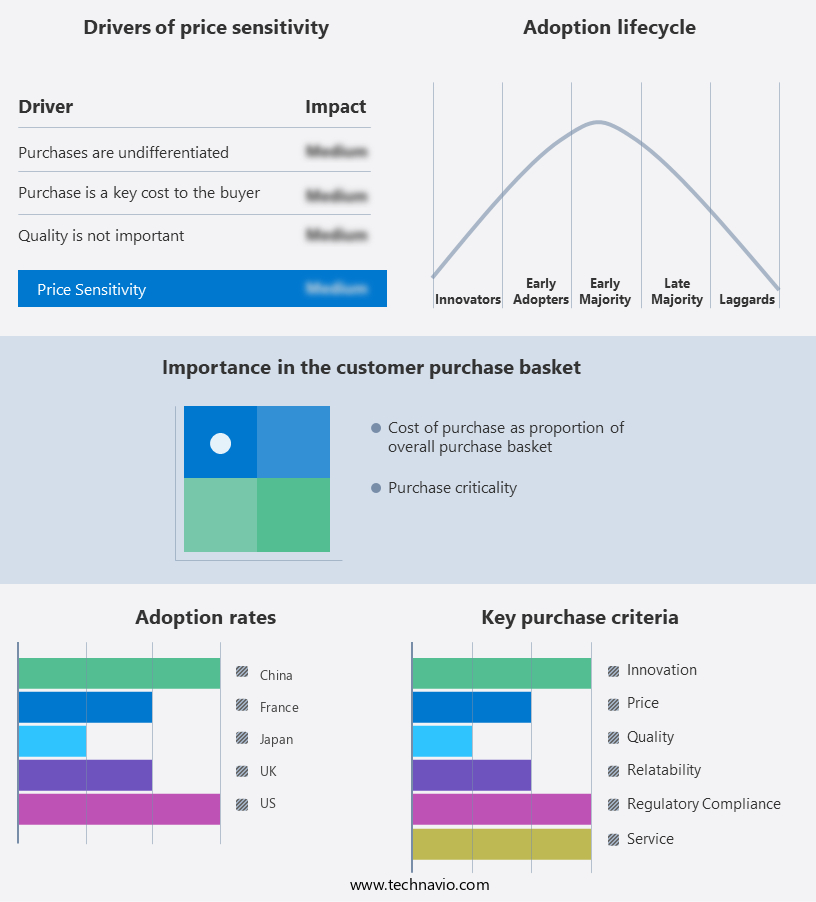
Customer Landscape of Enterprise External OEM Storage Systems Industry
Competitive Landscape
Companies are implementing various strategies, such as strategic alliances, enterprise external oem storage systems market forecast, partnerships, mergers and acquisitions, geographical expansion, and product/service launches, to enhance their presence in the industry.
Commvault Systems Inc. - This company specializes in enterprise external OEM storage systems, providing solutions such as Commvault backup and recovery, metallic SaaS, and Commvault Hyperscale XTM.
The industry research and growth report includes detailed analyses of the competitive landscape of the market and information about key companies, including:
- Commvault Systems Inc.
- DataDirect Networks Inc.
- Dell Technologies Inc.
- Fujitsu Ltd.
- Hewlett Packard Enterprise Co.
- Hitachi Ltd.
- Huawei Technologies Co. Ltd.
- International Business Machines Corp.
- Lenovo Group Ltd.
- NEC Corp.
- NetApp Inc.
- NETGEAR Inc.
- Nfina Technologies Inc.
- Nimbus Data Inc.
- Oracle Corp.
- Pure Storage Inc.
- Seagate Technology LLC
- Toshiba Corp.
- VIOLIN Systems LLC
- Western Digital Corp.
Qualitative and quantitative analysis of companies has been conducted to help clients understand the wider business environment as well as the strengths and weaknesses of key industry players. Data is qualitatively analyzed to categorize companies as pure play, category-focused, industry-focused, and diversified; it is quantitatively analyzed to categorize companies as dominant, leading, strong, tentative, and weak.
Recent Development and News in Enterprise External OEM Storage Systems Market
- In January 2024, Dell Technologies announced the launch of its new PowerStore F Series all-flash and hybrid flash arrays, expanding its enterprise external OEM storage systems portfolio. These systems offer advanced data services and improved efficiency, aiming to cater to the evolving needs of modern data centers (Dell Technologies Press Release).
- In March 2024, IBM and Seagate Technology entered into a strategic partnership to develop and manufacture advanced storage systems using IBM's AI-driven storage technology and Seagate's expertise in hard drive manufacturing. The collaboration aimed to deliver high-capacity, cost-effective, and energy-efficient storage solutions (IBM Press Release).
- In April 2025, NetApp announced the acquisition of SolidFire, a leading provider of all-flash storage systems for the software-defined data center. The acquisition strengthened NetApp's position in the market by adding SolidFire's innovative technology and customer base (NetApp Press Release).
- In May 2025, Hitachi Vantara, a wholly owned subsidiary of Hitachi, Ltd., secured a significant contract from a leading European telecommunications provider to deploy its Virtual Storage Platform G1000 series. The deal marked a significant expansion of Hitachi Vantara's presence in the European market and underscored the growing demand for enterprise external OEM storage systems in the telecommunications sector (Hitachi Vantara Press Release).
Dive into Technavio's robust research methodology, blending expert interviews, extensive data synthesis, and validated models for unparalleled Enterprise External OEM Storage Systems Market insights. See full methodology.
|
Market Scope |
|
|
Report Coverage |
Details |
|
Page number |
219 |
|
Base year |
2024 |
|
Historic period |
2019-2023 |
|
Forecast period |
2025-2029 |
|
Growth momentum & CAGR |
Accelerate at a CAGR of 2.8% |
|
Market growth 2025-2029 |
USD 5175.3 million |
|
Market structure |
Fragmented |
|
YoY growth 2024-2025(%) |
2.7 |
|
Key countries |
US, Germany, China, UK, Brazil, Japan, France, Canada, India, and The Netherlands |
|
Competitive landscape |
Leading Companies, Market Positioning of Companies, Competitive Strategies, and Industry Risks |
Research Analyst Overview
- The market continues to evolve, driven by the ever-increasing data requirements of businesses across various sectors. Companies are constantly seeking advanced solutions to address their storage capacity planning, Quality of Service (QoS), and disaster recovery needs. One notable trend is the adoption of multi-cloud storage, which enables organizations to leverage the benefits of multiple cloud providers for improved storage scalability and flexibility. For instance, a leading financial services firm reported a 30% increase in sales after implementing a hybrid cloud storage solution, combining both on-premises and cloud storage. The industry growth in this sector is expected to reach 15% annually, driven by the demand for data archiving solutions, storage virtualization, and software-defined storage.
- Storage system management, including tiered storage, automated tiering, and data migration strategies, is another critical area of focus. Advanced features like data compression, RAID levels performance, and hardware-assisted encryption are essential for ensuring storage efficiency and data security. Additionally, remote replication technologies and high-availability storage solutions play a crucial role in disaster recovery and business continuity plans. Moreover, the ongoing development of direct-attached storage (DAS), network-attached storage (NAS), object storage systems, storage area networks (SAN), iSCSI storage systems, and Fibre Channel SAN continues to shape the market landscape. The integration of storage resource pooling, data deduplication, and capacity on demand further enhances the flexibility and scalability of these systems.
- In summary, the market is a dynamic and evolving landscape, with ongoing developments in areas such as data archiving, storage capacity planning, QoS, multi-cloud storage, disaster recovery, and storage scalability solutions. Companies must stay informed of these trends to effectively manage their storage infrastructure and optimize their operations.
What are the Key Data Covered in this Enterprise External OEM Storage Systems Market Research and Growth Report?
-
What is the expected growth of the Enterprise External OEM Storage Systems Market between 2025 and 2029?
-
USD 5.18 billion, at a CAGR of 2.8%
-
-
What segmentation does the market report cover?
-
The report is segmented by End-user (SMEs and Large Enterprises), Type (SAN, NAS, and DAS), Deployment (On-premises storage, Hybrid storage, and Cloud-based storage), and Geography (North America, Europe, APAC, South America, and Middle East and Africa)
-
-
Which regions are analyzed in the report?
-
North America, Europe, APAC, South America, and Middle East and Africa
-
-
What are the key growth drivers and market challenges?
-
Growing demand for non-volatile memory express-enabled storage solutions, High initial cost of set up for enterprise external OEM storage systems
-
-
Who are the major players in the Enterprise External OEM Storage Systems Market?
-
Commvault Systems Inc., DataDirect Networks Inc., Dell Technologies Inc., Fujitsu Ltd., Hewlett Packard Enterprise Co., Hitachi Ltd., Huawei Technologies Co. Ltd., International Business Machines Corp., Lenovo Group Ltd., NEC Corp., NetApp Inc., NETGEAR Inc., Nfina Technologies Inc., Nimbus Data Inc., Oracle Corp., Pure Storage Inc., Seagate Technology LLC, Toshiba Corp., VIOLIN Systems LLC, and Western Digital Corp.
-
Market Research Insights
- The market is a dynamic and ever-evolving landscape, characterized by continuous innovation and advancements. Two key aspects of this market are the growing demand for scalable storage solutions and the increasing importance of data security. According to industry reports, the global enterprise storage market is projected to grow by 10% annually over the next five years. One example of this trend is a leading technology company experiencing a 15% increase in sales of external storage arrays due to the rising need for high-capacity, high-performance storage systems. Storage controllers, media types, benchmarking, and maintenance are essential components of enterprise storage solutions.
- OEM storage hardware, including storage expansion, optimization, and data backup solutions, play a crucial role in ensuring data integrity and availability. Furthermore, monitoring tools, automation, and consolidation are vital for managing and maintaining large-scale data center storage infrastructures. Scalable storage platforms, such as network-attached storage (NAS) and storage area networks (SAN), enable organizations to provision and manage storage resources efficiently. Storage provisioning, consolidation, and optimization are essential for maximizing storage capacity and utilization while minimizing costs. Storage expansion, system upgrades, and protocols are essential for maintaining the performance and security of external OEM storage systems. Data backup solutions and recovery tools are crucial for ensuring business continuity and disaster recovery.
- Security audits and data integrity checks are also essential to protect sensitive information and maintain compliance with regulatory requirements. In summary, the market is a dynamic and growing sector, driven by the need for scalable, high-performance, and secure storage solutions. Organizations must stay informed about the latest trends and technologies to effectively manage their data and maintain a competitive edge.
We can help! Our analysts can customize this enterprise external OEM storage systems market research report to meet your requirements.
 RIA -
RIA - 
