



Europe Vehicle Rental Market Size 2025-2029
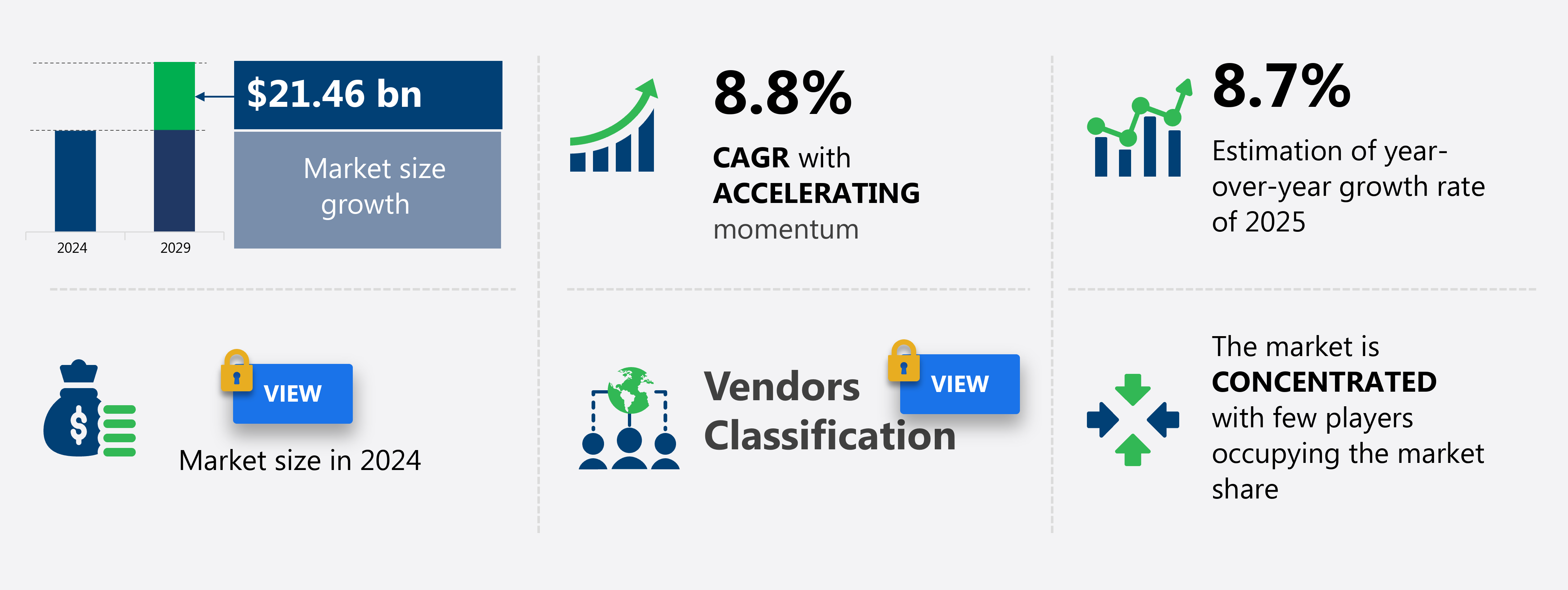
The Europe vehicle rental market size is forecast to increase by USD 21.46 billion, at a CAGR of 8.8% between 2024 and 2029.
- The market is experiencing significant growth, driven by several key factors. Firstly, there is a growing awareness and preference for car rental among European consumers, particularly among the younger demographic. Secondly, the increasing dependence on technology-driven rental vehicle services is helping to expand the customer base and improve the overall rental experience. Additionally, the rising number of car-sharing services is contributing to the market growth, providing a more flexible and affordable option for consumers. The market is also facing challenges, such as increasing competition and regulatory compliance, which companies must navigate to remain competitive and profitable.
What will be the Europe Vehicle Rental Market Size During the Forecast Period?
- The Europe Vehicle Rental Market growth, caters to the needs of both business and leisure travelers. Automobiles are rented through both online channels and offline stores, with Rental Car services being the key players. Travelers prefer renting personal vehicles for flexibility and convenience during global travel or local usage. Car damage repair and insurance compensation policies are essential considerations for car rental operators. Entertainment systems and Internet booking applications have become essential features for car rentals, enhancing the user experience. Airport transport is a major segment, while economy cars and executive cars cater to different customer segments.
- The upper middle-class demographic serves as a crucial consumer segment, with urbanization and rising internet penetration fueling demand in the vehicle rental market. Advancements in vehicle rental technology are optimizing operations, allowing companies to efficiently manage fleet management, customer bookings, and rental logistics. Airports continue to be prime locations for passenger car rentals and light truck rental, given their high traveler volume. The surge in leisure travel and bleisure (business and leisure combined), along with the trend of global commuting, is amplifying the demand for rental vehicles, including short-term car rental and long-term car rental services. Additionally, the adoption of electric vehicle rentals and eco-friendly car rental options is reshaping the industry, particularly in regions like Europe, where light trucks for rent are gaining traction. As consumers increasingly opt for rental solutions over ownership, the market is poised for sustained growth.
How is this market segmented and which is the largest segment?
The market research report provides comprehensive data (region-wise segment analysis), with forecasts and estimates in "USD billion" for the period 2025-2029, as well as historical data from 2019-2023 for the following segments.
- Distribution Channel
- Offline
- Online
- Type
- Short term
- Long term
- Geography
- Europe
- Germany
- UK
- France
- Italy
- Europe
By Distribution Channel Insights
- The offline segment is estimated to witness significant growth during the forecast period.
Offline distribution channels in the market include rental offices, travel agents, and hotel partnerships. These channels provide a tangible and convenient option for customers who may not feel comfortable using online platforms or who lack access to them. Additionally, offline rentals often attract spontaneous travelers or those in need of immediate assistance, as they can simply visit a rental office and secure a vehicle on the spot.
Travel agencies also play a significant role in the offline segment. Collaborating with these agencies allows vehicle rental companies to reach a wider audience, particularly tourists and business travelers, who often rely on travel agents for comprehensive travel services. Hotels also contribute to the offline distribution of rental vehicles. Many hotels partner with car rental companies to offer on-site services, enabling guests to book transportation directly through hotel concierges. These factors combined are expected to drive growth in the vehicle rental market in Europe during the forecast period.

Get a glance at the market report of share of various segments Request Free Sample
Market Dynamics
Our market researchers analyzed the data with 2024 as the base year, along with the key drivers, trends, and challenges. A holistic analysis of drivers will help companies refine their marketing strategies to gain a competitive advantage.
What are the key market drivers leading to the rise in the adoption of the market?
Growing awareness about rental cars among European people is the key driver of the market.
- The market is experiencing significant growth due to shifting consumer preferences towards mobility solutions. The trend towards sustainability and the need for flexibility and affordability have led an increasing number of Europeans to opt for renting automobiles instead of owning personal vehicles. Rental Car services offer travelers access to a wide selection of vehicles without the long-term financial commitment. The rise of online channels and mobile apps has made the rental process more convenient than ever before. Additionally, the availability of entertainment systems, global positioning systems, Wi-Fi networks, and insurance compensation policies add to the appeal.
- Government policies encouraging carpooling and the growth of ride-hailing services, such as taxis, have also contributed to the expansion of the Rental Car industry. The market caters to various segments, including business professionals, self-driven, and chauffeur-driven options. International and domestic companies offer rental durations ranging from short-term to long-term, with a diverse fleet that includes luxury, executive, economy, SUVs, and more. Fuel consumption and vehicle emissions are essential considerations, with many companies focusing on environmental conservation. The upper-middle-class group is a significant consumer base for this market.
What are the Europe Vehicle Rental market trends ?
Growing dependence on technology-driven rental vehicle services to increase customer base is the upcoming trend in the market.
- Vehicle rental services in Europe have witnessed significant advancements, with operators leveraging technology to enhance customer convenience. Online channels, including websites and mobile apps, have become the preferred mode of booking for travelers seeking to rent automobiles for personal use or business purposes. Rental Car industry players, such as Enterprise Rent-A-Car and National Rental Car, are investing in digital platforms to offer real-time vehicle availability, insurance compensation policies, and features like entertainment systems, global positioning systems, and Wi-Fi networks. The urban population's growing preference for self-driven vehicles, coupled with the increasing popularity of carpooling and taxis, has led to a rise in demand for rental services.
- Government policies promoting environmental conservation and reducing vehicle emissions are also driving the market. Rental durations range from short-term to long-term, catering to various customer segments, including business professionals and the upper-middle-class group. Luxury, Executive, Economy, and SUV rentals are popular choices based on comfort and fuel consumption preferences. Rental branch locations offer both self-driven and chauffeur-driven options, while international and domestic companies compete to provide the most comprehensive rental solutions.
What challenges does the market face during the growth?
Rising number of car-sharing services is a key challenge affecting the market growth.
- The market encompasses the rental of various types of automobiles, including cars, motorcycles, and Recreational Vehicles (RVs), through both online and offline channels. Rental Car services cater to travelers seeking personal vehicles for short-term or long-term use. The industry offers various classes, such as Luxury, Executive, Economy, SUVs, and fuel-efficient vehicles, catering to diverse customer segments. Car damage repair and insurance compensation policies are crucial aspects of the Rental Car industry. Modern vehicles come equipped with entertainment systems, global positioning systems, Wi-Fi networks, and other advanced technologies to enhance the customer experience. Government policies, environmental conservation, and vehicle emissions are increasingly influencing the industry, leading to the emergence of vehicle-sharing services.
- Taxis, carpooling, and ride-hailing services are alternative mobility solutions gaining popularity. Business professionals often prefer Self-Driven or Chauffeur-Driven rental services for convenience and comfort. International and domestic companies dominate the market, with Enterprise Rent-A-Car and National Rental Car being notable players. Websites, mobile apps, and smartphone-based applications facilitate the rental process, offering flexibility and ease. The rental duration can range from hours to months, with options for short-term and long-term rentals at various rental branches.
Exclusive Customer Landscape
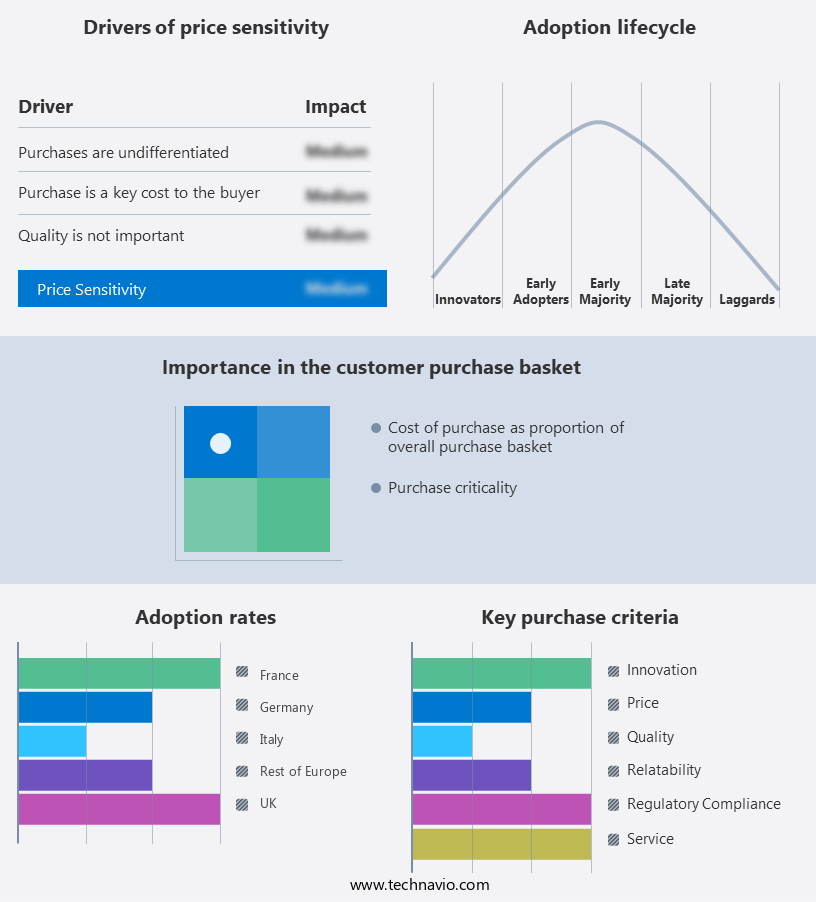
The market forecasting report includes the adoption lifecycle of the market, covering from the innovator's stage to the laggard's stage. It focuses on adoption rates in different regions based on penetration. Furthermore, the market report also includes key purchase criteria and drivers of price sensitivity to help companies evaluate and develop their market growth analysis strategies.
Customer Landscape
Key Companies & Market Insights
Companies are implementing various strategies, such as strategic alliances, market forecast, partnerships, mergers and acquisitions, geographical expansion, and product/service launches, to enhance their presence in the market.
Avis Budget Group Inc. - The company offers vehicle rental services under the brands like Avis Car Rental and Budget Rent a Car.
The market research and growth report includes detailed analyses of the competitive landscape of the market and information about key companies, including:
- BNP Paribas SA
- City Vehicle Rentals Ltd.
- Enterprise Holdings Inc.
- Europcar Group UK Ltd.
- Heisterkamp Transportation Solutions
- Hertz Global Holdings Inc.
- LeasePlan Corp. NV
- Petit Forestier
- SIXT SE
- TIP Trailer Services Management B.V.
Qualitative and quantitative analysis of companies has been conducted to help clients understand the wider business environment as well as the strengths and weaknesses of key market players. Data is qualitatively analyzed to categorize companies as pure play, category-focused, industry-focused, and diversified; it is quantitatively analyzed to categorize companies as dominant, leading, strong, tentative, and weak.
Latest Market Development and News
-
In January 2024, Germany-based car rental company Sixt announced plans to acquire 250,000 vehicles from Stellantis for use across Europe and North America by 2026.
-
In June 2023, Europcar partnered with the BringOz logistics platform to digitize internal processes and automate vehicle movement.
-
In May 2023, Bolt entered into leasing framework agreements totaling â¬126 million with Luminor and Swedbank to expand its car-sharing service, Bolt Drive, in the Baltic countries.
-
In December 2023, Sixt announced it was phasing out Tesla electric rental cars from its fleets due to reduced resale costs.
Research Analyst Overview
The market caters to the demand for mobility solutions among travelers and business professionals. Rental Car services offer personal vehicles for both short-term and long-term use, available through online channels and offline rental branches. Renting a car is popular among urban populations for various reasons, including convenience, comfort, and cost-effectiveness. Rental Car industry players provide various offerings, such as entertainment systems, global positioning systems, Wi-Fi networks, and insurance compensation policies for car damage repair. Government policies and environmental conservation initiatives influence the industry, with a focus on reducing vehicle emissions.
Self-Driven and Chauffeur-Driven options are available. Taxis, carpooling, and ride-hailing services are alternative transportation methods that compete with the Rental Car industry. Websites, mobile apps, and smartphone-based applications are essential tools for customers to make reservations and manage their rental experience. Factors like rental duration, rental branch locations, and vehicle type influence customer preferences. Business travelers and the upper-middle-class group are significant customer segments.
|
Europe Vehicle Rental Market Scope |
|
|
Report Coverage |
Details |
|
Page number |
151 |
|
Base year |
2024 |
|
Historic period |
2019-2023 |
|
Forecast period |
2025-2029 |
|
Growth momentum & CAGR |
Accelerate at a CAGR of 8.8% |
|
Market Growth 2025-2029 |
USD 21.46 billion |
|
Market structure |
Concentrated |
|
YoY growth 2024-2025(%) |
8.7 |
|
Key countries |
Germany, UK, France, Italy, and Rest of Europe |
|
Competitive landscape |
Leading Companies, Market Positioning of Companies, Competitive Strategies, and Industry Risks |
What are the Key Data Covered in this Market Research and Growth Report?
- CAGR of the market during the forecast period
- Detailed information on factors that will drive the market growth and forecasting between 2025 and 2029
- Precise estimation of the size of the market and its contribution of the market in focus to the parent market
- Accurate predictions about upcoming market growth and trends and changes in consumer behaviour
- Growth of the market across Europe
- Thorough analysis of the market's competitive landscape and detailed information about companies
- Comprehensive analysis of factors that will challenge the growth of market companies
We can help! Our analysts can customize this market research report to meet your requirements.
 RIA -
RIA - 
