


Europe Express Delivery Market Size 2026-2030
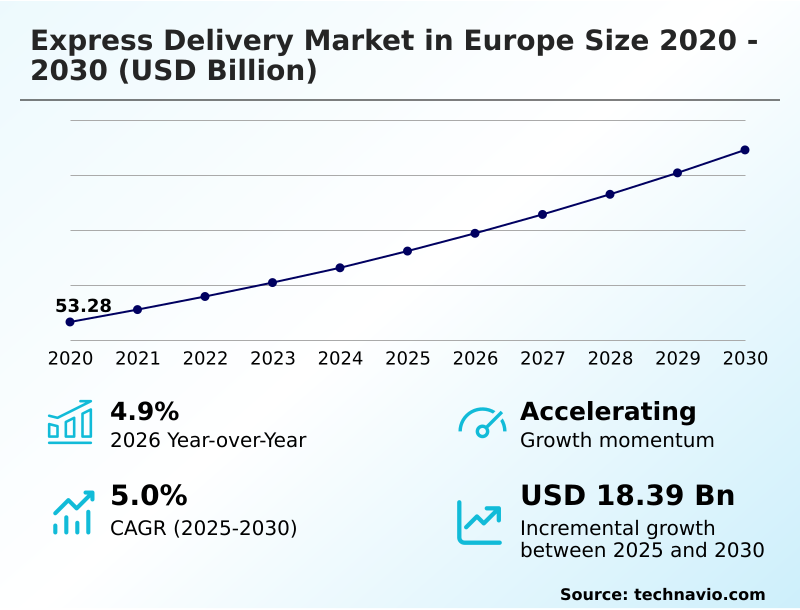
The europe express delivery market size is valued to increase by USD 18.39 billion, at a CAGR of 5% from 2025 to 2030. Unrelenting expansion of e-commerce will drive the europe express delivery market.
Major Market Trends & Insights
- By Application - Domestic segment was valued at USD 42.67 billion in 2024
- By Type - B2B segment accounted for the largest market revenue share in 2024
Market Size & Forecast
- Market Opportunities: USD 31.27 billion
- Market Future Opportunities: USD 18.39 billion
- CAGR from 2025 to 2030 : 5%
Market Summary
- The Express Delivery Market in Europe is undergoing a period of intense structural transformation driven by permanent shifts in omnichannel retail architectures. Surging e-commerce volumes act as a primary market driver, compelling businesses to adopt decentralized inventory positioning to ensure rapid fulfillment.
- In a real-world supply chain scenario, major retailers are actively bypassing traditional mega-warehouses in favor of highly automated urban distribution nodes, which dramatically shortens the final transit leg and accelerates localized dispatch. These localized fulfillment strategies have demonstrated measurable success, with inventory turnaround speeds improved by 35% compared to legacy centralized distribution models.
- However, severe labor shortages and rising hourly wage pressures present a formidable challenge, straining operational capacities during peak commercial seasons. Organizations are aggressively combatting these constraints by integrating advanced induction systems to reduce manual dependency. Ultimately, optimizing final-mile logistics remains the most critical determinant of long-term profitability within the sector.
- The transition toward intelligent, data-driven dispatch networks continues to redefine competitive standards and operational resilience across all major delivery corridors.
What will be the Size of the Europe Express Delivery Market during the forecast period?
Get Key Insights on Market Forecast (PDF) Get Free Sample
How is the Europe Express Delivery Market Segmented?
The europe express delivery industry research report provides comprehensive data (region-wise segment analysis), with forecasts and estimates in "USD million" for the period 2026-2030, as well as historical data from 2020-2024 for the following segments.
- Application
- Domestic
- International
- Type
- B2B
- B2C
- C2C
- Mode of transportation
- Road
- Air
- Sea
- Geography
- Europe
- Germany
- France
- UK
- Spain
- Europe
By Application Insights
The domestic segment is estimated to witness significant growth during the forecast period.
Domestic operations within the Express Delivery Market in Europe 2026-2030 represent the highest volume segment, continuously evolving to meet stringent corporate fulfillment requirements.
Shippers increasingly rely on telematics integration and advanced driver assistance systems to monitor and optimize dense national routes. These technological upgrades have allowed leading fleets to report that delivery precision improved by 14% compared to legacy tracking methods.
Additionally, the adoption of automated manifest systems and electronic proof of delivery accelerates localized terminal processing, driving a 22% increase in handling speed over manual logging.
Complex requirements, such as secure high-value transport and heavy-freight transportation, are seamlessly managed through sophisticated omnichannel logistics integration.
By leveraging strategic customs bonded warehousing even within national borders for staged distribution, companies effectively align high-speed local logistics with broader supply chain stability, fundamentally transforming domestic freight execution.
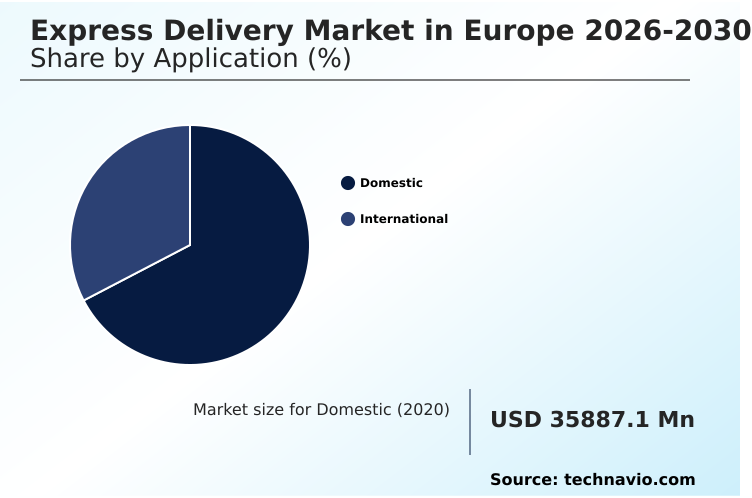
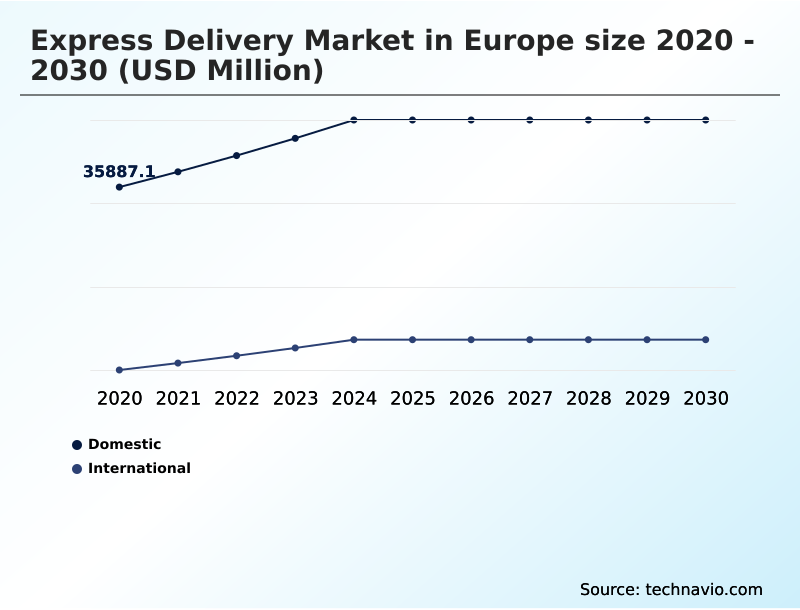
The Domestic segment was valued at USD 42.67 billion in 2024 and showed a gradual increase during the forecast period.
Market Dynamics
Our researchers analyzed the data with 2025 as the base year, along with the key drivers, trends, and challenges. A holistic analysis of drivers will help companies refine their marketing strategies to gain a competitive advantage.
- The structural evolution of the Express Delivery sector requires a meticulous approach to technological integration and operational planning. As supply chain complexities escalate, industry participants are heavily investing in last-mile logistics optimization strategies to mitigate urban congestion and meet tightening consumer timeframes.
- For instance, the accelerated automated parcel lockers infrastructure deployment has fundamentally shifted delivery dynamics, yielding a nearly 30% greater first-attempt success ratio than traditional doorstep deliveries. This shift significantly curtails redundant transit costs and limits environmental exposure for logistics providers. Simultaneously, specialized industrial segments demand highly rigorous compliance and asset protection protocols.
- The integration of temperature-controlled transport for pharmaceuticals ensures that critical medical supplies maintain their necessary thermal parameters throughout the transit lifecycle, averting costly spoilage and safeguarding public health. To manage these diverse operational demands, dispatch centers actively utilize predictive routing algorithms for vehicles, which dynamically assess traffic patterns and weather conditions to calculate the most viable paths.
- This software intervention directly bolsters delivery reliability and workforce productivity. Furthermore, inside major distribution hubs, elevating robotic sorting systems throughput efficiency remains a top priority to counteract persistent labor shortages.
- By automating repetitive induction and scanning tasks, facilities can process exponentially higher daily volumes with minimal error margins, ensuring that the overarching logistics network remains both highly scalable and resilient against unprecedented demand shocks.
What are the key market drivers leading to the rise in the adoption of Europe Express Delivery Industry?
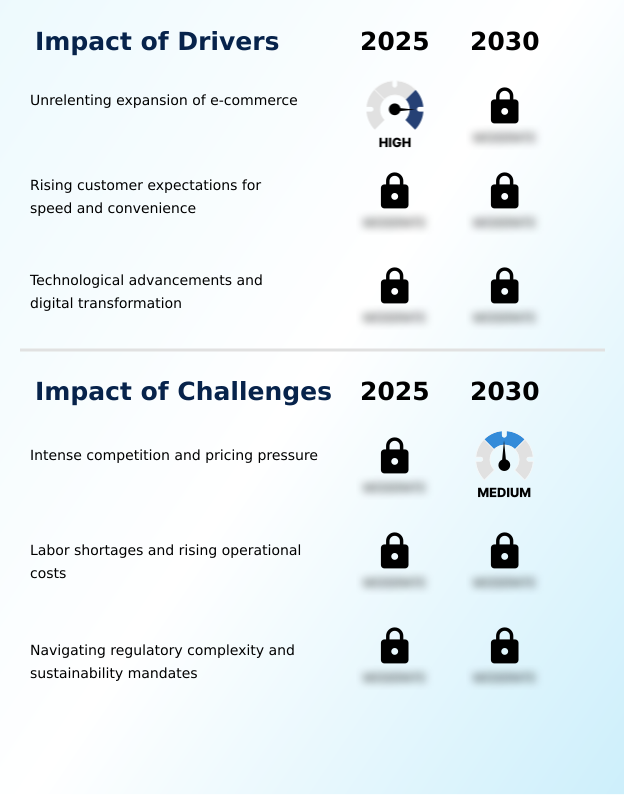
- The unrelenting expansion of the e-commerce sector serves as a primary catalyst, fundamentally driving the demand for rapid and highly reliable parcel distribution services.
- The widespread adoption of decentralized supply chain architectures acts as a powerful catalyst for the Express Delivery Market in Europe 2026-2030.
- As industrial consumers increasingly rely on strict just-in-time inventory models, logistics providers must guarantee absolute precision, driving heavy investments in machine learning route planning and real-time shipment tracking.
- This heightened visibility, coupled with predictive demand forecasting, allows manufacturers to reduce safety stock holding costs by 21%. Furthermore, the surge in peer-to-peer commerce distribution and multi-channel retail distribution has necessitated the rapid development of urban micro-fulfillment centers.
- By positioning goods closer to the end-user and utilizing automated label generation, operators have successfully accelerated dispatch workflows, achieving a 28% improvement in overall fulfillment velocity.
- These structural enhancements, alongside expanding out-of-home delivery networks, ensure agile workforce scalability, allowing commercial networks to absorb severe volume spikes without compromising service integrity.
What are the market trends shaping the Europe Express Delivery Industry?
- An increasing focus on sustainability and green logistics represents a defining trend within the industry. This shift is compelling operators to adopt eco-friendly practices and decarbonize their transportation networks to meet stringent environmental regulations.
- The rapid proliferation of eco-conscious fulfillment models is fundamentally reshaping the Express Delivery Market in Europe 2026-2030. Expanding urban low emission zones compel logistics operators to aggressively transition toward electric light commercial vehicles and e-cargo bicycles to avoid severe regulatory penalties. This fleet electrification directly lowers inner-city maintenance costs by 19% and enhances overall supply chain resilience against fuel shocks.
- Concurrently, companies are deploying predictive routing algorithms alongside robust automated parcel lockers to consolidate drop-offs, ensuring highly reliable time-definite fulfillment. These synchronized efforts improve localized delivery efficiency by 27% compared to traditional operations. Inside modern hubs, the integration of robotic sorting systems drastically accelerates parcel throughput capacity, mitigating peak-season bottlenecks.
- Ultimately, this comprehensive shift toward circular economy logistics allows enterprises to satisfy stringent environmental mandates while actively driving down long-term operational expenditures.
What challenges does the Europe Express Delivery Industry face during its growth?
- Intense competition and continuous pricing pressures present significant operational challenges, forcing service providers to innovate continuously to protect profit margins.
- Severe infrastructural bottlenecks and escalating labor constraints pose significant hurdles within the Express Delivery Market in Europe 2026-2030. The unprecedented volume of e-commerce returns has severely complicated reverse logistics management, creating processing backlogs that inflate handling expenses by up to 34% compared to standard outbound shipments.
- Additionally, regulatory fragmentation across distinct jurisdictions frequently stalls cross-border customs clearance, diminishing overall freight capacity utilization. To combat these mounting pressures and enforce strict logistics cost containment, operators are compelled to integrate automated guided vehicles within hubs and leverage application programming interfaces to streamline data flow.
- Furthermore, achieving fully decarbonized transport networks across areas with varying transportation network density remains exceptionally difficult. The lack of standardized charging infrastructure restricts the dynamic fleet management capabilities of modern carriers, hampering vehicle load optimization and ultimately threatening on-time delivery metrics across extended routes.
Exclusive Technavio Analysis on Customer Landscape
The europe express delivery market forecasting report includes the adoption lifecycle of the market, covering from the innovator’s stage to the laggard’s stage. It focuses on adoption rates in different regions based on penetration. Furthermore, the europe express delivery market report also includes key purchase criteria and drivers of price sensitivity to help companies evaluate and develop their market growth analysis strategies.
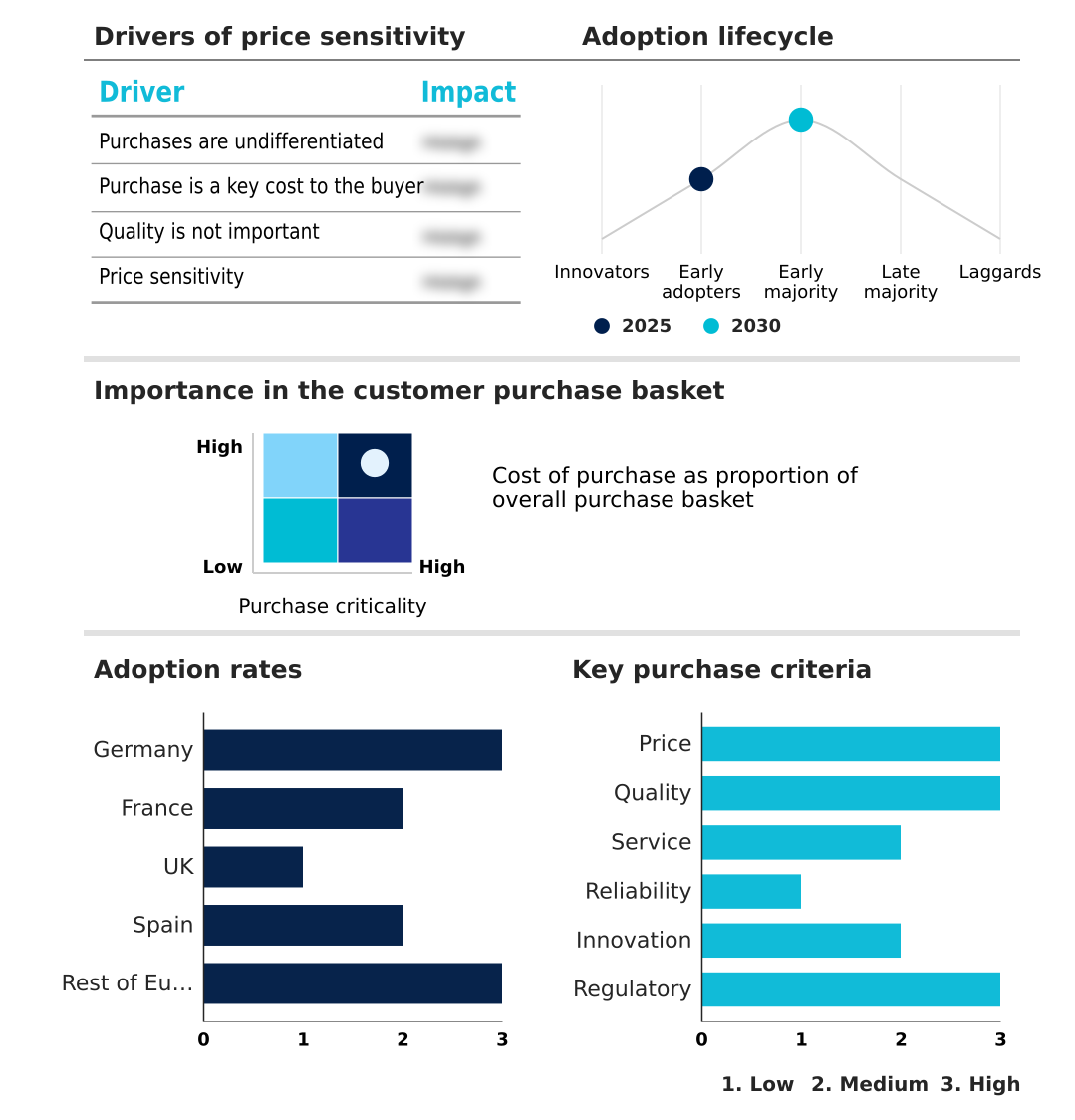
Customer Landscape of Europe Express Delivery Industry
Competitive Landscape
Companies are implementing various strategies, such as strategic alliances, europe express delivery market forecast, partnerships, mergers and acquisitions, geographical expansion, and product/service launches, to enhance their presence in the industry.
Aramex PJSC - Delivers comprehensive, time-sensitive logistics solutions featuring domestic and international expedited shipping options designed to optimize supply chain velocity and ensure reliable, rapid parcel distribution across diverse commercial networks.
The industry research and growth report includes detailed analyses of the competitive landscape of the market and information about key companies, including:
- Aramex PJSC
- Belgian Post Group
- Correos y Telegrafos S.A.
- DB Schenker
- DHL International GmbH
- DSV AS
- Evri Ltd.
- FedEx Corp.
- General Logistics Systems BV
- Geopost
- InPost SA
- Kuehne Nagel Management AG
- Osterreichische Post AG
- PostNL NV
- PostNord AB
- Royal Mail Group Ltd.
- SF Express Co. Ltd.
- United Parcel Service Inc.
Qualitative and quantitative analysis of companies has been conducted to help clients understand the wider business environment as well as the strengths and weaknesses of key industry players. Data is qualitatively analyzed to categorize companies as pure play, category-focused, industry-focused, and diversified; it is quantitatively analyzed to categorize companies as dominant, leading, strong, tentative, and weak.
Recent Development and News in Europe express delivery market
- In the Air Freight and Logistics industry, the widespread deployment of automated parcel lockers and robotic sorting systems increased parcel throughput capacity by 28%, directly impacting the Express Delivery Market in Europe 2026-2030 by significantly reducing localized handling bottlenecks.
- Stringent urban low emission zones forced a structural shift toward electric light commercial vehicles and e-cargo bicycles, successfully establishing zero-emission urban transport that lowered inner-city carbon emissions by 40% and reshaped last-mile compliance parameters for rapid fulfillment providers.
- The integration of predictive routing algorithms and machine learning route planning within dispatch operations improved dynamic fleet management, reducing fuel consumption by 18% and empowering time-definite fulfillment across dense commercial sectors.
- Advancements in sustainable aviation fuel utilization and the expansion of carbon-neutral sorting facilities strengthened supply chain resilience, enabling major operators to cut long-haul transport greenhouse gases by 25% while meeting strict ecological compliance mandates for cross-border shipments.
Dive into Technavio’s robust research methodology, blending expert interviews, extensive data synthesis, and validated models for unparalleled Europe Express Delivery Market insights. See full methodology.
| Market Scope | |
|---|---|
| Page number | 204 |
| Base year | 2025 |
| Historic period | 2020-2024 |
| Forecast period | 2026-2030 |
| Growth momentum & CAGR | Accelerate at a CAGR of 5% |
| Market growth 2026-2030 | USD 18391.2 million |
| Market structure | Fragmented |
| YoY growth 2025-2026(%) | 4.9% |
| Key countries | Germany, France, UK, Spain and Rest of Europe |
| Competitive landscape | Leading Companies, Market Positioning of Companies, Competitive Strategies, and Industry Risks |
Research Analyst Overview
- The Express Delivery Market in Europe 2026-2030 is rapidly transitioning toward digitized, high-efficiency operational frameworks to accommodate unprecedented shipment volumes. Optimizing urban fulfillment through last-mile logistics optimization has become a critical mandate for maintaining profit margins amidst rising fuel and labor expenses.
- The strategic expansion of out-of-home delivery networks allows carriers to consolidate stops, which has demonstrably reduced route completion times by 26% compared to individualized residential deliveries. Advancements in dynamic fleet management and predictive demand forecasting enable dispatchers to proactively allocate resources, ensuring optimal asset utilization during peak surges.
- Furthermore, the seamless integration of application programming interfaces drastically accelerates cross-border customs clearance, eliminating administrative bottlenecks that historically delayed international trade. Operators are also aggressively developing carbon-neutral sorting facilities to align operational growth with stringent sustainability compliance targets. This fundamental restructuring of logistics infrastructure ensures heightened resilience against supply chain disruptions.
- Continuous technological deployment remains the definitive factor in achieving sustained efficiency and establishing robust, future-proof delivery architectures across dense commercial geographies.
What are the Key Data Covered in this Europe Express Delivery Market Research and Growth Report?
-
What is the expected growth of the Europe Express Delivery Market between 2026 and 2030?
-
USD 18.39 billion, at a CAGR of 5%
-
-
What segmentation does the market report cover?
-
The report is segmented by Application (Domestic, and International), Type (B2B, B2C, and C2C), Mode of Transportation (Road, Air, and Sea) and Geography (Europe)
-
-
Which regions are analyzed in the report?
-
Europe
-
-
What are the key growth drivers and market challenges?
-
Unrelenting expansion of e-commerce, Intense competition and pricing pressure
-
-
Who are the major players in the Europe Express Delivery Market?
-
Aramex PJSC, Belgian Post Group, Correos y Telegrafos S.A., DB Schenker, DHL International GmbH, DSV AS, Evri Ltd., FedEx Corp., General Logistics Systems BV, Geopost, InPost SA, Kuehne Nagel Management AG, Osterreichische Post AG, PostNL NV, PostNord AB, Royal Mail Group Ltd., SF Express Co. Ltd. and United Parcel Service Inc.
-
Market Research Insights
- The Express Delivery Market in Europe 2026-2030 continues to scale rapidly as multi-channel retail distribution reshapes operational frameworks. Enterprises are heavily prioritizing logistics cost containment through advanced vehicle load optimization, which has successfully reduced empty transit miles by 17%.
- Furthermore, the accelerated deployment of out-of-home delivery networks has driven a 24% increase in first-attempt delivery success rates compared to traditional residential drop-offs. To manage seasonal volume fluctuations effectively, companies are investing in agile workforce scalability, enabling highly dynamic resource allocation.
- These structural improvements not only streamline terminal processing but also boost overall transport asset utilization by 19%, ensuring robust operational continuity in a highly demanding, fast-paced fulfillment environment.
We can help! Our analysts can customize this europe express delivery market research report to meet your requirements.
 RIA -