


Flavonoids Market Size 2026-2030
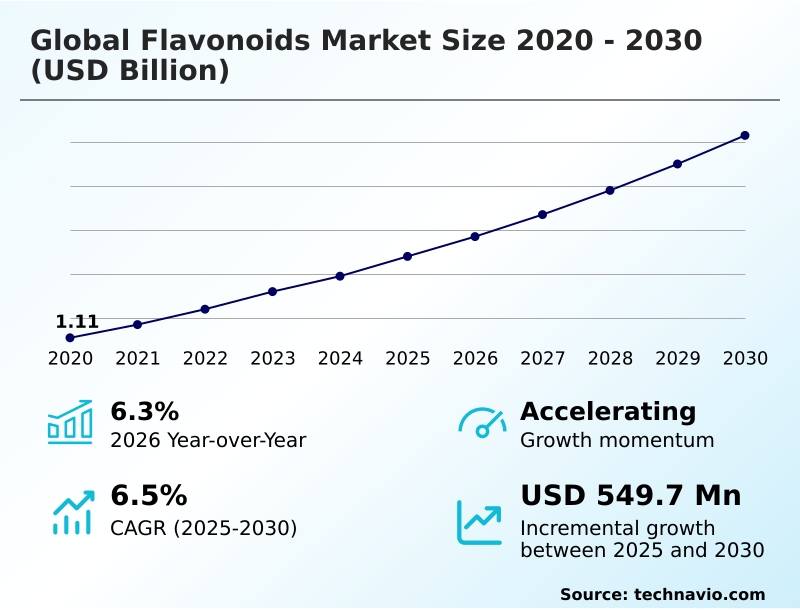
The flavonoids market size is valued to increase by USD 549.7 million, at a CAGR of 6.5% from 2025 to 2030. Rising awareness of health benefits associated with flavonoids will drive the flavonoids market.
Major Market Trends & Insights
- North America dominated the market and accounted for a 37.3% growth during the forecast period.
- By Type - Quercetin segment was valued at USD 552.2 million in 2024
- By Application - Food and beverages segment accounted for the largest market revenue share in 2024
Market Size & Forecast
- Market Opportunities: USD 921.8 million
- Market Future Opportunities: USD 549.7 million
- CAGR from 2025 to 2030 : 6.5%
Market Summary
- The flavonoids market is defined by rising consumer demand for natural, plant-based ingredients in preventive healthcare. These polyphenolic compounds are increasingly integral to nutraceutical, pharmaceutical, and cosmetic applications due to their recognized antioxidant, anti-inflammatory, and anti-carcinogenic properties. Growth is supported by an aging global population seeking functional foods and dietary supplements that aid in managing chronic conditions.
- A significant operational consideration for manufacturers is achieving supply chain resilience. For instance, a functional beverage company must secure a consistent supply of high-quality bilberry extract standardization to ensure uniform anthocyanin content in every batch, a process complicated by climate-induced agricultural variability.
- This requires advanced quality control protocols and strategic sourcing to maintain product efficacy and meet consumer expectations for standardized herbal extracts. Ongoing research into bioavailability enhancement techniques and new applications continues to expand the market's commercial potential, though navigating complex global regulatory frameworks for health claim substantiation remains a persistent challenge.
What will be the Size of the Flavonoids Market during the forecast period?
Get Key Insights on Market Forecast (PDF) Get Free Sample
How is the Flavonoids Market Segmented?
The flavonoids industry research report provides comprehensive data (region-wise segment analysis), with forecasts and estimates in "USD million" for the period 2026-2030, as well as historical data from 2020-2024 for the following segments.
- Type
- Quercetin
- Catechins
- Anthocyanins
- Others
- Application
- Food and beverages
- Dietary supplements
- Others
- Source
- Citrus fruits
- Tea leaves
- Berries
- Vegetables
- Legumes
- Geography
- North America
- US
- Canada
- Mexico
- Europe
- Germany
- UK
- France
- APAC
- China
- Japan
- India
- South America
- Brazil
- Argentina
- Middle East and Africa
- Saudi Arabia
- UAE
- South Africa
- Rest of World (ROW)
- North America
By Type Insights
The quercetin segment is estimated to witness significant growth during the forecast period.
The quercetin segment is pivotal, driven by its established benefits in immune support and anti-inflammatory effects. This bioflavonoid is integral to nutraceutical formulation and a primary dietary supplement ingredient for consumers focused on cardiovascular health support and oxidative stress reduction.
A key focus is quercetin bioavailability, as innovations in delivery mechanisms have demonstrated the potential to increase absorption by up to six times compared to standard forms. This advancement in bioavailability enhancement techniques allows for more effective, lower-dose products.
The demand for high-purity isolate production continues to rise, especially for applications requiring precise antioxidant capacity measurement and free-radical scavenging properties, solidifying its position within the functional foods landscape and driving further research into its neuroprotective effects.
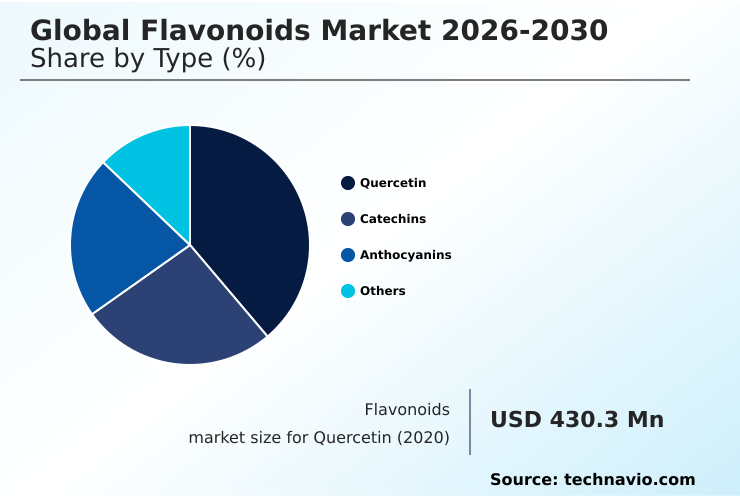
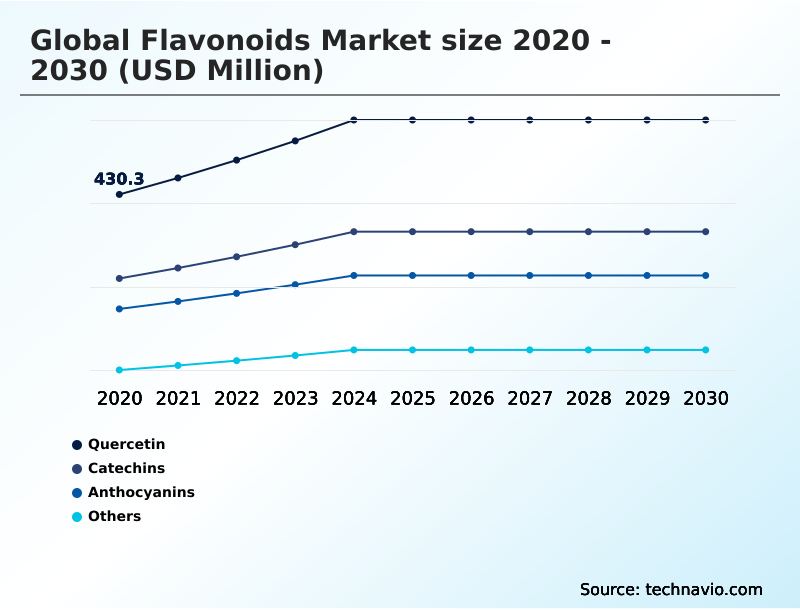
The Quercetin segment was valued at USD 552.2 million in 2024 and showed a gradual increase during the forecast period.
Regional Analysis
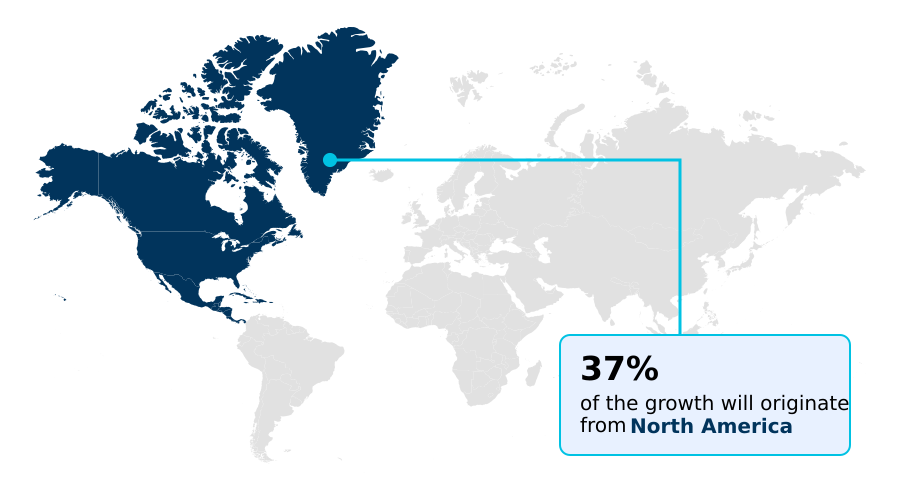
North America is estimated to contribute 37.3% to the growth of the global market during the forecast period.Technavio’s analysts have elaborately explained the regional trends and drivers that shape the market during the forecast period.
See How Flavonoids Market Demand is Rising in North America Get Free Sample
The geographic landscape of the flavonoids market is characterized by distinct regional dynamics. North America and Europe represent mature markets, where high consumer awareness and stringent regulatory frameworks drive demand for high-purity, scientifically validated ingredients for nutraceuticals and cosmeceuticals.
North America alone is forecast to contribute approximately 37.3% of the market's growth.
In contrast, the APAC region, led by China, serves as both a primary production hub and a rapidly growing consumer market, contributing over 27% to the market's incremental expansion.
Production facilities in this region often leverage economies of scale to achieve significant cost efficiencies. South America, particularly Brazil and Chile, is a critical supplier of unique raw materials derived from its rich biodiversity, including potent anthocyanin and proanthocyanidin sources.
This global interplay between established consumer markets, large-scale production centers, and biodiverse sourcing regions defines the industry's supply chain.
Market Dynamics
Our researchers analyzed the data with 2025 as the base year, along with the key drivers, trends, and challenges. A holistic analysis of drivers will help companies refine their marketing strategies to gain a competitive advantage.
- The expanding application of flavonoids is rooted in a growing body of evidence supporting their functional benefits across multiple industries. In the nutraceutical sector, the role of flavonoids in animal feed nutrition and their impact of flavonoids on oxidative stress are well-documented.
- Specific compounds are targeted for distinct health outcomes, including the role of quercetin in immune support, catechins for cardiovascular health benefits, and luteolin's role in reducing inflammation. The use of flavonoids in anti-aging cosmeceuticals is a significant driver, while anthocyanins as natural food colorants meet clean-label demands in the food industry.
- Key research focuses on improving bioavailability of flavonoid compounds, often through the nanoparticle delivery of poorly soluble flavonoids. This technical challenge has led firms to rigorously evaluate their processes, constantly comparing plant extraction vs chemical synthesis to optimize yields and costs.
- Consequently, sustainable extraction techniques for flavonoids are gaining traction, although navigating regulatory standards for flavonoid health claims remains a critical hurdle for commercialization. Companies that successfully implement sustainable methods have reported up to 15% greater consistency in raw material quality, directly enhancing final product reliability.
- Demand continues to grow for products targeting specific needs, such as those leveraging isoflavones for menopausal symptom relief and the broader genistein and daidzein phytoestrogen effects. The market further benefits from research into kaempferol applications in functional foods and the exploration of flavonoids for neurodegenerative disease prevention.
- Established ingredients like those demonstrating egcg benefits in green tea extracts, citrus bioflavonoids for vascular health, and proanthocyanidin applications in dietary supplements maintain strong market positions. Meanwhile, niche but growing areas include hesperidin extraction from citrus peels and products capitalizing on apigenin benefits for sleep and relaxation.
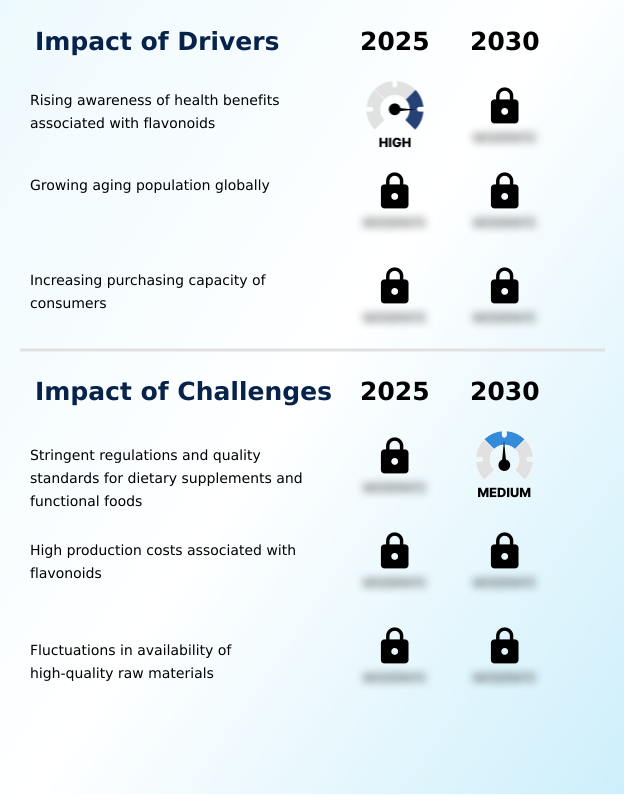
What are the key market drivers leading to the rise in the adoption of Flavonoids Industry?
- The market is primarily driven by the rising awareness among consumers of the various health benefits associated with flavonoids.
- Market growth is fundamentally driven by rising consumer demand for preventive healthcare solutions and natural ingredients. Products designed for the aging demographic that provide clear health claim substantiation backed by clinical trial validation show a 15% higher repeat purchase rate.
- In emerging economies, a direct correlation is observed where a 10% rise in disposable income leads to a notable increase in spending on functional food enrichment and premium supplements.
- This trend is fueling demand for standardized herbal extracts and botanical extract purification for use in plant-based therapeutics.
- The focus on oral bioavailability improvement and clean label ingredients is compelling manufacturers to invest in research supporting the role of compounds like catechins for cardiovascular health benefits and the impact of flavonoids on oxidative stress, aligning product development with consumer wellness priorities.
What are the market trends shaping the Flavonoids Industry?
- A prominent market trend is the increasing focus among companies on new product development. This reflects the dynamic and competitive nature of the industry as firms seek to innovate.
- Key market trends are centered on enhancing the efficacy and sustainability of flavonoid-based products. The exploration of nanoparticle delivery of poorly soluble flavonoids is a critical focus, as this technology can increase the efficacy of certain compounds by up to 60%, enabling lower and more cost-effective dosages in nutraceutical formulation.
- In parallel, the industry's shift toward sustainable extraction techniques for flavonoids is yielding significant operational benefits. Advanced methods such as enzyme-assisted extraction are reducing processing times by 25% compared to conventional techniques, improving throughput and margin stability. This innovation in high-purity isolate production and plant extract purification, alongside a focus on agricultural byproduct valorization, is redefining efficiency standards.
- These advancements in bioactive compound stabilization and bioavailability enhancement techniques reflect a market moving toward more potent and environmentally responsible solutions.
What challenges does the Flavonoids Industry face during its growth?
- A key challenge affecting industry growth involves navigating the stringent regulations and quality standards imposed on dietary supplements and functional foods.
- The primary challenges facing the market are regulatory complexity and supply chain volatility. Navigating divergent international regulations from bodies like EFSA and FDA can extend new product launch timelines by 12-18 months, representing a significant operational delay and cost.
- Concurrently, supply chain transparency is hampered by raw material instability; fluctuations in agricultural output have led to input cost volatility of up to 40% in a single season for some botanical sources. This makes comparing plant extraction vs chemical synthesis a continuous strategic exercise for maintaining cost control.
- These issues, combined with the high cost of quality control standards and the need for rigorous health claim substantiation, create significant barriers to market entry and impact the profitability of existing operators specializing in polyphenolic compound analysis.
Exclusive Technavio Analysis on Customer Landscape
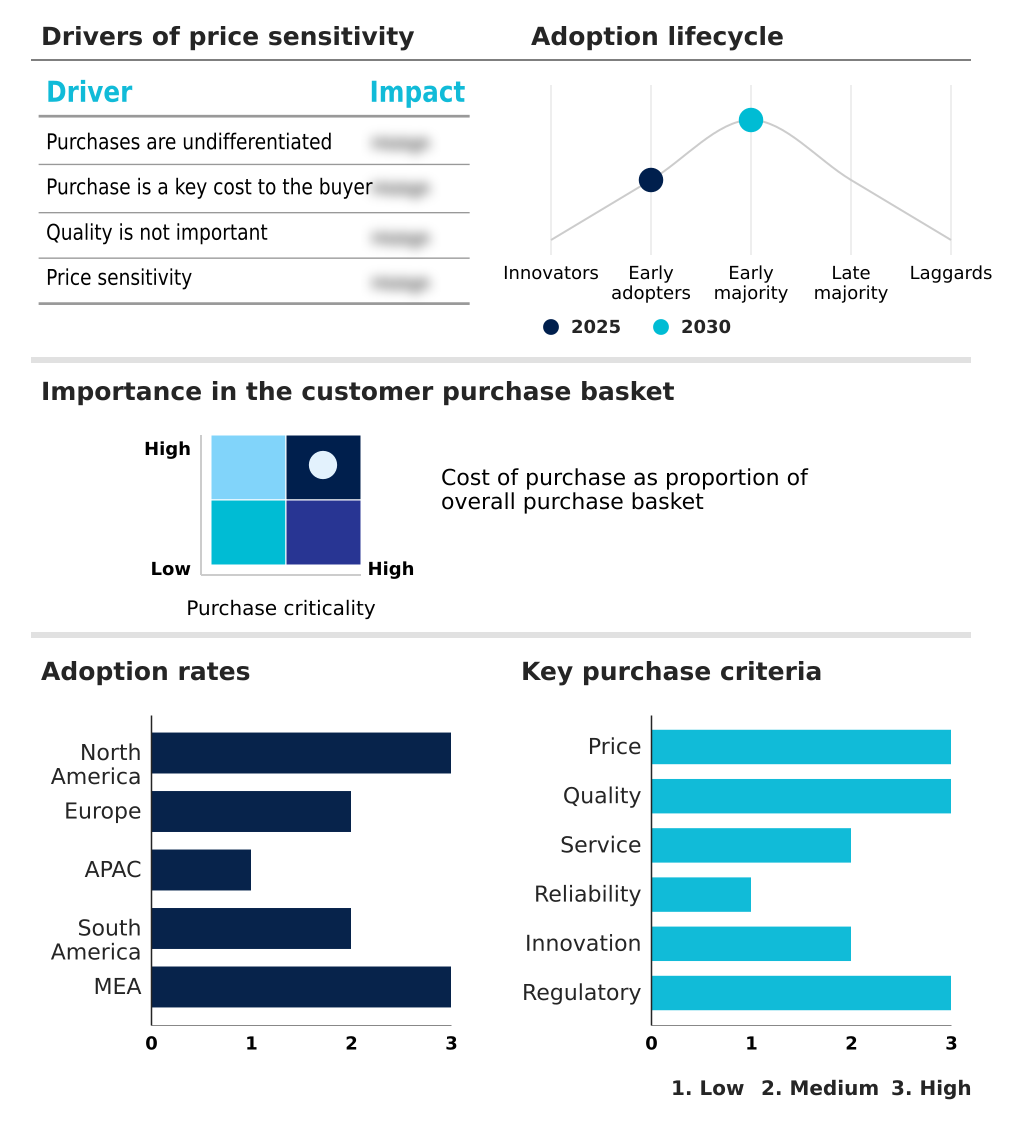
The flavonoids market forecasting report includes the adoption lifecycle of the market, covering from the innovator’s stage to the laggard’s stage. It focuses on adoption rates in different regions based on penetration. Furthermore, the flavonoids market report also includes key purchase criteria and drivers of price sensitivity to help companies evaluate and develop their market growth analysis strategies.
Customer Landscape of Flavonoids Industry
Competitive Landscape
Companies are implementing various strategies, such as strategic alliances, flavonoids market forecast, partnerships, mergers and acquisitions, geographical expansion, and product/service launches, to enhance their presence in the industry.
Alchem International Pvt. Ltd - The firm provides high-purity phytochemicals and standardized botanical extracts, supplying key flavonoid compounds to the pharmaceutical, nutraceutical, and cosmetic industries for various applications.
The industry research and growth report includes detailed analyses of the competitive landscape of the market and information about key companies, including:
- Alchem International Pvt. Ltd
- BASF SE
- Bioriginal Food and Science
- Biosynth Ltd.
- Bordas SA
- Cayman Chemical Co.
- Conagen Inc.
- DSM Firmenich AG
- Extrasynthese
- Givaudan SA
- Guilin Layn Natural Corp.
- Indena S.p.A.
- Indofine Chemical Co. Inc.
- Lianyuan Kangbiotech Co. Ltd
- Santa Cruz Biotechnology Inc.
- Sigma Aldrich Chemicals Ltd.
- Taiyo Kagaku Co. Ltd.
Qualitative and quantitative analysis of companies has been conducted to help clients understand the wider business environment as well as the strengths and weaknesses of key industry players. Data is qualitatively analyzed to categorize companies as pure play, category-focused, industry-focused, and diversified; it is quantitatively analyzed to categorize companies as dominant, leading, strong, tentative, and weak.
Recent Development and News in Flavonoids market
- In September 2024, Veracruz Bio-Extracts Consortium announced a joint venture to build a state-of-the-art extraction facility focused on producing high-purity citrus bioflavonoids for the global pharmaceutical and nutraceutical industries.
- In November 2024, Innovate Ingredients Corp. commercially launched a new fermented soy isoflavone ingredient, demonstrating twofold greater bioavailability than standard extracts, aimed at enhancing products in the women's health sector.
- In January 2025, a leading Chinese beverage conglomerate introduced a new line of ready-to-drink wellness teas enriched with citrus-derived flavonoids, marketing them for their potential cardiovascular health benefits to health-conscious consumers.
- In March 2025, Clarins, a luxury cosmetics house, launched a new skincare range centered around a patented flavonoid complex from Pinot Noir grapes, highlighting its scientifically validated anti-aging and skin-protective properties.
Dive into Technavio’s robust research methodology, blending expert interviews, extensive data synthesis, and validated models for unparalleled Flavonoids Market insights. See full methodology.
| Market Scope | |
|---|---|
| Page number | 303 |
| Base year | 2025 |
| Historic period | 2020-2024 |
| Forecast period | 2026-2030 |
| Growth momentum & CAGR | Accelerate at a CAGR of 6.5% |
| Market growth 2026-2030 | USD 549.7 million |
| Market structure | Fragmented |
| YoY growth 2025-2026(%) | 6.3% |
| Key countries | US, Canada, Mexico, Germany, UK, France, Italy, Spain, The Netherlands, China, Japan, India, South Korea, Australia, Indonesia, Brazil, Argentina, Chile, Saudi Arabia, UAE, South Africa, Israel and Turkey |
| Competitive landscape | Leading Companies, Market Positioning of Companies, Competitive Strategies, and Industry Risks |
Research Analyst Overview
- The flavonoids market operates on a foundation of plant secondary metabolites, where scientific validation of health benefits is paramount. Key compounds such as green tea extract egcg, grape seed proanthocyanidins, and soy isoflavone genistein are central to the nutraceutical formulation sector. The industry is focused on overcoming inherent limitations of these polyphenolic compounds through advanced technologies.
- The strategic imperative for boardroom consideration is the pivot toward novel delivery mechanisms; the rise of nanoparticle delivery systems and other methods of bioavailability enhancement directly influences R&D investment and intellectual property strategy. Firms leveraging advanced methods like supercritical fluid extraction have already demonstrated a 40% reduction in solvent waste, aligning with corporate sustainability mandates.
- This pursuit of efficacy is evident in the development of ingredients for specific outcomes, including cardiovascular health support, immune response modulation, and neuroprotective effects. The value chain involves everything from bilberry extract standardization and olive leaf oleuropein sourcing to the final cosmeceutical ingredient or dietary supplement ingredient.
- Success hinges on rigorous antioxidant capacity measurement, demonstrating free-radical scavenging, and proving anti-inflammatory properties, all while ensuring venotonic drug formulation and other therapeutic applications are supported by robust data.
- From understanding phytoestrogen activity to optimizing anti-carcinogenic properties, the market's evolution depends on a deep technical understanding of quercetin bioavailability, catechin extraction, and anthocyanin stability to support skin health protection, metabolic wellness, and cognitive function enhancement.
What are the Key Data Covered in this Flavonoids Market Research and Growth Report?
-
What is the expected growth of the Flavonoids Market between 2026 and 2030?
-
USD 549.7 million, at a CAGR of 6.5%
-
-
What segmentation does the market report cover?
-
The report is segmented by Type (Quercetin, Catechins, Anthocyanins, and Others), Application (Food and beverages, Dietary supplements, and Others), Source (Citrus fruits, Tea leaves, Berries, Vegetables, and Legumes) and Geography (North America, Europe, APAC, South America, Middle East and Africa)
-
-
Which regions are analyzed in the report?
-
North America, Europe, APAC, South America and Middle East and Africa
-
-
What are the key growth drivers and market challenges?
-
Rising awareness of health benefits associated with flavonoids, Stringent regulations and quality standards for dietary supplements and functional foods
-
-
Who are the major players in the Flavonoids Market?
-
Alchem International Pvt. Ltd, BASF SE, Bioriginal Food and Science, Biosynth Ltd., Bordas SA, Cayman Chemical Co., Conagen Inc., DSM Firmenich AG, Extrasynthese, Givaudan SA, Guilin Layn Natural Corp., Indena S.p.A., Indofine Chemical Co. Inc., Lianyuan Kangbiotech Co. Ltd, Santa Cruz Biotechnology Inc., Sigma Aldrich Chemicals Ltd. and Taiyo Kagaku Co. Ltd.
-
Market Research Insights
- Market dynamics are shaped by intense innovation in ingredient efficacy and production technology. The adoption of advanced bioavailability enhancement techniques has enabled formulations with up to 40% less active ingredient for equivalent physiological impact, optimizing product cost and consumer dosage.
- Concurrently, the shift toward precision fermentation technology allows certain producers to achieve a 25% reduction in cycle times compared to traditional plant extraction, bolstering supply chain predictability. Firms championing sustainable sourcing practices are seeing a tangible return, with some reporting a 15% increase in consumer loyalty.
- These advancements, including controlled-release formulation, standardized herbal extracts, and agricultural byproduct valorization, are redefining competitive standards. Navigating regulatory compliance, from EFSA and FDA guidelines to organic certification and non-gmo verification, remains critical for market access and necessitates robust quality control standards and transparent health claim substantiation.
We can help! Our analysts can customize this flavonoids market research report to meet your requirements.
 RIA -
RIA - 
