


Frequency Counter Market Size 2024-2028
The frequency counter market size is forecast to increase by USD 905.2 million, at a CAGR of 8.09% between 2023 and 2028.
- The market is experiencing significant growth, driven primarily by the increasing demand for Long Term Evolution (LTE) technology. This advanced telecommunications standard necessitates precise frequency measurement and monitoring, thereby fueling the adoption of frequency counters. Another key trend is the proliferation of application-specific frequency counters, catering to the unique requirements of various industries, including telecommunications, automotive, and military. However, companies in this market face challenges. One major obstacle is the necessity for low-cost and multiple-technology solutions.
- With the expanding scope of applications for frequency counters, manufacturers must offer cost-effective options while ensuring compatibility with various technologies. Additionally, ensuring high accuracy and reliability across multiple technologies adds complexity to the design and manufacturing process. Effective management of these challenges will be crucial for companies seeking to capitalize on the market's growth potential and maintain a competitive edge.
What will be the Size of the Frequency Counter Market during the forecast period?

The market continues to evolve, driven by the ever-increasing demand for precise and reliable frequency measurement solutions across various sectors. From scientific instrumentation and medical devices to automotive electronics and industrial automation, the applications of frequency counters are as diverse as the environments in which they operate. Environmental conditions, such as temperature, can significantly impact frequency measurement accuracy. To mitigate this, advanced frequency counters incorporate features like temperature compensation and analog-to-digital conversion for accurate readings. Frequency response, error correction, and spectral analysis are crucial aspects of frequency measurement, ensuring optimal performance in applications ranging from power generation to wireless communication.
Phase-locked loops and digital frequency counters provide high-precision frequency standard capabilities, while test and measurement solutions offer calibration certificates and traceability to national standards. Crystal oscillators, gate time measurement, and compliance standards are essential components of frequency counters, ensuring accurate and reliable frequency measurement. In the realm of data acquisition and real-time processing, time interval measurement and data reduction techniques play a vital role. Power consumption, power generation, and battery life are essential considerations in applications where portability is crucial. Frequency counters also address challenges like rf interference, pulse width modulation, and signal processing, enabling seamless integration into embedded systems and support services.
As research and development in frequency measurement technology continues to unfold, new trends emerge, such as data logging, frequency hopping, and remote control capabilities. The continuous dynamism of the market ensures that frequency counters remain indispensable tools for various industries, driving innovation and progress.
How is this Frequency Counter Industry segmented?
The frequency counter industry research report provides comprehensive data (region-wise segment analysis), with forecasts and estimates in "USD million" for the period 2024-2028, as well as historical data from 2018-2022 for the following segments.
- End-user
- Communication
- Aerospace
- Others
- Type
- Bench-top
- Handheld
- Geography
- North America
- US
- Europe
- Germany
- APAC
- China
- Japan
- Taiwan
- Rest of World (ROW)
- North America
By End-user Insights
The communication segment is estimated to witness significant growth during the forecast period.
Frequency counters play a crucial role in the telecommunications industry as it undergoes expansion towards 4G services and the commercialization of 5G in 2020. This growth is driven by R&D investments in LTE-Advanced technologies and the need for comprehensive 5G trial runs. Frequency counters are essential for network operators, equipment manufacturers, and broadband service providers to deliver high-quality triple-play services - voice, video, and data over mobile and fixed networks. They contribute to the rollout of new services, reducing capital expenditures, and ensuring quality of service (QoS) throughout the network lifecycle. In scientific instrumentation, frequency counters are used for precise frequency measurement and error correction in various applications, including environmental conditions monitoring, test and measurement, and industrial automation.
They are also integrated into digital frequency standards, phase-locked loops, and data acquisition systems. Frequency counters find applications in power generation, automotive electronics, and wireless communication systems, requiring real-time processing, low power consumption, and resistance to radio frequency interference. Their integration with sensor interfaces, waveform generation, data reduction, and signal processing enables advanced functionalities. The market for frequency counters is diverse, catering to various industries and applications, and continues to evolve with technological advancements.

The Communication segment was valued at USD 294.60 million in 2018 and showed a gradual increase during the forecast period.
Regional Analysis
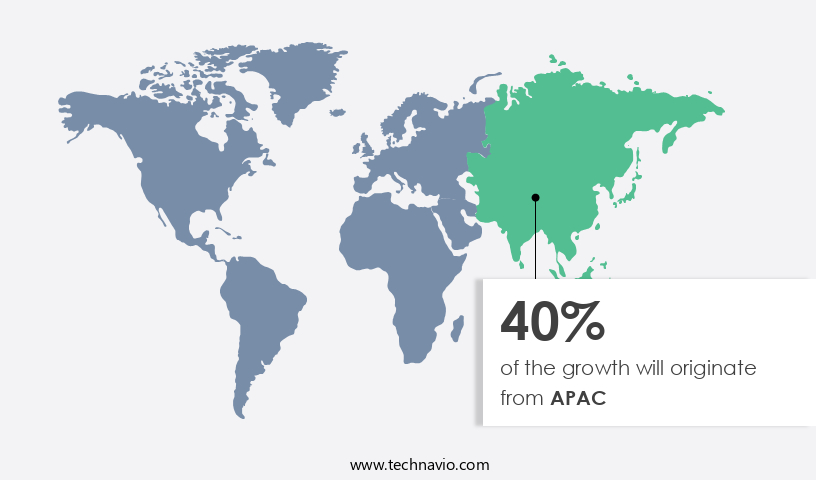
APAC is estimated to contribute 40% to the growth of the global market during the forecast period.Technavio's analysts have elaborately explained the regional trends and drivers that shape the market during the forecast period.
The market in the US is witnessing significant growth, driven by the increasing demand for electronic devices and the expanding Internet of Things (IoT) sector. Frequency measurement technology is integral to various applications, including medical devices, scientific instrumentation, and industrial automation. Environmental conditions necessitate error correction and frequency response in these applications, leading to the adoption of advanced technologies such as spectral analysis, phase-locked loops, and digital frequency counters. Frequency standards, crystal oscillators, and time bases are crucial components in ensuring precise frequency measurement. Moreover, the market is witnessing the integration of frequency counters in power generation systems, automotive electronics, and wireless communication networks.
Real-time processing, data reduction, and signal processing are essential features in these applications. Compliance with various standards, such as compliance standards and data logging, is also a critical factor in the market's growth. The increasing trend towards miniaturization and power efficiency is leading to advancements in technologies like pulse width modulation, digital-to-analog conversion, and data acquisition. Furthermore, research and development efforts in frequency distribution and other related technologies are expected to drive innovation in the market. Despite the challenges posed by rf interference and battery life, the market is poised for growth, with applications in various industries, including power generation, automotive, and industrial automation.
Market Dynamics
Our researchers analyzed the data with 2023 as the base year, along with the key drivers, trends, and challenges. A holistic analysis of drivers will help companies refine their marketing strategies to gain a competitive advantage.
What are the key market drivers leading to the rise in the adoption of Frequency Counter Industry?
- The significant surge in demand for LTE technology serves as the primary catalyst for market growth. The market is driven by the adoption of advanced technologies such as LTE and LTE-A. These technologies enable high-speed data transfers through smart devices, making them increasingly popular in both developed and developing countries. LTE, a 4G technology, offers faster access to data compared to 2G and 3G. Telecom carriers are responding to the growing demand for web access through smart devices by offering high-speed connectivity using LTE technology. Sensor interfaces, waveform generation, data acquisition, and embedded systems are integral components of frequency counter applications. These technologies are used in various industries, including power generation, pulse width modulation, time interval measurement, signal processing, and wireless communication.
- Support services are essential to ensure the proper functioning of these systems. Frequency counters are used in various applications, including power generation, where they help optimize power efficiency. In the automotive industry, they are used for engine control and emission monitoring. In the medical field, they are used for analyzing waveforms in ECG and EEG signals. Data reduction techniques and wireless communication are essential for the efficient transfer and processing of data generated by frequency counters. These technologies enable real-time monitoring and analysis of data, making them valuable in various industries. Overall, the market is expected to grow due to the increasing adoption of advanced technologies and the growing demand for high-speed connectivity.
What are the market trends shaping the Frequency Counter Industry?
- The use of application-specific frequency counters is gaining significant traction in the market. This trend reflects the increasing demand for precise measurement and optimization of system performance in various industries.
- In the realm of test and measurement, the market is witnessing significant growth due to the increasing demand for precise and reliable frequency measurement solutions across various industries. These industries include aerospace and defense, consumer electronics, and semiconductors, among others. The proliferation of wired and wireless communication technologies necessitates the establishment of Machine-to-Machine (M2M) communication networks. The complexity of these networks increases with the number of devices connected, leading to the implementation of application-specific test and measurement (T&M) solutions. companies in the market are responding to this demand by introducing innovative and application-specific products.
- For instance, some companies are focusing on products with high input impedance and operating temperatures suitable for extreme environments. Others are developing solutions with advanced features such as atomic clocks, crystal oscillators, and gate times for enhanced accuracy. Moreover, compliance with industry standards, such as automotive electronics, is essential for companies in the market. As a result, they are providing calibration certificates to ensure the accuracy and reliability of their products. Data logging is another critical feature that companies are incorporating into their offerings to enable users to store and analyze measurement data. In summary, the market is experiencing growth due to the increasing demand for precise and reliable frequency measurement solutions across various industries.Companies are responding to this demand by introducing innovative and application-specific products that cater to the unique requirements of test engineers. These products include solutions with advanced features such as atomic clocks, crystal oscillators, and gate times, as well as solutions that comply with industry standards and offer data logging capabilities.
What challenges does the Frequency Counter Industry face during its growth?
- The need for affordable and multi-technology solutions is a significant challenge that mandatorily requires the industry's attention to ensure sustainable growth.
- The market is driven by the demand for advanced signal analysis and real-time processing in various industries, including industrial automation. However, power consumption and battery life are critical concerns for end-users, especially in remote applications. RF interference and the need for digital-to-analog conversion add to the complexity and cost of frequency counter equipment. companies must focus on research and development to offer innovative solutions that address these challenges. Frequency hopping technology is a potential solution to mitigate RF interference. Incremental features, technology, positive brand image, continuous product support, and after-sales services are essential for companies to sustain in the market.
- However, the high cost of these features and technology restricts new purchases by price-sensitive end-users. Local companies in certain regions offer lower-priced alternatives, providing competition to key suppliers. Overall, the market is dynamic, with companies continually seeking to innovate while addressing the cost concerns of end-users.
Exclusive Customer Landscape
The frequency counter market forecasting report includes the adoption lifecycle of the market, covering from the innovator's stage to the laggard's stage. It focuses on adoption rates in different regions based on penetration. Furthermore, the frequency counter market report also includes key purchase criteria and drivers of price sensitivity to help companies evaluate and develop their market growth analysis strategies.
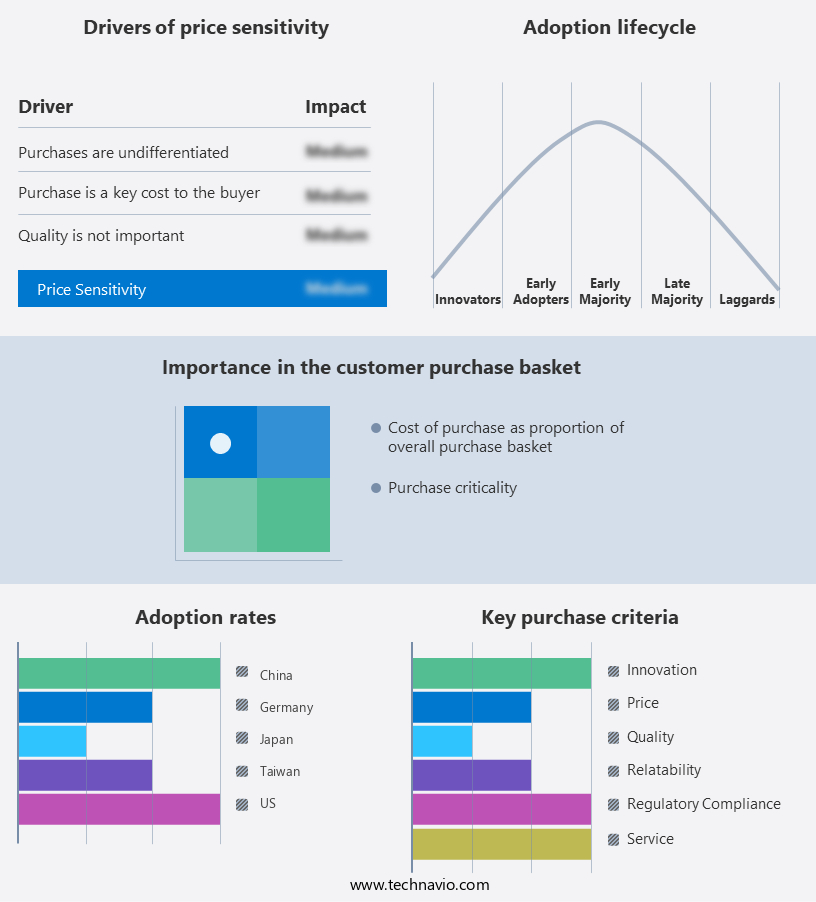
Customer Landscape
Key Companies & Market Insights
Companies are implementing various strategies, such as strategic alliances, frequency counter market forecast, partnerships, mergers and acquisitions, geographical expansion, and product/service launches, to enhance their presence in the industry.
Aim and Thurlby Thandar Instruments - The company specializes in providing advanced frequency counting solutions, featuring instruments like the TF930 and PFM3000. These instruments deliver precise frequency measurement capabilities, enhancing research and development processes. By utilizing state-of-the-art technology, these devices ensure accurate and reliable results, contributing to improved product performance and innovation. With a commitment to research and development, the company continues to expand its offering, providing clients with cutting-edge solutions to meet their unique requirements.
The industry research and growth report includes detailed analyses of the competitive landscape of the market and information about key companies, including:
- Aim and Thurlby Thandar Instruments
- Anritsu Corp.
- B and K Precision Corp.
- Berkeley Nucleonics Corp.
- CIRCUTOR SAU
- Fortive Corp.
- Good Will Instrument Co., Ltd.
- INSEVIS GmbH
- ISKRA elektro in sistemske resitve d.o.o
- Keysight Technologies Inc.
- Madell Technology Corp.
- National Instruments Corp.
- OMRON Corp.
- Saluki Technology Inc.
- Schneider Electric SE
- Selec Controls Pvt. Ltd.
- Simpson Electric Co. Inc.
- TE Connectivity Ltd.
- Tense Elektronik
- Texas Instruments Inc.
Qualitative and quantitative analysis of companies has been conducted to help clients understand the wider business environment as well as the strengths and weaknesses of key industry players. Data is qualitatively analyzed to categorize companies as pure play, category-focused, industry-focused, and diversified; it is quantitatively analyzed to categorize companies as dominant, leading, strong, tentative, and weak.
Recent Development and News in Frequency Counter Market
- In February 2023, Hirose Electric Corporation, a leading manufacturer of connectors and sensors, announced the launch of its new high-precision frequency counter, model FC-1100. This advanced device boasts a measurement range of up to 10 GHz and is designed to meet the growing demand for precise frequency measurement in various industries, including telecommunications and aerospace (Hirose Electric Corporation, 2023).
- In July 2024, Texas Instruments and National Instruments, two major players in the semiconductor industry, announced a strategic collaboration to jointly develop and market high-performance frequency counters. The partnership aims to leverage each company's expertise and resources to create innovative solutions for applications in test and measurement, wireless communications, and other industries (Texas Instruments, 2024).
- In October 2024, Anritsu Corporation, a global leader in test and measurement solutions, completed the acquisition of Agilent Technologies' microwave and communications test business. The acquisition significantly expanded Anritsu's portfolio of frequency counter products and strengthened its position in the market (Anritsu Corporation, 2024).
- In March 2025, the European Union (EU) implemented new regulations on Radio Frequency Identification (RFID) technology, mandating that all new RFID systems must include frequency counters to ensure accurate and reliable frequency measurement. This initiative is expected to drive growth in the market, particularly in Europe (European Commission, 2025).
Research Analyst Overview
- In the intricate realm of frequency measurement, market trends reflect a growing demand for advanced solutions that ensure signal integrity and precise phase measurement. Frequency stability and calibration traceability are paramount, with calibration intervals optimized to minimize disruptions. Phase detection and frequency demodulation are integral to this process, requiring high dynamic range and low intermodulation distortion. Frequency synthesizers and multi-channel frequency counters are popular choices for applications requiring precise calibration data and short-term stability. Dynamic range and time delay are crucial factors in these systems, as is calibration software for efficient calibration procedures. Signal-to-noise ratio and harmonic distortion are key performance indicators, with stringent requirements for high-speed frequency counters and time-to-digital converters.
- Frequency dividers and programmable frequency counters offer flexibility, while frequency modulation and frequency mixing are essential techniques for generating and measuring complex signals. Noise floor and calibration traceability are essential for maintaining accuracy over the long term. Precision frequency counters and calibration data are indispensable tools for achieving the desired level of frequency measurement accuracy. Time delay and phase measurement are interconnected, with time-to-digital converters and frequency counter modules playing essential roles in these applications. In summary, the market is characterized by a focus on signal integrity, precise phase measurement, and calibration traceability. Advanced technologies, such as frequency synthesizers, multi-channel frequency counters, and calibration software, are driving innovation and meeting the evolving needs of businesses in various industries.
Dive into Technavio's robust research methodology, blending expert interviews, extensive data synthesis, and validated models for unparalleled Frequency Counter Market insights. See full methodology.
|
Market Scope |
|
|
Report Coverage |
Details |
|
Page number |
170 |
|
Base year |
2023 |
|
Historic period |
2018-2022 |
|
Forecast period |
2024-2028 |
|
Growth momentum & CAGR |
Accelerate at a CAGR of 8.09% |
|
Market growth 2024-2028 |
USD 905.2 million |
|
Market structure |
Fragmented |
|
YoY growth 2023-2024(%) |
7.32 |
|
Key countries |
US, China, Germany, Japan, and Taiwan |
|
Competitive landscape |
Leading Companies, Market Positioning of Companies, Competitive Strategies, and Industry Risks |
What are the Key Data Covered in this Frequency Counter Market Research and Growth Report?
- CAGR of the Frequency Counter industry during the forecast period
- Detailed information on factors that will drive the growth and forecasting between 2024 and 2028
- Precise estimation of the size of the market and its contribution of the industry in focus to the parent market
- Accurate predictions about upcoming growth and trends and changes in consumer behaviour
- Growth of the market across North America, APAC, Europe, South America, and Middle East and Africa
- Thorough analysis of the market's competitive landscape and detailed information about companies
- Comprehensive analysis of factors that will challenge the frequency counter market growth of industry companies
We can help! Our analysts can customize this frequency counter market research report to meet your requirements.
 RIA -
RIA - 
