



Friction Stir Welding Equipment Market Size 2026-2030
The friction stir welding equipment market size is valued to increase by USD 89.8 million, at a CAGR of 6.3% from 2025 to 2030. Surging demand for lightweight materials in aerospace and space exploration will drive the friction stir welding equipment market.
Major Market Trends & Insights
- APAC dominated the market and accounted for a 40.6% growth during the forecast period.
- By Product Type - Fixed FSW equipment segment was valued at USD 103.2 million in 2024
- By End-user - Automotive industry segment accounted for the largest market revenue share in 2024
Market Size & Forecast
- Market Opportunities: USD 138.6 million
- Market Future Opportunities: USD 89.8 million
- CAGR from 2025 to 2030 : 6.3%
Market Summary
- The friction stir welding equipment market is transitioning from a niche technology to a mainstream manufacturing process, underpinned by demands from the electric vehicle and aerospace sectors. The imperative for lightweight manufacturing to improve efficiency and performance drives adoption, with solid-state joining technology being essential for high-strength aluminum alloys used in battery enclosure manufacturing and cryogenic fuel tanks.
- This shift is supported by the integration of Industry 4.0, where a smart fsw machining center equipped with force-control software and advanced sensor arrays enables real-time data monitoring and predictive maintenance capabilities.
- For instance, an automotive OEM developing a new EV platform must weigh the benefits of achieving superior structural integrity and leak-proof performance from a solid-state joining process against the higher capital expenditure and slower cycle times of robotic friction stir welding compared to alternatives.
- Although high initial costs and a shortage of skilled operators present challenges, the move toward automated joining solutions and hybrid multi-tasking machine systems mitigates these issues, enhancing process repeatability and expanding applications for dissimilar material joining.
What will be the Size of the Friction Stir Welding Equipment Market during the forecast period?

Get Key Insights on Market Forecast (PDF) Get Free Sample
How is the Friction Stir Welding Equipment Market Segmented?
The friction stir welding equipment industry research report provides comprehensive data (region-wise segment analysis), with forecasts and estimates in "USD million" for the period 2026-2030, as well as historical data from 2020-2024 for the following segments.
- Product type
- Fixed FSW equipment
- Mobile FSW equipment
- Robotic FSW equipment
- End-user
- Automotive industry
- Aerospace industry
- Railway industry
- Shipbuilding industry
- Others
- Type
- Gantry machines
- Linear seam machine
- Geography
- APAC
- China
- India
- Japan
- North America
- US
- Canada
- Mexico
- Europe
- Germany
- UK
- France
- South America
- Brazil
- Argentina
- Colombia
- Middle East and Africa
- South Africa
- Saudi Arabia
- UAE
- Rest of World (ROW)
- APAC
By Product Type Insights
The fixed fsw equipment segment is estimated to witness significant growth during the forecast period.
The market is segmented by product type, end-user, and geography. Fixed FSW equipment, including large gantry-style machines and vertical gantry FSW systems, remains fundamental for lightweight manufacturing.
These systems provide the high structural stiffness required to apply immense forging pressure, ensuring the structural integrity of high-strength aluminum alloys.
Their application in joining double-skin aluminum extrusions for railcars demonstrates effective thermal distortion control, a critical factor for achieving zero-defect manufacturing.
By utilizing robust clamping fixtures, these machines deliver superior fatigue resistance, essential for heavy industrial applications where performance and durability are paramount. This capability results in defect rate reductions of up to 40% compared to traditional joining methods.
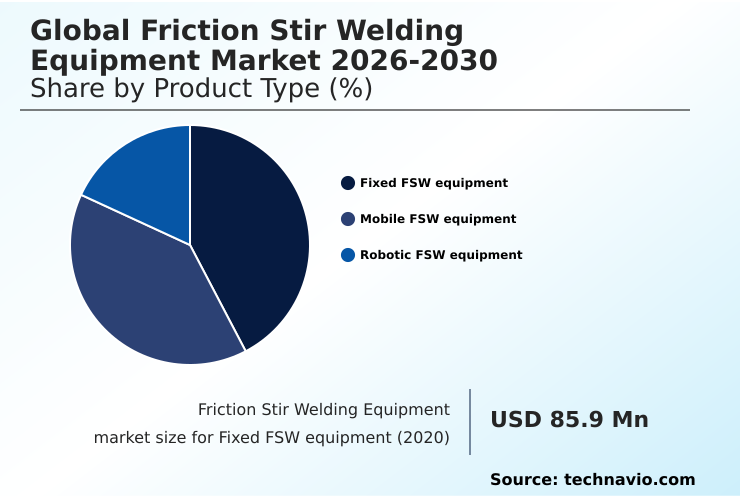
The Fixed FSW equipment segment was valued at USD 103.2 million in 2024 and showed a gradual increase during the forecast period.

Regional Analysis
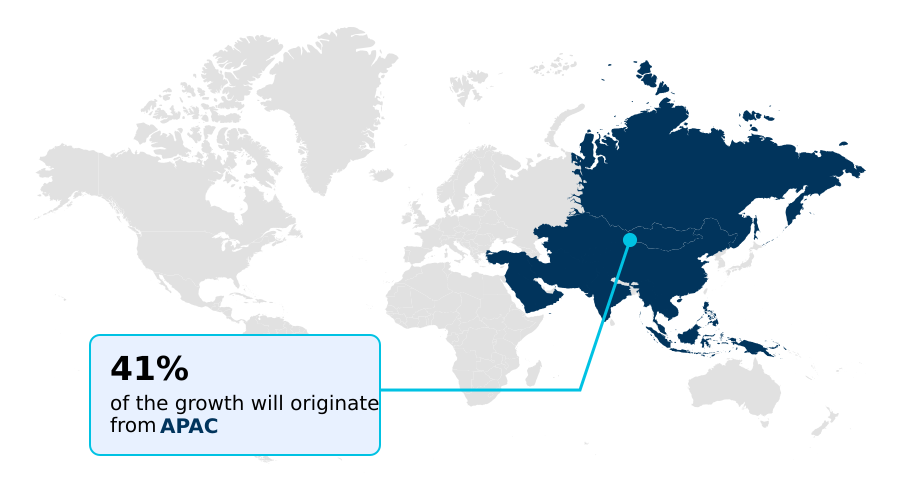
APAC is estimated to contribute 40.6% to the growth of the global market during the forecast period.Technavio’s analysts have elaborately explained the regional trends and drivers that shape the market during the forecast period.
See How Friction Stir Welding Equipment Market Demand is Rising in APAC Get Free Sample
The geographic landscape of the friction stir welding equipment market is led by APAC, which accounts for over 40% of the market's incremental growth, driven by massive high-speed rail and shipbuilding projects.
North America focuses on high-value aerospace applications where the adoption of dissimilar material joining techniques in a high-rigidity robot series reduces assembly defects by up to 15%.
In Europe, the focus is on e-mobility and green energy, with a push toward supply chain localization for electric vehicle components. This has increased demand for automated inspection systems and hybrid multi-tasking machine tools.
The use of friction stir spot welding and refill friction stir spot welding is expanding globally, enhancing process repeatability in automotive body-in-white applications. This regional diversification underscores a global trend toward advanced manufacturing capabilities and specialized weld quality monitoring.
Market Dynamics
Our researchers analyzed the data with 2025 as the base year, along with the key drivers, trends, and challenges. A holistic analysis of drivers will help companies refine their marketing strategies to gain a competitive advantage.
- A key strategic decision for manufacturers is the friction stir welding vs laser welding debate, especially for joining dissimilar materials in automotive applications. While laser welding offers speed, friction stir welding for aluminum alloys provides superior joint quality, which is critical for fsw equipment for electric vehicle batteries.
- FSW applications in aerospace sector capitalize on this technology's ability to create defect-free welds in fsw for cryogenic tank fabrication. The choice between large gantries and robotic fsw for complex geometries depends on part complexity and production volume.
- Central to successful implementation is optimizing fsw process parameters to ensure consistent results, particularly when working with fsw for high strength aluminum alloys. Advancements in fsw tool materials are expanding capabilities for fsw for thick plate welding and enabling new friction stir spot welding applications.
- The cost analysis of fsw equipment reveals that while initial investment is high, operational savings are significant, a crucial factor in the fsw in marine and shipbuilding industry and for fsw for railway rolling stock.
- Overcoming challenges in friction stir welding, such as the need for specialized skills and fixtures, is key to realizing the full benefits of solid state joining. The ability of fsw for copper to aluminum joints is also driving adoption in power electronics, while fsw integration with cnc machines lowers the barrier to entry for smaller shops.
- Ultimately, robust quality control in friction stir welding, which can reduce post-weld inspection times by more than 50% compared to fusion processes, underpins its value proposition.
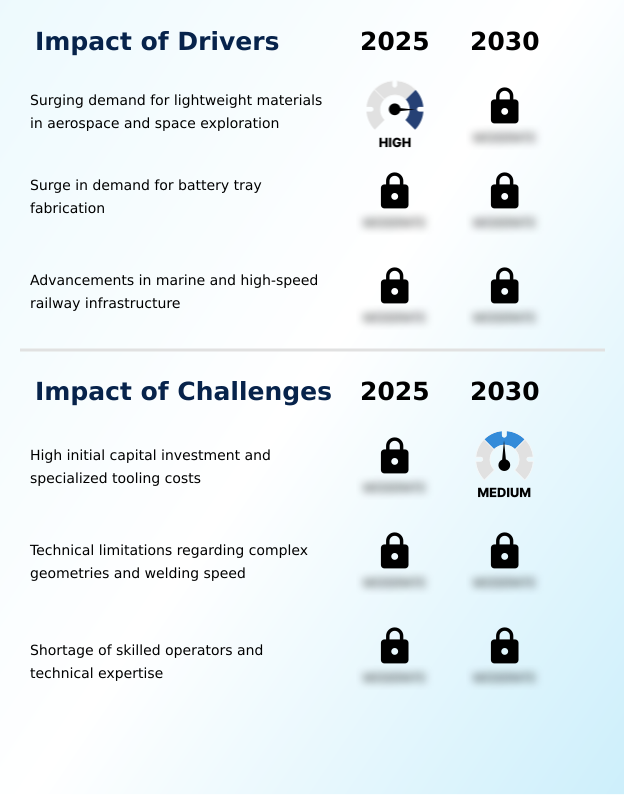
What are the key market drivers leading to the rise in the adoption of Friction Stir Welding Equipment Industry?
- A key market driver is the surging demand for lightweight materials within the aerospace and space exploration sectors, where advanced joining technologies are critical.
- Market growth is primarily driven by the aerospace and energy sectors' demand for advanced manufacturing capabilities.
- The solid-state joining process is critical for fabricating components from corrosion-resistant alloys and aluminum-lithium alloys, ensuring the metallurgical integrity and leak-proof performance of items like cryogenic fuel tanks.
- This solid-state joining technology is superior to fusion methods as it minimizes the heat-affected zone, which is validated through rigorous non-destructive testing. The development of mobile FSW equipment allows for in-situ repairs and construction, expanding applications.
- A joining technology evaluation by aerospace firms often reveals that FSW joints have a fatigue life more than double that of conventional welds, ensuring superior joint integrity for mission-critical structures.
What are the market trends shaping the Friction Stir Welding Equipment Industry?
- A key market trend is the accelerated adoption of friction stir welding equipment, driven by its increasing use in manufacturing electric vehicle battery enclosures.
- Key trends are reshaping the market, led by the proliferation of robotic friction stir welding for high-volume battery enclosure manufacturing. The use of high-payload industrial robotics equipped with advanced FSW end-effectors enables automated joining solutions with exceptional path accuracy.
- This shift toward automation is complemented by the rise of the smart FSW machining center, which integrates force-control software and advanced sensor arrays for real-time data monitoring. These systems feed information to digital twin models, enabling predictive maintenance capabilities that can reduce unplanned downtime by over 25%.
- Such innovations are driving a significant cycle time reduction, with some applications achieving improvements of more than 30%, enhancing process repeatability across production lines.
What challenges does the Friction Stir Welding Equipment Industry face during its growth?
- The high initial capital investment required for equipment and specialized tooling presents a key challenge to the friction stir welding equipment market's growth.
- Significant challenges constrain market adoption, centered on the complexity and cost of implementation. The successful application of this thermo-mechanical process requires deep expertise in material flow dynamics and tool-workpiece interaction, creating a need for extensive process parameter optimization of tool rotation speed, traverse speed, and plunge depth.
- The high upfront capital expenditure strategy for acquiring 5-axis FSW machines or even portable FSW units remains a major hurdle for smaller enterprises. Furthermore, effective production line integration is complex, as it often requires custom welding process control software and advanced automated inspection systems. This complexity can delay project ramp-up by as much as six months, impacting return on investment.
Exclusive Technavio Analysis on Customer Landscape
The friction stir welding equipment market forecasting report includes the adoption lifecycle of the market, covering from the innovator’s stage to the laggard’s stage. It focuses on adoption rates in different regions based on penetration. Furthermore, the friction stir welding equipment market report also includes key purchase criteria and drivers of price sensitivity to help companies evaluate and develop their market growth analysis strategies.
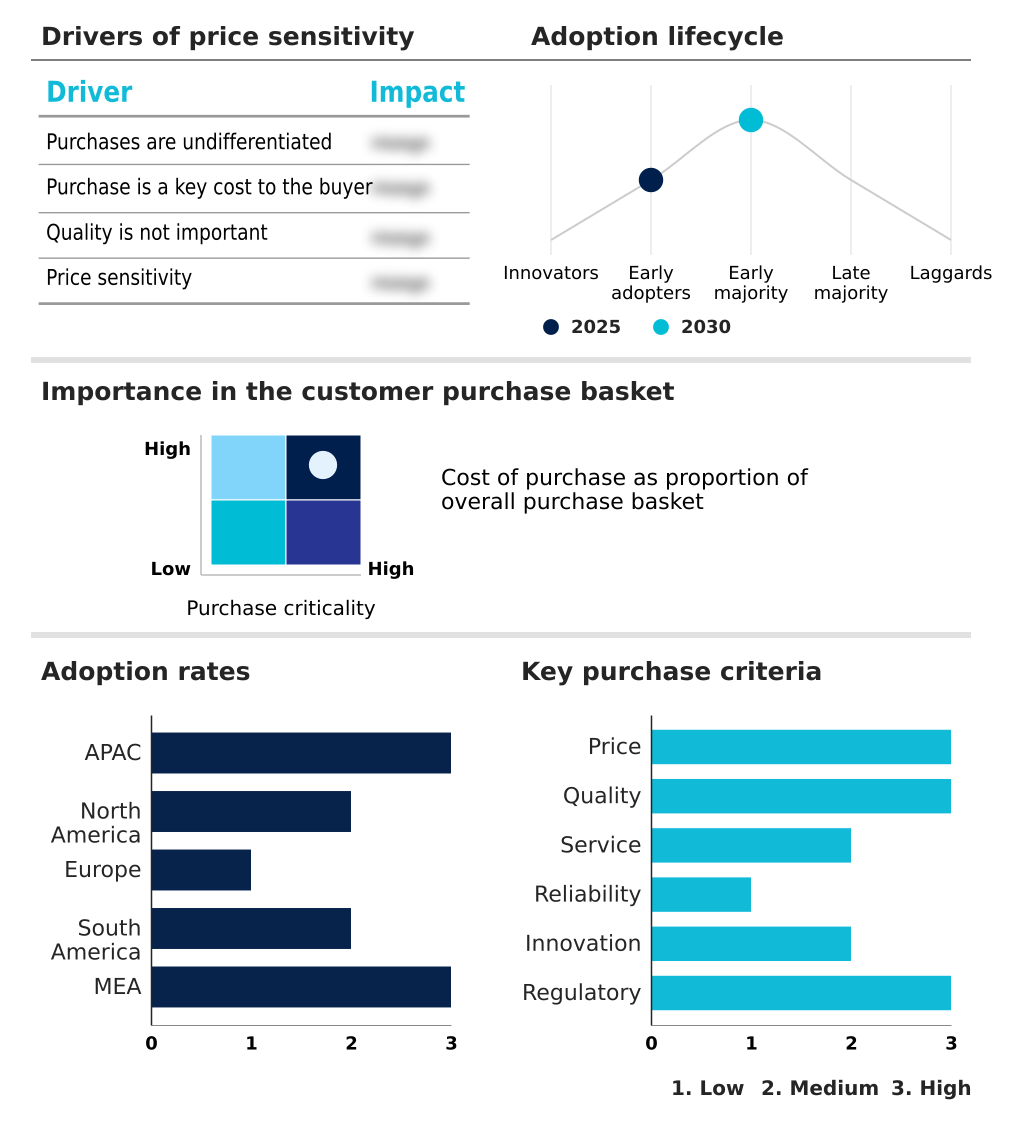
Customer Landscape of Friction Stir Welding Equipment Industry
Competitive Landscape
Companies are implementing various strategies, such as strategic alliances, friction stir welding equipment market forecast, partnerships, mergers and acquisitions, geographical expansion, and product/service launches, to enhance their presence in the industry.
Advanced Integration Tech. LP - Specialized FSW heads transform standard CNC machines into advanced solid-state joining systems, significantly lowering the barrier to adoption for high-integrity welding applications.
The industry research and growth report includes detailed analyses of the competitive landscape of the market and information about key companies, including:
- Advanced Integration Tech. LP
- AEE Co. Ltd
- Beijing FSW Technology Co. Ltd.
- Bond Technologies, LLC.
- Chongqing CME
- ETA Technology Pvt. Ltd.
- FOOKE GmbH
- Friction Welding Tech Pvt. Ltd.
- Grenzebach Maschinenbau GmbH
- Hwacheon Machine Tool Co Ltd
- KUKA AG
- Manufacturing Technology Inc.
- PaR Systems LLC
- PTG Holroyd
- Sakae Industries Co. Ltd.
- Stirweld
- The Lincoln Electric Co.
- TRA-C industrie
- TWI Ltd.
- Yamazaki Mazak Corp.
Qualitative and quantitative analysis of companies has been conducted to help clients understand the wider business environment as well as the strengths and weaknesses of key industry players. Data is qualitatively analyzed to categorize companies as pure play, category-focused, industry-focused, and diversified; it is quantitatively analyzed to categorize companies as dominant, leading, strong, tentative, and weak.
Recent Development and News in Friction stir welding equipment market
- In September, 2024, Ford Motor Company announced a major collaboration with a specialized welding automation firm to deploy high-speed friction stir welding lines for producing electric truck frames.
- In November, 2024, KUKA AG demonstrated a new high-rigidity robot series specifically engineered for friction stir welding applications, featuring enhanced stiffness to minimize deflection during welding of curved aerospace panels.
- In February, 2025, Mazak Corporation introduced a smart FSW machining center with an AI-driven control system capable of detecting potential tool failures by analyzing vibration and thermal signatures.
- In March, 2025, Kawasaki Heavy Industries deployed a fleet of robotic FSW systems at a shipyard in Kobe to automate the welding of double-hull structures for commercial vessels.
Dive into Technavio’s robust research methodology, blending expert interviews, extensive data synthesis, and validated models for unparalleled Friction Stir Welding Equipment Market insights. See full methodology.
| Market Scope | |
|---|---|
| Page number | 297 |
| Base year | 2025 |
| Historic period | 2020-2024 |
| Forecast period | 2026-2030 |
| Growth momentum & CAGR | Accelerate at a CAGR of 6.3% |
| Market growth 2026-2030 | USD 89.8 million |
| Market structure | Fragmented |
| YoY growth 2025-2026(%) | 5.9% |
| Key countries | China, India, Japan, South Korea, Australia, Indonesia, US, Canada, Mexico, Germany, UK, France, Italy, Spain, The Netherlands, Brazil, Argentina, Colombia, South Africa, Saudi Arabia, UAE, Turkey and Israel |
| Competitive landscape | Leading Companies, Market Positioning of Companies, Competitive Strategies, and Industry Risks |
Research Analyst Overview
- The friction stir welding equipment market is defined by its strategic role in advancing lightweight manufacturing across critical sectors. The adoption of solid-state joining technology is no longer a niche consideration but a central element of production strategy, particularly for battery enclosure manufacturing and fabricating cryogenic fuel tanks from high-strength aluminum alloys and aluminum-lithium alloys.
- A key trend influencing boardroom decisions is the integration of digital intelligence into machinery, where a smart fsw machining center with force-control software represents a significant capital investment tied to long-term risk mitigation and quality assurance. For example, deploying automated joining solutions with high-payload industrial robotics can deliver a 30% reduction in cycle times, directly impacting profitability.
- This evolution is compelling a shift toward custom-engineered solutions like vertical gantry fsw systems and mobile fsw equipment, which offer the structural integrity and leak-proof performance required for next-generation products. The increasing use of robotic friction stir welding and fsw end-effectors in flexible cells highlights the move toward adaptable, high-efficiency production lines.
What are the Key Data Covered in this Friction Stir Welding Equipment Market Research and Growth Report?
-
What is the expected growth of the Friction Stir Welding Equipment Market between 2026 and 2030?
-
USD 89.8 million, at a CAGR of 6.3%
-
-
What segmentation does the market report cover?
-
The report is segmented by Product Type (Fixed FSW equipment, Mobile FSW equipment, and Robotic FSW equipment), End-user (Automotive industry, Aerospace industry, Railway industry, Shipbuilding industry, and Others), Type (Gantry machines, and Linear seam machines) and Geography (APAC, North America, Europe, South America, Middle East and Africa)
-
-
Which regions are analyzed in the report?
-
APAC, North America, Europe, South America and Middle East and Africa
-
-
What are the key growth drivers and market challenges?
-
Surging demand for lightweight materials in aerospace and space exploration, High initial capital investment and specialized tooling costs
-
-
Who are the major players in the Friction Stir Welding Equipment Market?
-
Advanced Integration Tech. LP, AEE Co. Ltd, Beijing FSW Technology Co. Ltd., Bond Technologies, LLC., Chongqing CME, ETA Technology Pvt. Ltd., FOOKE GmbH, Friction Welding Tech Pvt. Ltd., Grenzebach Maschinenbau GmbH, Hwacheon Machine Tool Co Ltd, KUKA AG, Manufacturing Technology Inc., PaR Systems LLC, PTG Holroyd, Sakae Industries Co. Ltd., Stirweld, The Lincoln Electric Co., TRA-C industrie, TWI Ltd. and Yamazaki Mazak Corp.
-
Market Research Insights
- The market's dynamics are shaped by a trade-off between advanced capabilities and adoption hurdles. The integration of digital twin models enables predictive maintenance capabilities, which can enhance equipment uptime by over 20%. Concurrently, innovations in force feedback control and process parameter optimization are improving joint integrity and reducing material waste.
- However, the high initial capital expenditure strategy required remains a significant barrier, with nearly 40% of smaller fabricators citing cost as a primary obstacle to adoption.
- This dynamic forces a continuous joining technology evaluation, where the long-term benefits of superior weld quality monitoring and reduced operational costs are weighed against the immediate financial outlay, influencing production line integration decisions across industries.
We can help! Our analysts can customize this friction stir welding equipment market research report to meet your requirements.
 RIA -
RIA - 
