



Full Truck Load (FTL) Market Size 2026-2030
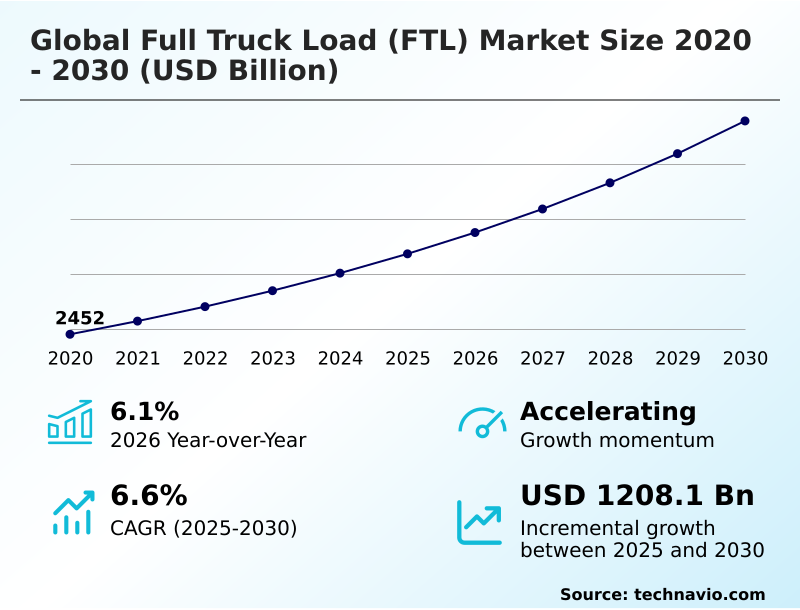
The full truck load (ftl) market size is valued to increase by USD 1208.1 billion, at a CAGR of 6.6% from 2025 to 2030. Increased outsourcing of logistics services will drive the full truck load (ftl) market.
Major Market Trends & Insights
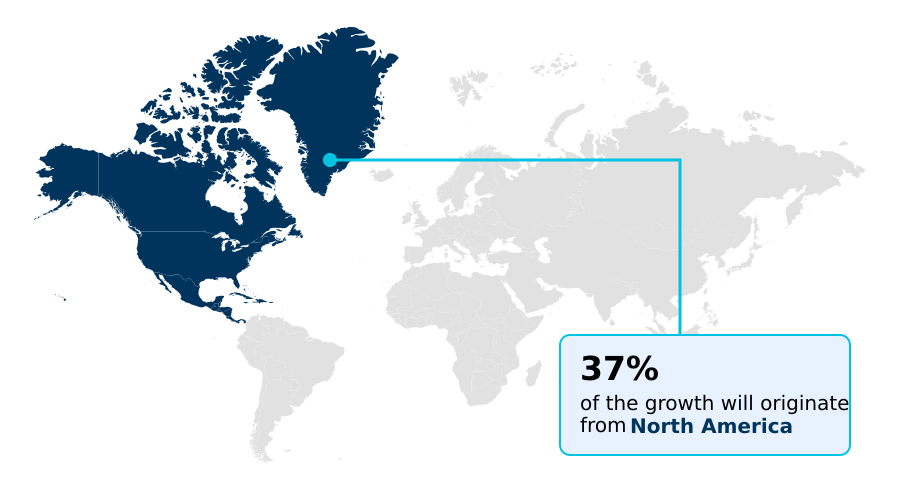
- North America dominated the market and accounted for a 36.6% growth during the forecast period.
- By End-user - Agriculture and fishing and forestry segment was valued at USD 1123.7 billion in 2024
- By Mobility Type - Domestic segment accounted for the largest market revenue share in 2024
Market Size & Forecast
- Market Opportunities: USD 1939.5 billion
- Market Future Opportunities: USD 1208.1 billion
- CAGR from 2025 to 2030 : 6.6%
Market Summary
- The full truck load (ftl) market is navigating a significant transformation, driven by digitalization and the persistent need for supply chain efficiency. Key trends include the widespread adoption of transportation management systems (TMS) and telematics to optimize route planning, improve asset utilization, and provide real-time tracking.
- These technologies are crucial for managing complex logistics, such as a manufacturer relying on just-in-time delivery to feed an assembly line, where a single delay can halt production. The emergence of big data analytics further enhances demand forecasting and helps mitigate the impact of empty miles.
- Concurrently, the industry grapples with significant challenges, including a chronic shortage of qualified drivers, which constrains capacity and increases labor costs. Volatility in fuel prices and increasing regulatory pressures related to emissions standards add further complexity to carrier pricing models.
- As companies increasingly outsource logistics to focus on core competencies, the demand for reliable, efficient, and technologically advanced FTL services continues to grow, pushing the market toward greater automation and data-driven decision-making.
What will be the Size of the Full Truck Load (FTL) Market during the forecast period?
Get Key Insights on Market Forecast (PDF) Get Free Sample
How is the Full Truck Load (FTL) Market Segmented?
The full truck load (ftl) industry research report provides comprehensive data (region-wise segment analysis), with forecasts and estimates in "USD billion" for the period 2026-2030, as well as historical data from 2020-2024 for the following segments.
- End-user
- Agriculture and fishing and forestry
- Manufacturing
- Wholesale and retail trade
- Others
- Mobility type
- Domestic
- International
- Technology
- GPS tracking
- Telematics
- Freight matching platforms
- Geography
- North America
- US
- Canada
- Mexico
- APAC
- China
- Japan
- India
- Europe
- Germany
- UK
- France
- South America
- Brazil
- Argentina
- Middle East and Africa
- Saudi Arabia
- UAE
- South Africa
- Rest of World (ROW)
- North America
By End-user Insights
The agriculture and fishing and forestry segment is estimated to witness significant growth during the forecast period.
The global full truck load (ftl) market is segmented by end-user, mobility type, and geography. The manufacturing segment's reliance on just-in-time delivery models requires dedicated capacity and precise scheduling, with advanced telematics ensuring on-time performance improves by over 12%.
The agriculture and fishing and forestry sector depends on specialized temperature-controlled transport and refrigerated trailers to maintain product integrity, where real-time tracking has been instrumental in optimizing procurement logistics.
Meanwhile, the wholesale and retail trade leverages FTL for rapid inventory replenishment, influenced heavily by consumer spending trends.
The domestic freight movement segment dominates, driven by industrial production within national borders, while the international freight forwarding segment navigates complex customs regulations.
This segmentation highlights diverse operational needs, from managing cost volatility in one sector to ensuring stringent compliance with emissions standards in another.
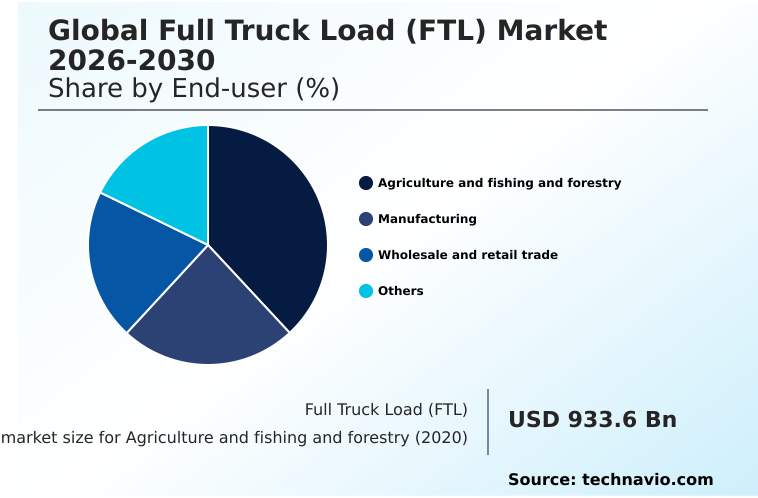
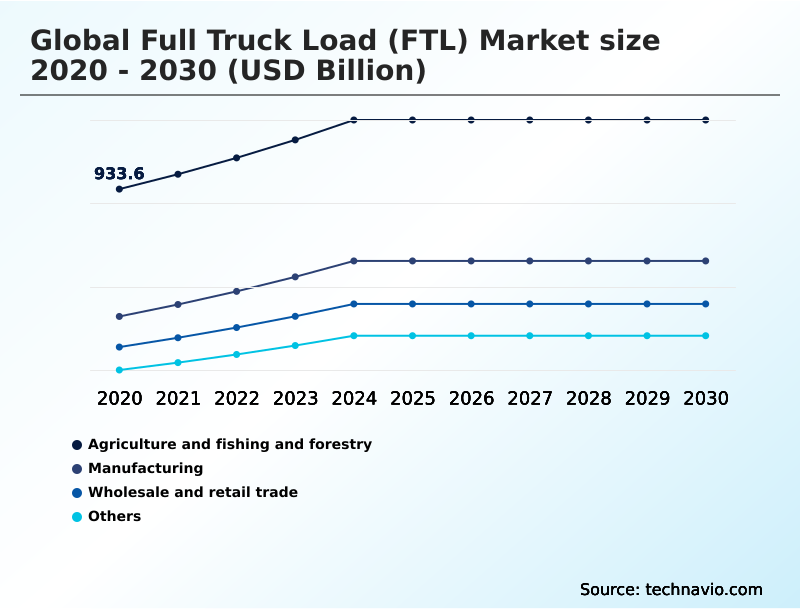
The Agriculture and fishing and forestry segment was valued at USD 1123.7 billion in 2024 and showed a gradual increase during the forecast period.
Regional Analysis
North America is estimated to contribute 36.6% to the growth of the global market during the forecast period.Technavio’s analysts have elaborately explained the regional trends and drivers that shape the market during the forecast period.
See How Full Truck Load (FTL) Market Demand is Rising in North America Get Free Sample
The global full truck load (ftl) market's geographic landscape is diverse, with each region presenting unique dynamics. North America's market is characterized by robust domestic freight movement and intricate cross-border logistics shaped by established trade corridors.
Here, carriers using advanced TMS for route planning have documented an average 8% reduction in fuel consumption. In APAC, rapid economic expansion fuels demand for international freight forwarding and multimodal transport, though infrastructure gaps remain a challenge.
Europe leads in sustainable practices, driven by stringent emissions standards and cabotage laws, with a focus on intermodal rail solutions that are up to four times more fuel-efficient than road transport for long-haul routes.
These regional distinctions highlight the varied operational strategies required for effective fleet management and navigating global supply chains.
Market Dynamics
Our researchers analyzed the data with 2025 as the base year, along with the key drivers, trends, and challenges. A holistic analysis of drivers will help companies refine their marketing strategies to gain a competitive advantage.
- Strategic decision-making in the global full truck load (ftl) market 2026-2030 now extends far beyond a simple ftl vs ltl cost benefit analysis. Leading carriers are leveraging ai in ftl route optimization to navigate congestion and reduce fuel spend, directly addressing the impact of driver shortage on ftl rates.
- The role of tms in ftl operations has become central, integrating data for real-time visibility for ftl shipments and enabling dynamic ftl capacity planning for seasonal peaks. To improve driver retention and safety, firms are using telematics data for ftl driver coaching, while automating ftl freight brokerage streamlines procurement.
- Managing fuel cost volatility in ftl remains a critical challenge, alongside complex cross border ftl compliance challenges. Companies are also focused on securing high value ftl cargo through advanced measures, including geofencing applications in ftl security. Furthermore, improving ftl dwell times with automation and developing sustainable ftl transportation strategies are key priorities.
- Shippers now weigh the benefits of a dedicated ftl fleet vs spot market sourcing, while specialized logistics for perishable goods demand precise execution. The ftl challenges in emerging markets require tailored approaches, but the core objective remains universal: reducing empty miles in ftl operations.
- Firms that utilize optimizing ftl with predictive analytics achieve on-time performance rates that are consistently 15-20% higher than those relying on historical data alone, demonstrating a clear competitive advantage in operational execution.
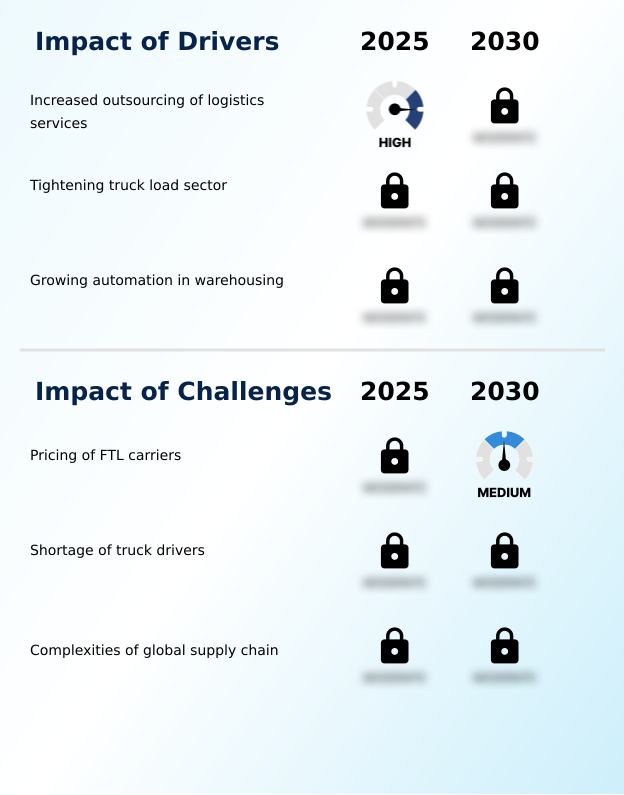
What are the key market drivers leading to the rise in the adoption of Full Truck Load (FTL) Industry?
- A key driver for the market is the increased outsourcing of logistics services, as enterprises aim to minimize operational expenditures and concentrate on their primary business functions.
- Market growth is significantly propelled by the strategic advantages of logistics outsourcing and automation. Companies are increasingly turning to third-party providers to manage their FTL needs, achieving average cost savings of 12% on transportation spend while focusing on core competencies.
- The growing automation in warehousing directly impacts FTL efficiency by reducing dwell times by over 30%, which is critical for supporting just-in-time delivery models.
- Furthermore, the trend of nearshoring to shorten supply chains creates sustained demand along key trade corridors, necessitating efficient empty miles reduction and load optimization strategies. These drivers collectively push the industry toward more integrated, cost-effective, and resilient transportation networks.
What are the market trends shaping the Full Truck Load (FTL) Industry?
- The emergence of big data is a prominent market trend, presenting opportunities for logistics companies to achieve a competitive edge through enhanced operational efficiencies and the development of innovative business models.
- Key trends in the market are centered on digitalization and data-driven efficiency. The adoption of AI-driven inventory management and sophisticated freight matching platforms is transforming how shippers connect with carriers, improving asset utilization by up to 20%. These systems facilitate superior demand forecasting, allowing for proactive adjustments to capacity constraints.
- The integration of advanced video telematics and geofencing provides enhanced security and operational oversight, reducing cargo-related losses by over 25% in high-risk lanes. This technological shift enables more agile and resilient supply chains, where real-time data informs everything from route planning to dynamic pricing, meeting the evolving demands for transparency and reliability.
What challenges does the Full Truck Load (FTL) Industry face during its growth?
- The complex pricing structures of FTL carriers, which are subject to cost volatility and intense market competition, pose a significant challenge to industry growth.
- The market faces persistent challenges related to cost volatility and regulatory complexity. Carrier pricing models are under constant pressure from fluctuating fuel expenses and a tightening insurance market, which has increased operational costs by as much as 15% in some regions.
- Navigating disparate customs regulations and cabotage laws adds a layer of complexity to cross-border logistics, often causing delays and compliance risks. The ongoing driver shortage exacerbates these issues, straining fleet management capabilities and limiting available capacity. These factors create a difficult operating environment where maintaining profitability requires sophisticated cost control and exceptional operational agility.
Exclusive Technavio Analysis on Customer Landscape
The full truck load (ftl) market forecasting report includes the adoption lifecycle of the market, covering from the innovator’s stage to the laggard’s stage. It focuses on adoption rates in different regions based on penetration. Furthermore, the full truck load (ftl) market report also includes key purchase criteria and drivers of price sensitivity to help companies evaluate and develop their market growth analysis strategies.
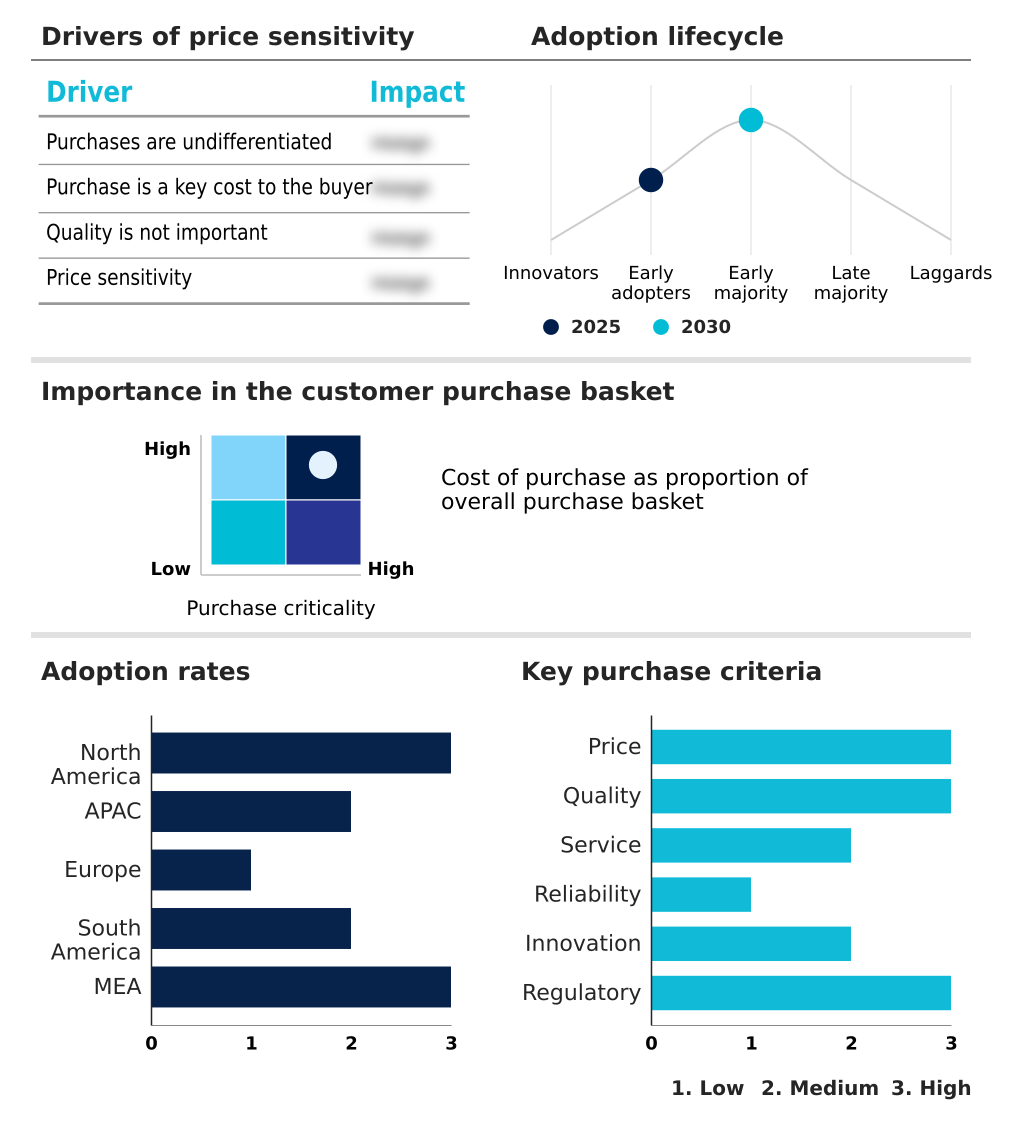
Customer Landscape of Full Truck Load (FTL) Industry
Competitive Landscape
Companies are implementing various strategies, such as strategic alliances, full truck load (ftl) market forecast, partnerships, mergers and acquisitions, geographical expansion, and product/service launches, to enhance their presence in the industry.
ArcBest Corp. - Offerings center on comprehensive FTL solutions, including dry van, reefer, and specialized freight, enhanced by digital platforms for optimized routing, real-time tracking, and capacity management.
The industry research and growth report includes detailed analyses of the competitive landscape of the market and information about key companies, including:
- ArcBest Corp.
- C H Robinson Worldwide Inc.
- CEVA Logistics SA
- DHL International GmbH
- Estes Express Lines
- FedEx Corp.
- GEODIS
- Knight Swift Transportation
- Kuehne Nagel Management AG
- Old Dominion Freight Line
- R L Carriers Inc.
- Saia Inc.
- Schenker AG
- Schneider National Inc.
- Southeastern Freight Lines
- Swift Transportation Co.
- TRANS TECH LOGISTICS Ltd
- United Parcel Service Inc.
- Werner Enterprises Inc.
- XPO Inc.
Qualitative and quantitative analysis of companies has been conducted to help clients understand the wider business environment as well as the strengths and weaknesses of key industry players. Data is qualitatively analyzed to categorize companies as pure play, category-focused, industry-focused, and diversified; it is quantitatively analyzed to categorize companies as dominant, leading, strong, tentative, and weak.
Recent Development and News in Full truck load (ftl) market
- In September 2024, LogiPro Solutions launched a new AI-driven transportation management system (TMS) designed to optimize multi-stop FTL routes, projecting a 15% reduction in fuel consumption for its early adopters.
- In November 2024, Apex Freightways announced the acquisition of Regional Transport Inc. for an undisclosed sum, a move aimed at expanding its FTL network coverage and dedicated capacity in the southeastern US.
- In January 2025, truck manufacturer Titan Motors partnered with tech firm Visionary AI to begin commercial trials of its Level 4 autonomous truck platooning technology on a major interstate corridor, aiming to address driver shortages.
- In April 2025, the Cross-Border Trade Commission approved a multi-billion dollar infrastructure project to build a new commercial port of entry, designed to reduce FTL transit times and alleviate congestion.
Dive into Technavio’s robust research methodology, blending expert interviews, extensive data synthesis, and validated models for unparalleled Full Truck Load (FTL) Market insights. See full methodology.
| Market Scope | |
|---|---|
| Page number | 295 |
| Base year | 2025 |
| Historic period | 2020-2024 |
| Forecast period | 2026-2030 |
| Growth momentum & CAGR | Accelerate at a CAGR of 6.6% |
| Market growth 2026-2030 | USD 1208.1 billion |
| Market structure | Fragmented |
| YoY growth 2025-2026(%) | 6.1% |
| Key countries | US, Canada, Mexico, China, Japan, India, South Korea, Australia, Indonesia, Germany, UK, France, Italy, Spain, The Netherlands, Brazil, Argentina, Chile, Saudi Arabia, UAE, South Africa, Israel and Turkey |
| Competitive landscape | Leading Companies, Market Positioning of Companies, Competitive Strategies, and Industry Risks |
Research Analyst Overview
- The full truck load (ftl) market is undergoing a technological consolidation where operational efficiency is paramount. The integration of a transportation management system with electronic logging devices and advanced telematics is now the baseline for competitive fleet management. This synergy enables precise freight auditing, dynamic route planning, and optimized asset utilization.
- For boardroom-level consideration, the decision is no longer about adopting technology but whether to invest in modernizing an owned fleet with refrigerated trailers and dry van trailers or shifting to an asset-light model that leverages freight matching platforms. Technologies like video telematics, geofencing, and blind spot information systems are critical for risk mitigation and securing high-value, temperature-controlled transport.
- The effective use of these tools for backhauls and just-in-time delivery can reduce empty miles, with some carriers reporting a return on investment in telematics technology within 18 months through fuel savings and reduced insurance premiums. This data-centric approach is fundamental to managing cost volatility and navigating the complexities of cross-border logistics and last-mile delivery.
What are the Key Data Covered in this Full Truck Load (FTL) Market Research and Growth Report?
-
What is the expected growth of the Full Truck Load (FTL) Market between 2026 and 2030?
-
USD 1208.1 billion, at a CAGR of 6.6%
-
-
What segmentation does the market report cover?
-
The report is segmented by End-user (Agriculture and fishing and forestry, Manufacturing, Wholesale and retail trade, and Others), Mobility Type (Domestic, and International), Technology (GPS tracking, Telematics, and Freight matching platforms) and Geography (North America, APAC, Europe, South America, Middle East and Africa)
-
-
Which regions are analyzed in the report?
-
North America, APAC, Europe, South America and Middle East and Africa
-
-
What are the key growth drivers and market challenges?
-
Increased outsourcing of logistics services, Pricing of FTL carriers
-
-
Who are the major players in the Full Truck Load (FTL) Market?
-
ArcBest Corp., C H Robinson Worldwide Inc., CEVA Logistics SA, DHL International GmbH, Estes Express Lines, FedEx Corp., GEODIS, Knight Swift Transportation, Kuehne Nagel Management AG, Old Dominion Freight Line, R L Carriers Inc., Saia Inc., Schenker AG, Schneider National Inc., Southeastern Freight Lines, Swift Transportation Co., TRANS TECH LOGISTICS Ltd, United Parcel Service Inc., Werner Enterprises Inc. and XPO Inc.
-
Market Research Insights
- The market is defined by a shift toward data-driven operations, where enhanced supply chain visibility is no longer a luxury but a standard requirement. The adoption of dynamic pricing models, which adjust rates based on real-time capacity and demand, has improved cost efficiencies by over 10% compared to static contract rates.
- Real-time tracking is now integral to contract logistics, providing shippers with the granular data needed for precise inventory replenishment and demand forecasting. As a result, companies leveraging these digital tools report a 15% higher on-time delivery rate, enabling more resilient and responsive supply chains that can better navigate market volatility and meet fluctuating consumer spending patterns.
We can help! Our analysts can customize this full truck load (ftl) market research report to meet your requirements.
 RIA -
RIA - 
