
Fuel Cells For Military Unmanned Aerial Vehicle (UAV) Market Size 2025-2029
The fuel cells for military unmanned aerial vehicle (uav) market size is forecast to increase by USD 391.2 million, at a CAGR of 11.2% between 2024 and 2029.
- The Fuel Cells for Military Unmanned Aerial Vehicles (UAV) market is driven by the increasing demand for extended flight times in military applications. This necessity arises from the need to collect extensive data over extended periods, particularly in reconnaissance and surveillance missions. A significant trend in this market is the emergence of formic acid hydrogen-on-demand technology, which addresses the challenge of limited fuel supply for UAVs. This technology enables UAVs to generate hydrogen from formic acid, providing a continuous power source. However, high initial costs associated with fuel cell systems pose a substantial challenge to market growth.
- These costs include the high price of fuel cells, hydrogen storage systems, and the infrastructure required to produce and transport hydrogen. Companies seeking to capitalize on this market must focus on reducing these costs through technological advancements and economies of scale. Additionally, collaborations and partnerships between industry players and governments can help share the financial burden and accelerate market growth.
What will be the Size of the Fuel Cells For Military Unmanned Aerial Vehicle (UAV) Market during the forecast period?
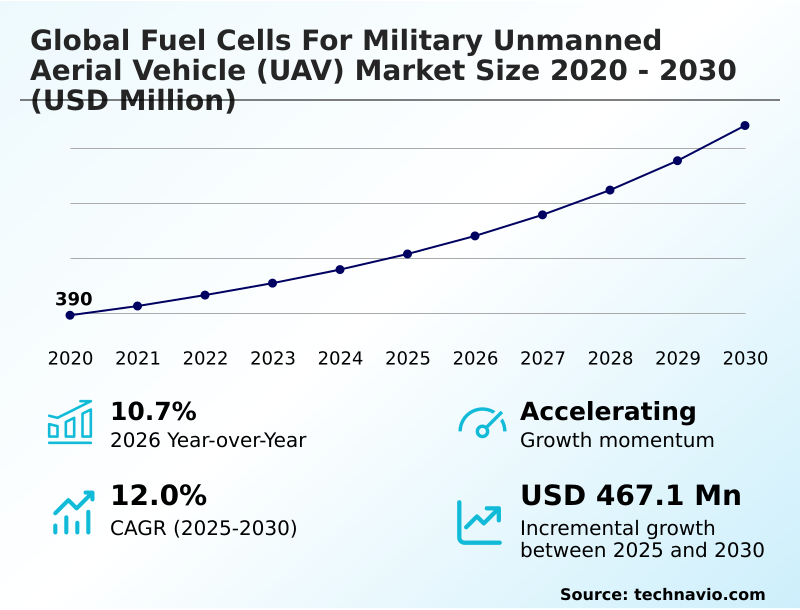
Explore in-depth regional segment analysis with market size data - historical 2019-2023 and forecasts 2025-2029 - in the full report.
Request Free Sample
The fuel cells market for Unmanned Aerial Vehicles (UAVs) in military applications continues to evolve, driven by the need for extended flight times, energy efficiency, and the ability to operate in extreme temperatures and high altitudes. Fuel cell systems, which convert hydrogen into electricity through a chemical reaction, offer several advantages over traditional batteries for UAVs. One significant challenge in implementing fuel cells for UAVs is the efficient acquisition, purification, and storage of hydrogen. Thermal management, air management, and water management are crucial factors in ensuring the reliability and longevity of fuel cell systems. Battery integration and solar integration are also essential to optimize power density and payload capacity.
Cost reduction is a continuous focus in the fuel cells market for UAVs, with ongoing efforts to improve catalyst degradation, membrane durability, and the development of hybrid power systems. Regulatory compliance and environmental conditions are also critical considerations in the design and implementation of fuel cell systems for military UAVs. Power management and data acquisition are essential components of fuel cell systems for UAVs, enabling real-time monitoring and control of operating temperature, power density, and other critical parameters. Control systems and bipolar plates play a vital role in optimizing the performance of fuel cell stacks. The fuel cells market for military UAVs is characterized by ongoing research and development, with new innovations and applications continually emerging.
The integration of fuel cells with lightweight materials, electrode materials, and data analysis tools is expected to further expand the capabilities of UAVs in various sectors.
How is this Fuel Cells For Military Unmanned Aerial Vehicle (UAV) Industry segmented?
The fuel cells for military unmanned aerial vehicle (uav) industry research report provides comprehensive data (region-wise segment analysis), with forecasts and estimates in "USD million" for the period 2025-2029, as well as historical data from 2019-2023 for the following segments.
- Product
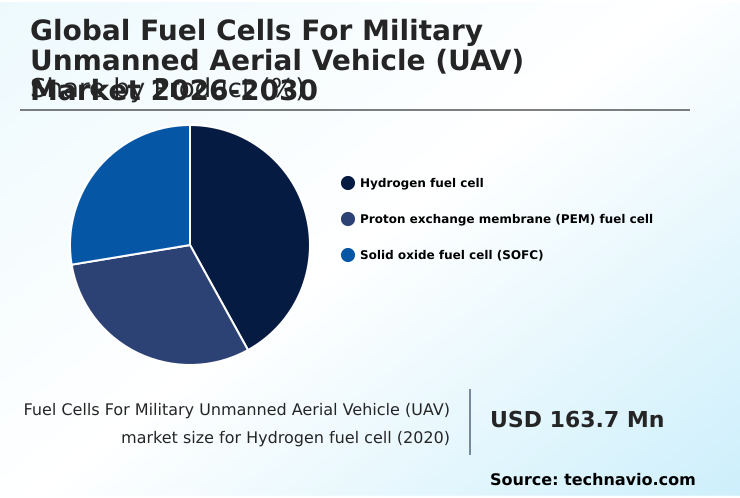
- Hydrogen fuel cell
- Proton exchange membrane (PEM) fuel cell
- Solid oxide fuel cell (SOFC)
- Type
- Tactical UAV
- Mini UAV
- Micro UAV
- Medium altitude long endurance (MALE) UAV
- High altitude long endurance (HALE) UAV
- Power Output
- Less than 5 kW
- 5-10 kW
- 10-20 kW
- Above 20 kW
- Geography
- North America
- Europe
- APAC
- China
- India
- Japan
- South Korea
- Rest of World (ROW)
By Product Insights
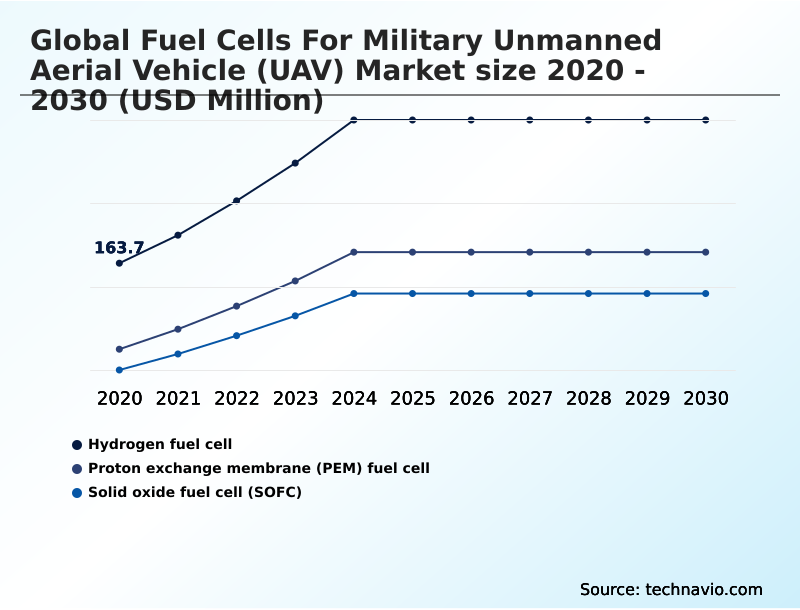
The hydrogen fuel cell segment is estimated to witness significant growth during the forecast period.
Hydrogen fuel cells have emerged as a promising power source for military Unmanned Aerial Vehicles (UAVs), offering extended flight endurance and eco-friendly operations. These systems produce electricity through a chemical reaction between hydrogen and oxygen, resulting in water vapor as the only emission. This makes them an attractive choice for military applications, as they reduce noise emissions and are less detectable, enhancing stealth capabilities. Hydrogen fuel cells' energy efficiency and power density enable UAVs to carry heavier payloads and operate at extreme temperatures and high altitudes. However, challenges such as hydrogen storage, transportation, and cost reduction remain.
Hydrogen purification is essential to ensure the fuel's quality and prevent catalyst degradation. Regulatory compliance and environmental conditions are critical considerations in the design and implementation of hydrogen fuel cell systems. Power management, data acquisition, thermal management, air management, water management, and solar integration are essential components of hydrogen fuel cell systems for UAVs. Hybrid power systems, including fuel cells and batteries, can optimize power usage and extend flight time. Bipolar plates, fuel cells, and fuel cell stacks are integral parts of these systems, requiring membrane durability and electrode materials for optimal performance. Cost per kWh, EMI/EMC, and lightweight materials are essential factors in the design and implementation of cost-effective hydrogen fuel cell systems for military UAVs.
Control systems, data analysis, and integration with batteries and solar panels are crucial for efficient power management and optimizing system performance.

Request Free Sample
The Hydrogen fuel cell segment was valued at USD 179.30 million in 2019 and showed a gradual increase during the forecast period.
Regional Analysis
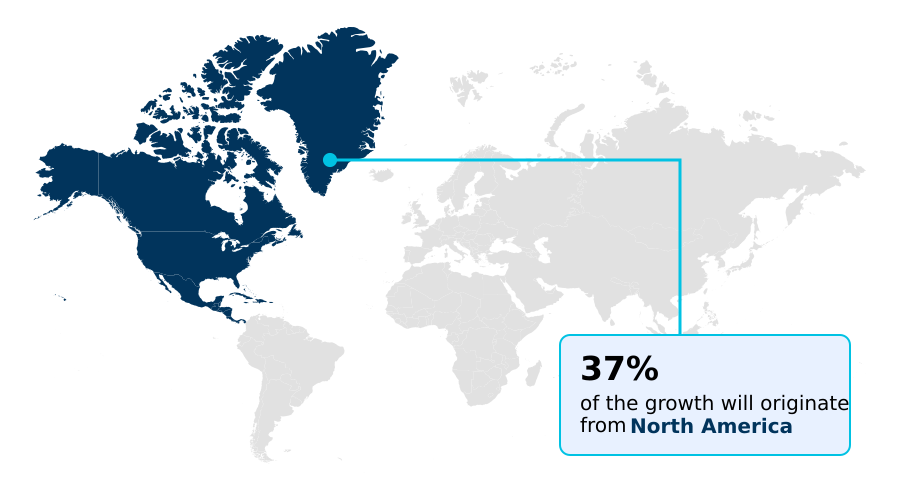
North America is estimated to contribute 39% to the growth of the global market during the forecast period.Technavio’s analysts have elaborately explained the regional trends and drivers that shape the market during the forecast period.
Request Free Sample
The global market for fuel cells in Unmanned Aerial Vehicles (UAVs) is experiencing significant growth due to increasing military applications, particularly in North America. With the United States Department of Defense (DoD) leading the way in adopting environmentally friendly energy sources, fuel cells are emerging as a preferred option for powering military UAVs. Fuel cells offer several advantages over traditional batteries, including extended flight times, energy efficiency, and the ability to operate in extreme temperatures and high altitudes. However, challenges such as hydrogen storage, transportation, and cost reduction remain. Hydrogen purification and membrane durability are also critical factors in ensuring fuel cell systems perform optimally.
Regulatory compliance and environmental conditions are essential considerations for military applications. Power management, data acquisition, thermal management, air management, battery integration, water management, and solar integration are all crucial elements of fuel cell systems. Cost per kWh, control systems, bipolar plates, fuel cells, and fuel cell stacks are key components that impact system performance and efficiency. Catalyst degradation and hybrid power systems are also areas of ongoing research to enhance fuel cell durability and reliability. Flight time, EMI/EMC, lightweight materials, and electrode materials are essential factors in designing fuel cell systems for military UAVs. Data analysis is necessary to optimize system performance and ensure regulatory compliance.
Market Dynamics
Our researchers analyzed the data with 2024 as the base year, along with the key drivers, trends, and challenges. A holistic analysis of drivers will help companies refine their marketing strategies to gain a competitive advantage.
Fuel cells have emerged as a promising solution for powering military unmanned aerial vehicles (UAVs), offering numerous advantages over traditional battery-powered systems. These advanced energy sources provide longer flight durations, faster refueling times, and improved efficiency. Fuel cells utilize hydrogen as a fuel source, producing only water as a byproduct, making them an environmentally friendly option. The military UAV fuel cell market is driven by the increasing demand for extended mission durations and the need for reduced emissions. Fuel cell technology is continually evolving, with ongoing research focusing on improving system size, weight, and cost. Integration of fuel cells with UAVs also enhances their operational capabilities, enabling them to carry heavier payloads and perform complex missions. Furthermore, fuel cells offer a high power density, ensuring optimal performance even in extreme temperatures and altitudes. The military UAV fuel cell market is poised for significant growth, with key applications including reconnaissance, surveillance, and communication.
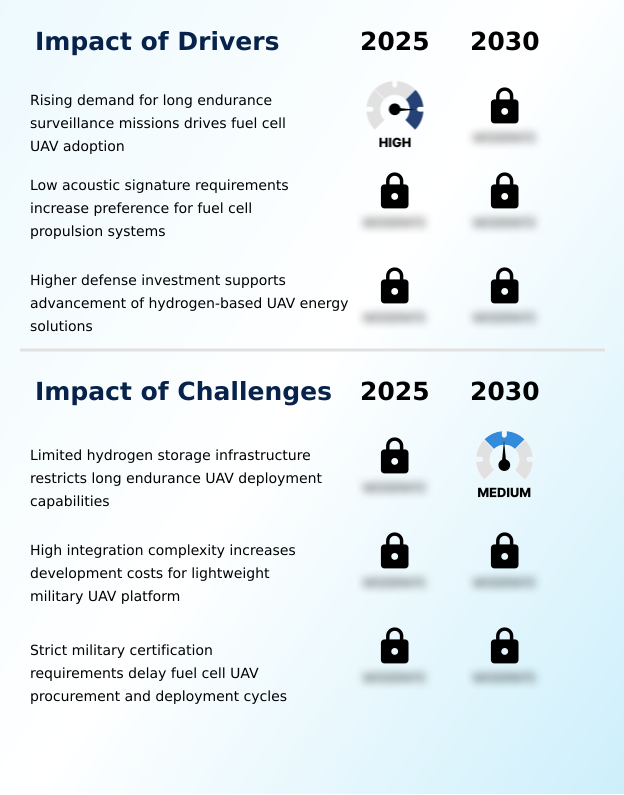
What are the key market drivers leading to the rise in the adoption of Fuel Cells For Military Unmanned Aerial Vehicle (UAV) Industry?
- The increasing demand for prolonged flight durations serves as the primary market motivator.
- Fuel cells offer significant advantages for powering military Unmanned Aerial Vehicles (UAVs) during high altitude operations. Compared to traditional lithium-polymer batteries, fuel cells provide longer flight times, enabling UAVs to cover larger areas and conduct more comprehensive surveillance missions. This extended endurance is crucial for intelligence, surveillance, and reconnaissance (ISR) applications, where continuous monitoring of critical areas is essential. The power density of fuel cells is higher than that of batteries, allowing for a greater payload capacity. However, catalyst degradation is a concern for fuel cells, which can impact their efficiency and lifespan. Hydrogen generation and regulatory compliance with environmental conditions and operating temperatures are also important considerations.
- Effective power management is necessary to optimize the performance of fuel cell-powered UAVs. Fuel cells provide a reliable and sustainable power source for military UAVs, allowing for extended flight times and increased mission endurance. Despite the challenges associated with fuel cell technology, the benefits make it an attractive option for military applications. With advancements in fuel cell technology, we can expect to see more widespread adoption in the military UAV market.
What are the market trends shaping the Fuel Cells For Military Unmanned Aerial Vehicle (UAV) Industry?
- The emergence of hydrogen-on-demand technology is gaining significant traction in the market. This advanced technology allows for the production of hydrogen gas as needed, making it a promising trend in various industries.
- Fuel cells play a crucial role in powering Unmanned Aerial Vehicles (UAVs) in various military applications. The Formira Hydrogen-On-Demand technology, which synthesizes hydrogen from liquid formic acid, is a safe and efficient solution for UAV power. This process involves transferring formic acid from a tank to a reformer, where hydrogen is generated and instantly consumed by the fuel cell stack. The electrolysis process initiates the system, while the fuel cells maintain continuous operation and charge the battery set. This technology offers several advantages, including high modularity due to its compact design. It eliminates the need for hydrogen storage, reducing the risk of flammable issues.
- Thermal management and air management systems ensure optimal fuel cell performance. Battery integration and water management systems maintain the battery's efficiency and longevity. Solar integration allows for hybrid power solutions, further increasing operational flexibility. Cost per kWh is a significant factor in UAV fuel cell applications. Advanced control systems and bipolar plates improve system efficiency and durability. These features contribute to the growing adoption of fuel cells in the military UAV market.
What challenges does the Fuel Cells For Military Unmanned Aerial Vehicle (UAV) Industry face during its growth?
- The high initial costs of fuel cell systems represent a significant challenge to the industry's growth trajectory. Fuel cell technology, while offering numerous benefits such as zero emissions and high efficiency, faces obstacles in gaining widespread adoption due to the substantial upfront expenses associated with implementing these systems.
- Fuel cells represent a promising technology for powering military Unmanned Aerial Vehicles (UAVs), offering extended flight times and reduced emissions. However, the integration of fuel cell systems into UAV platforms presents challenges, including membrane durability, hybrid power system compatibility, and Electromagnetic Interference/Electromagnetic Compatibility (EMI/EMC) considerations. To address these challenges, investments in research and development are essential to reduce costs and improve system efficiency. Standardization efforts can also facilitate the development of adaptable and modular fuel cell systems, easing integration into various UAV designs.
- Lightweight materials and advanced electrode materials are crucial for enhancing fuel cell performance and reducing weight. Data analysis plays a vital role in optimizing fuel cell operation and improving overall system performance. Incorporating these advancements into military UAVs can lead to significant improvements in mission capabilities and operational readiness.
Exclusive Customer Landscape
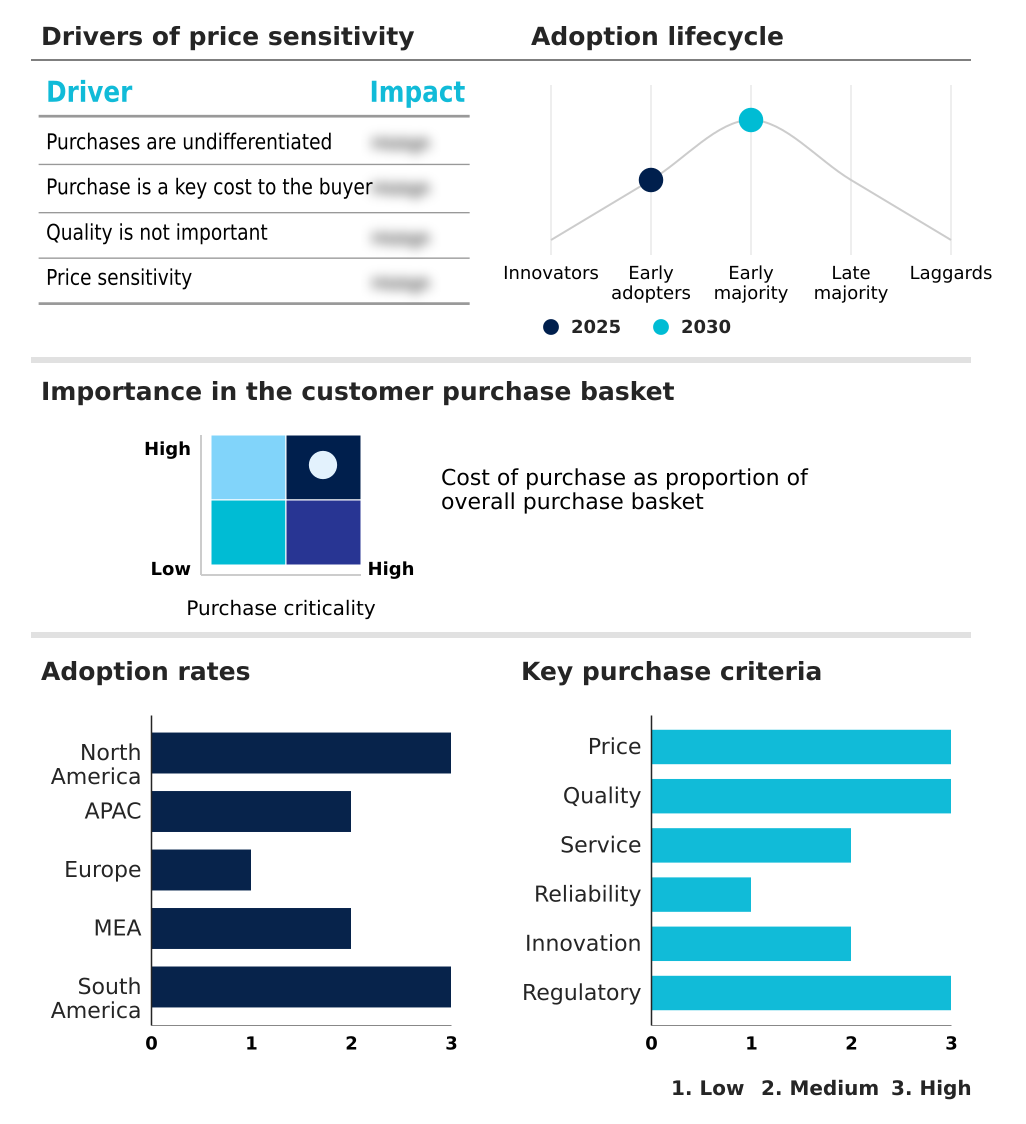
The fuel cells for military unmanned aerial vehicle (uav) market forecasting report includes the adoption lifecycle of the market, covering from the innovator’s stage to the laggard’s stage. It focuses on adoption rates in different regions based on penetration. Furthermore, the fuel cells for military unmanned aerial vehicle (uav) market report also includes key purchase criteria and drivers of price sensitivity to help companies evaluate and develop their market growth analysis strategies.
Customer Landscape
Key Companies & Market Insights
Companies are implementing various strategies, such as strategic alliances, fuel cells for military unmanned aerial vehicle (uav) market forecast, partnerships, mergers and acquisitions, geographical expansion, and product/service launches, to enhance their presence in the industry.
AeroVironment Inc. - The company specializes in fuel cell technology for military unmanned aerial vehicles (UAVs). Our solution integrates a hybridized proton exchange membrane fuel cell system. This advanced technology, featuring a lithium-ion battery, ensures optimal power output during critical takeoff and maneuvering phases. The fuel cell system efficiently converts hydrogen fuel into electricity, providing extended flight duration and reduced emissions. By combining the benefits of fuel cells and lithium-ion batteries, our offering enhances UAV performance and mission capabilities.
The industry research and growth report includes detailed analyses of the competitive landscape of the market and information about key companies, including:
- AeroVironment Inc.
- Aviation Turkey
- Ballard Power Systems Inc.
- Barnard Microsystems Ltd.
- Cobham Ltd.
- Doosan Fuel Cell Co. Ltd.
- Elbit Systems Ltd.
- General Dynamics Corp.
- H3 Dynamics Holdings Pte. Ltd.
- Honeywell International Inc.
- Intelligent Energy Ltd.
- Israel Aerospace Industries Ltd.
- ISS Aerospace
- MMC
- Northrop Grumman Corp.
- Plug Power Inc.
- Textron Inc.
- The Boeing Co.
- TW Horizon Fuel Cell Technologies
- ZeroAvia Inc.
Qualitative and quantitative analysis of companies has been conducted to help clients understand the wider business environment as well as the strengths and weaknesses of key industry players. Data is qualitatively analyzed to categorize companies as pure play, category-focused, industry-focused, and diversified; it is quantitatively analyzed to categorize companies as dominant, leading, strong, tentative, and weak.
Recent Development and News in Fuel Cells For Military Unmanned Aerial Vehicle (UAV) Market
- In January 2024, Ballard Power Systems, a leading fuel cell manufacturer, announced a strategic partnership with AeroVironment, a leading UAV manufacturer, to integrate Ballard's fuel cell technology into AeroVironment's military UAVs. This collaboration aimed to extend the endurance and reduce the emissions of these UAVs (Ballard Power Systems Press Release, 2024).
- In March 2024, Plug Power, another fuel cell technology provider, secured a USD50 million contract from the U.S. Army to develop and deliver hydrogen fuel cell systems for military UAVs. This contract marked a significant milestone in the adoption of fuel cells for military UAV applications (Plug Power Press Release, 2024).
- In May 2024, Siemens Energy and H2 Energy, a hydrogen fuel cell company, announced the successful demonstration of a fuel cell system for military UAVs. The system, which achieved a power output of 10 kW, could potentially extend the flight time of military UAVs by up to 5 hours (Siemens Energy Press Release, 2024).
- In April 2025, the U.S. Department of Defense (DoD) released a policy statement, emphasizing the importance of reducing the carbon footprint of military operations. The statement highlighted the potential of fuel cells in powering military UAVs as a key initiative to achieve this goal (DoD Press Release, 2025).
Research Analyst Overview
- The military UAV market is experiencing significant advancements in power systems, with fuel cells emerging as a promising alternative to traditional battery systems. Fuel cell components, such as hydrogen production methods and infrastructure, are crucial elements driving this shift. UAV assembly lines integrate these components into UAV design, enabling longer flight durations and increased payload capabilities. UAV sensor systems and communication systems require reliable power sources, making fuel cell technology an attractive option. Hydrogen storage tanks and refueling infrastructure are essential for efficient UAV operation and deployment. UAV regulations and safety standards necessitate stringent testing and certification processes for fuel cell UAVs.
- UAV training simulators and maintenance programs ensure operators are proficient in handling these advanced systems. UAV logistics and support services must adapt to accommodate hydrogen-powered UAVs, necessitating collaboration between stakeholders. UAV aerodynamics and flight dynamics are also under scrutiny to optimize fuel cell integration. UAV propulsion systems and navigation systems benefit from the high energy density and clean emissions of hydrogen fuel cells. UAV repair facilities and design teams collaborate to address any challenges associated with fuel cell integration. Hydrogen production methods and infrastructure continue to evolve, offering potential cost savings and operational efficiencies for military UAV applications.
- UAV data security remains a priority, with fuel cell systems providing an additional layer of security through reduced reliance on batteries. In summary, the military UAV market's transition to fuel cell power systems is influenced by various factors, including regulations, infrastructure development, and technological advancements. Fuel cell components, such as hydrogen production methods and infrastructure, are integral to this transformation, shaping the future of UAV manufacturing, operation, and support.
Dive into Technavio’s robust research methodology, blending expert interviews, extensive data synthesis, and validated models for unparalleled Fuel Cells For Military Unmanned Aerial Vehicle (UAV) Market insights. See full methodology.
|
Market Scope
|
|
Report Coverage
|
Details
|
|
Page number
|
234
|
|
Base year
|
2024
|
|
Historic period
|
2019-2023 |
|
Forecast period
|
2025-2029
|
|
Growth momentum & CAGR
|
Accelerate at a CAGR of 11.2%
|
|
Market growth 2025-2029
|
USD 391.2 million
|
|
Market structure
|
Fragmented
|
|
YoY growth 2024-2025(%)
|
10.2
|
|
Key countries
|
US, Canada, China, Japan, UK, India, Germany, South Korea, Italy, and France
|
|
Competitive landscape
|
Leading Companies, Market Positioning of Companies, Competitive Strategies, and Industry Risks
|
Request Free Sample
What are the Key Data Covered in this Fuel Cells For Military Unmanned Aerial Vehicle (UAV) Market Research and Growth Report?
- CAGR of the Fuel Cells For Military Unmanned Aerial Vehicle (UAV) industry during the forecast period
- Detailed information on factors that will drive the growth and forecasting between 2025 and 2029
- Precise estimation of the size of the market and its contribution of the industry in focus to the parent market
- Accurate predictions about upcoming growth and trends and changes in consumer behaviour
- Growth of the market across North America, APAC, Europe, Middle East and Africa, and South America
- Thorough analysis of the market’s competitive landscape and detailed information about companies
- Comprehensive analysis of factors that will challenge the fuel cells for military unmanned aerial vehicle (uav) market growth of industry companies
We can help! Our analysts can customize this fuel cells for military unmanned aerial vehicle (uav) market research report to meet your requirements.
Get in touch
1 Executive Summary
- 1.1 Market overview
- Executive Summary - Chart on Market Overview
- Executive Summary - Data Table on Market Overview
- Executive Summary - Chart on Global Market Characteristics
- Executive Summary - Chart on Market by Geography
- Executive Summary - Chart on Market Segmentation by Product
- Executive Summary - Chart on Market Segmentation by Type
- Executive Summary - Chart on Market Segmentation by Power Output
- Executive Summary - Chart on Incremental Growth
- Executive Summary - Data Table on Incremental Growth
- Executive Summary - Chart on Company Market Positioning
2 Technavio Analysis
- 2.1 Analysis of price sensitivity, lifecycle, customer purchase basket, adoption rates, and purchase criteria
- Analysis of price sensitivity, lifecycle, customer purchase basket, adoption rates, and purchase criteria
- 2.2 Criticality of inputs and Factors of differentiation
- Overview on criticality of inputs and factors of differentiation
- 2.3 Factors of disruption
- Overview on factors of disruption
- 2.4 Impact of drivers and challenges
- Impact of drivers and challenges in 2024 and 2029
3 Market Landscape
- 3.1 Market ecosystem
- Parent Market
- Data Table on - Parent Market
- 3.2 Market characteristics
- Market characteristics analysis
4 Market Sizing
- 4.1 Market definition
- Offerings of companies included in the market definition
- 4.2 Market segment analysis
- 4.4 Market outlook: Forecast for 2024-2029
- Chart on Global - Market size and forecast 2024-2029 ($ million)
- Data Table on Global - Market size and forecast 2024-2029 ($ million)
- Chart on Global Market: Year-over-year growth 2024-2029 (%)
- Data Table on Global Market: Year-over-year growth 2024-2029 (%)
5 Historic Market Size
- 5.1 Global Fuel Cells Market For Military Unmanned Aerial Vehicle (UAV) 2019 - 2023
- Historic Market Size - Data Table on Global Fuel Cells Market For Military Unmanned Aerial Vehicle (UAV) 2019 - 2023 ($ million)
- 5.2 Product segment analysis 2019 - 2023
- Historic Market Size - Product Segment 2019 - 2023 ($ million)
- 5.3 Type segment analysis 2019 - 2023
- Historic Market Size - Type Segment 2019 - 2023 ($ million)
- 5.4 Power Output segment analysis 2019 - 2023
- Historic Market Size - Power Output Segment 2019 - 2023 ($ million)
- 5.5 Geography segment analysis 2019 - 2023
- Historic Market Size - Geography Segment 2019 - 2023 ($ million)
- 5.6 Country segment analysis 2019 - 2023
- Historic Market Size - Country Segment 2019 - 2023 ($ million)
6 Qualitative Analysis
- 6.1 Impact of AI on global fuel cells market for military unmanned aerial vehicle (UAVs)
7 Five Forces Analysis
- 7.1 Five forces summary
- Five forces analysis - Comparison between 2024 and 2029
- 7.2 Bargaining power of buyers
- Bargaining power of buyers - Impact of key factors 2024 and 2029
- 7.3 Bargaining power of suppliers
- Bargaining power of suppliers - Impact of key factors in 2024 and 2029
- 7.4 Threat of new entrants
- Threat of new entrants - Impact of key factors in 2024 and 2029
- 7.5 Threat of substitutes
- Threat of substitutes - Impact of key factors in 2024 and 2029
- 7.6 Threat of rivalry
- Threat of rivalry - Impact of key factors in 2024 and 2029
- 7.7 Market condition
- Chart on Market condition - Five forces 2024 and 2029
8 Market Segmentation by Product
- 8.1 Market segments
- Chart on Product - Market share 2024-2029 (%)
- Data Table on Product - Market share 2024-2029 (%)
- 8.2 Comparison by Product
- Chart on Comparison by Product
- Data Table on Comparison by Product
- 8.3 Hydrogen fuel cell - Market size and forecast 2024-2029
- Chart on Hydrogen fuel cell - Market size and forecast 2024-2029 ($ million)
- Data Table on Hydrogen fuel cell - Market size and forecast 2024-2029 ($ million)
- Chart on Hydrogen fuel cell - Year-over-year growth 2024-2029 (%)
- Data Table on Hydrogen fuel cell - Year-over-year growth 2024-2029 (%)
- 8.4 Proton exchange membrane (PEM) fuel cell - Market size and forecast 2024-2029
- Chart on Proton exchange membrane (PEM) fuel cell - Market size and forecast 2024-2029 ($ million)
- Data Table on Proton exchange membrane (PEM) fuel cell - Market size and forecast 2024-2029 ($ million)
- Chart on Proton exchange membrane (PEM) fuel cell - Year-over-year growth 2024-2029 (%)
- Data Table on Proton exchange membrane (PEM) fuel cell - Year-over-year growth 2024-2029 (%)
- 8.5 Solid oxide fuel cell (SOFC) - Market size and forecast 2024-2029
- Chart on Solid oxide fuel cell (SOFC) - Market size and forecast 2024-2029 ($ million)
- Data Table on Solid oxide fuel cell (SOFC) - Market size and forecast 2024-2029 ($ million)
- Chart on Solid oxide fuel cell (SOFC) - Year-over-year growth 2024-2029 (%)
- Data Table on Solid oxide fuel cell (SOFC) - Year-over-year growth 2024-2029 (%)
- 8.6 Market opportunity by Product
- Market opportunity by Product ($ million)
- Data Table on Market opportunity by Product ($ million)
9 Market Segmentation by Type
- 9.1 Market segments
- Chart on Type - Market share 2024-2029 (%)
- Data Table on Type - Market share 2024-2029 (%)
- 9.2 Comparison by Type
- Chart on Comparison by Type
- Data Table on Comparison by Type
- 9.3 Tactical UAV - Market size and forecast 2024-2029
- Chart on Tactical UAV - Market size and forecast 2024-2029 ($ million)
- Data Table on Tactical UAV - Market size and forecast 2024-2029 ($ million)
- Chart on Tactical UAV - Year-over-year growth 2024-2029 (%)
- Data Table on Tactical UAV - Year-over-year growth 2024-2029 (%)
- 9.4 Mini UAV - Market size and forecast 2024-2029
- Chart on Mini UAV - Market size and forecast 2024-2029 ($ million)
- Data Table on Mini UAV - Market size and forecast 2024-2029 ($ million)
- Chart on Mini UAV - Year-over-year growth 2024-2029 (%)
- Data Table on Mini UAV - Year-over-year growth 2024-2029 (%)
- 9.5 Micro UAV - Market size and forecast 2024-2029
- Chart on Micro UAV - Market size and forecast 2024-2029 ($ million)
- Data Table on Micro UAV - Market size and forecast 2024-2029 ($ million)
- Chart on Micro UAV - Year-over-year growth 2024-2029 (%)
- Data Table on Micro UAV - Year-over-year growth 2024-2029 (%)
- 9.6 Medium altitude long endurance (MALE) UAV - Market size and forecast 2024-2029
- Chart on Medium altitude long endurance (MALE) UAV - Market size and forecast 2024-2029 ($ million)
- Data Table on Medium altitude long endurance (MALE) UAV - Market size and forecast 2024-2029 ($ million)
- Chart on Medium altitude long endurance (MALE) UAV - Year-over-year growth 2024-2029 (%)
- Data Table on Medium altitude long endurance (MALE) UAV - Year-over-year growth 2024-2029 (%)
- 9.7 High altitude long endurance (HALE) UAV - Market size and forecast 2024-2029
- Chart on High altitude long endurance (HALE) UAV - Market size and forecast 2024-2029 ($ million)
- Data Table on High altitude long endurance (HALE) UAV - Market size and forecast 2024-2029 ($ million)
- Chart on High altitude long endurance (HALE) UAV - Year-over-year growth 2024-2029 (%)
- Data Table on High altitude long endurance (HALE) UAV - Year-over-year growth 2024-2029 (%)
- 9.8 Market opportunity by Type
- Market opportunity by Type ($ million)
- Data Table on Market opportunity by Type ($ million)
10 Market Segmentation by Power Output
- 10.1 Market segments
- Chart on Power Output - Market share 2024-2029 (%)
- Data Table on Power Output - Market share 2024-2029 (%)
- 10.2 Comparison by Power Output
- Chart on Comparison by Power Output
- Data Table on Comparison by Power Output
- 10.3 Less than 5 kW - Market size and forecast 2024-2029
- Chart on Less than 5 kW - Market size and forecast 2024-2029 ($ million)
- Data Table on Less than 5 kW - Market size and forecast 2024-2029 ($ million)
- Chart on Less than 5 kW - Year-over-year growth 2024-2029 (%)
- Data Table on Less than 5 kW - Year-over-year growth 2024-2029 (%)
- 5-10 kW - Market size and forecast 2024-2029
- Chart on 5-10 kW - Market size and forecast 2024-2029 ($ million)
- Data Table on 5-10 kW - Market size and forecast 2024-2029 ($ million)
- Chart on 5-10 kW - Year-over-year growth 2024-2029 (%)
- Data Table on 5-10 kW - Year-over-year growth 2024-2029 (%)
- 10-20 kW - Market size and forecast 2024-2029
- Chart on 10-20 kW - Market size and forecast 2024-2029 ($ million)
- Data Table on 10-20 kW - Market size and forecast 2024-2029 ($ million)
- Chart on 10-20 kW - Year-over-year growth 2024-2029 (%)
- Data Table on 10-20 kW - Year-over-year growth 2024-2029 (%)
- 10.6 Above 20 kW - Market size and forecast 2024-2029
- Chart on Above 20 kW - Market size and forecast 2024-2029 ($ million)
- Data Table on Above 20 kW - Market size and forecast 2024-2029 ($ million)
- Chart on Above 20 kW - Year-over-year growth 2024-2029 (%)
- Data Table on Above 20 kW - Year-over-year growth 2024-2029 (%)
- 10.7 Market opportunity by Power Output
- Market opportunity by Power Output ($ million)
- Data Table on Market opportunity by Power Output ($ million)
11 Customer Landscape
- 11.1 Customer landscape overview
- Analysis of price sensitivity, lifecycle, customer purchase basket, adoption rates, and purchase criteria
12 Geographic Landscape
- 12.1 Geographic segmentation
- Chart on Market share by geography 2024-2029 (%)
- Data Table on Market share by geography 2024-2029 (%)
- 12.2 Geographic comparison
- Chart on Geographic comparison
- Data Table on Geographic comparison
- 12.3 North America - Market size and forecast 2024-2029
- Chart on North America - Market size and forecast 2024-2029 ($ million)
- Data Table on North America - Market size and forecast 2024-2029 ($ million)
- Chart on North America - Year-over-year growth 2024-2029 (%)
- Data Table on North America - Year-over-year growth 2024-2029 (%)
- 12.4 APAC - Market size and forecast 2024-2029
- Chart on APAC - Market size and forecast 2024-2029 ($ million)
- Data Table on APAC - Market size and forecast 2024-2029 ($ million)
- Chart on APAC - Year-over-year growth 2024-2029 (%)
- Data Table on APAC - Year-over-year growth 2024-2029 (%)
- 12.5 Europe - Market size and forecast 2024-2029
- Chart on Europe - Market size and forecast 2024-2029 ($ million)
- Data Table on Europe - Market size and forecast 2024-2029 ($ million)
- Chart on Europe - Year-over-year growth 2024-2029 (%)
- Data Table on Europe - Year-over-year growth 2024-2029 (%)
- 12.6 Middle East and Africa - Market size and forecast 2024-2029
- Chart on Middle East and Africa - Market size and forecast 2024-2029 ($ million)
- Data Table on Middle East and Africa - Market size and forecast 2024-2029 ($ million)
- Chart on Middle East and Africa - Year-over-year growth 2024-2029 (%)
- Data Table on Middle East and Africa - Year-over-year growth 2024-2029 (%)
- 12.7 South America - Market size and forecast 2024-2029
- Chart on South America - Market size and forecast 2024-2029 ($ million)
- Data Table on South America - Market size and forecast 2024-2029 ($ million)
- Chart on South America - Year-over-year growth 2024-2029 (%)
- Data Table on South America - Year-over-year growth 2024-2029 (%)
- 12.8 US - Market size and forecast 2024-2029
- Chart on US - Market size and forecast 2024-2029 ($ million)
- Data Table on US - Market size and forecast 2024-2029 ($ million)
- Chart on US - Year-over-year growth 2024-2029 (%)
- Data Table on US - Year-over-year growth 2024-2029 (%)
- 12.9 Canada - Market size and forecast 2024-2029
- Chart on Canada - Market size and forecast 2024-2029 ($ million)
- Data Table on Canada - Market size and forecast 2024-2029 ($ million)
- Chart on Canada - Year-over-year growth 2024-2029 (%)
- Data Table on Canada - Year-over-year growth 2024-2029 (%)
- 12.10 China - Market size and forecast 2024-2029
- Chart on China - Market size and forecast 2024-2029 ($ million)
- Data Table on China - Market size and forecast 2024-2029 ($ million)
- Chart on China - Year-over-year growth 2024-2029 (%)
- Data Table on China - Year-over-year growth 2024-2029 (%)
- 12.11 Japan - Market size and forecast 2024-2029
- Chart on Japan - Market size and forecast 2024-2029 ($ million)
- Data Table on Japan - Market size and forecast 2024-2029 ($ million)
- Chart on Japan - Year-over-year growth 2024-2029 (%)
- Data Table on Japan - Year-over-year growth 2024-2029 (%)
- 12.12 India - Market size and forecast 2024-2029
- Chart on India - Market size and forecast 2024-2029 ($ million)
- Data Table on India - Market size and forecast 2024-2029 ($ million)
- Chart on India - Year-over-year growth 2024-2029 (%)
- Data Table on India - Year-over-year growth 2024-2029 (%)
- 12.13 UK - Market size and forecast 2024-2029
- Chart on UK - Market size and forecast 2024-2029 ($ million)
- Data Table on UK - Market size and forecast 2024-2029 ($ million)
- Chart on UK - Year-over-year growth 2024-2029 (%)
- Data Table on UK - Year-over-year growth 2024-2029 (%)
- 12.14 South Korea - Market size and forecast 2024-2029
- Chart on South Korea - Market size and forecast 2024-2029 ($ million)
- Data Table on South Korea - Market size and forecast 2024-2029 ($ million)
- Chart on South Korea - Year-over-year growth 2024-2029 (%)
- Data Table on South Korea - Year-over-year growth 2024-2029 (%)
- 12.15 Germany - Market size and forecast 2024-2029
- Chart on Germany - Market size and forecast 2024-2029 ($ million)
- Data Table on Germany - Market size and forecast 2024-2029 ($ million)
- Chart on Germany - Year-over-year growth 2024-2029 (%)
- Data Table on Germany - Year-over-year growth 2024-2029 (%)
- 12.16 France - Market size and forecast 2024-2029
- Chart on France - Market size and forecast 2024-2029 ($ million)
- Data Table on France - Market size and forecast 2024-2029 ($ million)
- Chart on France - Year-over-year growth 2024-2029 (%)
- Data Table on France - Year-over-year growth 2024-2029 (%)
- 12.17 Italy - Market size and forecast 2024-2029
- Chart on Italy - Market size and forecast 2024-2029 ($ million)
- Data Table on Italy - Market size and forecast 2024-2029 ($ million)
- Chart on Italy - Year-over-year growth 2024-2029 (%)
- Data Table on Italy - Year-over-year growth 2024-2029 (%)
- 12.18 Market opportunity by geography
- Market opportunity by geography ($ million)
- Data Tables on Market opportunity by geography ($ million)
13 Drivers, Challenges, and Opportunity/Restraints
- 13.3 Impact of drivers and challenges
- Impact of drivers and challenges in 2024 and 2029
- 13.4 Market opportunities/restraints
14 Competitive Landscape
- 14.2 Competitive Landscape
- Overview on criticality of inputs and factors of differentiation
- 14.3 Landscape disruption
- Overview on factors of disruption
- 14.4 Industry risks
- Impact of key risks on business
15 Competitive Analysis
- 15.2 Company ranking index
- 15.3 Market positioning of companies
- Matrix on companies position and classification
- 15.4 AeroVironment Inc.
- AeroVironment Inc. - Overview
- AeroVironment Inc. - Business segments
- AeroVironment Inc. - Key news
- AeroVironment Inc. - Key offerings
- AeroVironment Inc. - Segment focus
- SWOT
- 15.5 Ballard Power Systems Inc.
- Ballard Power Systems Inc. - Overview
- Ballard Power Systems Inc. - Product / Service
- Ballard Power Systems Inc. - Key offerings
- SWOT
- 15.6 Barnard Microsystems Ltd.
- Barnard Microsystems Ltd. - Overview
- Barnard Microsystems Ltd. - Product / Service
- Barnard Microsystems Ltd. - Key offerings
- SWOT
- 15.7 Cobham Ltd.
- Cobham Ltd. - Overview
- Cobham Ltd. - Product / Service
- Cobham Ltd. - Key offerings
- SWOT
- 15.8 Elbit Systems Ltd.
- Elbit Systems Ltd. - Overview
- Elbit Systems Ltd. - Product / Service
- Elbit Systems Ltd. - Key news
- Elbit Systems Ltd. - Key offerings
- SWOT
- 15.9 General Dynamics Corp.
- General Dynamics Corp. - Overview
- General Dynamics Corp. - Business segments
- General Dynamics Corp. - Key news
- General Dynamics Corp. - Key offerings
- General Dynamics Corp. - Segment focus
- SWOT
- 15.10 H3 Dynamics Holdings Pte. Ltd.
- H3 Dynamics Holdings Pte. Ltd. - Overview
- H3 Dynamics Holdings Pte. Ltd. - Product / Service
- H3 Dynamics Holdings Pte. Ltd. - Key offerings
- SWOT
- 15.11 Honeywell International Inc.
- Honeywell International Inc. - Overview
- Honeywell International Inc. - Business segments
- Honeywell International Inc. - Key news
- Honeywell International Inc. - Key offerings
- Honeywell International Inc. - Segment focus
- SWOT
- 15.12 Israel Aerospace Industries Ltd.
- Israel Aerospace Industries Ltd. - Overview
- Israel Aerospace Industries Ltd. - Product / Service
- Israel Aerospace Industries Ltd. - Key news
- Israel Aerospace Industries Ltd. - Key offerings
- SWOT
- 15.13 ISS Aerospace
- ISS Aerospace - Overview
- ISS Aerospace - Product / Service
- ISS Aerospace - Key offerings
- SWOT
- 15.14 MMC
- MMC - Overview
- MMC - Product / Service
- MMC - Key offerings
- SWOT
- 15.15 Northrop Grumman Corp.
- Northrop Grumman Corp. - Overview
- Northrop Grumman Corp. - Business segments
- Northrop Grumman Corp. - Key news
- Northrop Grumman Corp. - Key offerings
- Northrop Grumman Corp. - Segment focus
- SWOT
- 15.16 Plug Power Inc.
- Plug Power Inc. - Overview
- Plug Power Inc. - Product / Service
- Plug Power Inc. - Key offerings
- SWOT
- 15.17 Textron Inc.
- Textron Inc. - Overview
- Textron Inc. - Business segments
- Textron Inc. - Key offerings
- Textron Inc. - Segment focus
- SWOT
- 15.18 TW Horizon Fuel Cell Technologies
- TW Horizon Fuel Cell Technologies - Overview
- TW Horizon Fuel Cell Technologies - Product / Service
- TW Horizon Fuel Cell Technologies - Key offerings
- SWOT
16 Appendix
- 16.2 Inclusions and exclusions checklist
- Inclusions checklist
- Exclusions checklist
- 16.3 Currency conversion rates for US$
- Currency conversion rates for US$
- 16.4 Research methodology
- 16.7 Validation techniques employed for market sizing
- Validation techniques employed for market sizing
- 16.9 360 degree market analysis
- 360 degree market analysis
- 16.10 List of abbreviations