


Gastroesophageal Reflux Disease (GERD) Market Analysis North America, Europe, Asia, Rest of World (ROW) - US, Germany, UK, China, Canada - Size and Forecast 2024-2028

Gastroesophageal Reflux Disease (GERD) Market Analysis North America, Europe, Asia, Rest of World (ROW) - US, Germany, UK, China, Canada - Size and Forecast 2024-2028

Published: May 2024 176 Pages SKU: IRTNTR71291

Market Overview at a Glance

$879.8 Mn
Market Opportunity
3.2%
CAGR
3.06
YoY growth 2023-2024(%)

Gastroesophageal Reflux Disease Market Size 2024-2028

The gastroesophageal reflux disease (GERD) market size is forecast to increase by USD 879.8 mn at a CAGR of 3.2% between 2023 and 2028.

  • The market is witnessing significant growth due to several key factors. The rising geriatric population and increasing prevalence of obesity are major drivers for the market. Additionally, there is an increased preference for complementary and alternative medicine (CAM), including cryotherapy and herbal remedies, which are gaining popularity in managing GERD symptoms. Digital health technologies, such as mobile apps, artificial intelligence (AI), and analytics, are revolutionizing the diagnosis and treatment of GERD. Telehealth, telemedicine, and virtual reality are also transforming patient care, enabling remote consultations and access to medical education. Medical devices, content, and network security are crucial considerations for the digital health sector.
  • Emerging trends include stem cell therapy, data security, home healthcare, and dietary supplements. Type 2 diabetes, precision medicine, collagen, and digital therapeutics are also areas of focus for the market. The adoption of acupuncture, cell therapy, and music therapy is increasing, offering alternative treatment options. Population health management, insurance, and professional development are essential aspects of the market, with cloud security playing a vital role in ensuring data privacy and security. The market is expected to continue growing, driven by these trends and the increasing demand for effective GERD treatments.

What will be the Size of the Gastroesophageal Reflux Disease (GERD) Market During the Forecast Period?
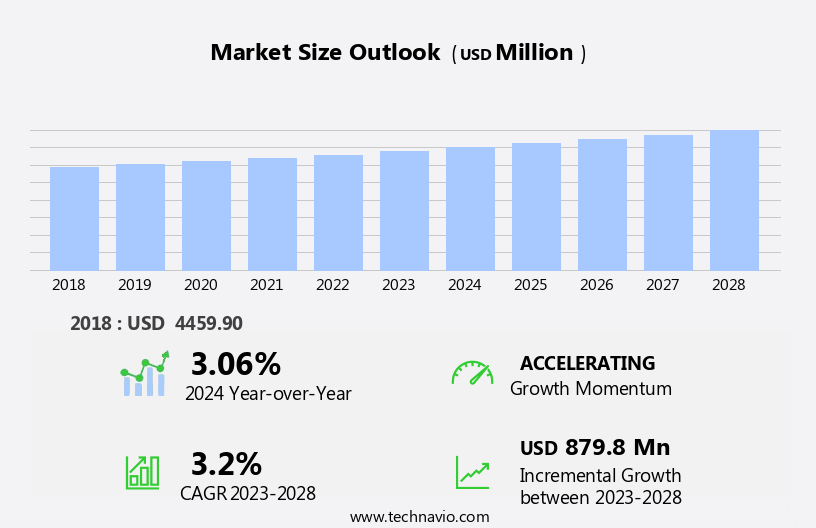
Gastroesophageal Reflux Disease (GERD) Market Size

 Request Free Sample

  • The market encompasses a range of treatments and interventions aimed at managing symptoms and preventing complications of this chronic condition. GERD, also known as acid reflux, affects millions worldwide, characterized by the backward flow of gastric acid into the esophagus, leading to heartburn and potential complications such as esophageal cancer. Market dynamics include the use of various treatments, including proton pump inhibitors (PPIs), antacids, and lifestyle changes. PPIs, prescription medications that reduce acid production, dominate the market due to their effectiveness in symptom relief. Diagnostic tests and endoscopic procedures are also utilized to diagnose and monitor the disease. Patient education and disease management are crucial aspects of the market, with a focus on symptom management and long-term care.
  • Clinical trials continue to explore new treatment options and improve existing therapies. Lifestyle changes, such as dietary modifications and weight loss, are often recommended as first-line treatments. The market for GERD treatments is expected to grow due to the increasing prevalence of the disease and the availability of new treatment options. Antacids and PPIs remain popular choices for symptomatic relief, while diagnostic tests and endoscopic procedures aid in accurate diagnosis and monitoring. Ongoing research and development efforts aim to improve patient outcomes and reduce the burden of this chronic condition.

How is this Gastroesophageal Reflux Disease (GERD) Industry segmented and which is the largest segment?

The gastroesophageal reflux disease (GERD) industry research report provides comprehensive data (region-wise segment analysis), with forecasts and estimates in "USD million" for the period 2024-2028, as well as historical data from 2018-2022 for the following segments.

  • Route Of Administration
    • Oral
    • Parenteral
  • Type
    • Antacid
    • PPI
    • H2 receptor antagonist drugs
    • Pro-Kinetic drugs
  • Geography
    • North America
      • Canada
      • US
    • Europe
      • Germany
      • UK
    • Asia
      • China
    • Rest of World (ROW)

By Route Of Administration Insights

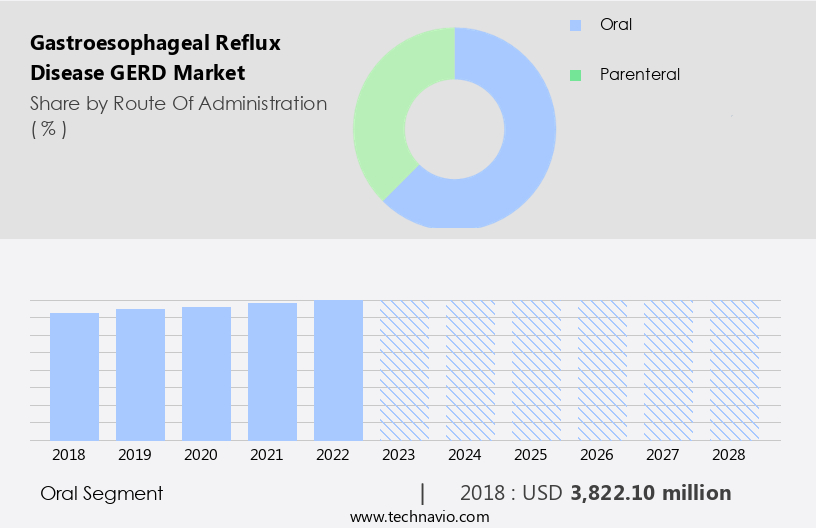
  • The oral segment is estimated to witness significant growth during the forecast period. The oral segment is estimated to witness significant growth during the forecast period. The oral route of administration is the most commonly used route for GERD medication. The oral route is preferred to administer GERD drugs over other methods as it is a safe, non-invasive, cost-effective, and easy-to-use method. The oral drug route of administration segment includes GERD drugs that can be administered in the form of capsules, tablets, syrups, solutions, and suspensions. The growth of the segment is accelerating at a moderate pace owing to the ease of usage and an increasing number of government approvals for oral GERD treatment.
Gastroesophageal Reflux Disease (GERD) Market Size

Get a glance at the market report of share of various segments Request Free Sample

The oral segment was valued at USD 3.82 billion in 2018 and showed a gradual increase during the forecast period.

Regional Analysis

  • Asia is estimated to contribute 39% to the growth of the global market during the forecast period.

Technavio's analysts have elaborately explained the regional trends and drivers that shape the market during the forecast period.
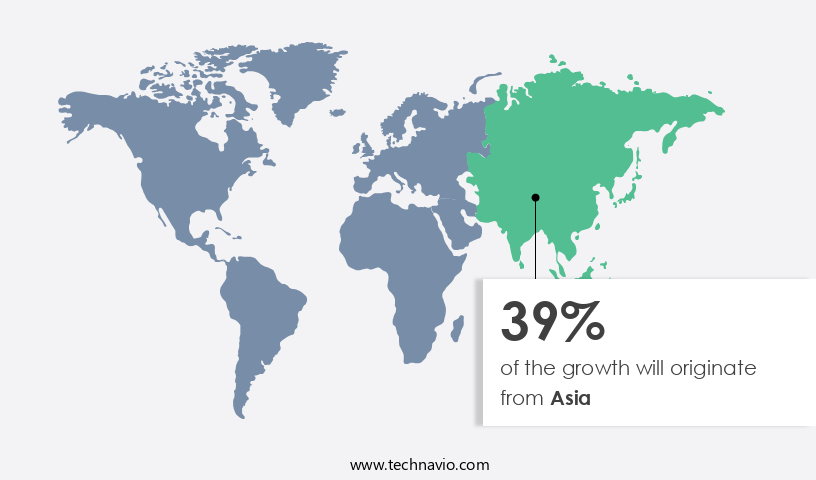
Gastroesophageal Reflux Disease (GERD) Market Share by Geography

For more insights on the market size of various regions, Request Free Sample

Another region offering significant growth is North America. The market in North America is driven by its high prevalence rate and the increasing use of over-the-counter (OTC) medications. According to the International Foundation for Gastrointestinal Disorders (IFFGD), the estimated prevalence of GERD in North America is 20%. Moreover, the Consumer Healthcare Products Association reports that over three-quarters of the population in the region use OTC medications for self-medication. Factors such as poor lifestyle choices and the usage of non-steroidal anti-inflammatory drugs (NSAIDs) contribute to market growth. However, the presence of counterfeit drugs poses a challenge. GERD is a chronic condition characterized by symptoms such as heartburn, regurgitation, and acid reflux. Treatment options include lifestyle modifications, acid suppression through Proton Pump Inhibitors (PPIs) and H2 Receptor Antagonists (H2RAs), and surgical interventions. 

Complications of GERD include esophageal cancer, Barrett's Esophagus, esophageal strictures, and hiatal hernia. Diagnostic tests like esophageal manometry, pH monitoring, and impedance testing aid in the diagnosis and monitoring of the disease. Pharmacological approaches include PPIs, H2RAs, antacids, and prescription medications. Non-pharmacological interventions include lifestyle changes, stress management, and patient education. Clinical trials and research focus on emerging therapies, personalized medicine, and precision medicine. The market faces challenges such as high treatment costs, health disparities, and the availability of alternative therapies. Regulatory frameworks, healthcare legislation, and insurance reimbursement policies play a significant role in market growth.

Market Dynamics

Our researchers analyzed the data with 2023 as the base year, along with the key drivers, trends, and challenges. A holistic analysis of drivers will help companies refine their marketing strategies to gain a competitive advantage.

What are the key market drivers leading to the rise in the adoption of Gastroesophageal Reflux Disease (GERD) Industry?

The rising geriatric population is the key driver of the market.

  • The aging population is a significant driving factor in the expansion of the global market for GERD treatment. As people grow older, the lower esophageal sphincter, which prevents gastric acid from flowing back into the esophagus, can weaken, leading to acid reflux and heartburn. Additionally, the digestive system's functionality may decrease with age, further contributing to acidity. GERD, a chronic digestive disorder, is also more prevalent among older adults. According to epidemiology data, the prevalence rates of GERD increase with age, making the aging population a substantial market opportunity. The GERD market encompasses various therapeutic approaches, including prescription medications like Proton Pump Inhibitors (PPIs) and H2 Receptor Antagonists, over-the-counter drugs such as antacids, and lifestyle changes.
  • Diagnostic tests, such as esophageal manometry, pH monitoring, and impedance testing, are essential for proper diagnosis and treatment. Esophageal disorders related to GERD, such as Barrett's Esophagus, esophageal strictures, and esophageal cancer, also contribute to the market's growth. Complications of GERD, including respiratory symptoms like chronic cough and asthma, dental erosion, sleep disturbances, and chronic laryngitis, further necessitate effective treatment and management. Pharmacological interventions, such as PPIs and H2 receptor antagonists, and surgical procedures like laparoscopic fundoplication and esophageal resection, are essential components of the GERD market. Patient education, clinical trials, and emerging therapies, such as regenerative medicine and stem cell therapy, are crucial in improving patient care and quality of life.
  • Health insurance coverage, economic impact, and patient satisfaction are essential factors influencing the market's growth. Adherence to treatment, nutritional counseling, and alternative therapies like herbal remedies and acupuncture, are also essential aspects of the GERD market. Market challenges include drug safety, regulatory framework, and healthcare disparities. The FDA approval process, ethical considerations, and informed consent are essential components of the regulatory framework. Healthcare providers, including gastroenterologists and primary care physicians, play a crucial role in the referral system and multidisciplinary care. Emerging therapies, such as personalized medicine and precision medicine, offer significant growth opportunities in the market.

What are the market trends shaping the Gastroesophageal Reflux Disease (GERD) Industry?

The rising prevalence of obesity is the upcoming market trend.

  • The association between obesity and gastroesophageal reflux disease (GERD) has gained considerable attention in medical research due to the increasing prevalence of obesity and related disorders, such as esophageal erosions, Barrett's esophagus (BE), and esophageal adenocarcinoma. Several studies suggest that obesity may contribute to GERD through various mechanisms, including increased intra-abdominal pressure and esophageal dysmotility. The rising cases of obesity are expected to significantly increase the medical costs associated with its complications, including GERD. Obesity is a leading risk factor for various chronic conditions, including cardiovascular diseases, type 2 diabetes, and certain types of cancer, which can result in premature death.
  • The economic impact of obesity is substantial, and the associated healthcare costs are projected to continue rising. In the context of GERD, lifestyle modifications, such as weight loss, smoking cessation, and diet modifications, are essential components of disease management. Clinical trials and research initiatives are ongoing to explore new therapeutic options, including pharmacological approaches, surgical interventions, and endoscopic treatments. Patient education, symptom management, and disease prevention are crucial aspects of GERD treatment. The diagnostic process involves various tests, including esophageal manometry, pH monitoring, and impedance testing, to assess esophageal motility and acid clearance. Complications of GERD include respiratory symptoms, dental erosion, sleep disturbances, and esophageal strictures, among others.
  • Effective management of GERD requires a multidisciplinary approach, involving gastroenterology specialists, primary care physicians, and other healthcare providers. The regulatory framework and ethical considerations play a vital role in ensuring patient safety and informed consent. The market for GERD treatment is dynamic, with emerging therapies, personalized medicine, and digital health solutions offering significant growth opportunities. However, market challenges, such as healthcare disparities and treatment costs, require ongoing attention and innovation.

What challenges does the Gastroesophageal Reflux Disease (GERD) Industry face during its growth?

Increased preference for complementary and alternative medicine CAM is a key challenge affecting the industry growth.

  • The global market for GERD treatment is influenced by the growing preference for complementary and alternative therapies (CAM) among patients. Approximately 70% of the population in the US have tried CAM treatments for GERD at least once. These therapies, which include acupuncture, massage, tai chi, herbs, and supplements, as well as mind and body therapies like yoga, meditation, exercise, and relaxation therapy, are increasingly popular due to their non-pharmacological approach. The trend towards CAM treatments for GERD is driven by a desire to avoid medication and focus on lifestyle modifications. Key CAM therapies for GERD include Proton Pump Inhibitors (PPIs) alternatives such as antacids, H2 receptor antagonists, and over-the-counter drugs.
  • Other interventions include lifestyle changes like diet modifications, obesity management through smoking cessation and alcohol consumption reduction, and non-pharmacological approaches like esophageal clearance techniques and reflux monitoring devices. The market dynamics for GERD treatment are further shaped by the availability of diagnostic tests, endoscopic procedures, and surgical interventions, as well as the prevalence of complications such as esophageal cancer, esophageal strictures, and Barrett's esophagus. The epidemiology data and treatment guidelines for GERD continue to evolve, providing opportunities for therapeutic innovations and personalized medicine approaches. The market faces challenges such as healthcare disparities, treatment costs, and the need for regulatory compliance and ethical considerations.

Exclusive Customer Landscape

The gastroesophageal reflux disease (GERD) market forecasting report includes the adoption lifecycle of the market, covering from the innovator's stage to the laggard's stage. It focuses on adoption rates in different regions based on penetration. Furthermore, the gastroesophageal reflux disease (GERD) market report also includes key purchase criteria and drivers of price sensitivity to help companies evaluate and develop their market growth analysis strategies.
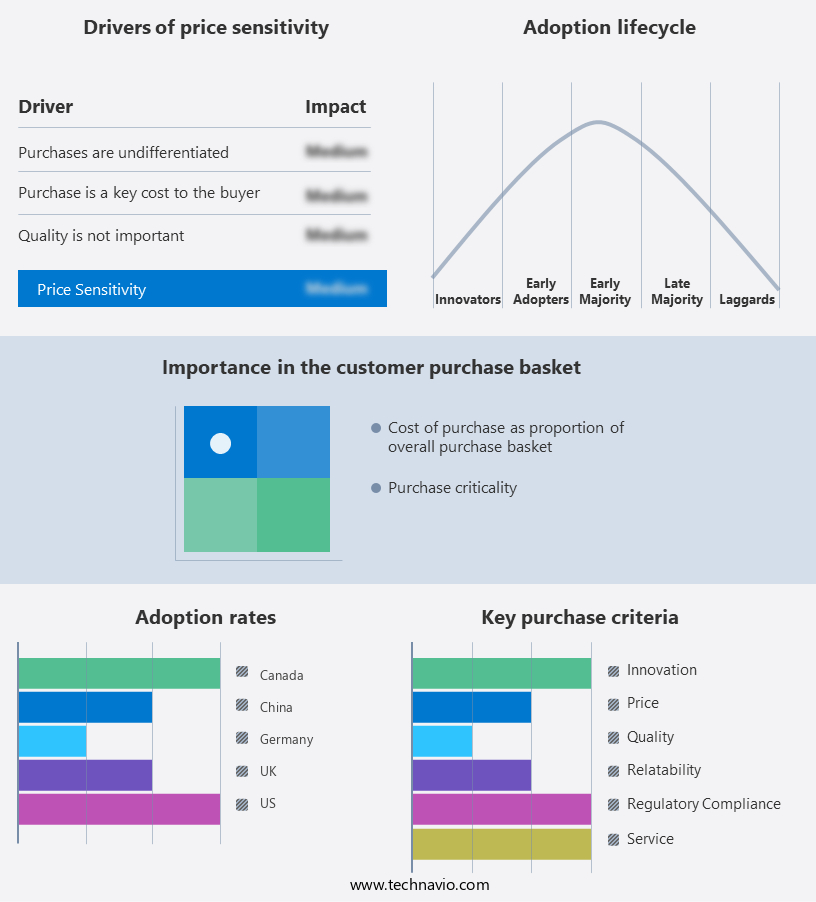
Gastroesophageal Reflux Disease (GERD) Market Share by Geography

 Customer Landscape

Key Companies & Market Insights

Companies are implementing various strategies, such as strategic alliances, gastroesophageal reflux disease (GERD) market forecast, partnerships, mergers and acquisitions, geographical expansion, and product/service launches, to enhance their presence in the industry.

The industry research and growth report includes detailed analyses of the competitive landscape of the market and information about key companies, including:

  • Abbott Laboratories
  • Alkem Laboratories Ltd.
  • Apotex Inc.
  • AstraZeneca Plc
  • Aurobindo Pharma Ltd.
  • Bayer AG
  • Cipla Inc.
  • Dr Reddys Laboratories Ltd.
  • Eisai Co. Ltd.
  • Fresenius SE and Co. KGaA
  • GlaxoSmithKline Plc
  • inovapharma.com
  • Johnson and Johnson Services Inc.
  • Lupin Ltd.
  • Perrigo Co. Plc
  • Pfizer Inc.
  • SRS Life Sciences Pte. Ltd.
  • Sun Pharmaceutical Industries Ltd.
  • Takeda Pharmaceutical Co. Ltd.
  • The Procter and Gamble Co.

Qualitative and quantitative analysis of companies has been conducted to help clients understand the wider business environment as well as the strengths and weaknesses of key industry players. Data is qualitatively analyzed to categorize companies as pure play, category-focused, industry-focused, and diversified; it is quantitatively analyzed to categorize companies as dominant, leading, strong, tentative, and weak.

Research Analyst Overview

Gastroesophageal Reflux Disease (GERD) is a chronic condition characterized by the backward flow of stomach contents into the esophagus, leading to various symptoms and potential complications. This complex condition necessitates a multifaceted approach to treatment and management. The global market for GERD treatment encompasses a wide range of interventions, from lifestyle modifications and non-pharmacological approaches to pharmacological therapies and surgical interventions. Proton pump inhibitors (PPIs) and H2 receptor antagonists (H2RAs) are among the most commonly used medications for acid suppression. However, there is a growing interest in alternative therapies, such as herbal remedies, acupuncture, and stress management techniques. Diagnostic tests, including endoscopic procedures and esophageal manometry, play a crucial role in the identification and assessment of GERD.

Further, these tests help determine the presence and severity of conditions such as esophageal strictures, hiatal hernia, and Barrett's esophagus. Patient education is a crucial component of GERD management. This includes understanding risk factors, such as obesity, smoking, and alcohol consumption, and implementing diet modifications and lifestyle changes. Clinical trials and research initiatives continue to explore new therapeutic options, including emerging therapies in the fields of personalized medicine and precision medicine. The economic impact of GERD is significant, with high treatment costs and potential complications leading to increased healthcare utilization and decreased quality of life. Health insurance coverage and financial assistance programs are essential for ensuring access to care for those affected by this condition.

Moreover, the prevalence rates of GERD vary across populations, with epidemiology data indicating a higher incidence in industrialized countries and older adults. Complications of GERD include respiratory symptoms, such as chronic cough and asthma, dental erosion, and sleep disturbances. Complications management involves a multidisciplinary approach, including gastroenterology specialists, primary care physicians, and referral systems. The regulatory framework for GERD treatment and management is complex, with FDA approval, drug safety, and clinical practice guidelines playing essential roles in ensuring the safety and efficacy of various interventions. Healthcare providers must navigate ethical considerations, informed consent, and patient privacy concerns, while also addressing the challenges of adherence to treatment and long-term complications.

Market Scope

Report Coverage

Details

Page number

176

Base year

2023

Historic period

2018-2022

Forecast period

2024-2028

Growth momentum & CAGR

Accelerate at a CAGR of 3.2%

Market Growth 2024-2028

USD 879.8 million

Market structure

Fragmented

YoY growth 2023-2024(%)

3.06

Key countries

US, Germany, UK, China, and Canada

Competitive landscape

Leading Companies, Market Positioning of Companies, Competitive Strategies, and Industry Risks

Request Free Sample

What are the Key Data Covered in this Gastroesophageal Reflux Disease (GERD) Market Research and Growth Report?

  • CAGR of the Gastroesophageal Reflux Disease (GERD) industry during the forecast period
  • Detailed information on factors that will drive the market growth and forecasting between 2024 and 2028
  • Precise estimation of the size of the market and its contribution of the industry in focus to the parent market
  • Accurate predictions about upcoming growth and trends and changes in consumer behaviour
  • Growth of the market across North America, Europe, Asia, and Rest of World (ROW)
  • Thorough analysis of the market's competitive landscape and detailed information about companies
  • Comprehensive analysis of factors that will challenge the gastroesophageal reflux disease (GERD) market growth of industry companies

We can help! Our analysts can customize this gastroesophageal reflux disease (GERD) market research report to meet your requirements.

Get in touch

1 Executive Summary

  • 1.1 Market overview
    • Executive Summary - Chart on Market Overview
    • Executive Summary - Data Table on Market Overview
    • Executive Summary - Chart on Global Market Characteristics
    • Executive Summary - Chart on Market by Geography
    • Executive Summary - Chart on Market Segmentation by Route of Administration
    • Executive Summary - Chart on Market Segmentation by Type
    • Executive Summary - Chart on Incremental Growth
    • Executive Summary - Data Table on Incremental Growth
    • Executive Summary - Chart on Company Market Positioning

2 Market Landscape

  • 2.1 Market ecosystem
    • Parent Market
    • Data Table on - Parent Market
  • 2.2 Market characteristics
    • Market characteristics analysis
  • 2.3 Value chain analysis
    • Value Chain Analysis

3 Market Sizing

  • 3.1 Market definition
    • Offerings of companies included in the market definition
  • 3.2 Market segment analysis
    • Market segments
  • 3.3 Market size 2023
    • 3.4 Market outlook: Forecast for 2023-2028
      • Chart on Global - Market size and forecast 2023-2028 ($ million)
      • Data Table on Global - Market size and forecast 2023-2028 ($ million)
      • Chart on Global Market: Year-over-year growth 2023-2028 (%)
      • Data Table on Global Market: Year-over-year growth 2023-2028 (%)

    4 Historic Market Size

    • 4.1 Global Gastroesophageal Reflux Disease (GERD) Market 2018 - 2022
      • Historic Market Size - Data Table on Global Gastroesophageal Reflux Disease (GERD) Market 2018 - 2022 ($ million)
    • 4.2 Route of Administration segment analysis 2018 - 2022
      • Historic Market Size - Route of Administration Segment 2018 - 2022 ($ million)
    • 4.3 Type segment analysis 2018 - 2022
      • Historic Market Size - Type Segment 2018 - 2022 ($ million)
    • 4.4 Geography segment analysis 2018 - 2022
      • Historic Market Size - Geography Segment 2018 - 2022 ($ million)
    • 4.5 Country segment analysis 2018 - 2022
      • Historic Market Size - Country Segment 2018 - 2022 ($ million)

    5 Five Forces Analysis

    • 5.1 Five forces summary
      • Five forces analysis - Comparison between 2023 and 2028
    • 5.2 Bargaining power of buyers
      • Bargaining power of buyers - Impact of key factors 2023 and 2028
    • 5.3 Bargaining power of suppliers
      • Bargaining power of suppliers - Impact of key factors in 2023 and 2028
    • 5.4 Threat of new entrants
      • Threat of new entrants - Impact of key factors in 2023 and 2028
    • 5.5 Threat of substitutes
      • Threat of substitutes - Impact of key factors in 2023 and 2028
    • 5.6 Threat of rivalry
      • Threat of rivalry - Impact of key factors in 2023 and 2028
    • 5.7 Market condition
      • Chart on Market condition - Five forces 2023 and 2028

    6 Market Segmentation by Route of Administration

    • 6.1 Market segments
      • Chart on Route of Administration - Market share 2023-2028 (%)
      • Data Table on Route of Administration - Market share 2023-2028 (%)
    • 6.2 Comparison by Route of Administration
      • Chart on Comparison by Route of Administration
      • Data Table on Comparison by Route of Administration
    • 6.3 Oral - Market size and forecast 2023-2028
      • Chart on Oral - Market size and forecast 2023-2028 ($ million)
      • Data Table on Oral - Market size and forecast 2023-2028 ($ million)
      • Chart on Oral - Year-over-year growth 2023-2028 (%)
      • Data Table on Oral - Year-over-year growth 2023-2028 (%)
    • 6.4 Parenteral - Market size and forecast 2023-2028
      • Chart on Parenteral - Market size and forecast 2023-2028 ($ million)
      • Data Table on Parenteral - Market size and forecast 2023-2028 ($ million)
      • Chart on Parenteral - Year-over-year growth 2023-2028 (%)
      • Data Table on Parenteral - Year-over-year growth 2023-2028 (%)
    • 6.5 Market opportunity by Route of Administration
      • Market opportunity by Route of Administration ($ million)
      • Data Table on Market opportunity by Route of Administration ($ million)

    7 Market Segmentation by Type

    • 7.1 Market segments
      • Chart on Type - Market share 2023-2028 (%)
      • Data Table on Type - Market share 2023-2028 (%)
    • 7.2 Comparison by Type
      • Chart on Comparison by Type
      • Data Table on Comparison by Type
    • 7.3 Antacid - Market size and forecast 2023-2028
      • Chart on Antacid - Market size and forecast 2023-2028 ($ million)
      • Data Table on Antacid - Market size and forecast 2023-2028 ($ million)
      • Chart on Antacid - Year-over-year growth 2023-2028 (%)
      • Data Table on Antacid - Year-over-year growth 2023-2028 (%)
    • 7.4 PPI - Market size and forecast 2023-2028
      • Chart on PPI - Market size and forecast 2023-2028 ($ million)
      • Data Table on PPI - Market size and forecast 2023-2028 ($ million)
      • Chart on PPI - Year-over-year growth 2023-2028 (%)
      • Data Table on PPI - Year-over-year growth 2023-2028 (%)
    • 7.5 H2 receptor antagonist drugs - Market size and forecast 2023-2028
      • Chart on H2 receptor antagonist drugs - Market size and forecast 2023-2028 ($ million)
      • Data Table on H2 receptor antagonist drugs - Market size and forecast 2023-2028 ($ million)
      • Chart on H2 receptor antagonist drugs - Year-over-year growth 2023-2028 (%)
      • Data Table on H2 receptor antagonist drugs - Year-over-year growth 2023-2028 (%)
    • 7.6 Prokinetic drugs - Market size and forecast 2023-2028
      • Chart on Prokinetic drugs - Market size and forecast 2023-2028 ($ million)
      • Data Table on Prokinetic drugs - Market size and forecast 2023-2028 ($ million)
      • Chart on Prokinetic drugs - Year-over-year growth 2023-2028 (%)
      • Data Table on Prokinetic drugs - Year-over-year growth 2023-2028 (%)
    • 7.7 Market opportunity by Type
      • Market opportunity by Type ($ million)
      • Data Table on Market opportunity by Type ($ million)

    8 Customer Landscape

    • 8.1 Customer landscape overview
      • Analysis of price sensitivity, lifecycle, customer purchase basket, adoption rates, and purchase criteria

    9 Geographic Landscape

    • 9.1 Geographic segmentation
      • Chart on Market share by geography 2023-2028 (%)
      • Data Table on Market share by geography 2023-2028 (%)
    • 9.2 Geographic comparison
      • Chart on Geographic comparison
      • Data Table on Geographic comparison
    • 9.3 North America - Market size and forecast 2023-2028
      • Chart on North America - Market size and forecast 2023-2028 ($ million)
      • Data Table on North America - Market size and forecast 2023-2028 ($ million)
      • Chart on North America - Year-over-year growth 2023-2028 (%)
      • Data Table on North America - Year-over-year growth 2023-2028 (%)
    • 9.4 Europe - Market size and forecast 2023-2028
      • Chart on Europe - Market size and forecast 2023-2028 ($ million)
      • Data Table on Europe - Market size and forecast 2023-2028 ($ million)
      • Chart on Europe - Year-over-year growth 2023-2028 (%)
      • Data Table on Europe - Year-over-year growth 2023-2028 (%)
    • 9.5 Asia - Market size and forecast 2023-2028
      • Chart on Asia - Market size and forecast 2023-2028 ($ million)
      • Data Table on Asia - Market size and forecast 2023-2028 ($ million)
      • Chart on Asia - Year-over-year growth 2023-2028 (%)
      • Data Table on Asia - Year-over-year growth 2023-2028 (%)
    • 9.6 Rest of World (ROW) - Market size and forecast 2023-2028
      • Chart on Rest of World (ROW) - Market size and forecast 2023-2028 ($ million)
      • Data Table on Rest of World (ROW) - Market size and forecast 2023-2028 ($ million)
      • Chart on Rest of World (ROW) - Year-over-year growth 2023-2028 (%)
      • Data Table on Rest of World (ROW) - Year-over-year growth 2023-2028 (%)
    • 9.7 US - Market size and forecast 2023-2028
      • Chart on US - Market size and forecast 2023-2028 ($ million)
      • Data Table on US - Market size and forecast 2023-2028 ($ million)
      • Chart on US - Year-over-year growth 2023-2028 (%)
      • Data Table on US - Year-over-year growth 2023-2028 (%)
    • 9.8 Germany - Market size and forecast 2023-2028
      • Chart on Germany - Market size and forecast 2023-2028 ($ million)
      • Data Table on Germany - Market size and forecast 2023-2028 ($ million)
      • Chart on Germany - Year-over-year growth 2023-2028 (%)
      • Data Table on Germany - Year-over-year growth 2023-2028 (%)
    • 9.9 UK - Market size and forecast 2023-2028
      • Chart on UK - Market size and forecast 2023-2028 ($ million)
      • Data Table on UK - Market size and forecast 2023-2028 ($ million)
      • Chart on UK - Year-over-year growth 2023-2028 (%)
      • Data Table on UK - Year-over-year growth 2023-2028 (%)
    • 9.10 China - Market size and forecast 2023-2028
      • Chart on China - Market size and forecast 2023-2028 ($ million)
      • Data Table on China - Market size and forecast 2023-2028 ($ million)
      • Chart on China - Year-over-year growth 2023-2028 (%)
      • Data Table on China - Year-over-year growth 2023-2028 (%)
    • 9.11 Canada - Market size and forecast 2023-2028
      • Chart on Canada - Market size and forecast 2023-2028 ($ million)
      • Data Table on Canada - Market size and forecast 2023-2028 ($ million)
      • Chart on Canada - Year-over-year growth 2023-2028 (%)
      • Data Table on Canada - Year-over-year growth 2023-2028 (%)
    • 9.12 Market opportunity by geography
      • Market opportunity by geography ($ million)
      • Data Tables on Market opportunity by geography ($ million)

    10 Drivers, Challenges, and Opportunity/Restraints

    • 10.1 Market drivers
      • 10.2 Market challenges
        • 10.3 Impact of drivers and challenges
          • Impact of drivers and challenges in 2023 and 2028
        • 10.4 Market opportunities/restraints

          11 Competitive Landscape

          • 11.1 Overview
            • 11.2 Competitive Landscape
              • Overview on criticality of inputs and factors of differentiation
            • 11.3 Landscape disruption
              • Overview on factors of disruption
            • 11.4 Industry risks
              • Impact of key risks on business

            12 Competitive Analysis

            • 12.1 Companies profiled
              • Companies covered
            • 12.2 Market positioning of companies
              • Matrix on companies position and classification
            • 12.3 Abbott Laboratories
              • Abbott Laboratories - Overview
              • Abbott Laboratories - Business segments
              • Abbott Laboratories - Key news
              • Abbott Laboratories - Key offerings
              • Abbott Laboratories - Segment focus
            • 12.4 Alkem Laboratories Ltd.
              • Alkem Laboratories Ltd. - Overview
              • Alkem Laboratories Ltd. - Business segments
              • Alkem Laboratories Ltd. - Key offerings
              • Alkem Laboratories Ltd. - Segment focus
            • 12.5 Apotex Inc.
              • Apotex Inc. - Overview
              • Apotex Inc. - Product / Service
              • Apotex Inc. - Key news
              • Apotex Inc. - Key offerings
            • 12.6 AstraZeneca Plc
              • AstraZeneca Plc - Overview
              • AstraZeneca Plc - Product / Service
              • AstraZeneca Plc - Key news
              • AstraZeneca Plc - Key offerings
            • 12.7 Aurobindo Pharma Ltd.
              • Aurobindo Pharma Ltd. - Overview
              • Aurobindo Pharma Ltd. - Product / Service
              • Aurobindo Pharma Ltd. - Key offerings
            • 12.8 Bayer AG
              • Bayer AG - Overview
              • Bayer AG - Business segments
              • Bayer AG - Key news
              • Bayer AG - Key offerings
              • Bayer AG - Segment focus
            • 12.9 Cipla Inc.
              • Cipla Inc. - Overview
              • Cipla Inc. - Business segments
              • Cipla Inc. - Key news
              • Cipla Inc. - Key offerings
              • Cipla Inc. - Segment focus
            • 12.10 Dr Reddys Laboratories Ltd.
              • Dr Reddys Laboratories Ltd. - Overview
              • Dr Reddys Laboratories Ltd. - Business segments
              • Dr Reddys Laboratories Ltd. - Key news
              • Dr Reddys Laboratories Ltd. - Key offerings
              • Dr Reddys Laboratories Ltd. - Segment focus
            • 12.11 Eisai Co. Ltd.
              • Eisai Co. Ltd. - Overview
              • Eisai Co. Ltd. - Business segments
              • Eisai Co. Ltd. - Key offerings
              • Eisai Co. Ltd. - Segment focus
            • 12.12 Fresenius SE and Co. KGaA
              • Fresenius SE and Co. KGaA - Overview
              • Fresenius SE and Co. KGaA - Business segments
              • Fresenius SE and Co. KGaA - Key news
              • Fresenius SE and Co. KGaA - Key offerings
              • Fresenius SE and Co. KGaA - Segment focus
            • 12.13 GlaxoSmithKline Plc
              • GlaxoSmithKline Plc - Overview
              • GlaxoSmithKline Plc - Business segments
              • GlaxoSmithKline Plc - Key news
              • GlaxoSmithKline Plc - Key offerings
              • GlaxoSmithKline Plc - Segment focus
            • 12.14 inovapharma.com
              • inovapharma.com - Overview
              • inovapharma.com - Product / Service
              • inovapharma.com - Key offerings
            • 12.15 Johnson and Johnson Services Inc.
              • Johnson and Johnson Services Inc. - Overview
              • Johnson and Johnson Services Inc. - Business segments
              • Johnson and Johnson Services Inc. - Key news
              • Johnson and Johnson Services Inc. - Key offerings
              • Johnson and Johnson Services Inc. - Segment focus
            • 12.16 Lupin Ltd.
              • Lupin Ltd. - Overview
              • Lupin Ltd. - Product / Service
              • Lupin Ltd. - Key news
              • Lupin Ltd. - Key offerings
            • 12.17 Perrigo Co. Plc
              • Perrigo Co. Plc - Overview
              • Perrigo Co. Plc - Business segments
              • Perrigo Co. Plc - Key offerings
              • Perrigo Co. Plc - Segment focus

            13 Appendix

            • 13.1 Scope of the report
              • 13.2 Inclusions and exclusions checklist
                • Inclusions checklist
                • Exclusions checklist
              • 13.3 Currency conversion rates for US$
                • Currency conversion rates for US$
              • 13.4 Research methodology
                • Research methodology
              • 13.5 Data procurement
                • Information sources
              • 13.6 Data validation
                • Data validation
              • 13.7 Validation techniques employed for market sizing
                • Validation techniques employed for market sizing
              • 13.8 Data synthesis
                • Data synthesis
              • 13.9 360 degree market analysis
                • 360 degree market analysis
              • 13.10 List of abbreviations
                • List of abbreviations

              Research Methodology

              Technavio presents a detailed picture of the market by way of study, synthesis, and summation of data from multiple sources. The analysts have presented the various facets of the market with a particular focus on identifying the key industry influencers. The data thus presented is comprehensive, reliable, and the result of extensive research, both primary and secondary.

              INFORMATION SOURCES

              Primary sources

              • Manufacturers and suppliers
              • Channel partners
              • Industry experts
              • Strategic decision makers

              Secondary sources

              • Industry journals and periodicals
              • Government data
              • Financial reports of key industry players
              • Historical data
              • Press releases

              DATA ANALYSIS

              Data Synthesis

              • Collation of data
              • Estimation of key figures
              • Analysis of derived insights

              Data Validation

              • Triangulation with data models
              • Reference against proprietary databases
              • Corroboration with industry experts

              REPORT WRITING

              Qualitative

              • Market drivers
              • Market challenges
              • Market trends
              • Five forces analysis

              Quantitative

              • Market size and forecast
              • Market segmentation
              • Geographical insights
              • Competitive landscape

              Interested in this report?

              Get your sample now to see our research methodology and insights!

              Download Now

              Frequently Asked Questions

              Gastroesophageal Reflux Disease (Gerd) market growth will increase by $ 879.8 mn during 2024-2028 .

              The Gastroesophageal Reflux Disease (Gerd) market is expected to grow at a CAGR of 3.2% during 2024-2028 .

              Gastroesophageal Reflux Disease (Gerd) market is segmented by Route Of Administration( Oral, Parenteral, H2 receptor antagonist drugs, Pro-kinetic drugs) Type( Antacid, PPI, H2 receptor antagonist drugs, Pro-Kinetic drugs)

              Abbott Laboratories, Alkem Laboratories Ltd., Apotex Inc., AstraZeneca Plc, Aurobindo Pharma Ltd., Bayer AG, Cipla Inc., Dr Reddys Laboratories Ltd., Eisai Co. Ltd., Fresenius SE and Co. KGaA, GlaxoSmithKline Plc, inovapharma.com, Johnson and Johnson Services Inc., Lupin Ltd., Perrigo Co. Plc, Pfizer Inc., SRS Life Sciences Pte. Ltd., Sun Pharmaceutical Industries Ltd., Takeda Pharmaceutical Co. Ltd., The Procter and Gamble Co. are a few of the key vendors in the Gastroesophageal Reflux Disease (Gerd) market.

              Asia will register the highest growth rate of 39% among the other regions. Therefore, the Gastroesophageal Reflux Disease (Gerd) market in Asia is expected to garner significant business opportunities for the vendors during the forecast period.

              US, Germany, UK, China, Canada

              • Rising geriatric populationWith growing age is the driving factor this market.
              • the occurrence of acidity and heartburn increases. There is a valve at the lower end of the esophagus that is designed to keep acid in the stomach. With age is the driving factor this market.
              • this valve or sphincter in the lower esophagus tends to relax is the driving factor this market.
              • which allows acid to reflux or flow backward is the driving factor this market.
              • causing heartburn. Also is the driving factor this market.
              • the digestive system tends to slow down with increasing age is the driving factor this market.
              • which also leads to acidity. Heartburn can also be caused by GERD. Age is directly related to the increase in various disorders is the driving factor this market.
              • including GERD. Thus is the driving factor this market.
              • the growing aging population is a major driving factor for the global GERD market.Advances in healthcare and advanced treatment options for various diseases have increased the average life expectancy of people. The geriatric population is the driving factor this market.
              • particularly among developed economies is the driving factor this market.
              • is growing rapidly. For instance is the driving factor this market.
              • as per the United States Census Bureau (USCB) is the driving factor this market.
              • in 2022 is the driving factor this market.
              • there were approximately 56 million people aged 65 years and above in the US is the driving factor this market.
              • and the number is expected to reach 73 million by 2030. The elderly population is more prone to health conditions is the driving factor this market.
              • including GERD. Thus is the driving factor this market.
              • the demand for GERD drugs is expected to increase globally with the rising geriatric population is the driving factor this market.
              • which will thereby drive growth of the global GRED market during the forecast period. is the driving factor this market.

              The Gastroesophageal Reflux Disease (Gerd) market vendors should focus on grabbing business opportunities from the Oral segment as it accounted for the largest market share in the base year.
