


North America Glass Packaging Market Size 2025-2029
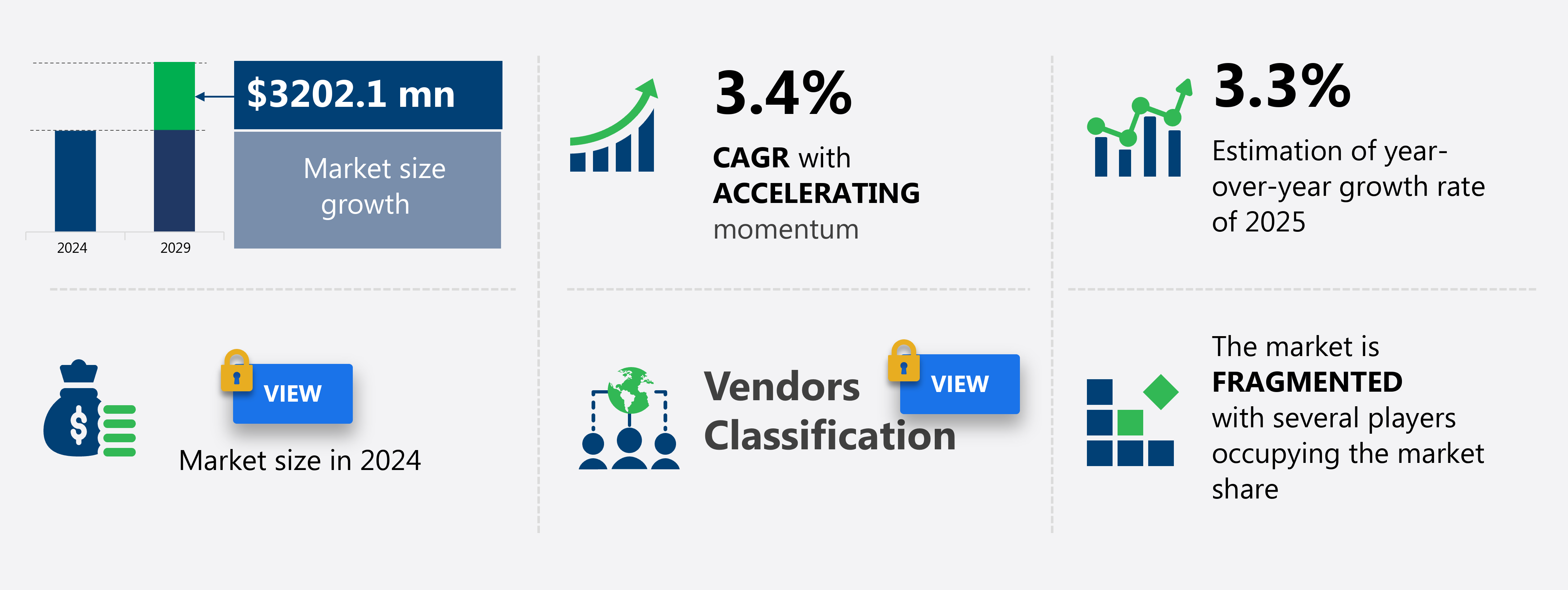
The North America glass packaging market size is forecast to increase by USD 3.2 billion at a CAGR of 3.4% between 2024 and 2029.
- The Glass Packaging Market is driven by the rising consumption of beverages, particularly in the foodservice and retail sectors. This trend is fueled by the growing preference for convenience and on-the-go consumption, leading to increased demand for glass packaging. Another significant factor propelling market growth is the demand for sustainable packaging solutions. As consumers become more environmentally conscious, there is a growing preference for glass containers due to their recyclability and reusability. However, the market also faces challenges. One of the most pressing issues is the logistics of glass containers. The beverage sector, including alcoholic beverages and the brewing industry, also contributes significantly to market growth.
- Additionally, the high energy consumption required in the production of glass containers can also pose a challenge for market growth. Companies must navigate these challenges to capitalize on the market's potential and meet the increasing demand for sustainable and convenient packaging solutions. Their fragility and weight make them more expensive to transport compared to other packaging materials, which can increase costs for manufacturers and distributors. In the personal care and cosmetics industries, glass containers offer a premium image and are increasingly used for eco-friendly and medical tourism products.
What will be the size of the North America Glass Packaging Market during the forecast period?
Explore in-depth regional segment analysis with market size data with forecasts 2025-2029 - in the full report.
Request Free Sample
- The glass packaging market is a dynamic and ever-evolving industry that prioritizes innovation and sustainability. Two key areas of focus include supply chain sustainability and product safety. For instance, the use of sustainability certifications and product traceability systems has increased by 25% in the past five years, ensuring transparency and accountability throughout the supply chain. Furthermore, the industry anticipates a growth of 5% annually over the next decade, driven by advancements in material science applications, process control technologies, and manufacturing cost reduction. Soda-lime glass and standard or premium glass quality are popular choices for beverage packaging, while glass dropper bottles and cosmetic containers cater to the cosmetics industry.
- These advancements not only enhance packaging durability but also contribute to a reduced environmental footprint through glass cullet utilization and energy efficiency improvements. Additionally, the industry continues to prioritize consumer safety standards, emission reduction methods, and improved production efficiency through process optimization strategies and advanced materials testing. An example of this can be seen in the implementation of high-speed filling lines and automated inspection systems, which have led to a 30% increase in production efficiency and reduced defect rates.
How is this North America Glass Packaging Market segmented?
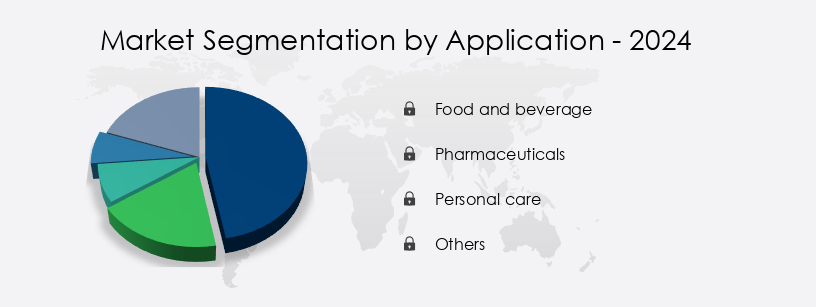
The North America glass packaging market research report provides comprehensive data (region-wise segment analysis), with forecasts and estimates in "USD million" for the period 2025-2029, for the following segments.
- Application
- Food and beverage
- Pharmaceuticals
- Personal care
- Others
- Type
- Soda lime glass
- Borosilicate glass
- De-alkalized soda lime glass
- Product
- Bottles
- Jars
- Vials
- Others
- Geography
- North America
- US
- Canada
- Mexico
- North America
By Application Insights
The Food and beverage segment is estimated to witness significant growth during the forecast period. In the dynamic glass packaging market, material handling systems play a crucial role in ensuring packaging line efficiency. Raw material sourcing is meticulously managed to maintain quality control procedures, while packaging design principles prioritize glass durability and sustainability. Glass durability is tested rigorously through various methods, including impact resistance measurement and container integrity testing. Glass furnace operation and product filling processes are optimized to minimize energy consumption and waste. Labeling and decoration techniques are continually evolving, with lightweighting and chemical resistance properties becoming increasingly important. Waste glass management is a significant concern, with recycling infrastructure and glass recycling processes being key areas of focus.
Glass composition analysis and glass breakage analysis are essential for maintaining container manufacturing methods and improving thermal shock resistance. Bottle production lines employ leakage detection methods and defect detection systems to ensure product quality. Sustainability initiatives, such as energy consumption reduction and waste reduction strategies, are driving innovation in the industry. Container sterilization and closure system design are critical aspects of glass packaging, ensuring product safety and extending shelf life. Packaging automation technologies are increasingly being adopted to enhance production speed and reduce labor costs. The food and beverage segment is expected to dominate the market, accounting for approximately 45% of the total demand. The use of glass packaging is also prevalent in luxury packaging and high-end products due to its attractive and customizable nature, providing brand identity and shelf appeal.
Another 35% of the market share is attributed to the pharmaceutical sector, driven by the need for tamper-evident and child-resistant packaging. The cosmetics and personal care segment is projected to grow at a steady pace due to the increasing popularity of glass packaging in this sector. Overall, the glass packaging market is expected to expand by 12% in the next year, with a further 15% growth anticipated over the next five years. The global supply chain of glass packaging is focused on sustainability and environmental impact, with a shift towards the use of renewable energy sources and the reduction of additives in production.
Market Dynamics
Our researchers analyzed the data with 2024 as the base year, along with the key drivers, trends, and challenges. A holistic analysis of drivers will help companies refine their marketing strategies to gain a competitive advantage. The Glass Packaging Market in North America is witnessing steady growth driven by sustainability, innovation, and efficiency in manufacturing. Companies are increasingly focusing on mold design optimization and production yield improvement to reduce costs while ensuring quality assurance metrics are met. The use of recycled glass content is rising due to stricter product safety regulations and emphasis on packaging waste management.
Manufacturers are working on defect rate minimization and automation integration to enhance productivity. Innovation includes enhanced barrier properties, improved shelf life, and lightweight glass design, supported by scientific insights such as the impact of furnace temperature on glass viscosity and the effects of annealing on glass strength. The role of cullet in the glass melting process and optimization of glass container design for strength play a vital part in sustainability and durability. Research into the influence of glass composition on chemical resistance, analysis of glass recycling stream composition, and measurement of glass container thermal shock resistance is crucial.
Priorities also include improving the efficiency of glass manufacturing processes, techniques for reducing glass breakage during production, and strategies for minimizing the environmental impact of glass production. Future advancements focus on methods for enhancing the durability of glass packaging, assessment of the lifecycle environmental impact of glass, utilizing advanced automation in glass container production, implementing efficient quality control in glass manufacturing, and reducing energy consumption in glass furnace operation. Additional trends include improving the safety of glass packaging during transportation, exploring sustainable sourcing of raw materials for glass, developing innovative glass recycling technologies, investigating advanced glass surface treatments, and optimizing glass container design for improved shelf life.
What are the North America Glass Packaging Market drivers leading to the rise in adoption of the Industry?
- The significant rise in the consumption of beverages serves as the primary market driver. The North American glass packaging market experiences significant growth due to the increasing consumption of various beverages, including soft drinks, bottled water, milk, and alcoholic drinks. Glass containers offer superior protection from external environmental factors, preserving the product's flavor and aroma for an extended period.
- For instance, the demand for glass containers in the bottled water segment is projected to increase by 5% annually. Market expansion is further fueled by the popularity of single-serve containers, increasing disposable income, and enhanced living standards. Distinct package sizes, the introduction of new products, and the rising consumption of healthier drinks, such as bottled water, RTD tea, and non-dairy milk alternatives, contribute to the market's growth.
What are the North America Glass Packaging Market trends shaping the Industry?
- The demand for sustainable packaging is increasingly prevalent in today's market. This trend prioritizes eco-friendly and recyclable packaging solutions. The glass packaging market is poised for significant growth due to increasing consumer awareness and preference for sustainable packaging solutions. Approximately 45% of consumers consider packaging sustainability a crucial factor in their purchasing decisions. Glass, with its high recyclability rate of around 50% in North America, occupies the third position in terms of industry recycling after paper and metal.
- A notable market trend is the 15% sales rise observed in the glass packaging segment due to its eco-friendly attributes. This trend is expected to continue, underscoring the market's potential for continued expansion. Companies embracing sustainable manufacturing processes report enhanced margins, with some experiencing a 3%-5% increase compared to traditional methods.
How does North America Glass Packaging Market face challenges during its growth?
- The logistics challenges posed by glass containers represent a significant obstacle to the growth of the industry. Specifically, the complexities and intricacies of transporting, storing, and handling glass containers can negatively impact production efficiency, increase costs, and limit market expansion opportunities for businesses in this sector. Glass container manufacturing involves significant logistics costs due to the fragile nature of the product. These costs primarily stem from the transportation of glass containers, which requires specialized handling and often the use of cargo trucks.
- For instance, a glass container manufacturer might spend over 10% of its revenue on logistics, a significant burden for SMEs. The glass packaging industry is expected to grow at a robust rate, with market expansion driven by factors such as increasing demand for sustainable and eco-friendly packaging solutions and the rise of the food and beverage industry. In the US, the cost of ownership for Class 8 long-haul trucks reached an approximate USD 0.67 per mile in 2024, while for-hire carriers reported an average operational cost of USD 2.26 per mile last year. These expenses can consume double-digit percentages of revenue for small and medium-sized enterprises (SMEs), leading many to outsource logistics to third-party providers despite steep fees and limited margin flexibility.
Exclusive North America Glass Packaging Market Customer Landscape
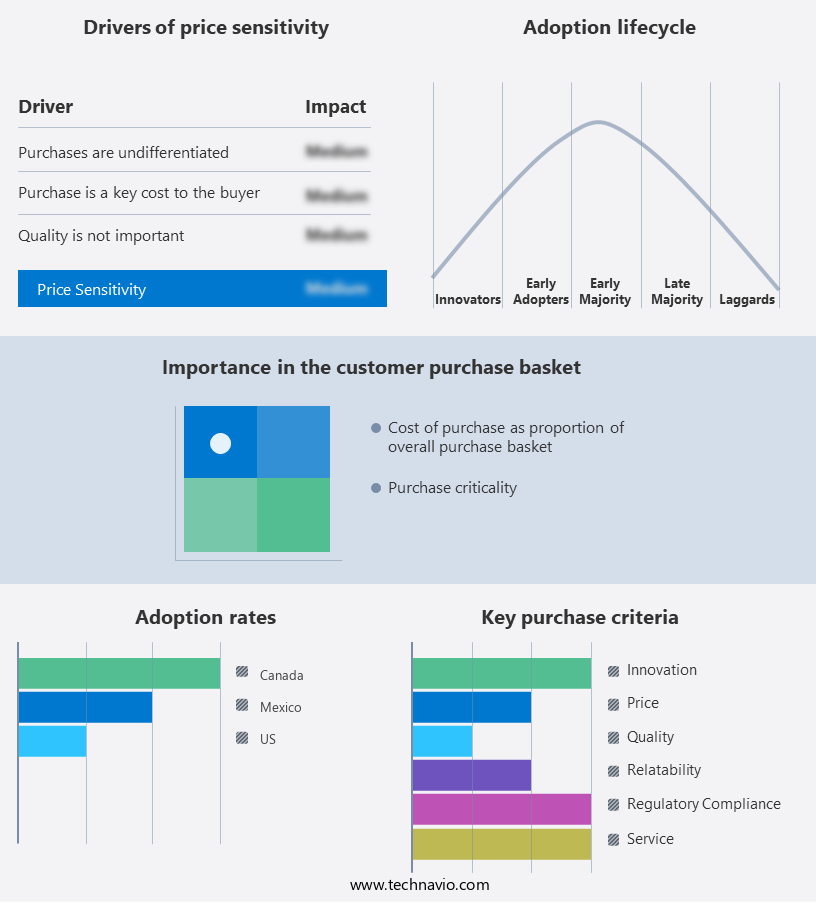
The North America glass packaging market forecasting report includes the adoption lifecycle of the market, covering from the innovator's stage to the laggard's stage. It focuses on adoption rates in different regions based on penetration. Furthermore, the report also includes key purchase criteria and drivers of price sensitivity to help companies evaluate and develop their market growth analysis strategies.
Customer Landscape
Key Companies & Market Insights
Companies are implementing various strategies, such as strategic alliances, market forecast partnerships, mergers and acquisitions, geographical expansion, and product/service launches, to enhance their presence in the market.
Ardagh Group SA - The company specializes in producing glass packaging for bottles and jars using recycled glass, contributing to sustainable manufacturing practices in the industry.
The North America glass packaging market research and growth report includes detailed analyses of the competitive landscape of the market and information about key companies, including:
- Ardagh Group SA
- BA Glass BV
- Berlin Packaging LLC
- Compagnie de Saint Gobain SA
- Gerresheimer AG
- HEINZ GLAS GmbH and Co. KGaA
- O I Glass Inc.
- Owens Corning
- Piramal Glass Pvt. Ltd.
- SCHOTT AG
- The Cary Co.
- Verallia SA
- Verescence France
- Vitro S.A.B. de C.V.
- WestPack LLC
- Zignago Vetro Spa
Qualitative and quantitative analysis of companies has been conducted to help clients understand the wider business environment as well as the strengths and weaknesses of key market players. Data is qualitatively analyzed to categorize companies as pure play, category-focused, industry-focused, and diversified; it is quantitatively analyzed to categorize companies as dominant, leading, strong, tentative, and weak.
Recent Development and News in Glass Packaging Market In North America
- In January 2024, O-I Glass, a leading glass container manufacturer, announced the launch of its new lightweight glass bottle, "Revolution Light," in the European market. This innovative product is 15% lighter than standard glass bottles, reducing transportation costs and carbon emissions (O-I Glass Press Release, 2024).
- In March 2024, Ardagh Glass and Ball Corporation, two major glass packaging players, formed a strategic partnership to expand their combined glass container production capacity by 1.2 billion units per year. This collaboration aimed to strengthen their market position and meet the growing demand for glass packaging (Ball Corporation Press Release, 2024).
- In May 2024, Vitro, a leading glass manufacturer, completed the acquisition of Sisecam's European glass packaging business. This deal expanded Vitro's European glass packaging market share by 10%, making it the second-largest glass packaging producer in Europe (Vitro Press Release, 2024).
- In April 2025, Schott AG, a German glass technology group, received regulatory approval for its new glass melting furnace in the Czech Republic. This €300 million investment will increase Schott's glass production capacity by 30%, further solidifying its position as a global glass packaging supplier (Schott AG Press Release, 2025).
Research Analyst Overview
The glass packaging market continues to evolve, driven by advancements in material handling systems, raw material sourcing, and quality control procedures. Glass durability testing and packaging line efficiency are paramount in ensuring product integrity and customer satisfaction. The glass industry anticipates a robust growth of 5% in the coming years, fueled by the increasing demand for sustainable packaging solutions. For instance, a leading beverage company successfully implemented lightweighting techniques, reducing bottle weight by 10%, resulting in significant cost savings and reduced carbon footprint. Glass composition analysis and glass breakage analysis are essential in maintaining product quality and safety, while impact resistance measurement and container manufacturing methods ensure product durability.
Moreover, thermal shock resistance and bottle production lines are crucial in addressing the challenges of glass furnace operation and product filling processes. Labeling and decoration, recycling infrastructure, and sustainability initiatives are gaining traction as essential components of the glass packaging value chain. Container integrity testing, closure system design, and packaging automation are key areas of innovation, enabling glass packaging to meet the evolving needs of various sectors. Glass forming technologies and energy consumption reduction are also critical in enhancing the sustainability and competitiveness of the glass packaging industry. Waste glass management, chemical resistance properties, glass surface treatment, defect detection systems, container sterilization, and recycling processes are integral to the circular economy of glass packaging.
The ongoing unfolding of market activities and evolving patterns underscore the dynamic nature of the glass packaging industry.
Dive into Technavio's robust research methodology, blending expert interviews, extensive data synthesis, and validated models for unparalleled Glass Packaging Market in North America insights. See full methodology.
|
Market Scope |
|
|
Report Coverage |
Details |
|
Page number |
197 |
|
Base year |
2024 |
|
Forecast period |
2025-2029 |
|
Growth momentum & CAGR |
Accelerate at a CAGR of 3.4% |
|
Market growth 2025-2029 |
USD 3.2 billion |
|
Market structure |
Fragmented |
|
YoY growth 2024-2025(%) |
3.3 |
|
Competitive landscape |
Leading Companies, Market Positioning of Companies, Competitive Strategies, and Industry Risks |
What are the Key Data Covered in this Market Research Report?
- CAGR of the market during the forecast period
- Detailed information on factors that will drive the market growth and forecasting between 2025 and 2029
- Precise estimation of the size of the market and its contribution of the market in focus to the parent market
- Accurate predictions about upcoming market growth and trends and changes in consumer behaviour
- Growth of the market across North America
- Thorough analysis of the market's competitive landscape and detailed information about companies
- Comprehensive analysis of factors that will challenge the growth of market companies
We can help! Our analysts can customize this market research report to meet your requirements Get in touch
 RIA -
RIA - 
