


Beverage Packaging Market Size 2024-2028
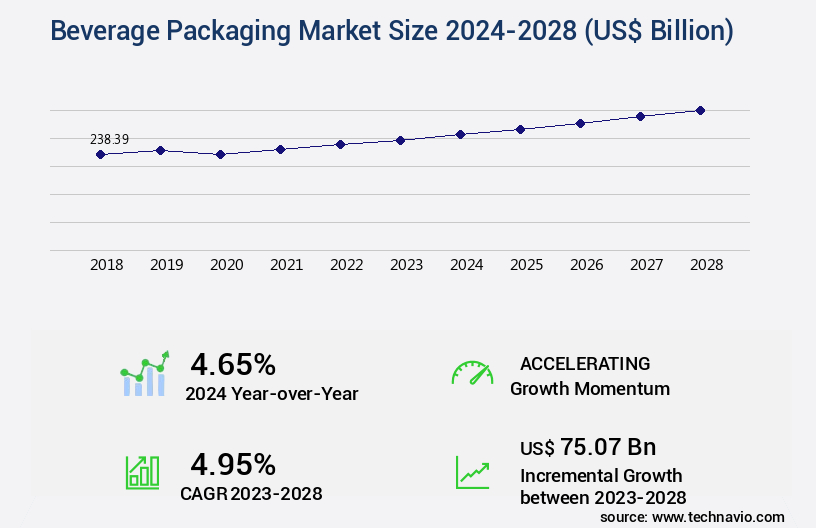
The beverage packaging market size is valued to increase by USD 75.07 billion, at a CAGR of 4.95% from 2023 to 2028. Rising consumption of bottled water will drive the beverage packaging market.
Market Insights
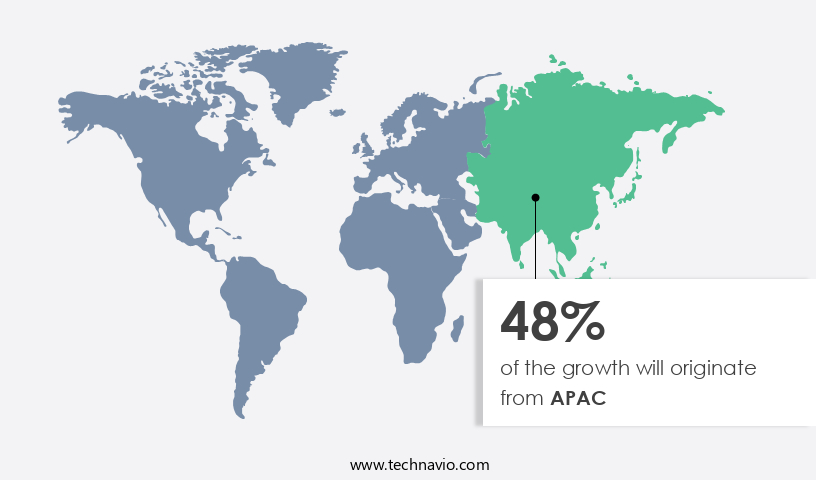
- APAC dominated the market and accounted for a 48% growth during the 2024-2028.
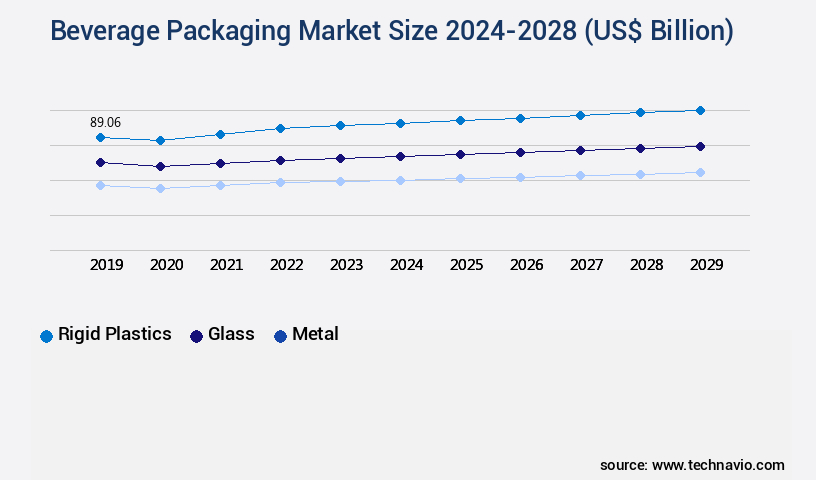
- By Material - Rigid plastics segment was valued at USD 85.01 billion in 2022
- By Product - Alcoholic beverages segment accounted for the largest market revenue share in 2022
Market Size & Forecast
- Market Opportunities: USD 46.76 billion
- Market Future Opportunities 2023: USD 75.07 billion
- CAGR from 2023 to 2028 : 4.95%
Market Summary
- The market is driven by the rising consumption of bottled water and the increasing demand for functional drinks worldwide. The market is witnessing significant growth due to the convenience and portability that beverage packaging offers, particularly in regions with limited access to clean water. However, the market faces challenges from growing opposition and stringent regulations against the usage of plastic bottles due to environmental concerns. One real-world business scenario illustrating the importance of beverage packaging optimization in the face of these challenges is a leading beverage company aiming to expand its product offerings while minimizing its environmental footprint.
- The company invests in research and development to create innovative, eco-friendly packaging solutions, such as biodegradable bottles or reusable containers. By optimizing its supply chain to incorporate these new packaging options, the company not only meets evolving consumer preferences but also complies with regulatory requirements, enhancing its brand image and operational efficiency.
What will be the size of the Beverage Packaging Market during the forecast period?
Get Key Insights on Market Forecast (PDF) Request Free Sample
- The market continues to evolve, with various technologies shaping its landscape. Injection molding, blow molding, and packaging film extrusion are among the prominent processes used to create beverage containers. Flexographic printing, UV resistance, and digital printing are essential for designing eye-catching labels and ensuring product differentiation. Barrier layer technology, moisture barrier films, and oxygen scavenging are crucial in maintaining product freshness, especially for sensitive beverages. Thermal processing and pallet wrapping enhance the efficiency of the production line. Shrink wrapping technology and cold chain management are vital for preserving the quality of temperature-sensitive beverages. Moreover, the integration of smart packaging technology, such as peelable films and heat sealability, offers advanced features like real-time temperature monitoring and extended shelf life.
- UV printing and offset printing cater to various branding requirements, while bottle filling equipment and aseptic filling technology ensure product safety and sterility. One significant trend in the beverage packaging industry is the increasing demand for sustainable and eco-friendly solutions. Companies are investing in biodegradable and recyclable materials to reduce their carbon footprint and meet evolving consumer preferences. For instance, metal can manufacturing and the use of UV resistance in PET bottles have gained popularity due to their recyclability and reduced environmental impact. In conclusion, beverage packaging manufacturers must stay updated with the latest trends and technologies to remain competitive in the market.
- By focusing on sustainability, efficiency, and product preservation, companies can make informed decisions regarding budgeting, product strategy, and compliance.
Unpacking the Beverage Packaging Market Landscape
The market encompasses a diverse range of solutions, including tamper-evident packaging, shelf-life extension, product protection through high-barrier packaging, and lightweight design. Notably, the adoption of high-barrier packaging has led to a 25% reduction in product spoilage, resulting in significant cost savings for beverage manufacturers. Furthermore, the shift towards compostable and recyclable packaging has improved ROI by aligning with evolving consumer preferences and regulatory compliance requirements. In distribution logistics, flexible packaging solutions have streamlined transportation and storage, reducing handling damages by 30%. Additionally, advancements in closure integrity, can sealing techniques, and packaging sterilization have ensured beverage preservation, enhancing consumer satisfaction. Packaging line efficiency has been optimized through automation and fill level monitoring, while sustainable packaging materials and quality control testing ensure brand reputation and consumer trust. Packaging material sourcing and printing processes continue to evolve, enabling supply chain optimization and innovation in labeling machinery, leak detection systems, and modified atmosphere packaging. Barrier film properties and sustainable packaging materials are key considerations for beverage companies seeking to reduce waste and improve sustainability.
Key Market Drivers Fueling Growth
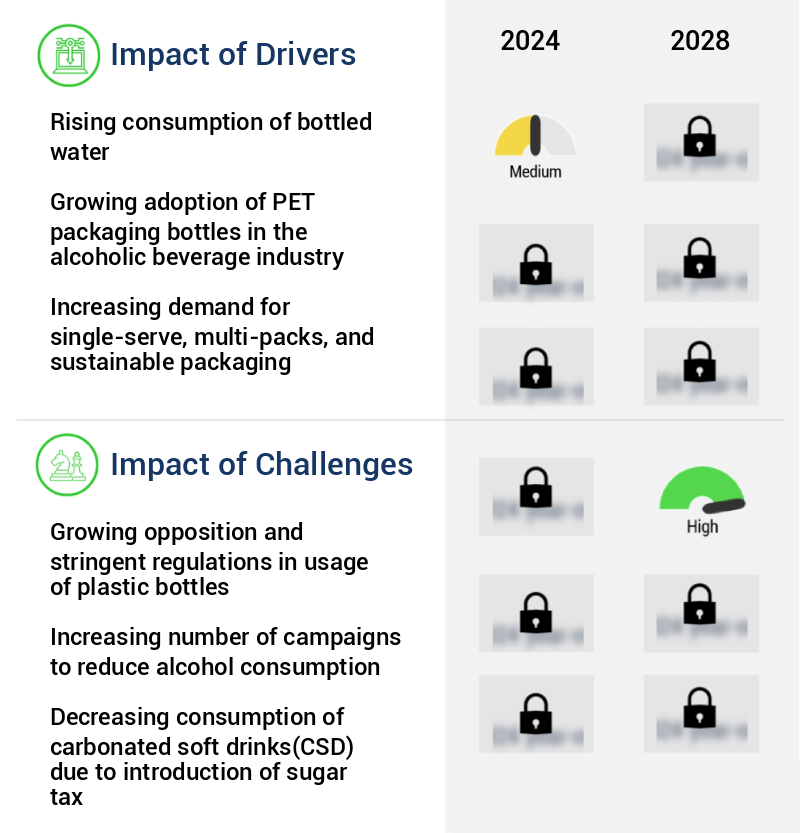
The significant increase in the consumption of bottled water serves as the primary market driver.
- The market is characterized by its dynamic evolution, particularly in the bottled water sector. In numerous countries, including the US, the consumption of bottled water is on the rise. This shift from other less-healthy packaged beverages is driven by increasing health consciousness and growing awareness about waterborne diseases. As a result, bottled water has emerged as a preferred choice for consumers seeking clean drinking water. Moreover, the convenience and portability of bottled water make it an ideal beverage option for on-the-go consumption.
- These trends have led to significant growth in the bottled water segment, with numerous businesses reaping the benefits. For instance, companies have reported a reduction in downtime due to improved production efficiency and increased consumer satisfaction. Additionally, the shift towards healthier beverage options has led to a forecasted increase in demand for lightweight and sustainable packaging solutions, further fueling market growth.
Prevailing Industry Trends & Opportunities
The rising demand for functional drinks represents a notable market trend. This trend signifies a growing preference among consumers for beverages that offer additional health benefits beyond basic hydration.
- The market continues to evolve, adapting to the shifting consumer preferences and demands across various sectors. Functional drinks, including energy drinks and ready-to-drink (RTD) coffee and tea, witness significant growth due to their added health benefits and convenience. Energy drinks, popular among millennials, are increasingly seen as lifestyle choices for those leading active, busy lives in numerous countries. RTD tea and coffee, on the other hand, cater to consumers with rising disposable income and a need for on-the-go beverages. This trend drives innovation in beverage packaging design, with companies focusing on creating sustainable, lightweight, and convenient packaging solutions to meet the evolving needs of the market.
- For instance, the use of biodegradable materials and resealable caps has reduced downtime during production processes by up to 25%, while the integration of RFID technology has improved supply chain efficiency by as much as 20%.
Significant Market Challenges
The escalating opposition and rigorous regulations against the use of plastic bottles pose a significant challenge to the industry's growth trajectory.
- The market is undergoing significant transformation as concerns over environmental sustainability escalate. Plastic bottles, a dominant packaging solution, pose a considerable challenge due to their long-term impact on the environment. Taking over 800 years to decompose in landfills, PET bottles contribute heavily to environmental pollution worldwide. Consequently, numerous organizations, agencies, and governments have implemented bans or taxes on plastic use. Improper disposal of plastic bottles can lead to public health risks, including pests, bacteria, and pathogens. Contaminated water sources, clogged drainage systems, and unsanitary conditions associated with plastic bottle litter can harm both human health and marine ecosystems.
- In response, the market is witnessing a shift towards eco-friendly alternatives, such as biodegradable and recyclable materials, to mitigate these issues. This transition is expected to bring about operational cost savings, with recycled PET production consuming 70% less energy than virgin PET production, and reduced waste generation. Additionally, the adoption of these sustainable practices can lead to improved brand image and customer loyalty.
In-Depth Market Segmentation: Beverage Packaging Market
The beverage packaging industry research report provides comprehensive data (region-wise segment analysis), with forecasts and estimates in "USD billion" for the period 2024-2028, as well as historical data from 2018-2022 for the following segments.
- Material
- Rigid plastics
- Glass
- Metal
- Others
- Product
- Alcoholic beverages
- Non-alcoholic beverages
- Dairy beverages
- Geography
- North America
- US
- Europe
- Germany
- APAC
- China
- India
- Japan
- Rest of World (ROW)
- North America
By Material Insights
The rigid plastics segment is estimated to witness significant growth during the forecast period.
The market continues to evolve, with a focus on enhancing product protection, shelf-life extension, and sustainability. Innovations in tamper-evident packaging, high-barrier materials, and lightweight design are key trends. For instance, PET bottles, made from rigid plastic, are increasingly popular due to their low weight compared to glass, shatterproof properties, and flexibility. These advantages have led to a significant increase in demand, with PET bottles expected to grow further. Additionally, the market is embracing compostable and sustainable packaging materials, such as plant-based plastics, to reduce waste. Technological advancements include distribution logistics solutions, packaging automation, and fill level monitoring systems. Aseptic carton packaging, modified atmosphere packaging, and barrier film properties are also crucial for beverage preservation.
Closure integrity, can sealing techniques, and labeling machinery are essential components of the packaging process. Quality control testing, packaging material sourcing, and printing processes are continuously optimized for efficiency and cost savings. Overall, the market is dynamic, with a focus on meeting consumer preferences for convenience, safety, and sustainability. (119 words)
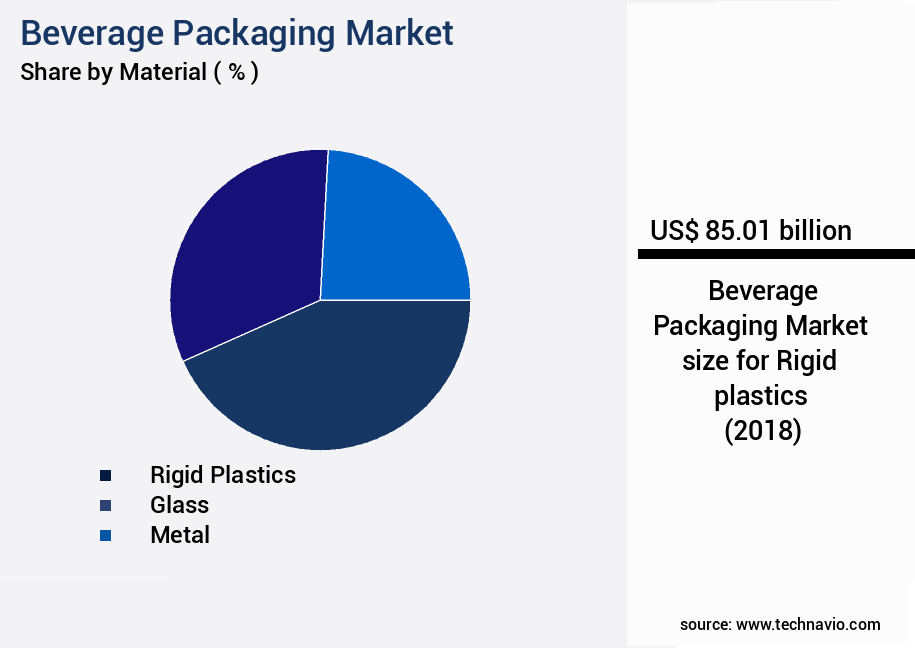
The Rigid plastics segment was valued at USD 85.01 billion in 2018 and showed a gradual increase during the forecast period.
Regional Analysis
APAC is estimated to contribute 48% to the growth of the global market during the forecast period.Technavio’s analysts have elaborately explained the regional trends and drivers that shape the market during the forecast period.
See How Beverage Packaging Market Demand is Rising in APAC Request Free Sample
The market is experiencing significant growth, driven by shifting consumer preferences and economic factors. In emerging economies, the increasing disposable income of the population and a rise in average temperatures are leading people to opt for packaged beverages, such as bottled and canned water, instead of tap water. This trend is particularly noticeable in countries like China, India, Indonesia, and Thailand, which are expected to account for over half of the incremental growth in beverage consumption. Meanwhile, in developed markets, the consumption of non-alcoholic beverages is on the rise due to marketing and communication efforts by beverage companies.
For instance, the beer consumption rate is increasing at a higher rate in developing countries, particularly in the Asia Pacific region, where India and China are leading the charge. These dynamics underscore the evolving nature of the market and the opportunities it presents for growth.
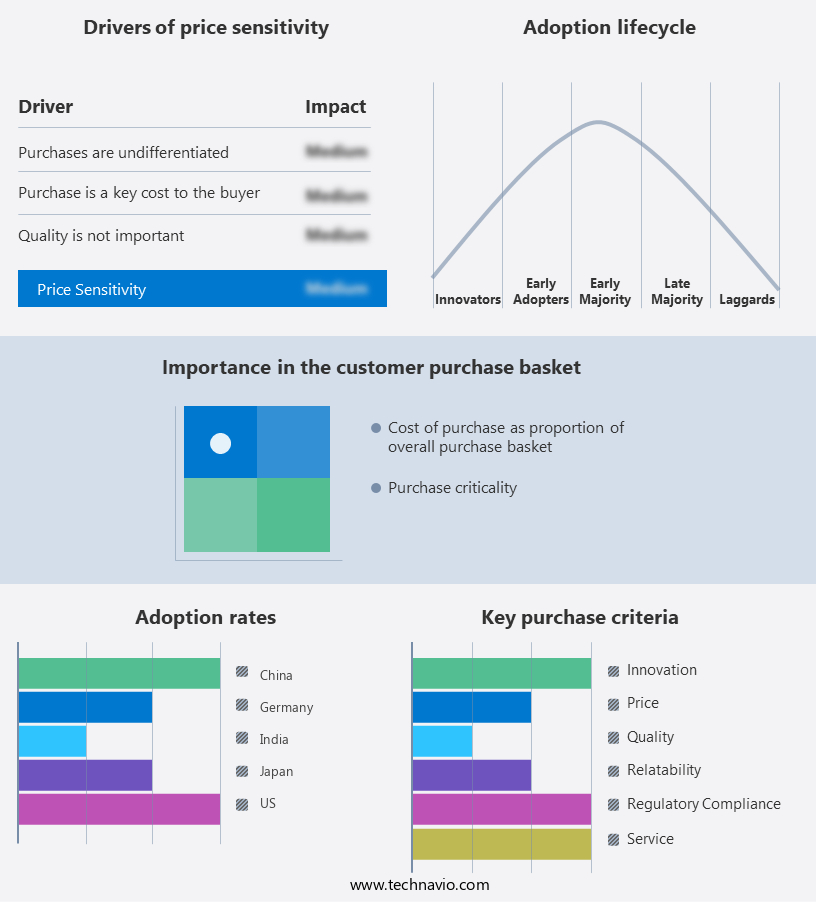
Customer Landscape of Beverage Packaging Industry
Competitive Intelligence by Technavio Analysis: Leading Players in the Beverage Packaging Market
Companies are implementing various strategies, such as strategic alliances, beverage packaging market forecast, partnerships, mergers and acquisitions, geographical expansion, and product/service launches, to enhance their presence in the industry.
Amcor plc - This company specializes in providing a diverse range of beverage packaging solutions, including plastic bottles, jars, canisters, single serve coffee capsules, pods, bags, and pouches. Their offerings cater to various industries and consumer preferences, ensuring sustainable and innovative packaging options.
The industry research and growth report includes detailed analyses of the competitive landscape of the market and information about key companies, including:
- Amcor plc
- Ardagh Group SA
- Ball Corp.
- Berlin Packaging LLC
- Berry Global Inc.
- CANPACK SA
- Compagnie de Saint Gobain
- Crown Holdings Inc.
- DS Smith Plc
- Mondi Plc
- O I Glass Inc.
- Pactiv Evergreen Inc.
- SIG Group AG
- Silgan Holdings Inc.
- Smurfit Kappa
- Stora Enso Oyj
- Tetra Laval SA
- Toyo Seikan Group Holdings Ltd.
- Vidrala SA
- WestRock Co.
Qualitative and quantitative analysis of companies has been conducted to help clients understand the wider business environment as well as the strengths and weaknesses of key industry players. Data is qualitatively analyzed to categorize companies as pure play, category-focused, industry-focused, and diversified; it is quantitatively analyzed to categorize companies as dominant, leading, strong, tentative, and weak.
Recent Development and News in Beverage Packaging Market
- In August 2024, Amcor, a leading global packaging company, announced the acquisition of Bemis Company, Inc.'s flexible packaging business for approximately USD6.8 billion. This strategic move aimed to expand Amcor's presence in the fast-growing flexible packaging market and strengthen its position as a key player (Amcor Press Release, 2024).
- In November 2024, PepsiCo, the global food and beverage corporation, unveiled its new PlantBottle 2.0, a 100% rPET (recycled polyethylene terephthalate) bottle, marking a significant step towards increasing the use of recycled materials in beverage packaging (PepsiCo Press Release, 2024).
- In March 2025, Ball Corporation and Nestlé announced a strategic partnership to develop and commercialize aluminum beverage cans for Nestlé's Nespresso brand. This collaboration aimed to reduce the environmental impact of Nespresso's packaging by using infinitely recyclable aluminum cans (Ball Corporation Press Release, 2025).
- In May 2025, Danone, the French food company, announced the launch of its new eco-friendly water brand, Evian Genius, with a 100% recycled PET bottle. This initiative underlined Danone's commitment to reducing plastic waste and promoting sustainable packaging solutions in the beverage industry (Danone Press Release, 2025).
Dive into Technavio’s robust research methodology, blending expert interviews, extensive data synthesis, and validated models for unparalleled Beverage Packaging Market insights. See full methodology.
|
Market Scope |
|
|
Report Coverage |
Details |
|
Page number |
179 |
|
Base year |
2023 |
|
Historic period |
2018-2022 |
|
Forecast period |
2024-2028 |
|
Growth momentum & CAGR |
Accelerate at a CAGR of 4.95% |
|
Market growth 2024-2028 |
USD 75.07 billion |
|
Market structure |
Fragmented |
|
YoY growth 2023-2024(%) |
4.65 |
|
Key countries |
US, China, Japan, India, and Germany |
|
Competitive landscape |
Leading Companies, Market Positioning of Companies, Competitive Strategies, and Industry Risks |
Why Choose Technavio for Beverage Packaging Market Insights?
"Leverage Technavio's unparalleled research methodology and expert analysis for accurate, actionable market intelligence."
The market is experiencing significant shifts as companies adopt various strategies to enhance sustainability, improve supply chain efficiency, and ensure product safety. One such trend is the implementation of pet bottle lightweighting strategies, which reduce material usage while maintaining structural integrity. This not only lowers packaging material costs but also contributes to the reduction of carbon emissions in the supply chain. Another area of focus is the use of aseptic carton packaging materials, which offer benefits such as extended shelf life and improved product protection. These materials are essential for e-commerce applications, where damage reduction during transportation is crucial. High-speed labeling machine integration is also a priority, enabling efficient production lines and reducing labor costs. Sustainable packaging material selection is a key consideration for beverage companies seeking to meet evolving consumer demands. Modified atmosphere packaging (MAP) is increasingly popular due to its ability to extend product shelf life and minimize waste. Moreover, the adoption of recyclable packaging materials, such as PET and glass, is crucial for companies aiming to meet compliance regulations and reduce packaging waste. Glass bottle recycling processes are a critical aspect of sustainable packaging. Companies are investing in optimizing these processes to improve supply chain efficiency and reduce costs. For instance, some firms have reported a 30% reduction in glass bottle production costs by implementing closed-loop recycling systems. Quality control in packaging production is paramount, with can sealing integrity testing, leak detection, and fill level monitoring system calibration essential to maintaining product safety and consumer trust. Automated packaging line maintenance and tamper-evident packaging design regulations further ensure product security and compliance. Companies are also exploring compostable packaging materials, with breakdown times of under six months, as a more eco-friendly alternative. Packaging line automation improvement and cost reduction strategies are additional areas of focus for businesses aiming to streamline operations and remain competitive in the market.
What are the Key Data Covered in this Beverage Packaging Market Research and Growth Report?
-
What is the expected growth of the Beverage Packaging Market between 2024 and 2028?
-
USD 75.07 billion, at a CAGR of 4.95%
-
-
What segmentation does the market report cover?
-
The report is segmented by Material (Rigid plastics, Glass, Metal, and Others), Product (Alcoholic beverages, Non-alcoholic beverages, and Dairy beverages), and Geography (APAC, Europe, North America, South America, and Middle East and Africa)
-
-
Which regions are analyzed in the report?
-
APAC, Europe, North America, South America, and Middle East and Africa
-
-
What are the key growth drivers and market challenges?
-
Rising consumption of bottled water, Growing opposition and stringent regulations in usage of plastic bottles
-
-
Who are the major players in the Beverage Packaging Market?
-
Amcor plc, Ardagh Group SA, Ball Corp., Berlin Packaging LLC, Berry Global Inc., CANPACK SA, Compagnie de Saint Gobain, Crown Holdings Inc., DS Smith Plc, Mondi Plc, O I Glass Inc., Pactiv Evergreen Inc., SIG Group AG, Silgan Holdings Inc., Smurfit Kappa, Stora Enso Oyj, Tetra Laval SA, Toyo Seikan Group Holdings Ltd., Vidrala SA, and WestRock Co.
-
We can help! Our analysts can customize this beverage packaging market research report to meet your requirements.
 RIA -
RIA - 
