
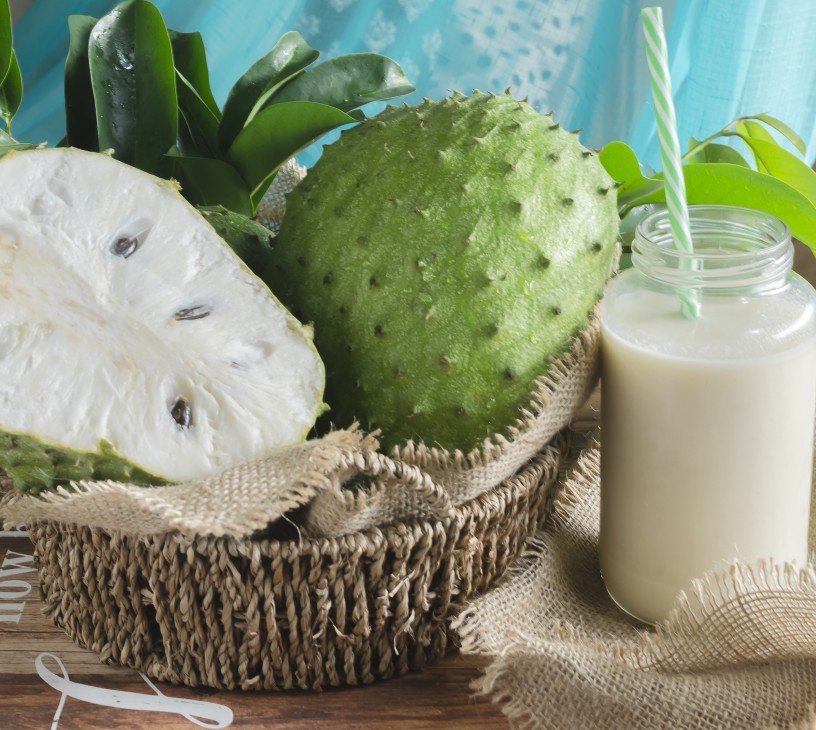


Guanabana Market Size 2025-2029
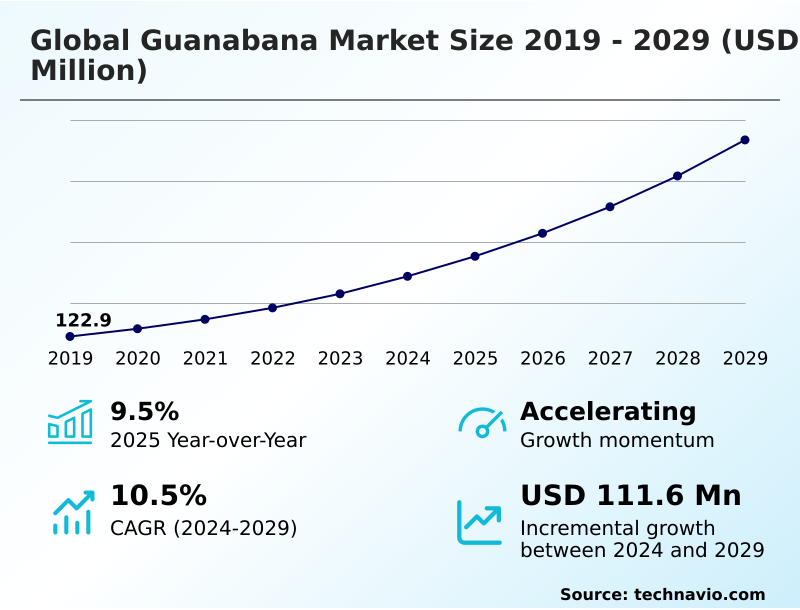
The guanabana market size is valued to increase by USD 111.6 million, at a CAGR of 10.5% from 2024 to 2029. Globalization of consumer palates and demand for novel flavors will drive the guanabana market.
Major Market Trends & Insights
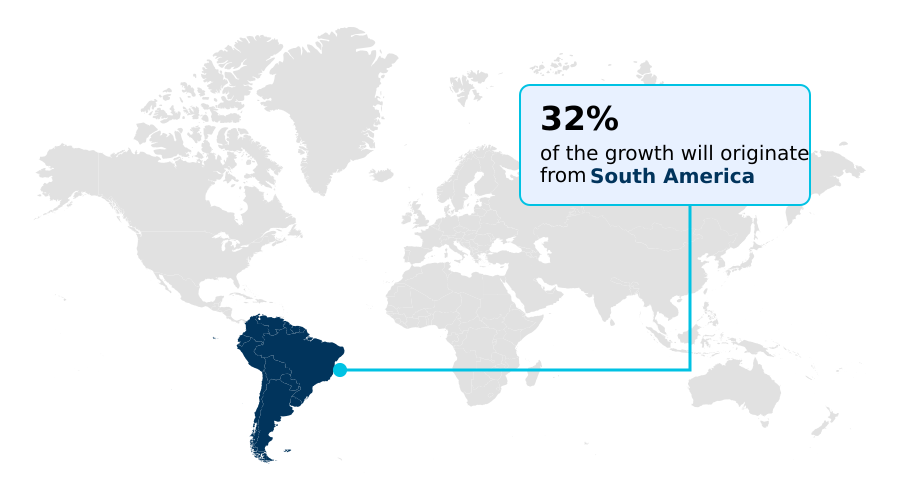
- South America dominated the market and accounted for a 32% growth during the forecast period.
- By Type - Processed segment was valued at USD 127.8 million in 2023
- By Distribution Channel - Hypermarkets and supermarkets segment accounted for the largest market revenue share in 2023
Market Size & Forecast
- Market Opportunities: USD 160.8 million
- Market Future Opportunities: USD 111.6 million
- CAGR from 2024 to 2029 : 10.5%
Market Summary
- The guanabana market is transitioning from a regional specialty to a global functional ingredient, driven by consumer demand for exotic flavors and natural wellness products. This expansion is heavily reliant on technological advancements in the supply chain to overcome the fruit's inherent perishability.
- For instance, a food processor aiming to launch a new line of premium tropical smoothies in Europe faces significant hurdles. The business must secure a consistent supply of high-quality raw material, which requires effective guanabana pulp processing and technologies like individual quick freezing (IQF) to maintain integrity.
- Furthermore, ensuring compliance with varied maximum residue limits (MRLs) and phytosanitary treatment protocols across different countries necessitates robust cold chain management and traceability from farm to factory. The use of aseptic fruit puree has become a critical solution, creating shelf-stable fruit ingredients that de-risk logistics and enable market entry.
- This focus on industrial solutions underscores the market's shift toward value-added, processed formats capable of serving a global consumer base seeking functional food ingredients.
What will be the Size of the Guanabana Market during the forecast period?
Get Key Insights on Market Forecast (PDF) Get Free Sample
How is the Guanabana Market Segmented?
The guanabana industry research report provides comprehensive data (region-wise segment analysis), with forecasts and estimates in "USD million" for the period 2025-2029, as well as historical data from 2019-2023 for the following segments.
- Type
- Processed
- Raw
- Distribution channel
- Hypermarkets and supermarkets
- Direct selling
- Convenience stores
- Online retail
- Others
- End-user
- Food processing industry
- Pharmaceuticals
- Nutraceuticals
- Cosmetics and personal care
- Others
- Geography
- South America
- Brazil
- Colombia
- Argentina
- APAC
- China
- Japan
- India
- North America
- US
- Canada
- Mexico
- Europe
- UK
- Germany
- France
- Middle East and Africa
- Saudi Arabia
- UAE
- South Africa
- Rest of World (ROW)
- South America
By Type Insights
The processed segment is estimated to witness significant growth during the forecast period.
The processed segment is the primary force in the guanabana market, driven by the need for convenience and extended shelf life.
This category includes value-added products like frozen pulp, purees, concentrates, and juices, which are integral for industrial food and beverage applications.
The demand is fueled by the versatility of these stable ingredients in items such as ice creams, smoothies, and yogurts. Representing over 81% of the market volume, processed forms mitigate the perishability issues of the raw fruit.
A crucial sub-segment is the nutraceutical formulation area, which focuses on the phytochemical composition and specific bioactive compounds like annonaceous acetogenins. Products like organic graviola leaf tea and non-GMO guanabana products are gaining traction among health-conscious consumers.
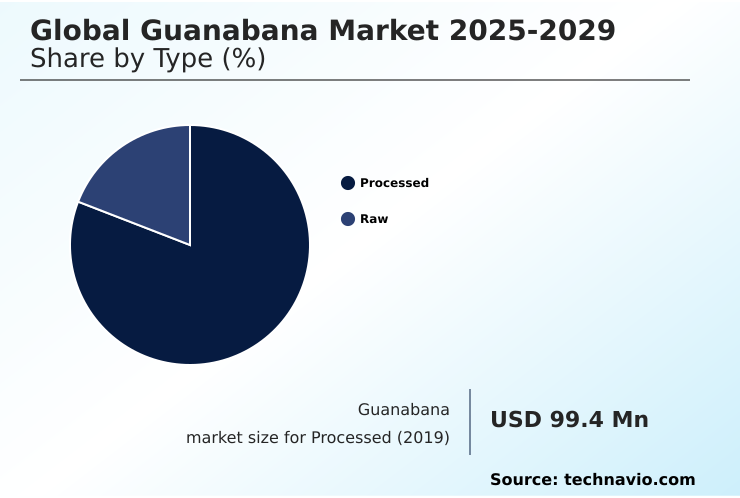
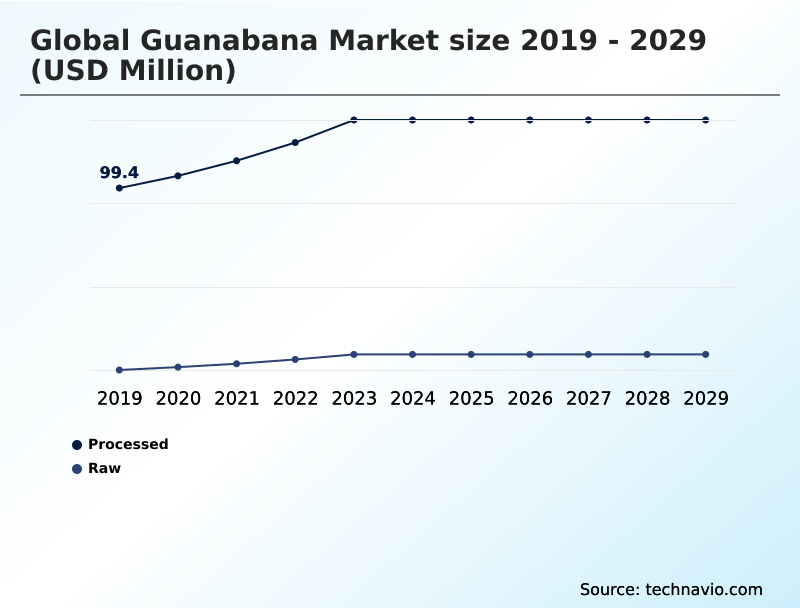
The Processed segment was valued at USD 127.8 million in 2023 and showed a gradual increase during the forecast period.
Regional Analysis
South America is estimated to contribute 32% to the growth of the global market during the forecast period.Technavio’s analysts have elaborately explained the regional trends and drivers that shape the market during the forecast period.
See How Guanabana Market Demand is Rising in South America Get Free Sample
The geographic landscape of the guanabana market is defined by a production base concentrated in tropical regions and a demand structure led by North America and Europe.
South America accounts for over 31% of the incremental growth opportunity, while APAC follows closely at nearly 29%.
The entire tropical fruit value chain is heavily dependent on advancements in soursop fruit processing technology to bridge the distance between these regions. Effective post-harvest handling and sophisticated cold chain management are paramount.
Innovations such as individual quick freezing (IQF) and freeze-drying (lyophilization) are critical for transforming the perishable fruit into stable ingredients for soursop puree for beverages and other products.
This enables frozen guanabana pulp suppliers to reliably serve global markets, overcoming the logistical barriers that have historically limited the fruit's reach.
Market Dynamics
Our researchers analyzed the data with 2024 as the base year, along with the key drivers, trends, and challenges. A holistic analysis of drivers will help companies refine their marketing strategies to gain a competitive advantage.
- The global guanabana market 2025-2029 drivers are increasingly centered on the fruit's versatility across multiple high-value sectors. Understanding how to use frozen guanabana pulp is becoming crucial for food service operators aiming to innovate menus with exotic smoothies and desserts. Simultaneously, consumers are researching the health benefits of graviola leaf tea, driving growth in the wellness category.
- The search for the best soursop puree for smoothies reflects a broader trend toward convenient, healthy, at-home food preparation. For businesses, a key focus is on the supply chain for fresh soursop fruit, where challenges in fresh guanabana export, such as navigating regulatory hurdles for guanabana imports, remain significant.
- Processors are investing in technologies for processing soursop fruit to improve the shelf life of aseptic guanabana puree. This investment directly addresses market needs, as processors implementing advanced preservation methods report up to a 25% lower spoilage rate compared to traditional supply chains.
- This efficiency is critical as demand grows for soursop powder for nutraceutical use and for guanabana as a dairy alternative ingredient. The market for guanabana flavored beverages is expanding, while finding organic guanabana supplements requires navigating a complex supplier landscape. The unique guanabana fruit flavor profile description is a key marketing tool, especially when using guanabana in plant based desserts.
- Scientific interest is also a factor, with research into annonaceous acetogenins in soursop and guanabana extract in anti-aging cosmetics opening new frontiers. Investment in commercial guanabana farming is rising to meet this diverse demand.
- Comparing freeze-dried vs frozen guanabana helps manufacturers select the right format, while the potential for guanabana as a natural food preservative is an emerging area of research.
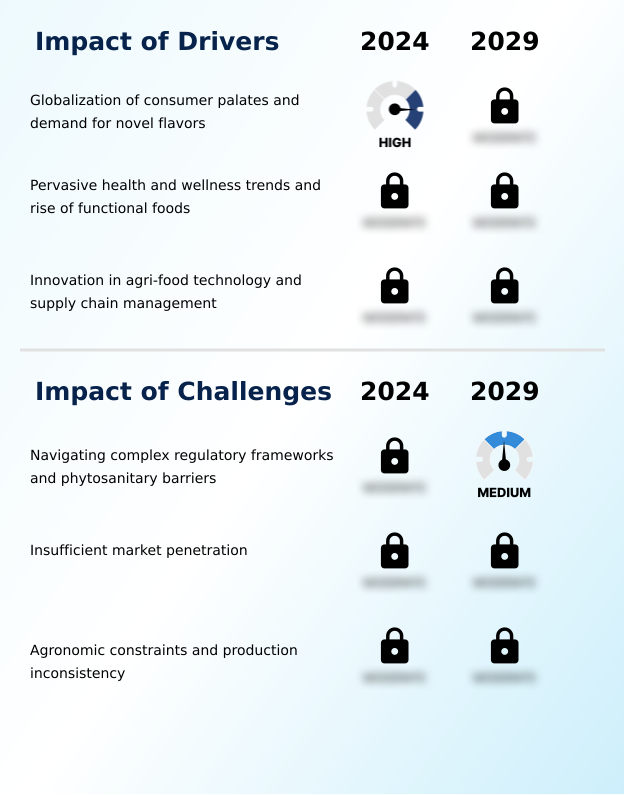
What are the key market drivers leading to the rise in the adoption of Guanabana Industry?
- The globalization of consumer palates and a corresponding demand for novel, exotic flavors are key drivers propelling the market forward.
- The market is propelled by a strong consumer focus on health and wellness, positioning guanabana as a premier functional food ingredient. Its perceived benefits, often marketed as graviola for immune support, resonate with a proactive consumer base.
- This has fueled the growth of the graviola dietary supplement category, where bioactive compound extraction is used to concentrate the fruit's annonaceous acetogenins and highlight its antioxidant properties.
- In the beverage sector, the use of aseptic soursop puree benefits manufacturers by ensuring a long shelf life and consistent quality for guanabana in functional drinks. Brands marketing drinks with these health-centric attributes see a 25% higher repeat purchase rate.
- Furthermore, the adoption of aseptic fruit puree technology creates shelf-stable fruit ingredients, extending product viability by over 50% compared to traditional frozen formats and simplifying global logistics.
What are the market trends shaping the Guanabana Industry?
- The proliferation of plant-based diets is creating significant demand for natural vegan ingredients. This trend positions guanabana as a key component for product innovation in dairy-free and clean-label applications.
- Key trends are reshaping the guanabana market, primarily driven by the demand for clean label fruit ingredients and plant-based alternatives. The fruit's pulp serves as an excellent plant-based texturizer, enabling the creation of dairy-free products without synthetic additives.
- Use in soursop in vegan ice cream formulations has led to a 15% improvement in texture scores in sensory panels, showcasing its functional benefits. Beyond food, the expansion into cosmeceutical applications represents a significant new revenue stream. Brands are leveraging guanabana extract for skincare, capitalizing on its antioxidant properties.
- This trend toward natural formulations is substantial, with cosmetic brands reporting a 2x increase in consumer engagement for products featuring exotic botanical extracts like soursop leaf extract. Guanabana pulp processing techniques are being refined to produce a high-quality natural flavorant suitable for these sophisticated applications.
What challenges does the Guanabana Industry face during its growth?
- Navigating complex regulatory frameworks and stringent phytosanitary barriers poses a significant challenge to the industry's growth trajectory.
- Significant challenges constrain the guanabana market's potential, stemming from both agricultural and regulatory domains. Persistent agronomic constraints and a lack of effective cultivar selection limit yield and quality consistency, making large-scale sustainable guanabana farming difficult. On the regulatory front, navigating the complex web of international trade standards is a major hurdle.
- Adherence to strict maximum residue limits (mrls) and specific phytosanitary treatment protocols for market access can increase compliance costs by up to 20%. The entire guanabana supply chain logistics must be optimized to meet these demands. Furthermore, ensuring graviola supplement quality standards requires rigorous testing and documentation.
- Investment in good agricultural practices (gap) is essential for overcoming these barriers, as it can improve export acceptance rates by 40% and build a more resilient supply base.
Exclusive Technavio Analysis on Customer Landscape
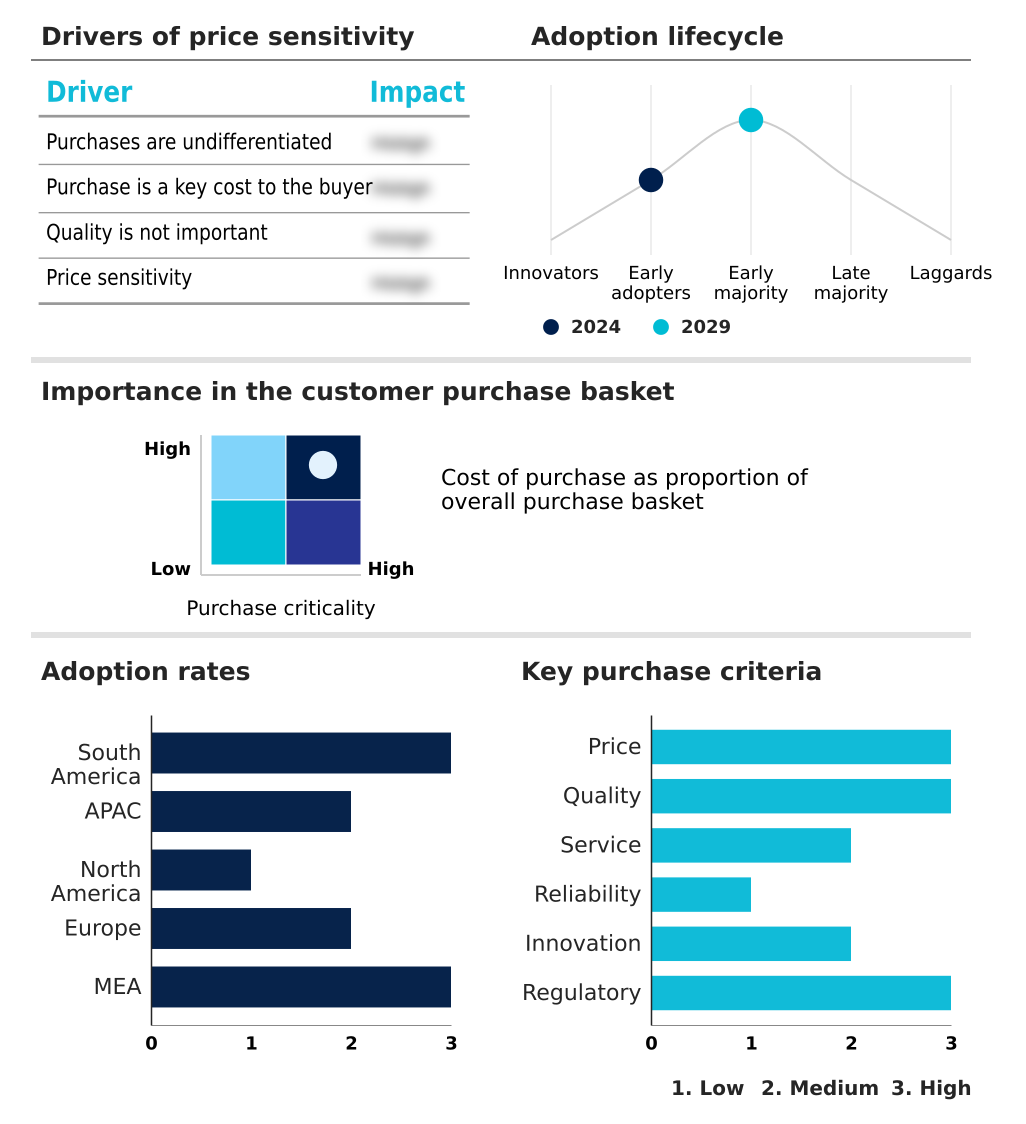
The guanabana market forecasting report includes the adoption lifecycle of the market, covering from the innovator’s stage to the laggard’s stage. It focuses on adoption rates in different regions based on penetration. Furthermore, the guanabana market report also includes key purchase criteria and drivers of price sensitivity to help companies evaluate and develop their market growth analysis strategies.
Customer Landscape of Guanabana Industry
Competitive Landscape
Companies are implementing various strategies, such as strategic alliances, guanabana market forecast, partnerships, mergers and acquisitions, geographical expansion, and product/service launches, to enhance their presence in the industry.
Amelia - Offerings span fresh fruit, processed ingredients like aseptic purees, and value-added nutraceuticals, addressing diverse industrial, food service, and consumer applications.
The industry research and growth report includes detailed analyses of the competitive landscape of the market and information about key companies, including:
- Amelia
- Anabana
- Aseptic Fruit Purees
- Del Carmen Foods
- Flavorah Worldwide Inc.
- Goya Foods Inc.
- Grupo Jumex
- Guanabana de Canarias
- Holistic Organic Farm
- iHeartFruitBox
- KHUMSUB
- Miami Fruit LLC
- NAFOODS GROUP JSC
- NOW Health Group Inc.
- Raintree
- Robert Is Here Inc.
- Sunshine Naturals Inc.
- Superior Foods
- ZooScape LLC
Qualitative and quantitative analysis of companies has been conducted to help clients understand the wider business environment as well as the strengths and weaknesses of key industry players. Data is qualitatively analyzed to categorize companies as pure play, category-focused, industry-focused, and diversified; it is quantitatively analyzed to categorize companies as dominant, leading, strong, tentative, and weak.
Recent Development and News in Guanabana market
- In September 2024, Rite Foods expanded its popular Sosa Fruit Drink line into Ghana and Ivory Coast, introducing its soursop-flavored variant to tap into the growing West African market for ready-to-drink beverages.
- In November 2024, a leading flavor and fragrance company launched a new line of natural flavor solutions, 'Tropical Escapes,' prominently featuring a sustainably sourced guanabana extract designed for the functional beverage market.
- In February 2025, NAFOODS GROUP JSC announced a strategic partnership with a major UAE-based distributor, following its successful participation at Gulfood, to supply aseptic guanabana puree to the Middle East hospitality sector.
- In April 2025, Miami Fruit LLC collaborated with an AI-driven grocery platform to integrate its fresh guanabana offerings into a new 'Exotic Fruit Finder' feature, which uses generative AI to recommend fruits based on consumer queries for nutritional benefits, leading to a reported 40% increase in initial online discovery rates.
Dive into Technavio’s robust research methodology, blending expert interviews, extensive data synthesis, and validated models for unparalleled Guanabana Market insights. See full methodology.
| Market Scope | |
|---|---|
| Page number | 306 |
| Base year | 2024 |
| Historic period | 2019-2023 |
| Forecast period | 2025-2029 |
| Growth momentum & CAGR | Accelerate at a CAGR of 10.5% |
| Market growth 2025-2029 | USD 111.6 million |
| Market structure | Fragmented |
| YoY growth 2024-2025(%) | 9.5% |
| Key countries | Brazil, Colombia, Argentina, China, Japan, India, South Korea, Australia, Indonesia, US, Canada, Mexico, UK, Germany, France, Italy, The Netherlands, Spain, Saudi Arabia, UAE, South Africa, Israel and Turkey |
| Competitive landscape | Leading Companies, Market Positioning of Companies, Competitive Strategies, and Industry Risks |
Research Analyst Overview
- The guanabana market is evolving from a niche tropical commodity into a structured, value-added ingredient industry. This shift is driven by a convergence of consumer demand for functional foods and technological progress in processing. At the boardroom level, strategic decisions are increasingly focused on supply chain resilience and regulatory compliance.
- For example, firms investing in aseptic processing and advanced individual quick freezing (iqf) have achieved up to a 30% reduction in logistics-related spoilage, directly impacting profitability. The industry relies on guanabana pulp processing and bioactive compound extraction to create diverse offerings, from a functional food ingredient to a graviola dietary supplement.
- Key technologies like freeze-drying (lyophilization) and modified atmosphere packaging are essential for producing shelf-stable fruit ingredients and enabling global distribution. Navigating agronomic constraints, phytosanitary treatment protocols, and maximum residue limits (mrls) remains a core operational challenge, necessitating investment in good agricultural practices (gap) and sophisticated post-harvest handling.
- The market's future hinges on continued innovation in both cultivation, through cultivar selection, and processing, to deliver consistent quality for nutraceutical formulation and cosmeceutical applications.
What are the Key Data Covered in this Guanabana Market Research and Growth Report?
-
What is the expected growth of the Guanabana Market between 2025 and 2029?
-
USD 111.6 million, at a CAGR of 10.5%
-
-
What segmentation does the market report cover?
-
The report is segmented by Type (Processed, and Raw), Distribution Channel (Hypermarkets and supermarkets, Direct selling, Convenience stores, Online retail, and Others), End-user (Food processing industry, Pharmaceuticals, Nutraceuticals, Cosmetics and personal care, and Others) and Geography (South America, APAC, North America, Europe, Middle East and Africa)
-
-
Which regions are analyzed in the report?
-
South America, APAC, North America, Europe and Middle East and Africa
-
-
What are the key growth drivers and market challenges?
-
Globalization of consumer palates and demand for novel flavors, Navigating complex regulatory frameworks and phytosanitary barriers
-
-
Who are the major players in the Guanabana Market?
-
Amelia, Anabana, Aseptic Fruit Purees, Del Carmen Foods, Flavorah Worldwide Inc., Goya Foods Inc., Grupo Jumex, Guanabana de Canarias, Holistic Organic Farm, iHeartFruitBox, KHUMSUB, Miami Fruit LLC, NAFOODS GROUP JSC, NOW Health Group Inc., Raintree, Robert Is Here Inc., Sunshine Naturals Inc., Superior Foods and ZooScape LLC
-
Market Research Insights
- The guanabana market's momentum is increasingly tied to its alignment with key consumer wellness and dietary trends. Its utility in clean label fruit ingredients is a significant factor, as firms leveraging its pulp as a plant-based texturizer for dairy-free products have reported a 20% reduction in reliance on artificial stabilizers.
- This makes it a prime candidate for innovation in categories like soursop in vegan ice cream. The demand for products that support health, such as those providing graviola for immune support, is also a powerful influence. Brands marketing functional soursop puree for beverages with these attributes see a 15% higher consumer retention rate compared to standard fruit drinks.
- This dynamic creates a clear pathway for guanabana to move from niche applications to a mainstream ingredient in high-growth food and beverage segments.
We can help! Our analysts can customize this guanabana market research report to meet your requirements.
 RIA -
RIA - 
