
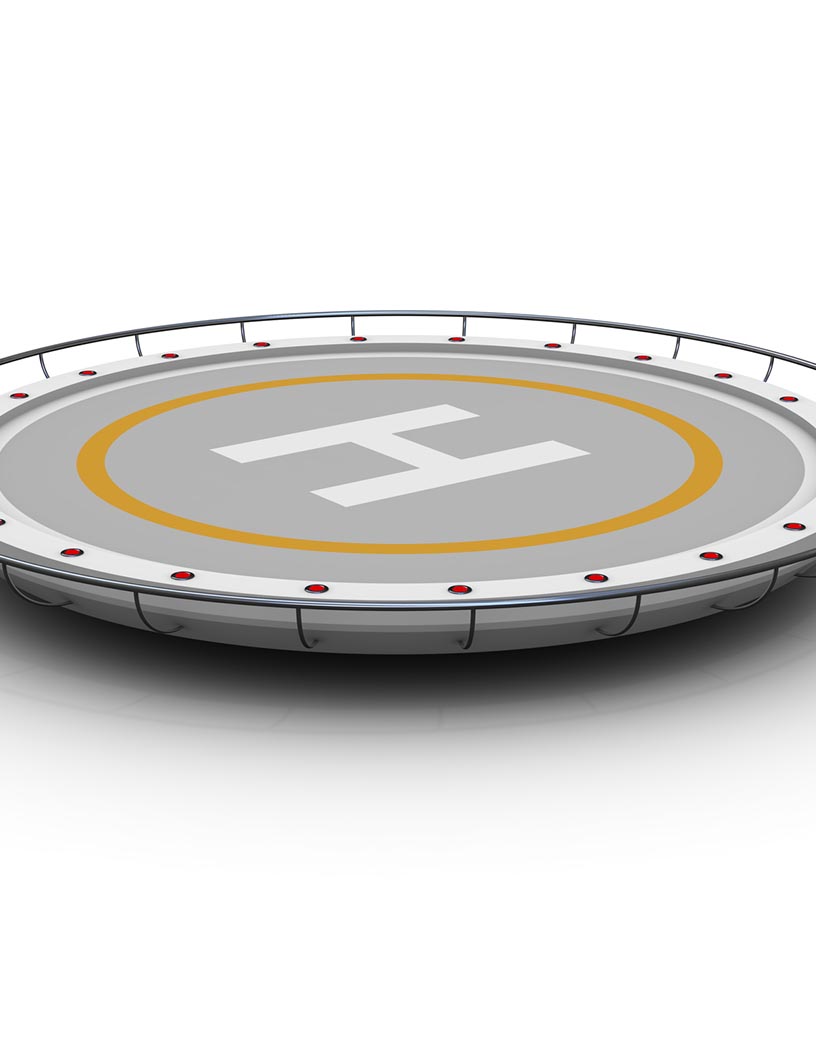


Heliport Lighting Market Size 2024-2028
The heliport lighting market size is forecast to increase by USD 30.13 million at a CAGR of 5.91% between 2023 and 2028.
- The market is witnessing significant growth due to the increasing adoption of heliports for urban air mobility and emergency medical services. The integration of smart technology with LED lighting is a major trend In the market, enabling energy efficiency and improved safety. However, the high initial cost and maintenance of heliport lighting remain challenges for market growth. LED lighting is increasingly being used in aviation due to its long lifespan and energy efficiency. The integration of smart lighting systems in heliports enhances safety by providing real-time information and improving visibility for helicopter landings. The market is expected to grow steadily as urban air mobility gains traction and the need for efficient and safe heliport infrastructure increases.
What will be the Size of the Market During the Forecast Period?
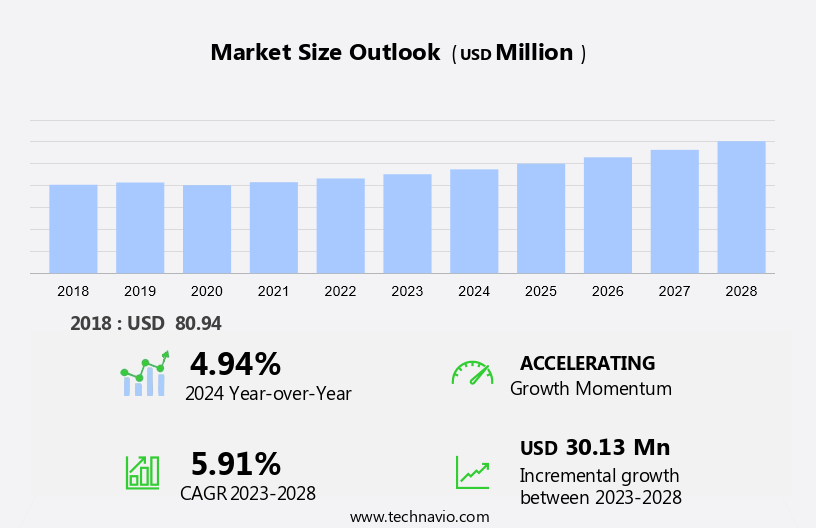
- The market encompasses a range of lighting solutions designed to facilitate safe and efficient helicopter operations. This market exhibits strong growth, driven by the increasing demand for helicopter services in various sectors, including commercial and military applications. Heliport lighting systems include high intensity lights for runway and taxiway marking, medium and low intensity lights for helipad edges, lift-off areas, and taxiways. FATO lights and taxiway lights are essential components, ensuring clear visibility during takeoff and landing. Organic developments in urban air mobility and historic back-drop of expanding helicopter usage are significant market drivers. Inorganic growth factors include mergers and acquisitions, collaborations, and technological advancements.
- Furthermore, heliport lighting solutions continue to evolve, incorporating energy-efficient LED technology and advanced control systems. The market's size and direction reflect the growing importance of helicopter operations in diverse industries, including emergency medical services, oil and gas exploration, and military applications.
How is this Heliport Lighting Industry segmented and which is the largest segment?
The heliport lighting industry research report provides comprehensive data (region-wise segment analysis), with forecasts and estimates in "USD million" for the period 2024-2028, as well as historical data from 2018-2022 for the following segments.
- Technology
- LED lighting
- Traditional lighting
- Application
- Civil
- Military
- Geography
- North America
- US
- Europe
- Germany
- UK
- APAC
- China
- Japan
- Middle East and Africa
- South America
- North America
By Technology Insights
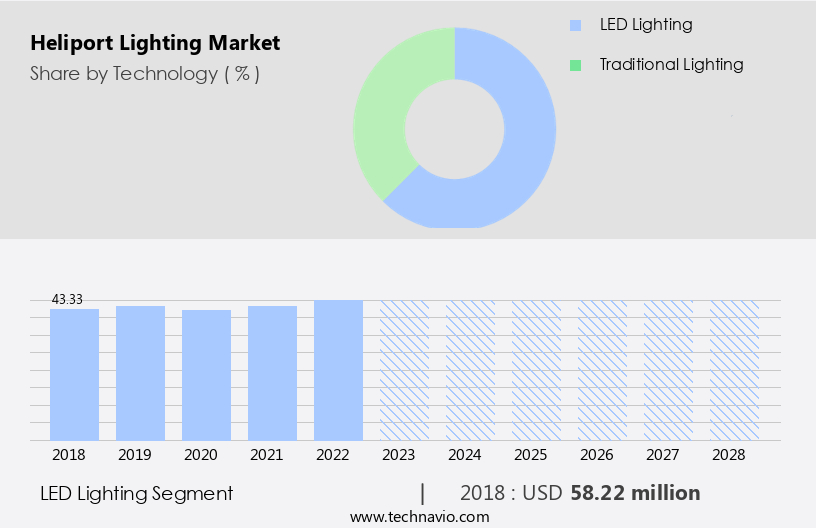
- The LED lighting segment is estimated to witness significant growth during the forecast period.
LED lighting technology is experiencing growth In the market due to its extended lifespan compared to traditional lighting, energy efficiency, and the absence of heat emission during prolonged usage. LED lights offer superior color rendering index ratings and the ability to generate directional emissions, making them ideal for heliport applications. Although LEDs have a higher initial cost than compact fluorescent lamps (CFLs) and halogen incandescent lights, their long-term cost-effectiveness is a significant advantage. In the heliport landscape, both commercial and military sectors utilize LED lighting for helipad edge lights, lift-off area lights, and taxiway lights. Urban Air Mobility is also integrating LED lighting technology for enhanced safety and efficiency. LEDs are particularly beneficial for historic heliports due to their design flexibility and minimal maintenance requirements. Organic and inorganic developments in LED technology continue to advance heliport lighting, ensuring optimal performance and functionality.
Get a glance at the Heliport Lighting Industry report of share of various segments Request Free Sample
The LED lighting segment was valued at USD 58.22 million in 2018 and showed a gradual increase during the forecast period.
Regional Analysis
- North America is estimated to contribute 32% to the growth of the global market during the forecast period.
Technavio's analysts have elaborately explained the regional trends and drivers that shape the market during the forecast period.
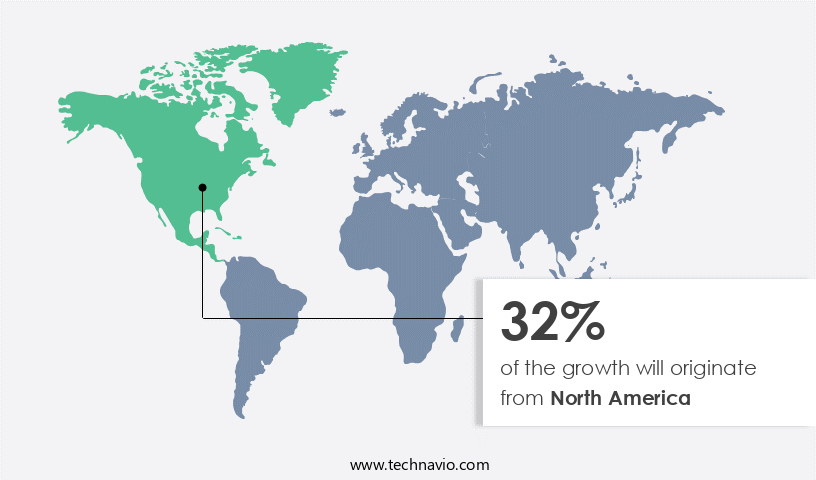
For more insights on the market share of various regions, Request Free Sample
The market in North America is experiencing growth due to the increasing demand for helicopter operations In the US, which has the highest number of operational heliports worldwide. Heliports serve various purposes, including medical services, general aviation for corporate, tourism, and airport feeders, and specialized services such as firefighting and law enforcement. With the rise in heli-tourism and helicopter passenger traffic, there is a growing need to expand the capacity of existing heliports and construct new ones in cities like New York and Los Angeles, which have the highest number of operational heliports In the US. The US military also utilizes heliports for military operations, adding to the market's growth.
Market Dynamics
Our researchers analyzed the data with 2023 as the base year, along with the key drivers, trends, and challenges. A holistic analysis of drivers will help companies refine their marketing strategies to gain a competitive advantage.
What are the key market drivers leading to the rise In the adoption of Heliport Lighting Industry?
Varied use of heliports is the key driver of the market.
- Heliports play a crucial role in various sectors, including disaster management and healthcare, by facilitating efficient helicopter operations. In disaster-stricken areas, heliports serve as essential bases for the rapid deployment of emergency response teams and resources. They enable the swift delivery of essential supplies, such as food, water, and medical support, to affected populations. Moreover, heliports support firefighting efforts by providing a water reserve for helicopters to extinguish forest fires. In the healthcare sector, the increasing use of helicopters as aerial ambulances has led to the expansion of heliports near medical facilities worldwide. This trend is driven by the growing global healthcare technologies and services market.
- In addition, heliports enable quick transportation of patients to specialized medical centers, improving their chances of receiving timely and effective treatment. The market for heliport lighting caters to the commercial and military sectors. The use of High Intensity Lights (HIL), Medium Intensity Lights (MIL), and Low Intensity Lights (LIL) is essential for the safe and efficient operation of helicopters at heliports and helipads. These lights include Heliport Edge Lights, Lift-off Area Lights, and Taxiway Lights, which ensure proper illumination for takeoff and landing. The market for heliport lighting experiences organic and inorganic developments, driven by the increasing demand for Urban Air Mobility (UAM) and Military and Defense applications.
What are the market trends shaping the Heliport Lighting Industry?
Integration of smart technology with heliport lighting is the upcoming market trend.
- The market is experiencing notable advancements with the integration of smart technology, significantly improving the functionality and efficiency of heliport lighting systems. This integration is primarily driven by the growing demand for enhanced control, monitoring, and automation In the aviation sector. Heliport operators are increasingly adopting smart technology solutions to optimize lighting operations, ensure safety, and simplify maintenance procedures. A significant factor fueling the adoption of smart technology in heliport lighting is the implementation of remote monitoring and control systems. These systems enable operators to monitor the real-time status and performance of their heliport lighting systems, allowing them to promptly address any faults or failures and make necessary adjustments.
- Furthermore, the integration of smart technology in Heliport lighting is essential for Commercial use and Military use applications, including Helicopter operations at Helipads, Lift-off Areas, and Taxiways. Additionally, the integration of smart technology aligns with the broader trend of Urban Air Mobility and the Military and Defense sectors.
What challenges does the Heliport Lighting Industry face during its growth?
High initial cost and maintenance of heliport lighting is a key challenge affecting the industry growth.
- The market experiences significant challenges due to the high initial investment and maintenance expenses related to heliport lighting systems. These costs negatively impact market growth and hinder heliport operators from adopting advanced lighting solutions. The infrastructure required for heliport lighting, including high intensity perimeter lights, medium intensity approach lights, low intensity taxiway lights, and control systems, can be costly.
- Moreover, the expense encompasses not just the equipment itself but also labor costs for installation, wiring, and integration with existing infrastructure. Military and commercial heliport applications, such as Urban Air Mobility, require extensive lighting systems for safe helicopter operations. Despite these challenges, organic and inorganic developments continue to shape the market, with advancements in LED technology and energy efficiency offering potential cost savings.
Exclusive Customer Landscape
The market forecasting report includes the adoption lifecycle of the market, covering from the innovator's stage to the laggard's stage. It focuses on adoption rates in different regions based on penetration. Furthermore, the market report also includes key purchase criteria and drivers of price sensitivity to help companies evaluate and develop their market growth analysis strategies.
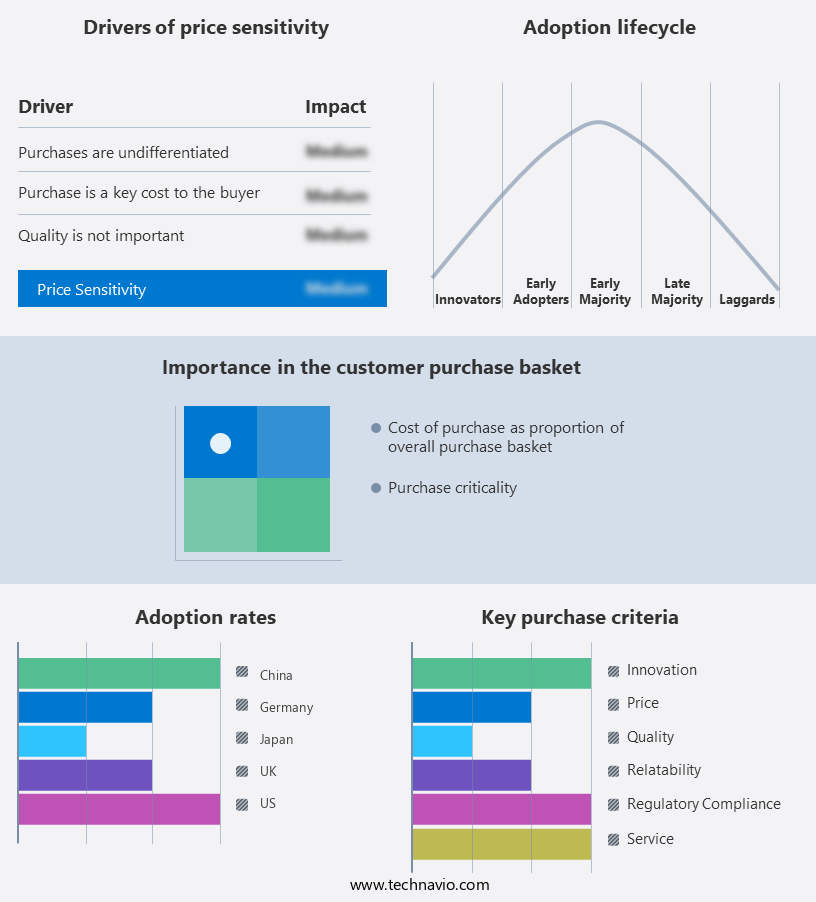
Customer Landscape
Key Companies & Market Insights
Companies are implementing various strategies, such as strategic alliances, market forecast, partnerships, mergers and acquisitions, geographical expansion, and product/service launches, to enhance their presence in the industry.
The industry research and growth report includes detailed analyses of the competitive landscape of the market and information about key companies, including:
- ADB Safegate BV
- Atg airports Ltd.
- Carmanah Technologies Corp.
- Downing Heliport Systems
- Eaton Corp. Plc
- FEC Heliports
- Flight Light Inc.
- Friars Airfield Solutions
- Heliport Systems Inc.
- Hughey and Phillips LLC
- Hunan Chendong Technology Co LTD
- ORGA BV
- Point Lighting Corp.
- PROMIC
- Q Aviation BV
- SC ELECTRO MAX SRL
- Shanghai Flylight Technology Co Ltd.
- SPX Corp.
- TKH Group NV
- Youyang Airport Lighting Equipment Inc.
Qualitative and quantitative analysis of companies has been conducted to help clients understand the wider business environment as well as the strengths and weaknesses of key industry players. Data is qualitatively analyzed to categorize companies as pure play, category-focused, industry-focused, and diversified; it is quantitatively analyzed to categorize companies as dominant, leading, strong, tentative, and weak.
Research Analyst Overview
Heliport lighting plays a crucial role in ensuring safe and efficient helicopter operations. The market for heliport lighting systems has witnessed significant growth over the past few years, driven by the increasing demand for helicopter services in various sectors. Heliport lighting systems consist of different types of lights designed to cater to the unique requirements of helicopter operations. These include high intensity lights, medium intensity lights, and low intensity lights. High intensity lights are typically used for runway and taxiway markings, providing clear visibility for helicopter pilots during takeoff and landing. Medium intensity lights are used for general area lighting, while low intensity lights are employed for perimeter lighting and obstacle marking.
In addition, the market has seen both organic and inorganic developments. Organic developments include the advancement of LED technology, which has led to the production of more energy-efficient and long-lasting lighting systems. Inorganic developments have been driven by mergers and acquisitions, strategic partnerships, and collaborations among market players. Commercial use of helicopters has been a significant contributor to the growth of the market. Helicopter services are increasingly being utilized in various industries such as oil and gas, emergency medical services, and urban air mobility. Heliports are being built in urban areas to facilitate quick and efficient transportation, leading to an increased demand for advanced lighting systems.
Furthermore, military use of helicopters is another sector driving the growth of the market. Helicopters are used extensively in military operations for transport, reconnaissance, and search and rescue missions. Military heliports require advanced lighting systems to ensure safe and efficient helicopter operations in challenging environments. Helipad edge lights, lift-off area lights, and taxiway lights are essential components of heliport lighting systems. Helipad edge lights mark the edges of the landing pad, providing clear visibility for helicopter pilots during landing and takeoff. Lift-off area lights illuminate the area where helicopters lift off, ensuring that pilots have clear visibility of the surrounding terrain.
In addition, taxiway lights guide helicopters along the taxiways to and from the landing pad. Urban air mobility is an emerging trend In the helicopter industry, and it is expected to drive significant growth In the market. Urban air mobility refers to the use of helicopters for transportation in urban areas, and it requires advanced lighting systems to ensure safe and efficient operations. The market is expected to continue growing due to the increasing demand for helicopter services in various sectors. The market is expected to be driven by the advancement of technology, increasing demand for energy-efficient lighting systems, and the growing popularity of urban air mobility.
However, factors such as high installation and maintenance costs and regulatory requirements may limit the growth of the market. The market is driven by the increasing demand for helicopter services in various sectors, including commercial and military use. The market is expected to continue growing due to the advancement of technology and the growing popularity of urban air mobility.
|
Market Scope |
|
|
Report Coverage |
Details |
|
Page number |
161 |
|
Base year |
2023 |
|
Historic period |
2018-2022 |
|
Forecast period |
2024-2028 |
|
Growth momentum & CAGR |
Accelerate at a CAGR of 5.91% |
|
Market growth 2024-2028 |
USD 30.13 million |
|
Market structure |
Fragmented |
|
YoY growth 2023-2024(%) |
4.94 |
|
Key countries |
US, China, Japan, Germany, and UK |
|
Competitive landscape |
Leading Companies, market growth and forecasting , Market Positioning of Companies, Competitive Strategies, and Industry Risks |
What are the Key Data Covered in this Heliport Lighting Market Research and Growth Report?
- CAGR of the Heliport Lighting industry during the forecast period
- Detailed information on factors that will drive the growth and forecasting between 2024 and 2028
- Precise estimation of the size of the market and its contribution of the industry in focus to the parent market
- Accurate predictions about upcoming growth and trends and changes in consumer behaviour
- Growth of the market across North America, Europe, APAC, Middle East and Africa, and South America
- Thorough analysis of the market's competitive landscape and detailed information about companies
- Comprehensive analysis of factors that will challenge the heliport lighting market growth of industry companies
We can help! Our analysts can customize this heliport lighting market research report to meet your requirements.
 RIA -
RIA - 
