


Indonesia Freight Logistics Market Size 2026-2030
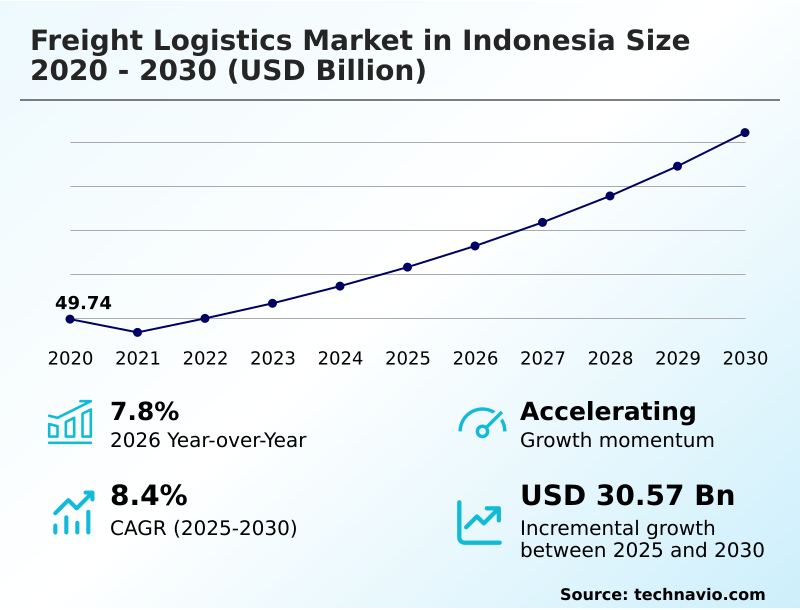
The Indonesia Freight Logistics Market size was valued at USD 61.56 billion in 2025, growing at a CAGR of 8.4% during the forecast period 2026-2030.
Major Market Trends & Insights
- By Service - Transportation segment was valued at USD 32.13 billion in 2024
- By Application - Manufacturing segment accounted for the largest market revenue share in 2024
Market Size & Forecast
- Historic Market Opportunities 2020-2024: USD 42.40 billion
- Market Future Opportunities 2025-2030: USD 30.57 billion
- CAGR from 2025 to 2030 : 8.4%
Market Summary
- The freight logistics market in Indonesia is defined by rapid transformation, with technology adoption increasing operational efficiency by over 20% in key segments. A typical business scenario involves a consumer goods company partnering with a 3PL provider to manage a complex supply chain spanning multiple islands, requiring a sophisticated mix of sea and land transport.
- This reliance on outsourcing has grown as e-commerce generates a 35% higher volume of small parcel shipments compared to traditional retail. A primary driver is the government's strategic investment in infrastructure, which directly reduces transit times and costs.
- However, the market faces a significant challenge from a shortage of skilled logistics professionals, which constrains the ability of firms to leverage advanced analytics and automation. This talent gap can limit the potential returns on technology investments, creating a bottleneck for modernization and the delivery of high-value, integrated services across the country.
What will be the Size of the Indonesia Freight Logistics Market during the forecast period?
Get Key Insights on Market Forecast (PDF) Request Free Sample
How is the Indonesia Freight Logistics Market Segmented?
The indonesia freight logistics industry research report provides comprehensive data (region-wise segment analysis), with forecasts and analysis for the period 2026-2030, as well as historical data from 2020-2024 for the following segments.
- Service
- Transportation
- Warehousing
- Others
- Application
- Manufacturing
- Automotive
- Consumer goods
- Retail industry
- Others
- Type
- 3PL
- 4PL
- Geography
- APAC
- Indonesia
- APAC
How is the Indonesia Freight Logistics Market Segmented by Service?
The transportation segment is estimated to witness significant growth during the forecast period.
The transportation segment underpins the freight logistics market in Indonesia, with road freight handling over 70% of intra-island distribution. Growth is driven by infrastructure upgrades that improve the efficiency of multimodal transport and reduce logistical friction.
The rise of e-commerce has amplified the need for efficient last-mile delivery, demanding sophisticated transport management systems for dynamic route optimization. This has led to a 15% improvement in on-time delivery metrics for leading 4PL providers.
Sea freight remains critical for inter-island shipping, while air freight serves time-sensitive sectors, creating a complex environment where logistics cost reduction and superior service level agreements are key differentiators for success in supply chain resilience.
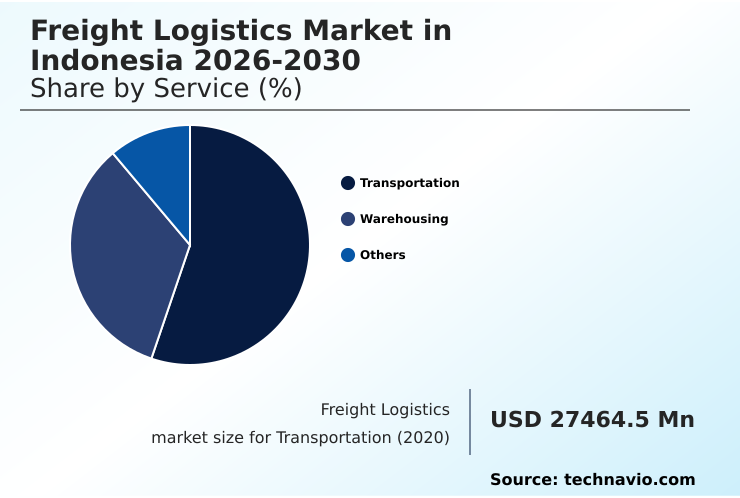
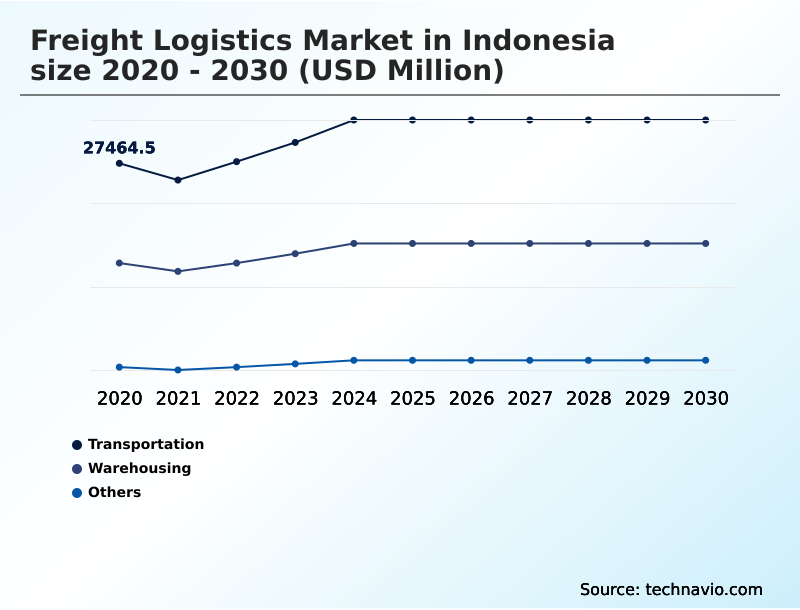
The Transportation segment was valued at USD 32.13 billion in 2024 and showed a gradual increase during the forecast period.
What are the key Drivers, Trends, and Challenges in the Indonesia Freight Logistics Market?
Our researchers analyzed the data with 2025 as the base year, along with the key drivers, trends, and challenges. A holistic analysis of drivers will help companies refine their marketing strategies to gain a competitive advantage.
- Achieving superior performance in the freight logistics market in Indonesia hinges on mastering several strategic domains. Businesses are actively exploring logistics cost optimization strategies, with successful implementations reducing operational expenditures by up to 15% through better load consolidation and route planning.
- The technology impact on warehouse management is profound, as automated systems can increase order picking accuracy to over 99.5%, a significant improvement over manual methods. Concurrently, the e-commerce influence on supply chains is reshaping the entire sector, demanding greater agility and speed in last-mile delivery networks to handle surging parcel volumes.
- In response, there is a growing focus on the adoption of sustainable and green logistics practices, driven by both regulatory pressures and consumer expectations. Companies that effectively integrate these green initiatives often see a 5-10% improvement in brand perception and customer loyalty.
- Finally, the ability to anticipate and react to disruptions is paramount, and firms are investing heavily in technologies for managing supply chain disruption effectively, which can reduce recovery times by half. These interconnected factors define the competitive landscape for logistics providers in the region.
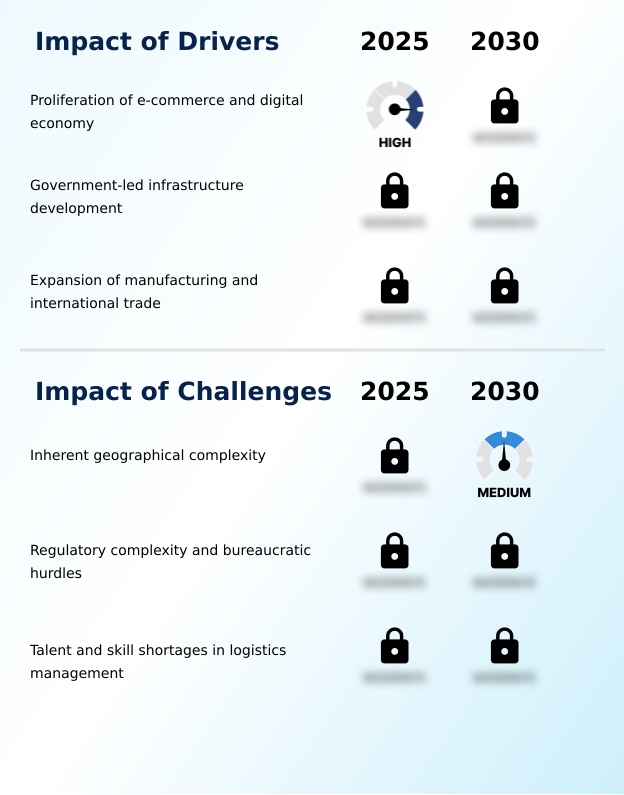
What are the key market drivers leading to the rise in the adoption of Indonesia Freight Logistics Industry?
- The rapid proliferation of e-commerce and the expanding digital economy are the key drivers fundamentally reshaping demand for freight logistics services.
- The exponential growth of e-commerce is a primary driver for the freight logistics market in Indonesia, increasing the volume of small parcel shipments by over 40% annually.
- This surge creates immense demand for agile last-mile delivery services and advanced fulfillment centers.
- To support this, government-led infrastructure development is critical, with new toll roads reducing overland transit times by as much as 30% in key economic corridors, thereby reducing logistical friction.
- This focus on improving connectivity enables more efficient inter-island shipping and strengthens trade facilitation.
- The expansion of the manufacturing sector further fuels demand, requiring sophisticated end-to-end solutions from 3PL providers to manage both inbound and outbound logistics for a diverse industrial base.
What are the market trends shaping the Indonesia Freight Logistics Industry?
- The widespread adoption of digital platforms is fostering integrated logistics ecosystems. This trend enhances connectivity and operational transparency across the value chain.
- A pivotal trend in the freight logistics market in Indonesia is the deep integration of artificial intelligence and machine learning, which improves demand forecasting accuracy by up to 25% compared to traditional statistical models. This shift enables predictive analytics for dynamic route optimization and capacity planning, significantly enhancing operational efficiency.
- The use of autonomous mobile robots in fulfillment centers is another key development, boosting order processing speeds by over 40%. This trend toward intelligent automation is driven by the need to meet the high-velocity demands of e-commerce logistics.
- Concurrently, the adoption of digital freight marketplaces provides greater supply chain visibility, allowing shippers to access a wider network of carriers and secure more competitive rates. The emphasis on green logistics is also gaining momentum, promoting decarbonization through electric vehicle adoption and route optimization.
What challenges does the Indonesia Freight Logistics Industry face during its growth?
- The inherent geographical complexity of the archipelago, coupled with infrastructural deficits, presents a key challenge to achieving efficient and cost-effective freight logistics.
- Inherent geographical complexity is a defining challenge for the freight logistics market in Indonesia, where reliance on inter-island shipping contributes to logistics costs that are nearly 20% higher as a percentage of GDP compared to regional peers.
- This structural issue is compounded by port congestion and underdeveloped land infrastructure, which can increase cargo dwell time by more than 48 hours at secondary ports. Navigating complex regulatory compliance and customs brokerage processes introduces further delays and uncertainty, undermining supply chain resilience.
- Additionally, a significant shortage of skilled talent in logistics management hinders the adoption of advanced technologies, limiting the potential efficiency gains from investments in new systems. These combined factors create persistent friction and constrain the market's ability to achieve seamless multimodal transport operations.
Exclusive Technavio Analysis on Customer Landscape
The indonesia freight logistics market forecasting report includes the adoption lifecycle of the market, covering from the innovator’s stage to the laggard’s stage. It focuses on adoption rates in different regions based on penetration. Furthermore, the indonesia freight logistics market report also includes key purchase criteria and drivers of price sensitivity to help companies evaluate and develop their market growth analysis strategies.
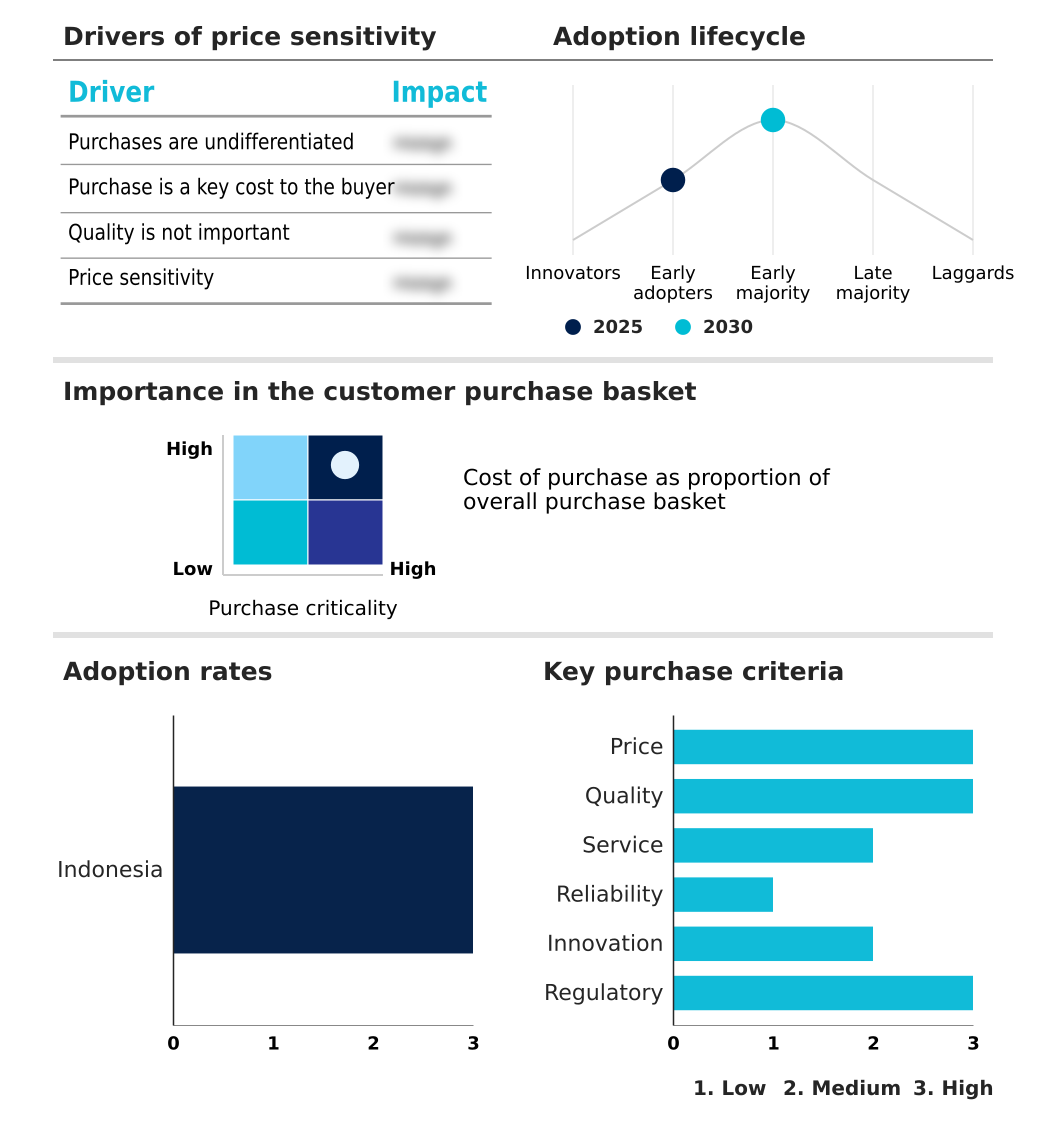
Customer Landscape of Indonesia Freight Logistics Industry
Competitive Landscape
Companies are implementing various strategies, such as strategic alliances, indonesia freight logistics market forecast, partnerships, mergers and acquisitions, geographical expansion, and product/service launches, to enhance their presence in the industry.
AP Moller Maersk AS - Delivers comprehensive freight logistics services, encompassing container shipping, end-to-end supply chain management, and international freight forwarding to support global commerce.
The industry research and growth report includes detailed analyses of the competitive landscape of the market and information about key companies, including:
- AP Moller Maersk AS
- Bollore Logistics
- CEVA Logistics SA
- DHL International GmbH
- DP World
- DSV AS
- FedEx Corp.
- GEODIS
- Kuehne Nagel Management AG
- Meratus Group
- Nippon Express Holdings Inc.
- PT Samudera Indonesia Tbk
- PT. Dunia Express Transindo
- PT. Kamadjaja Logistics
- Puninar Logistics
- DB Schenker
- SF Express Co. Ltd.
- SPIL
- Yusen Logistics Co. Ltd.
Qualitative and quantitative analysis of companies has been conducted to help clients understand the wider business environment as well as the strengths and weaknesses of key industry players. Data is qualitatively analyzed to categorize companies as pure play, category-focused, industry-focused, and diversified; it is quantitatively analyzed to categorize companies as dominant, leading, strong, tentative, and weak.
Market Intelligence Radar: High-Impact Developments & Growth Signals
- In the Cargo Ground Transportation industry, the adoption of sophisticated routing and scheduling algorithms has increased dispatch system efficiency by over 15%, directly impacting the freight logistics market in indonesia 2026-2030 by enabling more reliable last-mile delivery and better asset utilization.
- A shift toward omnichannel retailing is compelling cargo ground transportation to support decentralized distribution networks, which directly drives demand in the freight logistics market in indonesia 2026-2030 for advanced warehousing and tighter delivery services, enhancing e-commerce logistics.
- Regulatory mandates focused on reducing emissions are accelerating the adoption of electric vehicles for last-mile delivery within the cargo ground transportation sector, creating a new demand for specialized green logistics infrastructure and decarbonization in the freight logistics market in indonesia 2026-2030.
- The integration of real-time tracking and telecommunication technologies into cargo ground transportation has become standard, enhancing supply chain visibility and impacting the freight logistics market in indonesia 2026-2030 by improving information management and customer service levels.
Dive into Technavio’s robust research methodology, blending expert interviews, extensive data synthesis, and validated models for unparalleled Indonesia Freight Logistics Market insights. See full methodology.
| Market Scope | |
|---|---|
| Page number | 194 |
| Base year | 2025 |
| Historic period | 2020-2024 |
| Forecast period | 2026-2030 |
| Growth momentum & CAGR | Accelerate at a CAGR of 8.4% |
| Market growth 2026-2030 | USD 30574.9 million |
| Market structure | Fragmented |
| YoY growth 2025-2026(%) | 7.8% |
| Key countries | Indonesia |
| Competitive landscape | Leading Companies, Market Positioning of Companies, Competitive Strategies, and Industry Risks |
Research Analyst Overview
- The freight logistics market in Indonesia ecosystem is a complex network where technology suppliers and service providers collaborate to meet end-user demands, with digital platform adoption showing a 30% year-over-year increase. Raw material suppliers and manufacturers rely on 3PL and 4PL providers for inbound logistics and supply chain orchestration.
- These providers, in turn, leverage transport management systems and warehouse management systems to optimize operations. Regulatory bodies influence customs brokerage and trade facilitation, while distribution channels like e-commerce platforms and retail chains dictate last-mile delivery requirements.
- End-users, from large corporations to SMEs, are increasingly demanding end-to-end solutions with high supply chain visibility, pushing service providers to improve operational efficiency by at least 15% through technology.
What are the Key Data Covered in this Indonesia Freight Logistics Market Research and Growth Report?
-
What is the expected growth of the Indonesia Freight Logistics Market between 2026 and 2030?
-
The Indonesia Freight Logistics Market is expected to grow by USD 30.57 billion during 2026-2030, registering a CAGR of 8.4%. Year-over-year growth in 2026 is estimated at 7.8%%. This acceleration is shaped by proliferation of e-commerce and digital economy, which is intensifying demand across multiple end-use verticals covered in the report.
-
-
What segmentation does the market report cover?
-
The report is segmented by Service (Transportation, Warehousing, and Others), Application (Manufacturing, Automotive, Consumer goods, Retail industry, and Others), Type (3PL, and 4PL) and Geography (APAC). Among these, the Transportation segment is estimated to witness significant growth during the forecast period, driven by rising adoption across key application areas. Each segment includes detailed qualitative and quantitative analysis, along with historical data from 2020-2024 and forecasts through 2030 with year-over-year growth rates.
-
-
Which regions are analyzed in the report?
-
The report covers APAC. Country-level analysis includes Indonesia, with dedicated market size tables and year-over-year growth for each.
-
-
What are the key growth drivers and market challenges?
-
The primary driver is proliferation of e-commerce and digital economy, which is accelerating investment and industry demand. The main challenge is inherent geographical complexity, creating operational barriers for key market participants. The report quantifies the impact of each driver and challenge across 2026 and 2030 with comparative analysis.
-
-
Who are the major players in the Indonesia Freight Logistics Market?
-
Key vendors include AP Moller Maersk AS, Bollore Logistics, CEVA Logistics SA, DHL International GmbH, DP World, DSV AS, FedEx Corp., GEODIS, Kuehne Nagel Management AG, Meratus Group, Nippon Express Holdings Inc., PT Samudera Indonesia Tbk, PT. Dunia Express Transindo, PT. Kamadjaja Logistics, Puninar Logistics, DB Schenker, SF Express Co. Ltd., SPIL and Yusen Logistics Co. Ltd.. The report provides qualitative and quantitative analysis categorizing companies as dominant, leading, strong, tentative, and weak based on their market positioning. Company profiles include business segment analysis, SWOT assessment, key offerings, and recent strategic developments.
-
Market Research Insights
- The freight logistics market in Indonesia is characterized by intense competition among a mix of global and local players, where the top 10 providers account for less than 40% of the total market share. Major companies like DHL International GmbH are focusing on specialized segments, such as the electric vehicle industry, by launching dedicated logistics hubs to capture high-growth opportunities.
- This move enhances network capabilities, with some providers expanding their cross-border road logistics fleet to improve service reliability by over 20% for e-commerce and manufacturing sectors. These strategic investments in infrastructure and niche services directly address the pressing need for greater efficiency and sustainability in the supply chain.
- However, providers still face challenges related to navigating complex local regulations and overcoming infrastructure gaps, compelling continuous adaptation and investment in digital platforms to maintain a competitive edge.
We can help! Our analysts can customize this indonesia freight logistics market research report to meet your requirements.
 RIA -
RIA - 
