


North America Indoor Air Quality Solutions Market Size 2024-2028
North America Indoor Air Quality Solutions market size is forecast to increase by USD 4.52 billion, at a CAGR of 7.77% between 2023 and 2028.
- The market is driven by heightened concerns over indoor air quality, which poses significant health risks and negatively impacts productivity. This concern is further fueled by increasing awareness of the connection between indoor air quality and various health issues, such as respiratory diseases and allergies. Technological advancements in indoor air quality solutions offer opportunities for market growth, with innovations in smart sensors, filtration systems, and automation enabling more effective and efficient solutions. However, the long product lifecycle of indoor air quality solutions poses a challenge, as upgrading or replacing systems can be costly and time-consuming.
- Companies seeking to capitalize on market opportunities must focus on offering cost-effective, technologically advanced solutions that cater to the evolving needs of consumers and businesses. Additionally, addressing the challenge of long product lifecycles through flexible financing options, extended warranties, and upgradability features can help maintain a competitive edge.
What will be the size of the North America Indoor Air Quality Solutions Market during the forecast period?
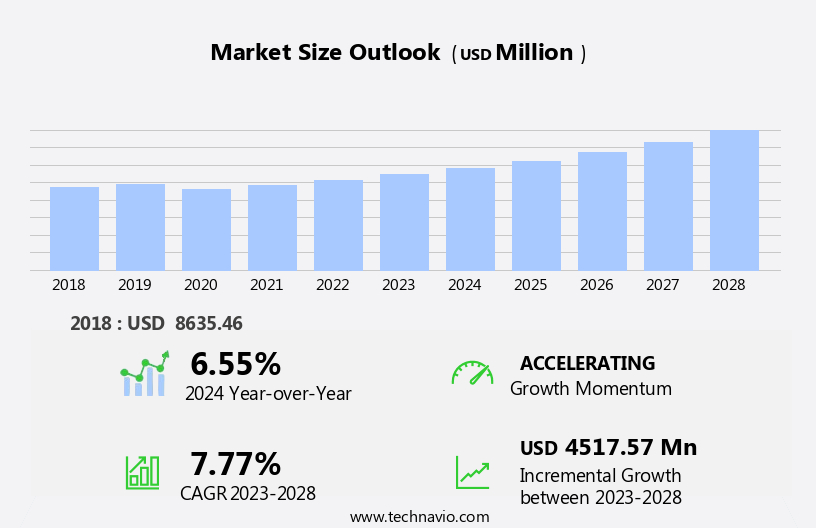
Explore in-depth regional segment analysis with market size data - historical 2018-2022 and forecasts 2024-2028 - in the full report.
Request Free Sample
- The indoor air quality (IAQ) solutions market in North America is witnessing significant growth due to heightened awareness of health and wellbeing, as well as the need for virus mitigation in the wake of the global pandemic. Air quality consulting firms are in high demand, providing expertise in engineering solutions such as electrostatic precipitators, carbon filters, and air ionizers. Pet allergens and airborne pathogens are major concerns, leading to a surge in demand for air quality certification and training. Customer satisfaction is paramount, driving the adoption of real-time monitoring systems and building automation for optimal air exchange rates.
- Air quality research continues to uncover new challenges, including lead paint and dust mites, necessitating ongoing innovation in IAQ technology. Ozone generators and activated carbon filters are effective in controlling various pollutants, while health-conscious businesses prioritize employee productivity and airborne pathogen control. Air quality software enables comprehensive IAQ management, ensuring regulatory compliance and continuous improvement.
How is this market segmented?
The market research report provides comprehensive data (region-wise segment analysis), with forecasts and estimates in "USD million" for the period 2024-2028, as well as historical data from 2018-2022 for the following segments.
- Product
- Equipment
- Services
- End-user
- Commercial
- Residential
- Geography
- North America
- US
- Canada
- Mexico
- North America
By Product Insights
The equipment segment is estimated to witness significant growth during the forecast period.
Indoor air quality is a significant factor in promoting health and well-being, necessitating regular testing for allergens, CO2 emissions, radon, and volatile organic compounds (VOCs) from electronic devices. Air monitoring sensors, HVAC equipment, and air conditioners are the primary types of equipment employed in indoor air quality solutions. The North American market for indoor air quality solutions, specifically equipment, is poised for substantial growth. This expansion is driven by the increasing demand for cost-effective, smart air monitoring sensors. Green building practices, building codes, and energy efficiency regulations are also influential in the market's evolution. Advanced technologies such as UV-C light technology, HVAC system optimization, and air filtration systems are becoming increasingly popular.
Commercial applications, including office buildings, schools and universities, and healthcare facilities, are significant markets for indoor air quality solutions. Residential applications, data centers, hotels and restaurants, retail stores, and manufacturing facilities also contribute to the market's growth. Maintenance and service, data analytics, and remote monitoring are essential aspects of the market, ensuring building performance and air quality management. Ashrae standards and HEPA filters are integral to the industry's best practices.
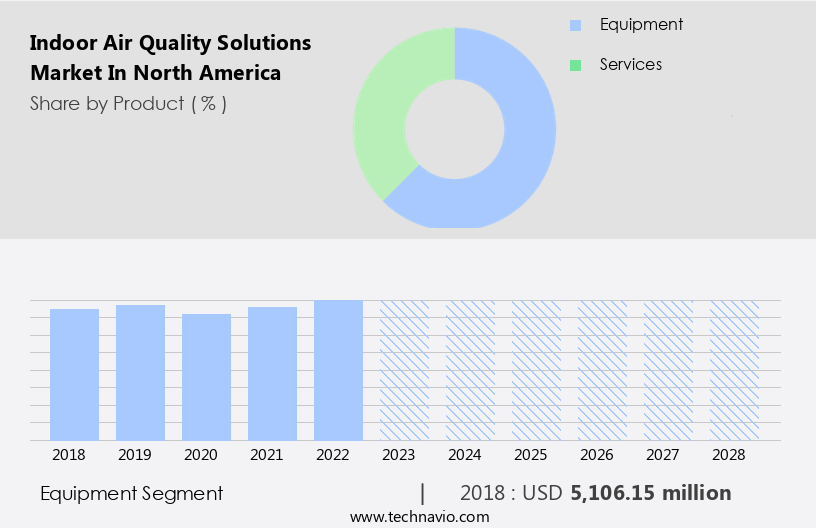
The Equipment segment was valued at USD 5106.15 million in 2018 and showed a gradual increase during the forecast period.
Market Dynamics
Our researchers analyzed the data with 2023 as the base year, along with the key drivers, trends, and challenges. A holistic analysis of drivers will help companies refine their marketing strategies to gain a competitive advantage.
What are the North America Indoor Air Quality Solutions Market market drivers leading to the rise in adoption of the Industry?
- Concerns over indoor air quality have significantly driven market growth, as increasing awareness and regulations emphasize the importance of maintaining healthy living environments.
- Air quality concerns have grown significantly in North America due to the increase in urbanization, industrialization, and vehicular emissions. This issue poses health risks such as headaches, lung cancer, heart problems, strokes, and respiratory diseases, including asthma. The deterioration of air quality is a major challenge for both authorities and citizens. Air filtration systems, HVAC systems, and data analytics are essential components of air quality control. HEPA filters and remote monitoring are crucial technologies for maintaining optimal air quality. Air quality standards, such as those set by ASHRAE, provide guidelines for maintaining healthy indoor environments.
- The integration of air quality control technologies, including air filtration and HVAC systems, with data analytics and remote monitoring, offers enhanced capabilities for maintaining optimal indoor air quality. These solutions are essential for retail stores and manufacturing facilities to ensure the health and safety of their employees and customers.
What are the North America Indoor Air Quality Solutions Market market trends shaping the Industry?
- Indoor air quality solutions are experiencing significant technological advancements, making it a noteworthy market trend. Professionals in this field are continually innovating to improve air quality and create healthier living spaces.
- Indoor air quality is a critical aspect of building design and management, with a focus on life cycle analysis and energy efficiency. In North America, the market for indoor air quality solutions is evolving, driven by the integration of advanced technologies. Computational fluid dynamics and ventilation systems with air quality sensors are becoming increasingly popular. These systems enable real-time monitoring and responsive management of indoor air quality, addressing concerns related to carbon dioxide (CO2) levels and other pollutants. Building codes and green building practices are also promoting the adoption of these technologies in office buildings, schools, and universities. Innovative technologies, such as computerized simulation and micro-engineered machines, are expected to play a significant role in the future.
- Detecting indoor air pollutants, which are often colorless and odorless, remains a challenge. New technologies are being developed to enhance the detection capabilities of indoor air quality systems, ensuring a healthier and more productive indoor environment.
How does North America Indoor Air Quality Solutions Market market faces challenges face during its growth?
- The prolonged product lifecycle of indoor air quality solutions poses a significant challenge to the industry's growth trajectory. This issue, which is mandatory for industry professionals to acknowledge, can hinder advancements and innovation in the sector.
- Indoor air quality solutions from leading market participants, including 3M Company, Camfil AB, Daikin Industries Ltd., and Lennox International Inc., are renowned for their dependability and superior quality. These solutions are engineered using robust materials, such as hard metals, which ensure a lengthy replacement cycle. However, appliances that come into frequent contact with humid environments during cleaning and maintenance may succumb to rusting. To mitigate this risk, companies employ the use of stainless steel or high-grade plastic materials in manufacturing, resulting in lightweight yet durable indoor air quality solutions. Furthermore, these companies invest heavily in research and development to introduce innovative and long-lasting materials, thereby enhancing the operational lifespan of their products.
- In the realm of indoor air quality management, air quality testing and improvement are essential aspects. Smart home integration, particle removal, system optimization, and volatile organic compound (VOC) removal are key focus areas for these solutions. Commercial applications, such as offices, schools, and healthcare facilities, require stringent air quality management to ensure optimal building performance. By providing advanced indoor air quality solutions, companies cater to the growing demand for healthier and more efficient indoor environments.
Exclusive North America Indoor Air Quality Solutions Market Customer Landscape
The market forecasting report includes the adoption lifecycle of the market, covering from the innovator's stage to the laggard's stage. It focuses on adoption rates in different regions based on penetration. Furthermore, the report also includes key purchase criteria and drivers of price sensitivity to help companies evaluate and develop their market growth analysis strategies.
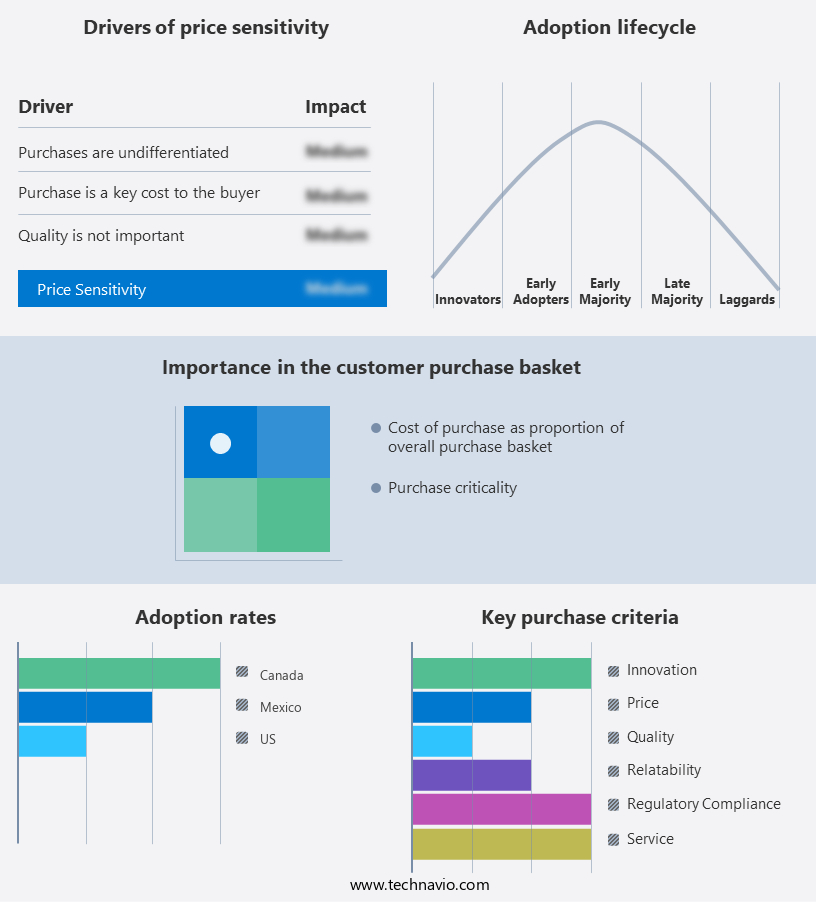
Customer Landscape
Key Companies & Market Insights
Companies are implementing various strategies, such as strategic alliances, market forecast partnerships, mergers and acquisitions, geographical expansion, and product/service launches, to enhance their presence in the market.
The market research and growth report includes detailed analyses of the competitive landscape of the market and information about key companies, including:
- 3M Co.
- Aeroqual Ltd.
- Camfil AB
- Carrier Global Corp.
- ClimateCare
- Daikin Industries Ltd.
- Ferguson plc
- Honeywell International Inc.
- Ingersoll Rand Inc.
- Johnson Controls
- Lennox International Inc.
- LG Electronics Inc.
- MANN HUMMEL International GmbH and Co. KG
- Nortek
- Panasonic Holdings Corp.
- QLEANAIR SCANDINAVIA AB
- RGF Environmental Group Inc.
- SGS SA
- TSI Inc.
- uHoo Ltd.
- UL Solutions Inc.
Qualitative and quantitative analysis of companies has been conducted to help clients understand the wider business environment as well as the strengths and weaknesses of key market players. Data is qualitatively analyzed to categorize companies as pure play, category-focused, industry-focused, and diversified; it is quantitatively analyzed to categorize companies as dominant, leading, strong, tentative, and weak.
Recent Development and News in Indoor Air Quality Solutions Market In North America
- In February 2023, Carrier Global Corporation, a leading heating, ventilating, and air conditioning (HVAC) manufacturer, introduced its new line of Healthy Buildings solutions, which includes advanced indoor air quality (IAQ) technologies. This expansion is aimed at addressing the growing demand for improved IAQ in commercial and residential buildings (Carrier, 2023).
- In April 2024, Honeywell International Inc. Announced a strategic partnership with Amazon Web Services (AWS) to develop cloud-based IAQ solutions. This collaboration combines Honeywell's expertise in IAQ technologies with AWS's advanced data analytics capabilities, aiming to create more efficient and effective IAQ monitoring and management systems (Honeywell, 2024).
- In June 2024, Daikin Industries, a major HVAC manufacturer, completed the acquisition of Air Quality Systems, a leading IAQ solutions provider in North America. This acquisition will enable Daikin to expand its product offerings and strengthen its presence in the North American market (Daikin, 2024).
- In September 2025, the United States Environmental Protection Agency (EPA) introduced new regulations on indoor air quality standards for commercial buildings. These regulations require regular monitoring and reporting of IAQ metrics, setting a new benchmark for building owners and managers to prioritize IAQ and ensure healthier environments for occupants (EPA, 2025).
Research Analyst Overview
Indoor air quality (IAQ) solutions continue to gain significance in North America as the importance of maintaining healthy and energy-efficient built environments becomes increasingly recognized. The market for IAQ technologies is characterized by continuous evolution, with applications spanning various sectors. Life cycle analysis plays a crucial role in evaluating the environmental impact of IAQ systems, while energy efficiency remains a key consideration for building owners and operators. Ventilation systems, a cornerstone of IAQ, are being optimized through advanced design and smart integration with air quality sensors. Building codes and green building practices mandate stringent IAQ standards, driving demand for innovative solutions.
Carbon dioxide (CO2) levels, a critical IAQ parameter, are being closely monitored in office buildings, schools, and universities to ensure optimal learning and working conditions. Air quality testing and improvement are essential for maintaining healthy indoor environments in residential and commercial applications. Smart home integration, particle removal, system optimization, and volatile organic compound (VOC) removal are some of the emerging trends in IAQ solutions. IAQ management is a priority for data centers, hotels and restaurants, healthcare facilities, retail stores, and manufacturing facilities, as they strive to minimize their carbon footprint and ensure occupant comfort and health. Maintenance and service are essential components of IAQ systems, ensuring their longevity and optimal performance.
UV-C light technology, HVAC systems, data analytics, air filtration, remote monitoring, and Ashrae standards are some of the tools and frameworks that are shaping the future of IAQ solutions. The ongoing unfolding of market activities and evolving patterns underscore the importance of staying informed and adaptive in this dynamic market.
Dive into Technavio's robust research methodology, blending expert interviews, extensive data synthesis, and validated models for unparalleled Indoor Air Quality Solutions Market in North America insights. See full methodology.
|
Market Scope |
|
|
Report Coverage |
Details |
|
Page number |
151 |
|
Base year |
2023 |
|
Historic period |
2018-2022 |
|
Forecast period |
2024-2028 |
|
Growth momentum & CAGR |
Accelerate at a CAGR of 7.77% |
|
Market growth 2024-2028 |
USD 4517.57 million |
|
Market structure |
Concentrated |
|
YoY growth 2023-2024(%) |
6.55 |
|
Competitive landscape |
Leading Companies, Market Positioning of Companies, Competitive Strategies, and Industry Risks |
What are the Key Data Covered in this Market Research Report?
- CAGR of the market during the forecast period
- Detailed information on factors that will drive the market growth and forecasting between 2024 and 2028
- Precise estimation of the size of the market and its contribution of the market in focus to the parent market
- Accurate predictions about upcoming market growth and trends and changes in consumer behaviour
- Growth of the market across North America
- Thorough analysis of the market's competitive landscape and detailed information about companies
- Comprehensive analysis of factors that will challenge the growth of market companies
We can help! Our analysts can customize this market research report to meet your requirements Get in touch
 RIA -
RIA - 
