
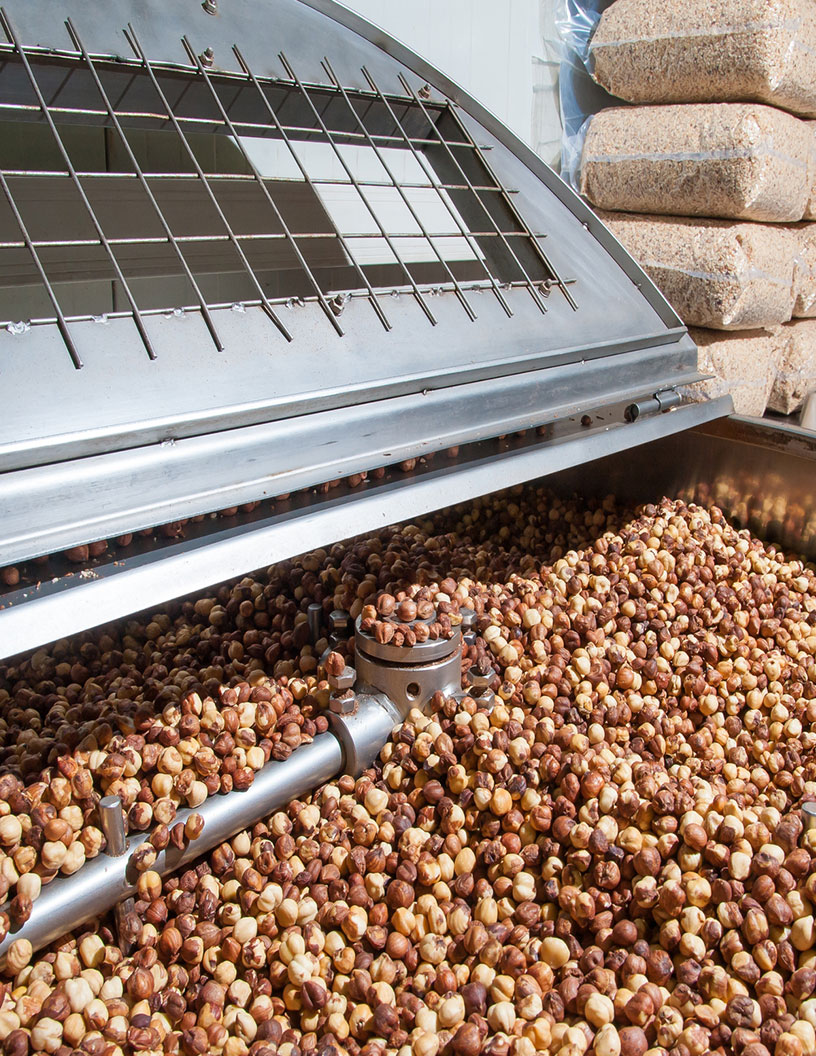


Industrial Steam Peeler Market Size 2024-2028
The industrial steam peeler market size is forecast to increase by USD 181.4 million, at a CAGR of 8.51% between 2023 and 2028.
- The market is experiencing significant growth, driven by the increasing demand to minimize peel loss in various industries, including the food and beverage industry. This trend is particularly prominent in food processing, where efficient peeling processes are crucial for maintaining product quality and reducing waste. Additionally, the adoption of advanced technologies in steam peelers is on the rise, enabling improved performance and increased productivity. However, the high energy consumption of industrial steam peelers poses a significant challenge for market participants. Companies must navigate this obstacle by implementing energy-efficient technologies and practices to remain competitive and sustainable in the market.
- The strategic implementation of these solutions will be key to capitalizing on the opportunities presented by the growing demand for efficient peeling processes and navigating the energy consumption challenge effectively.
What will be the Size of the Industrial Steam Peeler Market during the forecast period?
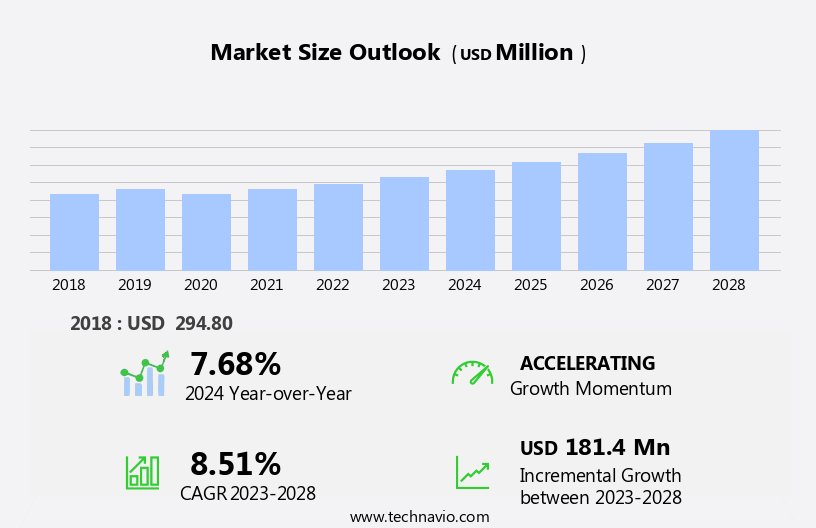
Explore in-depth regional segment analysis with market size data - historical 2018-2022 and forecasts 2024-2028 - in the full report.
Request Free Sample
The market continues to evolve, driven by the increasing demand for food grade materials and automation in the food industry. Steam technology, a key component of peeling processes, plays a crucial role in ensuring product quality preservation and control system efficiency. Food manufacturing sectors, including fruit peeling and vegetable peeling, heavily rely on steam peeling for uniformity and waste reduction. Peeling yield and efficiency are critical factors in this market, with continuous peeling and automatic peeling systems gaining popularity for their ability to reduce production time and improve operational costs. Rotary peeling and potato peeling are common applications, with stainless steel construction ensuring corrosion resistance and adherence to food safety standards.
Food waste management and energy efficiency are essential considerations, with data logging and remote monitoring enabling process optimization and maintenance schedules. Technical support and spare parts availability are also vital for ensuring seamless operations. Steam injection and peel thickness control contribute to the market's ongoing dynamism, with operator interfaces and conveyor systems facilitating material handling and hygiene and sanitation. Water consumption and steam consumption are essential operational costs, with high-pressure steam and peeling time reduction essential for maximizing return on investment. Safety features, training and documentation, and cleaning and maintenance are integral to the market's evolving patterns, ensuring the continued growth and innovation in industrial steam peeling technology.
How is this Industrial Steam Peeler Industry segmented?
The industrial steam peeler industry research report provides comprehensive data (region-wise segment analysis), with forecasts and estimates in "USD million" for the period 2024-2028, as well as historical data from 2018-2022 for the following segments.
- Product
- Batch steam peeler
- Continuous steam peeler
- Geography
- North America
- US
- Canada
- Europe
- Belgium
- The Netherlands
- APAC
- China
- Rest of World (ROW)
- North America
.
By Product Insights
The batch steam peeler segment is estimated to witness significant growth during the forecast period.
In the realm of food processing, steam injection plays a pivotal role in various applications, including vegetable peeling. Batch steam peelers, a popular choice for this process, utilize high-pressure steam to facilitate efficient peel removal. These systems operate at temperatures between 350°F and 400°F, and up to 2000 kPa of pressure. The steam injection process works by rapidly heating the surface layers of raw materials through exposure to high-pressure steam. Upon decreasing the pressure, the water beneath the surface is vaporized, effectively peeling the skin off. Peel thickness control is crucial in maintaining product uniformity, and operator interfaces ensure ease of use.
Conveyor systems facilitate material handling, while production capacity is optimized through process automation and continuous peeling. Energy efficiency is a significant concern, with steam technology playing a key role in reducing water consumption and operational costs. Food safety standards necessitate stringent hygiene and sanitation practices, which are addressed through cleaning and maintenance schedules. Data logging and remote monitoring systems provide valuable insights for process optimization and quality control. Spare parts availability and food-grade materials ensure minimal downtime and product quality preservation. Steam injection technology's advantages extend to fruit peeling, where rotary peelers employ similar principles.
Peeling yield is maximized, and peeling time is significantly reduced, contributing to increased efficiency and productivity. Safety features are essential, including automatic peeling systems and industrial automation for enhanced operator safety. Training and documentation are vital for effective implementation and maintenance. Corrosion resistance is a critical consideration for the long-term durability of steam processing equipment. In summary, the steam injection market is dynamic, with a focus on energy efficiency, process optimization, and product quality preservation.
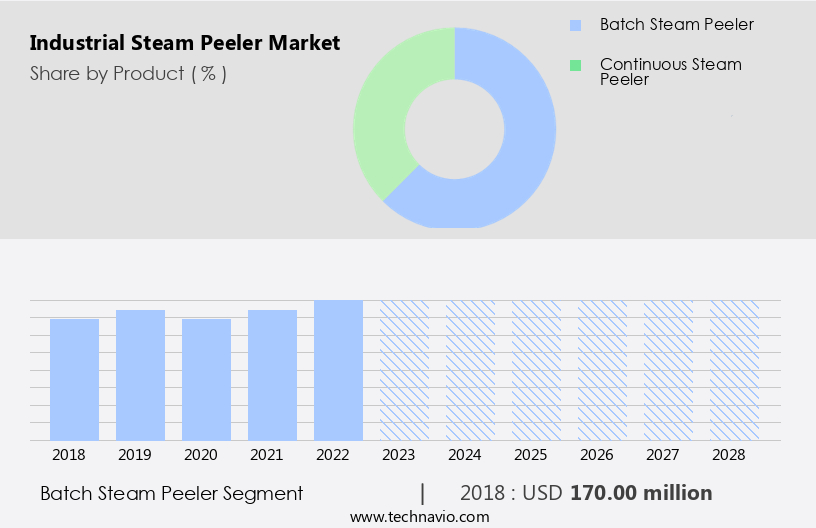
The Batch steam peeler segment was valued at USD 170.00 million in 2018 and showed a gradual increase during the forecast period.
Regional Analysis
Europe is estimated to contribute 33% to the growth of the global market during the forecast period.Technavio's analysts have elaborately explained the regional trends and drivers that shape the market during the forecast period.

The market is witnessing significant growth due to the increasing demand for high-quality food products and a focus on reducing food wastage. Germany, as the leading country in this market, is expected to drive market growth. Europe, being one of the largest processors of Fruits and Vegetables (F&V), houses major F&V processing companies such as Dole plc, The Kraft Heinz Company, The J. M. Smucker Company, and J. R. Simplot Company. The rise in production and exports of F&V from Europe may boost the demand for industrial steam peelers. These peelers offer advantages like peel thickness control, operator interface, conveyor systems, and production capacity, which are essential for food processing industries.
Peel removal efficiency, technical support, and operational costs are other significant factors influencing the market's growth. Hygiene and sanitation, food safety standards, and remote monitoring are crucial aspects of industrial automation in food manufacturing. Energy efficiency, process optimization, product uniformity, and stainless steel construction are essential features of industrial steam peelers. The return on investment, maintenance schedules, and material handling are essential considerations for businesses. Water consumption and high-pressure steam are critical factors in the peeling process. Safety features, training, and documentation, steam consumption, spare parts availability, food grade materials, and product quality preservation are essential elements of the market.
Fruit peeling, peeling yield, rotary peeling, and potato peeling are various applications of these peelers. Waste reduction is a significant trend in the market. Industrial steam peelers offer advantages like peeling efficiency, automatic and continuous peeling, batch peeling, and peeling time reduction. The market's growth is further fueled by the increasing adoption of steam technology in food processing industries. Corrosion resistance and quality control are essential aspects of industrial steam peelers in the food industry.
Market Dynamics
Our researchers analyzed the data with 2023 as the base year, along with the key drivers, trends, and challenges. A holistic analysis of drivers will help companies refine their marketing strategies to gain a competitive advantage.
What are the key market drivers leading to the rise in the adoption of Industrial Steam Peeler Industry?
- The significant increase in the demand to minimize peel loss serves as the primary market driver.
- Industrial steam peelers have gained significant attention in the fruit and vegetable processing industry due to their efficiency in reducing product loss during the peeling process. Traditional methods such as knife peeling, abrasion peeling, and caustic peeling can result in substantial product loss, negatively impacting yield and profitability for industrial end-users. In response, companies are focusing on manufacturing industrial steam peelers that enhance yield by minimizing peel loss. For instance, Kirmeko's STRATA Invicta steam peeler increases yield by up to 6% more than other steam peelers. ANDRITZ AG's Sepa-Stator steam peeler ensures low product losses during peeling. TOMRA System ASA offers both Eco and Orbit steam peelers, which are known for their minimal peel losses.
- These steam peelers operate using high-pressure steam, which enables automatic peeling, continuous peeling, and batch peeling processes. Industrial automation plays a crucial role in the manufacturing of these peelers, ensuring consistent peeling time reduction and safety features. Training and documentation are essential for effective implementation and operation of these steam peelers. Spare parts availability is another critical factor that companies prioritize to ensure seamless maintenance and productivity. Overall, the shift towards industrial steam peelers is a strategic move for companies in the fruit and vegetable processing industry to optimize their operations, increase yield, and enhance profitability.
What are the market trends shaping the Industrial Steam Peeler Industry?
- The adoption of new technologies is a prevailing trend in the steam peeler market. Steam peelers are increasingly being equipped with advanced technologies to enhance their efficiency and productivity.
- In the food industry, automation and product quality preservation are key priorities. Industrial steam peelers play a crucial role in food manufacturing, particularly in fruit and potato peeling. companies in this market are focusing on offering advanced features to enhance the performance and energy efficiency of these machines. For instance, steam accumulators, heat recovery units, and steam exhaust valves are being integrated into steam peelers. These features help in storing and releasing steam on demand, reducing peak demand from steam generators, and recovering energy from exhaust steam.
- Additionally, corrosion-resistant materials are used to ensure food grade quality and prolong equipment life. Waste reduction is another significant consideration, with peeling yield and rotary peeling techniques being employed to minimize food waste. Overall, the market is driven by the need for efficient, energy-saving, and high-quality food manufacturing solutions.
What challenges does the Industrial Steam Peeler Industry face during its growth?
- The escalating energy consumption by industrial steam peelers poses a significant challenge to the industry's growth trajectory.
- Steam peeling is an essential process in the food industry for removing skins from vegetables and fruits. This method relies on high-pressure and high-temperature steam, which can reach up to 2000 kPa. In a French fry production line, for instance, a steam peeling machine with a peeling capacity of 25 tons per hour is commonly used. The energy consumption for steam production is substantial, with approximately 150 Megajoules (MJ) required per ton of products produced. To optimize steam peeling efficiency, advanced technologies such as steam injection, peel thickness control, and operator interfaces are utilized.
- Conveyor systems are integrated to ensure continuous production and maintain consistent peel removal efficiency. Technical support and data logging systems enable operators to monitor and analyze production data, ensuring food safety standards and minimizing operational costs. Furthermore, food waste management is a critical consideration, as excess steam and peel waste can be utilized as by-products or recycled for other industrial processes. Steam technology continues to evolve, offering potential for increased production capacity and improved peel removal efficiency. By focusing on these advancements, food processing companies can enhance their operations, reduce waste, and maintain high-quality food products.
Exclusive Customer Landscape
The industrial steam peeler market forecasting report includes the adoption lifecycle of the market, covering from the innovator's stage to the laggard's stage. It focuses on adoption rates in different regions based on penetration. Furthermore, the industrial steam peeler market report also includes key purchase criteria and drivers of price sensitivity to help companies evaluate and develop their market growth analysis strategies.
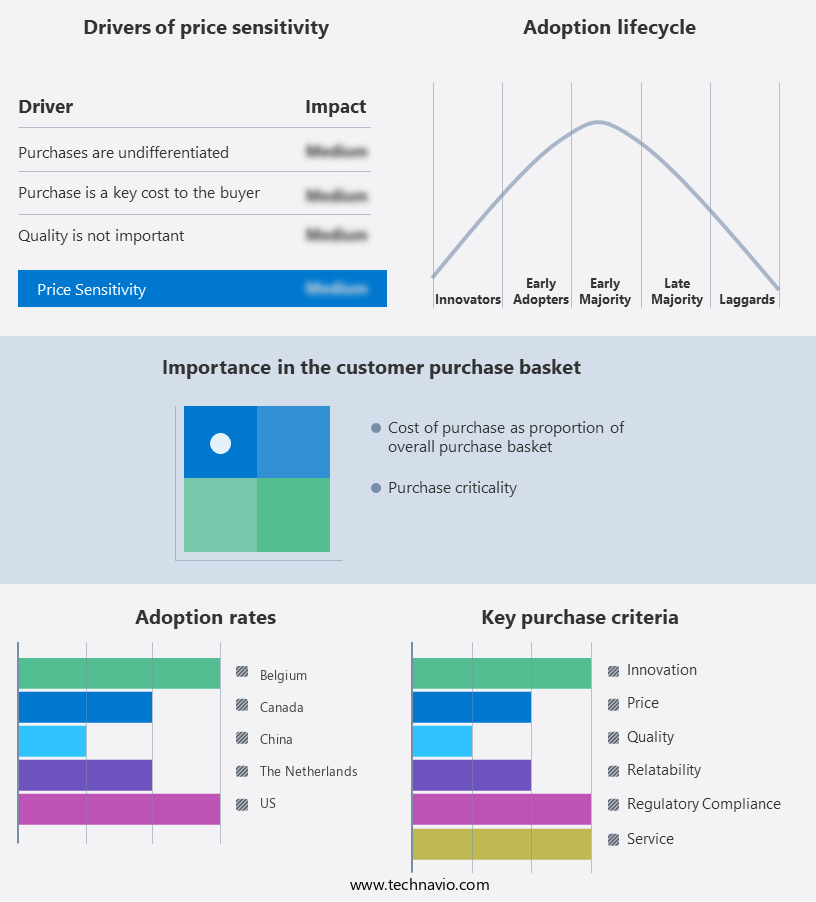
Customer Landscape
Key Companies & Market Insights
Companies are implementing various strategies, such as strategic alliances, industrial steam peeler market forecast, partnerships, mergers and acquisitions, geographical expansion, and product/service launches, to enhance their presence in the industry.
Andritz AG - The Gouda Brush n Belt, an industrial steam peeler from this organization, boasts impressive processing capabilities, accommodating up to 45 tons per hour.
The industry research and growth report includes detailed analyses of the competitive landscape of the market and information about key companies, including:
- Andritz AG
- ATS Automation Tooling Systems Inc.
- Boema Spa
- Buscetto costruzioni
- CMI Equipment
- DANA Technology ApS
- EIMA Engineering GmbH
- FENCO Food Machinery s.r.l.
- Food Machinery Australasia Ltd.
- Idaho Steel
- John Bean Technologies Corp.
- Kiremko BV
- Lyco Manufacturing Inc.
- Pigo S.r.l.
- Spomasz Wronki
- TNA Australia Pty Ltd.
- Tomra Systems ASA
- Turatti Srl
- Yangzhou flourish
Qualitative and quantitative analysis of companies has been conducted to help clients understand the wider business environment as well as the strengths and weaknesses of key industry players. Data is qualitatively analyzed to categorize companies as pure play, category-focused, industry-focused, and diversified; it is quantitatively analyzed to categorize companies as dominant, leading, strong, tentative, and weak.
Recent Development and News in Industrial Steam Peeler Market
- In February 2023, Toshiba Corporation announced the launch of its new industrial steam peeler, the THP-3000S, designed to increase efficiency and productivity in the food processing industry. This innovative peeler utilizes Toshiba's proprietary steam technology, reducing peeling time by up to 30% compared to conventional methods (Toshiba Corporation, 2023).
- In June 2024, Danfoss Power Solutions and Alfa Laval entered into a strategic partnership to integrate Danfoss' variable speed drives with Alfa Laval's steam peelers. This collaboration aims to provide customers with optimized steam peeling solutions, enhancing energy efficiency and reducing operational costs (Danfoss, 2024).
- In October 2024, Spirax Sarco, a leading steam technology company, acquired Steam Engineering Services, a specialist in steam peeling systems. This acquisition strengthened Spirax Sarco's position in the industrial steam peeling market, enabling them to offer comprehensive steam solutions and services to their clients (Spirax Sarco, 2024).
- In March 2025, the European Union passed the new Food Processing Regulation, which includes stricter guidelines for food processing equipment, including industrial steam peelers. This regulation aims to ensure food safety and hygiene, driving the demand for advanced and compliant steam peeling solutions (European Commission, 2025).
Research Analyst Overview
- The market is characterized by a focus on operational efficiency and process optimization. Companies are integrating advanced peeling systems, including peeling chambers with customized designs, to enhance productivity gains. Process monitoring and validation are crucial for ensuring HACCP compliance and GMP standards. Peeling drum design, steam pressure regulation, and temperature control are essential factors in system performance optimization. Life cycle assessment and energy audit are key considerations for cost optimization. Integrated control systems enable remote access and data analytics, providing valuable insights for continuous improvement. Product traceability and automated cleaning systems ensure food safety certifications and maintain quality assurance.
- Steam generators and steam distribution systems are essential components for efficient steam utilization. Peeling cycle time reduction is a significant trend, with CIP systems streamlining cleaning processes. Waste discharge systems and steam pressure regulation are critical for minimizing environmental impact and maintaining regulatory compliance. Process monitoring and system customization are essential for maintaining operational efficiency and ensuring product consistency. Automated cleaning systems and performance optimization through data analytics are driving innovation in the market.
Dive into Technavio's robust research methodology, blending expert interviews, extensive data synthesis, and validated models for unparalleled Industrial Steam Peeler Market insights. See full methodology.
|
Market Scope |
|
|
Report Coverage |
Details |
|
Page number |
141 |
|
Base year |
2023 |
|
Historic period |
2018-2022 |
|
Forecast period |
2024-2028 |
|
Growth momentum & CAGR |
Accelerate at a CAGR of 8.51% |
|
Market growth 2024-2028 |
USD 181.4 million |
|
Market structure |
Fragmented |
|
YoY growth 2023-2024(%) |
7.68 |
|
Key countries |
US, The Netherlands, China, Belgium, and Canada |
|
Competitive landscape |
Leading Companies, Market Positioning of Companies, Competitive Strategies, and Industry Risks |
What are the Key Data Covered in this Industrial Steam Peeler Market Research and Growth Report?
- CAGR of the Industrial Steam Peeler industry during the forecast period
- Detailed information on factors that will drive the growth and forecasting between 2024 and 2028
- Precise estimation of the size of the market and its contribution of the industry in focus to the parent market
- Accurate predictions about upcoming growth and trends and changes in consumer behaviour
- Growth of the market across Europe, APAC, North America, Middle East and Africa, and South America
- Thorough analysis of the market's competitive landscape and detailed information about companies
- Comprehensive analysis of factors that will challenge the industrial steam peeler market growth of industry companies
We can help! Our analysts can customize this industrial steam peeler market research report to meet your requirements.
 RIA -
RIA - 
