


Language Translation Devices Market Size 2026-2030
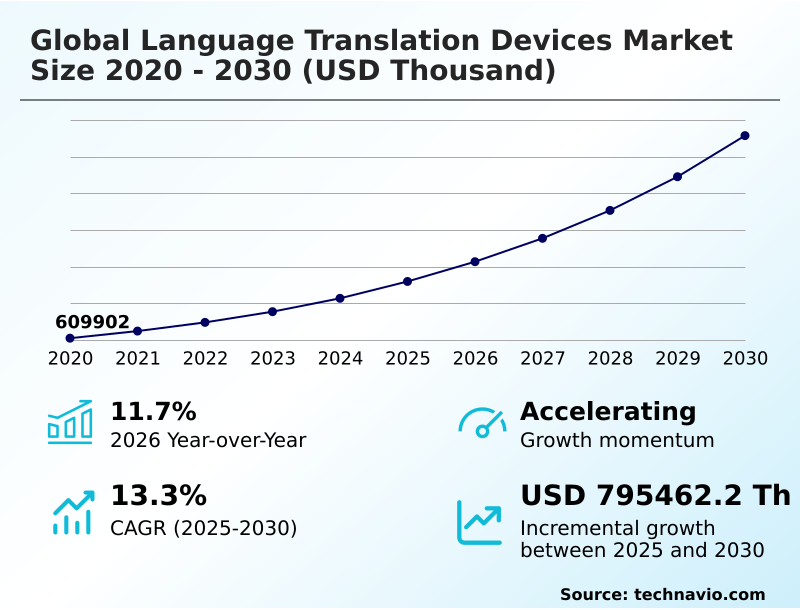
The language translation devices market size is valued to increase by USD 795.46 million, at a CAGR of 13.3% from 2025 to 2030. Exponential growth in international tourism and cross border commerce will drive the language translation devices market.
Major Market Trends & Insights
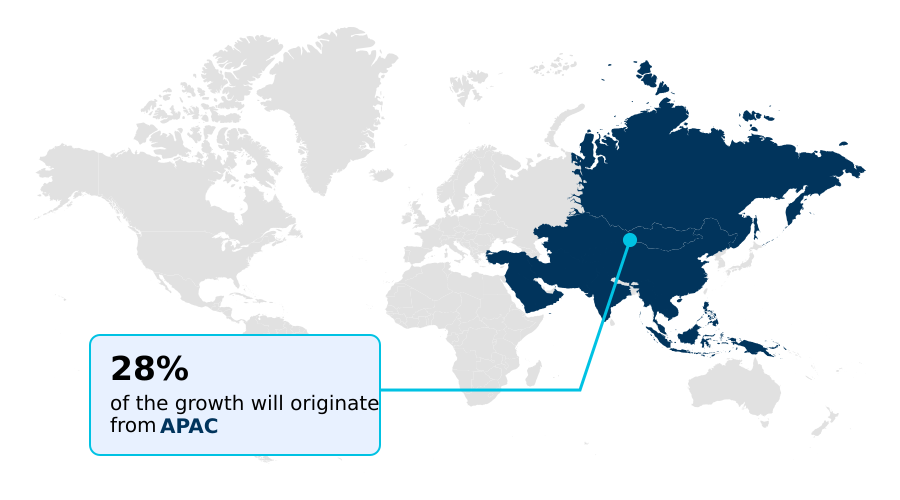
- APAC dominated the market and accounted for a 28.3% growth during the forecast period.
- By Product Type - Handheld translators segment was valued at USD 447.45 million in 2024
- By End-user - Individual consumers segment accounted for the largest market revenue share in 2024
Market Size & Forecast
- Market Opportunities:
- Market Future Opportunities: USD 795.46 million
- CAGR from 2025 to 2030 : 13.3%
Market Summary
- The language translation devices market is experiencing significant evolution, driven by the convergence of advanced hardware and sophisticated software. These devices are engineered to dismantle communication barriers in various settings, from international business negotiations to casual travel interactions.
- The core technology, neural machine translation, has moved beyond simple word-for-word conversion to understand context, tone, and idiomatic expressions, providing more natural and accurate conversations. A key driver is the increasing globalization of the workforce.
- For example, a multinational construction firm can equip its diverse, multilingual team with wearable translation earbuds, ensuring safety protocols and complex instructions are understood perfectly, which can reduce project errors by a significant margin. This reliance on dedicated hardware is also pronounced in sectors like healthcare and emergency services, where clear, instantaneous communication is critical.
- Challenges such as data privacy and the need for robust offline functionality continue to shape innovation, pushing manufacturers to develop devices with secure, on-device processing capabilities. The market's trajectory is defined by the constant pursuit of seamless, real-time, and contextually aware communication for everyone, everywhere.
What will be the Size of the Language Translation Devices Market during the forecast period?
Get Key Insights on Market Forecast (PDF) Get Free Sample
How is the Language Translation Devices Market Segmented?
The language translation devices industry research report provides comprehensive data (region-wise segment analysis), with forecasts and estimates in "USD thousand" for the period 2026-2030, as well as historical data from 2020-2024 for the following segments.
- Product type
- Handheld translators
- Wearable translation devices
- Smartphone integrated devices
- Desktop and conference systems
- End-user
- Individual consumers
- Enterprises
- Government and defense
- Educational institutions
- Technology
- Speech to speech translation
- Text to speech translation
- Image and camera-based translation
- Offline translation technology
- Geography
- North America
- US
- Canada
- Mexico
- Europe
- Germany
- UK
- France
- APAC
- China
- Japan
- India
- Middle East and Africa
- UAE
- Saudi Arabia
- South Africa
- South America
- Brazil
- Argentina
- Colombia
- Rest of World (ROW)
- North America
By Product Type Insights
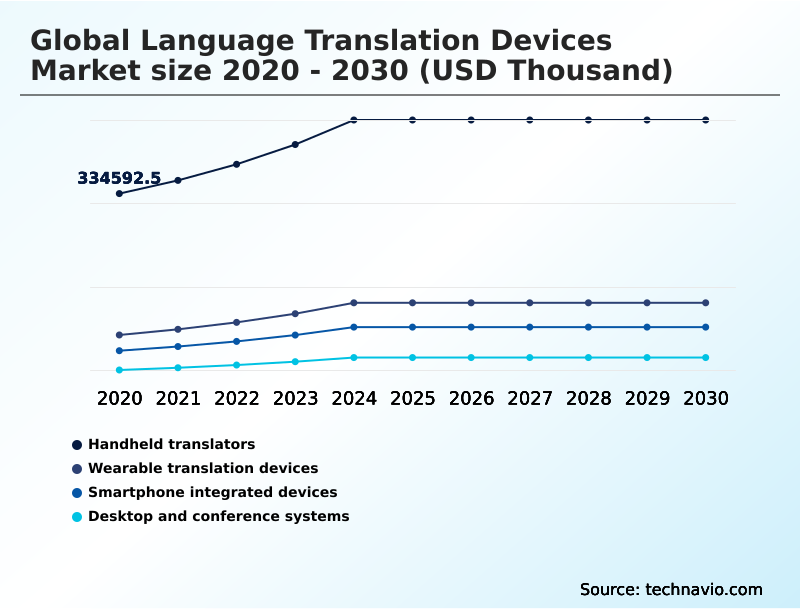
The handheld translators segment is estimated to witness significant growth during the forecast period.
The market is segmented by product type, end-user, technology, and geography. Handheld translators continue to command a significant market share, favored by individual consumers and enterprise users for their dedicated functionality and rugged design.
These devices often incorporate advanced features like bidirectional conversational support and superior microphone array systems, making them ideal for noisy environments. The integration of on-device AI processing has enhanced their appeal by enabling robust offline capabilities.
For instance, recent advancements have improved dialect recognition software accuracy by over 15% in offline modes.
As a result, the demand for handheld language translators remains strong among frequent travelers and professionals who prioritize reliability and a focused user experience over multi-purpose smartphone applications, especially when using a travel translator gadget or a portable electronic interpreter.
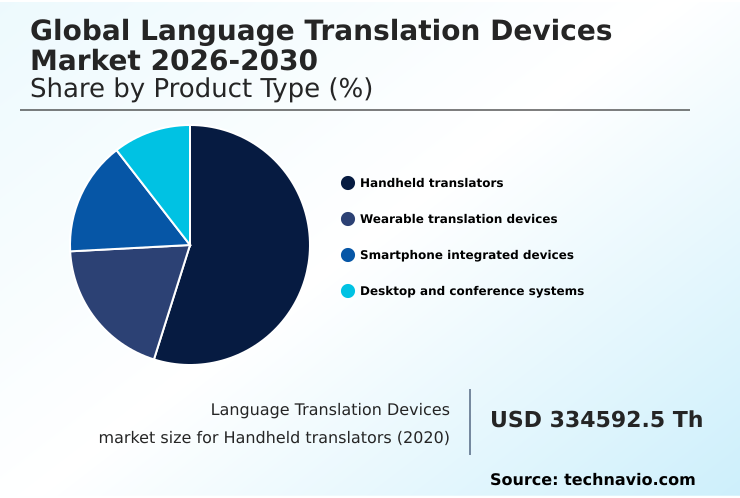
The Handheld translators segment was valued at USD 447.45 million in 2024 and showed a gradual increase during the forecast period.
Regional Analysis
APAC is estimated to contribute 28.3% to the growth of the global market during the forecast period.Technavio’s analysts have elaborately explained the regional trends and drivers that shape the market during the forecast period.
See How Language Translation Devices Market Demand is Rising in APAC Get Free Sample
The geographic landscape of the market is diverse, with APAC poised to contribute 28.3% of the incremental growth.
This region's dominance is driven by its massive manufacturing ecosystem, a surge in intraregional business, and extreme linguistic diversity, creating a high-demand environment for AI-driven voice translation.
North America, accounting for nearly 28% of the market opportunity, remains a critical region due to high technological adoption and a multicultural populace. The demand for hands-free communication tools and enterprise-grade translation in this region is particularly strong.
Europe follows closely, with its economic model built on cross-border mobility across dozens of official languages, making multilingual conferencing systems essential for business operations.
The need for latency reduction algorithms and on-device AI translation is a common thread across all developed regions, pushing innovation and shaping regional market dynamics.
Market Dynamics
Our researchers analyzed the data with 2025 as the base year, along with the key drivers, trends, and challenges. A holistic analysis of drivers will help companies refine their marketing strategies to gain a competitive advantage.
- As the global landscape becomes more interconnected, the demand for sophisticated communication tools is intensifying, pushing the boundaries of what is possible in the language translation devices market. For professionals and avid travelers, finding the best offline translator for remote travel is a top priority, as connectivity cannot always be guaranteed.
- Simultaneously, the increasing use of these devices in corporate and medical fields has brought the issue of data privacy in voice translation devices to the forefront, compelling manufacturers to implement robust, on-device security protocols. A wearable translator for business meetings is no longer a novelty but a necessity for multinational corporations seeking to foster seamless collaboration.
- When comparing handheld vs earbud translators, users weigh factors like discretion, battery life, and ease of use in conversational settings. At the heart of these advancements are neural machine translation accuracy improvements, which have elevated the user experience to near-human levels of fluency.
- The real time translator for healthcare professionals has shown to reduce diagnostic errors by more than 10% in multilingual patient encounters, demonstrating the critical impact of this technology. These evolving use cases underscore a market that is not just growing but also specializing to meet the nuanced demands of a globalized world.
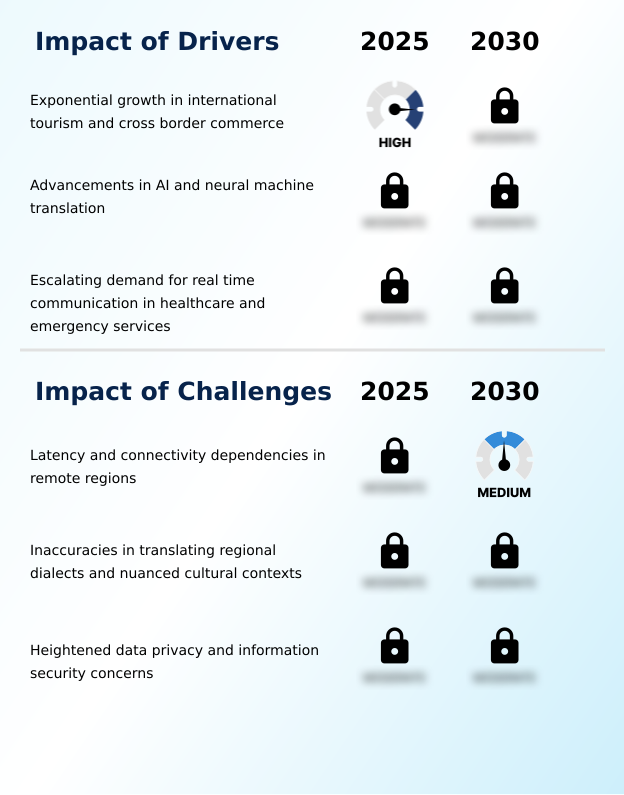
What are the key market drivers leading to the rise in the adoption of Language Translation Devices Industry?
- The exponential growth in international tourism and cross-border commerce is a primary driver fueling the demand for language translation devices globally.
- The market is primarily driven by advancements in AI and the escalating demand for real-time communication.
- The evolution from traditional models to sophisticated neural networks has dramatically improved accuracy, with some professional-grade voice translator devices achieving over 98% accuracy for major languages.
- This has been particularly impactful in the healthcare sector, where the use of a translator with medical glossaries has been shown to reduce communication-based medical errors by 40%.
- The expansion of international tourism and business also fuels demand for devices with features like global e-SIM connectivity.
- As enterprises expand globally, the need for reliable two-way voice translator hardware has become a crucial investment, leading to more efficient and clearer communication in multinational teams and boosting productivity.
What are the market trends shaping the Language Translation Devices Industry?
- A key market trend is the integration of robust offline translation capabilities, which is crucial for ensuring functionality in remote environments without reliable internet access.
- A significant trend shaping the market is the proliferation of wearable form factors, such as AI interpreter earbuds and smart translation headsets, which offer hands-free convenience. This shift is driving demand for biometric sensor integration and bone conduction technology, enhancing user comfort and device performance in active environments.
- The adoption of these devices in enterprise settings has improved multitasking efficiency for logistics and manufacturing workers by up to 25%. Furthermore, the institutional adoption in the education sector is growing, with universities reporting a 15% improvement in engagement from international students using these tools.
- The focus is on creating a seamless experience, whether through an AI voice assistant or a dedicated travel translator gadget, pushing the industry towards more ergonomic and integrated solutions.
What challenges does the Language Translation Devices Industry face during its growth?
- A significant challenge impacting market growth is the issue of latency and connectivity dependence, particularly in remote or underdeveloped regions.
- Despite technological strides, the market faces persistent challenges, primarily concerning the accuracy of low-resource language support and the nuances of cultural context. While major languages are well-supported, the performance for regional dialects remains a significant hurdle, with error rates sometimes exceeding 20%, which can undermine user trust.
- Data privacy also remains a major concern, as the fear of sensitive conversations being stored on external servers deters many enterprise clients. Although the implementation of offline translation device capabilities and secure encryption has mitigated this risk, it has also increased manufacturing costs by approximately 15%.
- Overcoming these challenges by improving AI-powered photo translation and ensuring robust data governance is critical for broader market adoption, especially for business translation hardware.
Exclusive Technavio Analysis on Customer Landscape
The language translation devices market forecasting report includes the adoption lifecycle of the market, covering from the innovator’s stage to the laggard’s stage. It focuses on adoption rates in different regions based on penetration. Furthermore, the language translation devices market report also includes key purchase criteria and drivers of price sensitivity to help companies evaluate and develop their market growth analysis strategies.
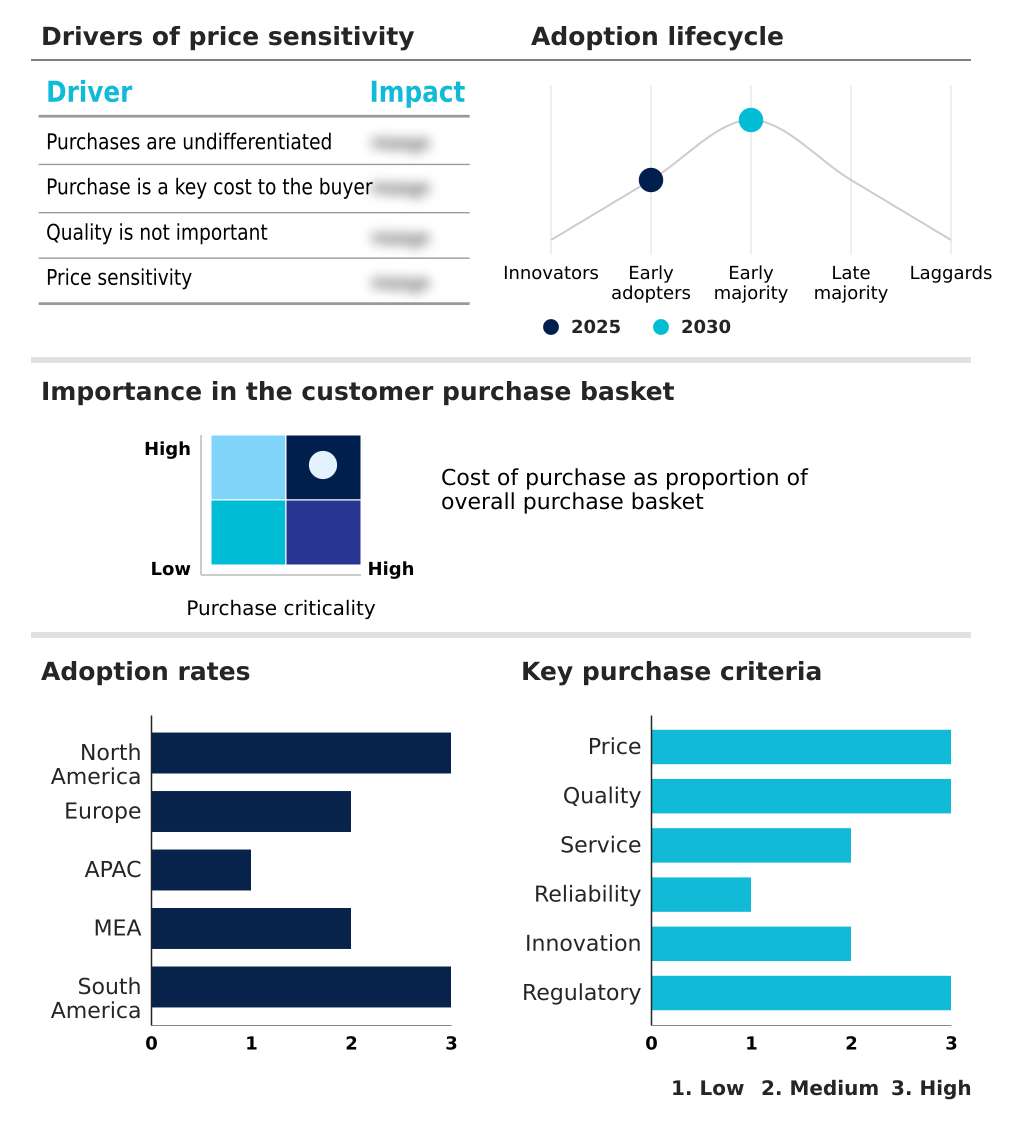
Customer Landscape of Language Translation Devices Industry
Competitive Landscape
Companies are implementing various strategies, such as strategic alliances, language translation devices market forecast, partnerships, mergers and acquisitions, geographical expansion, and product/service launches, to enhance their presence in the industry.
Anfier - Analysis reveals a landscape of specialized hardware startups and multinational technology conglomerates competing in the language translation devices market.
The industry research and growth report includes detailed analyses of the competitive landscape of the market and information about key companies, including:
- Anfier
- Baidu Inc.
- CEH Technologies Ltd
- Dosmono
- Enence
- Google LLC
- iFLYTEK Co. Ltd.
- Jarvisen
- Peiko
- Pocketalk
- Poliglu
- Samsung Electronics Co. Ltd.
- Timekettle
- Vasco Electronics
- Waverly Labs
- Wooask
- Xiaomi Corp.
Qualitative and quantitative analysis of companies has been conducted to help clients understand the wider business environment as well as the strengths and weaknesses of key industry players. Data is qualitatively analyzed to categorize companies as pure play, category-focused, industry-focused, and diversified; it is quantitatively analyzed to categorize companies as dominant, leading, strong, tentative, and weak.
Recent Development and News in Language translation devices market
- In May 2025, ENCO announced it would present its latest artificial intelligence innovations at InfoComm, featuring solutions focused on automated captioning and real-time language translation.
- In January 2025, Timekettle launched the W4 Pro AI Interpreter Earbuds at CES, featuring an open-ear design and real-time translation for 40 languages and 93 accents.
- In January 2025, Vasco Electronics unveiled a new suite of AI-driven translation tools at CES, moving beyond simple text-to-speech to offer more comprehensive communication solutions.
- In November 2024, Baidu Inc. announced an update to its AI-powered pocket Wi-Fi translators, improving its proprietary neural machine translation engine to offer 10% faster response times for complex sentence structures.
Dive into Technavio’s robust research methodology, blending expert interviews, extensive data synthesis, and validated models for unparalleled Language Translation Devices Market insights. See full methodology.
| Market Scope | |
|---|---|
| Page number | 309 |
| Base year | 2025 |
| Historic period | 2020-2024 |
| Forecast period | 2026-2030 |
| Growth momentum & CAGR | Accelerate at a CAGR of 13.3% |
| Market growth 2026-2030 | USD 795462.2 thousand |
| Market structure | Fragmented |
| YoY growth 2025-2026(%) | 11.7% |
| Key countries | US, Canada, Mexico, Germany, UK, France, Italy, Spain, The Netherlands, China, Japan, India, South Korea, Australia, Indonesia, UAE, Saudi Arabia, South Africa, Turkey, Israel, Brazil, Argentina and Colombia |
| Competitive landscape | Leading Companies, Market Positioning of Companies, Competitive Strategies, and Industry Risks |
Research Analyst Overview
- The language translation devices market is characterized by intense innovation, where advancements in neural machine translation and on-device AI processing are setting new performance benchmarks. The integration of speech-to-speech translation with voice cloning technology is creating more natural and less disruptive user experiences.
- Key hardware developments include sophisticated microphone array systems and acoustic noise cancellation, which are critical for accuracy in real-world environments. The shift towards edge computing for translation allows for secure local processing, a crucial feature for enterprise clients concerned about data security. This has led to a 20% reduction in data transmission vulnerabilities for companies adopting devices with this capability.
- The development of contextual translation models and dialect recognition software further enhances the utility of these devices, moving beyond literal translation. Technologies like optical character recognition and text-to-speech synthesis are standard, while bidirectional conversational support is a key differentiator.
- The proliferation of smart wireless earbuds, augmented reality spectacles, and other hands-free communication tools indicates a clear trend towards more integrated and less obtrusive solutions, including enterprise-grade translation and multilingual conferencing systems.
What are the Key Data Covered in this Language Translation Devices Market Research and Growth Report?
-
What is the expected growth of the Language Translation Devices Market between 2026 and 2030?
-
USD 795.46 million, at a CAGR of 13.3%
-
-
What segmentation does the market report cover?
-
The report is segmented by Product Type (Handheld translators, Wearable translation devices, Smartphone integrated devices, and Desktop and conference systems), End-user (Individual consumers, Enterprises, Government and defense, and Educational institutions), Technology (Speech to speech translation, Text to speech translation, Image and camera-based translation, and Offline translation technology) and Geography (North America, Europe, APAC, Middle East and Africa, South America)
-
-
Which regions are analyzed in the report?
-
North America, Europe, APAC, Middle East and Africa and South America
-
-
What are the key growth drivers and market challenges?
-
Exponential growth in international tourism and cross border commerce, Latency and connectivity dependencies in remote regions
-
-
Who are the major players in the Language Translation Devices Market?
-
Anfier, Baidu Inc., CEH Technologies Ltd, Dosmono, Enence, Google LLC, iFLYTEK Co. Ltd., Jarvisen, Peiko, Pocketalk, Poliglu, Samsung Electronics Co. Ltd., Timekettle, Vasco Electronics, Waverly Labs, Wooask and Xiaomi Corp.
-
Market Research Insights
- The market dynamics for language translation devices are shaped by rapid technological advancements and shifting consumer expectations. The proliferation of AI-powered pocket translator models has intensified competition, compelling vendors to differentiate through superior features. For instance, the accuracy of instant photo translator functions has improved by over 30% in recent years, making them highly practical for tourists.
- Enterprise translation solution adoption is also on the rise, with businesses reporting a 20% increase in cross-border team efficiency after deploying multilingual communication devices. However, the market faces challenges from free smartphone apps, which are often perceived as a viable alternative.
- To counter this, hardware manufacturers are focusing on niche applications, such as professional-grade voice translator devices for specific industries, which offer unparalleled reliability and security that free services cannot match. This strategic focus ensures dedicated devices remain relevant in high-stakes environments.
We can help! Our analysts can customize this language translation devices market research report to meet your requirements.
 RIA -
RIA - 
