

US Lead Acid Battery Market Analysis US - US - Size and Forecast 2024-2028

US Lead Acid Battery Market Analysis US - US - Size and Forecast 2024-2028

Published: Jun 2024 133 Pages SKU: IRTNTR73807

Market Overview at a Glance

$1.26 B
Market Opportunity
3.14%
CAGR
3.04
YoY growth 2023-2024(%)

US Lead Acid Battery Market Size 2024-2028 

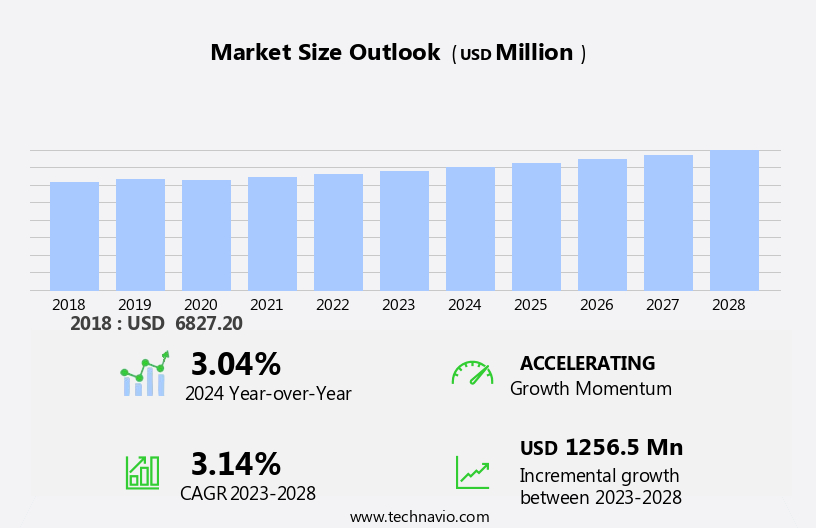
The US lead acid battery market size is forecast to increase by USD 1.26 billion at a CAGR of 3.14% between 2023 and 2028.

  • In the market, the sector continues to witness significant growth due to the increasing focus on energy storage solutions for various applications. Key drivers include the expanding data center industry, which relies heavily on uninterrupted power supply, and the growing adoption of renewable energy sources, such as solar and wind, for power generation. Moreover, the demand for lead-acid batteries in microgrids and off-grid applications, including telecom equipment and lighting systems, is on the rise. The use of lead-acid batteries in niche applications, such as submarines and bioenergy, further bolsters market growth. Market trends include the declining costs of alternative batteries, such as lithium-ion, which may impact the market share of lead-acid batteries.
  • However, advancements in lead-acid battery technology, including the use of lead oxide and nickel, and the integration of digital technologies, such as glass electrodes and sulfuric acid monitoring systems, offer opportunities for market growth. Additionally, the increasing demand for energy storage solutions in 5G services and greenhouse applications is expected to create new opportunities for market participants. Overall, the market is poised for steady growth, driven by the increasing demand for reliable energy storage solutions and the continuous advancements in battery technology.

What will be the size of the US Lead Acid Battery Market during the forecast period?
Lead Acid Battery Market in US Size

 Request Free Sample

  • The market encompasses the production and sale of lead acid batteries, a type of rechargeable battery widely used in various sectors, including telecommunications and energy storage. In the US market, this industry experiences significant demand due to the batteries' reliability and affordability. Lead acid batteries are integral to telecom sector applications, such as powering wireless telecom equipment and ensuring connectivity. Additionally, they are crucial in the military, data centers, and uninterruptible power supply (UPS) systems. Despite the prevalence of alternative technologies like lithium-ion and nickel-metal hydride batteries, lead acid batteries remain competitive. They consist of lead electrodes submerged in a sulfuric acid solution, with absorbent glass mat or gel VRLA batteries offering improved performance.
  • Lead oxide and lead alloy plates are essential components. Water is added to maintain the battery's electrolyte level. Despite their advantages, lead acid batteries face challenges due to their toxic materials, including lead and sulfuric acid. However, advancements in battery design and recycling initiatives mitigate these concerns. The market's size and direction remain strong, driven by the growing need for energy storage devices in various applications and the continuous evolution of electronic equipment.

How is this market segmented and which is the largest segment?

The market research report provides comprehensive data (region-wise segment analysis), with forecasts and estimates in "USD million" for the period 2024-2028, as well as historical data from 2018-2022 for the following segments.

  • Application
    • Mobile
    • Stationary
  • Type
    • Flooded
    • Sealed
  • Geography
    • US

By Application Insights

  • The mobile segment is estimated to witness significant growth during the forecast period. The market spans various sectors, including telecom, energy storage, wireless telecom industry, military, data centers, and the IT sector. In the telecom industry, VRLA (Valve-Regulated Lead-Acid) batteries are utilized in telecom towers for backup power and connectivity. The energy storage space is another significant market for lead acid batteries, with applications in renewable energy, the electricity sector, and substations.
  • The military sector uses lead acid batteries in UPS (Uninterruptible Power Supply) systems and vehicles. Lithium-ion technology and Nickel-Metal Hydride batteries are competitors, but lead acid batteries remain popular due to their cost-effectiveness and reliability. Original Equipment Manufacturers (OEMs) continue to use lead acid batteries in nickel-cadmium batteries, sealed lead-acid batteries, and absorbent glass mat batteries. The market is influenced by factors like automation, cranking power, cold-start capabilities, and backup power requirements. 
Lead Acid Battery Market in US Size

Get a glance at the market share of various segments Request Free Sample

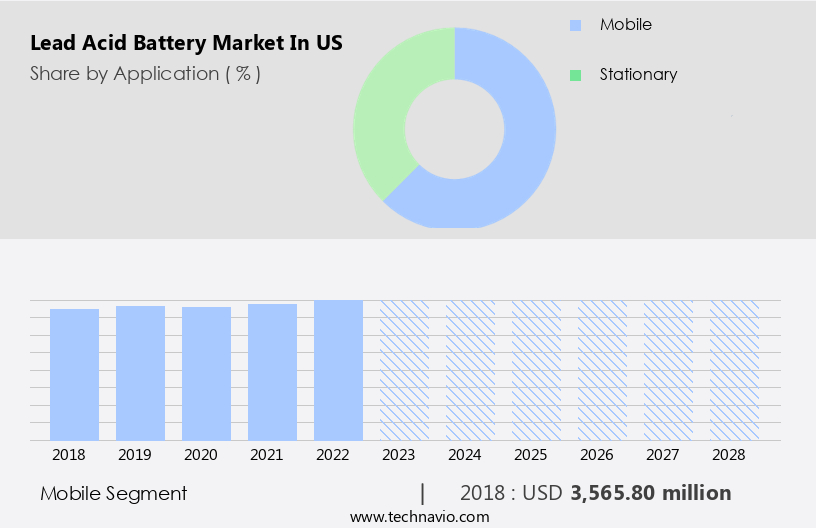
The Mobile segment was valued at  USD 3.57  billion in 2018 and showed a gradual increase during the forecast period.

Market Dynamics

Our researchers analyzed the data with 2023 as the base year, along with the key drivers, trends, and challenges. A holistic analysis of drivers will help companies refine their marketing strategies to gain a competitive advantage.

What are the key market drivers leading to the rise in adoption of US Lead Acid Battery Market?

  • Rising focus on green telecom towers is the key driver of the market. The sector is experiencing significant growth due to increasing mobile and smartphone penetration and declining telecom tariffs. This expansion has led to a rise in telecom subscriptions, resulting in the installation of numerous green telecom towers to reduce carbon footprint and greenhouse gas emissions. In response, lead acid battery manufacturers such as C&D Technologies INC, Clarios, and EnerSys are broadening their product offerings to include eco-friendly telecom power systems. The Energy storage space is crucial for the wireless telecom industry, as connectivity relies on uninterrupted power supply. Lead acid batteries, including Nickel-Metal Hydride, Nickel-cadmium, Absorbent Glass Mat, and Gel VRLA, are widely used due to their reliability and cost-effectiveness.
  • New electrode designs, Calcium-alloy grids, Carbon additives, Pulse charging, and Multi-stage charging methods are enhancing the performance and longevity of these batteries. Additionally, the IT sector, data centers, UPS systems, and renewable energy sources like Solar, Wind, Hydropower, and Bioenergy require large-scale energy storage devices. Lead, Sulfuric acid, and other toxic materials are essential components of these batteries, necessitating proper disposal and recycling at recycling centers. The automotive sector, including passenger cars, e-bikes, and electric motors, also utilizes these batteries. The US military, marine commerce activities, and ICE vehicles also rely on these rechargeable batteries for backup power and cranking power, cold-start capabilities, and uninterruptible power supply systems.

What are the market trends shaping the US Lead Acid Battery Market?

  • Rising company collaborations is the upcoming trend in the market. The lead acid battery market In the US is experiencing significant collaboration among companies and stakeholders to advance the technology and enhance its competitive edge against lithium-ion batteries. Pre-competitive research organizations, such as the Consortium for Battery Innovation (CBI), play a pivotal role in this endeavor. Comprised of lead acid battery manufacturers, raw material suppliers, technology suppliers, research institutions, and industry experts, these organizations facilitate research, technology development, and knowledge sharing. The market encompasses various segments, including the telecom sector, the Energy storage space in the wireless telecom industry, the military, data centers, and the IT sector. In the telecom industry, these batteries are utilized for uninterruptible power supply (UPS) systems, backup power, and cranking power for telecom towers and 5G services.
  • The VRLA segment, which includes flooded batteries, absorbent glass mat, and gel VRLA batteries, dominates the market. New electrode designs, such as calcium-alloy grids and carbon additives, as well as charging methods like pulse charging and multi-stage charging, are being explored to improve lead acid battery performance. Automation and digitalization are also driving the market's growth. Lead acid batteries are used extensively in various industries, including the automotive sector, marine commerce activities, and the electricity sector, which relies on renewable energy sources like solar, wind, hydropower, and bioenergy. The market also includes various battery types, such as nickel-based batteries, zinc-based batteries, brand-new batteries, and rechargeable batteries, which are used in applications ranging from UPS systems to electric motors and passenger cars.

What challenges does US Lead Acid Battery Market face during the growth?

  • Declining costs of lithium-ion batteries is a key challenge affecting the market growth. Lead acid batteries have traditionally held a significant market share in the energy storage space due to their cost-effectiveness and ability to deliver high bursts of instantaneous power, particularly in cranking applications for automobiles. However, lithium-ion batteries are gaining popularity due to their superior performance characteristics, such as higher current density, longer power-holding capacity, and longer shelf life. The cost gap between these battery chemistries has narrowed substantially over the past decade, driven by increased production scale and manufacturing efficiency. In the telecom sector, including the wireless telecom industry, connectivity and backup power are crucial. Lead acid batteries, specifically valve-regulated lead-acid (VRLA) batteries, are widely used in telecom applications for their reliability and ability to provide backup power in the event of grid failures.
  • In data centers, uninterruptible power supply (UPS) systems rely on lead acid batteries to ensure continuous power supply. Lithium-ion batteries, on the other hand, are increasingly being adopted for their longer cycle life, higher energy density, and faster charging capabilities. In the IT sector, lithium-ion batteries are used in servers to provide backup power during power outages and to support the increasing internet traffic. Both lead acid and lithium-ion batteries have their unique advantages and applications. While these batteries offer cost-effectiveness and reliability, lithium-ion batteries provide superior performance and longer life. The energy storage market is witnessing a shift towards lithium-ion batteries, driven by advancements in technology and declining costs The energy storage market is evolving rapidly, driven by digitalization, the increasing demand for 5G services, and the growing subscriber base for telecom services.  In marine commerce activities, lead acid batteries are used in electric motors and forklift trucks.

Exclusive US Lead Acid Battery Market Customer Landscape

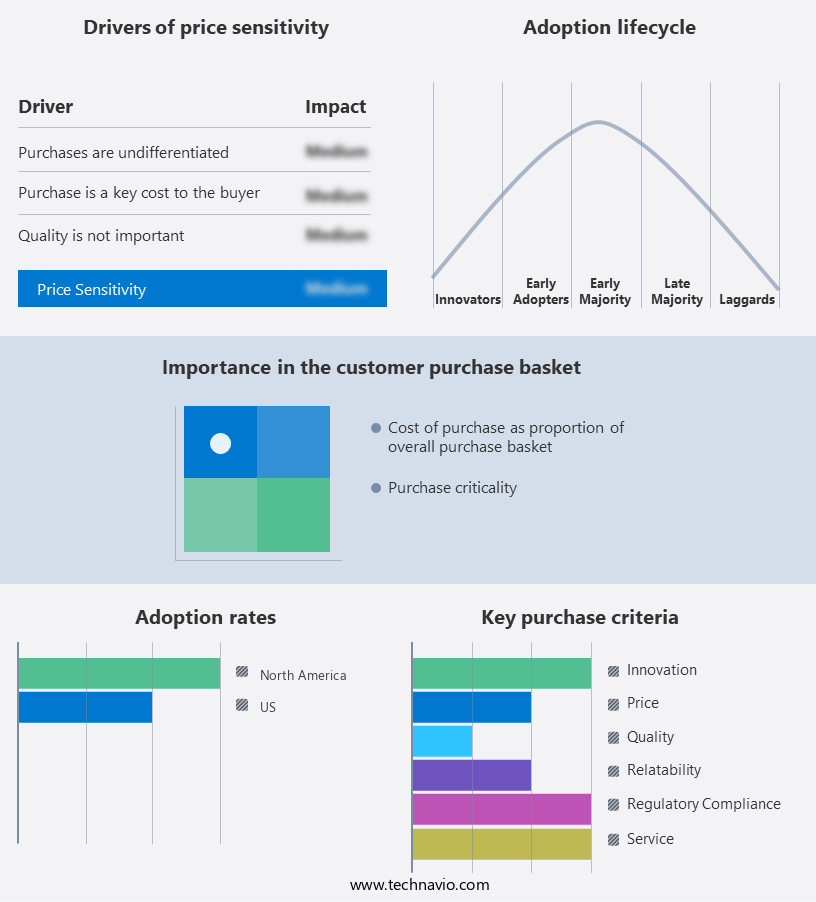
The market forecasting report includes the adoption lifecycle of the market, covering from the innovator's stage to the laggard's stage. It focuses on adoption rates in different regions based on penetration. Furthermore, the report also includes key purchase criteria and drivers of price sensitivity to help companies evaluate and develop their market growth analysis strategies.
Lead Acid Battery Market in US Share by Geography

 Customer Landscape

Key Companies & Market Insights

Companies are implementing various strategies, such as strategic alliances, market forecast partnerships, mergers and acquisitions, geographical expansion, and product/service launches, to enhance their presence in the market.

The market research and growth report includes detailed analyses of the competitive landscape of the market and information about key companies, including:

  • C and D Technologies Inc.
  • Camel Group Co. Ltd.
  • CLARIOS LLC
  • Concorde Battery Corp.
  • Crown Equipment Corp.
  • East Penn Manufacturing Co. Inc.
  • Energizer Holdings Inc.
  • EnerSys
  • Exponential Power Inc.
  • HBL Power Systems Ltd.
  • Johnson Controls International Plc.
  • Panasonic Holdings Corp.
  • Power Sonic Corp.
  • Robert Bosch GmbH
  • Surrette Battery Co. Ltd.
  • Teledyne Technologies Inc.
  • Trojan Battery Co. LLC
  • U.S. Battery Manufacturing Co.
  • UPS Battery Center Ltd.
  • Wirtz Mfg Co. Inc.

Qualitative and quantitative analysis of companies has been conducted to help clients understand the wider business environment as well as the strengths and weaknesses of key market players. Data is qualitatively analyzed to categorize companies as pure play, category-focused, industry-focused, and diversified; it is quantitatively analyzed to categorize companies as dominant, leading, strong, tentative, and weak.

Research Analyst Overview

The market encompasses a broad scope of applications including the energy storage sector. This technology plays a crucial role in various industries, including telecommunications and the energy sector. In the telecommunications industry, these batteries are utilized to power electronic equipment and provide backup power for telecom towers and UPS systems. The energy storage space is a dynamic and evolving market, driven by the increasing demand for connectivity and renewable energy. These batteries, specifically valve-regulated lead-acid (VRLA) batteries, have been a mainstay in this sector due to their reliability, durability, and cost-effectiveness. The wireless telecom industry relies heavily on these batteries to power base stations and provide backup power for critical communication networks.

In addition, lead acid batteries are used in the military for various applications, including powering electronic equipment and providing backup power for critical systems. Data centers and IT sectors also utilize these batteries for backup power and to ensure uninterrupted power supply for servers and internet traffic. The VRLA segment, specifically, has gained popularity due to its maintenance-free design and long service life. These batteries are also used in the electricity sector for various applications, such as grid energy storage and in substations. In the renewable energy sector, lead acid batteries are used to store excess energy generated from solar, wind, hydropower, bioenergy, and other sources.

Moreover, the market is driven by several factors, including the increasing demand for energy storage devices, the growing use of electronic equipment, and the need for backup power in various industries. New electrode designs, such as calcium-alloy grids and carbon additives, are being developed to improve the performance and efficiency of lead acid batteries. Automation and advanced charging methods, such as pulse charging and multi-stage charging methods, are also being adopted to optimize the performance and lifespan of lead acid batteries. The market is expected to continue growing due to the increasing demand for renewable energy and the need for reliable and cost-effective energy storage solutions.

Market Scope

Report Coverage

Details

Page number

133

Base year

2023

Historic period

2018-2022

Forecast period

2024-2028

Growth momentum & CAGR

Accelerate at a CAGR of 3.14%

Market growth 2024-2028

USD 1.26 billion

Market structure

Fragmented

YoY growth 2023-2024(%)

3.04

Competitive landscape

Leading Companies, Market Positioning of Companies, Competitive Strategies, and Industry Risks

Request Free Sample

What are the Key Data Covered in this Market Research Report?

  • CAGR of the market during the forecast period
  • Detailed information on factors that will drive the market growth and forecasting between 2024 and 2028
  • Precise estimation of the size of the market  and its contribution of the market in focus to the parent market
  • Accurate predictions about upcoming market growth and trends and changes in consumer behaviour
  • Growth of the market across US
  • Thorough analysis of the market's competitive landscape and detailed information about companies
  • Comprehensive analysis of factors that will challenge the growth of market companies

We can help! Our analysts can customize this market research report to meet your requirements Get in touch

1 Executive Summary

  • 1.1 Market overview
    • Executive Summary - Chart on Market Overview
    • Executive Summary - Data Table on Market Overview
    • Executive Summary - Chart on Country Market Characteristics
    • Executive Summary - Chart on Market Segmentation by Application
    • Executive Summary - Chart on Market Segmentation by Type
    • Executive Summary - Chart on Company Market Positioning

2 Market Landscape

  • 2.1 Market ecosystem
    • Parent Market
    • Data Table on - Parent Market
  • 2.2 Market characteristics
    • Market characteristics analysis
  • 2.3 Value chain analysis
    • Value Chain Analysis

3 Market Sizing

  • 3.1 Market definition
    • Offerings of companies included in the market definition
  • 3.2 Market segment analysis
    • Market segments
  • 3.3 Market size 2023
    • 3.4 Market outlook: Forecast for 2023-2028
      • Chart on US - Market size and forecast 2023-2028 ($ million)
      • Data Table on US - Market size and forecast 2023-2028 ($ million)
      • Chart on US: Year-over-year growth 2023-2028 (%)
      • Data Table on US: Year-over-year growth 2023-2028 (%)

    4 Historic Market Size

    • 4.1 Lead Acid Battery Market in US 2018 - 2022
      • Historic Market Size - Data Table on Lead Acid Battery Market in US 2018 - 2022 ($ million)
    • 4.2 Application segment analysis 2018 - 2022
      • Historic Market Size - Application Segment 2018 - 2022 ($ million)
    • 4.3 Type segment analysis 2018 - 2022
      • Historic Market Size - Type Segment 2018 - 2022 ($ million)

    5 Five Forces Analysis

    • 5.1 Five forces summary
      • Five forces analysis - Comparison between 2023 and 2028
    • 5.2 Bargaining power of buyers
      • Bargaining power of buyers - Impact of key factors 2023 and 2028
    • 5.3 Bargaining power of suppliers
      • Bargaining power of suppliers - Impact of key factors in 2023 and 2028
    • 5.4 Threat of new entrants
      • Threat of new entrants - Impact of key factors in 2023 and 2028
    • 5.5 Threat of substitutes
      • Threat of substitutes - Impact of key factors in 2023 and 2028
    • 5.6 Threat of rivalry
      • Threat of rivalry - Impact of key factors in 2023 and 2028
    • 5.7 Market condition
      • Chart on Market condition - Five forces 2023 and 2028

    6 Market Segmentation by Application

    • 6.1 Market segments
      • Chart on Application - Market share 2023-2028 (%)
      • Data Table on Application - Market share 2023-2028 (%)
    • 6.2 Comparison by Application
      • Chart on Comparison by Application
      • Data Table on Comparison by Application
    • 6.3 Mobile - Market size and forecast 2023-2028
      • Chart on Mobile - Market size and forecast 2023-2028 ($ million)
      • Data Table on Mobile - Market size and forecast 2023-2028 ($ million)
      • Chart on Mobile - Year-over-year growth 2023-2028 (%)
      • Data Table on Mobile - Year-over-year growth 2023-2028 (%)
    • 6.4 Stationary - Market size and forecast 2023-2028
      • Chart on Stationary - Market size and forecast 2023-2028 ($ million)
      • Data Table on Stationary - Market size and forecast 2023-2028 ($ million)
      • Chart on Stationary - Year-over-year growth 2023-2028 (%)
      • Data Table on Stationary - Year-over-year growth 2023-2028 (%)
    • 6.5 Market opportunity by Application
      • Market opportunity by Application ($ million)
      • Data Table on Market opportunity by Application ($ million)

    7 Market Segmentation by Type

    • 7.1 Market segments
      • Chart on Type - Market share 2023-2028 (%)
      • Data Table on Type - Market share 2023-2028 (%)
    • 7.2 Comparison by Type
      • Chart on Comparison by Type
      • Data Table on Comparison by Type
    • 7.3 Flooded - Market size and forecast 2023-2028
      • Chart on Flooded - Market size and forecast 2023-2028 ($ million)
      • Data Table on Flooded - Market size and forecast 2023-2028 ($ million)
      • Chart on Flooded - Year-over-year growth 2023-2028 (%)
      • Data Table on Flooded - Year-over-year growth 2023-2028 (%)
    • 7.4 Sealed - Market size and forecast 2023-2028
      • Chart on Sealed - Market size and forecast 2023-2028 ($ million)
      • Data Table on Sealed - Market size and forecast 2023-2028 ($ million)
      • Chart on Sealed - Year-over-year growth 2023-2028 (%)
      • Data Table on Sealed - Year-over-year growth 2023-2028 (%)
    • 7.5 Market opportunity by Type
      • Market opportunity by Type ($ million)
      • Data Table on Market opportunity by Type ($ million)

    8 Customer Landscape

    • 8.1 Customer landscape overview
      • Analysis of price sensitivity, lifecycle, customer purchase basket, adoption rates, and purchase criteria

    9 Drivers, Challenges, and Opportunity/Restraints

    • 9.1 Market drivers
      • 9.2 Market challenges
        • 9.3 Impact of drivers and challenges
          • Impact of drivers and challenges in 2023 and 2028
        • 9.4 Market opportunities/restraints

          10 Competitive Landscape

          • 10.1 Overview
            • 10.2 Competitive Landscape
              • Overview on criticality of inputs and factors of differentiation
            • 10.3 Landscape disruption
              • Overview on factors of disruption
            • 10.4 Industry risks
              • Impact of key risks on business

            11 Competitive Analysis

            • 11.1 Companies profiled
              • Companies covered
            • 11.2 Market positioning of companies
              • Matrix on companies position and classification
            • 11.3 C and D Technologies Inc.
              • C and D Technologies Inc. - Overview
              • C and D Technologies Inc. - Product / Service
              • C and D Technologies Inc. - Key news
              • C and D Technologies Inc. - Key offerings
            • 11.4 Camel Group Co. Ltd.
              • Camel Group Co. Ltd. - Overview
              • Camel Group Co. Ltd. - Product / Service
              • Camel Group Co. Ltd. - Key offerings
            • 11.5 Concorde Battery Corp.
              • Concorde Battery Corp. - Overview
              • Concorde Battery Corp. - Product / Service
              • Concorde Battery Corp. - Key news
              • Concorde Battery Corp. - Key offerings
            • 11.6 Crown Equipment Corp.
              • Crown Equipment Corp. - Overview
              • Crown Equipment Corp. - Product / Service
              • Crown Equipment Corp. - Key offerings
            • 11.7 East Penn Manufacturing Co. Inc.
              • East Penn Manufacturing Co. Inc. - Overview
              • East Penn Manufacturing Co. Inc. - Product / Service
              • East Penn Manufacturing Co. Inc. - Key news
              • East Penn Manufacturing Co. Inc. - Key offerings
            • 11.8 Energizer Holdings Inc.
              • Energizer Holdings Inc. - Overview
              • Energizer Holdings Inc. - Business segments
              • Energizer Holdings Inc. - Key offerings
              • Energizer Holdings Inc. - Segment focus
            • 11.9 EnerSys
              • EnerSys - Overview
              • EnerSys - Business segments
              • EnerSys - Key news
              • EnerSys - Key offerings
              • EnerSys - Segment focus
            • 11.10 Johnson Controls International Plc.
              • Johnson Controls International Plc. - Overview
              • Johnson Controls International Plc. - Business segments
              • Johnson Controls International Plc. - Key news
              • Johnson Controls International Plc. - Key offerings
              • Johnson Controls International Plc. - Segment focus
            • 11.11 Power Sonic Corp.
              • Power Sonic Corp. - Overview
              • Power Sonic Corp. - Product / Service
              • Power Sonic Corp. - Key offerings
            • 11.12 Robert Bosch GmbH
              • Robert Bosch GmbH - Overview
              • Robert Bosch GmbH - Product / Service
              • Robert Bosch GmbH - Key news
              • Robert Bosch GmbH - Key offerings
            • 11.13 Teledyne Technologies Inc.
              • Teledyne Technologies Inc. - Overview
              • Teledyne Technologies Inc. - Business segments
              • Teledyne Technologies Inc. - Key news
              • Teledyne Technologies Inc. - Key offerings
              • Teledyne Technologies Inc. - Segment focus
            • 11.14 Trojan Battery Co. LLC
              • Trojan Battery Co. LLC - Overview
              • Trojan Battery Co. LLC - Product / Service
              • Trojan Battery Co. LLC - Key offerings
            • 11.15 U.S. Battery Manufacturing Co.
              • U.S. Battery Manufacturing Co. - Overview
              • U.S. Battery Manufacturing Co. - Product / Service
              • U.S. Battery Manufacturing Co. - Key offerings
            • 11.16 UPS Battery Center Ltd.
              • UPS Battery Center Ltd. - Overview
              • UPS Battery Center Ltd. - Product / Service
              • UPS Battery Center Ltd. - Key offerings
            • 11.17 Wirtz Mfg Co. Inc.
              • Wirtz Mfg Co. Inc. - Overview
              • Wirtz Mfg Co. Inc. - Product / Service
              • Wirtz Mfg Co. Inc. - Key offerings

            12 Appendix

            • 12.1 Scope of the report
              • 12.2 Inclusions and exclusions checklist
                • Inclusions checklist
                • Exclusions checklist
              • 12.3 Currency conversion rates for US$
                • Currency conversion rates for US$
              • 12.4 Research methodology
                • Research methodology
              • 12.5 Data procurement
                • Information sources
              • 12.6 Data validation
                • Data validation
              • 12.7 Validation techniques employed for market sizing
                • Validation techniques employed for market sizing
              • 12.8 Data synthesis
                • Data synthesis
              • 12.9 360 degree market analysis
                • 360 degree market analysis
              • 12.10 List of abbreviations
                • List of abbreviations

              Research Methodology

              Technavio presents a detailed picture of the market by way of study, synthesis, and summation of data from multiple sources. The analysts have presented the various facets of the market with a particular focus on identifying the key industry influencers. The data thus presented is comprehensive, reliable, and the result of extensive research, both primary and secondary.

              INFORMATION SOURCES

              Primary sources

              • Manufacturers and suppliers
              • Channel partners
              • Industry experts
              • Strategic decision makers

              Secondary sources

              • Industry journals and periodicals
              • Government data
              • Financial reports of key industry players
              • Historical data
              • Press releases

              DATA ANALYSIS

              Data Synthesis

              • Collation of data
              • Estimation of key figures
              • Analysis of derived insights

              Data Validation

              • Triangulation with data models
              • Reference against proprietary databases
              • Corroboration with industry experts

              REPORT WRITING

              Qualitative

              • Market drivers
              • Market challenges
              • Market trends
              • Five forces analysis

              Quantitative

              • Market size and forecast
              • Market segmentation
              • Geographical insights
              • Competitive landscape

              Interested in this report?

              Get your sample now to see our research methodology and insights!

              Download Now

              Frequently Asked Questions

              Lead Acid Batteryin US market growth will increase by $ 1256.5 mn during 2024-2028.

              The Lead Acid Batteryin US market is expected to grow at a CAGR of 3.14% during 2024-2028.

              Lead Acid Batteryin US market is segmented by Application( Mobile, Stationary) Type( Flooded, Sealed)

              C and D Technologies Inc., Camel Group Co. Ltd., CLARIOS LLC, Concorde Battery Corp., Crown Equipment Corp., East Penn Manufacturing Co. Inc., Energizer Holdings Inc., EnerSys, Exponential Power Inc., HBL Power Systems Ltd., Johnson Controls International Plc., Panasonic Holdings Corp., Power Sonic Corp., Robert Bosch GmbH, Surrette Battery Co. Ltd., Teledyne Technologies Inc., Trojan Battery Co. LLC, U.S. Battery Manufacturing Co., UPS Battery Center Ltd., Wirtz Mfg Co. Inc. are a few of the key vendors in the Lead Acid Batteryin US market.

              North America will register the highest growth rate of 100% among the other regions. Therefore, the Lead Acid Batteryin US market in North America is expected to garner significant business opportunities for the vendors during the forecast period.

              US

              • Rising focus on green telecom towersThe growing population and rapid advances in technology in the US have resulted in increased mobile and smartphone penetration across countries. The telecommunication industry in the US has registered a significant surge in its growth is the driving factor this market.
              • owing to a decline in telecom tariffs because of intense market competition. The rise in telecom subscriptions has driven the number of green telecom tower installations. Telecom tower operators in the US are under tremendous pressure to reduce their carbon footprint and greenhouse gas (GHG) emissions. Hence is the driving factor this market.
              • manufacturers (C&D technologies INC is the driving factor this market.
              • Clarios is the driving factor this market.
              • EnerSys is the driving factor this market.
              • East penn manufacturing co.) are expanding their product portfolios of green telecom power systems. Diesel accounts for more than 40% of the total operating expenditure is the driving factor this market.
              • as diesel generators are predominantly used in the telecom sector. However is the driving factor this market.
              • their increased deployment can lead to environmental pollution. Therefore is the driving factor this market.
              • telecom operators have started investing in alternative green power systems to reduce operational costs and related pollution. Telecom operators have responded positively to regulations on carbon emissions. The growing demand for clean energy in the telecom sector is promoting investments in and funding for research and development (R&D) in battery technology. Thus is the driving factor this market.
              • the emphasis on the use of green energy sources for powering telecom towers are expected to drive the demand for lead acid batteries in US in the telecommunication industry which will drive the growth of the market in focus during the forecast period. is the driving factor this market.

              The Lead Acid Batteryin US market vendors should focus on grabbing business opportunities from the Mobile segment as it accounted for the largest market share in the base year.
              RIA - Research AI Assistant
              Ask RIA
