


Meltblown Nonwoven Fabric Market Size 2026-2030
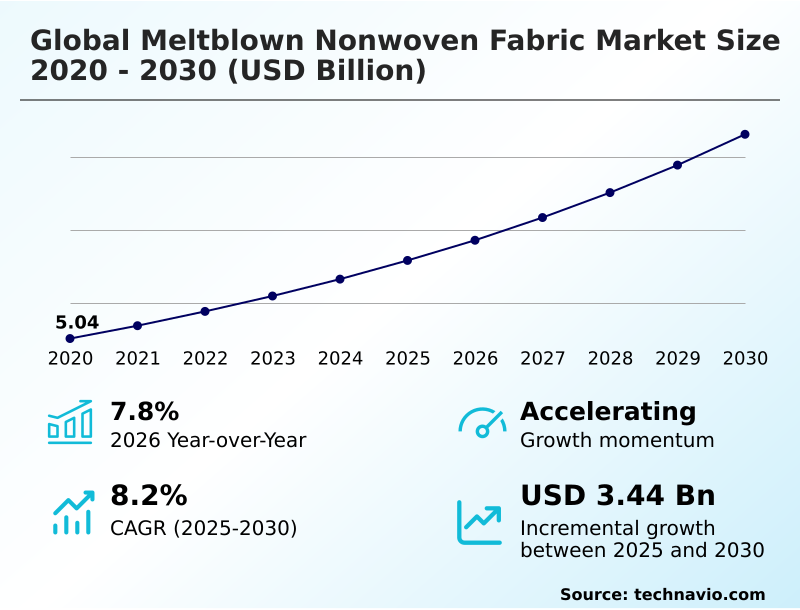
The meltblown nonwoven fabric market size is valued to increase by USD 3.44 billion, at a CAGR of 8.2% from 2025 to 2030. Acceleration of advanced healthcare and hygiene standards will drive the meltblown nonwoven fabric market.
Major Market Trends & Insights
- APAC dominated the market and accounted for a 51.3% growth during the forecast period.
- By End-user - Medical segment was valued at in 2024
- By Material - Polypropylene segment accounted for the largest market revenue share in 2024
Market Size & Forecast
- Market Opportunities: USD 5.57 billion
- Market Future Opportunities: USD 3.44 billion
- CAGR from 2025 to 2030 : 8.2%
Market Summary
- The meltblown nonwoven fabric market is undergoing a critical transformation, balancing the demand for high-performance filtration with an urgent push toward sustainability. Key applications in healthcare and industrial sectors rely on the material's ultrafine fiber structure for superior particulate filtration efficiency, a characteristic essential for HEPA filter media and protective apparel layers.
- Concurrently, regulatory pressure is accelerating the adoption of biodegradable polymer feedstock, forcing manufacturers to innovate beyond traditional polypropylene melt blowing. This transition creates significant operational hurdles, as alternative materials exhibit different polymer rheology, requiring adjustments to die tip design and web formation processes.
- A typical business scenario involves a manufacturer retooling a production line to create advanced spunmelt composite fabrics for automotive cabin air filters. This requires mastering bicomponent fiber technology to meet new acoustic and filtration standards, while navigating supply chain instabilities that can disrupt the availability of specialized resins, impacting production schedules and profitability.
What will be the Size of the Meltblown Nonwoven Fabric Market during the forecast period?
Get Key Insights on Market Forecast (PDF) Get Free Sample
How is the Meltblown Nonwoven Fabric Market Segmented?
The meltblown nonwoven fabric industry research report provides comprehensive data (region-wise segment analysis), with forecasts and estimates in "USD million" for the period 2026-2030, as well as historical data from 2020-2024 for the following segments.
- End-user
- Medical and hygiene and personal care
- Construction
- Home textile
- Automotive
- Others
- Material
- Polypropylene
- Polyester
- Others
- Product
- Fine fiber
- Dual texture
- Geography
- APAC
- China
- Japan
- India
- North America
- US
- Canada
- Mexico
- Europe
- Germany
- UK
- France
- South America
- Brazil
- Argentina
- Colombia
- Middle East and Africa
- South Africa
- UAE
- Saudi Arabia
- Rest of World (ROW)
- APAC
By End-user Insights
The medical and hygiene and personal care segment is estimated to witness significant growth during the forecast period.
The medical and personal care segment is pivoting from high-volume emergency supplies to specialized, high-performance applications. Growth is driven by the demand for advanced wound care materials and components for adult incontinence products where skin health and comfort are paramount.
This shift compels innovation in spunmelt composite fabrics and high loft nonwovens to deliver superior fluid management and breathability.
For instance, advanced meltblown medical textiles can achieve up to a 15% improvement in bacterial filtration efficiency while maintaining low pressure drop.
The focus is on materials offering a hydrophobic barrier and excellent air permeability measurement, using technologies like electret media technology and basis weight control to meet stringent clinical standards for surgical drape fabrics and sterilization wrap media.
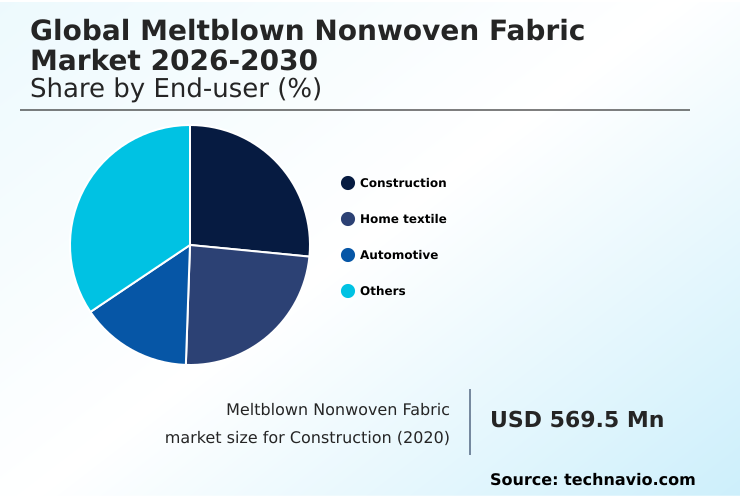
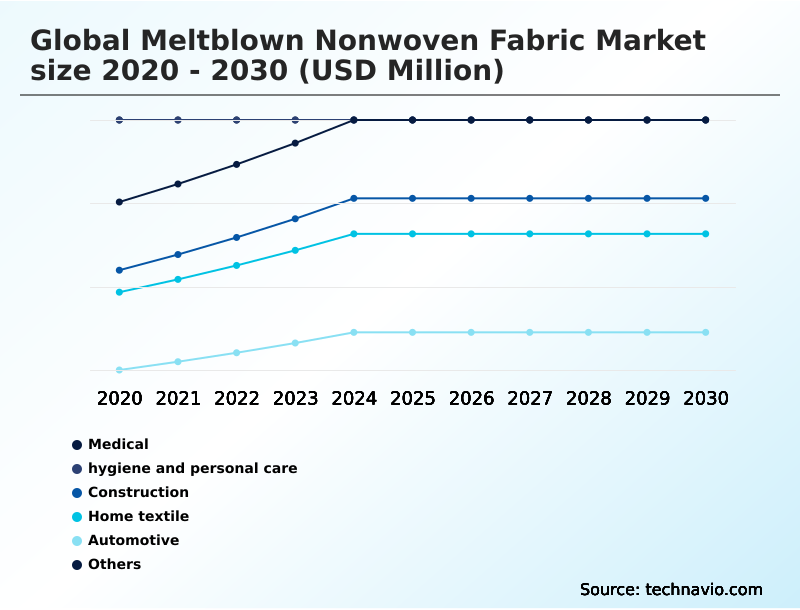
The Medical and hygiene and personal care segment was valued at in 2024 and showed a gradual increase during the forecast period.
Regional Analysis
APAC is estimated to contribute 51.3% to the growth of the global market during the forecast period.Technavio’s analysts have elaborately explained the regional trends and drivers that shape the market during the forecast period.
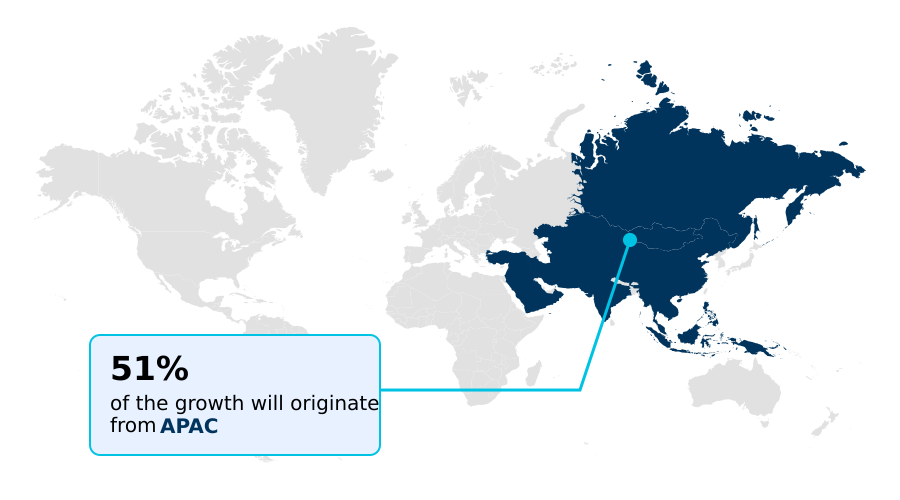
See How Meltblown Nonwoven Fabric Market Demand is Rising in APAC Get Free Sample
The geographic landscape is dominated by APAC, which is projected to contribute over 51% of the market’s incremental growth. This is driven by China's vast industrial base and rising demand for disposable hygiene components.
In North America, which accounts for approximately 23% of the growth opportunity, the focus is on reshoring critical production, with initiatives aiming to increase domestic capacity for meltblown medical textiles by 15% to ensure supply chain security.
The region emphasizes high-performance applications like HEPA filter media and advanced sorbent material for oil spills. Meanwhile, Europe's market is defined by stringent regulations favoring biodegradable polymer feedstock and circular economy principles.
This has spurred innovations in coforming technology and binder-free material, particularly for single-use plastic alternatives, positioning the region as a leader in sustainable nonwoven solutions.
Market Dynamics
Our researchers analyzed the data with 2025 as the base year, along with the key drivers, trends, and challenges. A holistic analysis of drivers will help companies refine their marketing strategies to gain a competitive advantage.
- The global meltblown nonwoven fabric market 2026-2030 is defined by its versatility across critical sectors. The use of meltblown nonwoven for n95 respirators remains a benchmark for filtration, alongside the broader application of high efficiency particulate air filtration media in cleanrooms and HVAC systems.
- A significant shift is occurring toward sustainable PLA meltblown nonwoven fabric, addressing environmental concerns without compromising performance. In mobility, the automotive cabin air filter material segment is growing, while acoustic insulation material for electric vehicles becomes essential for managing noise. The industrial sector relies on polyester meltblown for hot gas filtration and meltblown media for liquid filtration cartridges.
- For environmental safety, meltblown sorbents for oil spill cleanup offer an effective solution. The market for polypropylene meltblown for hygiene products continues to expand, serving as the absorbent core for adult diapers. In healthcare, the material is crucial, seen in meltblown fabric for surgical gowns and meltblown nonwovens for sterilization wraps.
- Emerging applications include nonwoven fabric for battery separators and breathable house wrap nonwoven material in construction. The industrial filtration meltblown roll goods are foundational for many finished products. Specialized forms like dual texture meltblown for abrasive wipes and lightweight meltblown for thermal insulation showcase further innovation.
- Finally, its use as a composite material for geotextile applications underscores its role in large-scale infrastructure projects, with polypropylene meltblown for face masks remaining a key consumer application.
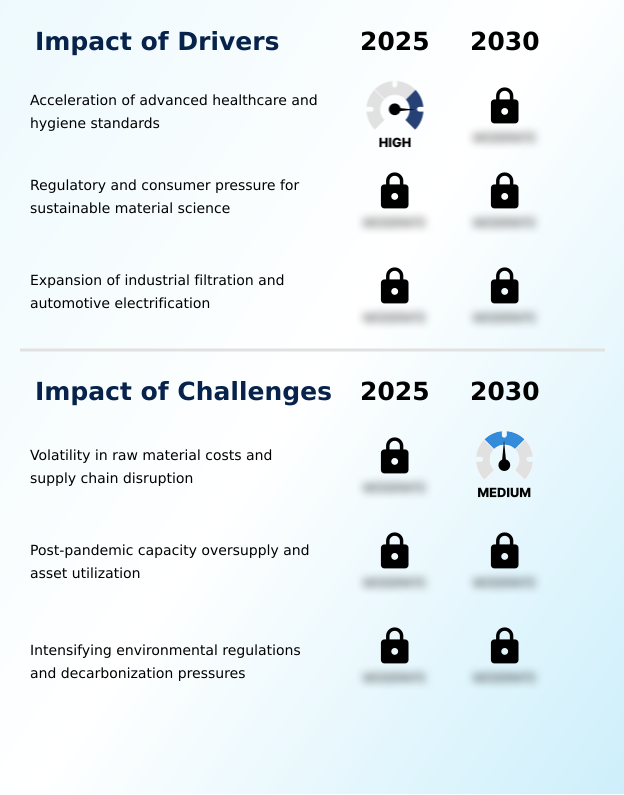
What are the key market drivers leading to the rise in the adoption of Meltblown Nonwoven Fabric Industry?
- The acceleration of advanced healthcare and hygiene standards, coupled with a growing demand for high-performance filtration, serves as a primary driver for market expansion.
- Market growth is primarily driven by elevated standards in healthcare and the expansion of industrial filtration. The demand for materials with high particulate filtration efficiency is non-negotiable in medical settings, where advanced composites offer a 20% improvement in barrier performance.
- This is achieved through a deep understanding of the fiber attenuation process and the application of electrostatic charging to create effective electret media.
- A second driver is the regulatory push for sustainability, compelling a shift to materials like agricultural crop covers and other single-use plastic alternatives.
- Innovations here have led to a 50% reduction in material waste for some manufacturers through optimized basis weight control.
- Finally, the automotive sector's evolution, particularly the rise of EVs, demands superior acoustic insulation nonwovens and sophisticated automotive cabin air filters, driving the development of lightweight, high-performance materials using spunbond meltblown spunbond (SMS) structures.
What are the market trends shaping the Meltblown Nonwoven Fabric Industry?
- The market is characterized by a significant trend toward strategic consolidation. This is leading to the formation of specialty material giants to enhance competitive positioning and technological synergy.
- Key trends are reshaping the competitive landscape, led by strategic consolidation and a pivot to advanced materials. The formation of specialty material giants through mergers is enabling entities to achieve cost synergies of up to 15% while expanding their technological portfolios to include both spunbond and meltblown capabilities.
- Another major trend is the transition toward bio-functional feedstocks, with new sustainable nonwovens reducing environmental impact by over 40% compared to conventional options. This involves overcoming the challenges of polylactic acid (PLA) processing and mastering thermal bonding techniques for new polymers.
- Furthermore, the market is seeing a convergence of filtration technologies, where functionalized nonwoven web formation creates media that can capture both particulates and gaseous pollutants, extending filter lifespans by 30%. This requires precise porosity control and expertise in nonwoven fabric lamination, creating high-value chemical resistant nonwovens and flame retardant nonwovens.
What challenges does the Meltblown Nonwoven Fabric Industry face during its growth?
- Volatility in petrochemical raw material costs and persistent supply chain disruptions present a key challenge to profitability and stable industry growth.
- The market faces significant headwinds from raw material volatility and structural overcapacity. Geopolitical instability has led to freight cost increases of over 40% in some lanes, severely compressing margins on products made from polypropylene. This volatility challenges production planning for items like food-grade nonwoven fabrics and protective apparel layers.
- Concurrently, post-pandemic oversupply has resulted in some production lines operating at less than 60% of their total capacity, intensifying price competition for commodity grades. Another challenge is the regulatory pressure to decarbonize. The energy-intensive melt blowing process, coupled with rules mandating recyclable or biodegradable materials, forces heavy investment in new technologies.
- Adapting lines for alternative feedstocks can initially increase scrap rates by up to 25% until the process is optimized for materials like breathable roofing membranes and geotextile drainage composites.
Exclusive Technavio Analysis on Customer Landscape
The meltblown nonwoven fabric market forecasting report includes the adoption lifecycle of the market, covering from the innovator’s stage to the laggard’s stage. It focuses on adoption rates in different regions based on penetration. Furthermore, the meltblown nonwoven fabric market report also includes key purchase criteria and drivers of price sensitivity to help companies evaluate and develop their market growth analysis strategies.
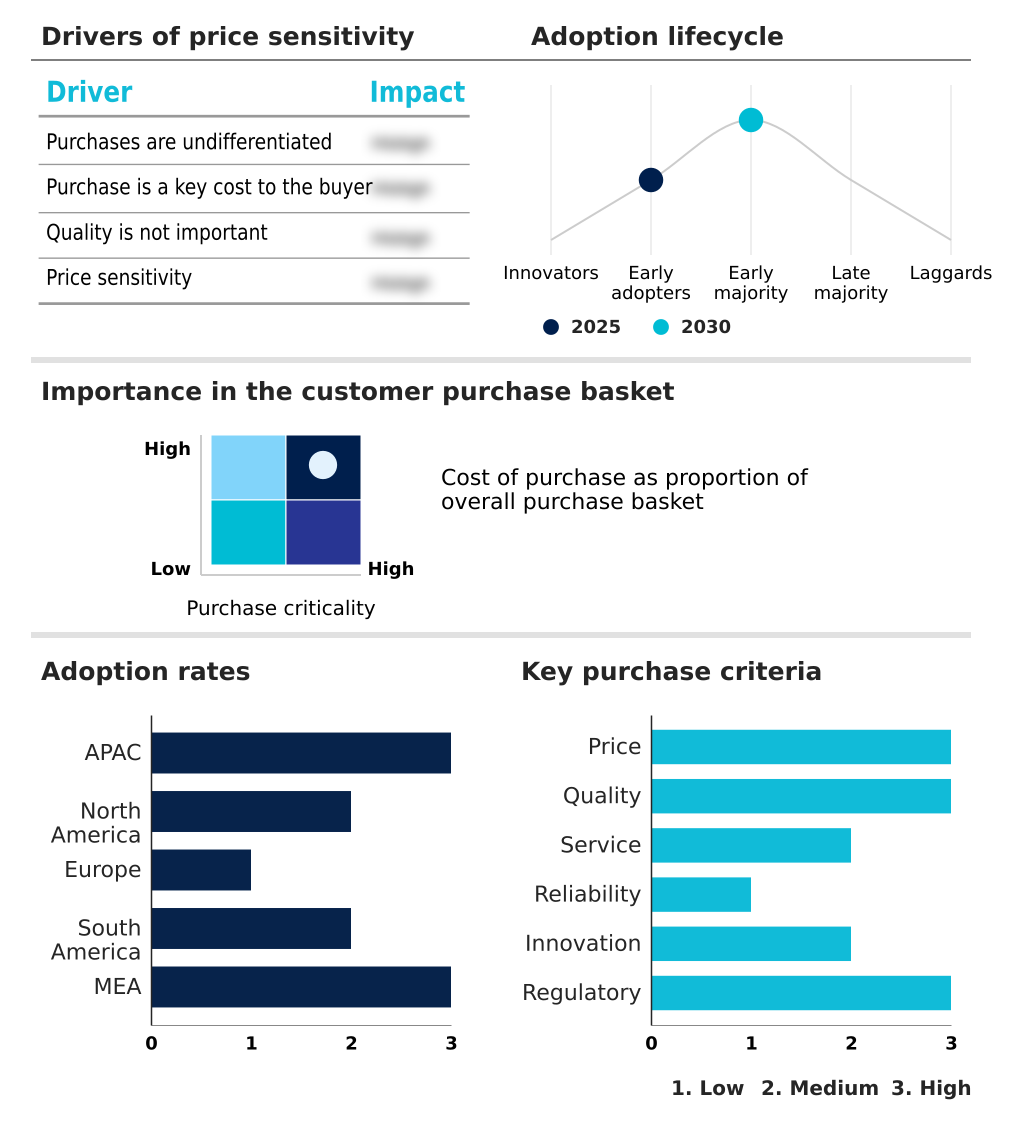
Customer Landscape of Meltblown Nonwoven Fabric Industry
Competitive Landscape
Companies are implementing various strategies, such as strategic alliances, meltblown nonwoven fabric market forecast, partnerships, mergers and acquisitions, geographical expansion, and product/service launches, to enhance their presence in the industry.
3M Co. - Offerings include high-efficiency filtration media, leveraging advanced meltblown nonwoven fabric technology for critical respirator and mask applications.
The industry research and growth report includes detailed analyses of the competitive landscape of the market and information about key companies, including:
- 3M Co.
- Ahlstrom Oyj
- Atex SpA
- Berry Global Inc.
- CHTC Jiahua Nonwoven Co. Ltd.
- Dalian Ruiguang Group Co. Ltd
- Don and Low Ltd.
- Dow Chemical Co.
- DuPont de Nemours Inc.
- Fiberwebindia Ltd.
- Fitesa S.A. and Affiliates
- Freudenberg Materials
- Garagum Economic Society
- JOFO Nonwovens Co. Ltd.
- Lydall Inc.
- Mitsui Chemicals Inc.
- Monadnock Paper Mills Inc.
- PFNonwovens Holding s.r.o.
- THRACE PLASTICS CO S.A.
- Toray Industries Inc.
Qualitative and quantitative analysis of companies has been conducted to help clients understand the wider business environment as well as the strengths and weaknesses of key industry players. Data is qualitatively analyzed to categorize companies as pure play, category-focused, industry-focused, and diversified; it is quantitatively analyzed to categorize companies as dominant, leading, strong, tentative, and weak.
Recent Development and News in Meltblown nonwoven fabric market
- In November 2024, Berry Global completed the merger of its Health, Hygiene and Specialties Global Division with Glatfelter Corp. to form a new publicly traded company named Magnera, creating a powerhouse in specialty nonwoven materials.
- In December 2024, Acme Mills launched Natura, a new product line of bio-based polylactic acid (PLA) nonwoven fabrics, targeting the replacement of petroleum-based materials in applications like packaging and healthcare.
- In April 2025, Freudenberg Performance Materials introduced a new range of fine denier polyester spunbond nonwovens designed to offer filtration efficiencies that compete with traditional meltblown layers in high-performance applications.
- In June 2024, Fitesa entered into a strategic partnership with Lenzing AG to co-develop and commercialize meltblown nonwovens that utilize wood-based botanic fibers, aiming to substitute fossil-based plastics in demanding applications.
Dive into Technavio’s robust research methodology, blending expert interviews, extensive data synthesis, and validated models for unparalleled Meltblown Nonwoven Fabric Market insights. See full methodology.
| Market Scope | |
|---|---|
| Page number | 302 |
| Base year | 2025 |
| Historic period | 2020-2024 |
| Forecast period | 2026-2030 |
| Growth momentum & CAGR | Accelerate at a CAGR of 8.2% |
| Market growth 2026-2030 | USD 3439.1 million |
| Market structure | Fragmented |
| YoY growth 2025-2026(%) | 7.8% |
| Key countries | China, Japan, India, South Korea, Australia, Indonesia, US, Canada, Mexico, Germany, UK, France, Italy, Spain, The Netherlands, Brazil, Argentina, Colombia, South Africa, UAE, Saudi Arabia, Egypt and Turkey |
| Competitive landscape | Leading Companies, Market Positioning of Companies, Competitive Strategies, and Industry Risks |
Research Analyst Overview
- The meltblown nonwoven fabric market is defined by intense innovation in material science and process engineering. A key dynamic is the industry's response to the dual pressures of performance enhancement and sustainability. This requires mastery of the melt spinning process, including polymer rheology and die tip design, to produce materials with a consistent fiber diameter distribution.
- The use of polypropylene melt blowing remains dominant, but the integration of bicomponent fiber technology and coforming technology is enabling the creation of advanced spunmelt composite fabrics, or SMS. These materials offer a superior hydrophobic barrier and gradient density structure, crucial for applications requiring high hydrostatic head resistance.
- Boardroom decisions are increasingly centered on investments in sustainable alternatives, such as polylactic acid (PLA) processing, which can reduce reliance on fossil fuels but demand new expertise in managing polymer degradation. Adopting such technologies can improve viral filtration efficiency (VFE) in electret media technology by up to 10%, justifying the capital expenditure.
- Ultimately, success hinges on balancing basis weight control, air permeability measurement, and barrier property testing to deliver value in a competitive landscape.
What are the Key Data Covered in this Meltblown Nonwoven Fabric Market Research and Growth Report?
-
What is the expected growth of the Meltblown Nonwoven Fabric Market between 2026 and 2030?
-
USD 3.44 billion, at a CAGR of 8.2%
-
-
What segmentation does the market report cover?
-
The report is segmented by End-user (Medical, hygiene and personal care, Construction, Home textile, Automotive, and Others), Material (Polypropylene, Polyester, and Others), Product (Fine fiber, and Dual texture) and Geography (APAC, North America, Europe, South America, Middle East and Africa)
-
-
Which regions are analyzed in the report?
-
APAC, North America, Europe, South America and Middle East and Africa
-
-
What are the key growth drivers and market challenges?
-
Acceleration of advanced healthcare and hygiene standards, Volatility in raw material costs and supply chain disruption
-
-
Who are the major players in the Meltblown Nonwoven Fabric Market?
-
3M Co., Ahlstrom Oyj, Atex SpA, Berry Global Inc., CHTC Jiahua Nonwoven Co. Ltd., Dalian Ruiguang Group Co. Ltd, Don and Low Ltd., Dow Chemical Co., DuPont de Nemours Inc., Fiberwebindia Ltd., Fitesa S.A. and Affiliates, Freudenberg Materials, Garagum Economic Society, JOFO Nonwovens Co. Ltd., Lydall Inc., Mitsui Chemicals Inc., Monadnock Paper Mills Inc., PFNonwovens Holding s.r.o., THRACE PLASTICS CO S.A. and Toray Industries Inc.
-
Market Research Insights
- Market dynamics are increasingly shaped by the push for high-performance, sustainable materials. The adoption of biodegradable polymer feedstock is a key strategic focus, with some bio-based materials achieving a carbon footprint reduction of over 40% compared to virgin polyolefins.
- In parallel, the demand for advanced meltblown medical textiles is driving innovation; new composite materials now offer a 25% improvement in barrier properties without sacrificing breathability. This is critical for applications like surgical drape fabrics and advanced wound care materials.
- Furthermore, the industrial sector's move toward higher efficiency standards has led to HVAC filtration systems that can capture 30% more fine particulates, directly impacting indoor air quality. These shifts highlight a market where technical performance and environmental compliance are intertwined, influencing both product development and supply chain strategies for disposable hygiene components.
We can help! Our analysts can customize this meltblown nonwoven fabric market research report to meet your requirements.
 RIA -
RIA - 
