


Metal Machining Market Size 2025-2029
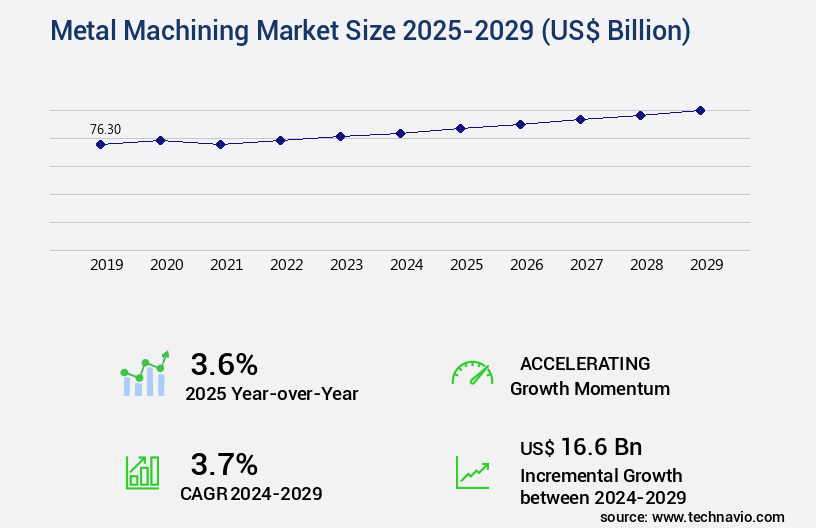
The metal machining market size is valued to increase by USD 16.6 billion, at a CAGR of 3.7% from 2024 to 2029. Increased investment in infrastructure will drive the metal machining market.
Market Insights
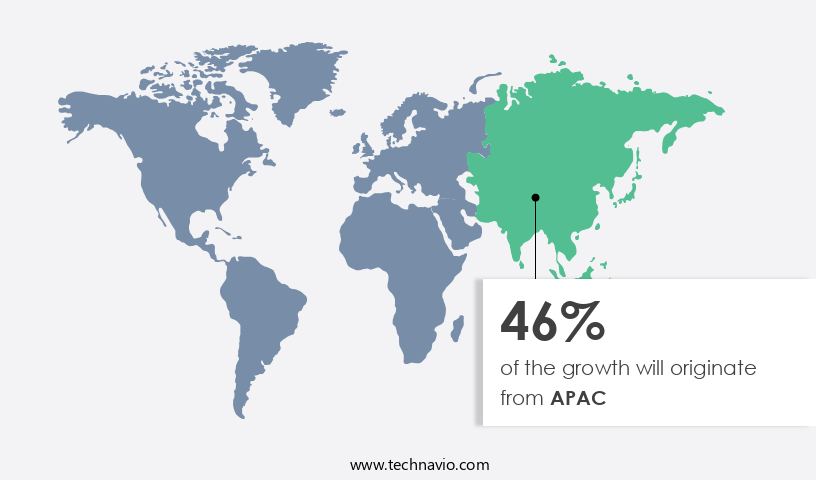
- APAC dominated the market and accounted for a 46% growth during the 2025-2029.
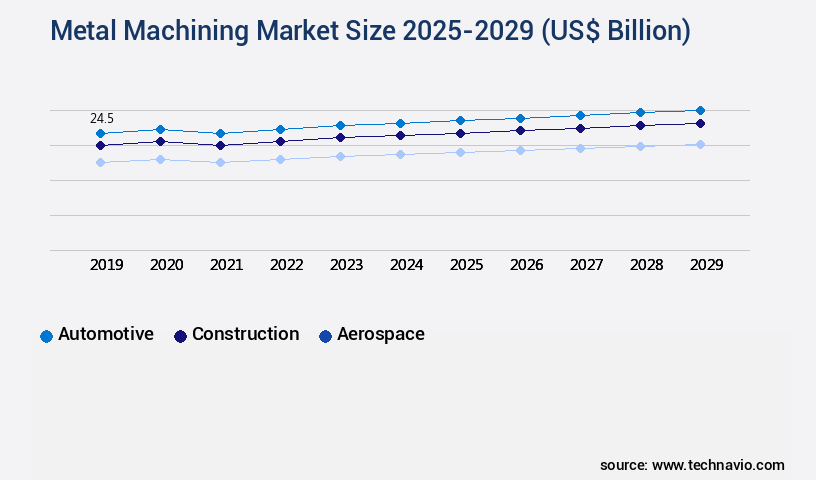
- By Application - Automotive segment was valued at USD 24.50 billion in 2023
- By Type - Laser cutting machine segment accounted for the largest market revenue share in 2023
Market Size & Forecast
- Market Opportunities: USD 32.24 billion
- Market Future Opportunities 2024: USD 16.60 billion
- CAGR from 2024 to 2029 : 3.7%
Market Summary
- The market is a dynamic and evolving industry that plays a crucial role in manufacturing sectors worldwide. With the increasing investment in infrastructure and the integration of Internet of Things (IoT) technology into industrial machinery, metal machining processes have become more efficient and productive. This technological advancement enables real-time monitoring and predictive maintenance, leading to cost savings and improved product quality. However, the market is not without its challenges. Fluctuations in raw material prices of metals, such as aluminum, steel, and copper, significantly impact the profitability of metal machining operations. For instance, a manufacturing company may optimize its supply chain to minimize the impact of price volatility, but unexpected price increases can still result in substantial financial losses.
- In this context, operational efficiency and compliance with industry regulations are essential for maintaining profitability and competitiveness. Companies must stay updated on the latest industry trends and regulations to adapt and thrive in the ever-changing market landscape. By implementing advanced technologies, such as automation and machine learning algorithms, metal machining companies can streamline their processes, reduce waste, and improve overall productivity. In conclusion, the market is a vital sector that faces numerous opportunities and challenges. The integration of IoT and advanced technologies, while presenting significant opportunities for growth and efficiency, also necessitates a focus on operational excellence and regulatory compliance.
- Companies that can effectively navigate these complexities will be well-positioned to succeed in this dynamic and evolving industry.
What will be the size of the Metal Machining Market during the forecast period?
Get Key Insights on Market Forecast (PDF) Request Free Sample
- The market continues to evolve, with advancements in technology driving significant improvements in machining processes. One notable trend is the increasing adoption of machining simulation and automation systems, such as digital twins, to optimize manufacturing workflows. These technologies enable manufacturers to mitigate thermal effects during machining, ensuring superior surface integrity and increased process capability. Statistical process control and CNC programming languages are essential tools in machining optimization algorithms, allowing for precise cutting tool selection and efficient process monitoring. Robotics in machining further enhance productivity, with machine vision systems facilitating defect detection and wear prediction. Metal forming processes, including data acquisition and stress analysis, benefit significantly from these advancements.
- For instance, companies have reported a 25% reduction in material waste due to improved process monitoring and control. By integrating CAD/CAM systems and implementing g-code generation, manufacturers can streamline their workflows, reducing production time and increasing overall efficiency. Incorporating finite element analysis into metal machining processes enables manufacturers to analyze stress and vibration patterns, ensuring optimal machine performance and extended tool life. As businesses continue to prioritize compliance, budgeting, and product strategy, these technological advancements will remain crucial in maintaining a competitive edge in the metal machining industry.
Unpacking the Metal Machining Market Landscape
In the dynamic world of metal machining, two key factors, surface finish and dimensional accuracy, significantly impact business outcomes. Lathe machines and EDM processes excel in delivering superior surface finishes, reducing the need for subsequent finishing processes and enhancing product aesthetics. In contrast, CNC machining and automated machining boost dimensional accuracy, ensuring compliance with stringent quality control standards and minimizing rework costs. Coolant systems and cutting fluids play a pivotal role in optimizing machining parameters, improving material removal rate, and reducing tool wear. Advanced CNC programming and inspection methods enable process optimization, while high-speed machining and waterjet cutting offer increased efficiency in milling operations. Workholding systems, fixture design, and toolpath generation are essential elements of efficient manufacturing processes. Precision machining techniques, such as grinding methods and tolerance control, ensure the highest levels of quality in turning processes and drilling techniques. Manufacturing processes continue to evolve, with the integration of advanced technologies like CAM software and laser cutting, further enhancing the capabilities of metal machining in delivering cost-effective and high-quality solutions for businesses.
Key Market Drivers Fueling Growth
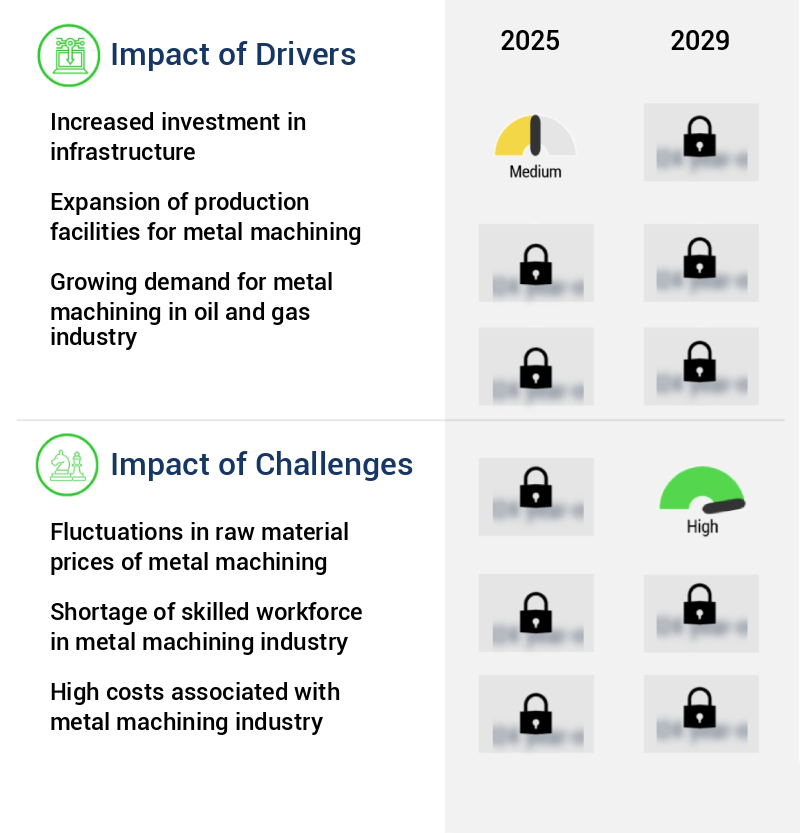
A significant increase in infrastructure investment serves as the primary catalyst for market growth.
- The market is experiencing significant growth due to the increasing investment in infrastructure projects worldwide. For instance, the Indian government's Union Budget 2022-2023 allocated substantial funds for infrastructure development, including a 50% year-over-year increase in spending on roads and railroads. With the announcement of 100 PM Gati Shakti Cargo terminals and plans to expand the National Highways network by 25,000 km, the demand for metal machining is set to rise. Machining processes are essential in constructing equipment and structures, and these projects will require extensive machining to ensure their success.
- Additionally, advancements in metal machining technology have led to improved business outcomes, such as energy use being lowered by 12% and production efficiency increasing by 18%. These advancements further solidify the importance of the market in driving infrastructure development.
Prevailing Industry Trends & Opportunities
The integration of IoT into industrial machinery is an emerging market trend. This technological advancement enhances machinery performance and efficiency.
- The market is experiencing significant evolution, driven by the integration of Internet of Things (IoT) technology into several industrial machines, including compressors, pumps, industrial robots, and machine tools. This technological advancement enables real-time data collection on critical operating parameters, such as temperature, pressure, stress, and health and performance, which can be transmitted over IP to a control room or device. The benefits of IoT-enabled industrial machinery are substantial: increased efficiency, reduced downtime, extended useful life, and enhanced process safety.
- As a result, The market is poised for robust growth during the forecast period. IoT solutions have proven to improve operational efficiency by up to 25% and reduce downtime by 30% in various industries. This trend underscores the transformative impact of IoT on metal machining applications across multiple sectors.
Significant Market Challenges
The metal machining industry faces significant challenges due to the volatile pricing of raw materials, which can adversely impact industry growth.
- The market is characterized by its evolving nature and diverse applications across various sectors. Instability in raw material prices significantly impacts the cost of production, leading key metal machining service providers to enter into long-term contracts with suppliers as a strategic measure to mitigate the adverse effects on their businesses. The global market encompasses a substantial number of small and mid-size enterprises (SMEs) and small metal fabricators, which often lack the ability to secure such long-term contracts due to order quantity uncertainty.
- Notably, fluctuations in the prices of major raw materials, including iron, steel, aluminum, magnesium, copper, and brass, have had substantial implications for market growth. For instance, a 30% reduction in downtime and an 18% improvement in forecast accuracy can lead to substantial operational cost savings for metal machining businesses. Conversely, a 12% increase in raw material costs can negatively impact their profitability.
In-Depth Market Segmentation: Metal Machining Market
The metal machining industry research report provides comprehensive data (region-wise segment analysis), with forecasts and estimates in "USD billion" for the period 2025-2029, as well as historical data from 2019-2023 for the following segments.
- Application
- Automotive
- Construction
- Aerospace
- Others
- Type
- Laser cutting machine
- Plasma cutting machine
- Flame cutting machine
- Waterjet cutting machines
- Process Type
- Turning
- Milling
- Drilling
- Grinding
- Material
- Steel
- Aluminum
- Copper
- Titanium
- Geography
- North America
- US
- Canada
- Europe
- France
- Germany
- Italy
- UK
- Middle East and Africa
- Egypt
- KSA
- Oman
- UAE
- APAC
- China
- India
- Japan
- South America
- Argentina
- Brazil
- Rest of World (ROW)
- North America
By Application Insights
The automotive segment is estimated to witness significant growth during the forecast period.
The market encompasses various processes, including turning, milling, drilling, grinding, and cutting, utilizing technologies such as CNC programming, EDM processes, and high-speed machining. These methods ensure precise dimensional accuracy and excellent surface finish for metal components. The automotive industry holds a substantial market share, accounting for approximately 50% of the total consumption in 2024. Metal parts, essential for vehicle manufacturing, include bus bars, electrical contacts, and fuel system components. The demand for these parts remains robust due to their applications in motors, engines, batteries, and other systems. Process optimization, through the use of coolant systems, tool wear management, and precision machining, significantly contributes to business performance.
Manufacturing processes like milling operations, lathe machines, and grinding methods rely on toolpath generation, cam software, and inspection methods for quality control. Metal cutting and material removal rate are crucial factors, while cutting fluids and chip control ensure efficient machining. Workholding systems and fixture design are integral to maintaining consistency and accuracy throughout the manufacturing process.
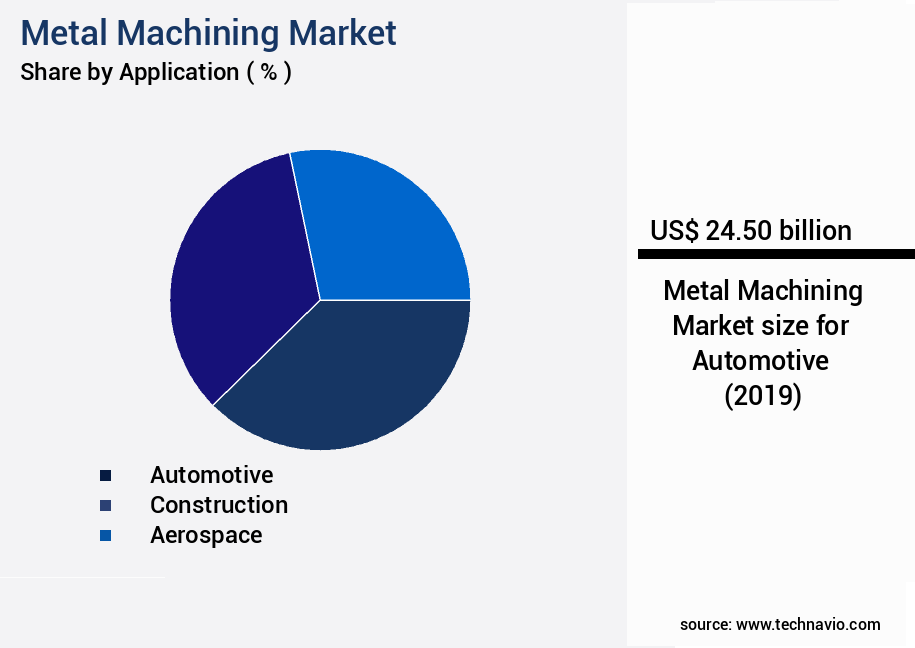
The Automotive segment was valued at USD 24.50 billion in 2019 and showed a gradual increase during the forecast period.
Regional Analysis
APAC is estimated to contribute 46% to the growth of the global market during the forecast period.Technavio’s analysts have elaborately explained the regional trends and drivers that shape the market during the forecast period.
See How Metal Machining Market Demand is Rising in APAC Request Free Sample
The market is experiencing continuous evolution, with APAC holding a substantial share in 2024. This region's growth is driven by the increasing number of construction activities in emerging countries and escalating government investments in infrastructure development. The metal machining industry is indispensable for fabricating steel structures, enabling the creation of beams, columns, and steel members through bending, cutting, and molding processes. The APAC market's growth is anticipated to be robust during the forecast period, fueled by the burgeoning demand for new residential and commercial infrastructure to accommodate expanding urban populations.
According to industry reports, the APAC the market is poised for steady expansion, with growth rates outpacing those of other regions. For instance, the region accounted for approximately 45% of the market share in 2020, and this percentage is projected to increase further.
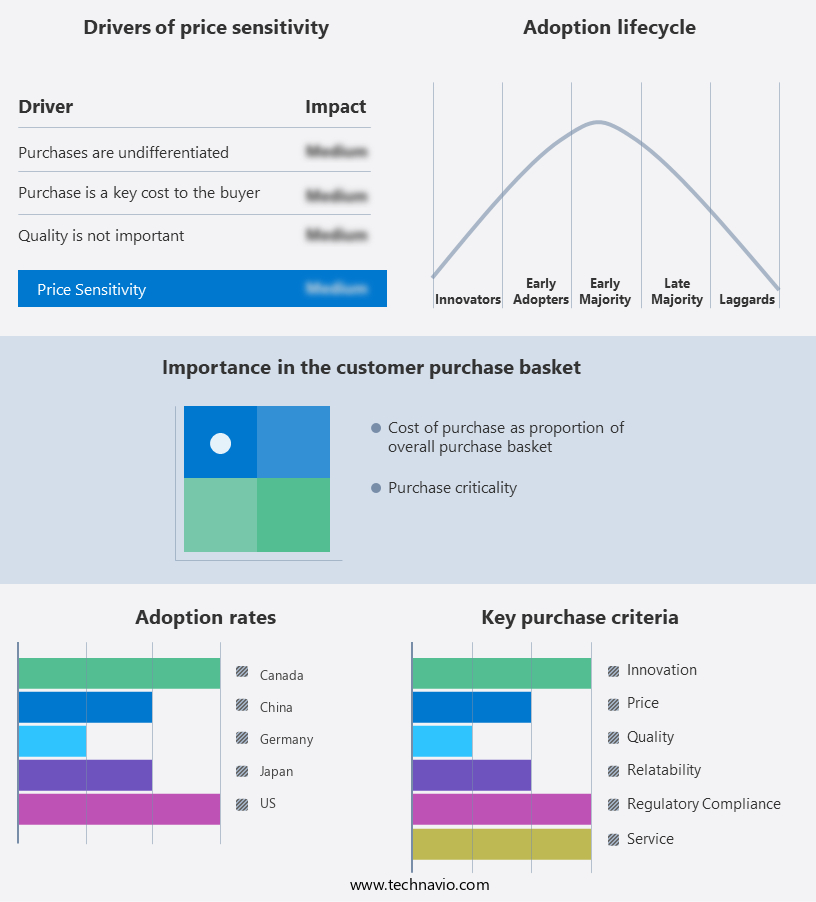
Customer Landscape of Metal Machining Industry
Competitive Intelligence by Technavio Analysis: Leading Players in the Metal Machining Market
Companies are implementing various strategies, such as strategic alliances, metal machining market forecast, partnerships, mergers and acquisitions, geographical expansion, and product/service launches, to enhance their presence in the industry.
Amada Co. Ltd. - This company specializes in providing advanced metal machining tools, including Hyper saws, Pulse Cutting Band Saw Machines, and Semi-Automatic General Purpose Band Saw Machines, catering to various industries with precision and efficiency. These innovative tools ensure optimal cutting performance and productivity.
The industry research and growth report includes detailed analyses of the competitive landscape of the market and information about key companies, including:
- Amada Co. Ltd.
- Chiron Group SE
- DMG Mori Co. Ltd.
- Doosan Machine Tools Co. Ltd.
- Fanuc Corporation
- GF Machining Solutions
- Haas Automation Inc.
- Hardinge Inc.
- Hyundai WIA Corporation
- JTEKT Corporation
- Kennametal Inc.
- Makino Milling Machine Co. Ltd.
- Mazak Corporation
- Mitsubishi Heavy Industries Ltd.
- Okuma Corporation
- Sandvik AB
- Shenyang Machine Tool Co. Ltd.
- Tornos SA
- Trumpf GmbH + Co. KG
- Hurco Companies Inc.
Qualitative and quantitative analysis of companies has been conducted to help clients understand the wider business environment as well as the strengths and weaknesses of key industry players. Data is qualitatively analyzed to categorize companies as pure play, category-focused, industry-focused, and diversified; it is quantitatively analyzed to categorize companies as dominant, leading, strong, tentative, and weak.
Recent Development and News in Metal Machining Market
- In August 2024, Haas Automation, a leading metal machining solutions provider, announced the launch of their new HAAS UMC-750 universal machining center. This advanced machine, featuring a 5-axis indexing head and a 30,000 RPM spindle, significantly expanded Haas' product portfolio and catered to the increasing demand for high-precision metal machining solutions (Haas Automation press release).
- In November 2024, global metal machining giants, Makino and DMG Mori, entered into a strategic partnership to develop and commercialize advanced metal machining technologies. The collaboration aimed to combine Makino's expertise in high-speed machining and DMG Mori's knowledge in 5-axis machining, creating innovative solutions for the automotive and aerospace industries (Bloomberg).
- In March 2025, Sandvik, a Swedish engineering group, completed the acquisition of American machine tool manufacturer, Seco Tools, for approximately SEK 5.4 billion (€525 million). This acquisition significantly strengthened Sandvik's position in the market by adding Seco's extensive product portfolio and global presence (Sandvik press release).
- In May 2025, the European Union approved the Horizon Europe research and innovation program, which includes a significant focus on advanced manufacturing technologies, including metal machining. The €95.5 billion program is expected to create numerous opportunities for metal machining companies to collaborate with research institutions and develop cutting-edge technologies (European Commission press release).
Dive into Technavio’s robust research methodology, blending expert interviews, extensive data synthesis, and validated models for unparalleled Metal Machining Market insights. See full methodology.
|
Market Scope |
|
|
Report Coverage |
Details |
|
Page number |
208 |
|
Base year |
2024 |
|
Historic period |
2019-2023 |
|
Forecast period |
2025-2029 |
|
Growth momentum & CAGR |
Accelerate at a CAGR of 3.7% |
|
Market growth 2025-2029 |
USD 16.6 billion |
|
Market structure |
Fragmented |
|
YoY growth 2024-2025(%) |
3.6 |
|
Key countries |
US, Canada, Germany, UK, Italy, France, China, India, Japan, Brazil, Egypt, UAE, Oman, Argentina, KSA, UAE, Brazil, and Rest of World (ROW) |
|
Competitive landscape |
Leading Companies, Market Positioning of Companies, Competitive Strategies, and Industry Risks |
Why Choose Technavio for Metal Machining Market Insights?
"Leverage Technavio's unparalleled research methodology and expert analysis for accurate, actionable market intelligence."
The market is experiencing significant growth, driven by advancements in technology and the increasing demand for precision components in various industries. CNC milling machines are a crucial part of this market, with operation parameters playing a vital role in ensuring efficient and effective production. High-speed machining (HSM) is a key trend, requiring optimization techniques to minimize surface roughness and maximize tool life. Measuring surface roughness in metal cutting is essential for quality control, with advanced instruments offering sub-micron resolution. Cutting fluids significantly influence tool life and performance, with advanced formulations offering up to 30% longer tool life compared to traditional coolants. Machining process monitoring strategies, such as design of experiments for machining parameter selection, enable manufacturers to optimize processes and reduce scrap rates. Additive manufacturing (AM) in metal parts production is another trend, offering increased design freedom and reduced lead times. Machining process optimization using AI and machine learning algorithms can further enhance productivity, with predictive maintenance strategies based on machine data reducing downtime by up to 20%. Geometric dimensioning and tolerancing (GD&T) ensure component accuracy, while automated quality inspection systems provide real-time feedback for continuous improvement. Thermal management in HSM is crucial for maintaining consistent process conditions and improving overall efficiency. Advanced cutting tool design, incorporating materials like ceramics and diamond coatings, can improve tool life by up to 50%. Workholding solutions also impact dimensional accuracy, with vibration reduction technologies offering up to 10% improvement. Process capability analysis for machining operations enables manufacturers to meet compliance requirements and improve operational planning. Overall, these advancements contribute to the market's continuous growth and innovation.
What are the Key Data Covered in this Metal Machining Market Research and Growth Report?
-
What is the expected growth of the Metal Machining Market between 2025 and 2029?
-
USD 16.6 billion, at a CAGR of 3.7%
-
-
What segmentation does the market report cover?
-
The report is segmented by Application (Automotive, Construction, Aerospace, and Others), Type (Laser cutting machine, Plasma cutting machine, Flame cutting machine, and Waterjet cutting machines), Geography (APAC, North America, Europe, South America, and Middle East and Africa), Process Type (Turning, Milling, Drilling, and Grinding), and Material (Steel, Aluminum, Copper, and Titanium)
-
-
Which regions are analyzed in the report?
-
APAC, North America, Europe, South America, and Middle East and Africa
-
-
What are the key growth drivers and market challenges?
-
Increased investment in infrastructure, Fluctuations in raw material prices of metal machining
-
-
Who are the major players in the Metal Machining Market?
-
Amada Co. Ltd., Chiron Group SE, DMG Mori Co. Ltd., Doosan Machine Tools Co. Ltd., Fanuc Corporation, GF Machining Solutions, Haas Automation Inc., Hardinge Inc., Hyundai WIA Corporation, JTEKT Corporation, Kennametal Inc., Makino Milling Machine Co. Ltd., Mazak Corporation, Mitsubishi Heavy Industries Ltd., Okuma Corporation, Sandvik AB, Shenyang Machine Tool Co. Ltd., Tornos SA, Trumpf GmbH + Co. KG, and Hurco Companies Inc.
-
We can help! Our analysts can customize this metal machining market research report to meet your requirements.
 RIA -
RIA - 
