

Methyl Methacrylate Adhesives Market Analysis APAC, Europe, North America, Middle East and Africa, South America - China, US, Japan, Germany, South Korea - Size and Forecast 2024-2028

Methyl Methacrylate Adhesives Market Analysis APAC, Europe, North America, Middle East and Africa, South America - China, US, Japan, Germany, South Korea - Size and Forecast 2024-2028

Published: Jul 2024 154 Pages SKU: IRTNTR74067

Market Overview at a Glance

$549.4 Mn
Market Opportunity
7.08%
CAGR
6.49
YoY growth 2023-2024(%)

Methyl Methacrylate Adhesives Market Size 2024-2028

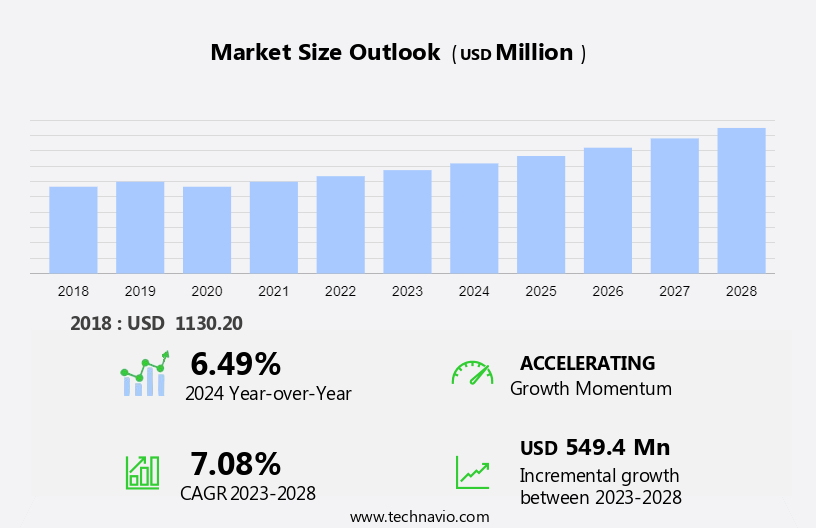
The methyl methacrylate adhesives market size is forecast to increase by USD 549.4 million, at a CAGR of 7.08% between 2023 and 2028.

  • The market is experiencing significant growth due to several key trends. The increasing demand from developing countries, particularly in Asia Pacific, is driving market expansion. Additionally, the rise in research and development activities aimed at improving product performance and sustainability is fueling innovation. Furthermore, MMA adhesives are utilized in the bonding of metals, including aluminum, steel and stainless steel in various industries. However, stringent regulations and policies pose challenges to market growth. Producers must comply with regulations to ensure product safety and environmental sustainability. Despite these challenges, the future looks promising for the market, with opportunities arising from increasing applications in various industries such as construction, automotive, and electronics. This market analysis report provides a comprehensive study of these trends and their impact on the market, offering valuable insights to stakeholders and industry participants.

What will be the Size of the Methyl Methacrylate Adhesives Market During the Forecast Period?
Methyl Methacrylate Adhesives Market Size

 Request Free Sample

  • The market encompasses the production and supply of polymethyl methacrylate (PMMA) adhesives, which are widely used in various industries due to their superior bonding capabilities and resistance to harsh environments. Key end-use sectors include automotive and transportation, where MMA adhesives are employed in manufacturing automotive components such as deflectors, bumpers, roofs, composite tanks, and car seats. Additionally, MMA adhesives find applications in the production of polymers like ABS, PVC, and acrylics, as well as In the electronics industry for bonding smart phone screens and electronics parts.
  • The global MMA adhesives market is expected to grow significantly due to increasing demand from these end-use sectors, as well as the ongoing shift towards lightweight and durable materials in various industries. The market's expansion is also driven by the growing production of plastic waste, which is being repurposed into new products using MMA adhesives.

How is this Methyl Methacrylate Adhesives Industry segmented and which is the largest segment?

The methyl methacrylate adhesives industry research report provides comprehensive data (region-wise segment analysis), with forecasts and estimates in "USD million" for the period 2024-2028, as well as historical data from 2018-2022 for the following segments.

  • End-user
    • Automotive and transportation
    • Construction
    • Marine
    • Others
  • Geography
    • APAC
      • China
      • Japan
      • South Korea
    • Europe
      • Germany
    • North America
      • US
    • Middle East and Africa
    • South America

By End-user Insights

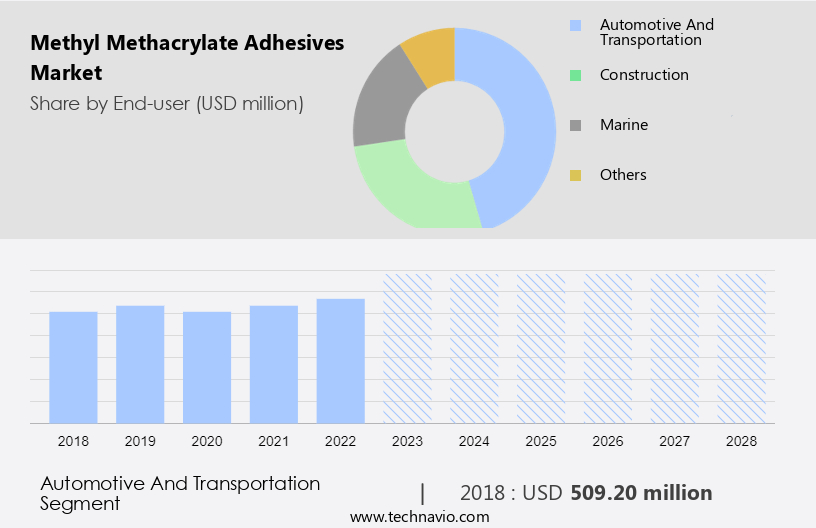
  • The automotive and transportation segment is estimated to witness significant growth during the forecast period.

Methyl methacrylate adhesives offer strong bonding solutions for metal and composite materials, finding extensive applications in various industries. In automotive manufacturing, these adhesives are used for bonding wheel arches, bumpers, roof panels, and internal fixtures, contributing to weight reduction, increased fuel efficiency, and enhanced aesthetic appeal. The aerospace industry utilizes methyl methacrylate adhesives for honeycomb filling, shimming, and structural bonding of aircraft components, fostering market growth. Additionally, these adhesives are employed in wind energy applications, construction, engineering, and electronics industries, offering benefits such as eco-friendliness, non-toxicity, and high performance. Polymers like ABS, PVC, acrylics, aluminum, stainless steel, and steel are common substrates for methyl methacrylate adhesives. The paints and coatings industry and medical sector also leverage these adhesives for their bonding needs.
Methyl Methacrylate Adhesives Market Size

Get a glance at the market report of share of various segments Request Free Sample

The automotive and transportation segment was valued at USD 509.20 million in 2018 and showed a gradual increase during the forecast period.

Regional Analysis

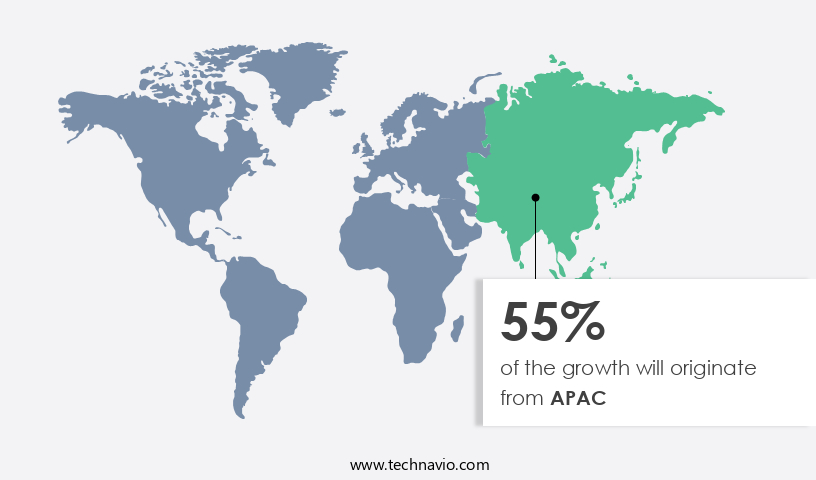
  • APAC is estimated to contribute 55% to the growth of the global market during the forecast period.

Technavio's analysts have elaborately explained the regional trends and drivers that shape the market during the forecast period.
Methyl Methacrylate Adhesives Market Share by Geography

For more insights on the market size of various regions, Request Free Sample

Methyl methacrylate adhesives play a significant role in various industries, including automotive, construction, and marine. The expansion of these sectors in Asia Pacific countries such as China, India, Japan, South Korea, and Indonesia is anticipated to propel the regional market. The proliferation of automotive manufacturing plants is a primary driver of market growth. APAC leads the global automotive production and is poised to maintain its dominance. Furthermore, the rise in infrastructure and residential construction In the region is expected to boost the market. 

Applications of these adhesives include metal, composites, deflectors, bumpers, roofs, composite tanks, blades, car seats, instrument panels, trucks, cars, rails, buses, tanks, wind energy, building & construction, lightweight vehicles, energy-efficient vehicles, high-performance vehicles, construction products, engineering adhesives, and various industries such as paints and coatings, medical, and wind energy. Polymers like ABS, PVC, acrylics, and metals, including aluminum, stainless steel, and steel, are common substrates for methyl methacrylate adhesives. The market is expected to grow due to the increasing demand for eco-friendly, non-toxic, and sustainable adhesives.

Market Dynamics

Our researchers analyzed the data with 2023 as the base year, along with the key drivers, trends, and challenges. A holistic analysis of drivers will help companies refine their marketing strategies to gain a competitive advantage.

What are the key market drivers leading to the rise In the adoption of Methyl Methacrylate Adhesives Industry?

Increasing demand from developing countries is the key driver of the market.

  • Methyl methacrylate adhesives, derived from polymethyl methacrylate, play a vital role in various industries, including metal and composite manufacturing, automotive, and construction. Developing countries like China, India, Indonesia, Brazil, and Mexico are major contributors to the global methyl methacrylate market due to factors such as the availability of raw materials, inexpensive labor, ample land, and lower transportation costs. These factors, coupled with less stringent regulations, make these countries attractive locations for methyl methacrylate adhesives production. The construction industry's growth, driven by urbanization and improved living standards in APAC, significantly impacts the demand for methyl methacrylate adhesives. In the automotive sector, these adhesives are used for bonding composite tanks, car seats, instrument panels, rails, and other components in trucks and cars.
  • In the wind energy industry, methyl methacrylate adhesives are employed for manufacturing wind turbine blades. Additionally, the production of lightweight vehicles and energy-efficient and high-performance vehicles necessitates the use of lightweight adhesives, further boosting market growth. The methyl methacrylate market also caters to the needs of the eco-friendly, non-toxic, and sustainable adhesives sector. In the composite materials industry, methyl methacrylate adhesives are used as engineering adhesives for bonding ABS, PVC, acrylics, metals (aluminum, stainless steel, and steel), and other substrates. Furthermore, methyl methacrylate adhesives find applications In the paints and coatings industry, electronics, and medical industry.

What are the market trends shaping the Methyl Methacrylate Adhesives Industry?

An increase in R&D activities is the upcoming market trend.

  • Methyl methacrylate adhesives, also known as Polymethyl methacrylate (PMMA) adhesives, are gaining significant traction in various industries due to their versatility and superior bonding properties. In the US, Germany, the UK, and Canada, technological advancements are driving the growth of this market. For instance, 3D vision systems are increasingly being used to inspect adhesive applications that cannot be examined by 2D systems. While 2D machines can measure the footprint of adhesives, 3D systems provide accurate volume determination and feature analysis. In October 2018, Sika, a leading adhesive manufacturer, launched two new structural methyl methacrylate adhesives, Sikafast-306 and Sikafast-308, for industrial assembly and transportation applications.
  • These adhesives, based on toughened methyl methacrylate technology, offer excellent adhesion to various substrates, including metals (aluminum, stainless steel, steel), composites, and plastics (ABS, PVC, acrylics). Methyl methacrylate adhesives find extensive applications in various sectors, including automotive (car seats, instrument panels, rails, bumpers, trucks, and cars), building & construction (roofs, composite tanks, and windows), wind energy, and general assembly industries. They are also used In the production of paints and coatings, electronic parts, and medical equipment. The increasing demand for lightweight, energy-efficient, and high-performance vehicles and construction products is further fueling the growth of the market. Additionally, the shift towards eco-friendly, non-toxic, and sustainable adhesives is expected to create new opportunities for market participants.

What challenges does the Methyl Methacrylate Adhesives Industry face during its growth?

Stringent regulations and policies are a key challenge affecting the industry growth.

  • Methyl methacrylate adhesives, derived from polymethyl methacrylate, play a significant role in various industries, including metal, composites, and automotive. Applications range from deflectors, bumpers, roofs, composite tanks, blades, car seats, instrument panels, trucks, cars, rails, buses, tanks, and wind energy. However, stringent regulations on the volatile organic compound (VOC) content in adhesives by the Environmental Protection Agency (EPA) and REACH pose challenges to market growth. In the US, for instance, the Massachusetts Department of Environmental Protection (MassDEP) introduced Regulation 310 CMR 7.18(30) in August 2013, setting VOC limits for industrial and commercial adhesives and adhesive primers. Europe's EU-No 10/2011 regulation focuses on plastic materials and articles, including adhesives, in indirect food additives.
  • These regulations and policies may hinder market expansion during the forecast period. In the automotive sector, lightweight vehicles, energy-efficient vehicles, and high-performance vehicles require eco-friendly, non-toxic, and sustainable adhesives. Substrates like ABS, PVC, acrylics, metals (aluminum, stainless steel, steel), and paints & coatings are common In the industry. The market serves the wind energy, building & construction, and general assembly industries, among others. companies must comply with these regulations to remain competitive.

Exclusive Customer Landscape

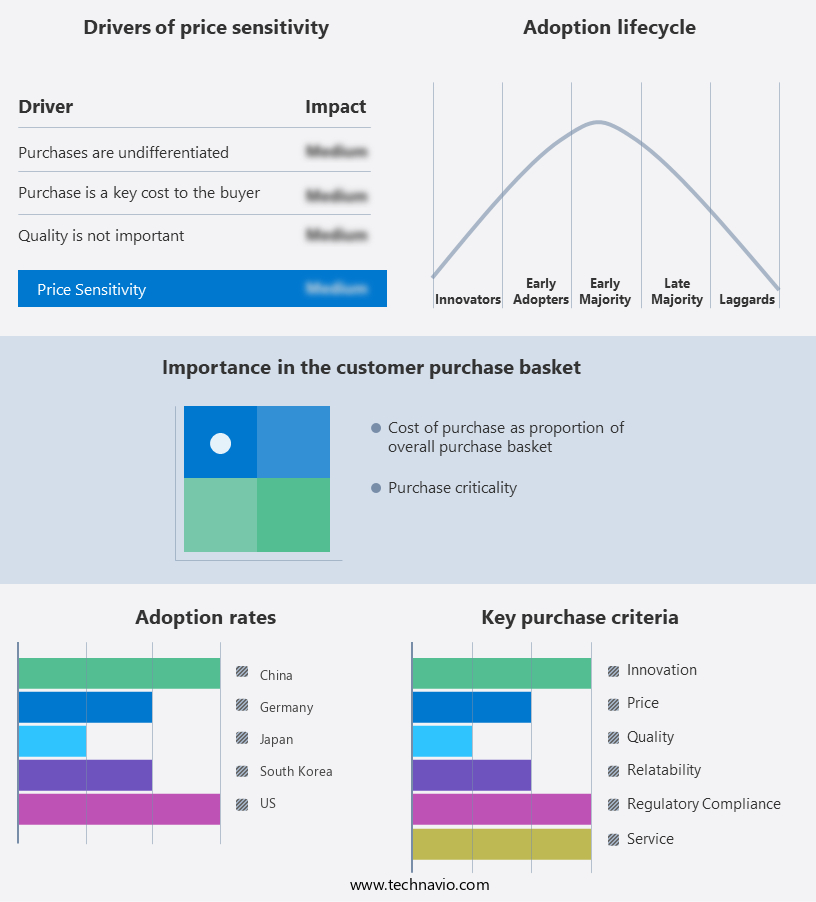
The methyl methacrylate adhesives market forecasting report includes the adoption lifecycle of the market, covering from the innovator's stage to the laggard's stage. It focuses on adoption rates in different regions based on penetration. Furthermore, the methyl methacrylate adhesives market report also includes key purchase criteria and drivers of price sensitivity to help companies evaluate and develop their market growth analysis strategies.
Methyl Methacrylate Adhesives Market Share by Geography

 Customer Landscape

Key Companies & Market Insights

Companies are implementing various strategies, such as strategic alliances, methyl methacrylate adhesives market forecast, partnerships, mergers and acquisitions, geographical expansion, and product/service launches, to enhance their presence In the industry.

The industry research and growth report includes detailed analyses of the competitive landscape of the market and information about key companies, including:

  • 3M Co.
  • Arkema SA
  • Chemique Adhesives
  • DELO Industrie Klebstoffe GmbH and Co. KGaA
  • EMME ESSE M.S. Srl
  • Engineered Bonding Solutions LLC
  • H.B. Fuller Co.
  • Henkel AG and Co. KGaA
  • Hernon Manufacturing Inc.
  • Huntsman Corp.
  • IPS Corp.
  • ITW Performance Polymers
  • Kisling AG
  • L and L Products Inc.
  • NOVA Chemicals Corp.
  • Parker Hannifin Corp.
  • Parson Adhesives Inc.
  • Permabond LLC
  • Scott Bader Co. Ltd.
  • Sika AG

Qualitative and quantitative analysis of companies has been conducted to help clients understand the wider business environment as well as the strengths and weaknesses of key industry players. Data is qualitatively analyzed to categorize companies as pure play, category-focused, industry-focused, and diversified; it is quantitatively analyzed to categorize companies as dominant, leading, strong, tentative, and weak.

Research Analyst Overview

Methyl methacrylate (MMA) adhesives have gained significant traction in various industries due to their versatile properties and ability to bond different materials effectively. These adhesives are widely used In the manufacturing of metal and composite components in sectors such as automotive, transportation, construction, and wind energy. In the automotive industry, MMA adhesives play a crucial role In the production of deflectors, bumpers, roofs, composite tanks, blades, car seats, and instrument panels. They provide strong bonding solutions for metals like aluminum, stainless steel, and steel, ensuring the durability and strength required for these applications. In addition, MMA adhesives are increasingly being used In the production of lightweight vehicles, energy-efficient vehicles, and high-performance vehicles, contributing to the reduction of plastic waste and the promotion of sustainability.

Further, the transportation sector also benefits from MMA adhesives In the manufacturing of rails, buses, and trucks. These adhesives ensure the efficient bonding of various materials, contributing to the overall strength and durability of these structures. Furthermore, In the wind energy industry, MMA adhesives are utilized extensively In the production of wind turbine blades, providing reliable bonding solutions for the composite materials used in blade manufacturing. MMA adhesives are also widely used In the building & construction industry for general assembly applications. They offer excellent bonding capabilities for a range of substrates, including engineering adhesives, plastics like ABS, PVC, and acrylics, and various metals.

In addition, their eco-friendly, non-toxic, and sustainable properties make them an attractive option for the construction industry, where environmental concerns are increasingly important. The paints and coatings industry also benefits from MMA adhesives, with their use In the production of smart phone screens and electronics parts. The adhesives provide strong, reliable bonds while ensuring the flexibility and durability required for these applications. The global production capacity for MMA adhesives continues to grow, driven by the increasing demand for lightweight, durable, and eco-friendly bonding solutions across various industries. The market for MMA adhesives is expected to expand further as more industries recognize their benefits and as technological advancements continue to improve their performance and sustainability.

Market Scope

Report Coverage

Details

Page number

154

Base year

2023

Historic period

2018-2022

Forecast period

2024-2028

Growth momentum & CAGR

Accelerate at a CAGR of 7.08%

Market Growth 2024-2028

USD 549.4 million

Market structure

Fragmented

YoY growth 2023-2024(%)

6.49

Key countries

China, US, Japan, Germany, and South Korea

Competitive landscape

Leading Companies, Market Positioning of Companies, Competitive Strategies, and Industry Risks

Request Free Sample

What are the Key Data Covered in this Methyl Methacrylate Adhesives Market Research and Growth Report?

  • CAGR of the Methyl Methacrylate Adhesives industry during the forecast period
  • Detailed information on factors that will drive the market growth and forecasting between 2024 and 2028
  • Precise estimation of the size of the market and its contribution of the industry in focus to the parent market
  • Accurate predictions about upcoming growth and trends and changes in consumer behaviour
  • Growth of the market across APAC, Europe, North America, Middle East and Africa, and South America
  • Thorough analysis of the market's competitive landscape and detailed information about companies
  • Comprehensive analysis of factors that will challenge the methyl methacrylate adhesives market growth of industry companies

We can help! Our analysts can customize this methyl methacrylate adhesives market research report to meet your requirements.

Get in touch

1 Executive Summary

  • 1.1 Market overview
    • Executive Summary - Chart on Market Overview
    • Executive Summary - Data Table on Market Overview
    • Executive Summary - Chart on Global Market Characteristics
    • Executive Summary - Chart on Market by Geography
    • Executive Summary - Chart on Market Segmentation by End-user
    • Executive Summary - Chart on Incremental Growth
    • Executive Summary - Data Table on Incremental Growth
    • Executive Summary - Chart on Company Market Positioning

2 Market Landscape

  • 2.1 Market ecosystem
    • Parent Market
    • Data Table on - Parent Market
  • 2.2 Market characteristics
    • Market characteristics analysis
  • 2.3 Value chain analysis
    • Value Chain Analysis

3 Market Sizing

  • 3.1 Market definition
    • Offerings of companies included in the market definition
  • 3.2 Market segment analysis
    • Market segments
  • 3.3 Market size 2023
    • 3.4 Market outlook: Forecast for 2023-2028
      • Chart on Global - Market size and forecast 2023-2028 ($ million)
      • Data Table on Global - Market size and forecast 2023-2028 ($ million)
      • Chart on Global Market: Year-over-year growth 2023-2028 (%)
      • Data Table on Global Market: Year-over-year growth 2023-2028 (%)

    4 Historic Market Size

    • 4.1 Global Methyl Methacrylate Adhesives Market 2018 - 2022
      • Historic Market Size - Data Table on Global Methyl Methacrylate Adhesives Market 2018 - 2022 ($ million)
    • 4.2 End-user segment analysis 2018 - 2022
      • Historic Market Size - End-user Segment 2018 - 2022 ($ million)
    • 4.3 Geography segment analysis 2018 - 2022
      • Historic Market Size - Geography Segment 2018 - 2022 ($ million)
    • 4.4 Country segment analysis 2018 - 2022
      • Historic Market Size - Country Segment 2018 - 2022 ($ million)

    5 Five Forces Analysis

    • 5.1 Five forces summary
      • Five forces analysis - Comparison between 2023 and 2028
    • 5.2 Bargaining power of buyers
      • Bargaining power of buyers - Impact of key factors 2023 and 2028
    • 5.3 Bargaining power of suppliers
      • Bargaining power of suppliers - Impact of key factors in 2023 and 2028
    • 5.4 Threat of new entrants
      • Threat of new entrants - Impact of key factors in 2023 and 2028
    • 5.5 Threat of substitutes
      • Threat of substitutes - Impact of key factors in 2023 and 2028
    • 5.6 Threat of rivalry
      • Threat of rivalry - Impact of key factors in 2023 and 2028
    • 5.7 Market condition
      • Chart on Market condition - Five forces 2023 and 2028

    6 Market Segmentation by End-user

    • 6.1 Market segments
      • Chart on End-user - Market share 2023-2028 (%)
      • Data Table on End-user - Market share 2023-2028 (%)
    • 6.2 Comparison by End-user
      • Chart on Comparison by End-user
      • Data Table on Comparison by End-user
    • 6.3 Automotive and transportation - Market size and forecast 2023-2028
      • Chart on Automotive and transportation - Market size and forecast 2023-2028 ($ million)
      • Data Table on Automotive and transportation - Market size and forecast 2023-2028 ($ million)
      • Chart on Automotive and transportation - Year-over-year growth 2023-2028 (%)
      • Data Table on Automotive and transportation - Year-over-year growth 2023-2028 (%)
    • 6.4 Construction - Market size and forecast 2023-2028
      • Chart on Construction - Market size and forecast 2023-2028 ($ million)
      • Data Table on Construction - Market size and forecast 2023-2028 ($ million)
      • Chart on Construction - Year-over-year growth 2023-2028 (%)
      • Data Table on Construction - Year-over-year growth 2023-2028 (%)
    • 6.5 Marine - Market size and forecast 2023-2028
      • Chart on Marine - Market size and forecast 2023-2028 ($ million)
      • Data Table on Marine - Market size and forecast 2023-2028 ($ million)
      • Chart on Marine - Year-over-year growth 2023-2028 (%)
      • Data Table on Marine - Year-over-year growth 2023-2028 (%)
    • 6.6 Others - Market size and forecast 2023-2028
      • Chart on Others - Market size and forecast 2023-2028 ($ million)
      • Data Table on Others - Market size and forecast 2023-2028 ($ million)
      • Chart on Others - Year-over-year growth 2023-2028 (%)
      • Data Table on Others - Year-over-year growth 2023-2028 (%)
    • 6.7 Market opportunity by End-user
      • Market opportunity by End-user ($ million)
      • Data Table on Market opportunity by End-user ($ million)

    7 Customer Landscape

    • 7.1 Customer landscape overview
      • Analysis of price sensitivity, lifecycle, customer purchase basket, adoption rates, and purchase criteria

    8 Geographic Landscape

    • 8.1 Geographic segmentation
      • Chart on Market share by geography 2023-2028 (%)
      • Data Table on Market share by geography 2023-2028 (%)
    • 8.2 Geographic comparison
      • Chart on Geographic comparison
      • Data Table on Geographic comparison
    • 8.3 APAC - Market size and forecast 2023-2028
      • Chart on APAC - Market size and forecast 2023-2028 ($ million)
      • Data Table on APAC - Market size and forecast 2023-2028 ($ million)
      • Chart on APAC - Year-over-year growth 2023-2028 (%)
      • Data Table on APAC - Year-over-year growth 2023-2028 (%)
    • 8.4 Europe - Market size and forecast 2023-2028
      • Chart on Europe - Market size and forecast 2023-2028 ($ million)
      • Data Table on Europe - Market size and forecast 2023-2028 ($ million)
      • Chart on Europe - Year-over-year growth 2023-2028 (%)
      • Data Table on Europe - Year-over-year growth 2023-2028 (%)
    • 8.5 North America - Market size and forecast 2023-2028
      • Chart on North America - Market size and forecast 2023-2028 ($ million)
      • Data Table on North America - Market size and forecast 2023-2028 ($ million)
      • Chart on North America - Year-over-year growth 2023-2028 (%)
      • Data Table on North America - Year-over-year growth 2023-2028 (%)
    • 8.6 Middle East and Africa - Market size and forecast 2023-2028
      • Chart on Middle East and Africa - Market size and forecast 2023-2028 ($ million)
      • Data Table on Middle East and Africa - Market size and forecast 2023-2028 ($ million)
      • Chart on Middle East and Africa - Year-over-year growth 2023-2028 (%)
      • Data Table on Middle East and Africa - Year-over-year growth 2023-2028 (%)
    • 8.7 South America - Market size and forecast 2023-2028
      • Chart on South America - Market size and forecast 2023-2028 ($ million)
      • Data Table on South America - Market size and forecast 2023-2028 ($ million)
      • Chart on South America - Year-over-year growth 2023-2028 (%)
      • Data Table on South America - Year-over-year growth 2023-2028 (%)
    • 8.8 China - Market size and forecast 2023-2028
      • Chart on China - Market size and forecast 2023-2028 ($ million)
      • Data Table on China - Market size and forecast 2023-2028 ($ million)
      • Chart on China - Year-over-year growth 2023-2028 (%)
      • Data Table on China - Year-over-year growth 2023-2028 (%)
    • 8.9 US - Market size and forecast 2023-2028
      • Chart on US - Market size and forecast 2023-2028 ($ million)
      • Data Table on US - Market size and forecast 2023-2028 ($ million)
      • Chart on US - Year-over-year growth 2023-2028 (%)
      • Data Table on US - Year-over-year growth 2023-2028 (%)
    • 8.10 Japan - Market size and forecast 2023-2028
      • Chart on Japan - Market size and forecast 2023-2028 ($ million)
      • Data Table on Japan - Market size and forecast 2023-2028 ($ million)
      • Chart on Japan - Year-over-year growth 2023-2028 (%)
      • Data Table on Japan - Year-over-year growth 2023-2028 (%)
    • 8.11 Germany - Market size and forecast 2023-2028
      • Chart on Germany - Market size and forecast 2023-2028 ($ million)
      • Data Table on Germany - Market size and forecast 2023-2028 ($ million)
      • Chart on Germany - Year-over-year growth 2023-2028 (%)
      • Data Table on Germany - Year-over-year growth 2023-2028 (%)
    • 8.12 South Korea - Market size and forecast 2023-2028
      • Chart on South Korea - Market size and forecast 2023-2028 ($ million)
      • Data Table on South Korea - Market size and forecast 2023-2028 ($ million)
      • Chart on South Korea - Year-over-year growth 2023-2028 (%)
      • Data Table on South Korea - Year-over-year growth 2023-2028 (%)
    • 8.13 Market opportunity by geography
      • Market opportunity by geography ($ million)
      • Data Tables on Market opportunity by geography ($ million)

    9 Drivers, Challenges, and Opportunity/Restraints

    • 9.1 Market drivers
      • 9.2 Market challenges
        • 9.3 Impact of drivers and challenges
          • Impact of drivers and challenges in 2023 and 2028
        • 9.4 Market opportunities/restraints

          10 Competitive Landscape

          • 10.1 Overview
            • 10.2 Competitive Landscape
              • Overview on criticality of inputs and factors of differentiation
            • 10.3 Landscape disruption
              • Overview on factors of disruption
            • 10.4 Industry risks
              • Impact of key risks on business

            11 Competitive Analysis

            • 11.1 Companies profiled
              • Companies covered
            • 11.2 Market positioning of companies
              • Matrix on companies position and classification
            • 3M Co.
              • 3M Co. - Overview
              • 3M Co. - Business segments
              • 3M Co. - Key news
              • 3M Co. - Key offerings
              • 3M Co. - Segment focus
            • 11.4 Arkema SA
              • Arkema SA - Overview
              • Arkema SA - Business segments
              • Arkema SA - Key news
              • Arkema SA - Key offerings
              • Arkema SA - Segment focus
            • 11.5 H.B. Fuller Co.
              • H.B. Fuller Co. - Overview
              • H.B. Fuller Co. - Business segments
              • H.B. Fuller Co. - Key news
              • H.B. Fuller Co. - Key offerings
              • H.B. Fuller Co. - Segment focus
            • 11.6 Henkel AG and Co. KGaA
              • Henkel AG and Co. KGaA - Overview
              • Henkel AG and Co. KGaA - Business segments
              • Henkel AG and Co. KGaA - Key news
              • Henkel AG and Co. KGaA - Key offerings
              • Henkel AG and Co. KGaA - Segment focus
            • 11.7 Huntsman Corp.
              • Huntsman Corp. - Overview
              • Huntsman Corp. - Business segments
              • Huntsman Corp. - Key news
              • Huntsman Corp. - Key offerings
              • Huntsman Corp. - Segment focus
            • 11.8 NOVA Chemicals Corp.
              • NOVA Chemicals Corp. - Overview
              • NOVA Chemicals Corp. - Product / Service
              • NOVA Chemicals Corp. - Key offerings
            • 11.9 Parker Hannifin Corp.
              • Parker Hannifin Corp. - Overview
              • Parker Hannifin Corp. - Business segments
              • Parker Hannifin Corp. - Key news
              • Parker Hannifin Corp. - Key offerings
              • Parker Hannifin Corp. - Segment focus
            • 11.10 Parson Adhesives Inc.
              • Parson Adhesives Inc. - Overview
              • Parson Adhesives Inc. - Product / Service
              • Parson Adhesives Inc. - Key offerings
            • 11.11 Scott Bader Co. Ltd.
              • Scott Bader Co. Ltd. - Overview
              • Scott Bader Co. Ltd. - Product / Service
              • Scott Bader Co. Ltd. - Key news
              • Scott Bader Co. Ltd. - Key offerings
            • 11.12 Sika AG
              • Sika AG - Overview
              • Sika AG - Business segments
              • Sika AG - Key news
              • Sika AG - Key offerings
              • Sika AG - Segment focus

            12 Appendix

            • 12.1 Scope of the report
              • 12.2 Inclusions and exclusions checklist
                • Inclusions checklist
                • Exclusions checklist
              • 12.3 Currency conversion rates for US$
                • Currency conversion rates for US$
              • 12.4 Research methodology
                • Research methodology
              • 12.5 Data procurement
                • Information sources
              • 12.6 Data validation
                • Data validation
              • 12.7 Validation techniques employed for market sizing
                • Validation techniques employed for market sizing
              • 12.8 Data synthesis
                • Data synthesis
              • 12.9 360 degree market analysis
                • 360 degree market analysis
              • 12.10 List of abbreviations
                • List of abbreviations

              Research Methodology

              Technavio presents a detailed picture of the market by way of study, synthesis, and summation of data from multiple sources. The analysts have presented the various facets of the market with a particular focus on identifying the key industry influencers. The data thus presented is comprehensive, reliable, and the result of extensive research, both primary and secondary.

              INFORMATION SOURCES

              Primary sources

              • Manufacturers and suppliers
              • Channel partners
              • Industry experts
              • Strategic decision makers

              Secondary sources

              • Industry journals and periodicals
              • Government data
              • Financial reports of key industry players
              • Historical data
              • Press releases

              DATA ANALYSIS

              Data Synthesis

              • Collation of data
              • Estimation of key figures
              • Analysis of derived insights

              Data Validation

              • Triangulation with data models
              • Reference against proprietary databases
              • Corroboration with industry experts

              REPORT WRITING

              Qualitative

              • Market drivers
              • Market challenges
              • Market trends
              • Five forces analysis

              Quantitative

              • Market size and forecast
              • Market segmentation
              • Geographical insights
              • Competitive landscape

              Interested in this report?

              Get your sample now to see our research methodology and insights!

              Download Now

              Frequently Asked Questions

              Methyl Methacrylate Adhesives market growth will increase by $ 549.4 mn during 2024-2028 .

              The Methyl Methacrylate Adhesives market is expected to grow at a CAGR of 7.08% during 2024-2028 .

              Methyl Methacrylate Adhesives market is segmented by End-user( Automotive and transportation, Construction, Marine, Others)

              3M Co., Arkema SA, Chemique Adhesives, DELO Industrie Klebstoffe GmbH and Co. KGaA, EMME ESSE M.S. Srl, Engineered Bonding Solutions LLC, H.B. Fuller Co., Henkel AG and Co. KGaA, Hernon Manufacturing Inc., Huntsman Corp., IPS Corp., ITW Performance Polymers, Kisling AG, L and L Products Inc., NOVA Chemicals Corp., Parker Hannifin Corp., Parson Adhesives Inc., Permabond LLC, Scott Bader Co. Ltd., Sika AG are a few of the key vendors in the Methyl Methacrylate Adhesives market.

              APAC will register the highest growth rate of 55% among the other regions. Therefore, the Methyl Methacrylate Adhesives market in APAC is expected to garner significant business opportunities for the vendors during the forecast period.

              China, US, Japan, Germany, South Korea

              • Increasing demand from developing countriesDeveloping countries such as China is the driving factor this market.
              • India is the driving factor this market.
              • Indonesia is the driving factor this market.
              • Brazil is the driving factor this market.
              • and Mexico are the major contributors to the global methyl methacrylate market. Many vendors of methyl methacrylate adhesives are shifting their manufacturing activities to these developing countries. Factors such as availability of raw materials is the driving factor this market.
              • inexpensive labor is the driving factor this market.
              • availability of land is the driving factor this market.
              • low transportation costs is the driving factor this market.
              • and less stringent government regulations are conducive to the growth of the market.The emergence of China and India as the manufacturing hubs of the construction is the driving factor this market.
              • automobile is the driving factor this market.
              • and other general industries in APAC is a significant factor as well. The governments of countries in APAC are investing heavily in the housing industry because of urbanization and improved standard of living. The increase in residential construction in the APAC region is expected to have a positive impact on the methyl methacrylate adhesives market. is the driving factor this market.

              The Methyl Methacrylate Adhesives market vendors should focus on grabbing business opportunities from the Automotive and transportation segment as it accounted for the largest market share in the base year.
