


Public Transportation Market Size 2026-2030
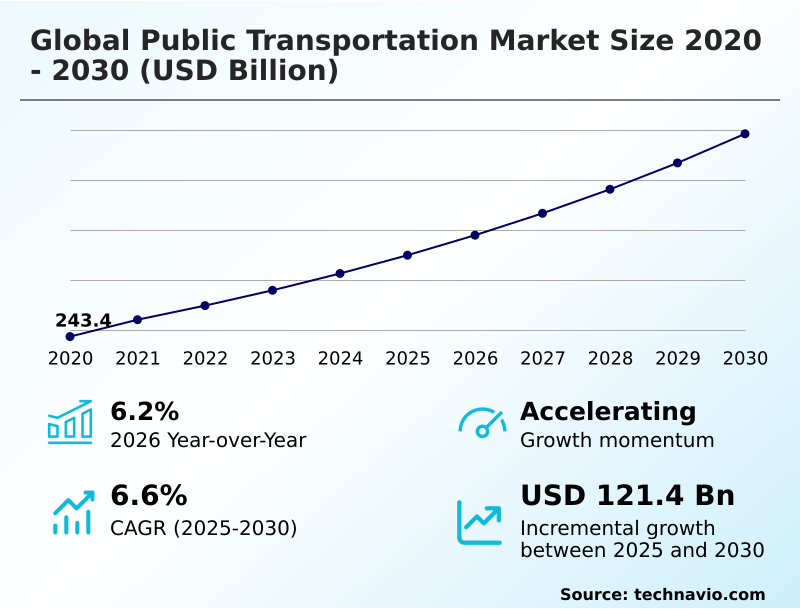
The public transportation market size is valued to increase by USD 121.4 billion, at a CAGR of 6.6% from 2025 to 2030. Acceleration of decarbonization and zero-emission mandates will drive the public transportation market.
Major Market Trends & Insights
- APAC dominated the market and accounted for a 34.8% growth during the forecast period.
- By Type - Bus segment was valued at USD 190.8 billion in 2024
- By Distribution Channel - Offline segment accounted for the largest market revenue share in 2024
Market Size & Forecast
- Market Opportunities: USD 202.8 billion
- Market Future Opportunities: USD 121.4 billion
- CAGR from 2025 to 2030 : 6.6%
Market Summary
- The public transportation market is navigating a period of profound transformation, defined by the dual imperatives of sustainability and technological integration. A primary focus is the systemic electrification of transit fleets and rail networks, driven by zero-emission bus mandates aimed at achieving national carbon-neutrality targets.
- Concurrently, the sector is experiencing rapid digitalization through the adoption of mobility-as-a-service platforms, which leverage real-time data integration to enhance operational efficiency. For instance, transit agencies are implementing intelligent fleet management systems that use predictive analytics to optimize routing and maintenance schedules, leading to significant reductions in operational downtime and improvements in service reliability.
- However, this progress is tempered by persistent challenges, including a structural human capital deficit and the emergence of a fiscal cliff as traditional revenue streams decline. The need to fund high capital expenditure for modernization while addressing workforce retention creates a complex strategic environment for operators navigating the future of urban mobility.
What will be the Size of the Public Transportation Market during the forecast period?
Get Key Insights on Market Forecast (PDF) Get Free Sample
How is the Public Transportation Market Segmented?
The public transportation industry research report provides comprehensive data (region-wise segment analysis), with forecasts and estimates in "USD billion" for the period 2026-2030, as well as historical data from 2020-2024 for the following segments.
- Type
- Bus
- Metro
- Suburban rail
- Light rail transit
- Distribution channel
- Offline
- Online
- Powertrain type
- Diesel fleets
- Hybrid transit vehicles
- Battery-electric buses
- Geography
- APAC
- India
- Japan
- China
- North America
- US
- Mexico
- Canada
- Europe
- Germany
- France
- UK
- South America
- Brazil
- Argentina
- Colombia
- Middle East and Africa
- South Africa
- Saudi Arabia
- UAE
- Rest of World (ROW)
- APAC
By Type Insights
The bus segment is estimated to witness significant growth during the forecast period.
The bus segment is undergoing a structural shift toward full electrification, driven by urban air quality goals and stringent decarbonization mandates.
This transition involves not just the replacement of aging fleets but also the strategic deployment of advanced energy management systems to support large-scale charging operations.
The integration of digital fleet management tools allows operators to monitor battery health and optimize schedules, while innovations like onboard diagnostics and electric drivetrains enhance performance.
The proliferation of electric buses is also supported by civil depot upgrades and the expansion of behind-the-meter power infrastructure.
As a result of these concerted efforts, some major urban fleets have already achieved approximately 20% zero-emission vehicle integration, improving life-cycle costs and urban mobility planning.
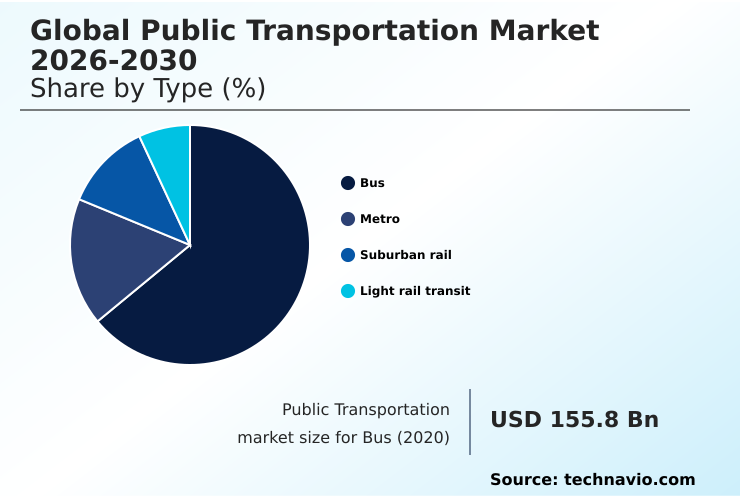
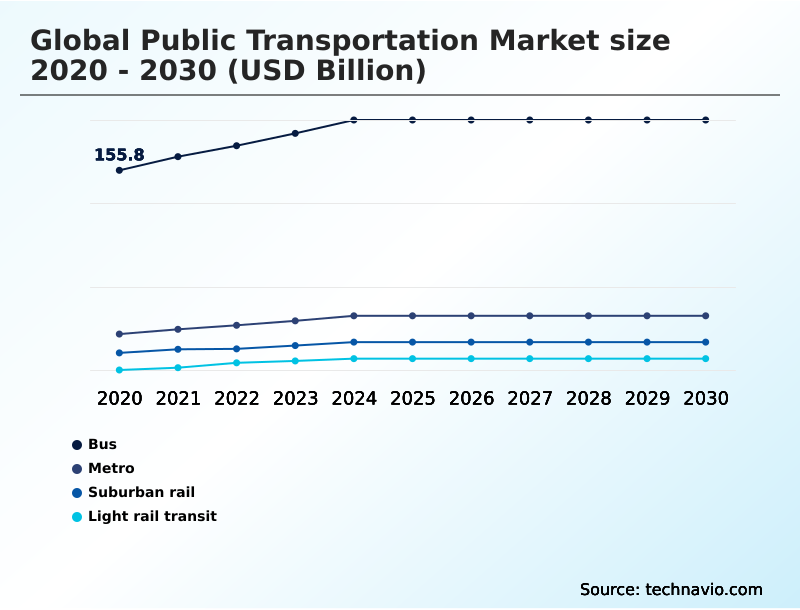
The Bus segment was valued at USD 190.8 billion in 2024 and showed a gradual increase during the forecast period.
Regional Analysis
APAC is estimated to contribute 34.8% to the growth of the global market during the forecast period.Technavio’s analysts have elaborately explained the regional trends and drivers that shape the market during the forecast period.
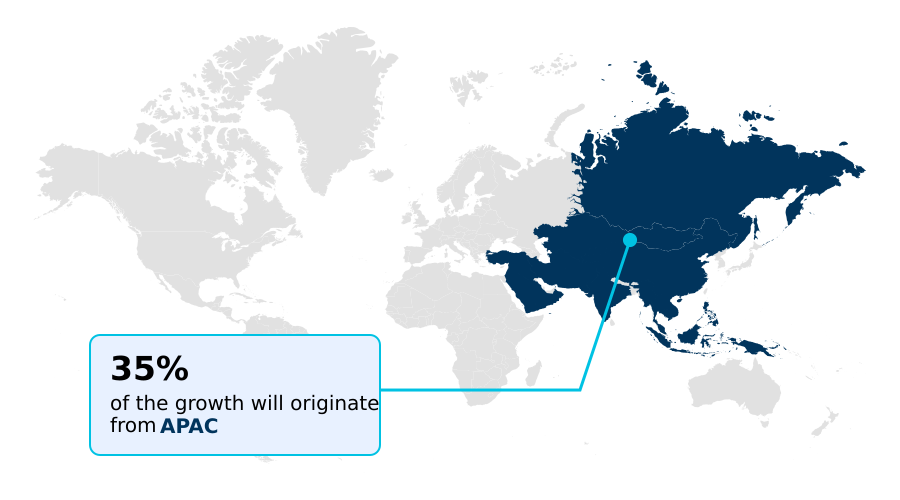
See How Public Transportation Market Demand is Rising in APAC Get Free Sample
The geographic landscape is marked by divergent regional strategies for modernization. In APAC, the focus is on large-scale infrastructure, with metro networks in some nations surpassing 1,000 kilometers in operational length.
This expansion is supported by a commitment to sovereign infrastructure and the use of localized digital control systems.
In Europe, the priority is decarbonization and interoperability, with initiatives aiming to double rail traffic and ensure over 75% of new city bus registrations are zero-emission.
North America is pivoting toward cost-effective bus rapid transit and physical hardening of legacy assets.
Meanwhile, South America is emerging as a leader in electric bus adoption, and the Middle East is leveraging sovereign wealth to build technologically advanced, AI-driven transit hubs with integrated software-integrated sensors.
These regional approaches highlight a global shift toward resilient, data-driven, and sustainable mobility.
Market Dynamics
Our researchers analyzed the data with 2025 as the base year, along with the key drivers, trends, and challenges. A holistic analysis of drivers will help companies refine their marketing strategies to gain a competitive advantage.
- The future of the sector is being shaped by a complex interplay of strategic planning and technological adoption. Effective climate resilience in transport infrastructure planning is now a baseline requirement, compelling agencies to re-evaluate legacy assets. The economic impact of regional rail corridor expansion is significant, encouraging investment in integrated networks.
- Concurrently, the mobility-as-a-service platform user experience is becoming a key differentiator, driven by the security protocols of account-based ticketing and the convenience of open-loop payment adoption in transit. Behind the scenes, AI predictive maintenance for rail operations is delivering measurable efficiency gains, with some operators seeing double-digit reductions in service disruptions compared to those using traditional methods.
- This is complemented by the benefits of intelligent fleet management software for optimizing routes. However, significant hurdles remain, including the challenges of electric bus fleet transition and the need for effective transit operator workforce retention strategies. The deployment of high-capacity automated rail systems and adherence to cross-border rail network interoperability standards are critical for managing urban density.
- Success will depend on balancing sustainable funding models for public transport with the investment needed for innovations like biometric payment interfaces in public transport and leveraging real-time data for transport optimization.
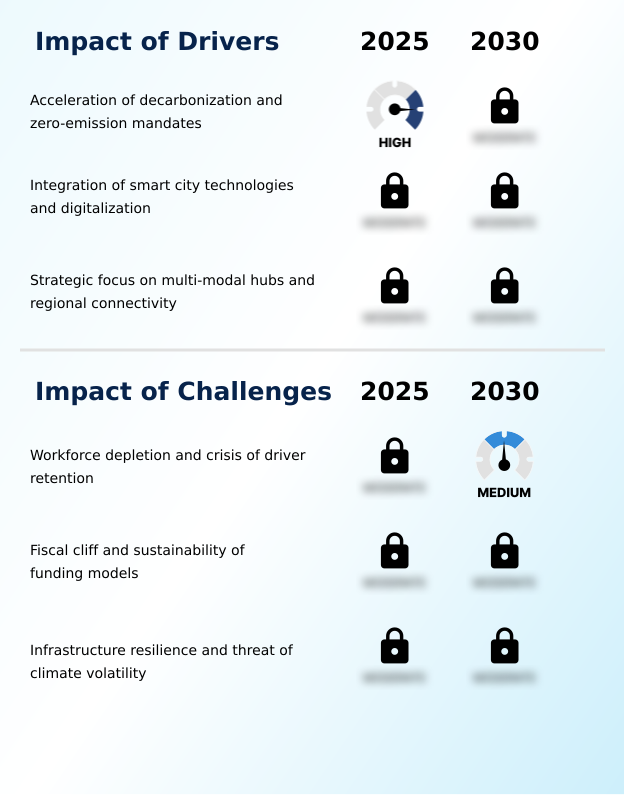
What are the key market drivers leading to the rise in the adoption of Public Transportation Industry?
- The acceleration of decarbonization efforts and the implementation of stringent zero-emission mandates are significant drivers propelling market growth.
- Market growth is primarily driven by a global decarbonization commitment and the integration of smart city technologies. Stringent zero-emission bus mandates are compelling operators to transition toward battery-electric alternatives, a shift supported by substantial public investment.
- For example, strategic funding initiatives are directing nearly 77% of their resources toward rail infrastructure upgrades to reduce fossil fuel reliance. Furthermore, the rapid digitalization of transit systems enhances the passenger experience through seamless multi-modal transfers.
- The adoption of unified mobility applications is a key part of digital-first strategies, with some national rail networks achieving over 95% electrification coverage, significantly lowering long-term life-cycle costs and supporting carbon-neutrality targets.
What are the market trends shaping the Public Transportation Industry?
- A defining market trend is the massive expansion of high-capacity automated rail. This is coupled with a strategic focus on developing sovereign infrastructure to manage extreme urban density.
- Key market trends are centered on the expansion of high-capacity rail and the digitalization of passenger services. The aggressive pursuit of automated train operations and advanced signaling reflects a global strategy to manage urban density and enhance technological interoperability.
- This push for modernization is delivering tangible outcomes, with some modern light rail vehicles now achieving up to 95% recyclability for rolling stock components. Concurrently, the sector is rapidly adopting smart ticketing initiatives and fare collection hardware that support contactless bank cards.
- This digital transformation is creating a more seamless travel ecosystem, underscored by the expansion of metro networks, which have surpassed 1,000 kilometers in certain regions. The focus on high-frequency services is reshaping urban mobility.
What challenges does the Public Transportation Industry face during its growth?
- A critical challenge affecting industry growth is the ongoing workforce depletion and the crisis in operator recruitment and retention.
- The market faces critical challenges related to financial sustainability and infrastructure resilience. A widening fiscal cliff, driven by declining traditional revenue streams, creates a significant revenue deficit that hampers investment in modernization. This is compounded by the high capital expenditure required for green transitions.
- Simultaneously, infrastructure degradation from extreme weather is a growing concern, with analyses indicating that nearly 75% of rail assets in some regions are exposed to heightened climate risks. The convergence of physical and cyber risks further strains resources, forcing agencies to balance maintenance with the need for physical hardening of assets.
- These persistent issues threaten to undermine long-term sustainability goals and operational continuity without new funding models and a focus on workplace security measures.
Exclusive Technavio Analysis on Customer Landscape
The public transportation market forecasting report includes the adoption lifecycle of the market, covering from the innovator’s stage to the laggard’s stage. It focuses on adoption rates in different regions based on penetration. Furthermore, the public transportation market report also includes key purchase criteria and drivers of price sensitivity to help companies evaluate and develop their market growth analysis strategies.
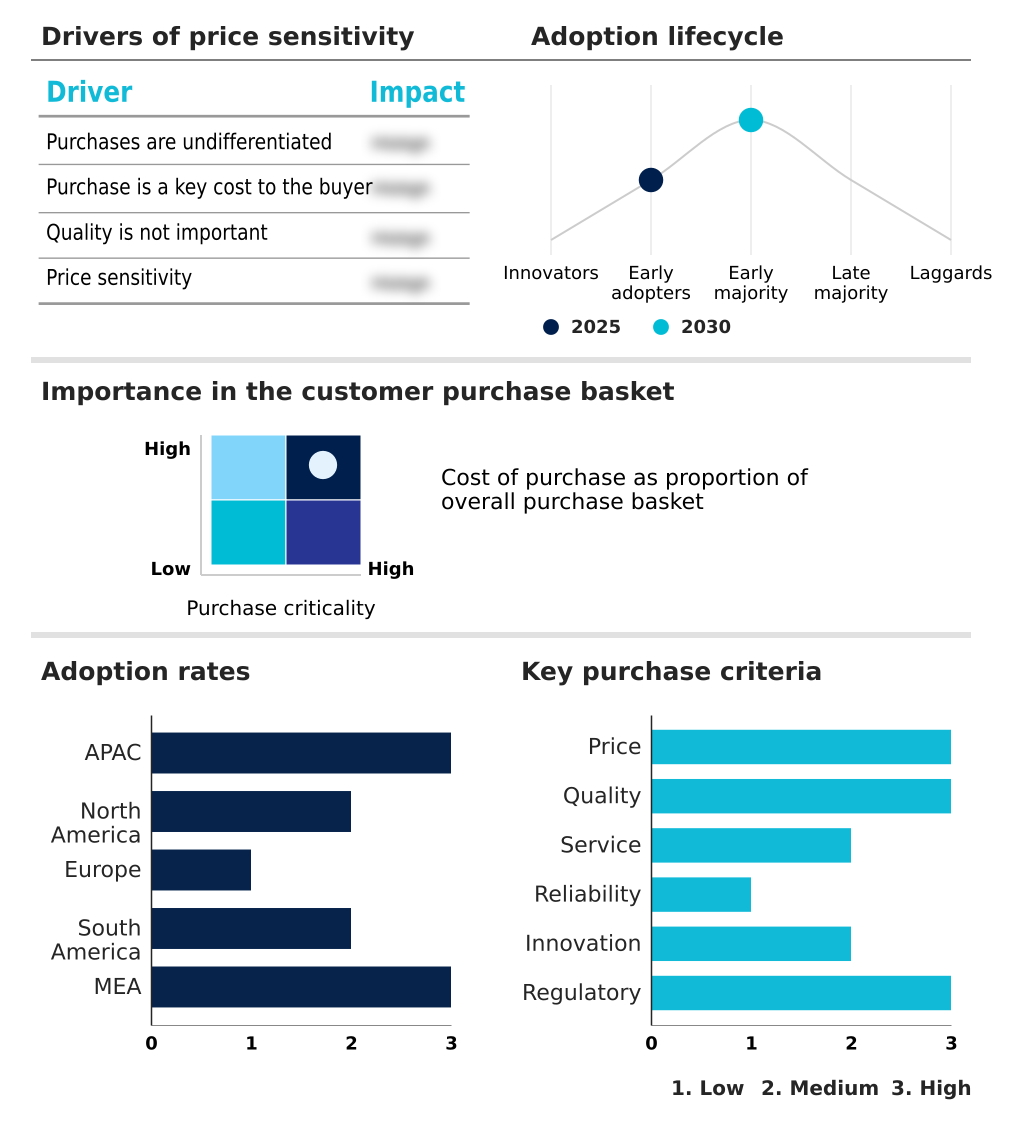
Customer Landscape of Public Transportation Industry
Competitive Landscape
Companies are implementing various strategies, such as strategic alliances, public transportation market forecast, partnerships, mergers and acquisitions, geographical expansion, and product/service launches, to enhance their presence in the industry.
Bay Area Rapid Transit - Operations feature integrated heavy rail, airport express, and light rail systems, establishing a comprehensive and reliable rapid transit network for high-capacity urban mobility.
The industry research and growth report includes detailed analyses of the competitive landscape of the market and information about key companies, including:
- Bay Area Rapid Transit
- BC Transit Corp
- Chicago Transit Authority
- Deutsche Bahn AG
- East Japan Railway Co.
- FirstGroup plc
- London and Partners Ltd.
- Massachusetts Bay Transportation
- Metro de Madrid SA
- Metrolink
- Metropolitan Transportation
- MTR Corp. Ltd.
- San Diego Metropolitan Transit
- Seoul Tourism Organization
- Sin U Lian Group
- SNCF Group
- STIB
- Transdev Group SA
- Washington Metropolitan
Qualitative and quantitative analysis of companies has been conducted to help clients understand the wider business environment as well as the strengths and weaknesses of key industry players. Data is qualitatively analyzed to categorize companies as pure play, category-focused, industry-focused, and diversified; it is quantitatively analyzed to categorize companies as dominant, leading, strong, tentative, and weak.
Recent Development and News in Public transportation market
- In May, 2025, the United States Federal Transit Administration released its fiscal year 2026 budget estimates, requesting over fourteen billion dollars in formula grants to sustain core transit programs amid changing revenue models.
- In August, 2025, the city of Santiago de Chile advanced its fleet electrification goals by adding 176 electric buses to its network, progressing toward its target of incorporating 1,800 zero-emission vehicles.
- In September, 2025, the European Union finalized projects for constructing and upgrading multimodal passenger hubs in cities like Marseille and Bolzano, designed to integrate high-speed rail, metro, and bus services.
- In November, 2025, Metro Transit in St. Louis announced the installation of state-of-the-art fare validators and a new mobile application to support contactless payments and fare capping for passengers.
Dive into Technavio’s robust research methodology, blending expert interviews, extensive data synthesis, and validated models for unparalleled Public Transportation Market insights. See full methodology.
| Market Scope | |
|---|---|
| Page number | 288 |
| Base year | 2025 |
| Historic period | 2020-2024 |
| Forecast period | 2026-2030 |
| Growth momentum & CAGR | Accelerate at a CAGR of 6.6% |
| Market growth 2026-2030 | USD 121.4 billion |
| Market structure | Fragmented |
| YoY growth 2025-2026(%) | 6.2% |
| Key countries | India, Japan, China, South Korea, Australia, Indonesia, US, Mexico, Canada, Germany, Russia, France, UK, Spain, The Netherlands, Brazil, Argentina, Colombia, South Africa, Saudi Arabia, UAE, Egypt and Nigeria |
| Competitive landscape | Leading Companies, Market Positioning of Companies, Competitive Strategies, and Industry Risks |
Research Analyst Overview
- The public transportation market is in a period of critical infrastructure revitalization, where strategic decisions on capital expenditure are paramount. Boardroom-level discussions are weighing the long-term life-cycle costs of systemic electrification against the immediate demands of rail infrastructure upgrades.
- The transition is complex, involving not just the adoption of battery-electric alternatives and hydrogen-powered alternatives, but also the deployment of advanced energy management and digital control systems. Modernization extends to the passenger interface with account-based ticketing, QR-based ticketing, and biometric-ready interfaces becoming standard.
- Operationally, the integration of intelligent fleet management, predictive analytics, and predictive maintenance has proven to reduce rolling stock failures by over 30%. This shift toward data-driven operations relies on advanced signaling, software-integrated sensors for real-time object detection, and vehicle-to-everything communication.
- However, this technological push is challenged by the need for physical resilience against threats like track washouts and the necessity for flood defenses, alongside managing issues like congestion pricing and value-capture taxes. Success requires balancing innovation—from fare capping and open-loop payment systems to automated safety systems—with the practicalities of maintaining aging assets and addressing risks like the fiscal cliff.
What are the Key Data Covered in this Public Transportation Market Research and Growth Report?
-
What is the expected growth of the Public Transportation Market between 2026 and 2030?
-
USD 121.4 billion, at a CAGR of 6.6%
-
-
What segmentation does the market report cover?
-
The report is segmented by Type (Bus, Metro, Suburban rail, and Light rail transit), Distribution Channel (Offline, and Online), Powertrain Type (Diesel fleets, Hybrid transit vehicles, and Battery-electric buses) and Geography (APAC, North America, Europe, South America, Middle East and Africa)
-
-
Which regions are analyzed in the report?
-
APAC, North America, Europe, South America and Middle East and Africa
-
-
What are the key growth drivers and market challenges?
-
Acceleration of decarbonization and zero-emission mandates, Workforce depletion and crisis of driver retention
-
-
Who are the major players in the Public Transportation Market?
-
Bay Area Rapid Transit, BC Transit Corp, Chicago Transit Authority, Deutsche Bahn AG, East Japan Railway Co., FirstGroup plc, London and Partners Ltd., Massachusetts Bay Transportation, Metro de Madrid SA, Metrolink, Metropolitan Transportation, MTR Corp. Ltd., San Diego Metropolitan Transit, Seoul Tourism Organization, Sin U Lian Group, SNCF Group, STIB, Transdev Group SA and Washington Metropolitan
-
Market Research Insights
- Market dynamics are shaped by a strategic push for passenger experience enhancement, where digitalization initiatives are delivering tangible results. The integration of unified mobility applications and digital-first strategies has improved service accessibility, while real-time data integration allows for more responsive operations, contributing to highway congestion reduction.
- For example, the deployment of cooperative intelligent transport systems has been shown to improve traffic flow efficiency by over 15% in some corridors. However, agencies face a significant fiscal cliff, as the capital expenditure needed for modernization strains traditional revenue streams. This financial pressure is compounded by the human capital deficit, which affects service reliability.
- Despite these issues, the focus on regional economic growth through better connectivity and the adoption of seamless multi-modal transfers continues to drive the sector forward, with some electrified networks reporting over 90% coverage.
We can help! Our analysts can customize this public transportation market research report to meet your requirements.
 RIA -
RIA - 
