



Renewable Fuel Market Size 2024-2028
The renewable fuel market size is forecast to increase by USD 66.7 million, at a CAGR of 7.13% between 2023 and 2028.
- The market is experiencing significant growth due to several key trends. One of the major factors driving market expansion is the increasing adoption of waste-to-energy technologies. These technologies convert waste materials into fuel, reducing the reliance on traditional fossil fuels and addressing environmental concerns. Another trend is the development of e-fuels, which are produced from renewable sources such as water, air, and sunlight. Renewable fuels, derived from biomass, solar, and hydro sources, are increasingly replacing fossil fuels in power generation and transportation applications. However, the inconsistent availability and quality of feedstocks for renewable fuels pose challenges to market growth. Producers must address these issues through advancements in technology and sustainable farming practices to ensure a steady supply of high-quality feedstocks. Overall, the market is poised for continued growth as the world transitions towards more sustainable energy sources.
What will be the Size of the Renewable Fuel Market During the Forecast Period?

- The market encompasses various sectors, including solar, hydropower, windpower, biofuels, and hydrogen fuels. This market is experiencing significant growth as the global shift towards net-zero carbon emissions intensifies. Biofuels, such as biodiesel, biogasoline, ethanol, and pyrolysis oil, are derived from feedstocks like municipal waste, landfills, and agricultural residues. The market is driven by the need to reduce greenhouse gas emissions, improve energy security, and decrease the carbon footprint of automobile production and transportation mediums. Additionally, the market is expanding into sectors like marine, cooling & heating, and electricity generation. The market's size and direction reflect the global energy transition towards sustainable, renewable sources.
How is the Renewable Fuel Industry segmented and which is the largest segment?
The renewable fuel industry research report provides comprehensive data (region-wise segment analysis), with forecasts and estimates in "USD million" for the period 2024-2028, as well as historical data from 2018-2022 for the following segments.
- Type
- Biofuels
- Hydrogen
- Biomethane
- Others
- End-user
- Road transporation
- Avaition
- Marine
- Residential
- Others
- Geography
- North America
- US
- Europe
- Germany
- UK
- France
- APAC
- China
- South America
- Middle East and Africa
- North America
By Type Insights
- The biofuels segment is estimated to witness significant growth during the forecast period.
Biofuels, including solar-derived bioethanol, hydropower-generated biomass fuel, windpower-produced biogasoline, and ethanol from corn, soybeans, cassava, sugar beets, sugar cane, and cereal crops, offer lower greenhouse gas emissions compared to fossil fuels. These renewable sources contribute to long-term sustainability and lessen reliance on finite resources. Biofuels reduce emissions of harmful pollutants like sulfur oxides (SOx) and particulate matter, improving air quality. Derived from agricultural residues and waste materials, they help manage and recycle organic waste. Biofuels provide an alternative to fossil fuels, enhancing energy security by diversifying energy sources and reducing dependence on imported oil. Locally produced biofuels from regional feedstocks reduce transportation costs and boost local economies.
Incorporating feedstocks from municipal waste and landfills further supports waste management and circular economy principles. Biofuels, such as biodiesel from soybean, canola oil, animal fat, and distillers corn, provide sustainable solutions for automobile production, power generation, transportation, marine, aerospace, locomotive, heat engines, fuel cells, vehicles, power generators, pipeline transport, and cooling & heating industries. Capital investment in renewable biofuels, including geothermal, wind, and hydrogen fuels, supports the energy transition towards net-zero carbon emissions.
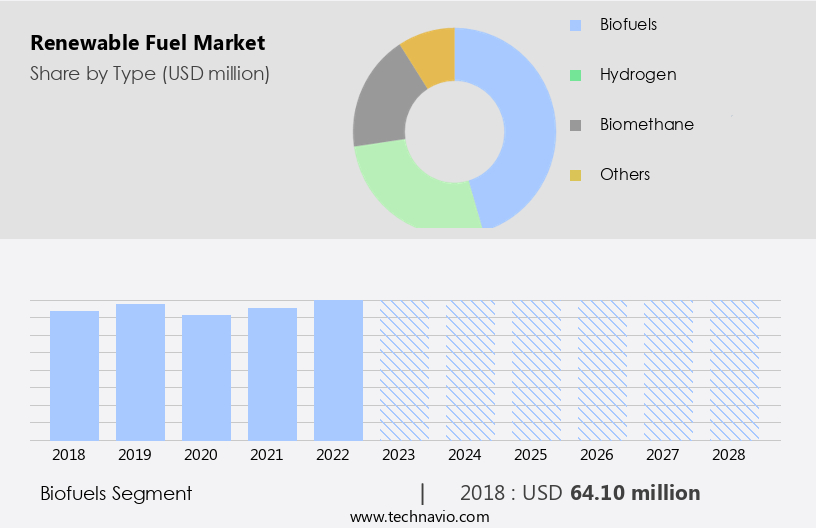
Get a glance at the market report of the share of various segments Request Free Sample
The biofuels segment was valued at USD 64.10 million in 2018 and showed a gradual increase during the forecast period.
Regional Analysis
- North America is estimated to contribute 37% to the growth of the global market during the forecast period.
Technavio's analysts have elaborately explained the regional trends and drivers that shape the market during the forecast period.

For more insights on the market size of various regions, Request Free Sample
Renewable fuels are gaining momentum in North America due to increasing commitments to reduce greenhouse gas emissions and growing consumer awareness about environmental sustainability. The Paris Agreement and Renewable Portfolio Standards or renewable energy Standards are driving the demand for renewable fuels, with policies mandating the use of renewable energy. Carbon pricing mechanisms, such as cap-and-trade systems and carbon taxes, provide financial incentives for adopting renewable fuels by increasing the cost of fossil fuels. The market in North America is experiencing significant investment from both government and private sectors, with technologies in solar, hydropower, windpower, biofuels, biogasoline, ethanol, electricity, and others advancing.
Feedstocks, including corn, soybeans, cassava, sugar beets, sugar cane, cereal crops, municipal waste, and landfills, are being utilized to produce renewable fuels. The power generation, transportation, marine, aerospace, locomotive, heat engines, fuel cells, vehicles, power generators, pipeline transport, and cooling & heating sectors are transitioning towards renewable fuels to reduce their carbon footprint and improve energy security. Capital investment in renewable energy technologies, including geothermal, wind, and hydrogen fuels, is also increasing.
Market Dynamics
Our researchers analyzed the data with 2023 as the base year, along with the key drivers, trends, and challenges. A holistic analysis of drivers will help companies refine their marketing strategies to gain a competitive advantage.
What are the key market drivers leading to the rise In the adoption of Renewable Fuel Industry?
Rising adoption of Waste-to-Energy Technologies is the key driver of the market.
-
The rising adoption of Waste-to-Energy technologies is a key driver in the growth of the global renewable fuel market. These technologies convert various types of waste materials, such as food scraps and agricultural residues, into usable energy, including electricity, heat, and fuels through methods like anaerobic digestion, incineration, gasification, pyrolysis, and fermentation. The conversion of organic waste into biogas, syngas, bio-oil, and other fuels helps reduce greenhouse gas emissions and provides a renewable energy source. Innovations such as Eni Rewind's Waste to Fuel (W2F) technology, which transforms organic waste into biofuels, are also contributing to sustainable waste management and energy recovery, thus supporting energy diversity and sustainability goals.
What are the market trends shaping the Renewable Fuel Industry?
Development of e-fuels is the upcoming market trend.
- The development of e-fuels is gaining momentum as an innovative trend in the renewable fuel sector. E-fuels are synthetic fuels produced from renewable electricity through processes such as Power-to-Liquids (PtL) and Power-to-Gas (PtG), using hydrogen and CO2 to create hydrocarbons. E-fuels provide a carbon-neutral solution if the CO2 is captured from the atmosphere, making them ideal for sectors that are hard to electrify, such as aviation and shipping. The integration of e-fuels into existing infrastructure and their drop-in nature are fueling the transition towards cleaner, renewable fuels.
What challenges does the Renewable Fuel Industry face during its growth?
Inconsistent availability and quality of feedstocks for renewable fuel is a key challenge affecting the industry's growth.
- One of the significant challenges facing the renewable fuel sector is the inconsistent availability and quality of feedstocks. The conversion of waste into energy heavily relies on a steady and reliable supply of organic materials, and variations in feedstock quality can impact the efficiency of energy production. This inconsistency can hinder the scalability and economic viability of Waste-to-Energy technologies, slowing down their widespread adoption. As the market moves forward, securing sustainable and high-quality feedstock will be essential to overcoming this barrier.
Exclusive Customer Landscape
The renewable fuel market forecasting report includes the adoption lifecycle of the market, covering from the innovator's stage to the laggard's stage. It focuses on adoption rates in different regions based on penetration. Furthermore, the renewable fuel market report also includes key purchase criteria and drivers of price sensitivity to help companies evaluate and develop their market growth analysis strategies.

Customer Landscape
Key Companies & Market Insights
Companies are implementing various strategies, such as strategic alliances, renewable fuel market forecast, partnerships, mergers and acquisitions, geographical expansion, and product/service launches, to enhance their presence in the industry.
The industry research and growth report includes detailed analyses of the competitive landscape of the market and information about key companies, including:
- Aemetis Inc.
- ALTO INGREDIENTS Inc.
- Archer Daniels Midland Co.
- BP Plc
- Bunge Ltd.
- Cargill Inc.
- Chevron Corp.
- Clariant AG
- Cox Energy SAB de CV
- Eni SpA
- Enviva Inc.
- Green Plains Inc.
- INEOS AG
- Louis Dreyfus Co. BV
- Neste Corp.
- Novozymes AS
- POET LLC
- Shell plc
- Suncor Energy Inc.
- TotalEnergies SE
- Valero Energy Corp.
Qualitative and quantitative analysis of companies has been conducted to help clients understand the wider business environment as well as the strengths and weaknesses of key industry players. Data is qualitatively analyzed to categorize companies as pure play, category-focused, industry-focused, and diversified; it is quantitatively analyzed to categorize companies as dominant, leading, strong, tentative, and weak.
Research Analyst Overview
Renewable fuels have emerged as a significant alternative to traditional fossil fuels in various sectors, including power generation, transportation, and automobile production. Renewable fuels, such as solar, hydropower, windpower, biofuels, biomass, pyrolysis oil, hydrogen fuels, and electricity, offer numerous benefits, including reduced greenhouse gas emissions and improved energy security. Biofuels, derived from feedstocks like corn, soybeans, cassava, sugar beets, sugar cane, and cereal crops, have gained popularity as a renewable alternative to fossil fuels In the transportation sector. These fuels, including biodiesel, biogasoline, and ethanol, offer significant reductions in carbon footprint compared to their fossil fuel counterparts. The power generation sector has also seen a shift towards renewable fuels, with wind energy, both onshore and offshore, and solar energy becoming increasingly prevalent.
Hydroelectric power, another renewable energy source, continues to be a significant contributor to the power sector. Geothermal energy is another renewable source gaining traction in the power industry. Fuel cells, which convert chemical energy into electricity, offer another avenue for renewable fuel adoption. Hydrogen fuels, produced from renewable sources, can be used in fuel cells to generate electricity. This technology holds significant potential for the transportation sector, particularly in the aviation industry. The marine sector is also exploring renewable fuel options, with biofuels and hydrogen fuels being considered as alternatives to traditional marine fuels. The use of renewable fuels in the marine sector can help reduce greenhouse gas emissions and improve energy security.
In addition, the adoption of renewable fuels is driven by various factors, including the need to reduce greenhouse gas emissions, energy security concerns, and the transition towards a low-carbon economy. Capital investment in renewable fuel production and infrastructure is a key driver of market growth. The use of renewable fuels In the transportation sector is also influenced by factors such as labor and land costs, feedstock availability, and agricultural subsidizations. The oil market, which has traditionally dominated the transportation fuel market, is facing increasing competition from renewable fuels. Renewable fuels offer numerous benefits, including reduced greenhouse gas emissions, improved energy security, and a smaller carbon footprint.
|
Market Scope |
|
|
Report Coverage |
Details |
|
Page number |
217 |
|
Base year |
2023 |
|
Historic period |
2018-2022 |
|
Forecast period |
2024-2028 |
|
Growth momentum & CAGR |
Accelerate at a CAGR of 7.13% |
|
Market growth 2024-2028 |
USD 66.7 million |
|
Market structure |
Fragmented |
|
YoY growth 2023-2024(%) |
6.29 |
|
Key countries |
US, China, Germany, UK, France, and Australia |
|
Competitive landscape |
Leading Companies, Market Positioning of Companies, Competitive Strategies, and Industry Risks |
What are the Key Data Covered in this Renewable Fuel Market Research and Growth Report?
- CAGR of the Renewable Fuel industry during the forecast period
- Detailed information on factors that will drive the market growth and forecasting between 2024 and 2028
- Precise estimation of the size of the market and its contribution of the industry in focus to the parent market
- Accurate predictions about upcoming growth and trends and changes in consumer behaviour
- Growth of the market across North America, Europe, APAC, South America, and Middle East and Africa
- Thorough analysis of the market's competitive landscape and detailed information about companies
- Comprehensive analysis of factors that will challenge the renewable fuel market growth of industry companies
We can help! Our analysts can customize this renewable fuel market research report to meet your requirements.
 RIA -
RIA - 
