



Sentiment Analytics Software Market Size 2025-2029
The sentiment analytics software market size is forecast to increase by USD 2.34 billion, at a CAGR of 16.6% between 2024 and 2029.
- The market is experiencing significant growth, driven by the increasing use of digital communication channels and the rising adoption of social media. With the expanding internet penetration, businesses and organizations are leveraging sentiment analytics software to monitor and analyze customer opinions and feedback in real-time. This data-driven approach enables companies to gain valuable insights into customer preferences, improve brand reputation, and make informed business decisions. However, the integration of generative AI in sentiment analytics poses a challenge. While AI-powered sentiment analysis offers enhanced accuracy and efficiency, it also introduces context-dependent errors. Misinterpretation of sarcasm, idioms, and cultural nuances can lead to inaccurate analysis and potential negative consequences for businesses.
- To navigate this challenge, companies must invest in advanced AI models that can better understand the nuances of human language and context. By doing so, they can capitalize on the opportunities presented by sentiment analytics software and effectively manage their online reputation and customer relationships.
What will be the Size of the Sentiment Analytics Software Market during the forecast period?
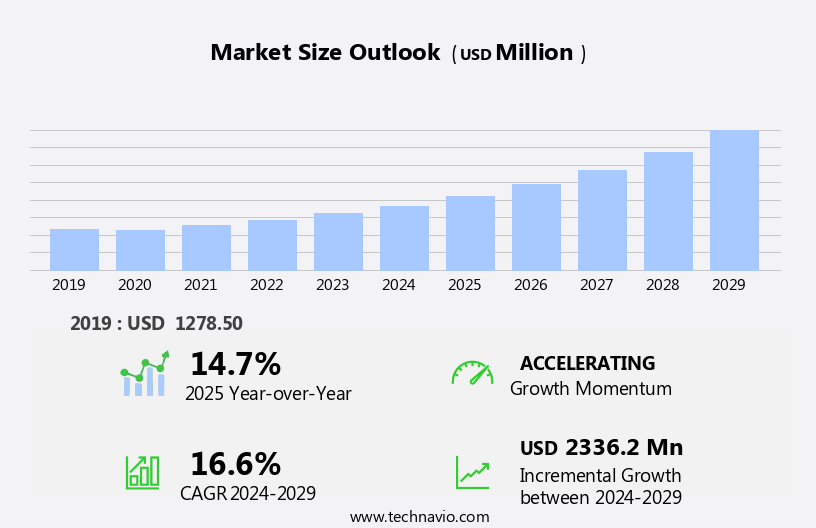
Explore in-depth regional segment analysis with market size data - historical 2019-2023 and forecasts 2025-2029 - in the full report.
Request Free Sample
The market continues to evolve, driven by the increasing demand for real-time customer feedback analysis and business intelligence (BI) applications. This market encompasses various technologies, including text mining, machine learning (ML), deep learning (DL), and natural language processing (NLP), to extract insights from unstructured data. Applications of sentiment analytics span across multiple sectors, such as marketing campaign effectiveness, competitive intelligence, risk management, brand reputation management, and customer experience optimization. Real-time sentiment monitoring is a crucial aspect of these applications, enabling businesses to respond promptly to customer feedback and mitigate potential crises. Moreover, sentiment analytics plays a pivotal role in market research, providing valuable insights into consumer opinions and preferences.
Polarity detection, emotion recognition, and topic modeling are essential components of sentiment analysis algorithms, helping to identify trends and patterns in customer sentiment. Model performance evaluation metrics, such as false positive rate, false negative rate, and F1 score, are crucial in ensuring the accuracy and reliability of sentiment analytics models. Additionally, bias detection is becoming increasingly important to mitigate potential biases in data and improve model fairness. The ongoing development of sentiment analytics is fueled by advancements in ML and DL, enabling more sophisticated models and improved accuracy. Social media monitoring is a significant area of growth, with businesses leveraging social listening to gain insights into customer sentiment and engagement.
Data governance and ethical considerations are essential aspects of sentiment analytics, ensuring that data is collected, processed, and used ethically and transparently. Sentiment analysis APIs and integration with data visualization tools further enhance the value of sentiment analytics, making it an indispensable tool for businesses seeking to gain a competitive edge and improve customer experience.
How is this Sentiment Analytics Software Industry segmented?
The sentiment analytics software industry research report provides comprehensive data (region-wise segment analysis), with forecasts and estimates in "USD million" for the period 2025-2029, as well as historical data from 2019-2023 for the following segments.
- Deployment
- On-premises
- Cloud-based
- End-user
- Retail
- BFSI
- Healthcare
- Others
- Geography
- North America
- US
- Europe
- Germany
- UK
- APAC
- China
- India
- Rest of World (ROW)
- North America
By Deployment Insights
The on-premises segment is estimated to witness significant growth during the forecast period.
In the realm of business intelligence, on-premises deployment of sentiment analytics software has emerged as a preferred choice for organizations seeking control over their data and operations. This setup enables companies to manage their data privately and adhere to regulatory requirements. On-premises sentiment analytics solutions offer customization benefits, allowing businesses to tailor the software to their unique needs and seamlessly integrate it with existing systems. Furthermore, dedicated on-premises infrastructure results in superior performance and faster processing times. Sentiment analytics software employs advanced techniques such as public opinion tracking, predictive analytics, polarity detection, marketing campaign effectiveness analysis, real-time sentiment monitoring, topic modeling, machine learning, and emotion recognition to derive valuable insights from vast amounts of data.
These insights contribute to product development, customer feedback analysis, text mining, business intelligence, and market research applications. Moreover, sentiment analytics software also addresses false negatives and positives through model performance evaluation and false positive rate reduction. Deep learning algorithms and topic modeling enhance the software's ability to detect bias and provide competitive intelligence, risk management, brand reputation management, data governance, social listening, crisis communication, and sentiment analysis integration. Ethical considerations and social media engagement are essential aspects of sentiment analysis, ensuring accurate sentiment classification and customer experience optimization. Data visualization tools facilitate the interpretation of complex data, making it easier for businesses to make informed decisions.
Overall, on-premises sentiment analytics software offers a robust and immersive solution for organizations seeking to gain a deeper understanding of public opinion and market trends.
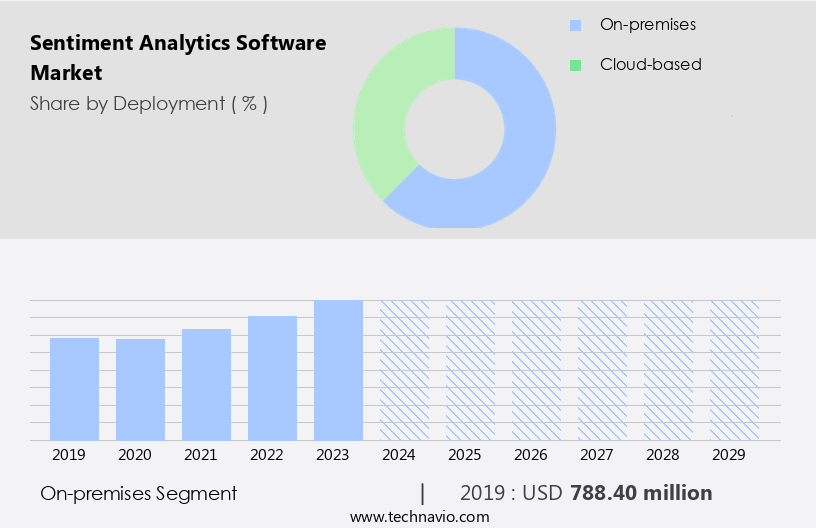
The On-premises segment was valued at USD 788.40 billion in 2019 and showed a gradual increase during the forecast period.
Regional Analysis
North America is estimated to contribute 38% to the growth of the global market during the forecast period.Technavio’s analysts have elaborately explained the regional trends and drivers that shape the market during the forecast period.
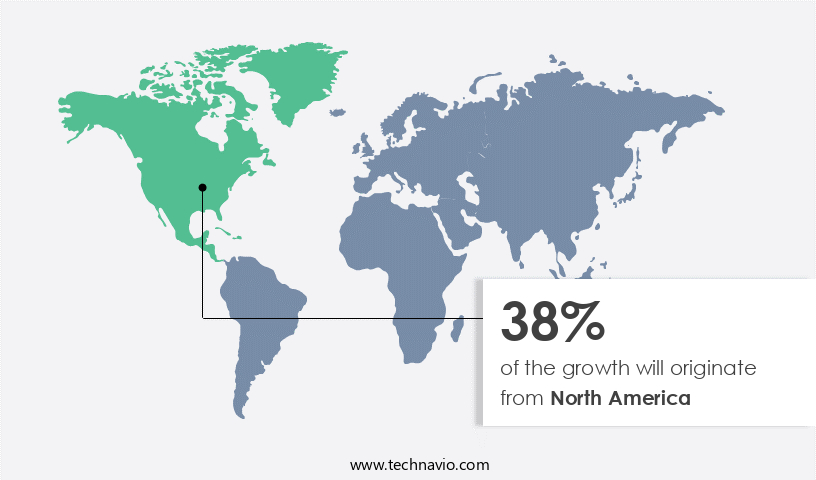
The market is experiencing significant growth, particularly in North America, where high internet penetration and a strong focus on customer experience drive adoption. In 2024, approximately 97% of the population in North America was connected to the internet, creating a solid base for the use of sentiment analytics tools. Organizations in this region are investing heavily in advanced technologies to personalize and enhance customer interactions. For instance, USAA, a leading financial services company, invested in AI-driven personalization to offer more tailored services, improving customer satisfaction. Patagonia, an innovative clothing company, also invested in technology to create seamless omnichannel experiences that align with customer values, showcasing the region's commitment to leveraging technology for superior customer engagement.
Sentiment analytics plays a crucial role in various applications, including predictive analytics, polarity detection, marketing campaign effectiveness, real-time sentiment monitoring, topic modeling, and product development insights. Machine learning and deep learning algorithms are integral to sentiment analysis, enabling false negative and false positive rate reduction, model performance evaluation, and bias detection. Ethical considerations are essential in sentiment analysis, with transparency and data governance crucial for brand reputation management, crisis communication, and competitive intelligence. Moreover, sentiment analysis is increasingly used for risk management, social media monitoring, and customer feedback analysis. Text mining and data extraction techniques are essential for sentiment analysis integration, while sentiment classification and accuracy metrics ensure model optimization and customer experience optimization.
Data visualization tools help businesses gain valuable insights from sentiment analysis, making it an indispensable tool for business intelligence and market research applications.
Market Dynamics
Our researchers analyzed the data with 2024 as the base year, along with the key drivers, trends, and challenges. A holistic analysis of drivers will help companies refine their marketing strategies to gain a competitive advantage.
The market is a dynamic and innovative sector, offering businesses valuable insights into consumer emotions and attitudes towards their brands. This technology utilizes natural language processing, machine learning, and text analytics to extract subjective information from various data sources, including social media, customer reviews, and call center interactions. Key players in this market provide solutions for real-time sentiment analysis, emotion detection, and predictive analytics. Features like sentiment scoring, trend analysis, and root cause identification are essential for businesses to gauge customer satisfaction, improve brand reputation, and enhance customer experience. Additionally, sentiment analytics software offers actionable insights for marketing campaigns, product development, and crisis management. Its applications extend to various industries, including healthcare, finance, retail, and hospitality, making it an indispensable tool for data-driven decision-making.
What are the key market drivers leading to the rise in the adoption of Sentiment Analytics Software Industry?
- The significant expansion of internet access and the increasing prevalence of social media usage serve as the primary catalyst for market growth.
- The market is experiencing significant growth due to the increasing use of the internet and social media. In 2024, there were approximately 5.5 billion internet users worldwide, a five-fold increase since 2005, representing 68% of the global population. Social media usage is a key driver, with over half of the global population actively engaging, spending an average of 2 hours and 24 minutes daily, amounting to a massive 4 trillion hours annually. Sentiment analytics software plays a crucial role in public opinion tracking, enabling businesses to monitor and analyze customer feedback in real-time. This data is essential for predictive analytics, polarity detection, marketing campaign effectiveness, and product development insights.
- Advanced techniques such as topic modeling, machine learning, and emotion recognition are used to enhance the accuracy of sentiment analysis and reduce false negative rates. Sentiment analytics software is increasingly being adopted by businesses to gain valuable insights into consumer behavior and preferences. By harnessing the power of this technology, organizations can make informed decisions, improve customer engagement, and enhance their brand reputation. The market is expected to continue growing as businesses increasingly recognize the value of sentiment analysis in understanding and responding to public opinion.
What are the market trends shaping the Sentiment Analytics Software Industry?
- The integration of generative AI is an emerging trend in the market. This advanced technology is becoming increasingly important for businesses seeking to enhance their operations and provide innovative solutions to customers.
- The market is witnessing significant advancements with the integration of generative AI technology. In September 2024, Freshworks introduced an enhanced Customer Service Suite, incorporating generative AI for advanced customer sentiment analysis, multi-language understanding, and quicker response times. This integration offers a more automated and personalized customer experience, showcasing the potential of generative AI to revolutionize customer service operations. Similarly, NinjaOne LLC, an IT platform specializing in endpoint management and automation, launched a new feature in October 2024, utilizing generative AI for enhanced patch management processes. This feature provides sentiment analysis for Windows updates, illustrating the versatility of generative AI in applications beyond traditional customer service, improving IT management, and operational efficiency.
- These advancements underscore the growing significance of generative AI in sentiment analytics, enabling more precise and real-time insights into customer and user sentiments. Model performance evaluation metrics, such as F1 score and false positive rate, remain essential for assessing model accuracy and minimizing bias. Text mining and social media monitoring continue to be crucial market research applications for sentiment analytics, offering valuable business intelligence. Deep learning algorithms and bias detection techniques further enhance the capabilities of sentiment analytics software, ensuring more accurate and nuanced insights.
What challenges does the Sentiment Analytics Software Industry face during its growth?
- The challenge of addressing context-dependent errors is a significant issue impeding industry growth. This issue, which refers to the difficulty in accurately interpreting information based on specific contexts, can have profound implications for various industries, including finance, healthcare, and customer service. Effective resolution of context-dependent errors requires advanced natural language processing capabilities and a deep understanding of the relevant domain.
- In the dynamic business landscape, sentiment analytics software has emerged as a valuable tool for gaining competitive intelligence, managing risk, and safeguarding brand reputation. By analyzing data from various sources, including social media, this technology helps organizations understand customer opinions, identify trends, and respond effectively to crises. Sentiment analysis algorithms and APIs enable real-time monitoring and analysis of vast volumes of data, providing insights into customer sentiment and engagement. Ethical considerations are essential in this context, ensuring data governance and privacy are maintained. Sarcasm and ambiguity pose significant challenges in sentiment analysis. For instance, a seemingly positive statement like "I'm so glad my package arrived a month late and in pieces" can convey a negative sentiment due to its sarcastic tone.
- Similarly, ambiguous sentences can lead to misinterpretation. For example, "The meeting was a great success" could mean different things depending on the context, such as a successful outcome or a well-organized event. To mitigate these challenges, it's crucial to employ advanced sentiment analysis techniques and continually refine algorithms to improve accuracy. By doing so, businesses can gain valuable insights, enhance customer engagement, and make informed decisions.
Exclusive Customer Landscape
The sentiment analytics software market forecasting report includes the adoption lifecycle of the market, covering from the innovator’s stage to the laggard’s stage. It focuses on adoption rates in different regions based on penetration. Furthermore, the sentiment analytics software market report also includes key purchase criteria and drivers of price sensitivity to help companies evaluate and develop their market growth analysis strategies.
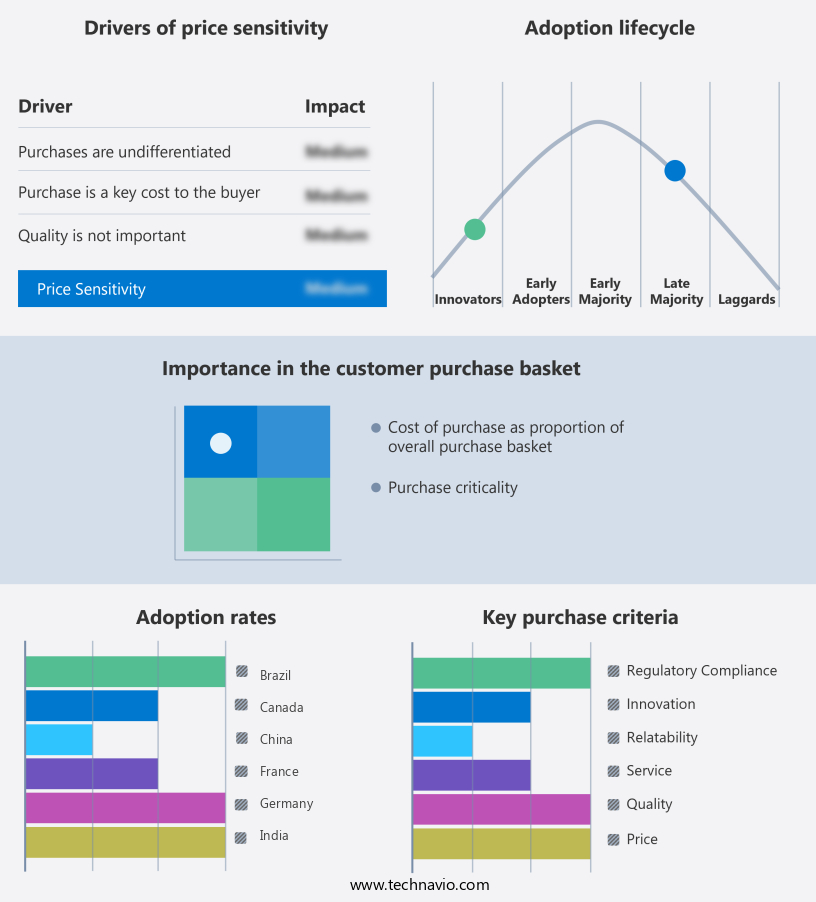
Customer Landscape
Key Companies & Market Insights
Companies are implementing various strategies, such as strategic alliances, sentiment analytics software market forecast, partnerships, mergers and acquisitions, geographical expansion, and product/service launches, to enhance their presence in the industry.
Affectiva Inc. - This business specializes in sentiment analytics software, enabling real-time analysis across multiple languages and seamless integration into various applications. The software utilizes advanced algorithms to interpret and evaluate emotional tone from text data, providing valuable insights for businesses and organizations. By harnessing the power of artificial intelligence and natural language processing, this solution empowers users to make informed decisions based on public sentiment.
The industry research and growth report includes detailed analyses of the competitive landscape of the market and information about key companies, including:
- Affectiva Inc.
- Alphabet Inc.
- Amazon Web Services Inc.
- Averbis GmbH
- Aylien
- Babel Street Inc
- Clarifai Inc.
- Happiest Minds Technologies Ltd.
- International Business Machines Corp.
- Lexalytics Inc.
- MeaningCloud LLC
- Medallia Inc.
- Microsoft Corp
- NetOwl
- QuestionPro Inc.
- Repustate Inc.
- SAS Institute Inc.
- Twinword Inc.
Qualitative and quantitative analysis of companies has been conducted to help clients understand the wider business environment as well as the strengths and weaknesses of key industry players. Data is qualitatively analyzed to categorize companies as pure play, category-focused, industry-focused, and diversified; it is quantitatively analyzed to categorize companies as dominant, leading, strong, tentative, and weak.
Recent Development and News in Sentiment Analytics Software Market
- In January 2024, IBM announced the acquisition of Quantum Computing Labs, a sentiment analytics software company, to strengthen its AI and data analytics capabilities (IBM Press Release). In March 2024, Microsoft and Twitter formed a strategic partnership to integrate Microsoft's Azure AI services with Twitter's data, enhancing Twitter's advertising offerings and Microsoft's sentiment analysis capabilities (Microsoft News Center).
- In May 2024, SAS, a leading analytics software company, raised USD1 billion in a funding round to expand its AI and analytics portfolio, including its sentiment analysis offerings (SAS Press Release). In April 2025, Google Cloud launched its new Natural Language API, which includes advanced sentiment analysis capabilities, further solidifying its position in the cloud-based sentiment analytics market (Google Cloud Blog).
- These developments underscore the growing importance of sentiment analytics software in various industries, with major tech companies and traditional analytics players investing heavily to expand their offerings and capabilities. The market is expected to continue its robust growth trajectory, driven by the increasing demand for real-time, data-driven insights from businesses and organizations. (Sources: IBM Press Release, Microsoft News Center, SAS Press Release, Google Cloud Blog)
Research Analyst Overview
- In the dynamic data analytics market, cost optimization and cognitive computing are key trends driving growth. Companies seek to minimize expenses while maximizing insights from big data. Cognitive computing, a subset of AI, automates data analysis through machine learning and natural language processing. Data security is paramount, with ethical considerations around data usage becoming increasingly important. Text analytics, opinion mining, and speech recognition are essential tools for deriving insights from unstructured data. Model maintenance, algorithm development, and data modeling are critical for accurate data interpretation. Data cleaning and preprocessing are necessary for ensuring data transformation and model deployment.
- Cloud computing and infrastructure play a significant role in data analytics, enabling scalability and accessibility. API development, user interface design, and human-computer interaction enhance user experience. Performance optimization, statistical analysis, and image recognition are crucial for data interpretation and model training. Responsible AI and ethical data usage are gaining importance, with companies focusing on model training and algorithm development that respect user privacy and data security. Data collection and interpretation remain foundational to the industry, with ongoing advancements in computer vision, data transformation, and opinion mining.
Dive into Technavio’s robust research methodology, blending expert interviews, extensive data synthesis, and validated models for unparalleled Sentiment Analytics Software Market insights. See full methodology.
|
Market Scope |
|
|
Report Coverage |
Details |
|
Page number |
202 |
|
Base year |
2024 |
|
Historic period |
2019-2023 |
|
Forecast period |
2025-2029 |
|
Growth momentum & CAGR |
Accelerate at a CAGR of 16.6% |
|
Market growth 2025-2029 |
USD 2336.2 million |
|
Market structure |
Fragmented |
|
YoY growth 2024-2025(%) |
14.7 |
|
Key countries |
US, Germany, China, UK, and India |
|
Competitive landscape |
Leading Companies, Market Positioning of Companies, Competitive Strategies, and Industry Risks |
What are the Key Data Covered in this Sentiment Analytics Software Market Research and Growth Report?
- CAGR of the Sentiment Analytics Software industry during the forecast period
- Detailed information on factors that will drive the growth and forecasting between 2025 and 2029
- Precise estimation of the size of the market and its contribution of the industry in focus to the parent market
- Accurate predictions about upcoming growth and trends and changes in consumer behaviour
- Growth of the market across North America, Europe, APAC, South America, and Middle East and Africa
- Thorough analysis of the market’s competitive landscape and detailed information about companies
- Comprehensive analysis of factors that will challenge the sentiment analytics software market growth of industry companies
We can help! Our analysts can customize this sentiment analytics software market research report to meet your requirements.
 RIA -
RIA - 
