


Telecare Devices Market Size 2025-2029
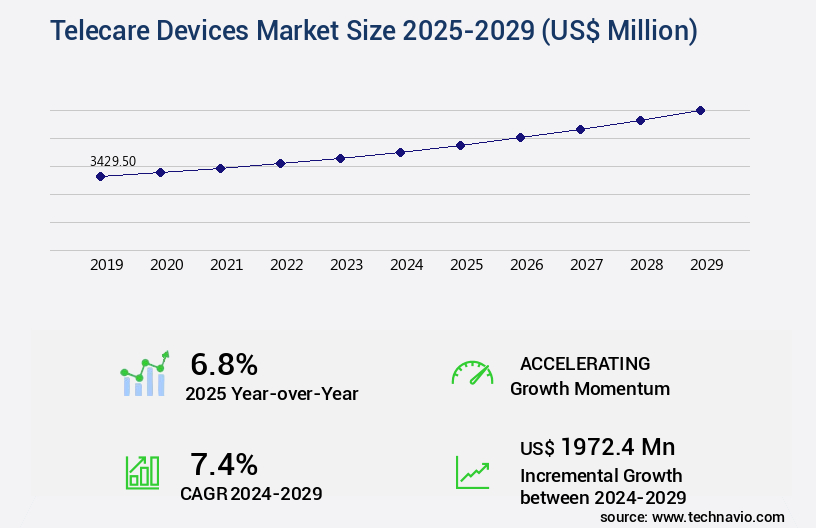
The telecare devices market size is valued to increase by USD 1.97 billion, at a CAGR of 7.4% from 2024 to 2029. Rising geriatric population will drive the telecare devices market.
Major Market Trends & Insights
- Europe dominated the market and accounted for a 39% growth during the forecast period.
- By Product Type - Personal alarm segment was valued at USD 1.91 billion in 2023
- By Device - Fall detector segment accounted for the largest market revenue share in 2023
Market Size & Forecast
- Market Opportunities: USD 91.40 million
- Market Future Opportunities: USD 1972.40 million
- CAGR from 2024 to 2029 : 7.4%
Market Summary
- The market is experiencing significant growth, driven by the increasing global population aged 65 and above. According to the World Health Organization, this demographic is projected to reach 1.5 billion by 2050, necessitating innovative solutions for their healthcare needs. Telecare devices, which enable remote monitoring and real-time health data transmission, are at the forefront of addressing this demand. Advancements in technology have led to the development of more sophisticated telecare devices. These innovations include fall detection sensors, medication adherence monitors, and vital signs sensors, among others. However, the market faces challenges such as technological failures and privacy concerns.
- Despite these hurdles, telecare devices continue to gain traction due to their ability to improve patient outcomes, reduce healthcare costs, and enhance the quality of life for seniors. The market's value is expected to reach USD 15.1 billion by 2026. This expansion is attributed to the increasing adoption of telecare devices in various healthcare settings, including hospitals, long-term care facilities, and home care services. As the market evolves, it will continue to focus on enhancing user experience, ensuring data security, and addressing the unique needs of diverse populations.
What will be the Size of the Telecare Devices Market during the forecast period?
Get Key Insights on Market Forecast (PDF) Request Free Sample
How is the Telecare Devices Market Segmented?
The telecare devices industry research report provides comprehensive data (region-wise segment analysis), with forecasts and estimates in "USD million" for the period 2025-2029, as well as historical data from 2019-2023 for the following segments.
- Product Type
- Personal alarm
- Monitoring system
- Device
- Fall detector
- Smoke detector
- Bed and chair sensor
- Pendant alarm
- Others
- Geography
- North America
- US
- Canada
- Europe
- Germany
- UK
- APAC
- Japan
- Rest of World (ROW)
- North America
By Product Type Insights
The personal alarm segment is estimated to witness significant growth during the forecast period.
The market encompasses a wide range of technologies, including personal alarms, remote patient monitoring systems, wearable health sensors, and telehealth platforms. These innovations facilitate patient self-management, enabling individuals to monitor their health data in real-time and engage with their healthcare providers remotely. One significant segment of this market is personal alarms, which provide a safety net for those at risk of falls, health emergencies, or disorientation. These devices, often worn as wristbands or necklaces, allow users to summon help with the press of a button. With the integration of data privacy regulations, health data can be securely transmitted and analyzed through data analytics dashboards and AI-powered diagnostics.
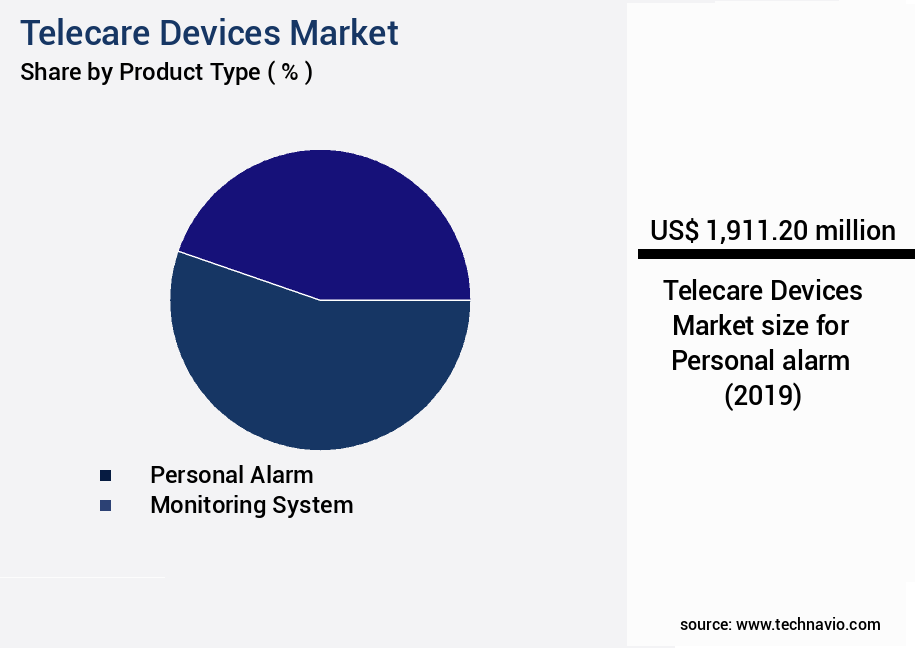
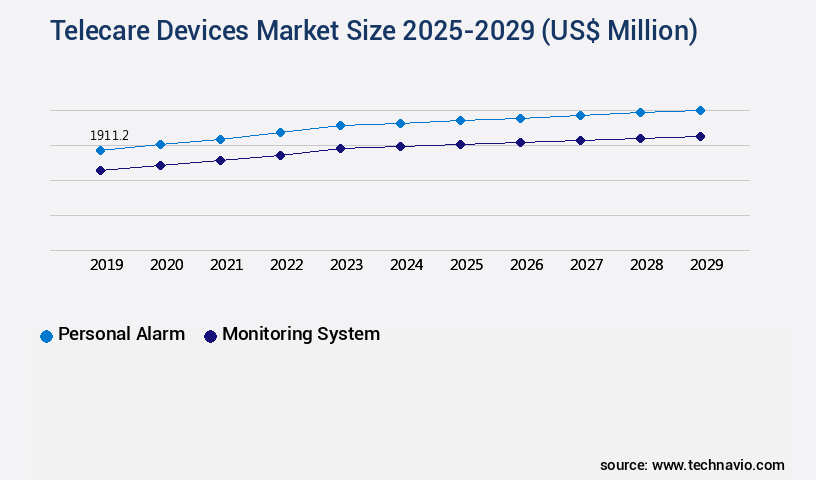
The Personal alarm segment was valued at USD 1.91 billion in 2019 and showed a gradual increase during the forecast period.
In-home telehealth systems, featuring remote diagnostics tools and real-time vital signs monitoring, have become increasingly popular. By 2025, the market is projected to reach a value of USD 36.6 billion, underscoring its growing importance in chronic disease management and medication adherence. Security protocols, device interoperability, and wireless communication standards ensure seamless integration and data sharing between various connected health devices and virtual care platforms.
Regional Analysis
Europe is estimated to contribute 39% to the growth of the global market during the forecast period. Technavio's analysts have elaborately explained the regional trends and drivers that shape the market during the forecast period.
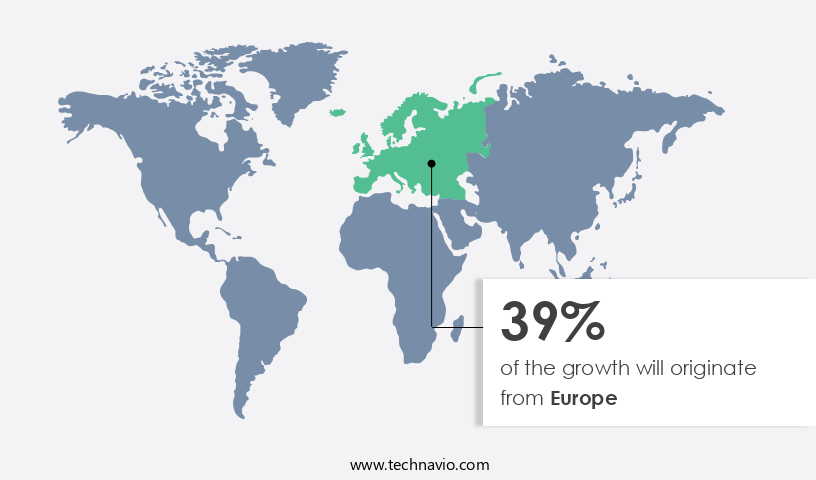
See How Telecare Devices Market Demand is Rising in Europe Request Free Sample
The market is witnessing significant evolution, with Europe emerging as a prominent region due to strategic partnerships and technological advancements. In April 2023, TeleAlarm Europe GmbH, a leading home emergency call system provider, announced a strategic collaboration with Skyresponse AB, a Swedish SaaS company. This partnership aims to launch a cloud monitoring system (CMS), integrating Skyresponse's advanced technology with TeleAlarm's existing solutions. The European market is expected to grow substantially, with the number of connected telecare devices projected to reach 25 million units by 2027, according to recent research.
This growth is driven by the increasing adoption of telehealth services and the rising geriatric population. The alliance between TeleAlarm and Skyresponse represents a crucial step towards creating a reliable and innovative emergency response management system, setting new standards in the industry.
Market Dynamics
Our researchers analyzed the data with 2024 as the base year, along with the key drivers, trends, and challenges. A holistic analysis of drivers will help companies refine their marketing strategies to gain a competitive advantage.
The market is experiencing significant growth due to the integration of telehealth platforms, enabling remote monitoring systems for accurate patient data collection. Wireless communication range sensors play a crucial role in transmitting real-time data, ensuring clinical effectiveness and improving patient engagement. Telehealth systems prioritize patient data encryption methods to maintain data security and regulatory compliance. Wearable sensor data analysis is a key component of telehealth, providing valuable insights for healthcare professionals to make informed decisions, ultimately impacting patient outcomes. Telehealth system maintenance is essential to ensure device reliability and battery life, which is a critical factor in patient satisfaction. Scalability of telehealth platforms is another important consideration, as the market continues to expand and healthcare systems seek cost-effective solutions. User experience design is also vital, as intuitive interfaces and seamless interoperability between healthcare devices enhance adoption rates. Cost-effectiveness is a significant driver for telehealth, as it reduces the need for in-person visits and offers more accessible services. Telehealth platforms must ensure data security and regulatory compliance, as patient privacy and safety are paramount. As telehealth adoption increases, it's essential to prioritize user experience, device reliability, and system maintenance to ensure patient satisfaction and engagement. Improving patient outcomes and regulatory compliance are essential for the continued growth of the market.
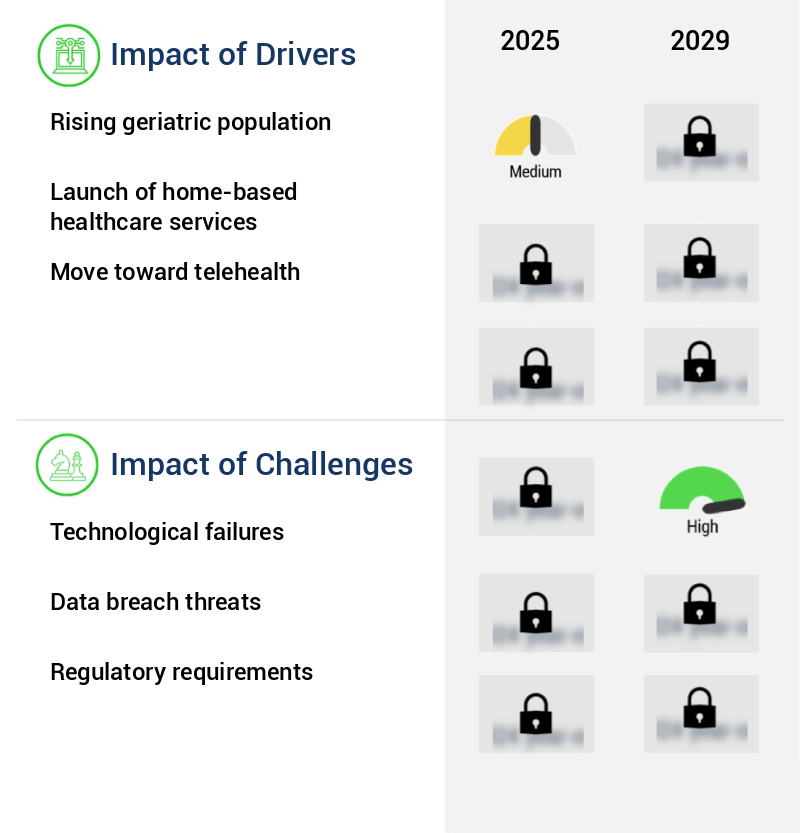
What are the key market drivers leading to the rise in the adoption of Telecare Devices Industry?
- The geriatric population's continued growth is the primary market driver, given its significant influence on market trends.
- The market is experiencing significant growth due to the increasing global geriatric population, driving the demand for advanced healthcare solutions. According to recent data, the number of individuals aged 65 and above in the United States grew by approximately 6% from 55.4 million in 2021 to nearly 58.9 million in 2023. This demographic shift underscores the growing need for telecare devices that can support the health and well-being of older adults. In India, the geriatric population also saw a notable increase, rising by around 5.5% during the same period.
- These trends highlight the importance of telecare devices in addressing the healthcare needs of aging populations worldwide.
What are the market trends shaping the Telecare Devices Industry?
- Product innovations are currently the mandated market trend. Or: The market trend now necessitates product innovations.
- The market is experiencing a significant evolution, fueled by continuous product innovations that prioritize enhanced connectivity and accessibility. A prime example of this progression is the emergence of new solutions aimed at transitioning from traditional analog systems to modern digital platforms. In a recent development, a leading telecommunications provider unveiled a new telecare solution in July 2024, enabling UK consumers to migrate from outdated analog phone and telecare systems to advanced broadband connections with IP phone services. Approximately two million UK residents, many residing in rural and remote areas with unreliable mobile coverage, stand to benefit from this initiative. This shift towards digital telecare solutions underscores the market's robust growth and commitment to improving healthcare services for a diverse population.
What challenges does the Telecare Devices Industry face during its growth?
- Technological failures pose a significant challenge to the industry's growth, as they can disrupt operations, decrease productivity, and potentially damage reputations.
- The market, encompassing medical alert systems and remote patient monitoring solutions, is experiencing a transformative evolution due to technological advancements and growing demand for remote healthcare services. According to recent reports, the market is projected to expand at a substantial rate, with telecare devices sales reaching approximately 30 million units worldwide by 2026. However, the market's progress is not without challenges. In October 2023, two tragic incidents occurred in the UK involving malfunctioning telecare devices during an analog-to-digital landline upgrade, prompting urgent discussions between the UK government's Department for Science, Innovation and Technology and Virgin Media O2 (VMO2). Despite VMO2 confirming that it did not supply the faulty devices, the exact cause of the failures remains undisclosed.
- In response, VMO2 temporarily halted its digital switchover program for vulnerable customers and those utilizing telecare devices, such as medical alert pendants.
Exclusive Technavio Analysis on Customer Landscape
The telecare devices market forecasting report includes the adoption lifecycle of the market, covering from the innovator's stage to the laggard's stage. It focuses on adoption rates in different regions based on penetration. Furthermore, the telecare devices market report also includes key purchase criteria and drivers of price sensitivity to help companies evaluate and develop their market growth analysis strategies.
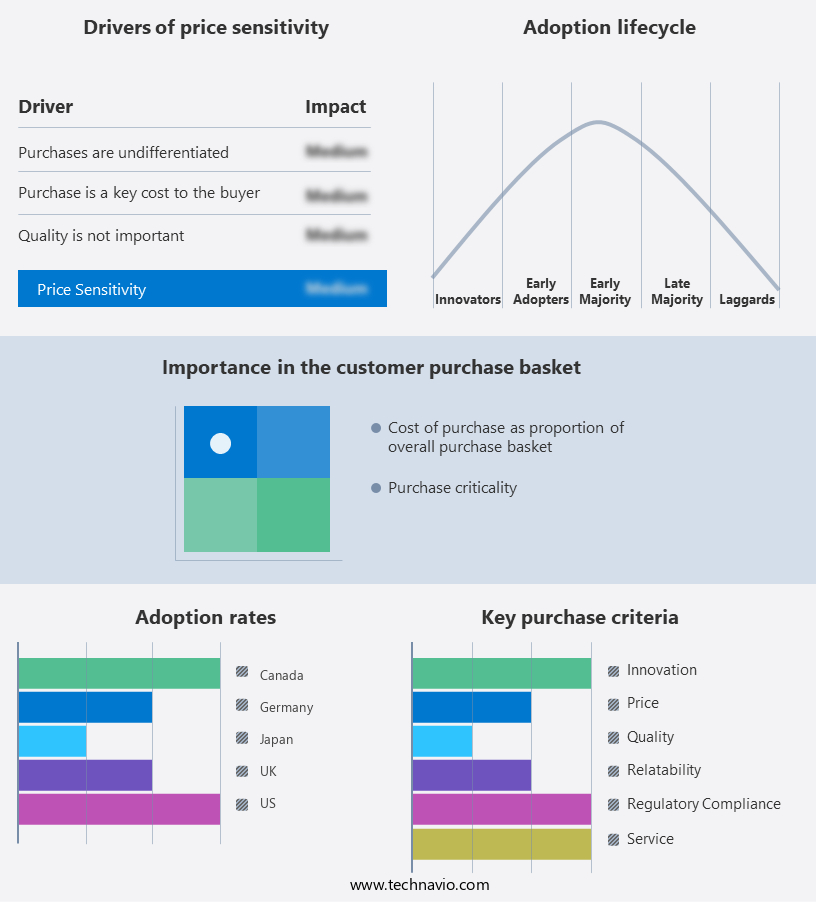
Customer Landscape of Telecare Devices Industry
Competitive Landscape
Companies are implementing various strategies, such as strategic alliances, telecare devices market forecast, partnerships, mergers and acquisitions, geographical expansion, and product/service launches, to enhance their presence in the industry.
BIOTRONIK SE and Co. KG - The Keyguard Digital XL Key Safe is a cutting-edge access solution enabling temporary entry for visitors.
The industry research and growth report includes detailed analyses of the competitive landscape of the market and information about key companies, including:
- BIOTRONIK SE and Co. KG
- Burton Security Ltd
- Careium
- Caretronic d.o.o.
- Chiptech International Ltd
- Chubb Fire and Security
- Climax Technology Co. Ltd.
- Essence Security International Ltd.
- Freeus LLC
- GE Healthcare Technologies Inc.
- Key Safe. Supra UK Ltd
- Koninklijke Philips NV
- Legrand SA
- LogicMark Inc
- Medtronic Plc
- Nortek Security and Control LLC
- Siemens Healthineers AG
- Taiwan Telecare Device Co
- TELEALARM Europe GMBH
- Tunstall Healthcare Group Ltd.
Qualitative and quantitative analysis of companies has been conducted to help clients understand the wider business environment as well as the strengths and weaknesses of key industry players. Data is qualitatively analyzed to categorize companies as pure play, category-focused, industry-focused, and diversified; it is quantitatively analyzed to categorize companies as dominant, leading, strong, tentative, and weak.
Recent Development and News in Telecare Devices Market
- In January 2024, Philips, a leading health technology company, announced the launch of its new telecare device, the 'Philips Lifeline with Fall Detection,' designed to detect and alert emergency services in case of falls. This innovative product expansion underscores Philips' commitment to enhancing elderly care solutions (Philips press release).
- In March 2024, Medtronic and Samsung Electronics formed a strategic partnership to integrate Medtronic's remote patient monitoring technologies with Samsung's consumer electronics. This collaboration aims to improve telehealth services and expand their reach (Medtronic press release).
- In April 2025, Sensible Innovations, a telecare device manufacturer, secured a USD 30 million series C funding round, led by Sequoia Capital India. This investment will support the company's product development, expansion into new markets, and scaling of operations (Crunchbase).
- In May 2025, the European Commission approved the use of telecare devices in all EU member states, marking a significant policy change that will boost the market growth and improve access to healthcare services for the elderly population (European Commission press release).
Dive into Technavio's robust research methodology, blending expert interviews, extensive data synthesis, and validated models for unparalleled Telecare Devices Market insights. See full methodology.
|
Market Scope |
|
|
Report Coverage |
Details |
|
Page number |
203 |
|
Base year |
2024 |
|
Historic period |
2019-2023 |
|
Forecast period |
2025-2029 |
|
Growth momentum & CAGR |
Accelerate at a CAGR of 7.4% |
|
Market growth 2025-2029 |
USD 1972.4 million |
|
Market structure |
Fragmented |
|
YoY growth 2024-2025(%) |
6.8 |
|
Key countries |
US, UK, Japan, Germany, and Canada |
|
Competitive landscape |
Leading Companies, Market Positioning of Companies, Competitive Strategies, and Industry Risks |
Research Analyst Overview
- The market continues to evolve, driven by advancements in technology and shifting healthcare priorities. Patient self-management is a key trend, with data privacy regulations playing a crucial role in enabling secure health data integration. Remote patient monitoring, facilitated by activity tracking devices and patient engagement tools, allows for real-time sensor data transmission and analysis via data analytics dashboards and remote diagnostics tools. One notable example of market growth is the adoption of telehealth platforms for chronic disease management. A recent study revealed a 50% increase in remote consultations for diabetes patients, leading to improved medication adherence and better disease management.
- The market is expected to grow at a robust rate, with industry analysts projecting a 20% annual expansion in the coming years. Security protocols, telehealth, and cloud-based data storage are essential components of this dynamic landscape, ensuring data privacy and enabling seamless device interoperability through wireless communication protocols. Wearable health sensors, sleep monitoring technology, and personal emergency response systems are also gaining traction, offering increased convenience and efficiency in home health monitoring and virtual care platforms. In-home telehealth solutions, such as fall detection systems and real-time vital signs monitoring, are revolutionizing healthcare delivery, particularly for elderly populations.
- Predictive analytics tools and AI-powered diagnostics further enhance the value proposition of these devices, enabling early intervention and more effective care. The ongoing unfolding of market activities and evolving patterns underscores the continuous dynamism of the market.
What are the Key Data Covered in this Telecare Devices Market Research and Growth Report?
-
What is the expected growth of the Telecare Devices Market between 2025 and 2029?
-
USD 1.97 billion, at a CAGR of 7.4%
-
-
What segmentation does the market report cover?
-
The report is segmented by Product Type (Personal alarm and Monitoring system), Device (Fall detector, Smoke detector, Bed and chair sensor, Pendant alarm, and Others), and Geography (Europe, North America, Asia, and Rest of World (ROW))
-
-
Which regions are analyzed in the report?
-
Europe, North America, Asia, and Rest of World (ROW)
-
-
What are the key growth drivers and market challenges?
-
Rising geriatric population, Technological failures
-
-
Who are the major players in the Telecare Devices Market?
-
BIOTRONIK SE and Co. KG, Burton Security Ltd, Careium, Caretronic d.o.o., Chiptech International Ltd, Chubb Fire and Security, Climax Technology Co. Ltd., Essence Security International Ltd., Freeus LLC, GE Healthcare Technologies Inc., Key Safe. Supra UK Ltd, Koninklijke Philips NV, Legrand SA, LogicMark Inc, Medtronic Plc, Nortek Security and Control LLC, Siemens Healthineers AG, Taiwan Telecare Device Co, TELEALARM Europe GMBH, and Tunstall Healthcare Group Ltd.
-
Market Research Insights
- The market encompasses a range of technologies designed to improve healthcare delivery and patient outcomes through remote monitoring and data analysis. Two significant aspects of this market are the integration of sensor network technology and the optimization of clinical workflow efficiency. For instance, remote monitoring systems for chronic conditions, such as continuous glucose monitoring and remote cardiac monitoring, have shown impressive outcomes, with one study reporting a 30% reduction in hospital readmissions. Furthermore, industry growth in this sector is anticipated to reach 15% annually over the next decade, driven by the increasing demand for personalized health plans and telehealth infrastructure.
- These advancements include data visualization tools, medical device integration, and data analytics platforms, which enable healthcare providers to make informed decisions and improve patient safety features. Additionally, the market is evolving to address healthcare regulatory compliance, elder care solutions, and patient data privacy and security concerns, with the integration of cognitive assessment tools, virtual physician assistants, and assistive living technology. Furthermore, home safety technology, remote care coordination, and medication reminders are becoming essential components of the market, ensuring that patients receive comprehensive care while maintaining their independence.
We can help! Our analysts can customize this telecare devices market research report to meet your requirements.
 RIA -
RIA - 
