



Vietnam Telecom Market Size 2026-2030
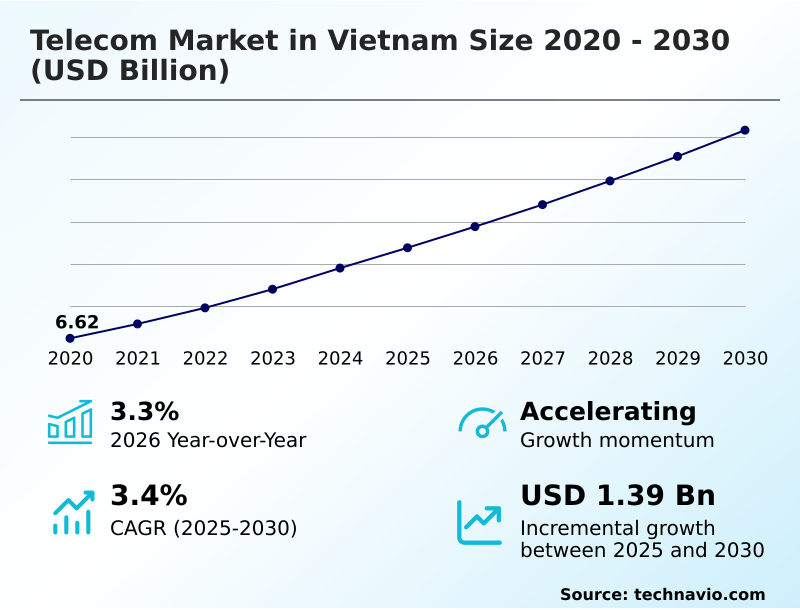
The Vietnam Telecom Market size was valued at USD 7.69 billion in 2025, growing at a CAGR of 3.4% during the forecast period 2026-2030.
Major Market Trends & Insights
- By End-user - Consumer segment was valued at USD 4.32 billion in 2024
- By Type - Wireless segment accounted for the largest market revenue share in 2024
Market Size & Forecast
- Historic Market Opportunities 2020-2024: USD 2.46 billion
- Market Future Opportunities 2025-2030: USD 1.39 billion
- CAGR from 2025 to 2030 : 3.4%
Market Summary
- The telecom market in Vietnam is characterized by a high mobile penetration rate exceeding 150%, creating a intensely competitive environment for service providers. This landscape is primarily driven by the government's national digital transformation strategy, which encourages investment in 5G and fiber-optic infrastructure.
- As a result, businesses are leveraging improved connectivity for operational gains; for example, logistics companies using IoT-based tracking solutions have reported a 10% reduction in asset loss. However, the market faces the significant challenge of high capital expenditure required for network upgrades.
- The cost to deploy a 5G site can be up to 30% higher than a 4G site, straining operator finances. This dynamic forces providers to balance infrastructure investment with the development of new digital services to maintain profitability in a rapidly evolving market.
What will be the Size of the Vietnam Telecom Market during the forecast period?
Get Key Insights on Market Forecast (PDF) Request Free Sample
How is the Vietnam Telecom Market Segmented?
The vietnam telecom industry research report provides comprehensive data (region-wise segment analysis), with forecasts and analysis for the period 2026-2030, as well as historical data from 2020-2024 for the following segments.
- End-user
- Consumer
- Business
- Type
- Wireless
- Wireline
- Application
- Residential
- Commercial
- Geography
- APAC
How is the Vietnam Telecom Market Segmented by End-user?
The consumer segment is estimated to witness significant growth during the forecast period.
The consumer segment, representing over 60% of total market revenue, is increasingly driven by demand for high-bandwidth digital services rather than basic voice and text.
This shift has led operators to bundle offerings, resulting in a 15% increase in average revenue per user for subscribers on tiered data plans.
The business segment, in contrast, focuses on specialized enterprise connectivity solutions and cloud computing services, where uptime and security are paramount.
While smaller, this segment offers profit margins that are on average 20% higher than consumer offerings, driven by demand for managed security services and custom service level agreements.
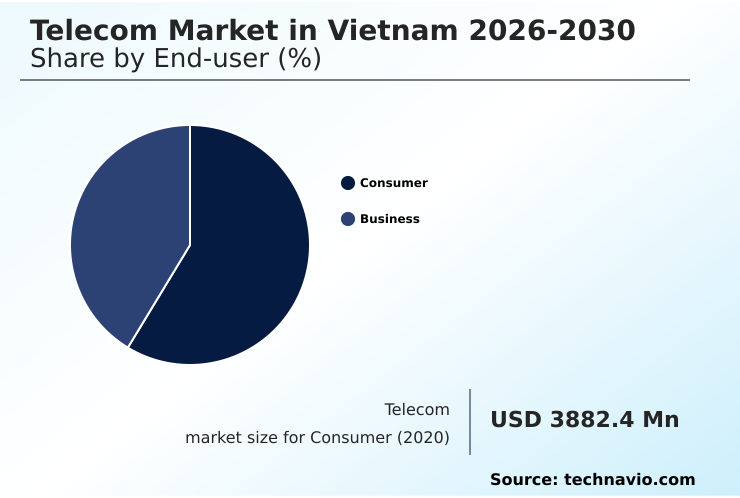
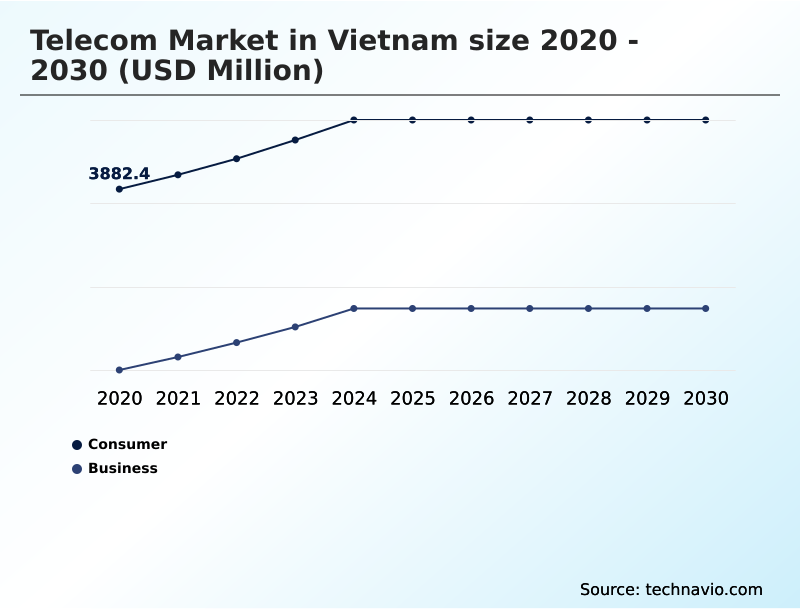
The Consumer segment was valued at USD 4.32 billion in 2024 and showed a gradual increase during the forecast period.
What are the key Drivers, Trends, and Challenges in the Vietnam Telecom Market?
Our researchers analyzed the data with 2025 as the base year, along with the key drivers, trends, and challenges. A holistic analysis of drivers will help companies refine their marketing strategies to gain a competitive advantage.
- A critical analysis of the telecom sector involves weighing 5G deployment costs vs revenue benefits, where initial capital outlay for network upgrades can be 30% higher than previous generations.
- The strategic integration of AI in telecom network optimization use cases is crucial for mitigating these expenses, with automated systems capable of reducing operational costs by up to 20% through predictive maintenance and efficient energy management.
- However, the challenges of rural broadband deployment persist, as the cost per connection in remote areas can be five times higher than in urban centers. This economic barrier slows the extension of high-speed internet and digital services to the entire population.
- Concurrently, the demand for private 5G networks for industrial applications is surging, offering a high-margin revenue stream for operators that can provide secure, low-latency connectivity for smart factories and automated logistics.
- This growth in enterprise-grade connectivity also magnifies concerns around cybersecurity threats in telecommunications infrastructure, compelling providers to invest heavily in advanced security measures to protect critical data and network integrity, shaping the overall investment strategy and service portfolio of market participants.
What are the key market drivers leading to the rise in the adoption of Vietnam Telecom Industry?
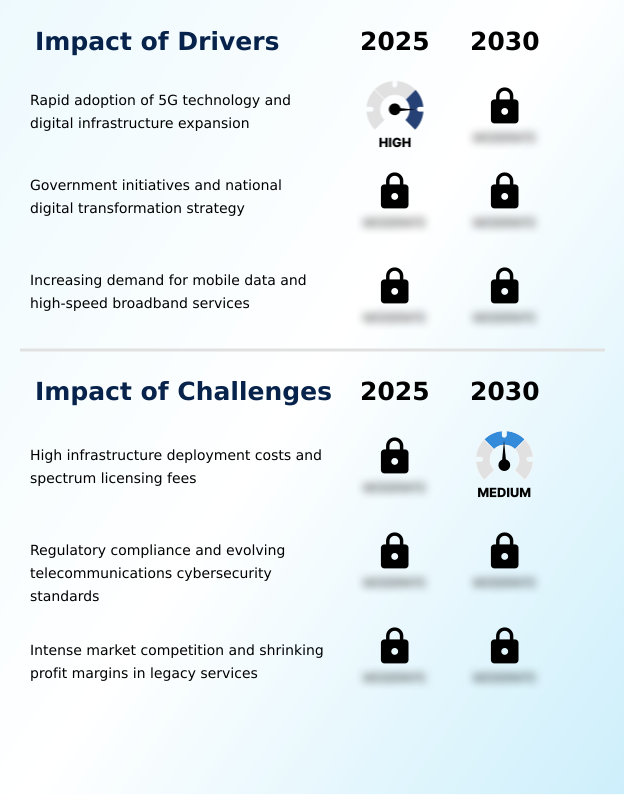
- Rapid adoption of 5G technology, coupled with the expansion of digital infrastructure, serves as the primary driver for market growth.
- The government-led digital transformation strategy is the primary driver, accelerating the adoption of 5G and expanding digital infrastructure across the nation.
- This initiative has spurred a 25% year-over-year increase in enterprise data traffic, fueling demand for high-speed broadband and advanced IoT connectivity solutions.
- The ongoing buildout of fiber-optic infrastructure, which now reaches over 70% of households in urban centers, is critical to supporting this growth.
- The expansion directly facilitates the development of smart city infrastructure and industrial automation connectivity, positioning the telecommunications sector as a cornerstone of the country's economic modernization and improving network performance monitoring capabilities.
What are the market trends shaping the Vietnam Telecom Industry?
- The integration of artificial intelligence and big data analytics is emerging as a transformative trend, enabling telecom operators to optimize network performance and enhance customer experiences.
- The integration of AI and big data is revolutionizing network operations, with leading operators reporting a 20% reduction in network-related issues through predictive analytics. This technological shift enables proactive real-time traffic management, crucial for maintaining service quality as data consumption per user increases.
- For example, implementing self-healing networks that automatically resolve up to 85% of common faults without human intervention significantly improves reliability. This trend is driven by the need for enhanced customer experience management and operational efficiency, allowing providers to offer more robust service level agreements for demanding enterprise connectivity solutions and maintain a competitive edge.
What challenges does the Vietnam Telecom Industry face during its growth?
- High infrastructure deployment costs and significant spectrum licensing fees present a key challenge, potentially constraining the pace of network expansion and service affordability.
- High infrastructure deployment costs remain a significant challenge, with the expense of 5G base stations running up to 30% higher than their 4G counterparts. This financial pressure is compounded by steep spectrum licensing fees, which can consume 10-15% of an operator's capital expenditure budget for a new network launch.
- These costs create a difficult balancing act for operators attempting to expand rural broadband expansion while maintaining competitive consumer pricing. Consequently, there is immense pressure to optimize operations and manage the complex regulatory compliance framework surrounding new technologies like network function virtualization and software-defined networking.
Exclusive Technavio Analysis on Customer Landscape
The vietnam telecom market forecasting report includes the adoption lifecycle of the market, covering from the innovator’s stage to the laggard’s stage. It focuses on adoption rates in different regions based on penetration. Furthermore, the vietnam telecom market report also includes key purchase criteria and drivers of price sensitivity to help companies evaluate and develop their market growth analysis strategies.
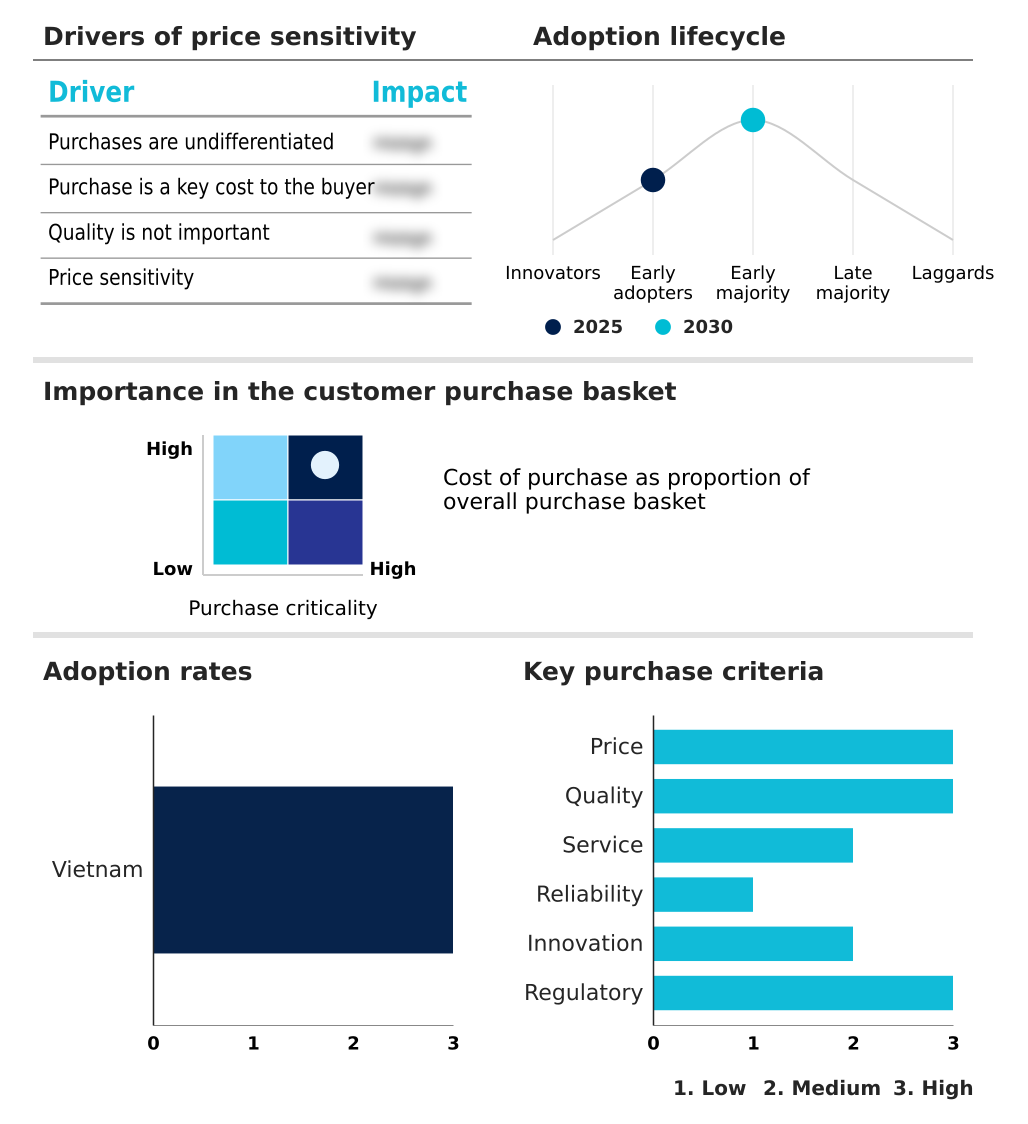
Customer Landscape of Vietnam Telecom Industry
Competitive Landscape
Companies are implementing various strategies, such as strategic alliances, vietnam telecom market forecast, partnerships, mergers and acquisitions, geographical expansion, and product/service launches, to enhance their presence in the industry.
CMC Telecom - Key offerings have evolved beyond basic connectivity, now encompassing a suite of integrated digital services, including cloud infrastructure, cybersecurity, and IoT platforms to support enterprise digital transformation.
The industry research and growth report includes detailed analyses of the competitive landscape of the market and information about key companies, including:
- CMC Telecom
- VNSKY
- Digital Technology Co. Ltd.
- FPT Corp
- Hanoi Telecom
- Indochina Telecom
- iTel Telecommunications
- MobiFone
- MyLocal
- Vietnamobile
- Viettel Group
- VNPT Vinaphone
Qualitative and quantitative analysis of companies has been conducted to help clients understand the wider business environment as well as the strengths and weaknesses of key industry players. Data is qualitatively analyzed to categorize companies as pure play, category-focused, industry-focused, and diversified; it is quantitatively analyzed to categorize companies as dominant, leading, strong, tentative, and weak.
Market Intelligence Radar: High-Impact Developments & Growth Signals
- In the Communications Equipment industry, the widespread adoption of Open RAN architecture is enabling telecom operators to reduce vendor lock-in and lower capital expenditure by up to 25% by fostering a more competitive supplier ecosystem for radio access network components.
- Persistent semiconductor supply chain constraints within the Communications Equipment industry have led to increased lead times for network hardware, directly impacting the pace and cost of 5G infrastructure rollouts and core network upgrades for telecom providers.
- Heightened regulatory scrutiny on the security of 5G communications equipment has forced telecom operators to diversify their procurement strategies, leading to a 15% increase in compliance-related operational costs and influencing international data flow policies.
- The proliferation of Internet of Things (IoT) devices has driven innovation in specialized, low-power communications equipment, creating opportunities for telecom operators to offer tailored IoT connectivity solutions for industrial automation and smart city infrastructure.
Dive into Technavio’s robust research methodology, blending expert interviews, extensive data synthesis, and validated models for unparalleled Vietnam Telecom Market insights. See full methodology.
| Market Scope | |
|---|---|
| Page number | 163 |
| Base year | 2025 |
| Historic period | 2020-2024 |
| Forecast period | 2026-2030 |
| Growth momentum & CAGR | Accelerate at a CAGR of 3.4% |
| Market growth 2026-2030 | USD 1390.5 million |
| Market structure | Concentrated |
| YoY growth 2025-2026(%) | 3.3% |
| Key countries | Vietnam |
| Competitive landscape | Leading Companies, Market Positioning of Companies, Competitive Strategies, and Industry Risks |
Research Analyst Overview
- The telecom market in Vietnam functions as a complex ecosystem where a few dominant, state-influenced operators interact within a stringent regulatory environment, with the top three holding over 95% of the subscriber market share. The value chain originates with global technology suppliers providing essential components for radio access network and core network upgrades.
- Service providers then deploy this technology across a rapidly expanding fiber-optic infrastructure to meet consumer and enterprise demand. This demand has resulted in a 30% annual increase in data traffic. Interactions are governed by strong data sovereignty regulations and a national digital transformation strategy, which simultaneously drive investment and impose compliance burdens.
- The ecosystem is completed by a growing base of digital service partners who leverage the network to offer content and solutions, creating a competitive and dynamic market.
What are the Key Data Covered in this Vietnam Telecom Market Research and Growth Report?
-
What is the expected growth of the Vietnam Telecom Market between 2026 and 2030?
-
The Vietnam Telecom Market is expected to grow by USD 1.39 billion during 2026-2030, registering a CAGR of 3.4%. Year-over-year growth in 2026 is estimated at 3.3%%. This acceleration is shaped by rapid adoption of 5g technology and digital infrastructure expansion, which is intensifying demand across multiple end-use verticals covered in the report.
-
-
What segmentation does the market report cover?
-
The report is segmented by End-user (Consumer, and Business), Type (Wireless, and Wireline), Application (Residential, and Commercial) and Geography (APAC). Among these, the Consumer segment is estimated to witness significant growth during the forecast period, driven by rising adoption across key application areas. Each segment includes detailed qualitative and quantitative analysis, along with historical data from 2020-2024 and forecasts through 2030 with year-over-year growth rates.
-
-
Which regions are analyzed in the report?
-
The report covers APAC. Country-level analysis includes Vietnam, with dedicated market size tables and year-over-year growth for each.
-
-
What are the key growth drivers and market challenges?
-
The primary driver is rapid adoption of 5g technology and digital infrastructure expansion, which is accelerating investment and industry demand. The main challenge is high infrastructure deployment costs and spectrum licensing fees, creating operational barriers for key market participants. The report quantifies the impact of each driver and challenge across 2026 and 2030 with comparative analysis.
-
-
Who are the major players in the Vietnam Telecom Market?
-
Key vendors include CMC Telecom, VNSKY, Digital Technology Co. Ltd., FPT Corp, Hanoi Telecom, Indochina Telecom, iTel Telecommunications, MobiFone, MyLocal, Vietnamobile, Viettel Group and VNPT Vinaphone. The report provides qualitative and quantitative analysis categorizing companies as dominant, leading, strong, tentative, and weak based on their market positioning. Company profiles include business segment analysis, SWOT assessment, key offerings, and recent strategic developments.
-
Market Research Insights
- The competitive landscape, where three major operators command over 90% of mobile subscriptions, is defined by strategic investments in next-generation infrastructure. Key players are aggressively expanding their 5G networks and data center infrastructure, with top-tier operators increasing capital expenditures by an average of 15% to capture market share.
- These moves are a direct response to the escalating demand from both consumer and enterprise segments for higher bandwidth and lower latency services. This investment push is critical for supporting the national digital transformation agenda.
- However, this growth is set against the challenge of declining revenues from legacy voice and SMS services, forcing companies to innovate rapidly in areas like cloud computing and IoT to secure new revenue streams and ensure long-term profitability.
We can help! Our analysts can customize this vietnam telecom market research report to meet your requirements.
 RIA -
RIA - 
