


UK Kitchen Furniture Market Size 2026-2030
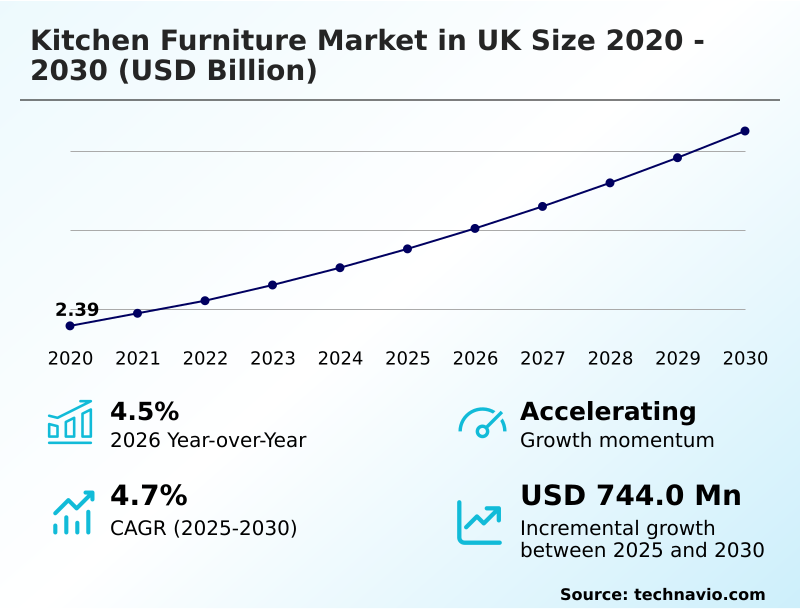
The uk kitchen furniture market size is valued to increase by USD 744 million, at a CAGR of 4.7% from 2025 to 2030. Sustainable materiality and industrialization of circular kitchen architectures will drive the uk kitchen furniture market.
Major Market Trends & Insights
- By Type - Kitchen cabinets segment was valued at USD 1.25 billion in 2024
- By Application - Residential segment accounted for the largest market revenue share in 2024
Market Size & Forecast
- Market Opportunities: USD 1.23 billion
- Market Future Opportunities: USD 744 million
- CAGR from 2025 to 2030 : 4.7%
Market Summary
- The kitchen furniture market in UK is undergoing a strategic realignment, pivoting from new-build demand to a specialized renovation sector. This shift is driven by homeowners investing in long-term functionality, transforming kitchens into multi-purpose spaces for socializing, work, and culinary activities.
- Key trends include the institutionalization of experiential showrooms offering virtual design integration, allowing consumers to visualize bespoke cabinetry and multifunctional modular storage solutions before purchase. Concurrently, a significant driver is the transition toward sustainable materiality and circular design architectures, with a rising preference for eco-certified furniture.
- For instance, a manufacturer may adopt automated cnc machining and precision joinery not only to produce bespoke cabinetry efficiently but also to minimize waste, aligning with circular economy principles. However, the industry faces challenges from material cost volatility for components like high-pressure laminates, forcing strategic product redesigns.
- The market is also characterized by the integration of smart technologies, such as smart-lighting arrays, which are becoming standard expectations in premium segments.
What will be the Size of the UK Kitchen Furniture Market during the forecast period?
Get Key Insights on Market Forecast (PDF) Get Free Sample
How is the UK Kitchen Furniture Market Segmented?
The uk kitchen furniture industry research report provides comprehensive data (region-wise segment analysis), with forecasts and estimates in "USD million" for the period 2026-2030, as well as historical data from 2020-2024 for the following segments.
- Type
- Kitchen cabinets
- Kitchen chairs
- Kitchen tables
- Others
- Application
- Residential
- Commercial
- Distribution channel
- Offline
- Online
- Geography
- Europe
- UK
- Europe
By Type Insights
The kitchen cabinets segment is estimated to witness significant growth during the forecast period.
The kitchen cabinets segment is the financial cornerstone of the market, accounting for over 60% of total project value.
This segment is defined by a consumer shift toward integrated storage solutions that are governed by ergonomic design principles and enabled by features like smart-lighting arrays and touch-to-open sensors.
Growth is driven by multifunctional modular storage and sophisticated modular construction techniques. Demand is increasing for specialized units such as larder units and walk-in pantries, alongside task-specific built-ins like beverage station integration.
Design influences from scandinavian-inspired designs and premium german-engineered cabinetry are also prominent, shaping aesthetics toward clean lines and high functionality in modern kitchen environments.
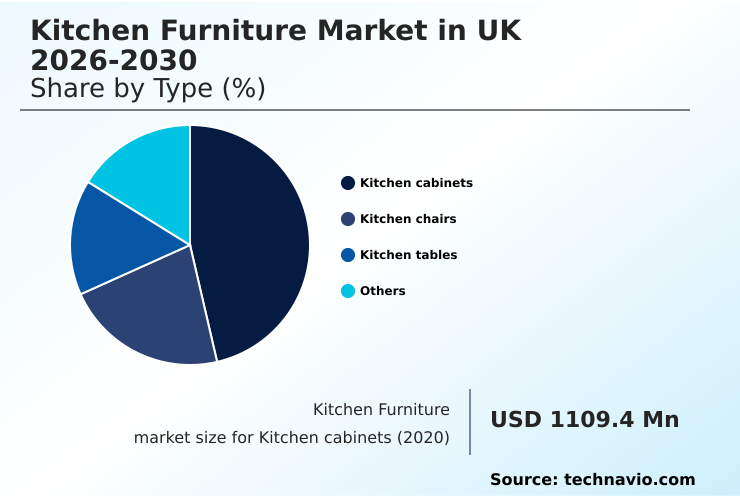
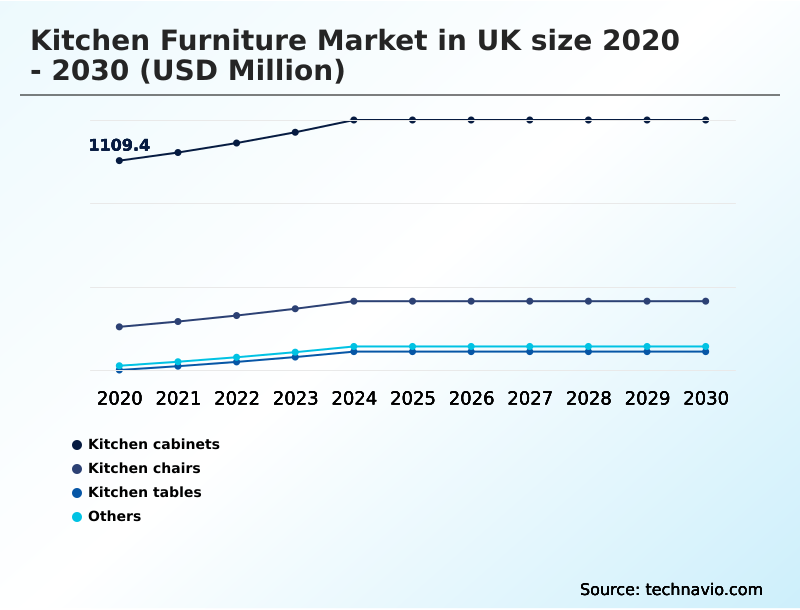
The Kitchen cabinets segment was valued at USD 1.25 billion in 2024 and showed a gradual increase during the forecast period.
Market Dynamics
Our researchers analyzed the data with 2025 as the base year, along with the key drivers, trends, and challenges. A holistic analysis of drivers will help companies refine their marketing strategies to gain a competitive advantage.
- Navigating the modern market requires a multifaceted strategy, beginning with an understanding of consumer preferences when comparing freestanding vs fitted kitchen units and designing multifunctional social kitchen spaces. The role of experiential showrooms in sales is undeniable, especially when using virtual reality for kitchen planning to create compelling, immersive experiences.
- On the production side, the benefits of modular construction in kitchens are clear, particularly when using sustainable materials for kitchen worktops like FSC-certified timber for bespoke kitchens and reclaimed wood in modern kitchens.
- Manufacturers must evaluate the impact of high-pressure laminates on durability and the advantages of moisture-resistant polymer cabinets while choosing low-VOC finishes for kitchen cabinets to meet environmental standards. Incorporating circular design principles for kitchen furniture is crucial, as is optimizing storage with deep-drawer pull-outs.
- Product innovation is also key, with features like integrating smart lighting in kitchen cabinetry, integrating invisible technology in kitchens, and offering rise-and-fall worktops for inclusive kitchens. Addressing the challenges of raw material volatility necessitates operational excellence; for example, automating kitchen furniture manufacturing processes has been shown to reduce material waste by over 25% compared to traditional methods.
- Furthermore, offering tool-free assembly for DIY kitchen furniture can expand market reach and appeal to a broader consumer base.
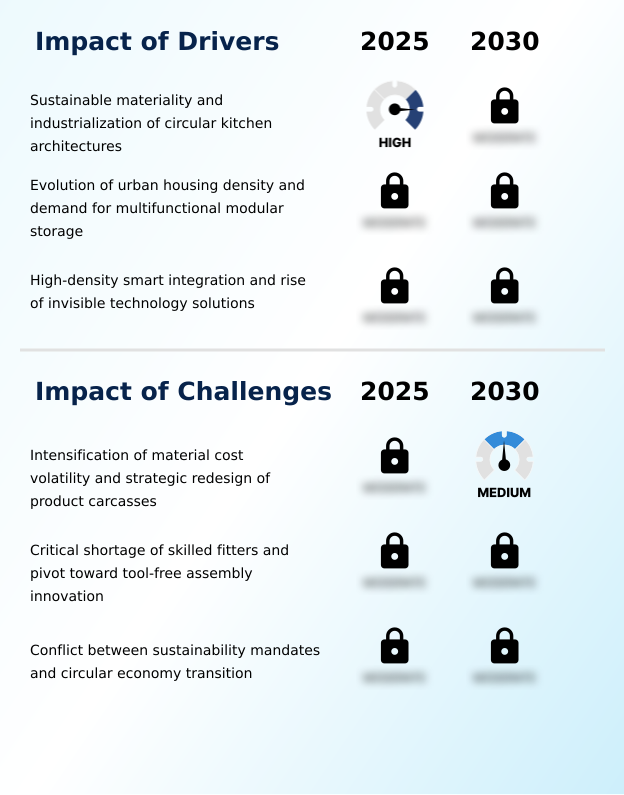
What are the key market drivers leading to the rise in the adoption of UK Kitchen Furniture Industry?
- The shift toward sustainable materiality and the industrialization of circular kitchen architectures are key drivers for market growth.
- A key market driver is the fundamental transition toward sustainable materiality and the industrialization of circular design architectures.
- Consumer consciousness and environmental mandates are compelling a move beyond traditional materials toward certified carbon-neutral materials, including FSC-certified hardwoods, reclaimed wood, and innovative bio-based composites.
- This shift is reshaping supply chains, with demand for eco-certified furniture and sustainable wood alternatives surging. For instance, consumer preference for products with verifiable sustainability credentials has increased by over 40% in recent years.
- This driver also influences product specifications, leading to the elimination of high-VOC finishes in favor of water-based lacquers and other low-VOC kitchen finishes.
- The adoption of circular economy kitchen design principles, which prioritize longevity and recyclability, is becoming a cornerstone of both residential and new-build procurement strategies, impacting everything from solid wood worktops to eco-friendly kitchen materials.
What are the market trends shaping the UK Kitchen Furniture Industry?
- The institutionalization of experiential showrooms that feature virtual design integration is an important emerging trend. This shift prioritizes immersive customer engagement and advanced visualization tools in the purchasing process.
- A primary trend is the institutionalization of experiential showrooms, which are merging physical engagement with advanced virtual design integration. This phygital retail model is becoming an industry standard, with some retailers reporting a 20% higher conversion rate for high-value purchases compared to online-only channels.
- Consumers are now stepping into customized layouts via virtual reality before manufacturing begins, a process that can shorten decision-making timelines by over 50%. This movement supports the proliferation of multi-functional social kitchens and integrated living zones. The aesthetic is defined by handle-less aesthetics and biophilic material palettes, while functionality is enhanced with innovations like FurnSpin rotating units and diagonal cabinetry.
- These interactive environments, featuring kitchen island designs and breakfast bars, transform the purchase journey into a curated design experience aligned with modern demands for transparency and professional expertise within open-plan kitchen layouts.
What challenges does the UK Kitchen Furniture Industry face during its growth?
- The intensification of material cost volatility, coupled with the necessity for strategic redesign of product carcasses, presents a key challenge to industry growth.
- The industry is contending with significant structural challenges, led by the extreme volatility of raw material pricing for timber, metals, and specialized polymers like high-pressure laminates. Input costs have escalated by over 35% in some quarters, squeezing margins and compelling manufacturers to pursue strategic redesign of product carcasses.
- This often involves using different cabinet carcass materials, which risks brand reputation if durability is perceived as compromised. Concurrently, a shortage of skilled installers is driving a pivot toward tool-free assembly innovation and ready-to-assemble cabinets, with tool-free systems capable of reducing on-site installation time by up to 50%.
- However, the high capital investment required for automating kitchen furniture manufacturing processes, including automated CNC machining and precision joinery, creates a barrier for smaller firms, intensifying competition with large-scale suppliers of DIY-friendly kitchen ranges.
Exclusive Technavio Analysis on Customer Landscape
The uk kitchen furniture market forecasting report includes the adoption lifecycle of the market, covering from the innovator’s stage to the laggard’s stage. It focuses on adoption rates in different regions based on penetration. Furthermore, the uk kitchen furniture market report also includes key purchase criteria and drivers of price sensitivity to help companies evaluate and develop their market growth analysis strategies.
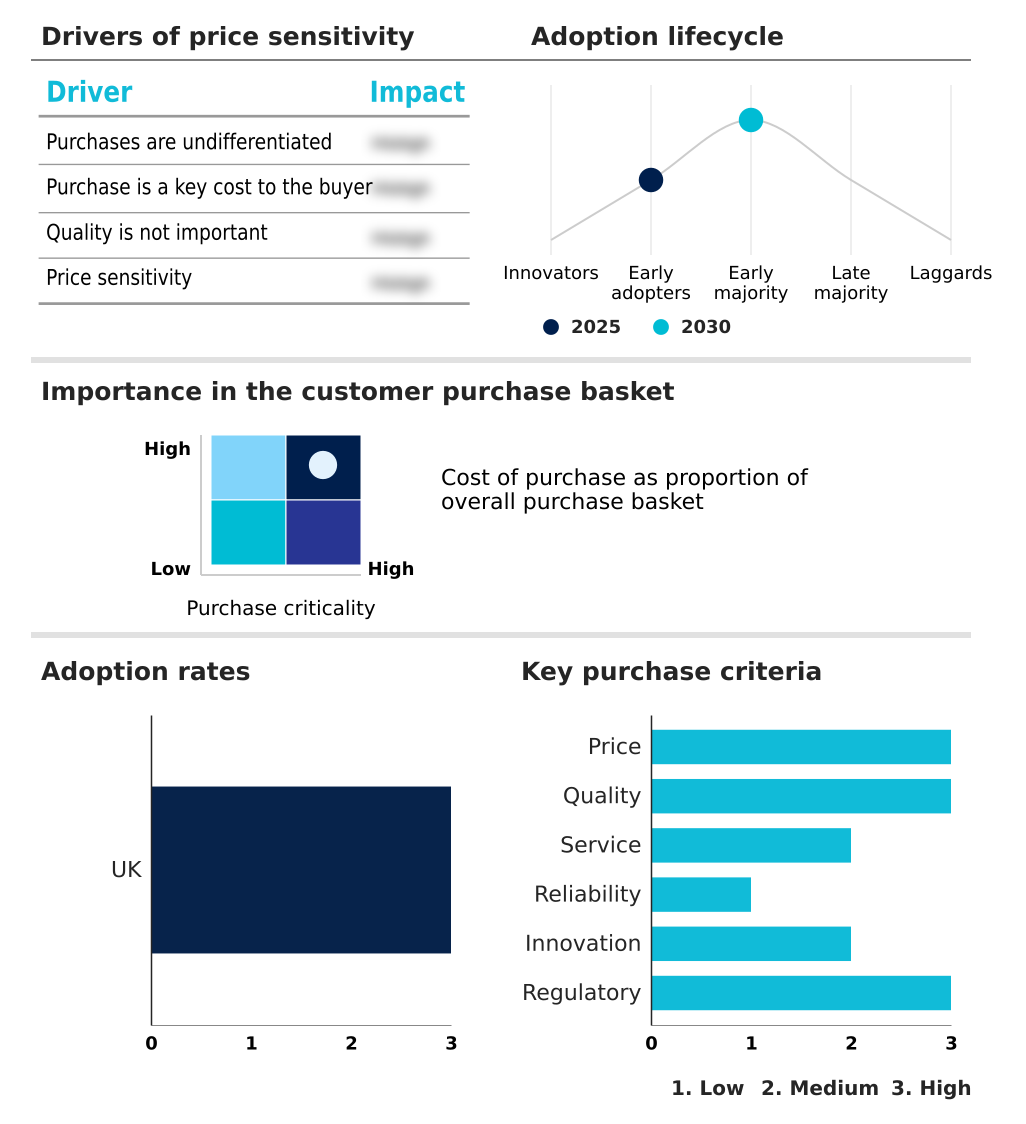
Customer Landscape of UK Kitchen Furniture Industry
Competitive Landscape
Companies are implementing various strategies, such as strategic alliances, uk kitchen furniture market forecast, partnerships, mergers and acquisitions, geographical expansion, and product/service launches, to enhance their presence in the industry.
Avanti Fitted Kitchens Ltd - Delivers bespoke fitted kitchens and tailored storage solutions, focusing on modern cabinetry and customized functionality for residential applications.
The industry research and growth report includes detailed analyses of the competitive landscape of the market and information about key companies, including:
- Avanti Fitted Kitchens Ltd
- B and Q
- Commodore Kitchens Ltd
- Crown Imperial
- Dennis and Robinson Ltd
- Howden Joinery Group plc
- Inter IKEA Holding BV
- LEICHT Kuchen AG
- Magnet fitted kitchens
- Moores Furniture Group
- Nobia AB
- Omega plc
- Paula Rosa Manhattan
- Procurement for Housing
- Reginox bv
- Schuller Mobelwerk KG
- The Symphony Group plc
- Wickes Building Supplies Ltd.
- Wren Kitchens Ltd
Qualitative and quantitative analysis of companies has been conducted to help clients understand the wider business environment as well as the strengths and weaknesses of key industry players. Data is qualitatively analyzed to categorize companies as pure play, category-focused, industry-focused, and diversified; it is quantitatively analyzed to categorize companies as dominant, leading, strong, tentative, and weak.
Recent Development and News in Uk kitchen furniture market
- In May, 2025, Alteri Investors completed the acquisition of Magnet from the Swedish Nobia Group, a strategic move designed to revitalize the brand by focusing on its domestic manufacturing and retail expertise.
- In March, 2025, Wren Kitchens solidified its market leadership by launching its new Home Trends Report, emphasizing sociable, flexible spaces through modular unit shapes and biophilic material palettes.
- In January, 2025, The Symphony Group advanced its leadership in inclusive design by unveiling its Future-Proof Kitchens initiative, which integrates accessible features from its specialist ranges into mainstream collections.
- In October, 2024, Uform confirmed a major industry shift with its new trends report, highlighting that sustainability has become a foundational market requirement, evidenced by a record surge in demand for ethically sourced cabinetry.
Dive into Technavio’s robust research methodology, blending expert interviews, extensive data synthesis, and validated models for unparalleled UK Kitchen Furniture Market insights. See full methodology.
| Market Scope | |
|---|---|
| Page number | 169 |
| Base year | 2025 |
| Historic period | 2020-2024 |
| Forecast period | 2026-2030 |
| Growth momentum & CAGR | Accelerate at a CAGR of 4.7% |
| Market growth 2026-2030 | USD 744.0 million |
| Market structure | Fragmented |
| YoY growth 2025-2026(%) | 4.5% |
| Key countries | UK |
| Competitive landscape | Leading Companies, Market Positioning of Companies, Competitive Strategies, and Industry Risks |
Research Analyst Overview
- The market is advancing through a focus on high-value renovation and technological integration. Demand for fitted and freestanding cabinetry is shaped by the need for multifunctional modular storage solutions that support modern lifestyles. Key innovations include the adoption of tool-free assembly innovation and strategic redesign of product carcasses to mitigate material cost pressures.
- The industry is embedding high-density smart integration and invisible technology solutions, from touch-to-open sensors to smart-lighting arrays. A significant boardroom-level focus is on sustainable materiality, with a shift toward carbon-neutral materials like FSC-certified hardwoods, reclaimed wood, and bio-based composites, alongside the use of water-based lacquers over high-volatile organic compound (VOC) finishes.
- This commitment to circular design architectures and eco-certified furniture is not just a trend but a core strategic pillar. Implementations of virtual design integration have been shown to shorten the sales cycle by up to 40%.
- This is achieved through precision joinery, automated CNC machining, and creating bespoke cabinetry with features like deep-drawer pull-outs, larder units, and biophilic material palettes to create multi-functional social kitchens with integrated living zones.
What are the Key Data Covered in this UK Kitchen Furniture Market Research and Growth Report?
-
What is the expected growth of the UK Kitchen Furniture Market between 2026 and 2030?
-
USD 744 million, at a CAGR of 4.7%
-
-
What segmentation does the market report cover?
-
The report is segmented by Type (Kitchen cabinets, Kitchen chairs, Kitchen tables, and Others), Application (Residential, and Commercial), Distribution Channel (Offline, and Online) and Geography (Europe)
-
-
Which regions are analyzed in the report?
-
Europe
-
-
What are the key growth drivers and market challenges?
-
Sustainable materiality and industrialization of circular kitchen architectures, Intensification of material cost volatility and strategic redesign of product carcasses
-
-
Who are the major players in the UK Kitchen Furniture Market?
-
Avanti Fitted Kitchens Ltd, B and Q, Commodore Kitchens Ltd, Crown Imperial, Dennis and Robinson Ltd, Howden Joinery Group plc, Inter IKEA Holding BV, LEICHT Kuchen AG, Magnet fitted kitchens, Moores Furniture Group, Nobia AB, Omega plc, Paula Rosa Manhattan, Procurement for Housing, Reginox bv, Schuller Mobelwerk KG, The Symphony Group plc, Wickes Building Supplies Ltd. and Wren Kitchens Ltd
-
Market Research Insights
- Market dynamics are increasingly shaped by consumer demand for integrated living and enhanced functionality. The preference for open-plan kitchen layouts is driving innovation in bespoke fitted kitchens featuring customizable storage systems. Designs incorporating solutions like walk-in pantries have been shown to increase perceived home value by up to 15%, reflecting a strong return on investment.
- Furthermore, the adoption of smart kitchen storage solutions is gaining traction, with some systems helping reduce household food waste by approximately 20% through superior organization and visibility. This trend is complemented by a growing commitment to eco-friendly kitchen materials, as sustainability becomes a key purchasing criterion alongside aesthetics and utility, influencing both product development and brand positioning.
We can help! Our analysts can customize this uk kitchen furniture market research report to meet your requirements.
 RIA -
RIA - 
