



Voice Biometrics Market Size 2025-2029
The voice biometrics market size is forecast to increase by USD 6.35 billion at a CAGR of 25.1% between 2024 and 2029.
- The market is experiencing significant growth, driven by the increasing adoption of voice recognition technology in the Banking, Financial Services, and Insurance (BFSI) sector. This sector's shift towards voice biometrics is due to the need for enhanced security and improved customer experience. Speaker verification, a type of voice biometrics, uses artificial intelligence and machine learning algorithms to analyze voice patterns and create voice prints for comparison. Another key driver is the introduction of voice biometrics in the automotive industry, where it is being integrated into in-car systems for personalized entertainment and hands-free control. However, the market also faces challenges. One significant obstacle is the lack of accuracy of access control passwords, which can lead to security vulnerabilities and user frustration.
- Voice biometrics offers a solution to this challenge by providing a more secure and convenient alternative to traditional passwords. Despite these opportunities and challenges, companies must navigate the complexities of implementing voice biometrics technology effectively to capitalize on market opportunities and maintain a competitive edge. Cloud computing technology plays a crucial role in the market by enabling the storage and processing of large volumes of biometric data
What will be the Size of the Voice Biometrics Market during the forecast period?
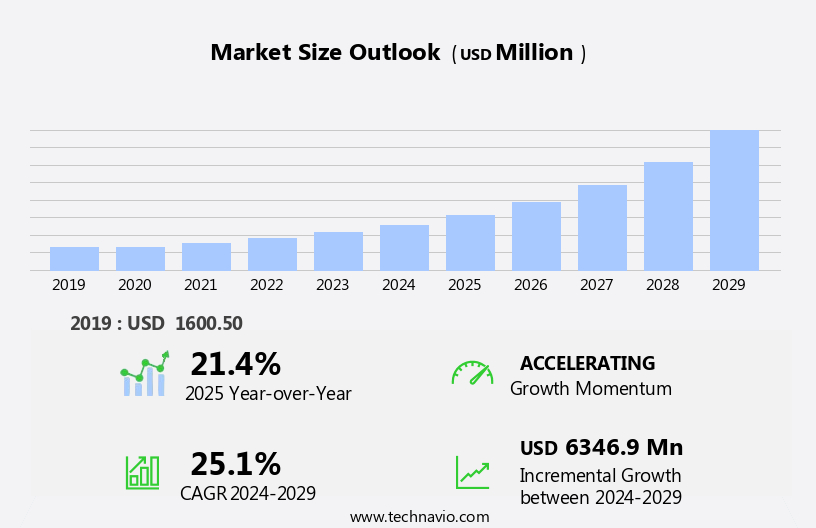
Explore in-depth regional segment analysis with market size data - historical 2019-2023 and forecasts 2025-2029 - in the full report.
Request Free Sample
The market is witnessing significant growth as businesses adopt voice-based authentication for identity management and multi-factor authentication in their authentication infrastructure. Voice-driven applications, such as voice search and voice-activated systems, are driving the demand for advanced acoustic models and language models in the authentication ecosystem. Biometric sensor technology and voice recognition engines are essential components of voice biometric systems, enabling feature extraction, threshold setting, emotional analysis, and fraud detection. The future trends in voice biometrics include voice stress analysis, noise cancellation, and biometric innovation to enhance the overall user experience. Biometric standards are crucial in ensuring the interoperability and security of voiceprint templates and voice-based interaction within the digital identity landscape.
Voice control and voice assistants are increasingly becoming integral parts of our daily lives, further expanding the market penetration of voice biometrics. Authentication servers play a vital role in managing and securing the enrollment database and providing seamless authentication services. The integration of biometric sensors and voice recognition engines in various industries is expected to fuel the growth of the market.
How is this Voice Biometrics Industry segmented?
The voice biometrics industry research report provides comprehensive data (region-wise segment analysis), with forecasts and estimates in "USD million" for the period 2025-2029, as well as historical data from 2019-2023 for the following segments.
- Type
- Active voice biometrics
- Passive voice biometrics
- End-user
- BFSI
- Government
- Telecommunication
- Healthcare
- Others
- Component
- Software
- Services
- Geography
- North America
- US
- Canada
- Europe
- France
- Germany
- Italy
- UK
- APAC
- China
- India
- Japan
- South America
- Brazil
- Rest of World (ROW)
- North America
By Type Insights
The Active voice biometrics segment is estimated to witness significant growth during the forecast period. The market is experiencing significant growth due to the increasing demand for advanced identity verification solutions. Active voice biometrics, a technology that utilizes a person's unique voice characteristics for authentication, is at the forefront of this trend. This technology offers several benefits, including enhanced security, improved user experience, and more accurate identity verification. Furthermore, the integration of voice biometrics with other biometric modalities, such as facial recognition and fingerprint scanning, creates a multi-modal authentication approach that strengthens security.
The finance, healthcare, and telecommunication industries are among the key adopters of voice biometrics, contributing to its growing popularity. Deep learning and natural language processing are also used to enhance the accuracy of voice biometrics systems. Data security and protection are essential considerations in the market, with encryption and access control measures implemented to safeguard biometric data. Liveness detection and spoofing detection technologies are also used to prevent fraud and ensure the authenticity of voice samples. Authentication solutions that offer fast verification times and high verification accuracy are in high demand. The false acceptance rate and false rejection rate are key performance indicators that are closely monitored to ensure the effectiveness of voice biometrics systems.
Speech signal processing and voice analysis are critical components of voice biometrics systems, with acoustic analysis and voice profiling used to extract features from voice samples. Voice recognition software and voice signal processing technologies are continually evolving to improve verification accuracy and reduce verification time. The market is experiencing significant growth due to the increasing demand for advanced identity verification solutions. Active voice biometrics, cloud computing, artificial intelligence, and other emerging technologies are driving innovation in this market, while data security and user experience remain key priorities. The integration of voice biometrics with other biometric modalities and its adoption in various industries are also contributing to its growing popularity.
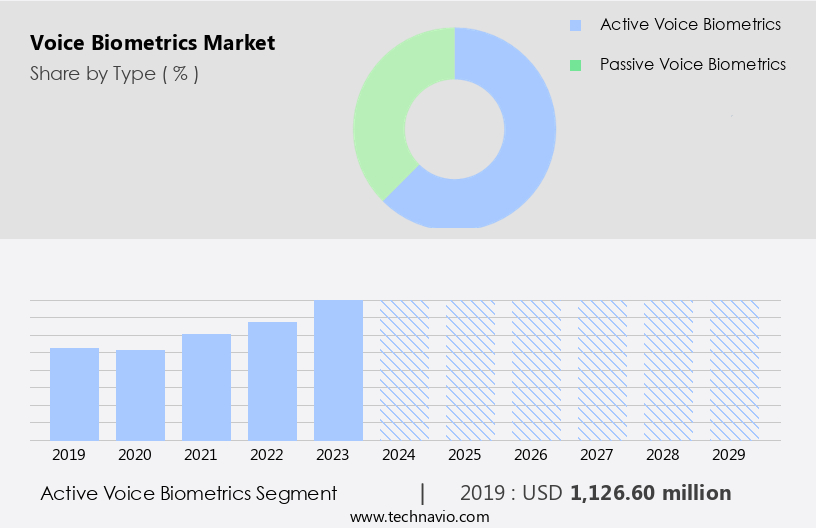
The Active voice biometrics segment was valued at USD 1.13 billion in 2019 and showed a gradual increase during the forecast period.
The Voice Biometrics Market is expanding rapidly as security solutions evolve to meet digital demands. Central to this growth is the voice recognition engine, which, powered by an acoustic model and language model, enables accurate identification through speech. A unique voiceprint template is generated for each individual, serving as a personal audio fingerprint. This template is matched via an authentication server during access requests, ensuring robust security. Advances in speech enhancement further boost system accuracy, even in noisy environments. Integration with a broader biometric authentication system supports multi-factor verification, strengthening protection across platforms. Rising biometric adoption across sectors like banking, telecom, and healthcare is driving demand for voice-based solutions, combining convenience with cutting-edge security.
Regional Analysis
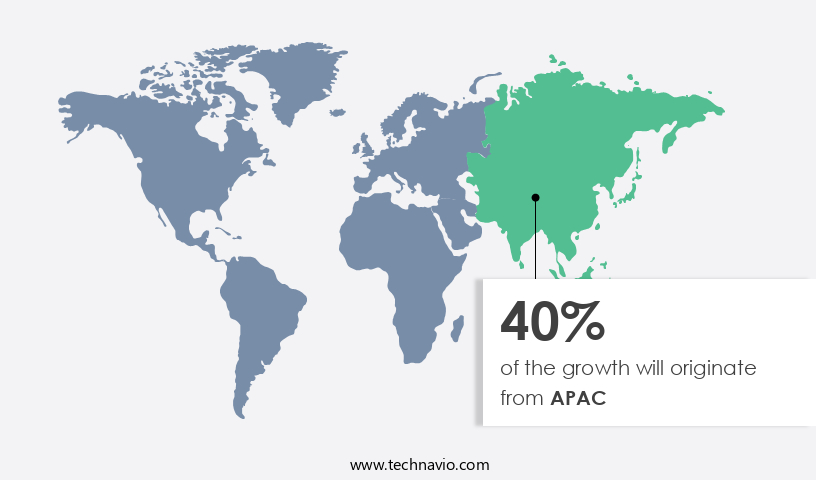
APAC is estimated to contribute 40% to the growth of the global market during the forecast period.Technavio's analysts have elaborately explained the regional trends and drivers that shape the market during the forecast period.
Voice biometrics, a form of biometric authentication, is gaining traction in various industries due to its convenience and security benefits. The enrollment process involves capturing and analyzing voice samples to create a unique voiceprint. Cloud computing enables the storage and processing of large volumes of biometric data, ensuring data protection and security. Artificial intelligence, deep learning, and machine learning technologies are integral to voice biometrics, enhancing speaker verification and voice pattern analysis. Financial services, including banks and ATMs, are major adopters, using voice biometrics for identity verification and fraud prevention. Voice spoofing detection is a crucial aspect, ensuring the authenticity of voice samples.
User experience is prioritized through quick enrollment times and high verification accuracy. APIs facilitate seamless integration into existing systems. Wearable technology and mobile devices are driving the market's growth, enabling voice-activated access to various services. Voice biometrics also offers access control and liveness detection, adding an extra layer of security. Speech recognition and natural language processing are essential components, enabling voice commands and voice-activated authentication. Equal error rate and false acceptance rate are critical metrics, ensuring reliable and accurate authentication. Voice biometrics platforms and authentication solutions provide robust solutions, offering speech signal processing, voice profiling, and voice analysis.
Data storage and user authentication are addressed through secure data storage and liveness detection. Voice biometrics is revolutionizing customer authentication and verification, offering a more secure and convenient alternative to traditional methods.
Market Dynamics
Our researchers analyzed the data with 2024 as the base year, along with the key drivers, trends, and challenges. A holistic analysis of drivers will help companies refine their marketing strategies to gain a competitive advantage.
What are the Voice Biometrics market drivers leading to the rise in the adoption of Industry?
- The rising prominence of voice biometrics technology in the BFSI sector is the primary market driver, as financial institutions increasingly adopt this advanced security measure to enhance customer experience and ensure greater security in their interactions. Voice biometrics, a technology that uses voice verification and identification for user authentication, is gaining traction in various industries, particularly in the banking and financial services sector (BFSI). With the digital transformation of the payments and card industry, consumer preferences are shifting towards convenient and secure payment methods, such as mobile wallets and online banking. However, this digitization also brings about an increase in fraudulent activities.
- Mobile devices have become the preferred choice for banking transactions, and voice biometrics is being integrated into mobile applications for added security and convenience. Fraud prevention is a critical concern for financial institutions, and voice biometrics offers a low false rejection rate, ensuring that only authorized users are granted access to their accounts. The adoption of voice biometrics is expected to continue growing as technology advances and consumer demand for secure and convenient authentication solutions increases. To address this challenge, voice biometrics is being adopted as an effective solution. It offers a user-friendly and affordable alternative to traditional authentication methods, requiring no hardware investment. Voice biometrics technology utilizes deep learning algorithms and artificial intelligence to analyze and authenticate a user's voice patterns, making it difficult to duplicate or forge.
What are the Voice Biometrics market trends shaping the Industry?
- The integration of voice biometrics technology is becoming increasingly prevalent in the automotive sector, representing a significant market trend. This innovation enables vehicles to recognize and authenticate drivers through their unique voice patterns, enhancing security and convenience. Voice biometrics is an emerging technology in customer authentication, offering convenience and affordability for various industries, including the automotive sector. The rapid expansion of the connected car market, driven by the Internet and wireless services, facilitates remote access to vehicles for navigation, infotainment, telematics, roadside assistance, video transmission, and stolen vehicle tracking.
- Biometric integration and data storage have become essential components of user authentication, ensuring the protection of sensitive information. Furthermore, liveness detection during enrollment and authentication processes adds an extra layer of security. The Asia Pacific region, particularly countries like Thailand, is experiencing significant growth in the automotive industry due to increasing demand for low-cost infotainment and telematics solutions. In addition, voice biometrics enables personalized in-vehicle preferences, such as Nuance Communications' Dragon Drive platform, ensuring seamless connectivity and an enhanced driving experience. Advancements in voice authentication through voice pattern analysis and machine learning algorithms have led to a decrease in false acceptance rates, making access control more secure.
How does Voice Biometrics market faces challenges during its growth?
- The inadequate accuracy of access control passwords poses a significant challenge to industry growth, as weak authentication can lead to data breaches, system vulnerabilities, and potential financial losses. It is crucial for organizations to prioritize implementing robust password policies and multi-factor authentication methods to mitigate these risks and ensure the security and integrity of their systems and data. Voice biometrics, an innovative technology that uses speech signal processing for user authentication, is gaining traction as a more convenient and secure alternative to traditional methods such as personal identification numbers (PINs) and passwords. However, the accuracy of voice biometric systems can be influenced by various factors, including changes in voice intonations, throat problems, aging, environmental factors, and background noise.
- Verification accuracy and verification time are crucial factors in the effectiveness of voice biometric systems. Authentication speed and equal error rate are also essential metrics to consider. To mitigate the challenges of voice biometric systems, advanced voice analysis techniques, such as natural language processing, are being integrated to improve accuracy and reduce false rejections. Voice signal processing and voice data are continuously being refined to enhance the user experience and ensure robust security. Despite the challenges, voice biometrics offer significant benefits, including convenience, improved security, and reduced reliance on traditional passwords and PINs. These issues can lead to false rejections or false acceptances, compromising security. Speech signal processing involves acoustic analysis, voice profiling, and voice recognition software to create a unique voiceprint for each user. This voiceprint is then stored in a database for future verification.
Exclusive Customer Landscape
The voice biometrics market forecasting report includes the adoption lifecycle of the market, covering from the innovator's stage to the laggard's stage. It focuses on adoption rates in different regions based on penetration. Furthermore, the voice biometrics market report also includes key purchase criteria and drivers of price sensitivity to help companies evaluate and develop their market growth analysis strategies.
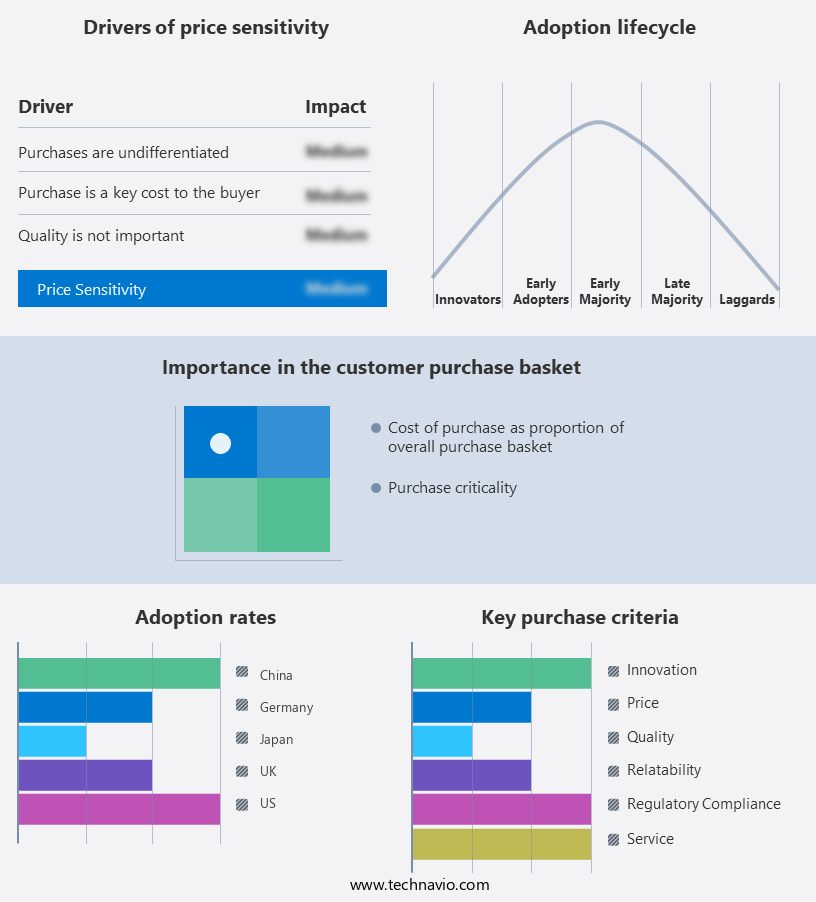
Customer Landscape
Key Companies & Market Insights
Companies are implementing various strategies, such as strategic alliances, voice biometrics market forecast, partnerships, mergers and acquisitions, geographical expansion, and product/service launches, to enhance their presence in the industry.
Aculab Plc - The company specializes in voice biometrics technology, offering solutions such as ArmorVox, EVA for Contact Centers, EVA Web, and EVA Forensics.
The industry research and growth report includes detailed analyses of the competitive landscape of the market and information about key companies, including:
- Aculab Plc
- Auraya Systems Pty. Ltd.
- Aware Inc.
- ID R and D
- Kaizen Voiz
- LumenVox GmbH
- NICE Ltd.
- Nuance Communications Inc.
- OneVault Pty. Ltd.
- Phonexia Sro
- Pindrop Security Inc.
- Sensory Inc.
- Speech Technology Center Ltd.
- Unifonic
- Uniphore Technologies Inc.
- ValidSoft Group
- Verint Systems Inc.
- Voice Biometrics Group
- VoicePIN.com Sp zoo
- Voxta
Qualitative and quantitative analysis of companies has been conducted to help clients understand the wider business environment as well as the strengths and weaknesses of key industry players. Data is qualitatively analyzed to categorize companies as pure play, category-focused, industry-focused, and diversified; it is quantitatively analyzed to categorize companies as dominant, leading, strong, tentative, and weak.
Recent Development and News in Voice Biometrics Market
- In January 2024, Amazon Web Services (AWS) announced the launch of Amazon Leonardo Skills Kit for Voice, enabling developers to create custom voice biometric authentication solutions using deep learning technologies (AWS Press Release, 2024).
- In March 2024, Mastercard and Nuance Communications entered into a strategic partnership to integrate Nuance's voice biometric technology into Mastercard's Identity Check Mobile solution, enhancing security and convenience for digital payments (Mastercard Newsroom, 2024).
- In May 2024, Beyond Identity, a voice biometrics company, secured a USD30 million Series B funding round, led by New Enterprise Associates, to accelerate the commercialization of its voice-enabled multi-factor authentication technology (Beyond Identity Press Release, 2024).
- In January 2025, Apple announced the integration of voice biometrics into its Apple ID account setup process, allowing users to securely authenticate their identity using their voice instead of traditional two-factor authentication methods (Apple Newsroom, 2025).
Research Analyst Overview
Voice biometrics, a subset of biometric authentication, continues to gain traction in various sectors due to its ability to provide secure and convenient identity verification solutions. This dynamic market is driven by advancements in artificial intelligence (AI) and speech recognition technologies, enabling more accurate voice pattern analysis and identification. Cloud computing plays a significant role in the market, enabling the storage and processing of large amounts of biometric data. This data is crucial for machine learning algorithms to improve verification accuracy and reduce false rejection rates. Identity verification is a primary application of voice biometrics, with financial services being an early adopter. Voice biometrics is increasingly being used on mobile devices and wearable technology for customer authentication and convenience.
Voice biometrics offers a more secure and user-friendly alternative to traditional passwords and two-factor authentication. However, the market's continuous evolution is not limited to identity verification. Voice biometrics is also being integrated into access control systems, wearable technology, and mobile devices, expanding its applications beyond identity verification. Furthermore, the integration of liveness detection and enrollment time optimization enhances the security and user experience of voice biometric systems. Data security and protection are essential considerations in the market. API integration enables seamless implementation of voice biometric solutions while ensuring data privacy and compliance with regulations. The market's ongoing unfolding is marked by advancements in speech signal processing, verification accuracy, verification time, and authentication speed.
Deep learning and natural language processing are also being employed to improve voice profiling and voice recognition software. Despite these advancements, voice biometrics is not immune to challenges. Voice spoofing detection remains an area of focus to prevent false acceptance rates and maintain the integrity of the systems. Equal error rate and false rejection rate optimization are also crucial to ensure user-friendly and accurate authentication solutions. In summary, the market is continuously evolving, driven by advancements in AI, speech recognition, and cloud computing. Its applications extend beyond identity verification, with access control, wearable technology, and mobile devices being key areas of growth.
Data security and user experience remain critical considerations, with ongoing research focusing on improving verification accuracy, reducing false rejection rates, and preventing voice spoofing.
Dive into Technavio's robust research methodology, blending expert interviews, extensive data synthesis, and validated models for unparalleled Voice Biometrics Market insights. See full methodology.
|
Market Scope |
|
|
Report Coverage |
Details |
|
Page number |
216 |
|
Base year |
2024 |
|
Historic period |
2019-2023 |
|
Forecast period |
2025-2029 |
|
Growth momentum & CAGR |
Accelerate at a CAGR of 25.1% |
|
Market growth 2025-2029 |
USD 6.35 billion |
|
Market structure |
Fragmented |
|
YoY growth 2024-2025(%) |
21.4 |
|
Key countries |
US, Canada, China, Germany, UK, India, France, Japan, Brazil, and Italy |
|
Competitive landscape |
Leading Companies, Market Positioning of Companies, Competitive Strategies, and Industry Risks |
What are the Key Data Covered in this Voice Biometrics Market Research and Growth Report?
- CAGR of the Voice Biometrics industry during the forecast period
- Detailed information on factors that will drive the growth and forecasting between 2025 and 2029
- Precise estimation of the size of the market and its contribution of the industry in focus to the parent market
- Accurate predictions about upcoming growth and trends and changes in consumer behaviour
- Growth of the market across North America, APAC, Europe, South America, and Middle East and Africa
- Thorough analysis of the market's competitive landscape and detailed information about companies
- Comprehensive analysis of factors that will challenge the voice biometrics market growth of industry companies
We can help! Our analysts can customize this voice biometrics market research report to meet your requirements.
 RIA -
RIA - 
