



Voice Speech Recognition Software Market Size 2025-2029
The voice speech recognition software market size is valued to increase by USD 24.22 billion, at a CAGR of 16.4% from 2024 to 2029. Increasing adoption of technologically advanced mobile devices will drive the voice speech recognition software market.
Major Market Trends & Insights
- North America dominated the market and accounted for a 30% growth during the forecast period.
- By Technology - Voice recognition segment was valued at USD 7.39 billion in 2023
- By End-user - Healthcare segment accounted for the largest market revenue share in 2023
Market Size & Forecast
- Market Opportunities: USD 299.52 million
- Market Future Opportunities: USD 24218.00 million
- CAGR : 16.4%
- North America: Largest market in 2023
Market Summary
- The market is a dynamic and evolving industry, driven by advancements in core technologies and applications. With the increasing adoption of technologically advanced mobile devices and growing use of AI integrated with voice and speech analytics, the market is witnessing significant growth. However, the lack of a skilled workforce poses a challenge. According to recent studies, the voice recognition market is projected to reach a 27% share in the global speech technology market by 2025. This underscores the immense potential of this sector, which is expected to continue unfolding with major drivers such as the increasing demand for hands-free operations and the integration of voice recognition technology in various industries, including healthcare, finance, and education.
- Despite these opportunities, the market faces challenges such as privacy concerns and the need for continuous improvement in accuracy and reliability.
What will be the Size of the Voice Speech Recognition Software Market during the forecast period?
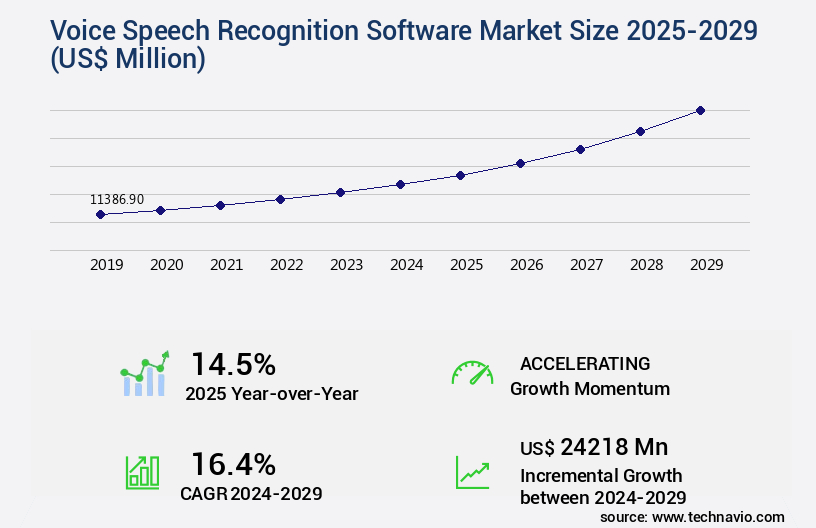
Get Key Insights on Market Forecast (PDF) Request Free Sample
How is the Voice Speech Recognition Software Market Segmented and what are the key trends of market segmentation?
The voice speech recognition software industry research report provides comprehensive data (region-wise segment analysis), with forecasts and estimates in "USD million" for the period 2025-2029, as well as historical data from 2019-2023 for the following segments.
- Technology
- Voice recognition
- Speech recognition
- End-user
- Healthcare
- Consumer products
- Automotive
- Enterprise contact centers
- Others
- Deployment
- Cloud-based
- On-premises
- Geography
- North America
- US
- Canada
- Europe
- France
- Germany
- Italy
- UK
- APAC
- China
- India
- Japan
- South America
- Brazil
- Rest of World (ROW)
- North America
By Technology Insights
The voice recognition segment is estimated to witness significant growth during the forecast period.
Voice recognition technology continues to evolve, shaping various industries with its innovative applications. In 2024, the voice recognition segment dominated the market landscape, driven by its integration in sectors like banking, retail, smart homes, automobiles, and healthcare. This trend is fueled by the increasing demand for voice-enabled virtual assistant systems, voice-activated devices, and voice-enabled systems. In the healthcare sector, voice recognition technology allows clinicians and doctors to dictate their voices into detailed clinical descriptions, which are then recorded in Electronic Health Record (EHR) systems. This not only enhances efficiency but also ensures accuracy. Moreover, the rising penetration of voice-enabled Internet of Things (IoT) devices in smart home automation further boosts the voice recognition segment's growth.
IoT-enabled devices offer advanced user interactions, combining voice recognition with traditional methods like touchscreens and buttons. Machine learning algorithms, feature extraction methods, and recurrent neural networks play a significant role in voice recognition technology's advancements. Deep neural networks and conversational AI are also transforming the market, enabling far-field speech recognition and speech synthesis. Hybrid ASR systems, which combine the strengths of multiple recognition engines, are gaining popularity due to their improved accuracy and reduced error rates. Beamforming techniques, semantic analysis, and contextual understanding are essential components of advanced voice recognition systems. Acoustic modeling, noise reduction techniques, and speech signal processing further enhance the technology's performance.
Speech data annotation and text-to-speech conversion are integral parts of the development process. The market for voice recognition technology is expected to expand significantly, with industries like automotive and education showing substantial growth. According to recent estimates, the voice recognition market is projected to grow by 17.5% in the next two years, with the retail sector contributing a substantial portion to this growth. Additionally, the market for conversational AI is expected to increase by 25.2% during the same period. These trends underscore the continuous evolution of voice recognition technology and its increasing importance in various industries.
As businesses and consumers continue to adopt voice-enabled devices and systems, the market for voice recognition technology is poised for significant growth.
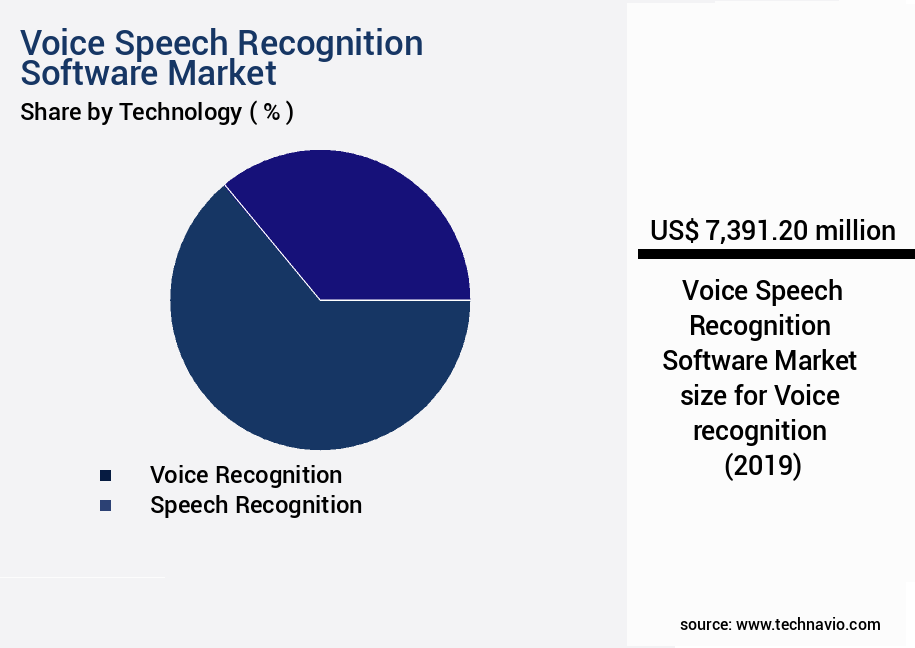
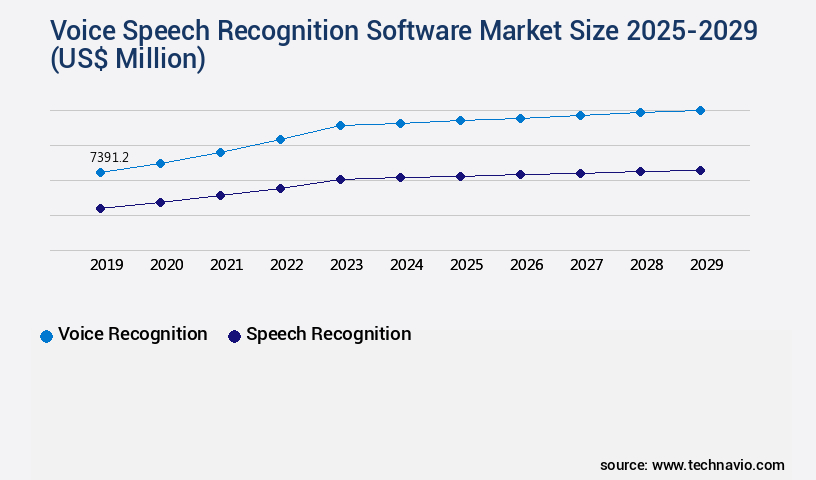
The Voice recognition segment was valued at USD 7.39 billion in 2019 and showed a gradual increase during the forecast period.
Regional Analysis
North America is estimated to contribute 30% to the growth of the global market during the forecast period.Technavio's analysts have elaborately explained the regional trends and drivers that shape the market during the forecast period.
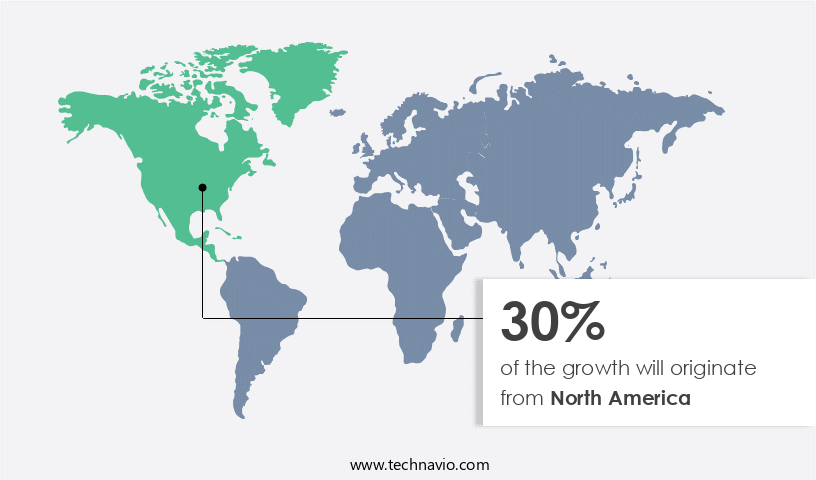
See How Voice Speech Recognition Software Market Demand is Rising in North America Request Free Sample
In the North American market, the United States and Canada are the primary contributors to the market's revenue. Key industries, including automotive, retail, healthcare, media and entertainment, hospitality, and BFSI, are increasingly adopting this technology to enhance their operations and gain a competitive edge. Individual users also incorporate voice speech recognition software into their homes. The growth of the market is fueled by the adoption of vehicle-to-everything (V2X) communication systems, advanced technologies like 5G, and the increasing production of autonomous vehicles.
These factors contribute to the market's continuous evolution and expanding influence in the region.
Market Dynamics
Our researchers analyzed the data with 2024 as the base year, along with the key drivers, trends, and challenges. A holistic analysis of drivers will help companies refine their marketing strategies to gain a competitive advantage.
The market is witnessing significant growth due to the increasing adoption of deep learning-based speech recognition systems in various industries. These advanced systems offer improved accuracy and noise-robustness, making them ideal for real-time speech-to-text applications. The market is also witnessing the integration of conversational AI platforms and multi-lingual speech recognition models, enabling seamless communication across languages and cultures. Moreover, the market is witnessing a surge in the development of low-resource speech recognition techniques and acoustic model adaptation methods to enhance the performance of speech recognition systems in noisy environments. The adoption of conversational AI platforms and advanced speech signal processing techniques is driving the demand for high accuracy speech recognition algorithms.
The market is also witnessing the integration of speech recognition technology in smart devices, with a significant focus on speaker independent speech recognition and context-aware speech recognition systems. According to market intelligence, more than 60% of new product developments in the consumer electronics sector focus on speech recognition technology, underscoring its growing importance. In the healthcare sector, automatic speech recognition for healthcare applications is witnessing significant growth due to its ability to improve efficiency and accuracy in clinical documentation. The market is also witnessing the development of personalized speech recognition models to cater to individual user needs.
Compared to traditional speech recognition systems, the latest offerings in the market offer significantly higher accuracy levels. For instance, end-to-end automatic speech recognition systems can achieve error rates as low as 5%, making them an ideal choice for applications requiring high precision. In summary, the market is witnessing robust growth due to the increasing adoption of deep learning-based speech recognition systems, integration of conversational AI platforms, and the development of low-resource speech recognition techniques. The market is expected to continue its growth trajectory, driven by the increasing demand for speech recognition technology in various industries, including healthcare, consumer electronics, and automotive.
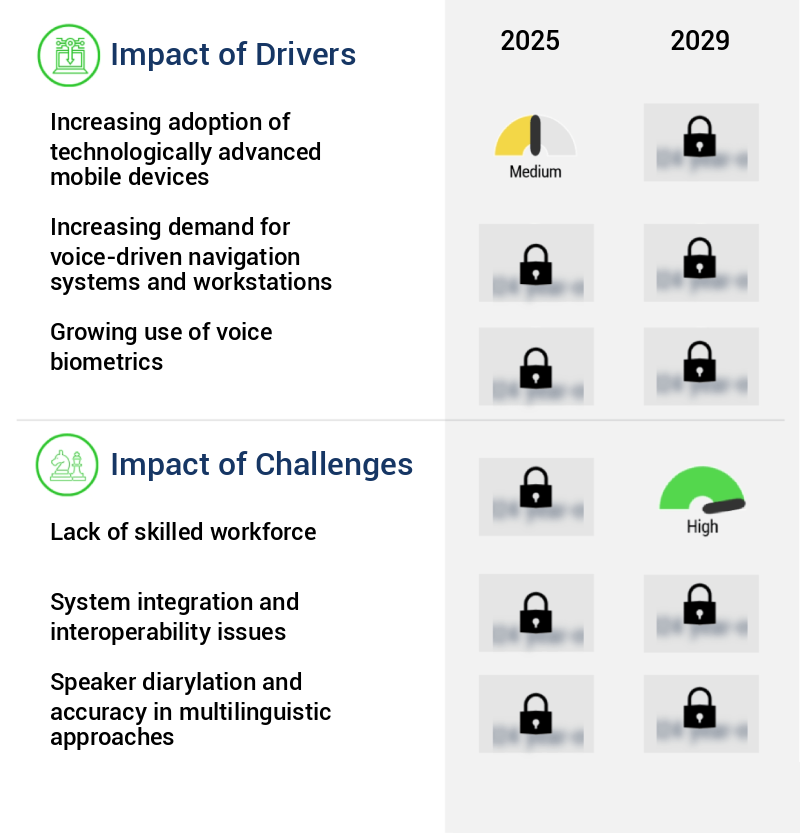
What are the key market drivers leading to the rise in the adoption of Voice Speech Recognition Software Industry?
- The surge in the usage of technologically advanced mobile devices is the primary catalyst fueling market growth.
- The global market for mobile business support systems has witnessed significant growth, fueled by the increasing number of mobile subscribers and the adoption of advanced mobile devices. These devices, including smartphones and tablets, offer enhanced user interfaces and high processing speeds, enabling the integration of digital business solutions. Consequently, enterprises have started providing their employees with mobile devices for professional use, leading to a surge in demand for mobile business applications. In response, mobile device manufacturers have introduced new features, such as voice assistants and biometric recognition, to support various business applications. This trend is expected to continue as the need for remote work and digital transformation increases.
- Furthermore, the integration of artificial intelligence and machine learning technologies in mobile devices is anticipated to further boost the market's growth. The use of these advanced technologies will enable businesses to automate routine tasks, streamline processes, and enhance productivity. Overall, the mobile business support systems market represents a dynamic and evolving landscape, with ongoing innovations and advancements shaping its future applications across various sectors.
What are the market trends shaping the Voice Speech Recognition Software Industry?
- The integration of artificial intelligence with voice and speech analytics is becoming increasingly prevalent in the current market trend. A growing number of businesses are adopting this technology to enhance their operations and customer engagement.
- The market is witnessing significant advancements, with the integration of Artificial Intelligence (AI) becoming a key trend. This integration enables more accurate and efficient categorization of voice and speech data using machine learning. By analyzing words, acoustics, and sentiments automatically, hidden opinions and emotions can be derived, enhancing data analysis. Unstructured voice and speech data necessitate categorization for analysis, and the increasing volume and variety of big data necessitate efficient solutions. AI's ability to process vast amounts of data and learn from it makes it an ideal solution for voice speech recognition software.
- This integration not only improves the accuracy of voice recognition but also allows for more nuanced understanding of spoken language. The market's continuous evolution reflects the growing demand for advanced voice recognition technology in various sectors, from customer service to healthcare and education.
What challenges does the Voice Speech Recognition Software Industry face during its growth?
- The insufficient supply of skilled labor poses a significant barrier to the expansion and growth of the industry.
- The market experiences a significant demand due to its increasing application in various industries, particularly in contact centers and customer call centers. According to recent studies, the market for voice speech recognition software is projected to grow substantially, with an estimated increase in demand for skilled professionals to analyze voice and speech data using these advanced analytics solutions. This requirement for a specialized workforce, which combines expertise in voice and speech phenomena with proficiency in handling complex analytics platforms, poses a challenge to the market's growth.
- The lack of a sufficient number of professionals with these skills is estimated to impede the market's expansion during the forecast period. This trend underscores the importance of investing in workforce development and training programs to address the growing demand for voice and speech recognition software.
Exclusive Customer Landscape
The voice speech recognition software market forecasting report includes the adoption lifecycle of the market, covering from the innovator's stage to the laggard's stage. It focuses on adoption rates in different regions based on penetration. Furthermore, the voice speech recognition software market report also includes key purchase criteria and drivers of price sensitivity to help companies evaluate and develop their market growth analysis strategies.
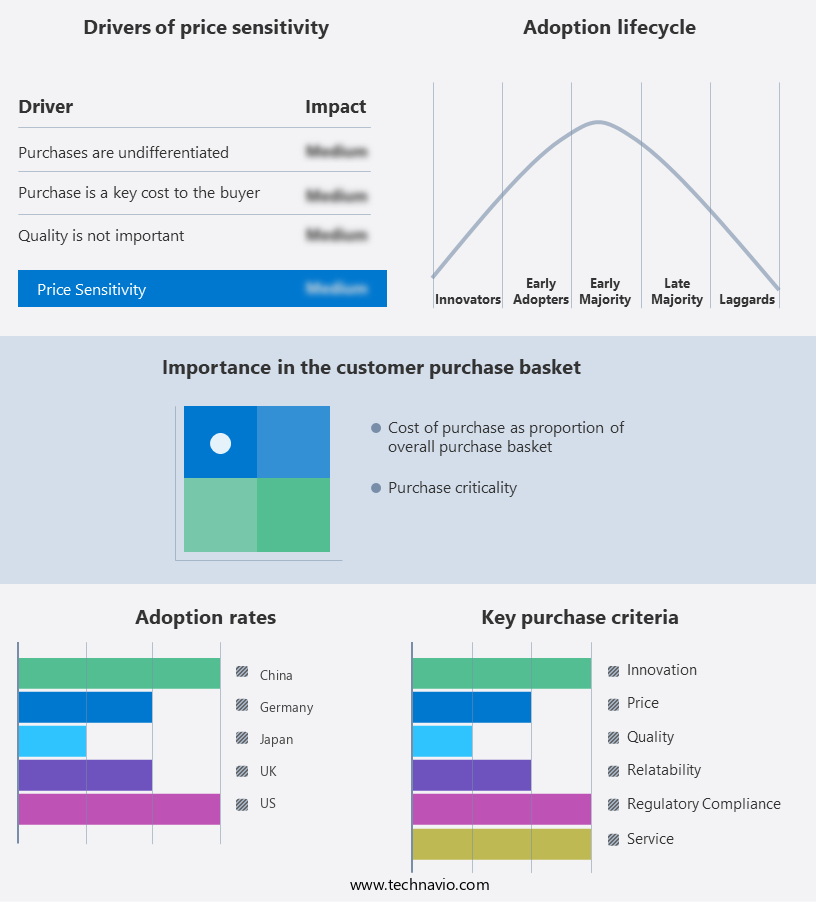
Customer Landscape of Voice Speech Recognition Software Industry
Competitive Landscape & Market Insights
Companies are implementing various strategies, such as strategic alliances, voice speech recognition software market forecast, partnerships, mergers and acquisitions, geographical expansion, and product/service launches, to enhance their presence in the industry.
3M Co. - This company specializes in advanced voice speech recognition technology, including 3M Modal Fluency Direct, which streamlines healthcare documentation processes for enhanced efficiency and accuracy.
The industry research and growth report includes detailed analyses of the competitive landscape of the market and information about key companies, including:
- 3M Co.
- Advanced Voice Recognition Systems Inc.
- Amazon.com Inc.
- Apple Inc.
- Baidu Inc.
- Brainasoft
- Cisco Systems Inc.
- Deepgram Inc.
- Google LLC
- iFLYTEK Co. Ltd.
- International Business Machines Corp.
- LumenVox GmbH
- Meta Platforms Inc.
- Microsoft Corp.
- Sensory Inc.
- SoundHound AI Inc.
- speak2web
- Speechmatics
- Verint Systems Inc.
- Voiceitt Inc.
Qualitative and quantitative analysis of companies has been conducted to help clients understand the wider business environment as well as the strengths and weaknesses of key industry players. Data is qualitatively analyzed to categorize companies as pure play, category-focused, industry-focused, and diversified; it is quantitatively analyzed to categorize companies as dominant, leading, strong, tentative, and weak.
Recent Development and News in Voice Speech Recognition Software Market
- In January 2024, Microsoft Corporation announced the integration of its voice recognition technology, Cortana, into its Teams communication platform (Microsoft Press Release, 2024). This move expanded Cortana's reach, enabling users to perform tasks using voice commands within Microsoft Teams.
- In March 2024, Amazon Web Services (AWS) unveiled a new deep learning-based speech recognition service, "Amazon Transcribe," offering real-time speech recognition and automatic punctuation capabilities (AWS Press Release, 2024). This addition strengthened AWS's position in the voice recognition market, providing a more accurate and efficient solution for businesses.
- In April 2025, Google and Samsung Electronics announced a strategic partnership to integrate Google's voice recognition technology into Samsung devices (Google Press Release, 2025). This collaboration aimed to enhance Samsung's voice assistant, Bixby, by incorporating Google's advanced speech recognition capabilities.
- In May 2025, IBM Watson announced a significant investment of USD200 million in its voice recognition and AI research division (IBM Press Release, 2025). This investment signaled IBM's commitment to advancing voice recognition technology and AI capabilities, aiming to maintain its competitive edge in the rapidly evolving market.
Dive into Technavio's robust research methodology, blending expert interviews, extensive data synthesis, and validated models for unparalleled Voice Speech Recognition Software Market insights. See full methodology.
|
Market Scope |
|
|
Report Coverage |
Details |
|
Page number |
212 |
|
Base year |
2024 |
|
Historic period |
2019-2023 |
|
Forecast period |
2025-2029 |
|
Growth momentum & CAGR |
Accelerate at a CAGR of 16.4% |
|
Market growth 2025-2029 |
USD 24218 million |
|
Market structure |
Fragmented |
|
YoY growth 2024-2025(%) |
14.5 |
|
Key countries |
US, China, UK, Canada, Germany, France, Japan, Brazil, Italy, and India |
|
Competitive landscape |
Leading Companies, Market Positioning of Companies, Competitive Strategies, and Industry Risks |
Research Analyst Overview
- In the dynamic and evolving landscape of automatic speech recognition (ASR) technology, cloud-based solutions have emerged as a significant force. This advanced technology utilizes feature extraction methods, such as Mel-Frequency Cepstral Coefficients (MFCCs), and employs machine learning algorithms, including recurrent neural networks (RNNs) and deep neural networks (DNNs), to analyze and interpret spoken language. Character error rate (CER) and word error rate (WER) are crucial performance metrics in this domain. Cloud-based ASR systems leverage powerful servers to process vast amounts of data, enabling them to outperform on-device ASR systems in terms of accuracy. These systems employ acoustic modeling, language modeling, and contextual understanding to transcribe speech with remarkable precision.
- Microphone array processing, beamforming techniques, and noise reduction techniques further enhance the performance of cloud-based ASR systems. Semantic analysis, intent recognition, and dialogue management are essential components of conversational AI, which is increasingly integrated into cloud-based ASR solutions. Hybrid ASR systems combine the strengths of cloud-based and on-device processing, offering the benefits of both low-latency processing and contextual understanding. Far-field speech recognition and speaker diarization are advanced features that further expand the capabilities of cloud-based ASR systems. Speech synthesis, prosody modeling, and language modeling are integral components of text-to-speech conversion, which is often integrated into cloud-based ASR systems to provide a more comprehensive and interactive user experience.
- Multi-channel processing and real-time processing are essential features that ensure seamless integration into various applications and devices. In summary, the cloud-based ASR market is characterized by continuous innovation, with a focus on improving accuracy, reducing latency, and expanding functionality through advanced techniques such as machine learning algorithms, natural language processing, and conversational AI.
What are the Key Data Covered in this Voice Speech Recognition Software Market Research and Growth Report?
-
What is the expected growth of the Voice Speech Recognition Software Market between 2025 and 2029?
-
USD 24.22 billion, at a CAGR of 16.4%
-
-
What segmentation does the market report cover?
-
The report segmented by Technology (Voice recognition and Speech recognition), End-user (Healthcare, Consumer products, Automotive, Enterprise contact centers, and Others), Deployment (Cloud-based and On-premises), and Geography (North America, Europe, APAC, South America, and Middle East and Africa)
-
-
Which regions are analyzed in the report?
-
North America, Europe, APAC, South America, and Middle East and Africa
-
-
What are the key growth drivers and market challenges?
-
Increasing adoption of technologically advanced mobile devices, Lack of skilled workforce
-
-
Who are the major players in the Voice Speech Recognition Software Market?
-
Key Companies 3M Co., Advanced Voice Recognition Systems Inc., Amazon.com Inc., Apple Inc., Baidu Inc., Brainasoft, Cisco Systems Inc., Deepgram Inc., Google LLC, iFLYTEK Co. Ltd., International Business Machines Corp., LumenVox GmbH, Meta Platforms Inc., Microsoft Corp., Sensory Inc., SoundHound AI Inc., speak2web, Speechmatics, Verint Systems Inc., and Voiceitt Inc.
-
Market Research Insights
- The market encompasses various technologies and applications, including signal enhancement, model evaluation, emotional speech recognition, speaker recognition, speech coding, dynamic time warping, audio compression, noise robustness, hidden Markov models, language identification, linguistic features, acoustic features, model deployment, accent recognition, model training, data preprocessing, API integration, data augmentation, adaptive beamforming, speech codec, grammar modeling, discriminative training, voice biometric, cer calculation, phonetic transcription, evaluation metrics, and SDK integration. The market's growth is driven by advancements in machine learning and artificial intelligence, leading to a 12% compound annual growth rate (CAGR) between 2018 and 2023.
- Furthermore, the integration of voice recognition technology in various industries, such as healthcare and finance, is expected to boost market expansion. Additionally, the increasing demand for speaker recognition and accent recognition applications contributes to the market's growth, with a 15% CAGR forecasted for this segment between 2019 and 2024.
We can help! Our analysts can customize this voice speech recognition software market research report to meet your requirements.
 RIA -
RIA - 
