



US Academic And Corporate Learning Management System Market Size 2025-2029
The US academic and corporate learning management system market size is forecast to increase by USD 34.43 billion, at a CAGR of 30.9% between 2024 and 2029.
- The US academic and corporate learning management system market is experiencing robust growth, driven by the increased emphasis on the digitization of education. As educational institutions and corporations prioritize digital transformation, the demand for comprehensive LMS solutions to manage and deliver learning content is rising. Within this market, the content management segment is expected to witness significant growth during the forecast period.
- The growing need for efficient content creation, curation, and distribution across various learning platforms is propelling this trend. LMS platforms that provide streamlined content management capabilities enable organizations to offer more engaging, personalized, and scalable learning experiences for students and employees alike. The shift towards online education has gained momentum as institutions and organizations recognize the benefits of flexible, accessible, and cost-effective learning solutions.
What will be the Size of the market During the Forecast Period?
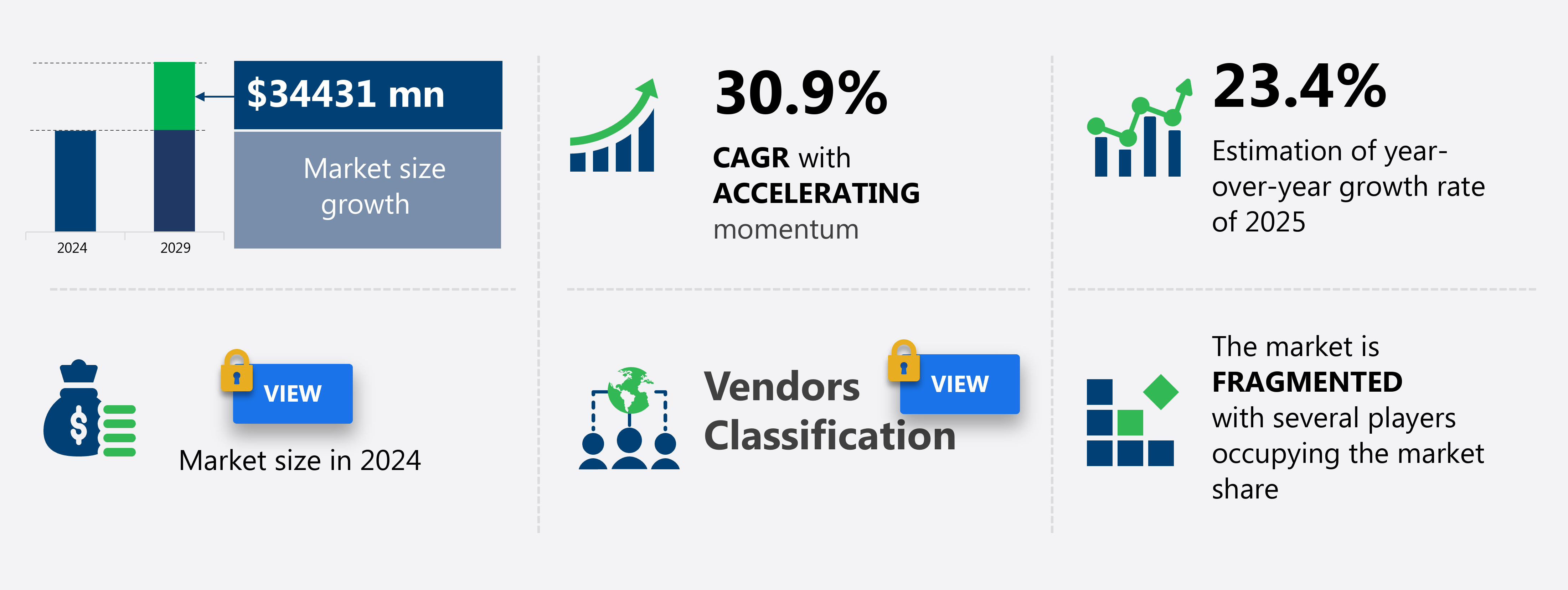
- The market encompasses software designed to manage and deliver training programs, educational content, examinations, and course materials in academic institutions and corporate settings. This market exhibits strong growth due to the increasing adoption of technology in education and employee training. The distance learning segment and cloud segment are driving market expansion, enabling multimedia-rich classes and flexible access to training courses for students and employees. E-learning, including employee training, HR, and e-learning content creators, are significant contributors to the market's growth.
How is this market segmented and which is the largest segment?
The market research report provides comprehensive data (region-wise segment analysis), with forecasts and estimates in "USD billion" for the period 2025-2029, as well as historical data from 2019-2023 for the following segments.
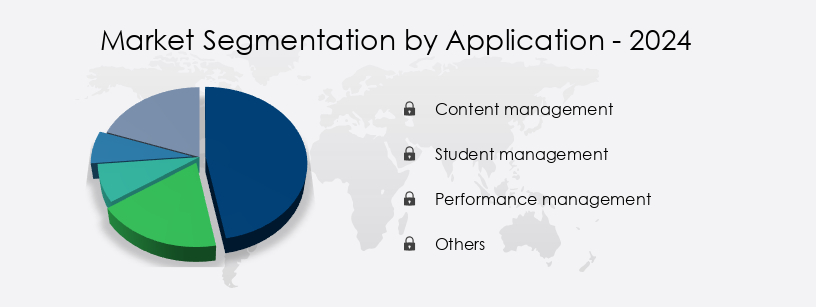
- Application
- Content management
- Student management
- Performance management
- Others
- End-user
- Corporates
- Higher education institutions
- K-12 schools
- Method
- Instructor-led training
- Distance learning
- Geography
- US
By Application Insights
- The content management segment is estimated to witness significant growth during the forecast period.
Learning Management Systems are essential software platforms used in both academic institutions and corporate settings to manage and deliver educational content, training programs, and examinations. These systems enable students and teachers to access course materials, track students' progress, and manage communication. In academic institutions, LMS supports multimedia-rich classes, online debates, homework, quizzes, and gradebook management, while in corporate settings, they offer business training, development programs, skill development plans, and compliance training modules. LMS also includes performance monitoring tools, HRMS systems, AI-driven features, and personalized learning experiences based on individual requirements and preferences. With the increasing adoption of digital learning, cloud-based solutions, mobile phones, tablets, and laptops have become integral to remote learning solutions.
The e-learning industry continues to evolve, integrating cutting-edge technologies like virtual reality, augmented reality, artificial intelligence, and learning analytics to provide great learning experiences and specialized skills development. LMS providers offer various deployment options, including cloud-based and on-premises, catering to large enterprises, distance learning segments, and retail verticals.
Get a glance at the market report of share of various segments Request Free Sample
Market Dynamics
The solution segment and service segment cater to the diverse needs of large-scale organizations, while the retail vertical segment benefits from the convenience and cost-effectiveness of LMS solutions. Despite enterprise resistance to cloud-based deployment, the cloud-based deployment segment is expected to dominate the market due to its scalability and flexibility. Overall, the academic and corporate LMS market is poised for continued growth, driven by the evolving needs of educators, trainers, and learners in various industries.
Our US Academic And Corporate Learning Management System (LMS) Market researchers analyzed the data with 2024 as the base year, along with the key drivers, trends, and challenges. A holistic analysis of drivers will help companies refine their marketing strategies to gain a competitive advantage.
What are the key market drivers leading to the rise in adoption of US Academic And Corporate Learning Management System (LMS) Market?
Increased emphasis on digitization of education is the key driver of the market.
- The market is experiencing significant growth due to the increasing demand for technology-driven education in both academic institutions and corporate settings. The integration of software platforms in training programs enables the delivery of educational content, examinations, and course materials online. Students' progress and teachers' instruction can be monitored through various communication tools, gradebook management, and student performance statistics. In the corporate world, business training, development programs, and compliance training modules are increasingly being delivered through LMS, enabling personalized learning experiences based on individual requirements and preferences. Moreover, the use of multimedia-rich classes, online debates, homework, quizzes, and AI-driven features enhances learner engagement and improves the overall learning experience.
- The e-learning industry is evolving rapidly, with cloud-based solutions becoming increasingly popular. The distance learning segment and cloud segment are expected to dominate the market, with the integration of mobile phones, tablets, and laptops as digital devices for remote learning solutions. The use of cutting-edge technologies such as virtual reality, augmented reality, artificial intelligence, and learning analytics is transforming the learning experience, providing specialized skills development opportunities. The focus on workforce development programs, career development, job search, and digital learning is driving the demand for advanced training programs and personalized training processes. The integration of LMS with HRMS systems and other performance monitoring tools is also gaining popularity, enabling businesses to evaluate employee skills and improve overall performance.
What are the market trends shaping the US Academic And Corporate Learning Management System (LMS) Market?
The emergence of mobile learning is the upcoming trend In the market.
- In today's digital age, Academic and Corporate Learning Management Systems (LMS) have become essential tools for delivering educational content and managing training programs in both academic institutions and corporate settings. Software platforms enable students and employees to access course materials, participate in multimedia-rich classes, complete examinations, and monitor their progress through gradebook management and student performance statistics. Communication tools facilitate interaction between teachers and students, as well as among students through online debates and homework submission. Corporations are embracing LMS technologies for business training, development programs, and skill development plans. Compliance training modules and performance monitoring tools are integral to these systems.
- HRMS systems and AI-driven features offer personalized learning experiences based on individual requirements and preferences. Microlearning and bite-sized modules are popular trends In the e-learning industry, catering to learners' need for flexibility and convenience. Learning analytics, virtual reality, and augmented reality are cutting-edge technologies that enhance learning experiences. Specialized skills development, employability, workforce development programs, career development, and job search are key benefits of digital learning. As bring-your-own-device (BYOD) policies become more common, cloud-based LMS solutions are increasingly preferred for their integration with various digital devices, including mobile phones, tablets, and laptops. The LMS market consists of various segments, including training courses, employee training, cloud-based solutions, and e-learning services.
- Large enterprises, distance learning, instructor-led training, solution segment, service segment, cloud-based deployment segment, large-scale organization segment, and retail vertical segment are major contributors to this market's growth. Despite the advantages, challenges such as enterprise resistance to change and the need for effective training content remain. E-learning content creators, ed-tech startups, and learning technology providers are addressing these challenges by offering advanced training programs, virtual education, personalized training processes, and cloud-based LMS technologies. LMS providers continue to innovate, integrating with HR systems, offering AI-driven features, and providing remote learning solutions.
What challenges does the US Academic And Corporate Learning Management System (LMS) Market face during the growth?
Uncertainty in selecting learning management system is a key challenge affecting the market growth.
- In the dynamic business landscape, the need for effective learning management systems (LMS) is increasingly important for both academic institutions and corporations. The market is characterized by a diverse range of local and international players, making the selection process challenging for customers. In the corporate sector, the lack of an effective evaluation of learning requirements can hinder the successful implementation of an LMS. For organizations and institutions, staying abreast of changing economic environments necessitates continuous skill development for their workforce and students. An LMS serves as a vital platform for delivering educational content, managing examinations, monitoring students' progress, and facilitating communication between teachers and students.
- Incorporating multimedia-rich classes, online debates, homework, quizzes, and gradebook management, LMS platforms offer a range of features tailored to various instructional approaches. These systems can support online courses, blended learning, and traditional classroom education. Businesses utilize LMS for training programs, development plans, and compliance training modules, while HRMS systems and AI-driven features offer performance monitoring tools. Personalized learning experiences catering to individual requirements and preferences are essential in today's digital learning landscape. Microlearning through bite-sized modules and learning analytics enable more effective skill evaluation. Cutting-edge technologies like virtual reality, augmented reality, artificial intelligence, and machine learning contribute to good learning experiences.
- LMS providers offer cloud-based solutions, training courses, and e-learning services, catering to the distance learning segment and the cloud segment. Integration with other systems, such as HR systems and remote learning solutions, is crucial for seamless implementation. The e-learning industry continues to grow, with a focus on employee engagement, skill development plans, and career development. Digital devices like mobile phones, tablets, and laptops have become essential tools for accessing learning content.
Exclusive Customer Landscape
The market forecasting report includes the adoption lifecycle of the market, covering from the innovator's stage to the laggard's stage. It focuses on adoption rates in different regions based on penetration. Furthermore, the market report also includes key purchase criteria and drivers of price sensitivity to help companies evaluate and develop their market growth analysis strategies.
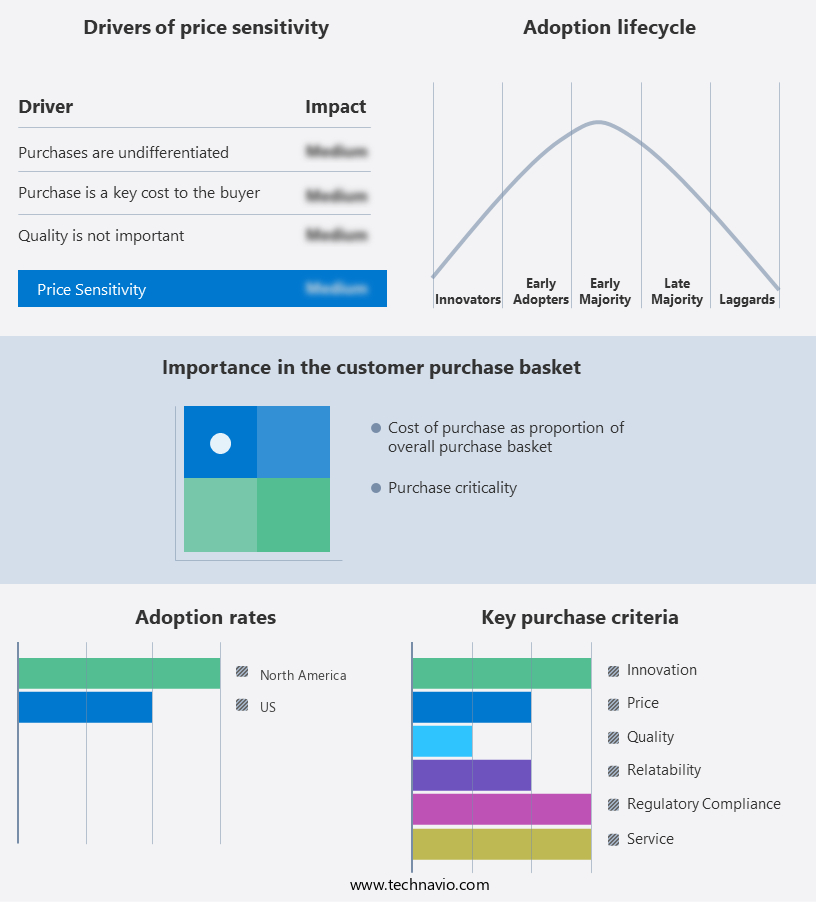
Customer Landscape
Key Companies & Market Insights
Companies are implementing various strategies, such as strategic alliances, market forecast, partnerships, mergers and acquisitions, geographical expansion, and product/service launches, to enhance their presence In the market.
360Learning SA - The company offers academic and corporate LMS namely Looop LMS.
The market research and growth report includes detailed analyses of the competitive landscape of the market and information about key companies, including:
- Adrenalin eSystems Ltd.
- Blackboard Inc.
- Cornerstone OnDemand Inc.
- D2L Inc.
- Degreed Inc.
- Docebo Inc.
- Epignosis LLC
- GENTLAB S.R.L
- Instructure Holdings Inc.
- Moodle Pty Ltd.
- Oracle Corp.
- PowerSchool Holdings Inc.
- SAP SE
- Skillsoft Corp.
- Sprout On Web Pty. Ltd.
- Tovuti Inc.
- Violet InfoSystems Pvt. Ltd.
- Workday Inc.
- Xperiencify
Qualitative and quantitative analysis of companies has been conducted to help clients understand the wider business environment as well as the strengths and weaknesses of key market players. Data is qualitatively analyzed to categorize companies as pure play, category-focused, industry-focused, and diversified; it is quantitatively analyzed to categorize companies as dominant, leading, strong, tentative, and weak.
Research Analyst Overview
The market encompasses software platforms designed to facilitate training programs in various settings. In this dynamic industry, educational content and examinations play a pivotal role in student progress and teacher instruction. These systems offer multimedia-rich classes, online debates, and homework assignments, among other features. Gradebook management and student performance statistics are essential components of these LMS, enabling teachers to monitor students' progress and provide personalized instruction. Communication tools allow for effective interaction between students and teachers, fostering a collaborative learning environment. Instructional approaches have evolved, with online courses and blended learning becoming increasingly popular.
Further, traditional classroom education continues to coexist with digital learning, as businesses recognize the importance of training and development programs. These initiatives focus on skill development plans, compliance training modules, and performance monitoring tools. Human resource management systems (HRMS) have integrated LMS technologies to streamline employee training and development. Cloud-based solutions have gained traction In the LMS market due to their flexibility and accessibility. These systems enable remote learning solutions, making education and training available to a wider audience. The e-learning industry is characterized by continuous innovation, with cutting-edge technologies such as virtual reality, augmented reality, and artificial intelligence (AI) driving the learning experiences.
Specialized skills, employability, and workforce development programs are key areas of focus for LMS providers. Career development, job search, and digital learning have become essential components of modern workforce training. The integration of AI-driven features offers personalized learning experiences tailored to individual requirements and preferences. Microlearning and bite-sized modules have gained popularity in recent years, enabling learners to absorb information at their own pace. Learning analytics provide valuable insights into student engagement and performance, allowing for targeted interventions and continuous improvement. The LMS market caters to various industries, with the retail vertical segment demonstrating significant growth. Large organizations and enterprises have embraced cloud-based LMS technologies, with on-premises solutions gradually losing favor.
Moreover, the solution segment dominates the market, followed by the service segment and the cloud-based deployment segment. Despite the numerous benefits, the adoption of LMS in large organizations faces resistance from some enterprises. This resistance stems from concerns over data security, integration with existing systems, and the cost of implementation and maintenance. Training content creators, ed-tech startups, and learning technology providers play a crucial role In the LMS market, offering a diverse range of courses and services. Onboarding, professional development, and continuous training are essential components of effective employee training programs. The extended enterprise, including channel training and compliance training, also benefits from LMS solutions.
|
Market Scope |
|
|
Report Coverage |
Details |
|
Page number |
166 |
|
Base year |
2024 |
|
Historic period |
2019-2023 |
|
Forecast period |
2025-2029 |
|
Growth momentum & CAGR |
Accelerate at a CAGR of 30.9% |
|
Market Growth 2025-2029 |
USD 34.43 billion |
|
Market structure |
Fragmented |
|
YoY growth 2024-2025(%) |
23.4 |
|
Competitive landscape |
Leading Companies, Market Positioning of Companies, Competitive Strategies, and Industry Risks |
What are the Key Data Covered in this Market Research and Growth Report?
- CAGR of the market during the forecast period
- Detailed information on factors that will drive the market growth and forecasting between 2025 and 2029
- Precise estimation of the size of the market and its contribution of the market in focus to the parent market
- Accurate predictions about upcoming market growth and trends and changes in consumer behaviour
- Growth of the market across US
- Thorough analysis of the market's competitive landscape and detailed information about companies
- Comprehensive analysis of factors that will challenge the growth of market companies
We can help! Our analysts can customize this market research report to meet your requirements. Get in touch
 RIA -
RIA - 
