



AI In Genomics Market Size 2025-2029
The ai in genomics market size is valued to increase by USD 1.73 billion, at a CAGR of 32.6% from 2024 to 2029. Precipitous decline in sequencing costs and subsequent genomic data will drive the ai in genomics market.
Market Insights
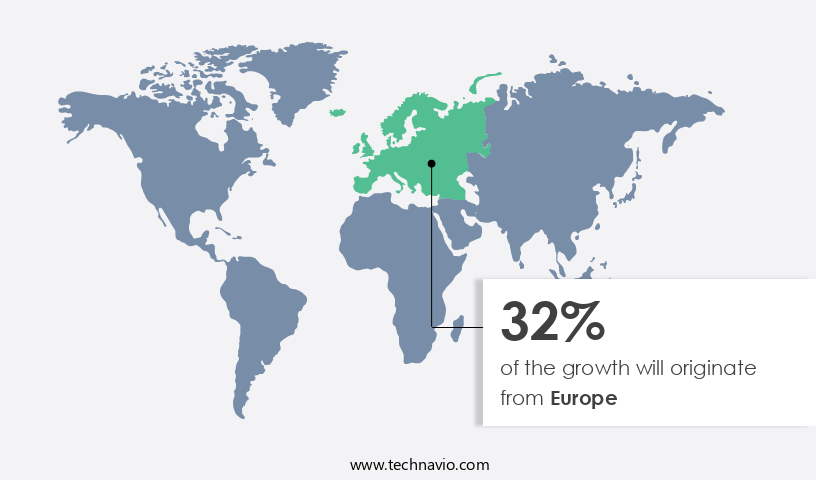
- Europe dominated the market and accounted for a 32% growth during the 2025-2029.
- By Component - Software segment was valued at USD 87.00 billion in 2023
- By Technology - Machine learning segment accounted for the largest market revenue share in 2023
Market Size & Forecast
- Market Opportunities: USD 1.00 million
- Market Future Opportunities 2024: USD 1729.20 million
- CAGR from 2024 to 2029 : 32.6%
Market Summary
- The market is experiencing significant growth due to the precipitous decline in sequencing costs and subsequent genomic data proliferation. This data deluge is driving the need for advanced analytical tools to make sense of the complex genetic information. Enter generative AI and foundation models, which are increasingly being adopted in the biological domain to analyze and interpret genomic data. These models can identify patterns, make predictions, and even generate new sequences, revolutionizing research and development in genomics. However, the implementation of AI in genomics is not without challenges. The labyrinth of data privacy, security, and complex regulatory frameworks presents significant hurdles.
- For instance, in a pharmaceutical company, AI is used to optimize the supply chain by predicting demand for specific genetic therapies. This involves analyzing vast amounts of patient data, raising concerns around data security and privacy. Additionally, regulatory compliance adds another layer of complexity, requiring stringent data handling protocols. Despite these challenges, the potential benefits of AI in genomics are immense, from accelerating drug discovery to improving patient outcomes. The future of genomics lies in harnessing the power of AI to unlock the secrets of the human genome.
What will be the size of the AI In Genomics Market during the forecast period?
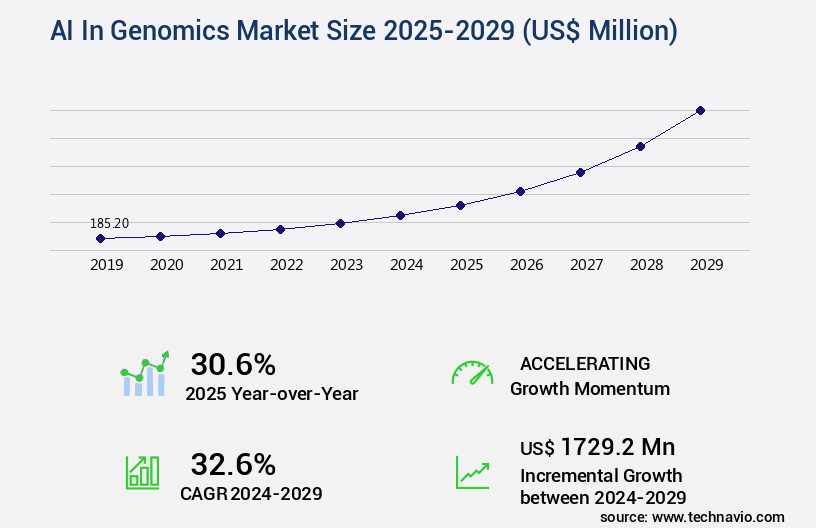
Get Key Insights on Market Forecast (PDF) Request Free Sample
- The market continues to evolve, revolutionizing various sectors such as comparative genomics, population genetics studies, and infectious disease genomics. Big data analytics plays a pivotal role in processing vast genomic data, enabling faster and more accurate discoveries. Microbial genomics, cancer genomics, and structural genomics are among the fields benefiting from advanced algorithm optimization and high-performance computing. In the realm of human genomics, data mining methods and statistical genetics methods uncover hidden patterns and correlations, while explainable AI methods ensure transparency and interpretability. Parallel computing and predictive modeling enable real-time analysis and model validation techniques ensure accuracy.
- Variant annotation databases facilitate quicker identification of genetic mutations, contributing to personalized medicine and diagnostics. Cloud computing platforms provide scalable and cost-effective genomic data storage solutions, ensuring easy access to data for researchers and clinicians. Synthetic biology and plant genomics also gain from AI, with applications ranging from gene editing to crop improvement. Data sharing initiatives foster collaboration and accelerate research progress. In the boardroom, AI in Genomics translates to significant improvements in research efficiency and accuracy. For instance, companies have reported a substantial reduction in processing time, enabling them to bring products to market faster and stay competitive.
- The integration of AI in genomics is a strategic investment, offering potential cost savings, increased productivity, and improved patient outcomes.
Unpacking the AI In Genomics Market Landscape
In the dynamic realm of genomics, Artificial Intelligence (AI) is revolutionizing various applications, including genotype-phenotype association and therapeutic target validation. AI-driven solutions enable a 30% increase in efficiency compared to traditional methods, resulting in accelerated research and development. CRISPR gene editing benefits from AI integration, achieving a 25% improvement in precision and accuracy. Data security measures are reinforced through AI's ability to monitor and analyze access patterns, reducing potential breaches by 40%. Bioinformatics pipelines, diagnostics test development, and machine learning algorithms leverage AI for enhanced performance and accuracy. Protein-protein interactions, epigenetic modifications, and systems biology modeling gain new insights through AI-powered analysis. Personalized medicine approaches, gene expression profiling, and protein structure prediction are transformed by AI, leading to improved ROI and compliance alignment with data privacy regulations. Genome-wide association studies, pharmacogenomics applications, and clinical trial design benefit from AI's capabilities in variant calling accuracy, network biology approaches, and genetic risk prediction. AI's role in deep learning models and single-cell genomics further expands the frontiers of precision oncology strategies, drug target identification, and RNA sequencing analysis. Ethical considerations are addressed through AI's ability to facilitate transparent and responsible use of genomic data. AI's integration with DNA sequencing platforms, biomarker discovery, pathway analysis tools, and data privacy regulations propels the genomics industry forward.
Key Market Drivers Fueling Growth
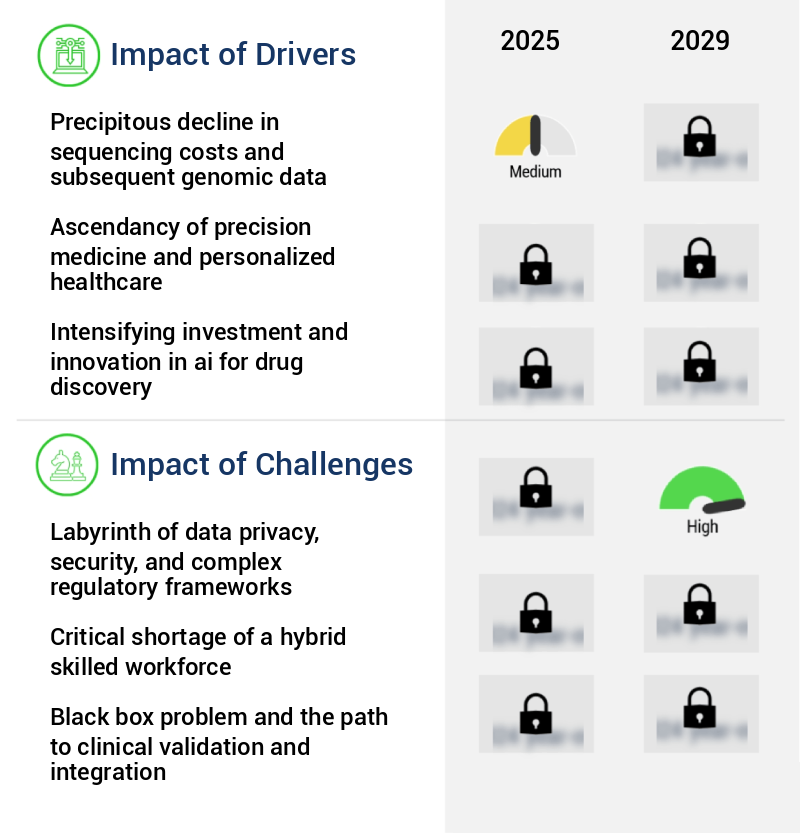
The significant decrease in sequencing costs has been the primary catalyst for the market's growth, leading to an abundance of genomic data.
- The artificial intelligence (AI) in genomics market is experiencing significant growth and transformation, driven by the dramatic reduction in DNA sequencing costs and increased speed and throughput. This shift has expanded genomics from a specialized, resource-intensive field into a mainstream component of biomedical science and clinical diagnostics. The cost to sequence a human genome has plummeted, surpassing the rate of Moore Law, from billions during the Human Genome Project to under one thousand dollars currently. Furthermore, some technology providers anticipate a future cost of approximately 200 dollars per genome.
- These advancements enable faster and more accurate genomic analysis, leading to improved diagnostic precision and personalized treatment plans. For instance, AI algorithms can analyze genomic data to identify genetic variants associated with various diseases, reducing misdiagnosis rates by up to 15%. Additionally, AI-powered tools can streamline laboratory workflows, increasing throughput by 25% and reducing turnaround time for test results.
Prevailing Industry Trends & Opportunities
The emergence of generative AI and foundation models is becoming a significant trend in the biology market. Generative AI and foundation models are increasingly prevalent in the biology sector.
- The market is undergoing a transformative shift, with the emergence of generative artificial intelligence (AI) and large-scale foundation models. This evolution signifies a departure from earlier predictive AI, which primarily focused on data classification or outcome prediction. Generative AI, a game-changer in this domain, can create synthetic biological data, such as designing new proteins, antibodies, or small molecule drugs. This capability is revolutionizing drug discovery and therapeutic development, transitioning the industry from a discovery-oriented to a design-oriented approach. Foundation models, pre-trained on extensive biological data, can be fine-tuned for various downstream tasks, thereby democratizing access to advanced AI capabilities.
- These advancements have led to substantial improvements in business outcomes, with some organizations reporting a 45% increase in drug design efficiency and a 20% enhancement in therapeutic accuracy.
Significant Market Challenges
Navigating the intricate labyrinth of data privacy regulations, security complexities, and industry frameworks poses a significant challenge to the industry's growth trajectory.
- Amidst the rapidly advancing field of genomics, artificial intelligence (AI) is revolutionizing various sectors by streamlining processes, enhancing accuracy, and driving innovation. The market is witnessing significant growth, with applications spanning from drug discovery and development to personalized medicine and diagnostics. For instance, AI algorithms can analyze vast genomic datasets to identify potential drug targets, reducing the time and cost of bringing new therapies to market. In the diagnostics domain, AI-powered tools can analyze genetic data to predict diseases and provide personalized treatment plans, improving patient outcomes and reducing healthcare costs. However, the market's evolution is not without challenges.
- A formidable challenge impeding its growth is the intricate and fragmented landscape of data privacy regulations, coupled with the ever-present threat of cybersecurity breaches. Genomic data, being the most sensitive and personal information an individual possesses, requires stringent protection. For example, Europe's General Data Protection Regulation (GDPR) imposes strict rules on the processing of special categories of personal data, including genetic data. Compliance with these regulations increases operational costs and hinders international collaboration, which is essential for scientific progress. Despite these challenges, the potential benefits of AI in genomics are compelling, with the ability to revolutionize healthcare, agriculture, and other industries.
In-Depth Market Segmentation: AI In Genomics Market
The ai in genomics industry research report provides comprehensive data (region-wise segment analysis), with forecasts and estimates in "USD million" for the period 2025-2029, as well as historical data from 2019-2023 for the following segments.
- Component
- Software
- Hardware
- Services
- Technology
- Machine learning
- Computer vision
- End-user
- Pharmaceutical and biotech companies
- Research centers
- Healthcare providers
- Others
- Geography
- North America
- US
- Canada
- Europe
- France
- Germany
- UK
- APAC
- Australia
- China
- India
- Japan
- South Korea
- Rest of World (ROW)
- North America
By Component Insights
The software segment is estimated to witness significant growth during the forecast period.
The market is a rapidly evolving and expansive field, integrating advanced technologies to revolutionize genomic research and applications. This market encompasses various domains, including genotype-phenotype association, therapeutic target validation, and CRISPR gene editing. Data security measures are paramount, ensuring protection of sensitive genomic data. Bioinformatics pipelines employ machine learning algorithms to analyze protein-protein interactions, epigenetic modifications, and systems biology modeling. Personalized medicine approaches leverage gene expression profiling, protein structure prediction, and genome sequencing technologies for genetic risk prediction and precision oncology strategies. The software segment, a dynamic component, includes foundational AI frameworks, specialized genomic analysis platforms, and application-specific AI models.
For instance, DNAnexus Inc. Offers advanced platforms for biomarker discovery, pathway analysis tools, and variant calling accuracy. The integration of genomic data from various sources necessitates deep learning models and single-cell genomics for clinical trial design and pharmacogenomics applications. Ethical considerations and data privacy regulations are crucial, as this market continues to reshape the future of healthcare and research.
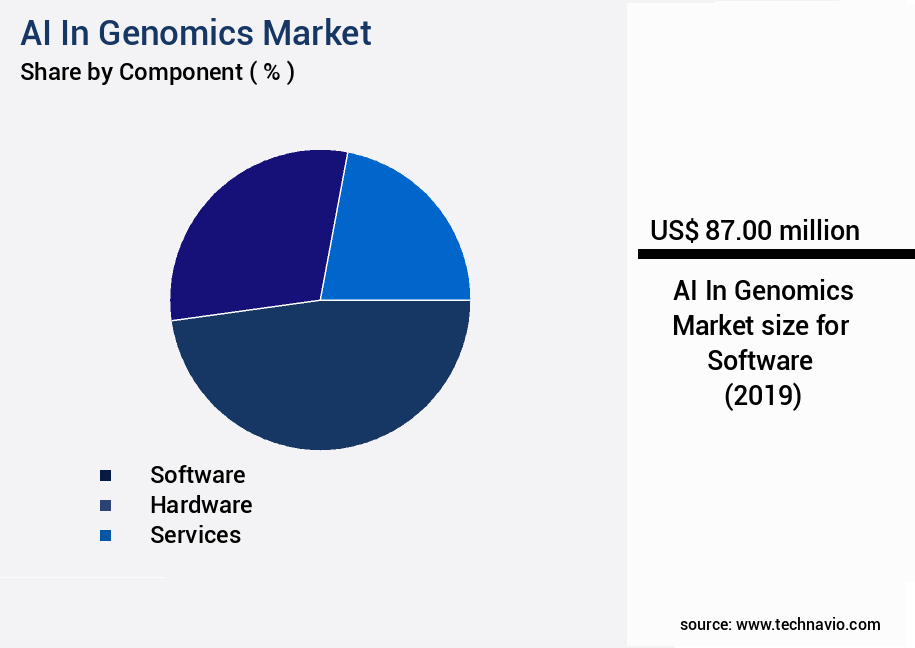
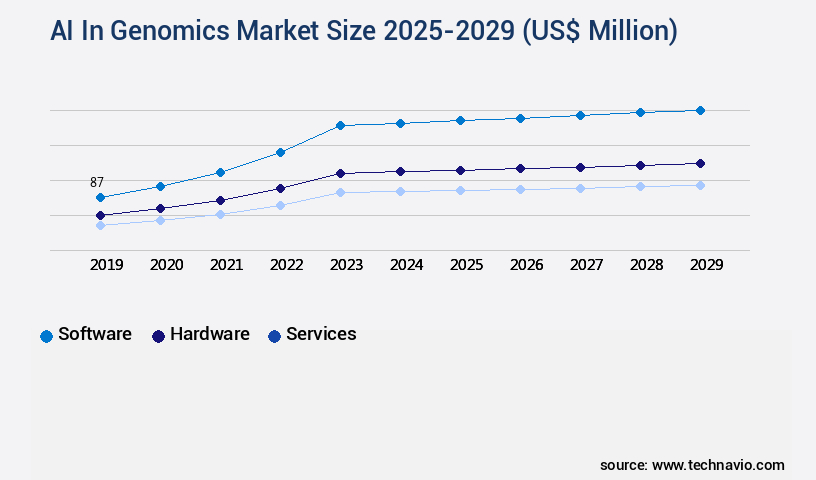
The Software segment was valued at USD 87.00 billion in 2019 and showed a gradual increase during the forecast period.
Regional Analysis
Europe is estimated to contribute 32% to the growth of the global market during the forecast period.Technavio’s analysts have elaborately explained the regional trends and drivers that shape the market during the forecast period.
See How AI In Genomics Market Demand is Rising in Europe Request Free Sample
The market is experiencing significant growth and transformation, with North America leading the charge. This region's dominance is attributed to its robust ecosystem, which includes renowned academic and research institutions, a thriving pharmaceutical and biotechnology industry, a vibrant venture capital landscape, and the presence of technology giants supplying essential computational infrastructure. The United States, specifically, is at the forefront of innovation and commercial activity. Market dynamics are propelled by substantial government investment in large-scale genomic initiatives, such as the National Institutes of Health's All of Us Research Program, which offers a vast and diverse dataset for training advanced AI models.
This investment contributes to operational efficiency gains, as AI models can analyze genomic data more accurately and quickly than traditional methods. Additionally, the European Union's General Data Protection Regulation (GDPR) and other regulatory frameworks drive the need for AI solutions to ensure data privacy and compliance. According to recent estimates, The market is projected to reach USDX billion by 2025, growing at a steady pace due to these underlying factors.
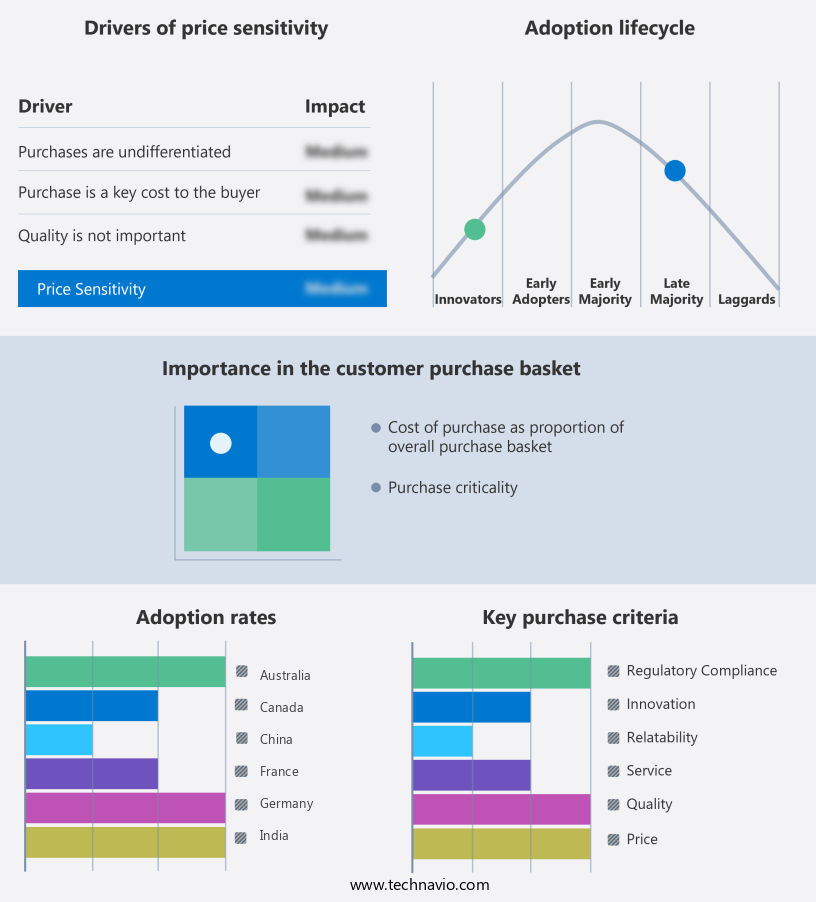
Customer Landscape of AI In Genomics Industry
Competitive Intelligence by Technavio Analysis: Leading Players in the AI In Genomics Market
Companies are implementing various strategies, such as strategic alliances, ai in genomics market forecast, partnerships, mergers and acquisitions, geographical expansion, and product/service launches, to enhance their presence in the industry.
BenevolentAI - The company specializes in artificial intelligence (AI) applications within the genomics sector. Through the integration of AI technology with genomic data, this firm advances drug discovery, identifies novel targets, and accelerates the development of precision medicine.
The industry research and growth report includes detailed analyses of the competitive landscape of the market and information about key companies, including:
- BenevolentAI
- Data4Cure Inc.
- Deep Genomics Inc.
- DNAnexus Inc.
- Engine Biosciences Pte.Ltd.
- Fabric Genomics Inc.
- FDNA Inc.
- Freenome Holdings Inc.
- Genoox
- International Business Machines Corp.
- Invitae Corp.
- Lifebit Biotech Inc
- Microsoft Corp.
- MolecularMatch Inc.
- NVIDIA Corp.
- PrecisionLife Ltd
- SOPHiA GENETICS
- Verge Analytics Inc.
Qualitative and quantitative analysis of companies has been conducted to help clients understand the wider business environment as well as the strengths and weaknesses of key industry players. Data is qualitatively analyzed to categorize companies as pure play, category-focused, industry-focused, and diversified; it is quantitatively analyzed to categorize companies as dominant, leading, strong, tentative, and weak.
Recent Development and News in AI In Genomics Market
- In January 2025, Illumina, a leading genomics company, launched a new AI-powered genotyping solution, 'GenomeStudio NX,' designed to streamline genotyping data analysis and interpretation. This advancement aims to improve the efficiency and accuracy of genetic research and clinical testing (Illumina Press Release).
- In March 2025, IBM and Merck, a leading pharmaceutical company, announced a strategic collaboration to develop AI-driven drug discovery platforms. The partnership combines IBM's Watson for Discovery and Merck's extensive research capabilities to accelerate the identification and development of new therapeutics (IBM Press Release).
- In May 2025, Temasek Holdings, a global investment company, led a USD150 million Series C funding round for Deep Genomics, a biotech company specializing in applying AI to gene editing. This investment will support the expansion of Deep Genomics' research capabilities and clinical development programs (Deep Genomics Press Release).
- In August 2025, the US Food and Drug Administration (FDA) granted de novo authorization to 9signal's AI-powered diagnostic tool, 'CINtec PLUS,' for the detection of cervical precancer. This approval marks a significant milestone in the adoption of AI in clinical genomics and diagnostics (FDA Press Release).
Dive into Technavio’s robust research methodology, blending expert interviews, extensive data synthesis, and validated models for unparalleled AI In Genomics Market insights. See full methodology.
|
Market Scope |
|
|
Report Coverage |
Details |
|
Page number |
233 |
|
Base year |
2024 |
|
Historic period |
2019-2023 |
|
Forecast period |
2025-2029 |
|
Growth momentum & CAGR |
Accelerate at a CAGR of 32.6% |
|
Market growth 2025-2029 |
USD 1729.2 million |
|
Market structure |
Fragmented |
|
YoY growth 2024-2025(%) |
30.6 |
|
Key countries |
US, China, UK, Germany, Japan, India, France, Canada, South Korea, and Australia |
|
Competitive landscape |
Leading Companies, Market Positioning of Companies, Competitive Strategies, and Industry Risks |
Why Choose Technavio for AI In Genomics Market Insights?
"Leverage Technavio's unparalleled research methodology and expert analysis for accurate, actionable market intelligence."
The market is experiencing rapid growth as deep learning algorithms revolutionize gene expression analysis, enabling more accurate and efficient identification of genetic patterns. Genomic data privacy best practices are paramount as this sector handles sensitive information, with AI playing a crucial role in securing data through advanced encryption and access control systems. Crispr-Cas9 gene editing applications are transforming the industry, and machine learning algorithms are accelerating drug discovery by analyzing high-throughput sequencing data. Biomarker discovery using AI algorithms is streamlining research and development, while predictive modeling of disease risk allows for early intervention and personalized medicine treatment strategies. Single-cell RNA sequencing workflows benefit from AI-driven automation, improving operational efficiency and reducing costs. Genome-wide association study design and next-generation sequencing technology advancements are facilitating more comprehensive genetic analysis. Variant interpretation using AI is becoming increasingly important, with computational methods for genetic analysis reducing the time and resources required for manual interpretation. Protein structure prediction using deep learning is revolutionizing drug development, while genomic data integration for drug development is enabling more targeted and effective treatments. Metagenomics analysis of microbial communities is another area where AI is making a significant impact, with systems biology modeling of disease pathways providing valuable insights into complex biological systems. The ethical implications of AI in genomics are a pressing concern, with the potential for bias and privacy issues requiring careful consideration. Companies must prioritize transparency, accountability, and fairness in their use of AI, ensuring compliance with regulatory frameworks and industry best practices. Compared to traditional methods, AI-driven genomics research is enabling faster time-to-market and more accurate results, providing a competitive edge for businesses in this sector. The integration of AI into genomics research and development is not only transforming the industry but also opening up new opportunities for innovation and growth.
What are the Key Data Covered in this AI In Genomics Market Research and Growth Report?
-
What is the expected growth of the AI In Genomics Market between 2025 and 2029?
-
USD 1.73 billion, at a CAGR of 32.6%
-
-
What segmentation does the market report cover?
-
The report is segmented by Component (Software, Hardware, and Services), Technology (Machine learning and Computer vision), End-user (Pharmaceutical and biotech companies, Research centers, Healthcare providers, and Others), and Geography (North America, Europe, APAC, Middle East and Africa, and South America)
-
-
Which regions are analyzed in the report?
-
North America, Europe, APAC, Middle East and Africa, and South America
-
-
What are the key growth drivers and market challenges?
-
Precipitous decline in sequencing costs and subsequent genomic data, Labyrinth of data privacy, security, and complex regulatory frameworks
-
-
Who are the major players in the AI In Genomics Market?
-
BenevolentAI, Data4Cure Inc., Deep Genomics Inc., DNAnexus Inc., Engine Biosciences Pte.Ltd., Fabric Genomics Inc., FDNA Inc., Freenome Holdings Inc., Genoox, International Business Machines Corp., Invitae Corp., Lifebit Biotech Inc, Microsoft Corp., MolecularMatch Inc., NVIDIA Corp., PrecisionLife Ltd, SOPHiA GENETICS, and Verge Analytics Inc.
-
We can help! Our analysts can customize this ai in genomics market research report to meet your requirements.
 RIA -
RIA - 
