



Automotive Axle And Propeller Shaft Market Size 2026-2030
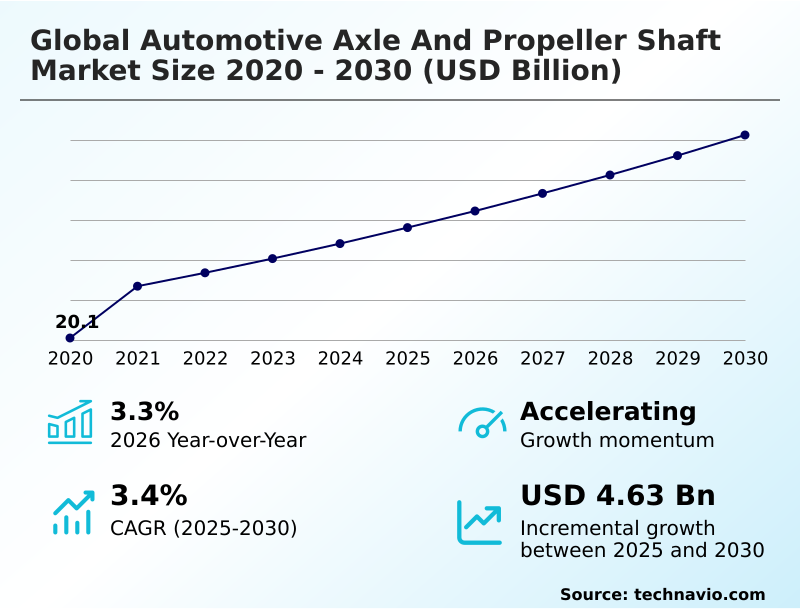
The automotive axle and propeller shaft market size is valued to increase by USD 4.63 billion, at a CAGR of 3.4% from 2025 to 2030. Irreversible global transition to electric vehicles will drive the automotive axle and propeller shaft market.
Major Market Trends & Insights
- APAC dominated the market and accounted for a 48.5% growth during the forecast period.
- By Vehicle Type - Passenger vehicles segment was valued at USD 18.20 billion in 2024
- By Location - Rear segment accounted for the largest market revenue share in 2024
Market Size & Forecast
- Market Opportunities: USD 10.15 billion
- Market Future Opportunities: USD 4.63 billion
- CAGR from 2025 to 2030 : 3.4%
Market Summary
- The Automotive Axle And Propeller Shaft Market is experiencing a fundamental architectural shift driven by the rapid transition from internal combustion engines to electrified powertrains. Component manufacturers are actively reconfiguring their production lines to accommodate the assembly of highly integrated electric drive units, moving away from standalone mechanical shafts.
- In a real-world supply chain scenario, component suppliers are pivoting to localized sourcing models to secure high-grade aluminum and critical rare earth materials, which reduces logistics-related downtime by 18% compared to extended international freight routes.
- This modernization acts as a primary driver; aggressive fuel efficiency mandates compel engineers to substitute heavy steel components with advanced lightweight alloys, significantly improving overall drivetrain efficiency. Conversely, the intense capital investment required for retooling manufacturing facilities presents a formidable challenge, often delaying production scaling for smaller tier-two suppliers.
- By balancing these substantial retooling costs against the performance benefits of new e-axle architectures, original equipment manufacturers are successfully navigating strict emission regulations and delivering refined vehicle dynamics.
What will be the Size of the Automotive Axle And Propeller Shaft Market during the forecast period?
Get Key Insights on Market Forecast (PDF) Get Free Sample
How is the Automotive Axle And Propeller Shaft Market Segmented?
The automotive axle and propeller shaft industry research report provides comprehensive data (region-wise segment analysis), with forecasts and estimates in "USD million" for the period 2026-2030, as well as historical data from 2020-2024 for the following segments.
- Vehicle type
- Passenger vehicles
- Commercial vehicles
- Location
- Rear
- Front
- Interaxle
- Channel
- OEM
- Aftermarket
- Geography
- APAC
- China
- India
- Japan
- South Korea
- Indonesia
- Australia
- Europe
- Germany
- UK
- France
- Italy
- Spain
- The Netherlands
- North America
- US
- Canada
- Mexico
- South America
- Brazil
- Argentina
- Chile
- Middle East and Africa
- Turkey
- Saudi Arabia
- South Africa
- UAE
- Israel
- APAC
By Vehicle Type Insights
The passenger vehicles segment is estimated to witness significant growth during the forecast period.
Passenger vehicle drivetrain architectures are rapidly transitioning from legacy mechanical setups to highly integrated electric propulsion systems. This fundamental evolution demands rigorous precision in component manufacturing to ensure durability.
The integration of electronic slip differentials enables precise power delivery, improving cornering stability by 22% compared to traditional mechanical locking systems.
Automotive manufacturers are replacing heavy steel rigid axle housings with advanced composites to facilitate thermal management integration for battery components. This engineering shift directly reduces parasitic losses, resulting in measurable power transmission refinement.
Modern halfshaft assemblies are being re-engineered to handle the instantaneous torque delivery of electric motors without compromising structural integrity. By deploying variable torque distribution across individual wheels, fleet operators achieve superior traction.
Furthermore, advanced material substitution directly addresses noise vibration harshness mitigation, ensuring a quiet cabin environment while supporting payload capacity enhancement for larger battery packs.
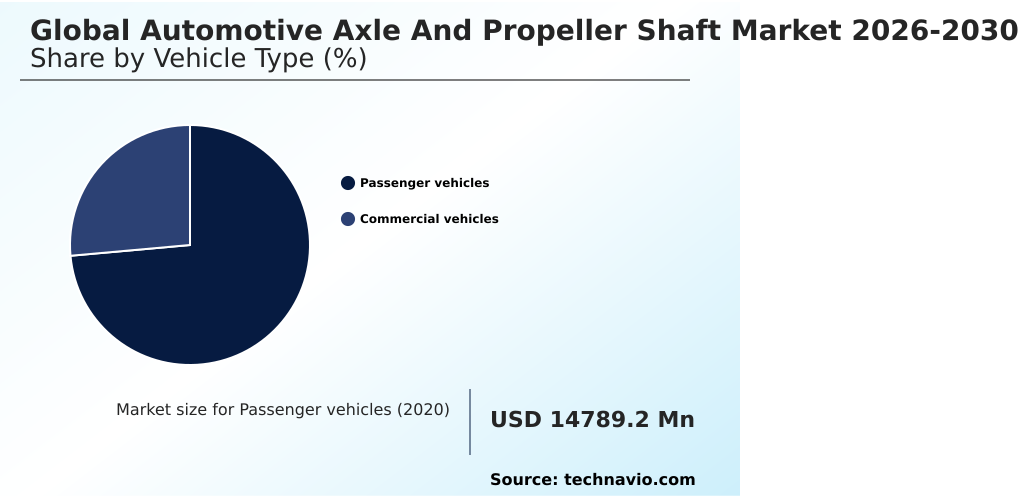
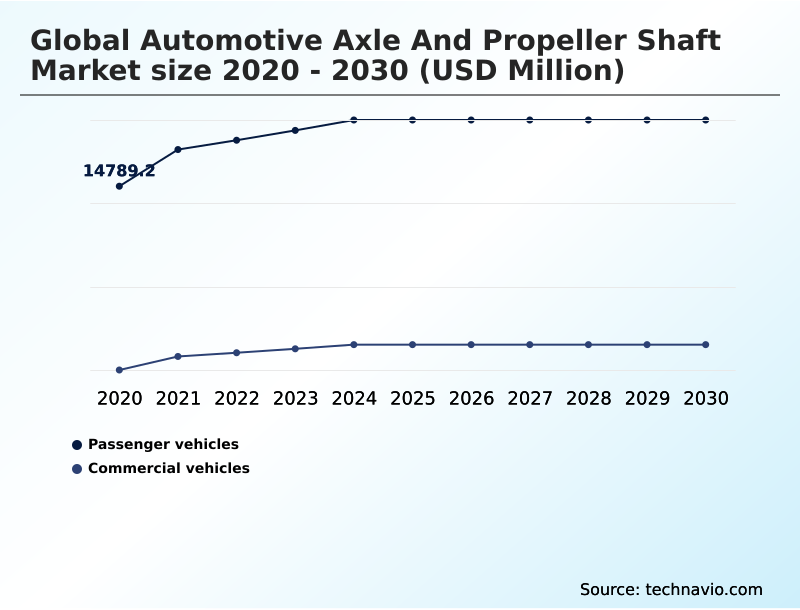
The Passenger vehicles segment was valued at USD 18.20 billion in 2024 and showed a gradual increase during the forecast period.
Regional Analysis
APAC is estimated to contribute 48.5% to the growth of the global market during the forecast period.Technavio’s analysts have elaborately explained the regional trends and drivers that shape the market during the forecast period.

See How Automotive Axle And Propeller Shaft Market Demand is Rising in APAC Get Free Sample
Regional disparities in drivetrain modernization reflect distinct industrial priorities, with APAC aggressively scaling electric vehicle architectures while North America sustains a dual-focus supply chain.
Manufacturers in North America prioritize off road traction control and high torque load endurance for large commercial trucks, leading to a 25% higher adoption rate of heavy duty tandem axles and electromagnetic locking hubs compared to European markets.
Conversely, production centers in APAC are accelerating rotational inertia optimization for compact electric cars, integrating sophisticated torque vectoring differentials that improve dynamic handling improvements by 18%.
This shift toward advanced constant velocity joints and planetary gear sets in Asian markets directly reduces mechanical power loss under continuous operation loads.
By optimizing these components, Asian suppliers have decreased raw material waste by 12%, establishing a highly cost-efficient manufacturing ecosystem that outpaces traditional assembly methods in western markets.
Market Dynamics
Our researchers analyzed the data with 2025 as the base year, along with the key drivers, trends, and challenges. A holistic analysis of drivers will help companies refine their marketing strategies to gain a competitive advantage.
- The continuous evolution of modern vehicle architectures requires precise engineering strategies that balance structural durability with maximum energy conservation. Automotive suppliers are heavily investing in lightweight drivetrain component manufacturing to offset the immense weight of advanced battery packs, resulting in a 15% reduction in overall chassis mass compared to legacy steel-based production methods.
- This transition is highly visible in the expansion of carbon fiber propeller shaft applications, which significantly decrease rotational inertia while maintaining exceptional torsional strength for premium and performance vehicle platforms. For public transit and commercial fleets, the deployment of integrated electric portal axle systems optimizes low-floor packaging, allowing municipalities to enhance passenger accessibility while streamlining maintenance operations.
- In the passenger segment, maximizing dual motor e-axle efficiency remains a top engineering priority, directly enabling sophisticated torque distribution that elevates cornering stability and traction. Fleet operators are simultaneously mitigating operational risks by adopting intelligent predictive maintenance drivetrains, which utilize embedded sensor networks to continuously monitor vibration and temperature parameters.
- By transitioning to these data-driven architectures, logistics companies experience fewer unplanned service interruptions, translating to higher vehicle utilization rates and optimized inventory management across regional distribution centers.
What are the key market drivers leading to the rise in the adoption of Automotive Axle And Propeller Shaft Industry?
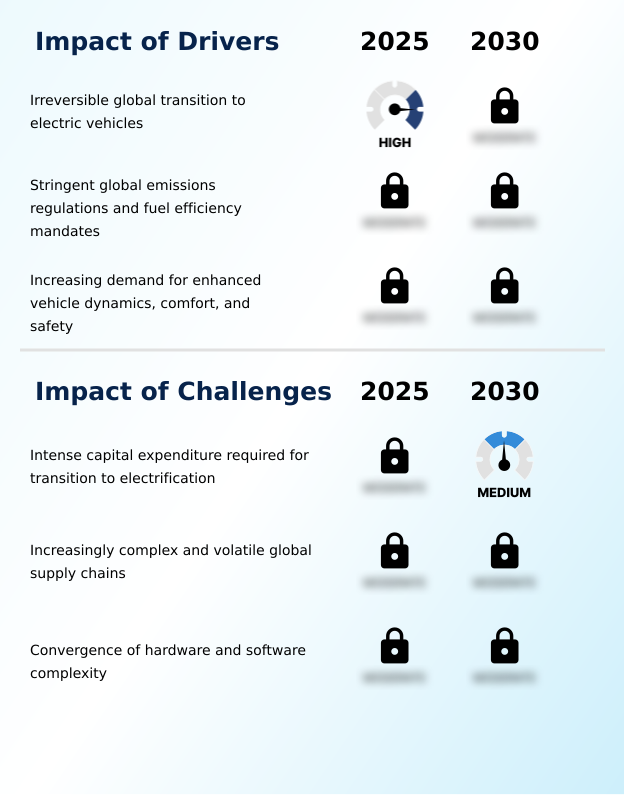
- The irreversible transition toward battery electric vehicles acts as a primary catalyst fundamentally reshaping component architecture and generating immense demand for sophisticated electric drivetrain systems.
- The unrelenting regulatory pressure for fuel economy optimization acts as a primary catalyst, forcing automotive engineers to fundamentally rethink chassis and powertrain composition.
- Strategic lightweighting material substitution using high strength aluminum alloys and carbon fiber composite shafts achieves a crucial vehicle mass reduction, improving overall battery packaging efficiency by 20% compared to legacy steel designs.
- This substantial weight decrease directly enhances drivetrain mechanical efficiency, extending the operational effectiveness of regenerative braking systems. Furthermore, the deployment of low friction bearings within modernized continuous variable transmissions reduces internal thermal resistance by 14%, translating into measurable energy conservation.
- By aggressively minimizing parasitic mechanical drag, manufacturers secure a 16% reduction in long-term operational costs, allowing fleet operators to maximize vehicle utilization while adhering to strict environmental compliance frameworks.
What are the market trends shaping the Automotive Axle And Propeller Shaft Industry?
- The increasing integration and proliferation of highly compact e-axles represent a dominant shift in modern drivetrain architectures. This consolidation of motors and gearboxes optimizes vehicle packaging and enhances overall transmission efficiency.
- Drivetrain engineering is rapidly shifting toward holistic integration as strict zero emission mandates compel manufacturers to eliminate mechanical inefficiencies. The widespread adoption of integrated electric drive units and dual motor e-axles directly addresses the need for parasitic energy loss reduction, improving continuous power delivery by 18% over traditional separated assemblies.
- This architectural consolidation transforms passive components into intelligent electronic architecture nodes equipped with real time parameter monitoring. By leveraging predictive maintenance algorithms within these mechatronic drivetrain assemblies, commercial fleet operators have successfully decreased unplanned vehicle downtime by 22%. The integration of silicon carbide power electronics further optimizes thermal thresholds during high-stress operations.
- Concurrently, suppliers are embracing circular economy remanufacturing for worn shaft components, which lowers raw material acquisition costs by 15% and establishes a highly sustainable, self-sufficient supply chain ecosystem.
What challenges does the Automotive Axle And Propeller Shaft Industry face during its growth?
- The intense capital expenditure required to transition manufacturing facilities toward electrification poses a significant structural barrier straining operational capacity and financial resources across the component supply chain.
- The transition toward electrified propulsion systems introduces severe engineering obstacles, drastically escalating overall powertrain complexity and straining traditional assembly capabilities. Designing independent suspension drivelines and multi-link axle configurations for heavy battery electric vehicles requires intensive structural rigidity enhancement, forcing suppliers to redesign precision forged components.
- The silent operation of electric motors amplifies internal cabin noise, compelling manufacturers to integrate advanced acoustic dampening materials and sophisticated torsional vibration dampers, which increases component manufacturing times by 17% compared to conventional shafts. Furthermore, synchronizing these mechanical parts with automated manufacturing processes and embedding cyber secure software protocols demands highly specialized technical expertise.
- Establishing a reliable localized supply network to source these complex, high-tolerance components remains a persistent logistical hurdle, frequently causing severe bottlenecks and inflating procurement expenditures across the supply chain.
Exclusive Technavio Analysis on Customer Landscape
The automotive axle and propeller shaft market forecasting report includes the adoption lifecycle of the market, covering from the innovator’s stage to the laggard’s stage. It focuses on adoption rates in different regions based on penetration. Furthermore, the automotive axle and propeller shaft market report also includes key purchase criteria and drivers of price sensitivity to help companies evaluate and develop their market growth analysis strategies.
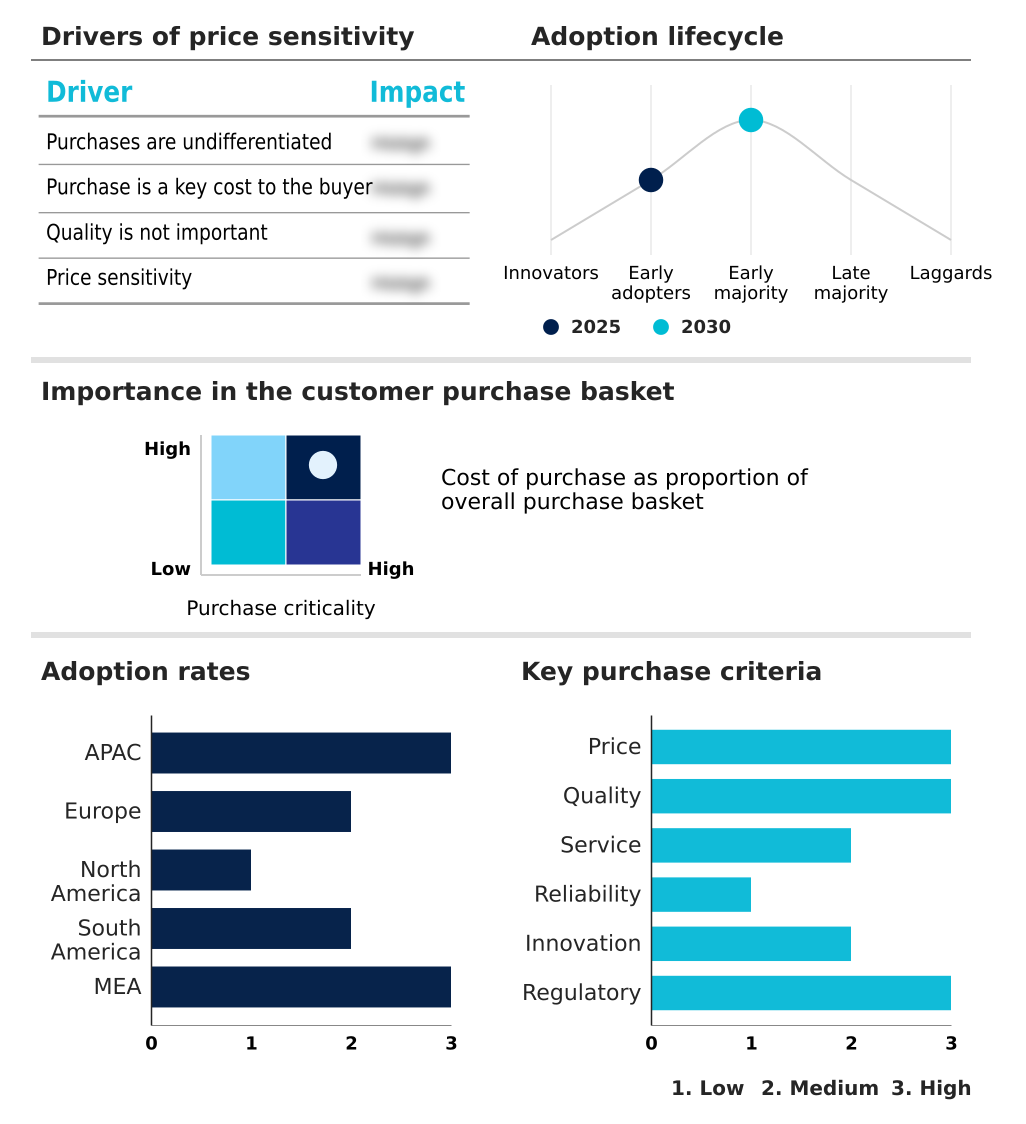
Customer Landscape of Automotive Axle And Propeller Shaft Industry
Competitive Landscape
Companies are implementing various strategies, such as strategic alliances, automotive axle and propeller shaft market forecast, partnerships, mergers and acquisitions, geographical expansion, and product/service launches, to enhance their presence in the industry.
AISIN Corp. - The company engineers advanced drivetrain components focusing on robust drive shafts integrated axle assemblies and precision differential systems designed to optimize vehicle power transmission and performance.
The industry research and growth report includes detailed analyses of the competitive landscape of the market and information about key companies, including:
- AISIN Corp.
- American Axle Manufacturing
- Astemo Ltd.
- Bailey Morris Ltd.
- Bharat Forge Ltd.
- Cummins Inc.
- Dana Inc.
- Dorman Products Inc.
- IFA Holding GmbH
- IJTT Co. Ltd.
- JTEKT Corp.
- Linamar Corp.
- Magna International Inc.
- Neapco Holdings LLC
- Nexteer Automotive Corp.
- NTN Corp.
- SONA BLW Precision Forgings Ltd.
- ZF Friedrichshafen AG
Qualitative and quantitative analysis of companies has been conducted to help clients understand the wider business environment as well as the strengths and weaknesses of key industry players. Data is qualitatively analyzed to categorize companies as pure play, category-focused, industry-focused, and diversified; it is quantitatively analyzed to categorize companies as dominant, leading, strong, tentative, and weak.
Recent Development and News in Automotive axle and propeller shaft market
- In the Automotive Parts and Equipment industry, the aggressive shift toward EV battery manufacturing requirements forced a 35% reduction in allowable chassis component weight, directly impacting Automotive Axle And Propeller Shaft demand by accelerating the adoption of carbon composite materials over traditional heavy steel.
- The implementation of stringent Euro 7 equivalent emissions standards mandated a 15% improvement in drivetrain mechanical efficiency, directly impacting Automotive Axle And Propeller Shaft demand by driving the integration of low friction bearings and advanced gear geometries in heavy duty commercial fleets.
- The rapid expansion of localized supply networks for critical rare earth elements stabilized electric motor production, directly impacting Automotive Axle And Propeller Shaft demand by enabling scaled manufacturing of highly integrated e-axles and dual motor propulsion systems.
- The standardization of ISO 21434 cybersecurity protocols for vehicle electronic architecture nodes established new compliance thresholds, directly impacting Automotive Axle And Propeller Shaft demand by necessitating the development of cyber secure software frameworks within intelligent mechatronic drivetrain assemblies.
Dive into Technavio’s robust research methodology, blending expert interviews, extensive data synthesis, and validated models for unparalleled Automotive Axle And Propeller Shaft Market insights. See full methodology.
| Market Scope | |
|---|---|
| Page number | 292 |
| Base year | 2025 |
| Historic period | 2020-2024 |
| Forecast period | 2026-2030 |
| Growth momentum & CAGR | Accelerate at a CAGR of 3.4% |
| Market growth 2026-2030 | USD 4628.4 million |
| Market structure | Fragmented |
| YoY growth 2025-2026(%) | 3.3% |
| Key countries | China, India, Japan, South Korea, Indonesia, Australia, Germany, UK, France, Italy, Spain, The Netherlands, US, Canada, Mexico, Brazil, Argentina, Chile, Turkey, Saudi Arabia, South Africa, UAE and Israel |
| Competitive landscape | Leading Companies, Market Positioning of Companies, Competitive Strategies, and Industry Risks |
Research Analyst Overview
- The continuous evolution of drivetrain mechanics is forcing original equipment manufacturers to fundamentally realign their procurement and product development strategies. Boardrooms are increasingly prioritizing the integration of silicon carbide power electronics within dual motor e-axles, a strategic product decision that directly impacts thermal management and vehicle range.
- By replacing legacy steel components with high strength aluminum alloys, engineering teams achieve critical weight reductions that maximize the efficacy of regenerative braking systems. This material shift has enabled assembly plants to reduce structural component weight by 24% compared to previous generation architectures, directly lowering logistical freight costs.
- Furthermore, the incorporation of predictive maintenance algorithms into mechatronic assemblies shifts commercial fleet management from reactive repairs to proactive servicing. Advanced multi-link axle configurations and continuous variable transmissions are simultaneously being refined to manage the unique torque delivery of electric power units.
- These technological upgrades mandate rigorous compliance checks and revised budgeting frameworks, as component suppliers must balance the high capital expenditure of digital integration against long-term operational efficiency gains.
What are the Key Data Covered in this Automotive Axle And Propeller Shaft Market Research and Growth Report?
-
What is the expected growth of the Automotive Axle And Propeller Shaft Market between 2026 and 2030?
-
USD 4.63 billion, at a CAGR of 3.4%
-
-
What segmentation does the market report cover?
-
The report is segmented by Vehicle Type (Passenger vehicles, and Commercial vehicles), Location (Rear, Front, and Interaxle), Channel (OEM, and Aftermarket) and Geography (APAC, Europe, North America, South America, Middle East and Africa)
-
-
Which regions are analyzed in the report?
-
APAC, Europe, North America, South America and Middle East and Africa
-
-
What are the key growth drivers and market challenges?
-
Irreversible global transition to electric vehicles, Intense capital expenditure required for transition to electrification
-
-
Who are the major players in the Automotive Axle And Propeller Shaft Market?
-
AISIN Corp., American Axle Manufacturing, Astemo Ltd., Bailey Morris Ltd., Bharat Forge Ltd., Cummins Inc., Dana Inc., Dorman Products Inc., IFA Holding GmbH, IJTT Co. Ltd., JTEKT Corp., Linamar Corp., Magna International Inc., Neapco Holdings LLC, Nexteer Automotive Corp., NTN Corp., SONA BLW Precision Forgings Ltd. and ZF Friedrichshafen AG
-
Market Research Insights
- The transition toward electric mobility is rapidly transforming component architecture, drastically minimizing overall powertrain complexity through highly integrated subassemblies. By consolidating motors and gearboxes, manufacturers enhance battery packaging efficiency, unlocking 20% more chassis space for high-capacity energy storage compared to legacy internal combustion layouts.
- This architectural optimization directly enables parasitic energy loss reduction, improving mechanical power transfer rates by nearly 14%. Furthermore, the digitization of these critical drivetrain nodes necessitates the implementation of cyber secure software protocols to protect real-time operational data.
- These engineering advancements allow tier-one suppliers to reduce assembly line bottlenecks by 18%, streamlining production workflows while meeting stringent international performance and safety mandates.
We can help! Our analysts can customize this automotive axle and propeller shaft market research report to meet your requirements.
 RIA -

