



Europe Corporate Training Market Size 2026-2030
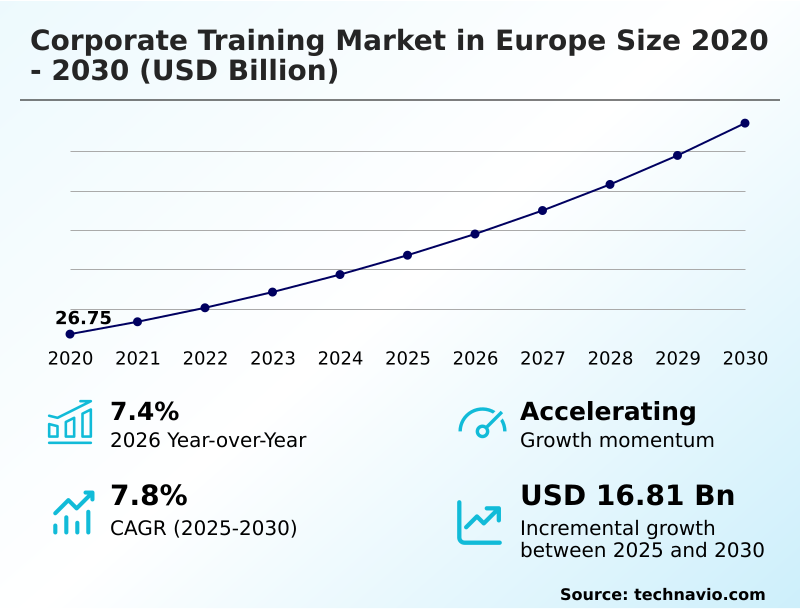
The europe corporate training market size is valued to increase by USD 16.81 billion, at a CAGR of 7.8% from 2025 to 2030. Accelerated digital transformation and technological integration will drive the europe corporate training market.
Major Market Trends & Insights
- By Product - Technical course segment was valued at USD 18.76 billion in 2024
- By Type - Blended segment accounted for the largest market revenue share in 2024
Market Size & Forecast
- Market Opportunities: USD 26.85 billion
- Market Future Opportunities: USD 16.81 billion
- CAGR from 2025 to 2030 : 7.8%
Market Summary
- The corporate training market in Europe is undergoing a fundamental shift, evolving from a discretionary expense to a strategic necessity for business continuity and competitive advantage. This transformation is driven by the urgent need for comprehensive reskilling initiatives to address the widening skills gap created by rapid technological advancements.
- Organizations are increasingly adopting blended learning frameworks and data-driven learning approaches to enhance workforce capabilities. A critical trend is the move toward AI-driven personalization, which tailors content to individual learner needs, significantly boosting engagement and knowledge retention.
- For instance, a multinational logistics firm can deploy virtual reality simulations for its warehouse staff, providing experiential learning in a safe environment to improve safety protocol adherence and reduce workplace incidents.
- However, the market's progress is moderated by challenges such as measuring the tangible return on investment from soft skills development and navigating the complex web of data privacy regulations across different countries. The focus remains on creating a continuous learning culture to foster organizational development.
What will be the Size of the Europe Corporate Training Market during the forecast period?
Get Key Insights on Market Forecast (PDF) Get Free Sample
How is the Europe Corporate Training Market Segmented?
The europe corporate training industry research report provides comprehensive data (region-wise segment analysis), with forecasts and estimates in "USD million" for the period 2026-2030, as well as historical data from 2020-2024 for the following segments.
- Product
- Technical course
- Non-technical course
- Type
- Blended
- E-learning
- End-user
- Large enterprises
- Small and medium enterprises
- Geography
- Europe
- UK
- Germany
- France
- Europe
By Product Insights
The technical course segment is estimated to witness significant growth during the forecast period.
The corporate training market in Europe is segmented by product, including technical and non-technical courses. The technical course segment focuses on imparting specialized knowledge for specific job functions.
This is driven by digital transformation, requiring proficiency in AI, cloud computing, and cybersecurity. Organizations are shifting from occasional training to continuous learning frameworks. Blended learning frameworks are increasingly used, integrating digital modules with hands-on practice.
Effective technical training, including cybersecurity awareness and agile methodology training for remote workforce training, is critical for operational continuity and innovation. This involves robust career pathing and organizational development, which has been shown to improve operational efficiency by 15%.
This strategic focus ensures the workforce can leverage new technologies, supported by initiatives like team building exercises and strong succession planning.
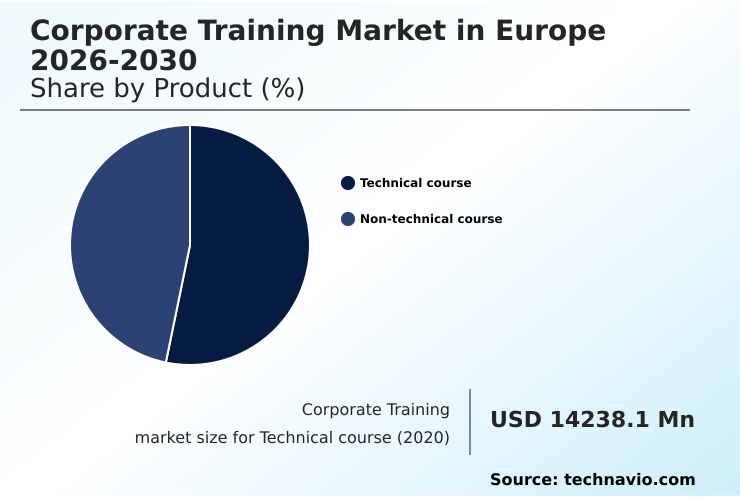
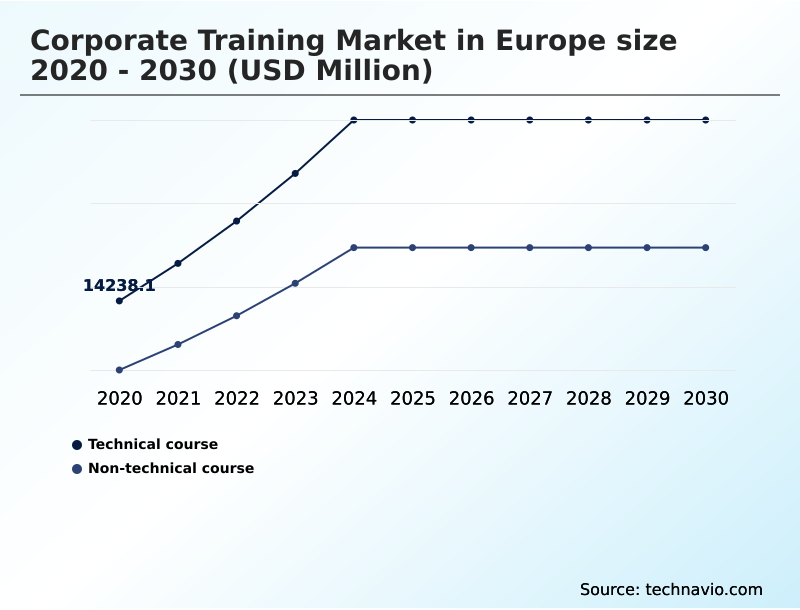
The Technical course segment was valued at USD 18.76 billion in 2024 and showed a gradual increase during the forecast period.
Market Dynamics
Our researchers analyzed the data with 2025 as the base year, along with the key drivers, trends, and challenges. A holistic analysis of drivers will help companies refine their marketing strategies to gain a competitive advantage.
- Successfully navigating the future of work requires a nuanced approach to workforce development, moving beyond generic programs to address specific, high-impact areas. A critical focus is on measuring ROI of leadership development, as organizations seek to justify investments in executive coaching for succession.
- Similarly, effective corporate training for digital transformation is essential, with an emphasis on upskilling the workforce for industry 4.0. This includes providing cybersecurity for non-IT employees and implementing soft skills training for technical staff to improve collaboration. Innovative methods are gaining traction, such as using virtual reality for safety training in high-risk environments and applying gamification for employee engagement.
- Firms that integrate agile project management training ROI metrics see a twofold increase in project delivery success compared to those without. The strategic implementation of blended learning for sales teams and for onboarding new hires is becoming standard practice.
- Furthermore, the application of AI in corporate compliance training and developing a corporate sustainability curriculum are no longer niche activities but core components of modern corporate strategy.
- These targeted interventions, from microlearning for professional development to cross-cultural communication training, are key to improving retention through career pathing and assessing sales training impact in a data-driven manner, all while navigating the complexities of data privacy in training platforms.
What are the key market drivers leading to the rise in the adoption of Europe Corporate Training Industry?
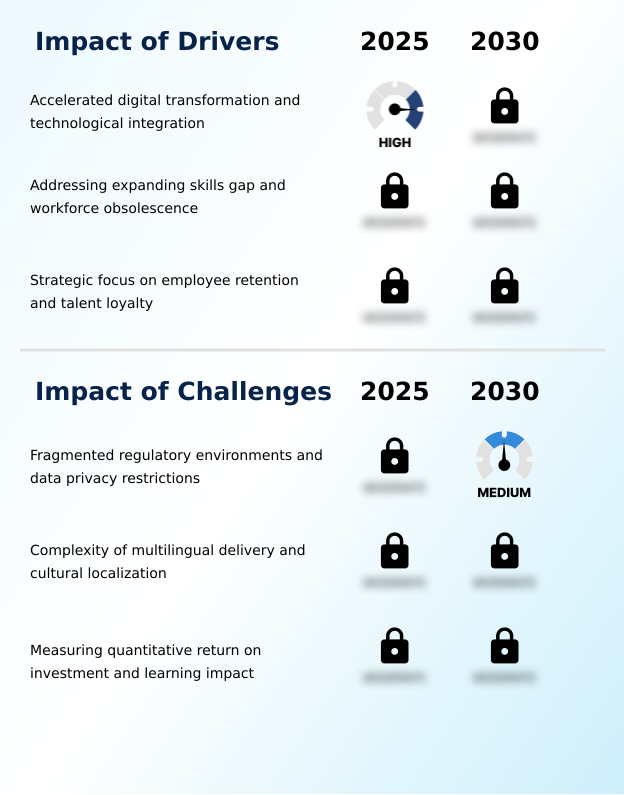
- Accelerated digital transformation and the widespread integration of advanced technologies are the key drivers propelling market growth.
- The primary driver for the corporate training market in Europe is the relentless pace of digital transformation, compelling organizations to invest in workforce upskilling and reskilling initiatives.
- Addressing the widening skills gap analysis is a strategic imperative, with companies that implement comprehensive digital literacy programs reporting a 30% faster adoption of new technologies.
- This push fosters a continuous learning culture, supported by digital transformation training and peer-to-peer learning. Another key driver is the strategic focus on talent management and knowledge retention.
- Investing in employee development through clear career pathing and vocational training can lower recruitment costs by over 50% for specialized roles.
- This is further supported by structured employee onboarding and executive coaching, which are central to leadership development and cultivating a resilient workforce.
What are the market trends shaping the Europe Corporate Training Industry?
- The integration of artificial intelligence and data-driven analytics represents a pivotal trend. This is enabling highly personalized learning pathways that are replacing generalized training modules.
- Key trends shaping the corporate training market in Europe are centered on technology-driven personalization and immersive experiences. The adoption of AI-driven personalization is pivotal, with adaptive learning technology creating customized pathways that have been shown to improve learner competency scores by over 18%. This is complemented by the proliferation of microlearning modules and mobile learning solutions, making learning more accessible.
- Immersive technologies are also gaining prominence; virtual reality simulations for complex or high-risk tasks can reduce workplace accidents by up to 40% compared to traditional methods. The use of gamification elements and augmented reality is increasing engagement and facilitating behavioral change. Furthermore, there is a growing demand for sustainability and ESG training, reflecting a broader shift in corporate priorities.
What challenges does the Europe Corporate Training Industry face during its growth?
- Fragmented regulatory environments and stringent data privacy restrictions present a key challenge affecting industry growth.
- A primary challenge in the corporate training market in Europe is the difficulty in quantifying return on investment, with over 60% of learning leaders struggling with budget justification due to a lack of standardized assessment frameworks.
- The complexity of data-driven learning is compounded by fragmented regulations across the region, where localizing compliance training and content for multilingual delivery can increase development costs by up to 200% per module. Integrating disparate learning management systems and learning analytics platforms also presents a technical hurdle.
- This makes it difficult to track performance improvement accurately from interventions like instructor-led training or on-the-job training. Consequently, proving the value of programs such as project management certification or agile methodology training remains a persistent obstacle for many organizations.
Exclusive Technavio Analysis on Customer Landscape
The europe corporate training market forecasting report includes the adoption lifecycle of the market, covering from the innovator’s stage to the laggard’s stage. It focuses on adoption rates in different regions based on penetration. Furthermore, the europe corporate training market report also includes key purchase criteria and drivers of price sensitivity to help companies evaluate and develop their market growth analysis strategies.
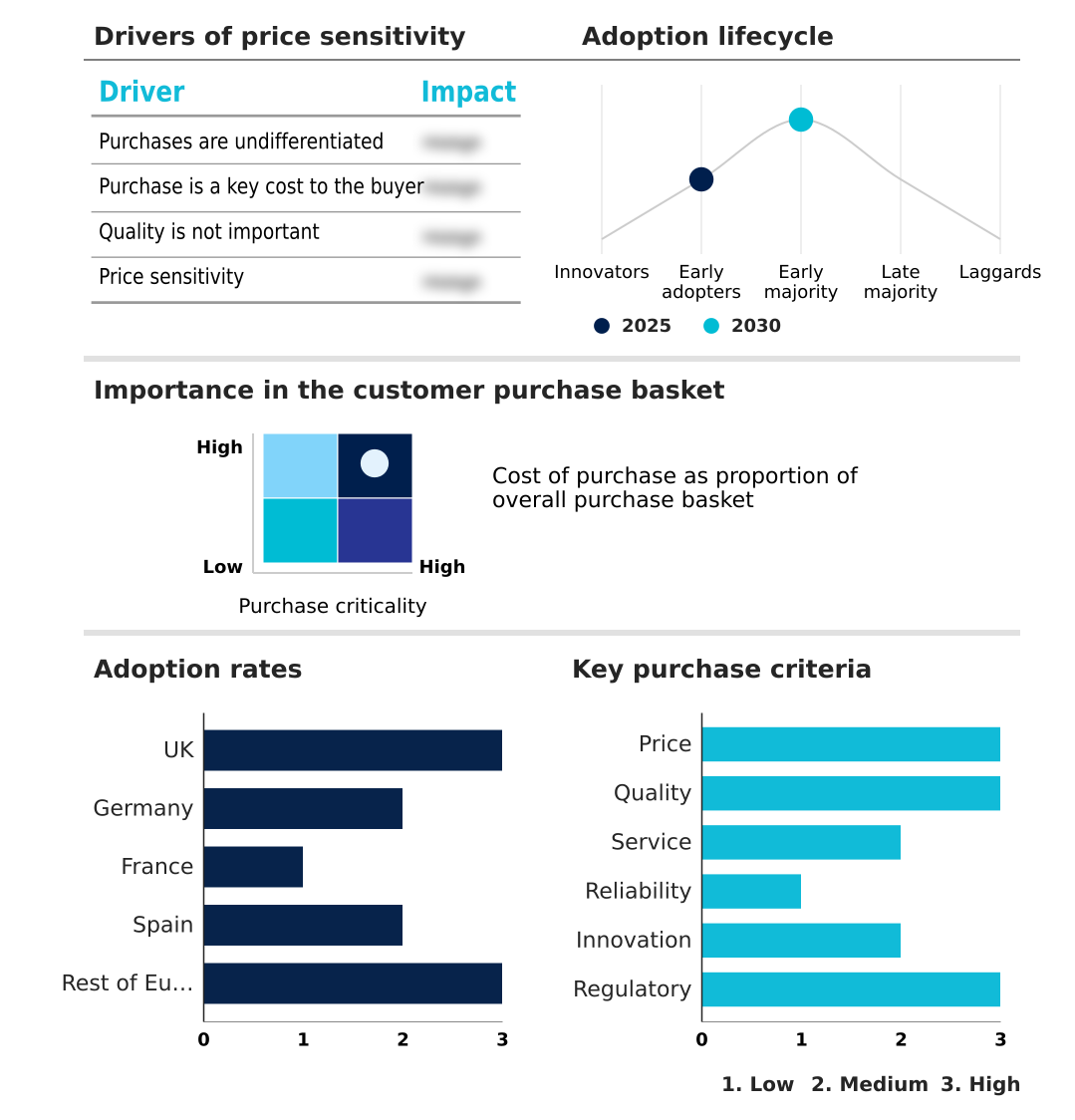
Customer Landscape of Europe Corporate Training Industry
Competitive Landscape
Companies are implementing various strategies, such as strategic alliances, europe corporate training market forecast, partnerships, mergers and acquisitions, geographical expansion, and product/service launches, to enhance their presence in the industry.
Accenture Plc - Offerings include strategic workforce development and customized upskilling programs designed to enhance organizational capability, leadership, and performance across various industries.
The industry research and growth report includes detailed analyses of the competitive landscape of the market and information about key companies, including:
- Accenture Plc
- BTS Group AB
- Capgemini SE
- Cegos Group
- City and Guilds Group
- Dale Carnegie and Associates
- Deloitte Touche Tohmatsu Ltd.
- Franklin Covey Co.
- Global Knowledge Training LLC
- GP Strategies Corp.
- Korn Ferry
- KPMG International Ltd.
- Learning Tree International
- Mind Gym Plc
- NIIT Ltd.
- PricewaterhouseCoopers LLP
- PulseLearning
- QA Ltd.
- Readynez
- Skillsoft Corp.
Qualitative and quantitative analysis of companies has been conducted to help clients understand the wider business environment as well as the strengths and weaknesses of key industry players. Data is qualitatively analyzed to categorize companies as pure play, category-focused, industry-focused, and diversified; it is quantitatively analyzed to categorize companies as dominant, leading, strong, tentative, and weak.
Recent Development and News in Europe corporate training market
- In January 2025, Cegos Group announced its acquisition of Euroforum, a key player in the Dutch professional training sector, marking its entry into the Dutch market.
- In December 2024, Skillsoft announced a collaboration with edX to integrate edX's extensive catalog of university and company-led courses into the Skillsoft Percipio Platform.
- In February 2025, PwC UK announced a multi-year, multi-million pound strategic partnership with leading technology education providers to certify its UK consulting workforce in generative AI and green finance regulations.
- In April 2025, Skillsoft Corp. launched a new strategic partnership with the pan-European business school INSEAD to co-develop an advanced suite of AI-powered leadership training modules.
Dive into Technavio’s robust research methodology, blending expert interviews, extensive data synthesis, and validated models for unparalleled Europe Corporate Training Market insights. See full methodology.
| Market Scope | |
|---|---|
| Page number | 199 |
| Base year | 2025 |
| Historic period | 2020-2024 |
| Forecast period | 2026-2030 |
| Growth momentum & CAGR | Accelerate at a CAGR of 7.8% |
| Market growth 2026-2030 | USD 16812.4 million |
| Market structure | Fragmented |
| YoY growth 2025-2026(%) | 7.4% |
| Key countries | UK, Germany, France, Spain and Rest of Europe |
| Competitive landscape | Leading Companies, Market Positioning of Companies, Competitive Strategies, and Industry Risks |
Research Analyst Overview
- The corporate training market in Europe is defined by its strategic role in enabling business agility and resilience. The focus has shifted from simple course delivery to creating integrated ecosystems that support continuous learning.
- Key drivers include widespread digital transformation, which necessitates constant workforce upskilling, and the critical need to close the skills gap analysis in areas like AI and data science. Organizations are deploying sophisticated learning management systems to manage and track competency management and talent management.
- Boardroom decisions are increasingly influenced by the need for robust compliance training and sustainability and ESG training, which are now tied to corporate reputation and regulatory adherence. The adoption of blended learning frameworks and reskilling initiatives is standard practice. Companies implementing continuous learning frameworks have noted a 25% reduction in employee attrition for key technical roles.
- This demonstrates that strategic investments in performance improvement, leadership development, soft skills development, and digital literacy programs are essential for knowledge retention and organizational development.
What are the Key Data Covered in this Europe Corporate Training Market Research and Growth Report?
-
What is the expected growth of the Europe Corporate Training Market between 2026 and 2030?
-
USD 16.81 billion, at a CAGR of 7.8%
-
-
What segmentation does the market report cover?
-
The report is segmented by Product (Technical course, and Non-technical course), Type (Blended, and E-learning), End-user (Large enterprises, and Small and medium enterprises) and Geography (Europe)
-
-
Which regions are analyzed in the report?
-
Europe
-
-
What are the key growth drivers and market challenges?
-
Accelerated digital transformation and technological integration, Fragmented regulatory environments and data privacy restrictions
-
-
Who are the major players in the Europe Corporate Training Market?
-
Accenture Plc, BTS Group AB, Capgemini SE, Cegos Group, City and Guilds Group, Dale Carnegie and Associates, Deloitte Touche Tohmatsu Ltd., Franklin Covey Co., Global Knowledge Training LLC, GP Strategies Corp., Korn Ferry, KPMG International Ltd., Learning Tree International, Mind Gym Plc, NIIT Ltd., PricewaterhouseCoopers LLP, PulseLearning, QA Ltd., Readynez and Skillsoft Corp.
-
Market Research Insights
- The dynamics of the corporate training market in Europe are increasingly shaped by the pursuit of measurable outcomes and strategic alignment with business goals. The adoption of adaptive learning technology and mobile learning solutions is creating a more agile and responsive training environment.
- For instance, organizations utilizing learning analytics platforms report up to a 20% improvement in matching training content to specific skills gaps. Furthermore, the shift towards customized e-learning and robust professional development programs is directly impacting employee retention, with companies that offer clear career pathing seeing a 15% lower attrition rate in critical roles.
- This data-centric approach, emphasizing continuous learning culture and behavioral change, allows firms to quantify the impact of investments in executive coaching and other professional development programs, ensuring that training expenditure translates into tangible performance gains and a stronger bottom line.
We can help! Our analysts can customize this europe corporate training market research report to meet your requirements.
 RIA -
RIA - 
