



Data Resiliency Market Size and Growth Forecast 2026-2030
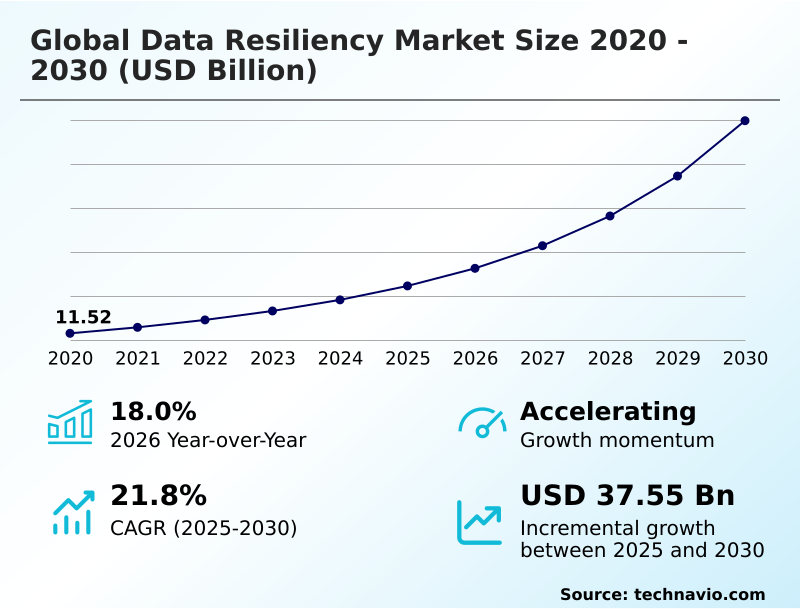
The Data Resiliency Market size was valued at USD 22.29 billion in 2025 growing at a CAGR of 21.8% during the forecast period 2026-2030.
North America accounts for 38.3% of incremental growth during the forecast period. The On-premises segment by Deployment was valued at USD 11.13 billion in 2024, while the Solution segment holds the largest revenue share by Component.
The market is projected to grow by USD 48.31 billion from 2020 to 2030, with USD 37.55 billion of the growth expected during the forecast period of 2025 to 2030.
Get Key Insights on Market Forecast (PDF) Request Free Sample
Data Resiliency Market Overview
The data resiliency market is defined by a critical shift from passive backup and recovery to proactive cyber resilience strategies. Organizations now prioritize maintaining continuous operations against a backdrop of sophisticated threats, driving demand for solutions that offer near-zero recovery time objective (RTO) and recovery point objective (RPO) targets. North America is a significant contributor to market expansion, driven by stringent regulatory pressures. For example, a healthcare provider facing a ransomware attack can leverage a cyber recovery vault with immutable backups to restore its electronic health record system in minutes, ensuring continuous data protection (CDP) and compliance with the Health Insurance Portability and Accountability Act (HIPAA) without paying a ransom. This focus on zero trust data security and automated failover capabilities illustrates the market’s direction toward intelligent, self-healing systems that safeguard critical information across hybrid and multi-cloud data management frameworks.
Drivers, Trends, and Challenges in the Data Resiliency Market
Enterprises are formulating a comprehensive multi-cloud backup and recovery strategy to navigate the complexities of modern IT infrastructure. This involves creating a detailed ransomware recovery and response plan that goes beyond simple data restoration to include forensic analysis and vulnerability patching.
A core component of this approach is disaster recovery orchestration and automation, which minimizes manual intervention and dramatically shortens recovery times, a critical factor for meeting the stringent uptime requirements outlined in regulations like the Sarbanes-Oxley Act (SOX). For instance, a global financial services firm deploying containerized applications must integrate data protection for kubernetes environments to secure transactional microservices.
Implementing immutable storage for cyber resilience is central to this architecture, as it creates an unchangeable, air-gapped copy of data that is impervious to malicious encryption or deletion. This method has proven to be significantly more effective at ensuring recoverability than traditional tape-based backups, reducing the risk of catastrophic data loss.
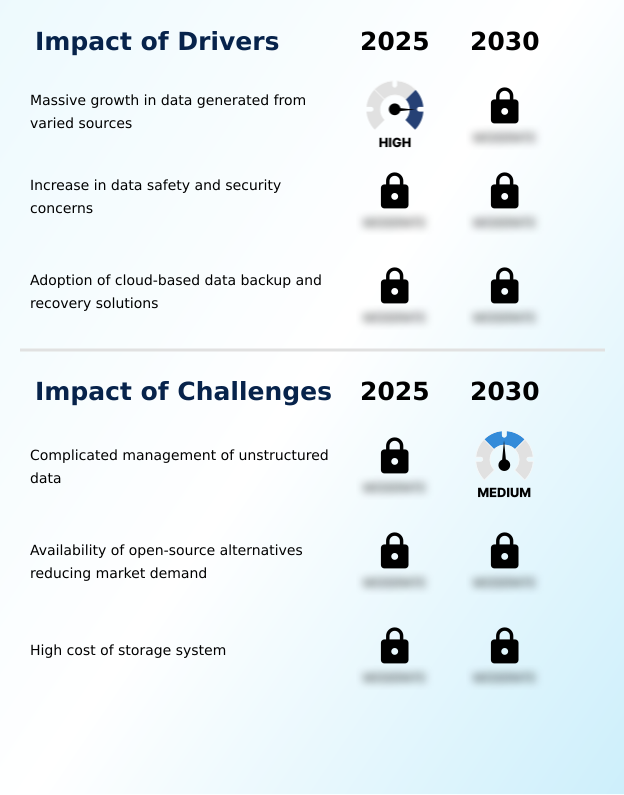
Primary Growth Driver: The massive growth in data generated from varied sources acts as a fundamental engine for market expansion as enterprises grapple with the sheer volume of information produced in the modern digital era.
The exponential increase in data volume from sources like IoT devices, social media, and remote work applications is a fundamental driver, with the market showing an 18% year-over-year growth.
This data explosion makes traditional backup methods insufficient for ensuring business continuity, fueling demand for automated and scalable data replication and protection solutions across hybrid and multi-cloud data management architectures.
The strategic importance of this information for real-time analytics means that any data loss can lead to severe financial and reputational damage.
Consequently, enterprises are prioritizing investments in advanced backup and recovery systems, including object storage and predictive analytics for recovery, to protect their most critical digital assets and maintain operational stability in a data-intensive environment.
Emerging Market Trend: The rising popularity of blockchain solutions is fundamentally altering the strategic landscape for organizations seeking to eliminate single points of failure within their backup and recovery architectures.
A primary trend is the integration of blockchain technology to create tamper-proof data validation systems, ensuring the integrity of backups. This shift toward decentralized ledgers provides a higher degree of confidence for industries handling sensitive files, such as finance and healthcare, by guaranteeing data immutability against unauthorized modification.
Organizations are leveraging these platforms to automate recovery protocols via smart contracts and simplify compliance audits under regulations like GDPR with a permanent record of backup activities. The adoption of cloud-based deployment models, which saw substantial growth in recent years, further enables this trend by providing the scalable infrastructure needed for distributed ledger technologies.
This convergence is creating more robust frameworks for information availability, independent of a single physical location.
Key Industry Challenge: The complicated management of unstructured data stands as a formidable barrier to achieving comprehensive operational continuity, as this information often lacks a predefined format or organizational structure.
A significant challenge is the complicated management of unstructured data, which now accounts for nearly 80% of all new enterprise information. Content such as emails, images, and social media posts lacks a predefined model, making it difficult to index, search, and protect efficiently with traditional data protection strategy tools.
This creates visibility gaps in an organization’s resiliency posture, leading to bloated storage costs and inefficient recovery processes that can exceed acceptable downtime limits. The lack of consistent metadata complicates the application of data lifecycle management and retention policies, increasing compliance risks under regulations such as the CCPA.
Addressing this requires investment in advanced classification, deduplication and compression, and AI-powered discovery tools to prevent resiliency frameworks from being overwhelmed.
Explore Full Market Dynamics Analysis Request Free Sample
Data Resiliency Market Segmentation
The data resiliency industry research report provides comprehensive data including region-wise segment analysis, with forecasts and analysis for the period 2026-2030, as well as historical data from 2020-2024 for the following segments.
Deployment Segment Analysis
The on-premises segment is estimated to witness significant growth during the forecast period.
The on-premises segment represents a foundational approach to information protection where organizations maintain complete control over their backup hardware and recovery software.
This deployment model, accounting for a significant share of the market, is critical for entities such as government agencies and large research institutions that require air-gapped storage to mitigate external cyber threats.
By hosting their resiliency infrastructure locally, these organizations can enforce strict data sovereignty mandates and ensure cryptographic keys never leave the internal network.
While requiring high initial capital expenditure for infrastructure like a cyber recovery vault, procurement decision-makers in regulated industries prioritize this model for its low-latency recovery capabilities, data immutability, and deep integration with legacy systems, which are essential for maintaining operational autonomy and meeting compliance standards like HIPAA.
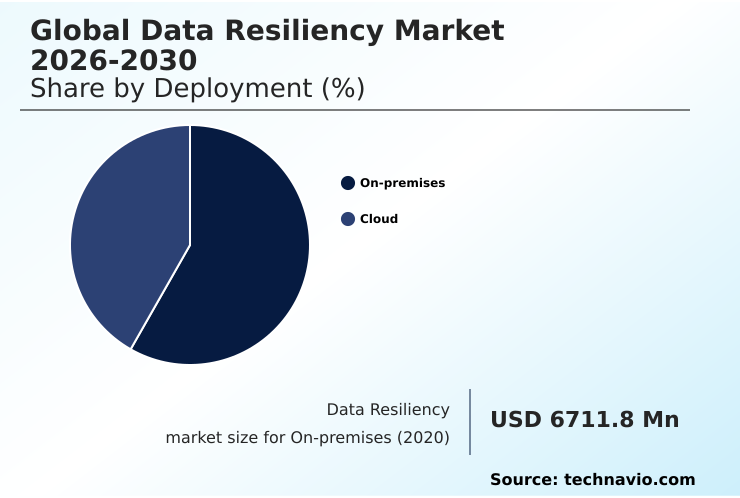
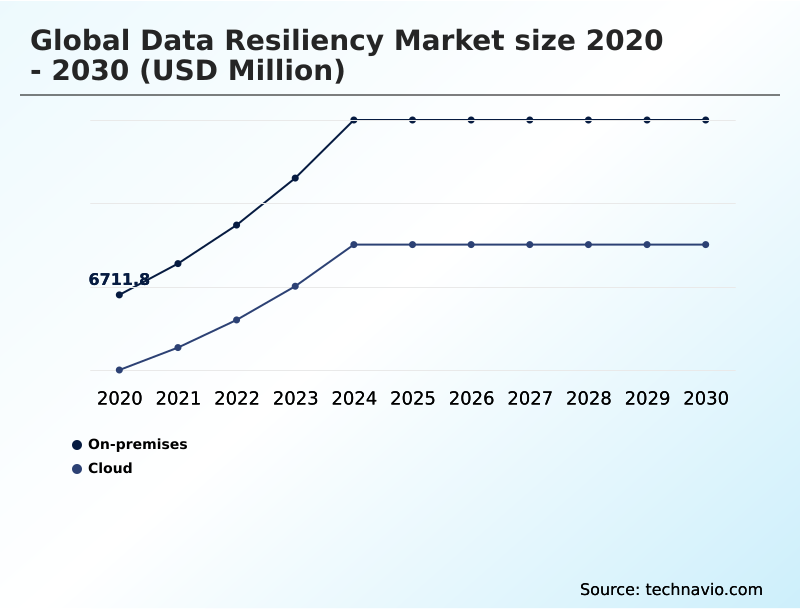
The On-premises segment was valued at USD 11.13 billion in 2024 and showed a gradual increase during the forecast period.
Data Resiliency Market by Region: North America Leads with 38.3% Growth Share
North America is estimated to contribute 38.3% to the growth of the global market during the forecast period.
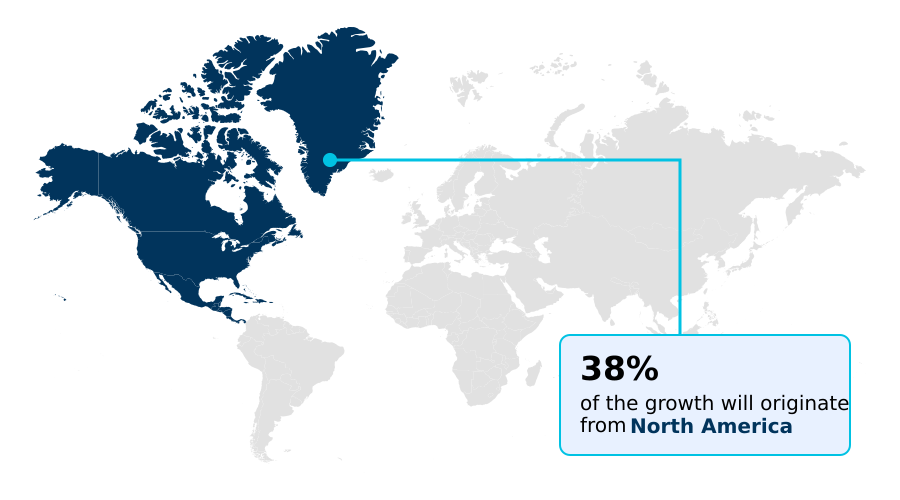
The geographic landscape is led by North America, which accounts for approximately 38% of the market's incremental growth.
This dominance is propelled by high adoption rates in the US and Canada, where stringent regulations like the California Consumer Privacy Act (CCPA) mandate robust data protection.
Enterprises in the region are heavily investing in disaster recovery as a service (DRaaS) and advanced cloud data management platforms to secure information across hybrid environments.
A key operational driver is the need to ensure data sovereignty while managing complex multi-cloud deployments.
Consequently, there is strong demand for unified data protection and cloud-native backup solutions that provide both security and compliance, enabling organizations to maintain control over sensitive assets irrespective of their physical or virtual location.
Customer Landscape Analysis for the Data Resiliency Market
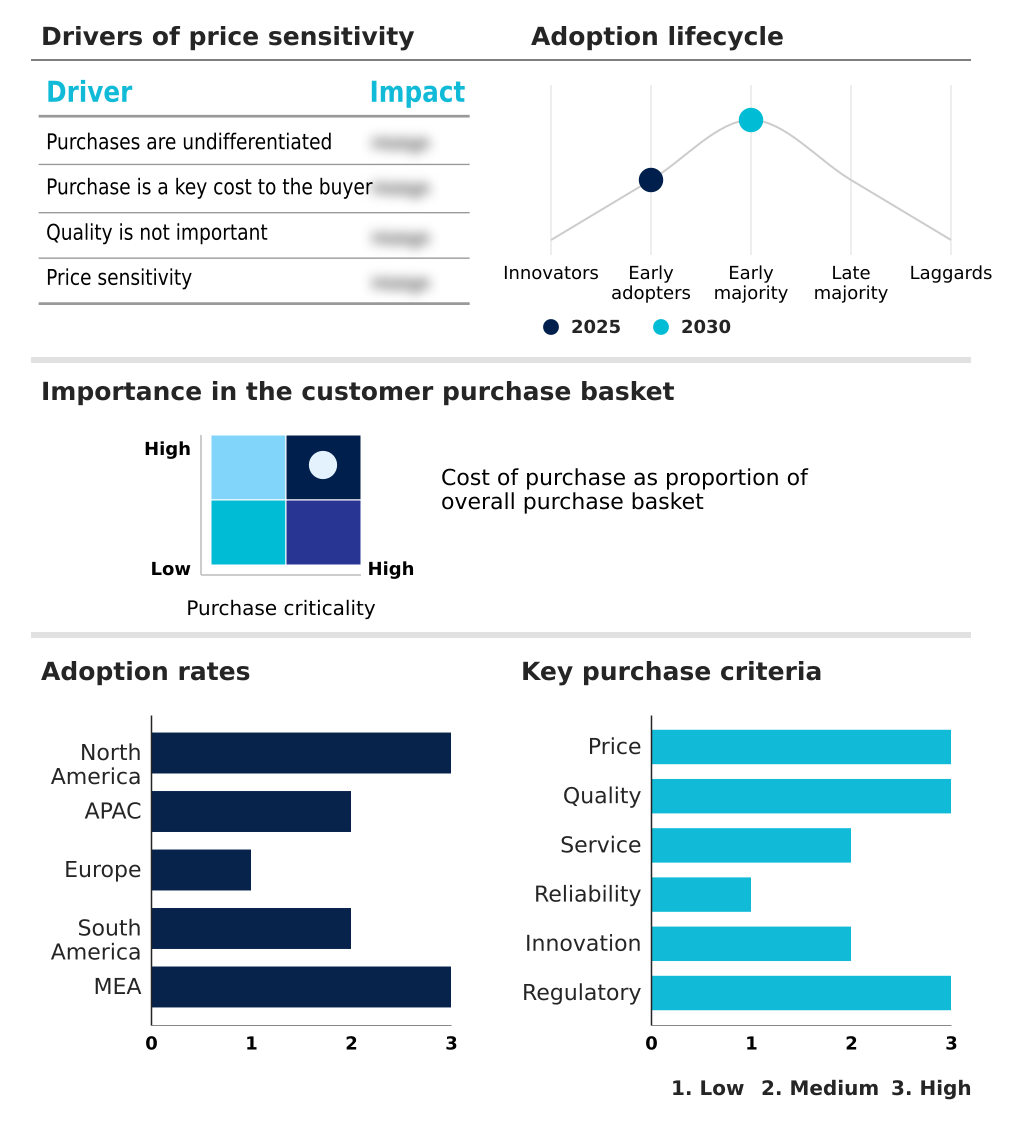
The data resiliency market forecasting report includes the adoption lifecycle of the market, covering from the innovator’s stage to the laggard’s stage. It focuses on adoption rates in different regions based on penetration. Furthermore, the data resiliency market report also includes key purchase criteria and drivers of price sensitivity to help companies evaluate and develop their market growth analysis strategies.
Competitive Landscape of the Data Resiliency Market
Companies are implementing various strategies, such as strategic alliances, partnerships, mergers and acquisitions, geographical expansion, and product/service launches, to enhance their presence in the data resiliency market industry.
Arcserve USA LLC - Offerings include enterprise-grade data storage solutions engineered for robust data protection, business continuity, and comprehensive cyber resilience.
The industry research and growth report includes detailed analyses of the competitive landscape of the market and information about key companies, including:
- Arcserve USA LLC
- Asigra Inc.
- Cloudian Inc.
- Cohesity Inc.
- Commvault Systems Inc.
- Dell Technologies Inc.
- Druva Inc.
- Hewlett Packard Enterprise Co.
- IBM Corp.
- Infinidat Ltd.
- Kaseya Ltd.
- NetApp Inc.
- Nutanix Inc.
- Pure Storage Inc.
- Quantum Corp.
- Rubrik Inc.
- Unitrends Inc.
- Veeam Software Group GmbH
- Veritas Technologies LLC
- Zscaler Inc.
Qualitative and quantitative analysis of companies has been conducted to help clients understand the wider business environment as well as the strengths and weaknesses of key industry players. Data is qualitatively analyzed to categorize companies as pure play, category-focused, industry-focused, and diversified; it is quantitatively analyzed to categorize companies as dominant, leading, strong, tentative, and weak.
Recent Developments in the Data Resiliency Market
- In May 2025, Veeam Software announced the launch of its next-generation resilience platform, which introduced an automated recovery orchestrator designed for large-scale disaster scenarios across complex public cloud ecosystems.
- In April 2025, Dell Technologies revealed a new suite of high-density storage arrays and automated protection software designed to manage the petabyte-scale requirements of modern artificial intelligence research facilities.
- In January 2025, Dell Technologies announced a significant update to its PowerProtect portfolio, integrating a new localized vaulting system to provide enhanced immutability for on-premises workloads against ransomware attacks.
- In August 2025, IBM announced a major update to its storage portfolio that integrated a native blockchain-based validation system designed to secure high-value datasets for global banking institutions against unauthorized modification.
Research Analyst Overview: Data Resiliency Market
The data resiliency market is fundamentally evolving from simple backup and recovery operations toward integrated cyber-defense frameworks. The solution segment dominates market revenue, reflecting enterprise-level investment in platforms that deliver data immutability and automated failover.
Boardroom decisions are increasingly focused on mitigating financial and operational risks associated with data breaches, linking procurement of a cyber recovery vault directly to corporate governance mandates under standards like ISO/IEC 27001. This strategic pivot drives adoption of zero trust data security architectures, where continuous data protection and robust data replication are standard features, not add-ons.
The objective is to achieve guaranteed recoverability with near-zero data loss, a non-negotiable requirement for industries where even minimal downtime can cause significant reputational damage. As such, an effective data protection strategy is now a key pillar of business continuity planning and a critical vendor qualification criterion.
Dive into Technavio’s robust research methodology, blending expert interviews, extensive data synthesis, and validated models for unparalleled Data Resiliency Market insights. See full methodology.
| Market Scope | |
|---|---|
| Page number | 284 |
| Base year | 2025 |
| Historic period | 2020-2024 |
| Forecast period | 2026-2030 |
| Growth momentum & CAGR | Accelerate at a CAGR of 21.8% |
| Market growth 2026-2030 | USD 37549.1 million |
| Market structure | Fragmented |
| YoY growth 2025-2026(%) | 18.0% |
| Key countries | US, Canada, Mexico, China, Japan, India, South Korea, Australia, Indonesia, Germany, UK, France, Italy, Spain, The Netherlands, Brazil, Argentina, Chile, Saudi Arabia, UAE, South Africa, Israel and Turkey |
| Competitive landscape | Leading Companies, Market Positioning of Companies, Competitive Strategies, and Industry Risks |
Data Resiliency Market: Key Questions Answered in This Report
-
What is the expected growth of the Data Resiliency Market between 2026 and 2030?
-
The Data Resiliency Market is expected to grow by USD 37.55 billion during 2026-2030, registering a CAGR of 21.8%. Year-over-year growth in 2026 is estimated at 18.0%%. This acceleration is shaped by massive growth in data generated from varied sources, which is intensifying demand across multiple end-use verticals covered in the report.
-
-
What segmentation does the market report cover?
-
The report is segmented by Deployment (On-premises, and Cloud), Component (Solution, and Service), End-user (Large enterprises, and SMEs) and Geography (North America, APAC, Europe, South America, Middle East and Africa). Among these, the On-premises segment is estimated to witness significant growth during the forecast period, driven by rising adoption across key application areas. Each segment includes detailed qualitative and quantitative analysis, along with historical data from 2020-2024 and forecasts through 2030 with year-over-year growth rates.
-
-
Which regions are analyzed in the report?
-
The report covers North America, APAC, Europe, South America and Middle East and Africa. North America is estimated to contribute 38.3% to market growth during the forecast period. Country-level analysis includes US, Canada, Mexico, China, Japan, India, South Korea, Australia, Indonesia, Germany, UK, France, Italy, Spain, The Netherlands, Brazil, Argentina, Chile, Saudi Arabia, UAE, South Africa, Israel and Turkey, with dedicated market size tables and year-over-year growth for each.
-
-
What are the key growth drivers and market challenges?
-
The primary driver is massive growth in data generated from varied sources, which is accelerating investment and industry demand. The main challenge is complicated management of unstructured data, creating operational barriers for key market participants. The report quantifies the impact of each driver and challenge across 2026 and 2030 with comparative analysis.
-
-
Who are the major players in the Data Resiliency Market?
-
Key vendors include Arcserve USA LLC, Asigra Inc., Cloudian Inc., Cohesity Inc., Commvault Systems Inc., Dell Technologies Inc., Druva Inc., Hewlett Packard Enterprise Co., IBM Corp., Infinidat Ltd., Kaseya Ltd., NetApp Inc., Nutanix Inc., Pure Storage Inc., Quantum Corp., Rubrik Inc., Unitrends Inc., Veeam Software Group GmbH, Veritas Technologies LLC and Zscaler Inc.. The report provides qualitative and quantitative analysis categorizing companies as dominant, leading, strong, tentative, and weak based on their market positioning. Company profiles include business segment analysis, SWOT assessment, key offerings, and recent strategic developments.
-
Data Resiliency Market Research Insights
Market dynamics are increasingly shaped by the need for a cohesive data protection strategy that spans complex IT environments. The adoption of cloud-native backup is accelerating, with organizations leveraging snapshot-based backup and instant recovery to improve data availability solutions.
For instance, an e-commerce platform can use these techniques to restore its customer database with minimal downtime during a system failure, ensuring business continuity during peak transaction periods. This shift is also influenced by data governance and compliance mandates such as the GDPR, which dictate policies for data loss prevention and workload mobility.
As enterprises refine their business continuity planning, the focus moves toward orchestrated recovery and comprehensive failover and failback testing to validate infrastructure resilience against a wide spectrum of potential disruptions.
We can help! Our analysts can customize this data resiliency market research report to meet your requirements.
 RIA -
RIA - 
