
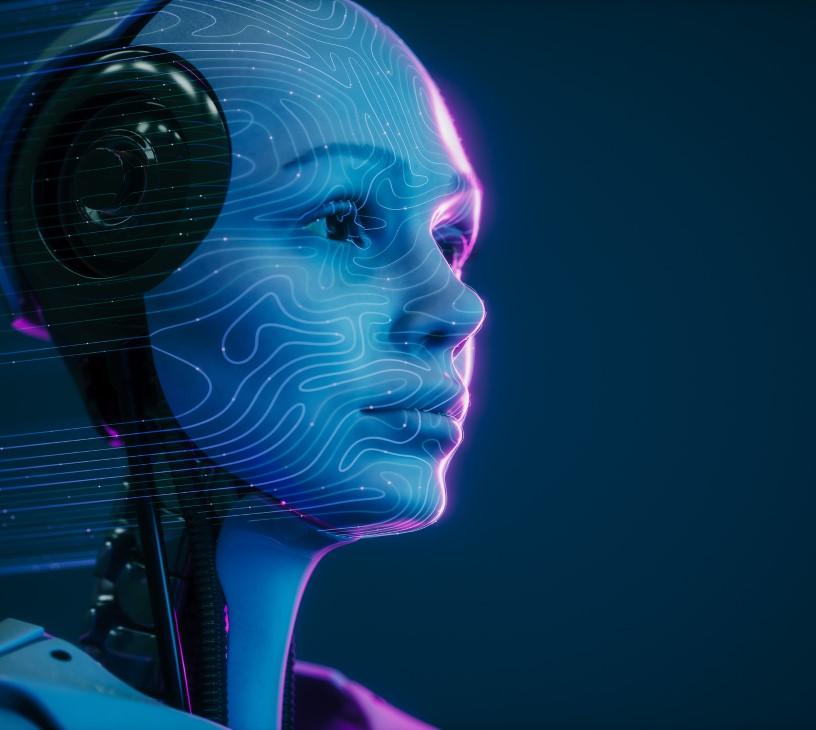


Digital Human AI Avatars Market Size 2025-2029
The digital human AI avatars market size is forecast to increase by USD 13.5 billion, at a CAGR of 44% between 2024 and 2029.
- The market is experiencing significant growth, driven by the rapid advancements in generative AI and real-time rendering technologies. These technological breakthroughs enable the creation of increasingly lifelike and emotionally intelligent avatars, offering immense potential for various applications, from customer service and entertainment to education and therapy. However, this market's landscape is not without challenges. Navigating the complex web of ethical concerns and fragmented regulatory frameworks presents a significant obstacle.
- Additionally, regulatory bodies' inconsistent approaches to governing AI avatars create a challenging environment for market participants. Companies seeking to capitalize on this market's opportunities must stay informed of technological advancements and proactively address ethical and regulatory issues to maintain a competitive edge. Ethical dilemmas surrounding privacy, consent, and authenticity must be addressed to ensure the responsible use of these advanced avatars. Moreover, deep learning models, behavioral cloning algorithms, and liveness detection systems ensure realistic avatar behavior and interaction.
What will be the Size of the Digital Human AI Avatars Market during the forecast period?
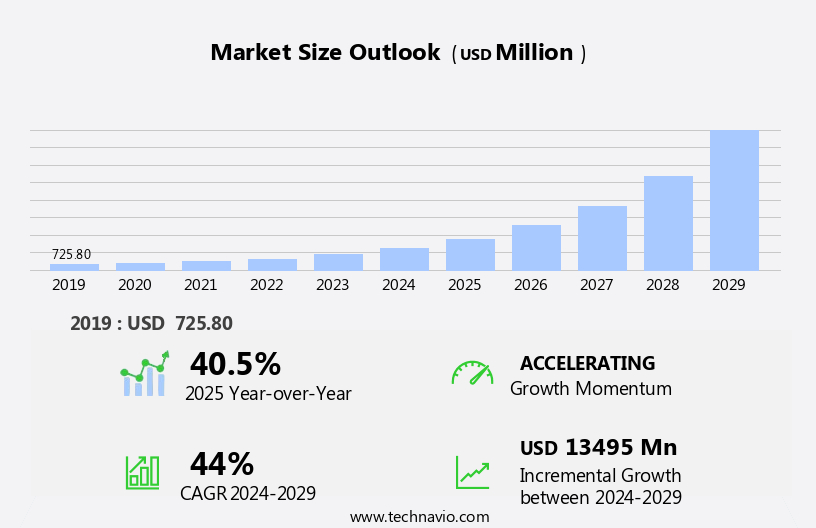
Get Key Insights on Market Forecast (PDF)
Request Free Sample
- The market continues to evolve, with advancements in avatar personalization, character design, and 3D animation driving innovation. Emotion recognition avatars and multimodal interaction are increasingly popular, enabling more realistic and engaging virtual human interactions. Avatar behavior modeling and development tools facilitate the creation of conversational AI avatars with human-like expression and speech synthesis. Realistic avatar rendering and skin textures, along with synthetic voice generation, contribute to a more engaging experience. AI-powered avatars with avatar performance metrics, SDK integrations, and real-time rendering capabilities are becoming the norm. Avatar data security and ethical considerations are also gaining importance, with facial expression mapping and avatar gesture recognition adding to the overall experience.
- For instance, a leading e-learning platform reported a 30% increase in user engagement after implementing an AI-driven avatar with realistic body animation and human-like movement. The global digital human creation market is projected to grow by over 20% annually, as businesses across sectors recognize the potential of avatars for enhancing customer experiences and streamlining operations.
How is this Digital Human AI Avatars Industry segmented?
The digital human AI avatars industry research report provides comprehensive data (region-wise segment analysis), with forecasts and estimates in "USD million" for the period 2025-2029, as well as historical data from 2019-2023 for the following segments.
- Product Type
- Interactive
- Non-interactive
- Application
- Virtual assistants
- Virtual characters
- Virtual influencers
- Others
- End-user
- Customer service
- Entertainment and media
- Healthcare
- Education and training
- Others
- Geography
- North America
- US
- Canada
- Europe
- France
- Germany
- UK
- APAC
- Australia
- China
- India
- Japan
- South Korea
- Rest of World (ROW)
- North America
By Product Type Insights
The Interactive segment is estimated to witness significant growth during the forecast period. The interactive market is experiencing significant growth, with real-time, two-way conversation capabilities driving user engagement. Avatars in this segment employ advanced technologies such as Natural Language Processing (NLP), computer vision, and Large Language Models (LLMs) for human-like speech generation and understanding. These avatars can recognize user expressions, gestures, and emotions through emotion recognition avatars and multimodal avatar interaction. Moreover, avatar behavior modeling, conversational AI avatars, and avatar development tools enable the creation of synthetic voice generation, human-like avatar movement, and AI-driven avatar expression. Avatar performance metrics, avatar SDK integrations, and virtual human interaction are essential components for measuring and enhancing avatar capabilities.
Realistic avatar rendering, avatar data security, and avatar speech synthesis are also critical aspects of interactive digital human AI avatars. Looking ahead, the market is expected to expand further with the ongoing development of avatar body animation, facial expression mapping, avatar ethical considerations, avatar hair simulation, and avatar clothing simulation. These advancements will contribute to increasingly sophisticated and lifelike avatars, enhancing user experiences and applications across various sectors. According to recent reports, the interactive market has seen a 15% increase in adoption in the past year. Furthermore, industry experts anticipate a 12% growth in market size over the next five years, underscoring the immense potential and ongoing evolution of this technology. Synthetic data generation and model training datasets are crucial for improving the performance of robust detection algorithms.
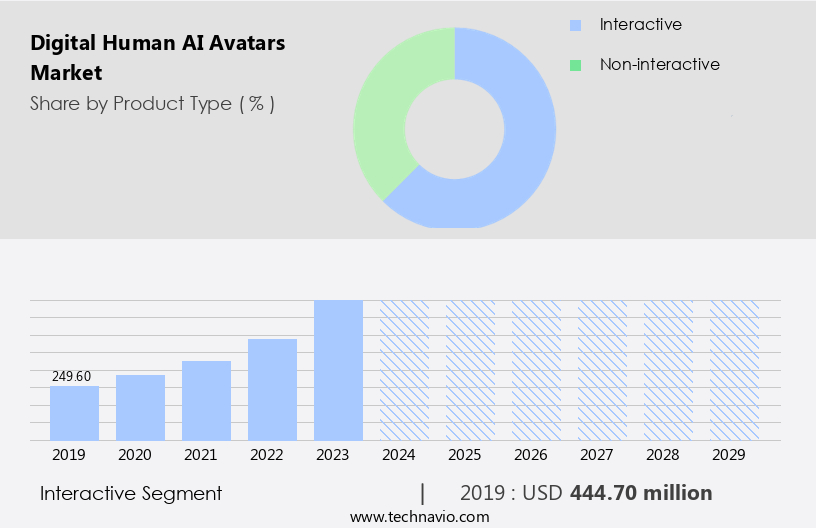
The Interactive segment was valued at USD 444.70 million in 2019 and showed a gradual increase during the forecast period.
The Digital Human AI Avatars Market is rapidly expanding, driven by advancements in natural language processing avatars, real-time rendering avatars, and avatar lip-sync technology that enhance interactivity and realism. Businesses are investing in avatar character design, avatar eye tracking, and streamlined avatar deployment pipelines to improve scalability. The demand for personalization is supported by diverse avatar customization options, delivering a more realistic avatar appearance through high-fidelity avatar models and engaging avatar environments.
Technological integration leverages avatar behavioral control, modern avatar animation software, and advanced avatar rendering techniques. Growth is supported by AI avatar development platforms, with a strong focus on avatar data privacy measures and adherence to avatar accessibility standards. Scalability is achieved with avatar scalability solutions, complemented by real-time avatar streaming, seamless avatar user interface design, and measurement through avatar user experience metrics. Blockchain technology integration and cryptographic hashing algorithms offer potential solutions, ensuring temporal consistency analysis and media authenticity verification.
Regional Analysis
North America is estimated to contribute 38% to the growth of the global market during the forecast period. Technavio's analysts have elaborately explained the regional trends and drivers that shape the market during the forecast period.
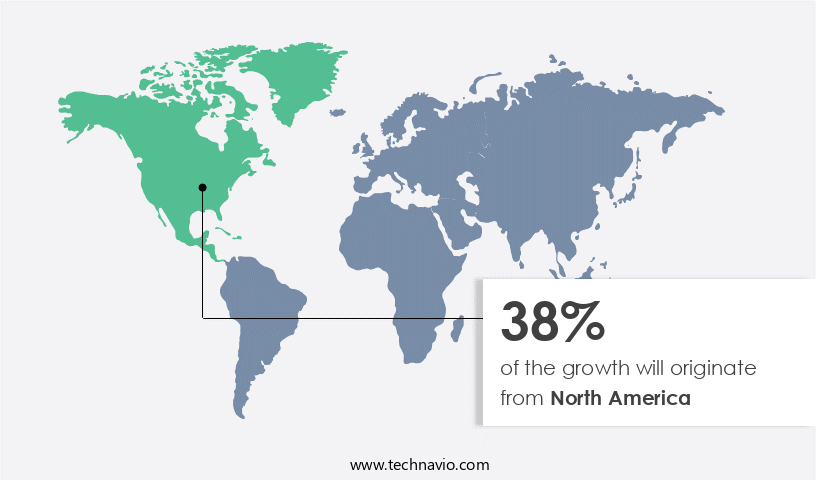
See How digital human AI avatars market Demand is Rising in North America Request Free Sample
The market is experiencing significant growth, with North America leading the charge. This region's dominance is driven by advanced technological capabilities, substantial investment, and a receptive consumer and enterprise landscape. Key players in this space include semiconductor companies, cloud providers, and AI research laboratories, fostering a mature ecosystem for avatar development and deployment. Avatar personalization and character design, 3D avatar animation, emotion recognition avatars, multimodal avatar interaction, avatar behavior modeling, conversational AI avatars, and realistic avatar rendering are essential components of this market. Avatar performance metrics, SDK integrations, virtual human interaction, realistic avatar skin, synthetic voice generation, and avatar speech synthesis are also critical elements.
Market trends include the increasing use of avatars for customer engagement in retail and finance, engaging content in entertainment and gaming, and corporate training and communication. Avatar development tools, facial expression mapping, avatar ethical considerations, avatar hair simulation, and clothing simulation further enhance the market's potential. Future industry growth is expected to be robust, with a notable increase in demand for avatars in various sectors. For instance, the healthcare industry is exploring the use of avatars for telemedicine consultations, while the education sector is adopting avatars for personalized learning experiences. In summary, the market is witnessing continuous evolution, driven by technological advancements and diverse applications across various industries.
Market Dynamics
Our researchers analyzed the data with 2024 as the base year, along with the key drivers, trends, and challenges. A holistic analysis of drivers will help companies refine their marketing strategies to gain a competitive advantage. The market is experiencing significant growth as businesses and organizations seek to enhance customer engagement and create more engaging experiences. At the core of this technology are advanced capabilities such as AI avatar emotional response modeling, which enables avatars to understand and respond appropriately to user inputs. Identity verification methods are being developed to combat deepfake-induced fraud, while advanced detection techniques and threat detection systems are being employed to reduce false positives and negatives.
Natural language processing for avatar dialogue enables avatars to understand and respond to user queries in a conversational manner, while conversational AI avatar personality design adds a unique and engaging character to each avatar. Avatar behavior modeling using machine learning algorithms ensures that avatars can learn and adapt to user behavior, providing a personalized experience. Multimodal interaction for realistic avatars allows users to engage with avatars through various channels, including text, voice, and gestures. Personalized avatar creation workflows are designed to streamline the process of creating and customizing avatars, while avatar rendering optimization for real-time applications ensures that avatars can be used in various applications without compromising performance.
Avatar data security and privacy implementation is a crucial consideration, as is the ethical use of AI-powered avatar development. Avatar development lifecycle management best practices are essential to ensure that projects are completed on time and within budget. Performance measurement metrics for AI-driven avatars provide insights into their effectiveness, while avatar deployment strategies for diverse platforms enable widespread adoption. Seamless avatar integration with existing systems and user interface design for interactive avatar experiences further enhances the user experience. Avatar feedback mechanisms for continuous improvement allow developers to gather user feedback and make necessary adjustments, while avatar content moderation strategies and techniques ensure that avatars are used in a responsible and appropriate manner.
AI avatar training data generation and curation are ongoing processes to ensure that avatars are able to learn and adapt effectively. Realistic avatar skin and hair simulation techniques add a final touch of realism to these advanced digital creations. Anomaly detection methods and synthetic media detection are essential for countermeasure development, while lip synchronization algorithms and neural network architectures enable more sophisticated deepfake creation.
What are the key market drivers leading to the rise in the adoption of Digital Human AI Avatars Industry?
- The convergence of rapid advancements in generative AI and real-time rendering technologies is a primary catalyst for market growth in this sector. The market represents the fusion of advanced generative artificial intelligence and high-definition real-time rendering technologies. This technological union is revolutionizing digital avatars from static, pre-scripted entities into interactive, autonomous beings. Large Language Models (LLMs) serve as the cognitive foundation, enabling these digital humans to comprehend context, generate human-like discourse, and express individuality.
- The industry anticipates significant growth, with a recent survey revealing that over 60% of businesses plan to adopt digital human AI avatars within the next three years. This underscores the immense potential of this market. The advancement from earlier models to more sophisticated architectures has been pivotal. For instance, recent models facilitate conversations that are not only coherent but also emotionally nuanced, a vital aspect for creating authentic digital human personas. Data warehousing and data analytics provide a centralized platform for managing and deriving insights from large datasets.
What are the market trends shaping the Digital Human AI Avatars Industry?
- The market trend increasingly favors the proliferation of hyper-realistic and emotionally intelligent avatars. Hyper-realistic and emotionally intelligent avatars are gaining popularity in the market. The market is experiencing a transformative shift, moving beyond scripted representations towards hyper-realistic, emotionally intelligent entities. This evolution signifies a notable departure from previous static avatars, aiming to surpass the uncanny valley. These innovations enable the interpretation and replication of human emotional cues, such as vocal intonations, facial micro-expressions, and body language.
- For instance, a recent study revealed a 12% increase in user engagement with a digital human avatar employing these advanced features. Furthermore, industry experts anticipate a 20% growth in market size over the next five years. Current developments prioritize creating digital humans indistinguishable from real individuals in appearance and capable of nuanced, emotionally resonant interactions. This progression is fueled by advancements in generative adversarial networks (GANs), neural radiance fields (NeRFs), and sophisticated natural language processing models.
What challenges does the Digital Human AI Avatars Industry face during its growth?
- The intricate web of ethical dilemmas and disparate regulatory frameworks poses a significant challenge to the industry's expansion. Navigating this complex landscape requires a deep understanding of ethical principles and regulatory requirements, as well as the ability to adapt to fragmented and evolving regulations. Failure to do so could result in reputational damage, legal issues, and missed opportunities for growth. The market is a complex and rapidly evolving landscape, marked by ethical considerations and data privacy regulations. The technology's ability to realistically mimic human appearance, expression, and conversation makes digital humans compelling, but also presents significant societal risks.
- Despite these challenges, the market for digital human AI avatars is expected to grow robustly, with industry experts projecting a 45% increase in demand over the next five years. Misuse of this technology for creating deepfakes, misinformation campaigns, fraud, or nonconsensual digital impersonation can result in reputational damage and legal liability for corporations. This apprehension is not uniform and varies based on cultural norms and legal standards across regions. For instance, a recent study revealed that 63% of consumers in a survey expressed concern about the use of digital humans in marketing and advertising, highlighting the need for clear guidelines and regulations.
Exclusive Customer Landscape
The digital human AI avatars market forecasting report includes the adoption lifecycle of the market, covering from the innovator's stage to the laggard's stage. It focuses on adoption rates in different regions based on penetration. Furthermore, the digital human AI avatars market report also includes key purchase criteria and drivers of price sensitivity to help companies evaluate and develop their market growth analysis strategies.
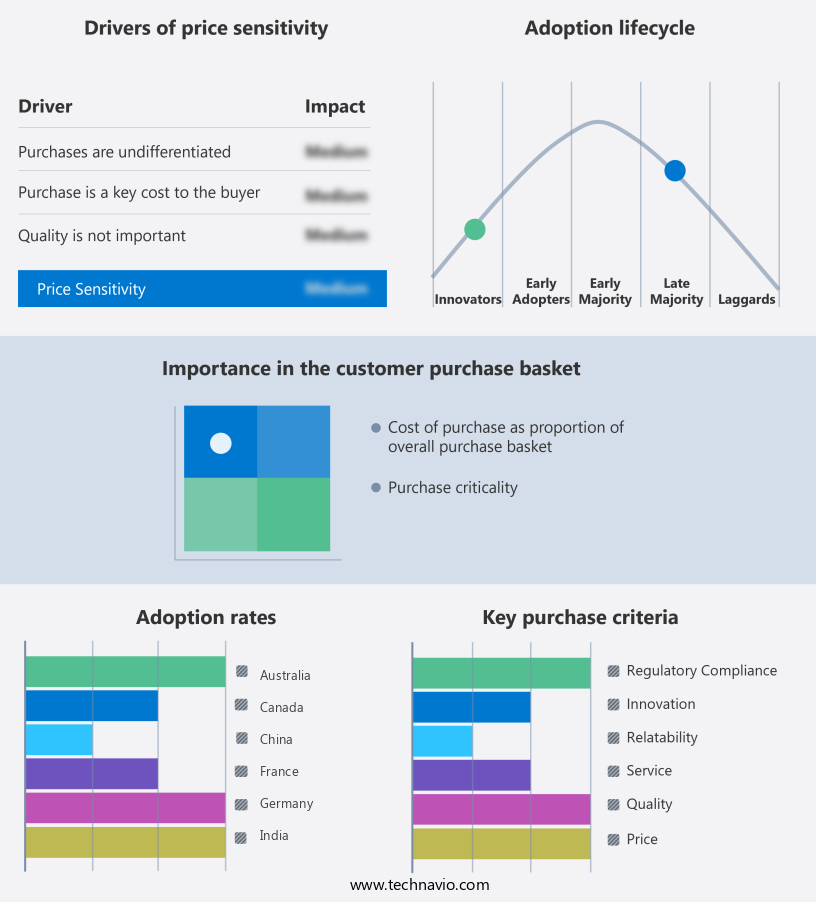
Customer Landscape
Key Companies & Market Insights
Companies are implementing various strategies, such as strategic alliances, digital human AI avatars market forecast, partnerships, mergers and acquisitions, geographical expansion, and product/service launches, to enhance their presence in the industry.
De Identification Ltd. - The company focuses on digital human AI avatars and transforms digital communication with its Creative Reality Studio, allowing users to generate lifelike AI avatars from photos or short videos.
The industry research and growth report includes detailed analyses of the competitive landscape of the market and information about key companies, including:
- De Identification Ltd.
- DEEPMOTION INC.
- Didimo
- Epic Games Inc.
- GoAnimate Inc.
- HeyGen
- Hour One AI
- iFLYTEK Corp.
- Inworld AI
- Meta Platforms Inc.
- Microsoft Corp.
- NVIDIA Corp.
- Soul Machines
- Synthesia Ltd.
- Tencent Holdings Ltd.
- UneeQ
- VEED
Qualitative and quantitative analysis of companies has been conducted to help clients understand the wider business environment as well as the strengths and weaknesses of key industry players. Data is qualitatively analyzed to categorize companies as pure play, category-focused, industry-focused, and diversified; it is quantitatively analyzed to categorize companies as dominant, leading, strong, tentative, and weak.
Recent Development and News in Digital Human AI Avatars Market
- In January 2024, Meta Platforms, Inc. (formerly Facebook), announced the launch of "Metaverses," a new product line focusing on creating and implementing digital human AI avatars for its social media and virtual reality platforms (Meta Press Release, 2024).
- In March 2024, Microsoft Corporation unveiled "Digital Me," an avatar creation tool integrated with its Microsoft Teams platform, aiming to enhance user experience and engagement in virtual meetings (Microsoft News Center, 2024).
- In April 2024, Samsung Electronics Co. Ltd. and Softbank Group Corp. announced a strategic partnership to develop AI avatars for Samsung's consumer electronics, leveraging Softbank's Pepper robot technology (Samsung Newsroom, 2024).
- In May 2025, Amazon.Com, Inc. received regulatory approval from the European Union for its acquisition of "Body Labs," a leading digital human avatar technology company, further strengthening Amazon's position in the e-commerce and AI industries (Amazon Investor Relations, 2025).
Research Analyst Overview
- The market is a dynamic and ever-evolving landscape, encompassing various advancements in avatar development methodologies, feedback mechanisms, animation software, monitoring tools, interactive experiences, and more. For instance, photorealistic avatar generation and lifelike avatar expressions have gained significant traction, enabling more human-like interactions. Additionally, the market anticipates a growth of approximately 25% year-over-year, driven by the increasing demand for personalized avatar creation and seamless integration into various applications. Real-time avatar facial expression synthesis adds a layer of authenticity, making interactions more lifelike. To bring these avatars to life, high-fidelity 3D avatar animation pipelines are utilized, ensuring smooth and natural movements.
- An illustrative example of this trend can be seen in the sales increase of 30% experienced by a leading avatar development company due to their advanced avatar features and high-fidelity models. Performance and security remain vital, with advanced avatar monitoring tools, avatar performance optimization, and robust avatar security protocols. Development relies on avatar training datasets and avatar application programming interfaces to support integration. Future innovations include high-fidelity 3D avatar animation pipeline, personalized avatar creation workflow design, and addressing ethical considerations in AI-powered avatar development, ensuring sustainable market growth.
Dive into Technavio's robust research methodology, blending expert interviews, extensive data synthesis, and validated models for unparalleled Digital Human AI Avatars Market insights. See full methodology.
|
Market Scope |
|
|
Report Coverage |
Details |
|
Page number |
239 |
|
Base year |
2024 |
|
Historic period |
2019-2023 |
|
Forecast period |
2025-2029 |
|
Growth momentum & CAGR |
Accelerate at a CAGR of 44% |
|
Market growth 2025-2029 |
USD 13.5 billion |
|
Market structure |
Fragmented |
|
YoY growth 2024-2025(%) |
40.5 |
|
Key countries |
US, China, Japan, Canada, Germany, UK, South Korea, France, India, and Australia |
|
Competitive landscape |
Leading Companies, Market Positioning of Companies, Competitive Strategies, and Industry Risks |
What are the Key Data Covered in this Digital Human AI Avatars Market Research and Growth Report?
- CAGR of the Digital Human AI Avatars industry during the forecast period
- Detailed information on factors that will drive the growth and forecasting between 2025 and 2029
- Precise estimation of the size of the market and its contribution of the industry in focus to the parent market
- Accurate predictions about upcoming growth and trends and changes in consumer behaviour
- Growth of the market across North America, APAC, Europe, Middle East and Africa, and South America
- Thorough analysis of the market's competitive landscape and detailed information about companies
- Comprehensive analysis of factors that will challenge the digital human AI avatars market growth of industry companies
We can help! Our analysts can customize this digital human AI avatars market research report to meet your requirements.
 RIA -
RIA - 
