



Digital Twin In Logistics Market Size 2026-2030
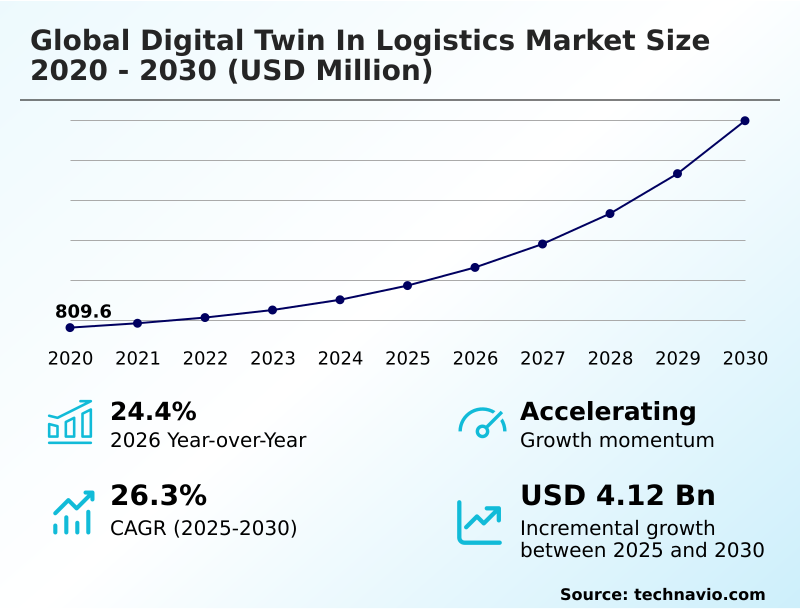
The digital twin in logistics market size is valued to increase by USD 4.12 billion, at a CAGR of 26.3% from 2025 to 2030. Raising demand for real time visibility and operational transparency will drive the digital twin in logistics market.
Major Market Trends & Insights
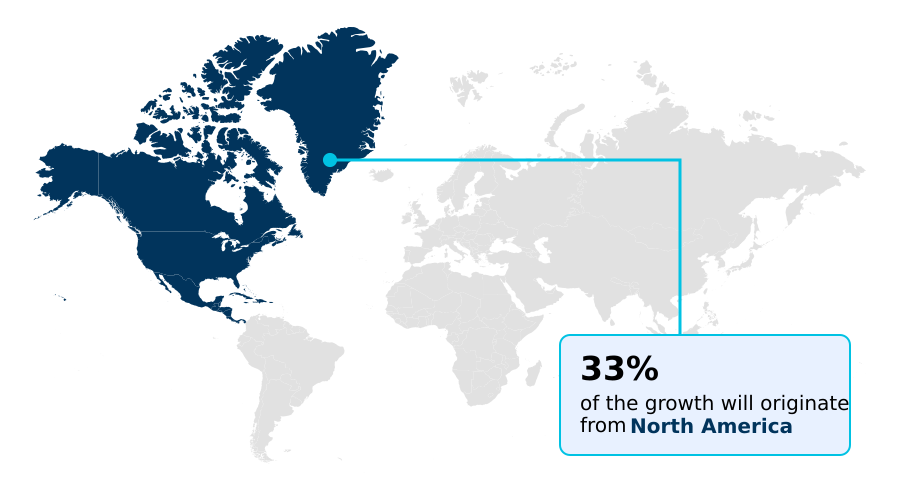
- North America dominated the market and accounted for a 32.8% growth during the forecast period.
- By Component - Software segment was valued at USD 888.6 million in 2024
- By Deployment - Cloud-based segment accounted for the largest market revenue share in 2024
Market Size & Forecast
- Market Opportunities: USD 5.17 billion
- Market Future Opportunities: USD 4.12 billion
- CAGR from 2025 to 2030 : 26.3%
Market Summary
- The digital twin in logistics market is defined by the creation of dynamic, virtual replicas of physical assets, processes, and entire supply chains. This technology enables organizations to move beyond static analysis to a real-time, data-driven operational paradigm. By integrating continuous data streams from IoT sensor integration and enterprise systems, these high-fidelity models provide unprecedented supply chain visibility.
- For example, a third-party logistics provider can use a digital twin to simulate the ripple effects of port congestion on its global network, testing various rerouting strategies in a virtual environment to mitigate delays without disrupting live operations. The adoption is fueled by the need for enhanced supply chain resilience and efficiency.
- Key applications include predictive simulation for maintenance, warehouse automation planning, and fleet management optimization. However, challenges related to data harmonization and the initial investment required for sophisticated physical AI integration remain significant considerations for businesses aiming to deploy these advanced systems.
- The ultimate goal is to achieve autonomous logistics, where virtual models not only mirror but also actively optimize physical world operations through agentic AI orchestration.
What will be the Size of the Digital Twin In Logistics Market during the forecast period?
Get Key Insights on Market Forecast (PDF) Get Free Sample
How is the Digital Twin In Logistics Market Segmented?
The digital twin in logistics industry research report provides comprehensive data (region-wise segment analysis), with forecasts and estimates in "USD million" for the period 2026-2030, as well as historical data from 2020-2024 for the following segments.
- Component
- Software
- Services
- Platform solutions
- Deployment
- Cloud-based
- On-premises
- Application
- Warehouse optimization
- Predictive maintenance
- Supply chain planning
- Fleet management
- Geography
- North America
- US
- Canada
- Mexico
- APAC
- China
- Japan
- India
- Europe
- Germany
- UK
- France
- Middle East and Africa
- UAE
- Saudi Arabia
- South Africa
- South America
- Brazil
- Argentina
- Colombia
- Rest of World (ROW)
- North America
By Component Insights
The software segment is estimated to witness significant growth during the forecast period.
The software component represents the core intelligence layer, enabling the creation and management of high-fidelity models for logistics operations. These solutions leverage prescriptive analytics and advanced algorithms to translate physical asset data into a dynamic virtual environment for predictive simulation.
Modern software integrates real-time data synchronization to power autonomous logistics decisions, moving beyond simple visualization to active operational control.
For instance, by using these platforms, organizations improve forecast accuracy for demand planning simulation by up to 25%, directly impacting inventory costs.
The emphasis is on developing robust systems that support complex operational efficiency metrics and risk mitigation simulation, allowing for preemptive adjustments to supply chain disruptions and enabling comprehensive asset lifecycle management before issues arise in the physical world.
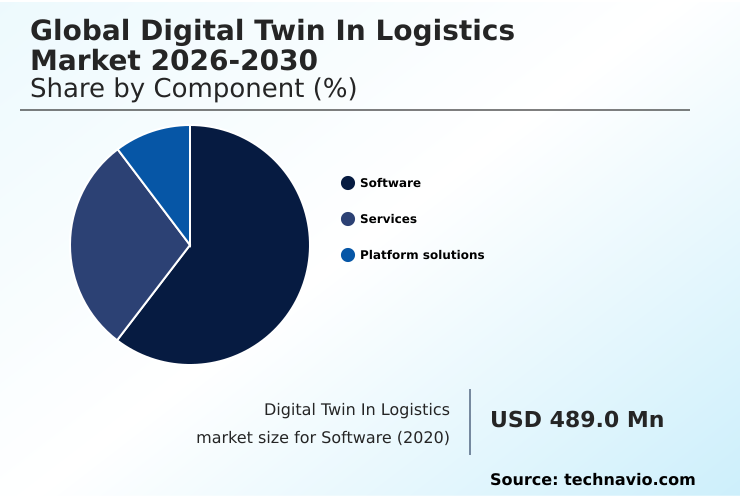
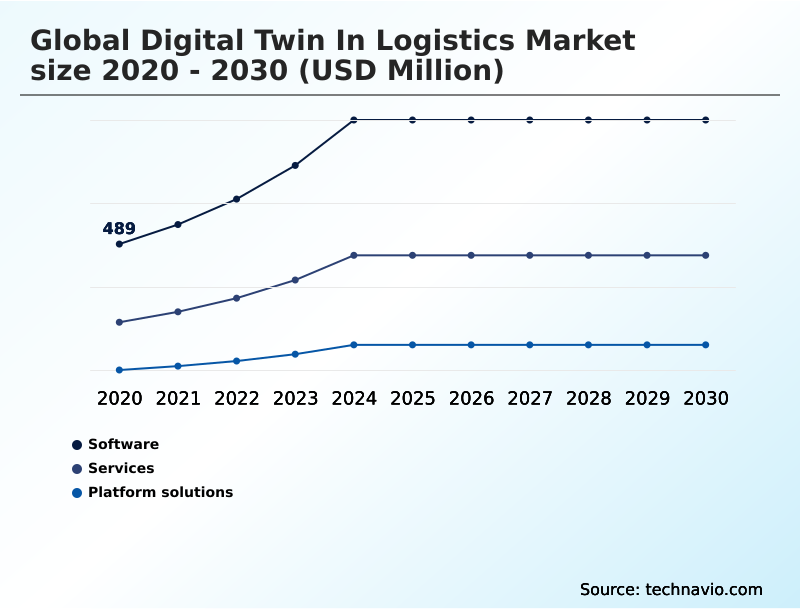
The Software segment was valued at USD 888.6 million in 2024 and showed a gradual increase during the forecast period.
Regional Analysis
North America is estimated to contribute 32.8% to the growth of the global market during the forecast period.Technavio’s analysts have elaborately explained the regional trends and drivers that shape the market during the forecast period.
See How Digital Twin In Logistics Market Demand is Rising in North America Get Free Sample
The market's geographic distribution reflects both technological maturity and economic ambition. North America currently leads, contributing 32.8% of the market's incremental growth, driven by advanced e-commerce fulfillment optimization and a focus on supply chain resilience.
High adoption of real-time logistics tracking and predictive maintenance for fleets is common.
In contrast, APAC is the fastest-growing region, with a projected expansion rate of 27.5%, fueled by massive investments in smart port logistics twin projects and manufacturing-centric supply chains.
Countries in the region are leveraging cross-border logistics simulation to manage complex trade corridors. Europe is focused on sustainable logistics planning and intralogistics optimization, using carbon footprint modeling to align with stringent environmental regulations.
The development of a multi-modal transport twin is a key priority for enhancing regional connectivity and efficiency.
Market Dynamics
Our researchers analyzed the data with 2025 as the base year, along with the key drivers, trends, and challenges. A holistic analysis of drivers will help companies refine their marketing strategies to gain a competitive advantage.
- Strategically, the adoption of digital twin technology is moving from a competitive advantage to an operational necessity. Understanding the benefits of a logistics digital twin is the first step, but enterprises are now focused on quantifying the digital twin ROI in logistics.
- This involves assessing how a real-time fleet management digital twin can reduce fuel costs or how a digital twin for warehouse optimization can increase throughput without major capital expenditure. The cost of implementing a digital twin remains a key consideration, especially as solutions become more complex with the integration of generative AI in logistics simulation.
- For specialized sectors, the value is clearer; for example, a digital twin for cold chain logistics provides auditable proof of temperature integrity, which is invaluable. Similarly, a digital twin for port management can significantly reduce vessel turnaround times.
- The technology is also becoming a key enabler for corporate sustainability goals, with digital twin for logistics sustainability platforms providing precise carbon accounting. Forward-thinking companies are now exploring building a warehouse digital twin not just for efficiency but for worker safety simulation.
- As the market matures, decisions will increasingly be based on finding the right digital twin technology vendors that offer scalable digital twin platforms for shipping and transportation, ensuring that the investment supports long-term strategic goals beyond immediate operational gains.
- Firms using these platforms for supply chain visibility have reported a twofold improvement in their ability to respond to disruptions compared to those without.
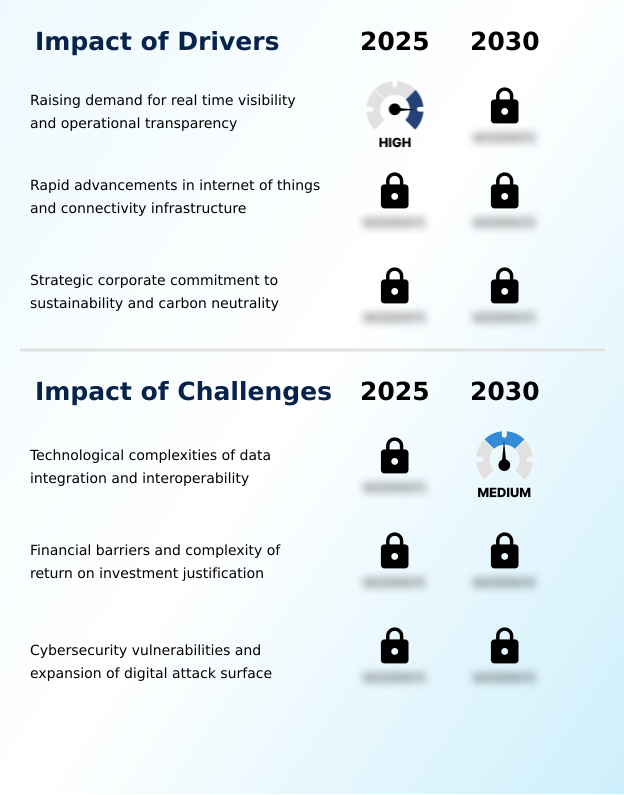
What are the key market drivers leading to the rise in the adoption of Digital Twin In Logistics Industry?
- The market is primarily driven by the increasing demand for real-time visibility and operational transparency across complex global supply chains.
- Market growth is fundamentally propelled by the urgent need for enhanced visibility and efficiency across global supply chains. The demand for a real-time supply chain control tower has intensified, with implementations leading to a 20% improvement in asset utilization.
- The rapid proliferation of IoT in warehouse management and advanced sensor technology provides the granular data essential for high-fidelity digital replicas.
- This connectivity, paired with advancements in logistics simulation software, allows for precise modeling of everything from warehouse workflows to multi-modal transport networks.
- Furthermore, a strong corporate commitment to sustainability is driving adoption, as a digital twin for logistics can model and reduce carbon emissions by over 15% through optimized routing and energy management, directly supporting circular economy logistics initiatives.
What are the market trends shaping the Digital Twin In Logistics Industry?
- A significant market trend is the integration of generative artificial intelligence with predictive simulation. This combination is advancing digital twins from descriptive models to prescriptive decision-making tools.
- Key market trends are centered on the fusion of predictive analytics with immersive and autonomous technologies. The integration of generative AI is enabling a shift toward a prescriptive digital twin for supply chain, allowing systems to autonomously suggest optimal responses to disruptions, improving predictive accuracy by over 30%.
- Concurrently, the emergence of the logistics metaverse and 3D supply chain visualization is transforming user interaction, creating immersive environments for virtual warehouse design and training. This approach reduces design errors by up to 40% before physical implementation. A third major trend is the move toward collaborative data ecosystems and interconnected platforms, supporting a comprehensive logistics network digital model.
- This enhances real-time logistics tracking and coordination across multiple stakeholders, enabling more resilient and efficient global operations.
What challenges does the Digital Twin In Logistics Industry face during its growth?
- A key challenge impeding market growth is the technological complexity associated with data integration and achieving interoperability between disparate logistics systems.
- Despite strong drivers, significant challenges hinder widespread adoption. The primary hurdle is the technical complexity of data integration, with interoperability issues consuming over 60% of project timelines and driving up costs. Many organizations struggle with harmonizing data from legacy systems to feed a logistics twin, which is essential for accurate demand forecasting simulation and AI-driven logistics planning.
- Another key restraint is the financial barrier, as the initial investment in building an end-to-end digital thread for logistics can be 3-4 times higher than for traditional analytics platforms, making ROI justification difficult for some stakeholders.
- Finally, the expanded digital attack surface creates significant cybersecurity vulnerabilities, requiring robust security protocols to protect sensitive operational data within the supply chain stress testing and simulation environments.
Exclusive Technavio Analysis on Customer Landscape
The digital twin in logistics market forecasting report includes the adoption lifecycle of the market, covering from the innovator’s stage to the laggard’s stage. It focuses on adoption rates in different regions based on penetration. Furthermore, the digital twin in logistics market report also includes key purchase criteria and drivers of price sensitivity to help companies evaluate and develop their market growth analysis strategies.
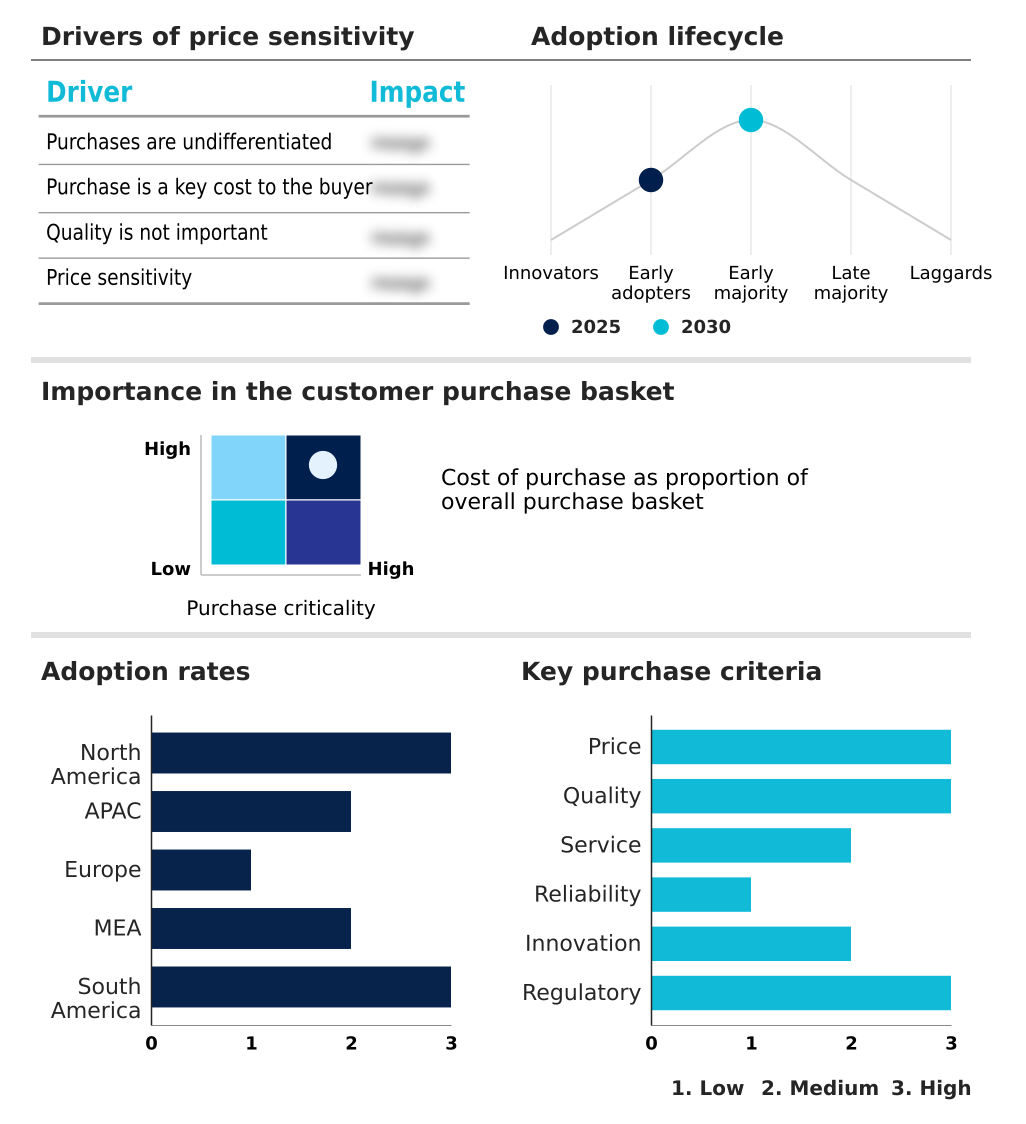
Customer Landscape of Digital Twin In Logistics Industry
Competitive Landscape
Companies are implementing various strategies, such as strategic alliances, digital twin in logistics market forecast, partnerships, mergers and acquisitions, geographical expansion, and product/service launches, to enhance their presence in the industry.
Amazon Web Services Inc. - Offerings include a scalable cloud infrastructure platform that enables the creation of integrated IoT-based virtual replicas and advanced logistics simulations for end-to-end supply chain management.
The industry research and growth report includes detailed analyses of the competitive landscape of the market and information about key companies, including:
- Amazon Web Services Inc.
- Bentley Systems Inc.
- Blue Yonder Group Inc.
- Dassault Systemes SE
- General Electric Co.
- Google LLC
- Hexagon AB
- IBM Corp.
- Kinaxis Inc.
- Manhattan Associates Inc.
- Microsoft Corp.
- NVIDIA Corp.
- Oracle Corp.
- Palantir Technologies Inc.
- PTC Inc.
- Robert Bosch GmbH
- Rockwell Automation Inc.
- SAP SE
- Siemens AG
- Unity Technologies Inc.
Qualitative and quantitative analysis of companies has been conducted to help clients understand the wider business environment as well as the strengths and weaknesses of key industry players. Data is qualitatively analyzed to categorize companies as pure play, category-focused, industry-focused, and diversified; it is quantitatively analyzed to categorize companies as dominant, leading, strong, tentative, and weak.
Recent Development and News in Digital twin in logistics market
- In April 2025, PSA Singapore announced the successful deployment of a comprehensive digital twin for the second phase of the Tuas Port expansion, creating a virtual environment to coordinate automated guided vehicles and quay cranes.
- In July 2025, Cainiao Smart Logistics Network introduced an end-to-end digital twin for its cross-border distribution centers in Southeast Asia, simulating the entire parcel journey from manufacturer to final delivery.
- In March 2025, the Saudi Ports Authority finalized the creation of a digital twin for the Jeddah Islamic Port to optimize the berthing schedules of mega-vessels and simulate the impact of terminal expansions.
- In May 2025, DP World integrated a high-definition digital twin into its BoxBay high-bay storage system at the Jebel Ali Port in Dubai, allowing operators to manage automated container movements in a 3D environment.
Dive into Technavio’s robust research methodology, blending expert interviews, extensive data synthesis, and validated models for unparalleled Digital Twin In Logistics Market insights. See full methodology.
| Market Scope | |
|---|---|
| Page number | 305 |
| Base year | 2025 |
| Historic period | 2020-2024 |
| Forecast period | 2026-2030 |
| Growth momentum & CAGR | Accelerate at a CAGR of 26.3% |
| Market growth 2026-2030 | USD 4121.2 million |
| Market structure | Fragmented |
| YoY growth 2025-2026(%) | 24.4% |
| Key countries | US, Canada, Mexico, China, Japan, India, South Korea, Australia, Indonesia, Germany, UK, France, Italy, Spain, The Netherlands, UAE, Saudi Arabia, South Africa, Turkey, Israel, Brazil, Argentina and Colombia |
| Competitive landscape | Leading Companies, Market Positioning of Companies, Competitive Strategies, and Industry Risks |
Research Analyst Overview
- The digital twin in logistics market is undergoing a significant transformation, shifting from static high-fidelity modeling to dynamic, intelligent orchestration. The core of this evolution lies in real-time data synchronization and the integration of prescriptive analytics, enabling systems to not only mirror but actively direct physical operations.
- This is driven by advanced IoT sensor integration and sophisticated predictive simulation, which together provide unprecedented supply chain visibility. Boardroom decisions are now centered on leveraging these capabilities for strategic advantage, particularly in allocating capital for warehouse automation and fleet management optimization. This physical AI integration allows for comprehensive asset lifecycle management and proactive risk mitigation simulation.
- The implementation of agentic AI orchestration and autonomous logistics concepts, supported by geospatial logistics and collaborative data ecosystems, is becoming a key differentiator.
- This technological convergence allows for more effective transportation network optimization and port operations management, with firms achieving up to a 40% reduction in simulation setup time, accelerating the path to enhanced supply chain resilience and superior operational efficiency metrics.
What are the Key Data Covered in this Digital Twin In Logistics Market Research and Growth Report?
-
What is the expected growth of the Digital Twin In Logistics Market between 2026 and 2030?
-
USD 4.12 billion, at a CAGR of 26.3%
-
-
What segmentation does the market report cover?
-
The report is segmented by Component (Software, Services, and Platform solutions), Deployment (Cloud-based, and On-premises), Application (Warehouse optimization, Predictive maintenance, Supply chain planning, and Fleet management) and Geography (North America, APAC, Europe, Middle East and Africa, South America)
-
-
Which regions are analyzed in the report?
-
North America, APAC, Europe, Middle East and Africa and South America
-
-
What are the key growth drivers and market challenges?
-
Raising demand for real time visibility and operational transparency, Technological complexities of data integration and interoperability
-
-
Who are the major players in the Digital Twin In Logistics Market?
-
Amazon Web Services Inc., Bentley Systems Inc., Blue Yonder Group Inc., Dassault Systemes SE, General Electric Co., Google LLC, Hexagon AB, IBM Corp., Kinaxis Inc., Manhattan Associates Inc., Microsoft Corp., NVIDIA Corp., Oracle Corp., Palantir Technologies Inc., PTC Inc., Robert Bosch GmbH, Rockwell Automation Inc., SAP SE, Siemens AG and Unity Technologies Inc.
-
Market Research Insights
- The market is characterized by a strategic shift toward intelligent and interconnected virtual ecosystems. Advanced logistics simulation software now enables organizations to improve on-time delivery rates by over 20% compared to legacy systems. The adoption of a supply chain control tower, powered by a logistics network digital model, provides a unified view that improves decision-making latency by up to 40%.
- Firms utilizing a digital twin for supply chain analytics are achieving a more granular understanding of operational bottlenecks. The integration of IoT in warehouse management provides the real-time data needed for these systems.
- This evolution toward AI-driven logistics planning is creating a more agile and responsive operational landscape, where virtual warehouse design and optimization can be validated before capital is committed.
We can help! Our analysts can customize this digital twin in logistics market research report to meet your requirements.
 RIA -
RIA - 
