


Fixed LTE Market Size 2024-2028
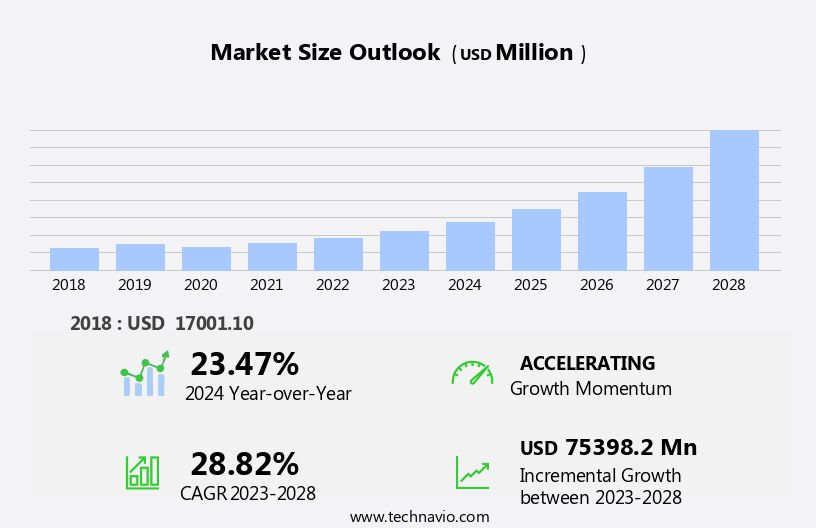
The fixed LTE market size is forecast to increase by USD 75.4 billion at a CAGR of 28.82% between 2023 and 2028.
- The market is experiencing significant growth, driven by the increase in public communication network operators and telecom companies embracing this technology. The demand for high-speed networks is on the rise, particularly in rural areas where wired broadband infrastructure is limited, driven by the increasing use of smartphones and gaming, which require faster and more reliable internet connections. However, technological challenges persist, including complexities in ensuring smooth interactions between Fixed LTE and other networks, as well as the need for cost-effective solutions to address the initial investment required for deployment. Despite these hurdles, the market is expected to continue expanding, fueled by the increasing need for reliable, high-speed internet connectivity.
What will be the Size of the Fixed LTE Market During the Forecast Period?
- The market refers to the use of Long Term Evolution (LTE) technology for providing high-speed internet connectivity to fixed locations, replacing traditional wired broadband connections. The market caters to both residential and commercial sectors, with LTE Infrastructure being deployed through Outdoor CPE and Indoor CPE. Telecom suppliers are focusing on enhancing the capabilities of LTE through advanced technologies like carrier aggregation, beamforming, and base stations. The market is witnessing significant growth due to the increasing demand for high-speed internet in rural areas and the proliferation of IoT devices.
- Telecom companies are investing heavily in LTE infrastructure to meet the growing demand for wireless broadband connection, offering an alternative to physical cable connections and fiber optic cables. The market is set to expand further as more service providers embrace cellular network technologies for broadband internet access.
How is this Fixed LTE Industry segmented and which is the largest segment?
The industry research report provides comprehensive data (region-wise segment analysis), with forecasts and estimates in "USD million" for the period 2024-2028, as well as historical data from 2018-2022 for the following segments.
- Solution
- LTE infrastructure
- Other solutions
- Geography
- North America
- US
- Europe
- UK
- France
- APAC
- China
- Japan
- Middle East and Africa
- South America
- North America
By Solution Insights
- The LTE infrastructure segment is estimated to witness significant growth during the forecast period.
The market represents the deployment of Long Term Evolution (LTE) technology for providing high-speed wireless broadband connections to residential and commercial sectors. Companies like Consistent Infosystems and telecom suppliers, such as T-Mobile, are investing in Fixed LTE Infrastructure to cater to the growing demand for reliable, high-speed internet in both markets. Outdoor and Indoor Customer Premises Equipment (CPE) are utilized to establish wireless connections for last mile applications. The Residential market is witnessing a rise in demand due to the increasing use of IoT devices, smartphones, tablets, laptops, and other data-intensive applications. The Commercial market, including remote working, cloud-based services, and low latency applications, also benefits significantly from Fixed LTE.
Cellular network technologies, such as LTE Infrastructure, offer high capacity and bandwidth, making them suitable for high-definition video streaming, online gaming, and virtual reality. Moreover, Fixed LTE is expanding its reach to rural areas with LTE-enabled devices, offering an alternative to traditional wired connections. Telecom companies are also focusing on advanced technologies like Fifth generation (5G), Massive MIMO, and Network slicing to enhance the overall user experience and support emerging technologies like virtual and augmented reality.
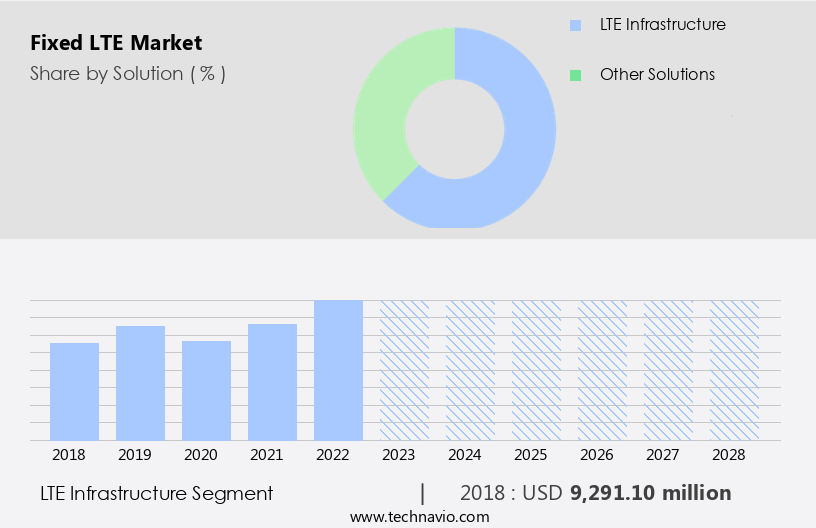
Get a glance at the market report of share of various segments Request Free Sample
The LTE infrastructure segment was valued at USD 9.29 billion in 2018 and showed a gradual increase during the forecast period.
Regional Analysis
- APAC is estimated to contribute 33% to the growth of the global market during the forecast period.
Technavio's analysts have elaborately explained the regional trends and drivers that shape the market during the forecast period.
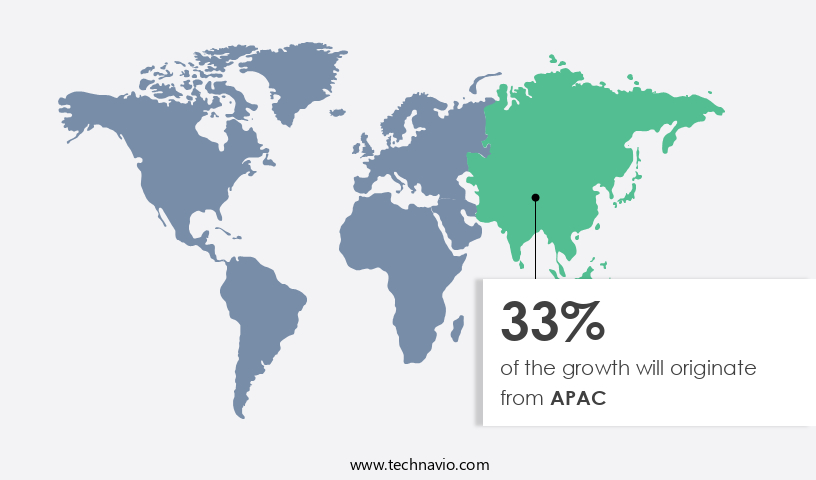
For more insights on the market size of various regions, Request Free Sample
The market is witnessing significant growth due to the increasing demand for high-speed internet connectivity in both residential and commercial sectors. Outdoor and Indoor CPE (Customer Premises Equipment) are being deployed to provide wireless broadband connections in areas where traditional wired connections are not feasible. The Residential market is seeing a rise in LTE-enabled devices, including smartphones, tablets, laptops, and IoT devices, leading to an increased need for high-capacity and high-bandwidth last mile applications. The Commercial market, too, is leveraging Fixed LTE infrastructure for applications such as remote working, cloud-based services, and low-latency requirements for high-definition video streaming and online gaming.
Cellular network technologies, such as Long Term Evolution (LTE) and High-speed packet access, are enabling mobile communication in rural areas where wired connections are not available. As we move towards the fifth generation of mobile communication, technologies like Massive MIMO and Network slicing are expected to further enhance the capabilities of Fixed LTE infrastructure. Additionally, the integration of virtual reality and augmented reality applications is set to revolutionize the way we communicate and access information.
Market Dynamics
Our researchers analyzed the data with 2023 as the base year, along with the key drivers, trends, and challenges. A holistic analysis of drivers will help companies refine their marketing strategies to gain a competitive advantage.
What are the key market drivers leading to the rise In the adoption of Fixed LTE Industry?
Increase in public communication network operators and telecom companies is the key driver of the market.
- Fixed LTE, a type of Long Term Evolution (LTE) technology, plays a significant role in providing connectivity for broadband internet access in both urban and rural communities. Telecommunications service providers are increasingly investing in this technology to expand their network capabilities and offer high-speed internet solutions. While traditional wired broadband infrastructure relies on physical cable connections, Fixed LTE uses base stations and network components such as routers and managed services to deliver internet connectivity. Carrier aggregation and beamforming are essential technologies that enhance the performance of Fixed LTE networks. These advanced features help to improve spectrum availability and coverage challenges in various areas.
- As part of the digital transformation, many telecom companies are collaborating to develop and deploy next-generation Fixed LTE networks based on 3GPP Release 17 with LTE/System Architecture Evolution (SAE) specifications. This includes industry leaders such as AT&T Inc., ZTE Corp., and US Cellular Corp., among others. The partnership aims to drive the development of high-performance Fixed LTE networks, providing reliable and efficient broadband solutions for businesses and individuals.
What are the market trends shaping the Fixed LTE Industry?
Rising demand for high-speed networks is the upcoming market trend.
- The telecommunications industry is witnessing a significant shift towards fixed LTE (Long Term Evolution) technology as the demand for broadband internet access continues to rise in both urban and rural communities. Service providers are investing in network components such as base stations, fiber optic cables, and carrier aggregation to enhance coverage and capacity. The use of beamforming technology and managed services, including customer premises equipment like routers, is becoming increasingly common to optimize network performance. The growing reliance on smartphones and the digital transformation have led to an increase in Internet consumption, putting pressure on existing wired broadband infrastructure.
- The availability of multiple network standards on smart devices, including LTE/5G, has fueled the demand for high-speed connectivity. However, spectrum availability and coverage challenges remain key issues in the implementation of fixed LTE technology. Despite these challenges, major players in the telecommunications industry are continually innovating, with a focus on 5G mmWave technology to address the capacity requirements of next-generation networks.
What challenges does the Fixed LTE Industry face during its growth?
Technological issues complicating smooth interactions is a key challenge affecting the industry growth.
- LTE, or Long-Term Evolution, is a mobile technology that provides connectivity for telecommunications services, including broadband internet access. Installed on pre-existing 2G and 3G networks, LTE's deployment adds complexity due to the presence of multiple mobile technologies and various companies, such as CommScope, Inc., Huawei Technologies Co. Ltd., ZTE Corporation, and ZyXel Communications Corp. This complicates RF engineering, requiring careful management of synchronization, interference, and radio alignment, regardless of colocation or network-sharing strategies. The integration of LTE involves restructuring existing spectrum and addressing coverage challenges in both rural and urban areas. The use of network components like base stations, routers, and carrier aggregation technologies, such as beamforming, further adds to the intricacy.
- Intergroup relations and delivery priorities become more complex due to the involvement of different service providers and their distinct policies regarding technology delivery. The introduction of Voice over LTE (VoLTE) adds additional difficulties as voice and data have distinct proofs of identification. Overall, the digital transformation in the telecommunications industry necessitates the effective management of these complexities to ensure seamless connectivity for consumers.
Exclusive Customer Landscape
The market forecasting report includes the adoption lifecycle of the market, covering from the innovator's stage to the laggard's stage. It focuses on adoption rates in different regions based on penetration. Furthermore, the market report also includes key purchase criteria and drivers of price sensitivity to help companies evaluate and develop their market growth analysis strategies.
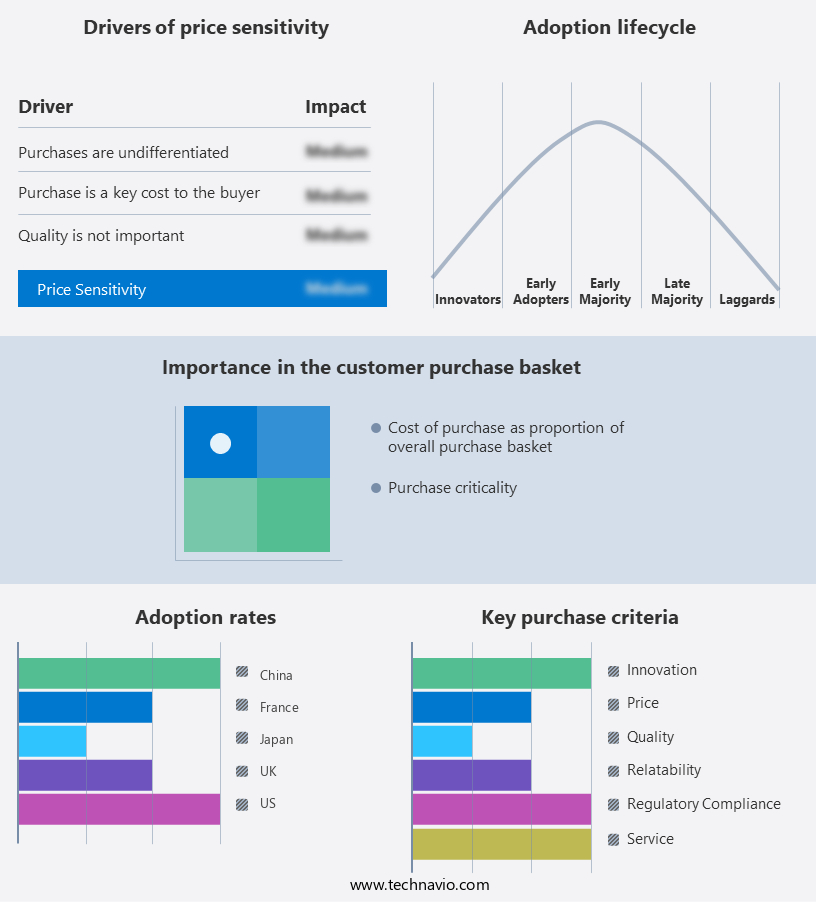
Customer Landscape
Key Companies & Market Insights
Companies are implementing various strategies, such as strategic alliances, market forecast, partnerships, mergers and acquisitions, geographical expansion, and product/service launches, to enhance their presence in the industry.
The industry research and growth report includes detailed analyses of the competitive landscape of the market and information about key companies, including:
- AT and T Inc.
- Aztech Technologies Pte Ltd.
- Cisco Systems Inc.
- CommScope Holding Co. Inc.
- Guangzhou V Solution Telecommunication Technology Co. Ltd.
- Huawei Technologies Co. Ltd.
- Hytera Communications Corp. Ltd.
- Infinite Electronics Inc.
- MAXCOMM Co Ltd.
- Motorola Solutions Inc.
- Netgear Inc.
- Nokia Corp.
- Sagemcom
- Samsung Electronics Co. Ltd.
- Technicolor SA
- Telefonica SA
- Telenet Systems Pvt. Ltd.
- Telrad Networks Ltd.
- United States Cellular Corp.
- ZTE Corp.
- Zyxel Communications Corp.
Qualitative and quantitative analysis of companies has been conducted to help clients understand the wider business environment as well as the strengths and weaknesses of key industry players. Data is qualitatively analyzed to categorize companies as pure play, category-focused, industry-focused, and diversified; it is quantitatively analyzed to categorize companies as dominant, leading, strong, tentative, and weak.
Research Analyst Overview
The market is witnessing significant growth as more telecom suppliers are investing in LTE Infrastructure to cater to the increasing demand for high-speed internet in both residential and commercial sectors. T-Mobile and Consistent Infosystems are some of the leading telecom companies driving this market forward. The Residential market is a major contributor to the market, as more consumers seek reliable, high-speed internet connections for activities like internet browsing, video streaming, online gaming, and data-intensive applications. LTE Infrastructure, including Outdoor CPE and Indoor CPE, is crucial for delivering wireless broadband connections to homes and businesses.
Moreover, the market is also experiencing a rise in demand for Fixed LTE solutions, as businesses rely on high-speed, low-latency connections for remote working, cloud-based services, and IoT devices. The Fixed LTE infrastructure's capacity and bandwidth make it an ideal choice for last-mile applications, enabling virtual reality, augmented reality, and other data-intensive applications. Cellular network technologies like Long Term Evolution (LTE) and High-speed packet access are revolutionizing mobile communication, providing wireless broadband connections that rival traditional wired connections. The market is expected to grow further with the advent of fifth-generation (5G) technologies, Massive MIMO, and Network slicing, which offer even higher capacity, lower latency, and improved coverage for rural areas.
|
Market Scope |
|
|
Report Coverage |
Details |
|
Page number |
140 |
|
Base year |
2023 |
|
Historic period |
2018-2022 |
|
Forecast period |
2024-2028 |
|
Growth momentum & CAGR |
Accelerate at a CAGR of 28.82% |
|
Market growth 2024-2028 |
USD 75.4 billion |
|
Market structure |
Fragmented |
|
YoY growth 2023-2024(%) |
23.47 |
|
Key countries |
US, China, France, UK, and Japan |
|
Competitive landscape |
Leading Companies, Market Positioning of Companies, Competitive Strategies, and Industry Risks |
What are the Key Data Covered in this Fixed LTE Market Research and Growth Report?
- CAGR of the Fixed LTE industry during the forecast period
- Detailed information on factors that will drive the market growth and forecasting between 2024 and 2028
- Precise estimation of the size of the market and its contribution of the industry in focus to the parent market
- Accurate predictions about upcoming growth and trends and changes in consumer behaviour
- Growth of the market across North America, Europe, APAC, Middle East and Africa, and South America
- Thorough analysis of the market's competitive landscape and detailed information about companies
- Comprehensive analysis of factors that will challenge the fixed lte market growth of industry companies
We can help! Our analysts can customize this fixed lte market research report to meet your requirements.
 RIA -
RIA - 
