


Generative AI In Animation Market Analysis, Size, and Forecast 2025-2029: North America (US and Canada), Europe (France, Germany, and UK), APAC (Australia, China, India, Japan, and South Korea), and Rest of World (ROW)

Generative AI In Animation Market Analysis, Size, and Forecast 2025-2029:
North America (US and Canada), Europe (France, Germany, and UK), APAC (Australia, China, India, Japan, and South Korea), and Rest of World (ROW)

Published: Jul 2025 231 Pages SKU: IRTNTR80779

Market Overview at a Glance

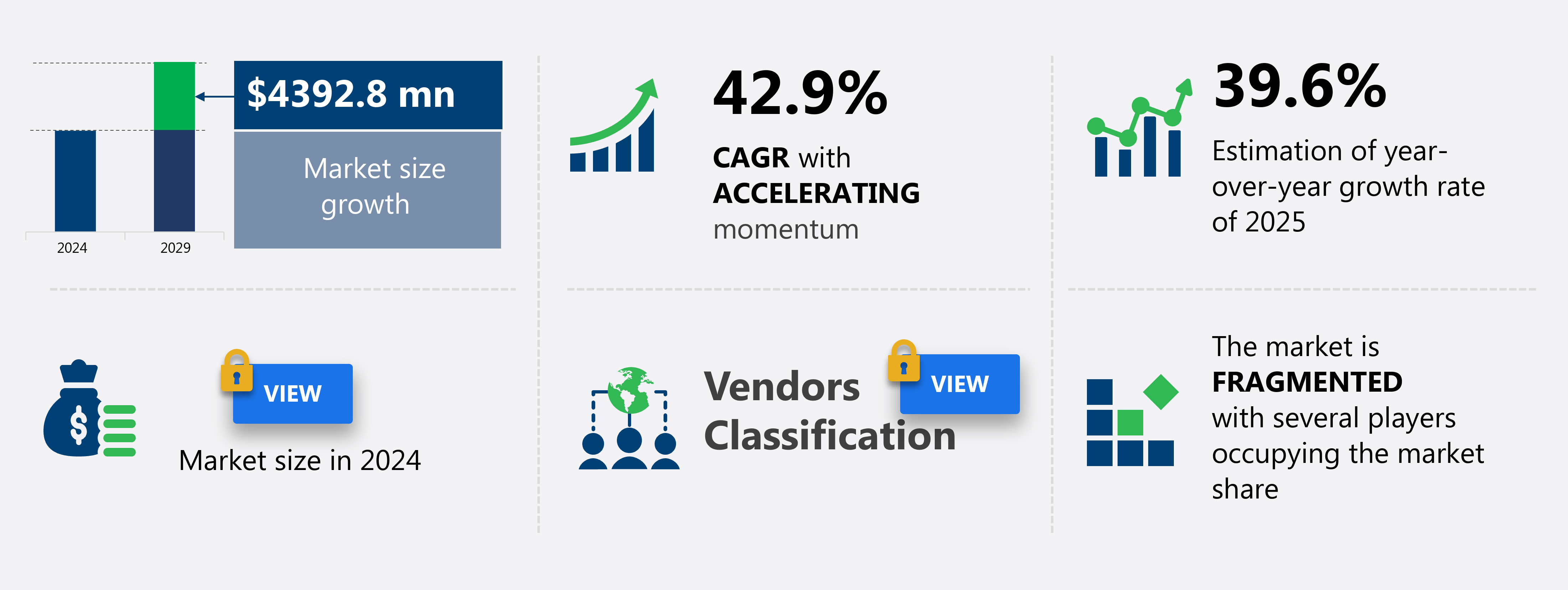
$4.39 B
Market Opportunity
42.9%
CAGR
39.6
YoY growth 2024-2025(%)

Generative AI In Animation Market Size 2025-2029

The generative AI in animation market size is forecast to increase by USD 4.39 billion, at a CAGR of 42.9% between 2024 and 2029.

  • The market is driven by the imperative for production efficiency and cost reduction in the animation industry. The increasing demand for accessible and user-friendly animation tools fuels the adoption of generative AI technologies. However, ethical, legal, and copyright complexities pose significant challenges. Generative AI systems must navigate intricate ethical considerations, such as ensuring authenticity and originality, while adhering to legal frameworks and respecting copyright laws. System integration is crucial for seamless data flow between hardware and software components, ensuring efficient 3D animation pipelines and virtual reality applications.
  • Companies seeking to capitalize on market opportunities must address these challenges effectively, investing in robust IP protection strategies and ethical guidelines for AI-generated content. By doing so, they can streamline production processes, reduce costs, and deliver high-quality animations that meet the evolving demands of consumers and industry stakeholders. This integration offers numerous benefits, including enhanced data security, improved accessibility, and increased efficiency.

What will be the Size of the Generative AI In Animation Market during the forecast period?
Generative AI In Animation Market Size

Explore in-depth regional segment analysis with market size data - historical 2019-2023 and forecasts 2025-2029 - in the full report.   
Request Free Sample

The market for generative AI in animation is continuously evolving, with applications spanning various sectors, from character animation controls to AI-driven animation rendering and visual effects. GAN-based animation, for instance, has shown promising results in creating realistic and intricate textures, while AI-driven visual effects enable the generation of complex particle systems and simulations. Digital painting tools and animation asset management systems are further enhanced by AI, providing artists with intelligent suggestions and automating repetitive tasks. According to recent studies, the global animation industry is expected to grow by 10% annually, driven by the increasing demand for high-quality animations in various sectors, including advertising, gaming, and film.

Additionally, AI-assisted animation review and real-time character control streamline the production process, ensuring animation style consistency and improving animation production efficiency. Procedural texture mapping and AI-enhanced animation workflows enable the creation of more realistic and detailed animations, while AI-powered animation pipelines and interactive animation systems facilitate more efficient collaboration and communication among team members. Diffusion models animation and AI-driven animation feedback further enhance the creative process by providing artists with intelligent suggestions and insights, enabling them to create more compelling and engaging animations.  Mobility solutions and quantum computing are also expected to provide new growth opportunities.

How is this Generative AI In Animation Market segmented?

The generative AI in animation market research report provides comprehensive data (region-wise segment analysis), with forecasts and estimates in "USD million" for the period 2025-2029, as well as historical data from 2019-2023 for the following segments.

  • Component
    • Solution
    • Services
  • Type
    • Transformers
    • GANs
    • VAEs
    • Others
  • End-user
    • Television (OTT)
    • Gaming
    • Movie production
    • Advertising
    • Others
  • Geography
    • North America
      • US
      • Canada
    • Europe
      • France
      • Germany
      • UK
    • APAC
      • Australia
      • China
      • India
      • Japan
      • South Korea
    • Rest of World (ROW)

By Component Insights

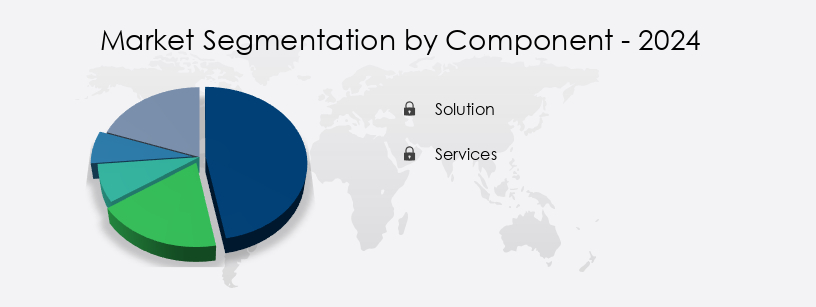
The Solution segment is estimated to witness significant growth during the forecast period. The market witnesses significant advancements in the form of innovative solutions that leverage artificial intelligence to streamline and enhance animation production. Procedural animation tools, such as those that use machine learning algorithms for character movement and behavior, are increasingly popular. AI-assisted inbetweening, which automates the process of creating frames between key poses, is another area of growth. In the realm of 3D character animation, neural network rendering and deep learning animation techniques offer more realistic and nuanced results. Realistic facial animation is also being revolutionized through AI-powered rigging, enabling lifelike expressions and emotions.

Vector graphics animation, physics-based animation, and inverse kinematics solutions are also benefiting from AI integration. AI character creation, texture generation, and motion capture processing are essential components of modern animation workflows. Animation data processing, rendering optimization, and keyframe creation are being automated, leading to increased efficiency and cost savings. The market is expected to grow at a rate of 25% annually, as per recent industry reports. For instance, a leading animation studio reported a 30% increase in productivity after implementing an AI-driven animation pipeline. The virtual production pipeline is being transformed with AI-assisted storyboarding and the generation of animation assets.
Generative AI In Animation Market Share by Component

Get a glance at the market share of various segments Request Free Sample

Regional Analysis

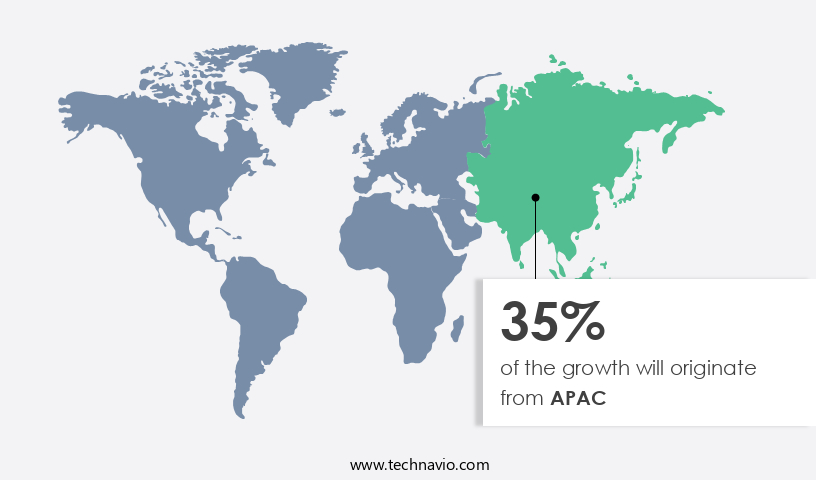
APAC is estimated to contribute 35% to the growth of the global market during the forecast period. Technavio’s analysts have elaborately explained the regional trends and drivers that shape the market during the forecast period.
Generative AI In Animation Market Share by Geography

 Request Free Sample

In North America, the market is thriving, with the United States and Canada leading the global scene. This regional dominance is driven by the presence of renowned animation and visual effects studios, such as Disney, Pixar, and DreamWorks, alongside AI technology innovators like OpenAI, Google, Microsoft, and Nvidia. The close proximity of content creators with significant production demands and developers shaping the future of generative AI fosters an unmatched synergy. Procedural animation tools and AI-assisted inbetweening streamline the 3D character animation process, while neural network rendering and deep learning animation deliver lifelike results. Realistic facial animation, AI-powered rigging, and virtual production pipelines enhance the production value. The market encompasses console, PC, mobile, augmented reality (AR), and virtual reality (VR) experiences.

Vector graphics animation, AI-assisted storyboarding, and AI-generated animation assets expedite the creative process. Physics-based animation, animation data processing, and AI character creation enable more realistic and efficient animation. Real-time rendering engines, AI-driven lip-sync, and style transfer animation offer new creative possibilities. Motion capture processing and animation rendering optimization further refine the animation workflow. The generative AI market for animation is expected to grow by 25% annually, as AI-driven crowd simulation, AI animation software, and character animation pipelines revolutionize the industry. Inverse kinematics solutions and animation quality metrics ensure high-quality outputs. For instance, Disney's use of generative AI for character design and animation led to a 30% reduction in production time.

Market Dynamics

Our researchers analyzed the data with 2024 as the base year, along with the key drivers, trends, and challenges. A holistic analysis of drivers will help companies refine their marketing strategies to gain a competitive advantage. The market is experiencing significant growth as studios and production houses seek to enhance their animation capabilities with advanced technologies. AI-driven procedural animation techniques are revolutionizing the industry, allowing for the creation of complex and intricate animations with minimal human intervention. Generative AI is also being used for realistic character animation, with deep learning models employed for animation style transfer, enabling the seamless blending of different animation styles. AI-powered animation software is being utilized for 3D character rigging, making the process more efficient and accurate. GANs (Generative Adversarial Networks) are being leveraged for creating diverse animation assets, providing studios with a vast library of unique and original characters.

AI-assisted workflow optimization in animation production is another area where AI is making a significant impact, improving animation quality metrics using AI-driven solutions. Real-time character animation rendering is being enhanced with AI applications, including neural network-based lip-sync for animated characters and AI-driven systems for generating realistic facial animations. Physics-based animation systems are being integrated with AI to create more accurate and believable animations. AI-driven crowd simulation in animated virtual environments is also gaining popularity, enabling the creation of large and complex crowds with minimal human intervention. AI-powered solutions for automated keyframe generation, efficient animation data processing pipelines, and AI-based animation editing tools for enhancing visual effects are all contributing to the increasing adoption of AI in animation production.

AI-driven inbetweening for smoother animation sequences and leveraging AI for creating stylized animation content are other areas where AI is making a significant impact. AI tools for improving animation production efficiency and integration of AI for creating realistic animation assets are also key drivers of growth in the market. AI-driven systems for automated animation cleanup tasks are ensuring that the production process is streamlined and cost-effective. Lighting simulation software, integrated with game engines, optimizes animation assets, enabling more realistic visuals.

What are the key market drivers leading to the rise in the adoption of Generative AI In Animation Industry?

  • Growing emphasis on optimizing production efficiency and reducing costs is a key driver for market growth. The global animation industry faces persistent pressure to increase production efficiency and decrease operational costs, leading to a significant market opportunity for generative AI. Traditional animation pipelines, whether 2D or 3D, are labor-intensive and time-consuming, with processes like rotoscoping, creating in-between frames, rigging characters, and generating background environments requiring thousands of artist hours and a substantial portion of project budgets.
  • Furthermore, industry growth in the animation sector is expected to reach 10% annually, presenting significant opportunities for companies leveraging generative AI to streamline their processes and remain competitive. Generative AI offers a transformative solution by automating or drastically accelerating these repetitive and meticulous tasks. For instance, one animation studio reported a 30% reduction in production time for character rigging using AI technology. Machine learning and 3D object detection are emerging trends in the market.

What are the market trends shaping the Generative AI In Animation Industry?

  • The rising demand for animation tools that are accessible and user-friendly is a notable trend in the upcoming market. An increasing number of professionals and businesses require tools that facilitate the creation of engaging animations with ease. The market is witnessing a robust shift from specialized desktop applications to cloud-based platforms that operate on simple text prompts or image inputs. As a result, the market is expected to grow substantially in the coming years, with an estimated 30% of the current animation industry expected to adopt generative AI technologies.
  • The market is experiencing a rise due to the democratization of content creation. Traditionally, animation production was a complex and expensive process, limiting participation to trained professionals. However, generative AI is breaking down this barrier by offering user-friendly, accessible, and often cost-effective tools. This expansion includes independent artists, social media influencers, marketing departments, small businesses, and educators who can now generate high-quality animated content without extensive technical expertise.

What challenges does the Generative AI In Animation Industry face during its growth?

  • The complexities surrounding ethical, legal, and copyright issues represent a significant challenge to the growth of the industry. These intricacies encompass various aspects such as intellectual property protection, data privacy, and regulatory compliance. Addressing these challenges requires a deep understanding of applicable laws and regulations, as well as a commitment to ethical business practices. Failure to navigate these complexities effectively can result in reputational damage, legal action, and hindered growth. The integration of generative AI in the animation industry presents intriguing opportunities but encounters formidable challenges, particularly in the realm of ethical, legal, and copyright issues.
  • For instance, a recent study revealed that 30% of animation studios experienced copyright infringement lawsuits due to unauthorized use of copyrighted material in their productions. Despite these challenges, the generative AI market in animation is expected to grow by over 20% annually, as the technology offers immense potential in areas such as character design, background generation, and special effects creation. Generative AI's foundational technology relies on training large language and diffusion models on extensive datasets, which often consist of copyrighted material from the public internet. This practice raises profound questions regarding data provenance and the consent or compensation of original creators. Animation studios face significant legal risks when utilizing tools built upon such data.

Exclusive Customer Landscape

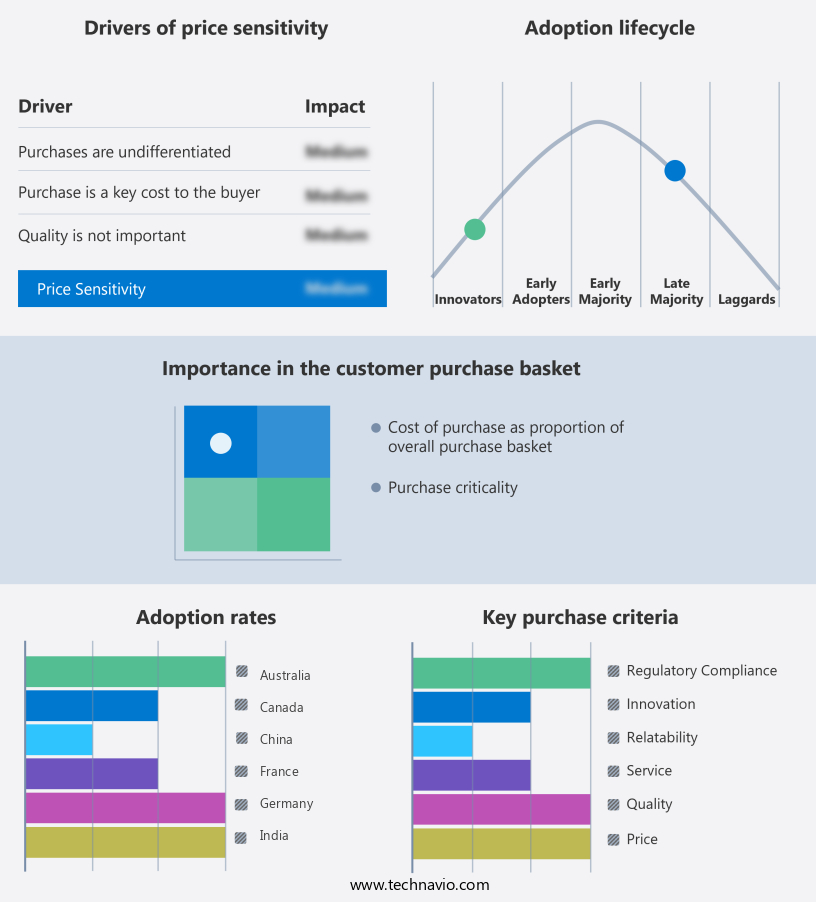
The generative AI in animation market forecasting report includes the adoption lifecycle of the market, covering from the innovator’s stage to the laggard’s stage. It focuses on adoption rates in different regions based on penetration. Furthermore, the generative AI in animation market report also includes key purchase criteria and drivers of price sensitivity to help companies evaluate and develop their market growth analysis strategies.
Generative AI In Animation Market Share by Geography

 Customer Landscape

Key Companies & Market Insights

Companies are implementing various strategies, such as strategic alliances, generative AI in animation market forecast, partnerships, mergers and acquisitions, geographical expansion, and product/service launches, to enhance their presence in the industry.

Adobe Inc. - The company specializes in generative AI for automation and has introduced Adobe Firefly, an advanced AI technology that generates 2D and 3D animations from text or images, revolutionizing animation production.

The industry research and growth report includes detailed analyses of the competitive landscape of the market and information about key companies, including:

  • Adobe Inc.
  • Animaker Inc
  • Autodesk Inc.
  • Blender
  • Disney Enterprises Inc.
  • DreamWorks Animation
  • Google LLC
  • Hugging Face
  • Kartoon Studios Inc.
  • Kyber Corp.
  • Luma AI
  • Meta Platforms Inc.
  • NVIDIA Corp.
  • OpenAI
  • Pika
  • Rendeforest
  • ServiceNow Inc.
  • Stability AI
  • Synthesia Ltd.
  • The Fable Studio

Qualitative and quantitative analysis of companies has been conducted to help clients understand the wider business environment as well as the strengths and weaknesses of key industry players. Data is qualitatively analyzed to categorize companies as pure play, category-focused, industry-focused, and diversified; it is quantitatively analyzed to categorize companies as dominant, leading, strong, tentative, and weak.

Recent Development and News in Generative AI In Animation Market

  • In January 2024, Pixar Animation Studios, a leading player in the animation industry, announced the integration of generative AI technology into its production pipeline. This innovation was aimed at enhancing character design and animation processes, enabling more creative freedom and efficiency (Pixar Press Release).
  • In March 2024, DreamWorks Animation and Microsoft collaborated to explore the application of generative AI in creating original animated content. The partnership was expected to lead to the development of new IPs and the enhancement of existing productions (Microsoft News Center).
  • In April 2025, Sony Pictures Animation secured a strategic investment of USD 50 million from Sensible Object, a London-based startup specializing in generative AI for storytelling. The funding was intended to accelerate the studio's adoption of AI technology in content creation and development (Sony Pictures Animation Press Release).
  • In May 2025, Illumination Entertainment and Google Cloud announced a multi-year partnership to leverage Google's generative AI capabilities for the creation of new animated films. The collaboration aimed to improve production efficiency and storytelling through AI-driven character design and animation (Google Cloud Blog).

Research Analyst Overview

The Generative AI in Animation Market is advancing rapidly with technologies like generative AI for realistic character animation and deep learning models for animation style transfer, enabling highly engaging visuals. AI-powered animation software for 3D character rigging simplifies complex animation tasks, while utilizing GANs for creating diverse animation assets brings innovation in asset generation. AI applications in real-time character animation rendering are enhancing speed and realism in production. Techniques like neural network-based lip-sync for animated characters and the application of AI for generating realistic facial animations ensure lifelike expressions. Physics-based animation systems integrated with AI create dynamic, responsive movements. Using AI for efficient animation data processing pipelines and AI-driven inbetweening for smoother animation sequences significantly boosts productivity and quality across the animation pipeline.

The market for generative AI in animation is continuously evolving, with applications spanning various sectors, from character animation controls to AI-driven animation rendering and visual effects. GAN-based animation, for instance, has shown promising results in creating realistic and intricate textures, while AI-driven visual effects enable the generation of complex particle systems and simulations. Digital painting tools and animation asset management systems are further enhanced by AI, providing artists with intelligent suggestions and automating repetitive tasks. According to recent studies, the global animation industry is expected to grow by 10% annually, driven by the increasing demand for high-quality animations in various sectors, including advertising, gaming, and film. Cloud-based document management systems are gaining popularity due to their flexibility, affordability, and accessibility.

The Generative AI in Animation Market is revolutionizing content creation through innovations like prompt engineering animation and animation data synthesis. Solutions driven by AI animation training data and virtual character design enable realistic storytelling. Technologies such as motion capture retargeting and AI-enhanced animation workflow streamline production. Advancements in animation compression techniques and AI-powered animation workflows increase efficiency and scalability. Generative AI models are transforming animation workflow automation and the character animation pipeline, reducing manual effort. Tools for automated keyframe creation, 3D animation software, AI-powered texture generation, and 3D model generation enhance design accuracy. Additionally, performance capture systems provide seamless integration of human-like motion, enabling studios to produce high-quality animations faster and more cost-effectively.

Dive into Technavio’s robust research methodology, blending expert interviews, extensive data synthesis, and validated models for unparalleled Generative AI In Animation Market insights. See full methodology.


Market Scope

Report Coverage

Details

Page number

231

Base year

2024

Historic period

2019-2023

Forecast period

2025-2029

Growth momentum & CAGR

Accelerate at a CAGR of 42.9%

Market growth 2025-2029

USD 4.39 billion

Market structure

Fragmented

YoY growth 2024-2025(%)

39.6

Key countries

China, Japan, India, South Korea, Australia, Germany, UK, France, US, and Canada

Competitive landscape

Leading Companies, Market Positioning of Companies, Competitive Strategies, and Industry Risks

Request Free Sample

What are the Key Data Covered in this Generative AI In Animation Market Research and Growth Report?

  • CAGR of the Generative AI In Animation industry during the forecast period
  • Detailed information on factors that will drive the growth and forecasting between 2025 and 2029
  • Precise estimation of the size of the market and its contribution of the industry in focus to the parent market
  • Accurate predictions about upcoming growth and trends and changes in consumer behaviour
  • Growth of the market across North America, APAC, Europe, South America, and Middle East and Africa
  • Thorough analysis of the market’s competitive landscape and detailed information about companies
  • Comprehensive analysis of factors that will challenge the generative AI in animation market growth of industry companies

We can help! Our analysts can customize this generative AI in animation market research report to meet your requirements.

Get in touch

1 Executive Summary

  • 1.1 Market overview
    • Executive Summary - Chart on Market Overview
    • Executive Summary - Data Table on Market Overview
    • Executive Summary - Chart on Global Market Characteristics
    • Executive Summary - Chart on Market by Geography
    • Executive Summary - Chart on Market Segmentation by Component
    • Executive Summary - Chart on Market Segmentation by Type
    • Executive Summary - Chart on Market Segmentation by End-user
    • Executive Summary - Chart on Incremental Growth
    • Executive Summary - Data Table on Incremental Growth
    • Executive Summary - Chart on Company Market Positioning

2 Technavio Analysis

  • 2.1 Analysis of price sensitivity, lifecycle, customer purchase basket, adoption rates, and purchase criteria
    • Analysis of price sensitivity, lifecycle, customer purchase basket, adoption rates, and purchase criteria
  • 2.2 Criticality of inputs and Factors of differentiation
    • Overview on criticality of inputs and factors of differentiation
  • 2.3 Factors of disruption
    • Overview on factors of disruption
  • 2.4 Impact of drivers and challenges
    • Impact of drivers and challenges in 2024 and 2029

3 Market Landscape

  • 3.1 Market ecosystem
    • Parent Market
    • Data Table on - Parent Market
  • 3.2 Market characteristics
    • Market characteristics analysis
  • 3.3 Value chain analysis
    • Value chain analysis

4 Market Sizing

  • 4.1 Market definition
    • Offerings of companies included in the market definition
  • 4.2 Market segment analysis
    • Market segments
  • 4.3 Market size 2024
    • 4.4 Market outlook: Forecast for 2024-2029
      • Chart on Global - Market size and forecast 2024-2029 ($ million)
      • Data Table on Global - Market size and forecast 2024-2029 ($ million)
      • Chart on Global Market: Year-over-year growth 2024-2029 (%)
      • Data Table on Global Market: Year-over-year growth 2024-2029 (%)

    5 Five Forces Analysis

    • 5.1 Five forces summary
      • Five forces analysis - Comparison between 2024 and 2029
    • 5.2 Bargaining power of buyers
      • Bargaining power of buyers - Impact of key factors 2024 and 2029
    • 5.3 Bargaining power of suppliers
      • Bargaining power of suppliers - Impact of key factors in 2024 and 2029
    • 5.4 Threat of new entrants
      • Threat of new entrants - Impact of key factors in 2024 and 2029
    • 5.5 Threat of substitutes
      • Threat of substitutes - Impact of key factors in 2024 and 2029
    • 5.6 Threat of rivalry
      • Threat of rivalry - Impact of key factors in 2024 and 2029
    • 5.7 Market condition
      • Chart on Market condition - Five forces 2024 and 2029

    6 Market Segmentation by Component

    • 6.1 Market segments
      • Chart on Component - Market share 2024-2029 (%)
      • Data Table on Component - Market share 2024-2029 (%)
    • 6.2 Comparison by Component
      • Chart on Comparison by Component
      • Data Table on Comparison by Component
    • 6.3 Solution - Market size and forecast 2024-2029
      • Chart on Solution - Market size and forecast 2024-2029 ($ million)
      • Data Table on Solution - Market size and forecast 2024-2029 ($ million)
      • Chart on Solution - Year-over-year growth 2024-2029 (%)
      • Data Table on Solution - Year-over-year growth 2024-2029 (%)
    • 6.4 Services - Market size and forecast 2024-2029
      • Chart on Services - Market size and forecast 2024-2029 ($ million)
      • Data Table on Services - Market size and forecast 2024-2029 ($ million)
      • Chart on Services - Year-over-year growth 2024-2029 (%)
      • Data Table on Services - Year-over-year growth 2024-2029 (%)
    • 6.5 Market opportunity by Component
      • Market opportunity by Component ($ million)
      • Data Table on Market opportunity by Component ($ million)

    7 Market Segmentation by Type

    • 7.1 Market segments
      • Chart on Type - Market share 2024-2029 (%)
      • Data Table on Type - Market share 2024-2029 (%)
    • 7.2 Comparison by Type
      • Chart on Comparison by Type
      • Data Table on Comparison by Type
    • 7.3 Transformers - Market size and forecast 2024-2029
      • Chart on Transformers - Market size and forecast 2024-2029 ($ million)
      • Data Table on Transformers - Market size and forecast 2024-2029 ($ million)
      • Chart on Transformers - Year-over-year growth 2024-2029 (%)
      • Data Table on Transformers - Year-over-year growth 2024-2029 (%)
    • 7.4 GANs - Market size and forecast 2024-2029
      • Chart on GANs - Market size and forecast 2024-2029 ($ million)
      • Data Table on GANs - Market size and forecast 2024-2029 ($ million)
      • Chart on GANs - Year-over-year growth 2024-2029 (%)
      • Data Table on GANs - Year-over-year growth 2024-2029 (%)
    • 7.5 VAEs - Market size and forecast 2024-2029
      • Chart on VAEs - Market size and forecast 2024-2029 ($ million)
      • Data Table on VAEs - Market size and forecast 2024-2029 ($ million)
      • Chart on VAEs - Year-over-year growth 2024-2029 (%)
      • Data Table on VAEs - Year-over-year growth 2024-2029 (%)
    • 7.6 Others - Market size and forecast 2024-2029
      • Chart on Others - Market size and forecast 2024-2029 ($ million)
      • Data Table on Others - Market size and forecast 2024-2029 ($ million)
      • Chart on Others - Year-over-year growth 2024-2029 (%)
      • Data Table on Others - Year-over-year growth 2024-2029 (%)
    • 7.7 Market opportunity by Type
      • Market opportunity by Type ($ million)
      • Data Table on Market opportunity by Type ($ million)

    8 Market Segmentation by End-user

    • 8.1 Market segments
      • Chart on End-user - Market share 2024-2029 (%)
      • Data Table on End-user - Market share 2024-2029 (%)
    • 8.2 Comparison by End-user
      • Chart on Comparison by End-user
      • Data Table on Comparison by End-user
    • 8.3 Television (OTT) - Market size and forecast 2024-2029
      • Chart on Television (OTT) - Market size and forecast 2024-2029 ($ million)
      • Data Table on Television (OTT) - Market size and forecast 2024-2029 ($ million)
      • Chart on Television (OTT) - Year-over-year growth 2024-2029 (%)
      • Data Table on Television (OTT) - Year-over-year growth 2024-2029 (%)
    • 8.4 Gaming - Market size and forecast 2024-2029
      • Chart on Gaming - Market size and forecast 2024-2029 ($ million)
      • Data Table on Gaming - Market size and forecast 2024-2029 ($ million)
      • Chart on Gaming - Year-over-year growth 2024-2029 (%)
      • Data Table on Gaming - Year-over-year growth 2024-2029 (%)
    • 8.5 Movie production - Market size and forecast 2024-2029
      • Chart on Movie production - Market size and forecast 2024-2029 ($ million)
      • Data Table on Movie production - Market size and forecast 2024-2029 ($ million)
      • Chart on Movie production - Year-over-year growth 2024-2029 (%)
      • Data Table on Movie production - Year-over-year growth 2024-2029 (%)
    • 8.6 Advertising - Market size and forecast 2024-2029
      • Chart on Advertising - Market size and forecast 2024-2029 ($ million)
      • Data Table on Advertising - Market size and forecast 2024-2029 ($ million)
      • Chart on Advertising - Year-over-year growth 2024-2029 (%)
      • Data Table on Advertising - Year-over-year growth 2024-2029 (%)
    • 8.7 Others - Market size and forecast 2024-2029
      • Chart on Others - Market size and forecast 2024-2029 ($ million)
      • Data Table on Others - Market size and forecast 2024-2029 ($ million)
      • Chart on Others - Year-over-year growth 2024-2029 (%)
      • Data Table on Others - Year-over-year growth 2024-2029 (%)
    • 8.8 Market opportunity by End-user
      • Market opportunity by End-user ($ million)
      • Data Table on Market opportunity by End-user ($ million)

    9 Customer Landscape

    • 9.1 Customer landscape overview
      • Analysis of price sensitivity, lifecycle, customer purchase basket, adoption rates, and purchase criteria

    10 Geographic Landscape

    • 10.1 Geographic segmentation
      • Chart on Market share by geography 2024-2029 (%)
      • Data Table on Market share by geography 2024-2029 (%)
    • 10.2 Geographic comparison
      • Chart on Geographic comparison
      • Data Table on Geographic comparison
    • 10.3 North America - Market size and forecast 2024-2029
      • Chart on North America - Market size and forecast 2024-2029 ($ million)
      • Data Table on North America - Market size and forecast 2024-2029 ($ million)
      • Chart on North America - Year-over-year growth 2024-2029 (%)
      • Data Table on North America - Year-over-year growth 2024-2029 (%)
    • 10.4 APAC - Market size and forecast 2024-2029
      • Chart on APAC - Market size and forecast 2024-2029 ($ million)
      • Data Table on APAC - Market size and forecast 2024-2029 ($ million)
      • Chart on APAC - Year-over-year growth 2024-2029 (%)
      • Data Table on APAC - Year-over-year growth 2024-2029 (%)
    • 10.5 Europe - Market size and forecast 2024-2029
      • Chart on Europe - Market size and forecast 2024-2029 ($ million)
      • Data Table on Europe - Market size and forecast 2024-2029 ($ million)
      • Chart on Europe - Year-over-year growth 2024-2029 (%)
      • Data Table on Europe - Year-over-year growth 2024-2029 (%)
    • 10.6 South America - Market size and forecast 2024-2029
      • Chart on South America - Market size and forecast 2024-2029 ($ million)
      • Data Table on South America - Market size and forecast 2024-2029 ($ million)
      • Chart on South America - Year-over-year growth 2024-2029 (%)
      • Data Table on South America - Year-over-year growth 2024-2029 (%)
    • 10.7 Middle East and Africa - Market size and forecast 2024-2029
      • Chart on Middle East and Africa - Market size and forecast 2024-2029 ($ million)
      • Data Table on Middle East and Africa - Market size and forecast 2024-2029 ($ million)
      • Chart on Middle East and Africa - Year-over-year growth 2024-2029 (%)
      • Data Table on Middle East and Africa - Year-over-year growth 2024-2029 (%)
    • 10.8 US - Market size and forecast 2024-2029
      • Chart on US - Market size and forecast 2024-2029 ($ million)
      • Data Table on US - Market size and forecast 2024-2029 ($ million)
      • Chart on US - Year-over-year growth 2024-2029 (%)
      • Data Table on US - Year-over-year growth 2024-2029 (%)
    • 10.9 China - Market size and forecast 2024-2029
      • Chart on China - Market size and forecast 2024-2029 ($ million)
      • Data Table on China - Market size and forecast 2024-2029 ($ million)
      • Chart on China - Year-over-year growth 2024-2029 (%)
      • Data Table on China - Year-over-year growth 2024-2029 (%)
    • 10.10 Germany - Market size and forecast 2024-2029
      • Chart on Germany - Market size and forecast 2024-2029 ($ million)
      • Data Table on Germany - Market size and forecast 2024-2029 ($ million)
      • Chart on Germany - Year-over-year growth 2024-2029 (%)
      • Data Table on Germany - Year-over-year growth 2024-2029 (%)
    • 10.11 Japan - Market size and forecast 2024-2029
      • Chart on Japan - Market size and forecast 2024-2029 ($ million)
      • Data Table on Japan - Market size and forecast 2024-2029 ($ million)
      • Chart on Japan - Year-over-year growth 2024-2029 (%)
      • Data Table on Japan - Year-over-year growth 2024-2029 (%)
    • 10.12 UK - Market size and forecast 2024-2029
      • Chart on UK - Market size and forecast 2024-2029 ($ million)
      • Data Table on UK - Market size and forecast 2024-2029 ($ million)
      • Chart on UK - Year-over-year growth 2024-2029 (%)
      • Data Table on UK - Year-over-year growth 2024-2029 (%)
    • 10.13 South Korea - Market size and forecast 2024-2029
      • Chart on South Korea - Market size and forecast 2024-2029 ($ million)
      • Data Table on South Korea - Market size and forecast 2024-2029 ($ million)
      • Chart on South Korea - Year-over-year growth 2024-2029 (%)
      • Data Table on South Korea - Year-over-year growth 2024-2029 (%)
    • 10.14 India - Market size and forecast 2024-2029
      • Chart on India - Market size and forecast 2024-2029 ($ million)
      • Data Table on India - Market size and forecast 2024-2029 ($ million)
      • Chart on India - Year-over-year growth 2024-2029 (%)
      • Data Table on India - Year-over-year growth 2024-2029 (%)
    • 10.15 Canada - Market size and forecast 2024-2029
      • Chart on Canada - Market size and forecast 2024-2029 ($ million)
      • Data Table on Canada - Market size and forecast 2024-2029 ($ million)
      • Chart on Canada - Year-over-year growth 2024-2029 (%)
      • Data Table on Canada - Year-over-year growth 2024-2029 (%)
    • 10.16 France - Market size and forecast 2024-2029
      • Chart on France - Market size and forecast 2024-2029 ($ million)
      • Data Table on France - Market size and forecast 2024-2029 ($ million)
      • Chart on France - Year-over-year growth 2024-2029 (%)
      • Data Table on France - Year-over-year growth 2024-2029 (%)
    • 10.17 Australia - Market size and forecast 2024-2029
      • Chart on Australia - Market size and forecast 2024-2029 ($ million)
      • Data Table on Australia - Market size and forecast 2024-2029 ($ million)
      • Chart on Australia - Year-over-year growth 2024-2029 (%)
      • Data Table on Australia - Year-over-year growth 2024-2029 (%)
    • 10.18 Market opportunity by geography
      • Market opportunity by geography ($ million)
      • Data Tables on Market opportunity by geography ($ million)

    11 Drivers, Challenges, and Opportunity/Restraints

    • 11.1 Market drivers
      • 11.2 Market challenges
        • 11.3 Impact of drivers and challenges
          • Impact of drivers and challenges in 2024 and 2029
        • 11.4 Market opportunities/restraints

          12 Competitive Landscape

          • 12.1 Overview
            • 12.2 Competitive Landscape
              • Overview on criticality of inputs and factors of differentiation
            • 12.3 Landscape disruption
              • Overview on factors of disruption
            • 12.4 Industry risks
              • Impact of key risks on business

            13 Competitive Analysis

            • 13.1 Companies profiled
              • Companies covered
            • 13.2 Company ranking index
              • Company ranking index
            • 13.3 Market positioning of companies
              • Matrix on companies position and classification
            • 13.4 Adobe Inc.
              • Adobe Inc. - Overview
              • Adobe Inc. - Business segments
              • Adobe Inc. - Key news
              • Adobe Inc. - Key offerings
              • Adobe Inc. - Segment focus
              • SWOT
            • 13.5 Autodesk Inc.
              • Autodesk Inc. - Overview
              • Autodesk Inc. - Business segments
              • Autodesk Inc. - Key news
              • Autodesk Inc. - Key offerings
              • Autodesk Inc. - Segment focus
              • SWOT
            • 13.6 Disney Enterprises Inc.
              • Disney Enterprises Inc. - Overview
              • Disney Enterprises Inc. - Product / Service
              • Disney Enterprises Inc. - Key offerings
              • SWOT
            • 13.7 DreamWorks Animation
              • DreamWorks Animation - Overview
              • DreamWorks Animation - Product / Service
              • DreamWorks Animation - Key offerings
              • SWOT
            • 13.8 Google LLC
              • Google LLC - Overview
              • Google LLC - Product / Service
              • Google LLC - Key offerings
              • SWOT
            • 13.9 Kartoon Studios Inc.
              • Kartoon Studios Inc. - Overview
              • Kartoon Studios Inc. - Product / Service
              • Kartoon Studios Inc. - Key offerings
              • SWOT
            • 13.10 Kyber Corp.
              • Kyber Corp. - Overview
              • Kyber Corp. - Product / Service
              • Kyber Corp. - Key offerings
              • SWOT
            • 13.11 Luma AI
              • Luma AI - Overview
              • Luma AI - Product / Service
              • Luma AI - Key offerings
              • SWOT
            • 13.12 Meta Platforms Inc.
              • Meta Platforms Inc. - Overview
              • Meta Platforms Inc. - Business segments
              • Meta Platforms Inc. - Key offerings
              • Meta Platforms Inc. - Segment focus
              • SWOT
            • 13.13 NVIDIA Corp.
              • NVIDIA Corp. - Overview
              • NVIDIA Corp. - Business segments
              • NVIDIA Corp. - Key news
              • NVIDIA Corp. - Key offerings
              • NVIDIA Corp. - Segment focus
              • SWOT
            • 13.14 OpenAI
              • OpenAI - Overview
              • OpenAI - Product / Service
              • OpenAI - Key offerings
              • SWOT
            • 13.15 Pika
              • Pika - Overview
              • Pika - Product / Service
              • Pika - Key offerings
              • SWOT
            • 13.16 Rendeforest
              • Rendeforest - Overview
              • Rendeforest - Product / Service
              • Rendeforest - Key offerings
              • SWOT
            • 13.17 Stability AI
              • Stability AI - Overview
              • Stability AI - Product / Service
              • Stability AI - Key offerings
              • SWOT
            • 13.18 Synthesia Ltd.
              • Synthesia Ltd. - Overview
              • Synthesia Ltd. - Product / Service
              • Synthesia Ltd. - Key offerings
              • SWOT

            14 Appendix

            • 14.1 Scope of the report
              • 14.2 Inclusions and exclusions checklist
                • Inclusions checklist
                • Exclusions checklist
              • 14.3 Currency conversion rates for US$
                • Currency conversion rates for US$
              • 14.4 Research methodology
                • Research methodology
              • 14.5 Data procurement
                • Information sources
              • 14.6 Data validation
                • Data validation
              • 14.7 Validation techniques employed for market sizing
                • Validation techniques employed for market sizing
              • 14.8 Data synthesis
                • Data synthesis
              • 14.9 360 degree market analysis
                • 360 degree market analysis
              • 14.10 List of abbreviations
                • List of abbreviations

              Research Methodology

              Technavio presents a detailed picture of the market by way of study, synthesis, and summation of data from multiple sources. The analysts have presented the various facets of the market with a particular focus on identifying the key industry influencers. The data thus presented is comprehensive, reliable, and the result of extensive research, both primary and secondary.

              INFORMATION SOURCES

              Primary sources

              • Manufacturers and suppliers
              • Channel partners
              • Industry experts
              • Strategic decision makers

              Secondary sources

              • Industry journals and periodicals
              • Government data
              • Financial reports of key industry players
              • Historical data
              • Press releases

              DATA ANALYSIS

              Data Synthesis

              • Collation of data
              • Estimation of key figures
              • Analysis of derived insights

              Data Validation

              • Triangulation with data models
              • Reference against proprietary databases
              • Corroboration with industry experts

              REPORT WRITING

              Qualitative

              • Market drivers
              • Market challenges
              • Market trends
              • Five forces analysis

              Quantitative

              • Market size and forecast
              • Market segmentation
              • Geographical insights
              • Competitive landscape

              Interested in this report?

              Get your sample now to see our research methodology and insights!

              Download Now

              Frequently Asked Questions

              Generative Ai In Animation market growth will increase by $ 4392.8 mn during 2025-2029 .

              The Generative Ai In Animation market is expected to grow at a CAGR of 42.9% during 2025-2029 .

              Generative Ai In Animation market is segmented by Component( Solution, Services) Type( Transformers, GANs, VAEs, Others) End-user( Television (OTT), Gaming, Movie production, Advertising, Others)

              Adobe Inc., Animaker Inc, Autodesk Inc., Blender, Disney Enterprises Inc., DreamWorks Animation, Google LLC, Hugging Face, Kartoon Studios Inc., Kyber Corp., Luma AI, Meta Platforms Inc., NVIDIA Corp., OpenAI, Pika, Rendeforest, ServiceNow Inc., Stability AI, Synthesia Ltd., The Fable Studio are a few of the key vendors in the Generative Ai In Animation market.

              APAC will register the highest growth rate of 35% among the other regions. Therefore, the Generative Ai In Animation market in APAC is expected to garner significant business opportunities for the vendors during the forecast period.

              China, Japan, India, South Korea, Australia, Germany, UK, France, US, Canada

              • Imperative for production efficiency and cost reductionA primary and compelling driver for the adoption of global generative AI in animation market is the persistent industry wide pressure to enhance production efficiency and significantly reduce operational costs. Traditional animation pipelines is the driving factor this market.
              • whether two dimensional or three dimensional is the driving factor this market.
              • are notoriously labor intensive is the driving factor this market.
              • time consuming is the driving factor this market.
              • and financially burdensome. Processes such as rotoscoping is the driving factor this market.
              • creating in-between frames is the driving factor this market.
              • rigging complex characters is the driving factor this market.
              • and generating detailed background environments require thousands of artist hours and constitute a substantial portion of any animation project budget. Generative AI presents a transformative solution to these long standing challenges by offering the capability to automate or drastically accelerate these repetitive and meticulous tasks. By leveraging AI models is the driving factor this market.
              • studios can generate fluid motion between keyframes is the driving factor this market.
              • create vast and varied environmental assets from simple text prompts is the driving factor this market.
              • and even develop initial character concepts and storyboards in a fraction of the time. This automation does not seek to replace human artists but rather to augment their capabilities is the driving factor this market.
              • freeing them from technical drudgery to concentrate on higher value creative endeavors such as narrative development is the driving factor this market.
              • character performance is the driving factor this market.
              • and overall artistic direction. This shift allows for more iterative creative processes is the driving factor this market.
              • enabling teams to experiment with more ideas without incurring prohibitive costs or timeline extensions. The economic benefits are substantial is the driving factor this market.
              • potentially lowering the barrier to entry for smaller studios and independent creators while allowing larger studios to undertake more ambitious projects or increase their content output to meet market demand. A key real world development underscoring this trend occurred in May 2023 is the driving factor this market.
              • when Stability AI launched its Stable Animation SDK. This software development kit was specifically designed to be integrated into existing artistic workflows is the driving factor this market.
              • providing developers and animators with tools to generate animations from text is the driving factor this market.
              • images is the driving factor this market.
              • or initial video inputs. The launch directly addresses the industrys need for efficiency is the driving factor this market.
              • offering a practical means to accelerate asset creation and motion generation is the driving factor this market.
              • thereby validating generative AI as an essential tool for cost containment and competitive advantage in modern animation production. is the driving factor this market.

              The Generative Ai In Animation market vendors should focus on grabbing business opportunities from the Solution segment as it accounted for the largest market share in the base year.
