



Generative AI In E-Commerce Market Size 2025-2029
The generative AI in e-commerce market size is forecast to increase by USD 2.22 billion, at a CAGR of 29.1% between 2024 and 2029.
- The market is driven by the imperative for hyper-personalization and enhanced customer experience. Intelligent shopping assistants and conversational commerce are increasingly popular, as they offer personalized product recommendations and seamless interactions, fostering customer loyalty and satisfaction. However, challenges persist, including data privacy, security, and an emerging trust deficit. Additionally, the implementation of generative AI in e-commerce requires significant investment in infrastructure and expertise, which may pose a barrier for smaller businesses. Image recognition technology and visual search facilitate product discovery, while chatbot integration and deep learning models enhance customer service automation.
- To capitalize on market opportunities and navigate challenges effectively, companies must prioritize innovation, invest in secure data management, and collaborate with trusted partners to deliver exceptional customer experiences. As consumers become more conscious of their digital footprints, companies must ensure robust data protection measures to maintain trust and build credibility. An e-commerce analytics dashboard, AI-driven ad targeting, and customer behavior prediction offer real-time insights. Additionally, AI model deployment, store layout optimization, and edge computing retail are emerging trends that are expected to shape the future of the retail and e-commerce market.
What will be the Size of the Generative AI In E-Commerce Market during the forecast period?
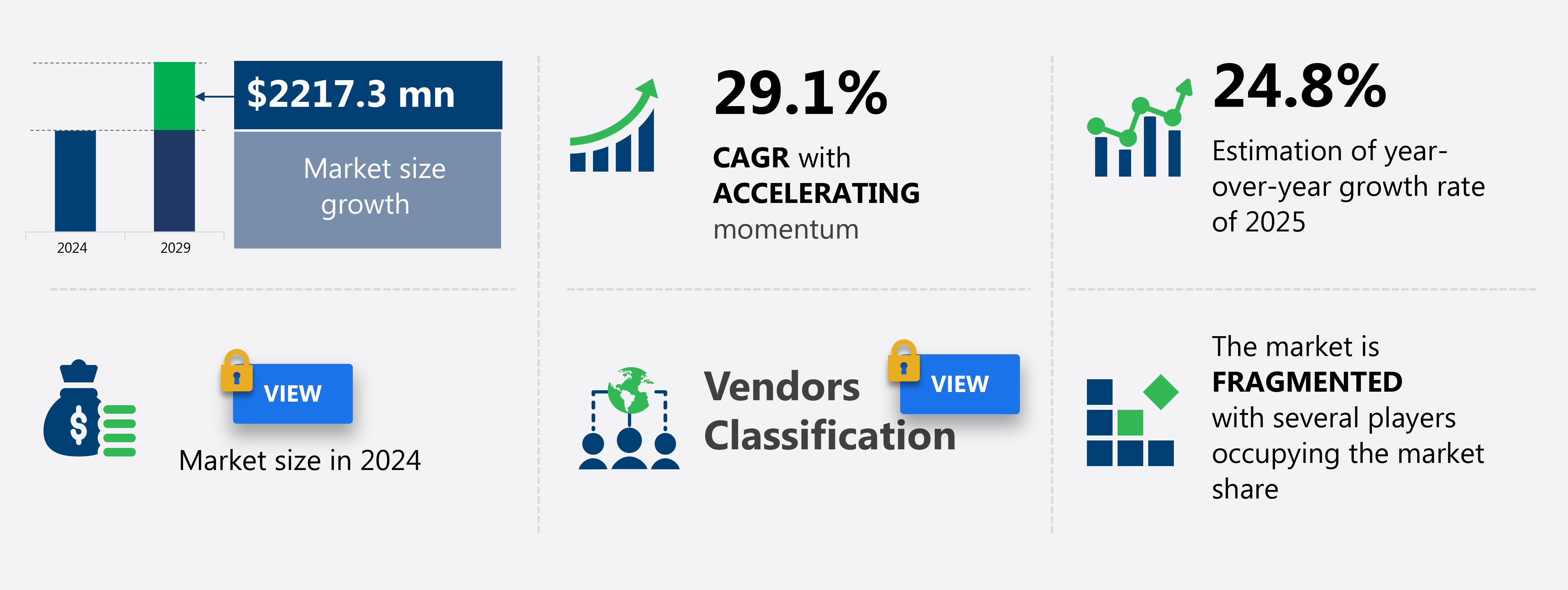
Explore in-depth regional segment analysis with market size data with forecasts 2025-2029 - in the full report.
Request Free Sample
- The market for generative AI in e-commerce continues to evolve, with applications spanning various sectors. AI-enhanced site search and AI-powered visual merchandising optimize the shopping experience, while AI-driven business intelligence and customer insights enable data-driven decision-making. Personalized offers generation, AI-based risk management, and AI-driven customer retention enhance customer engagement. AI-powered fraud prevention, campaign optimization, return prediction, and loyalty programs ensure trust and repeat business. Dynamic pricing optimization, predictive maintenance AI, automated marketing campaigns, and personalized email campaigns boost sales.
- According to recent studies, the global e-commerce AI market is projected to grow by 25% annually, underpinned by the increasing adoption of AI technologies to streamline operations and improve customer experience. For instance, a major retailer reported a 15% increase in sales due to AI-powered website personalization. Conversational commerce, virtual try-on, voice commerce, and targeted advertising campaigns further enrich the shopping experience.
How is this Generative AI In E-Commerce Market segmented?
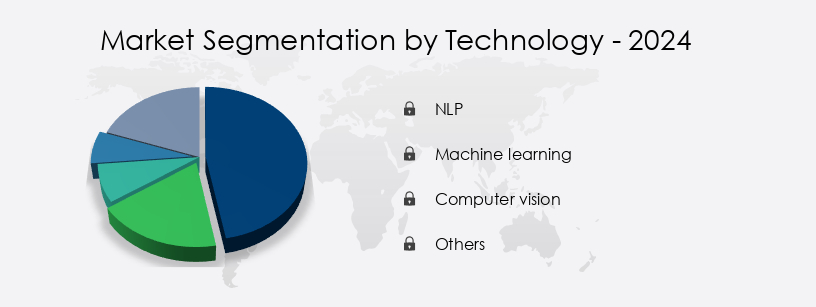
The generative AI in e-commerce market research report provides comprehensive data (region-wise segment analysis), with forecasts and estimates in "USD million" for the period 2025-2029,for the following segments.
- Technology
- NLP
- Machine learning
- Computer vision
- Others
- Application
- B2C
- B2B
- Others
- Deployment
- Cloud-based
- On-premises
- Geography
- North America
- US
- Canada
- Mexico
- Europe
- France
- Germany
- Italy
- UK
- APAC
- China
- India
- Japan
- Rest of World (ROW)
- North America
By Technology Insights
The NLP segment is estimated to witness significant growth during the forecast period. The global e-commerce market is witnessing significant advancements with the integration of generative AI technologies. AI-enhanced customer profiling and fraud detection algorithms ensure personalized experiences and enhanced security. AI-powered product recommendations and e-commerce data analytics provide valuable insights for businesses to optimize sales and inventory. AI-driven cross-selling, visual search, and conversational commerce platforms offer engaging shopping experiences. Automated customer service through chatbot support and AI-driven email marketing streamline communication channels. AI-driven website design and real-time product recommendations create seamless user experiences. AI-powered search engines and smart recommendations engines facilitate efficient product discovery. AI-based demand forecasting and inventory optimization ensure stock availability and reduce wastage.
Upselling and cross-selling with AI strategies increase revenue. AI-driven pricing strategies and marketing automation optimize business operations. According to recent research, the global e-commerce market is expected to grow by 15% annually. An example of AI's impact is a leading retailer experiencing a 20% increase in sales due to AI-driven product recommendations. Generative NLP, specifically large language models, plays a crucial role in this transformation, enabling automated content generation, conversational interaction, and data-driven decision-making. Supply chain AI, powered by predictive analytics, optimizes logistics and demand forecasting, ensuring stock availability and minimizing overstocking or understocking issues.
Get Key Insights on Market Forecast (PDF)- Request Free Sample
Regional Analysis
North America is estimated to contribute 36% to the growth of the global market during the forecast period. Technavio's analysts have elaborately explained the regional trends and drivers that shape the market during the forecast period.
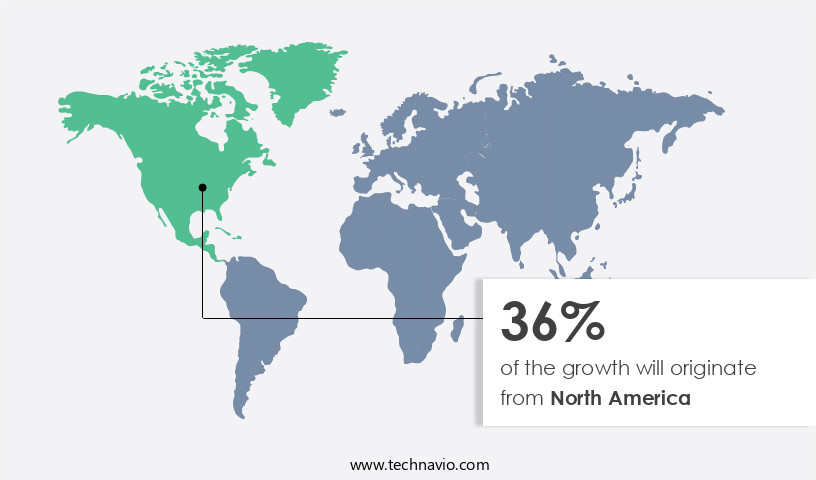
See How generative AI in e-commerce market Demand is Rising in North America Request Free Sample
In North America, the market is thriving, driven by the region's status as a global innovation hub and mature adoption landscape. Key players include technology hyperscalers Google LLC, Microsoft Corp., and Amazon Web Services Inc., based in the US, which contribute foundational models and cloud infrastructure. AI-enhanced customer profiling and fraud detection algorithms heighten shopping experiences, while AI-powered product recommendations and visual search cater to consumer preferences. Real-time, personalized product bundles and upselling with AI boost sales, with real-time search relevance and conversational commerce platforms enhancing engagement.
AI-driven marketing automation, email marketing, and inventory optimization further streamline operations. According to recent industry reports, AI adoption in retail is projected to reach 40% by 2025, underscoring the market's potential for growth. An example of AI's impact: Walmart's AI-driven pricing strategies led to a 1% increase in online sales in Q3 2021. Furthermore, retailers are exploring explainable AI retail, inventory management systems, customer churn prediction, and marketing campaign optimization to enhance retail operations efficiency and optimize the in-store experience.
Market Dynamics
Our researchers analyzed the data with 2024 as the base year, along with the key drivers, trends, and challenges. A holistic analysis of drivers will help companies refine their marketing strategies to gain a competitive advantage. The Generative AI in E-Commerce Market is transforming the digital retail landscape by delivering intelligent, scalable, and hyper-personalized solutions that significantly enhance the online shopping experience. With the rapid adoption of AI technologies, e-commerce businesses are embracing customer service chatbots and chatbot customer support to provide instant, efficient assistance, reduce response time, and improve satisfaction levels. Generative AI marketing copy and dynamic website content generation are revolutionizing how brands engage users by creating compelling, brand-aligned messaging that resonates with individual shoppers.
Through predictive analytics for sales and predictive modeling for e-commerce sales forecasting, businesses can accurately anticipate demand and refine sales strategies. Operational efficiency is another area of transformation, with inventory optimization AI, ai for e-commerce inventory management, and automated order fulfillment streamlining supply chain and stock management processes. Supply chain AI integration and AI-driven supply chain risk management provide real-time insights, enabling retailers to proactively address disruptions. Customer segmentation AI and machine learning models for customer segmentation are enabling businesses to better understand diverse customer profiles and develop tailored marketing strategies.
AI's capabilities extend into search and discovery through e-commerce visual search, AI-driven visual search implementation, AI-powered search relevance, and an AI-powered search engine, making product discovery more intuitive and efficient. Natural language processing (NLP) and natural language processing for product reviews enable deeper understanding of customer sentiment, while computer vision for e-commerce and computer vision for automated product quality control automate visual merchandising and product inspection. Content creation is further streamlined with product description generation and generative AI for product descriptions, helping brands maintain consistency and speed across large product catalogs. Image generation for e-commerce allows for high-quality, AI-generated visuals that elevate product presentation.
Sales and marketing efforts are enhanced with conversational AI for sales, AI-driven customer insights, and AI-driven targeted advertising that support personalized messaging. Advanced campaigns are driven by AI-powered loyalty programs, AI-driven campaign optimization, and AI-driven targeted advertising optimization, resulting in improved conversion rates and customer retention. Pricing and promotion strategies are refined through using AI for dynamic pricing strategies and personalized email marketing campaigns using AI, allowing retailers to adapt to market shifts and buyer behavior in real-time.
What are the key market drivers leading to the rise in the adoption of Generative AI In E-Commerce Industry?
- The imperative need for hyper-personalization and enhanced customer experience is a key driver for the Generative AI in E-Commerce Market, as businesses leverage AI to deliver tailored interactions and improve customer satisfaction. The global e-commerce market is witnessing a rise in demand for generative AI technology to deliver hyper-personalized and engaging customer experiences. With the digital marketplace becoming increasingly saturated, generic shopping journeys result in consumer fatigue, high cart abandonment rates, and decreased brand loyalty. This technology allows for dynamically created, one-to-one interactions at an unprecedented scale, resulting in a shopping experience that feels more like a consultative conversation with a knowledgeable expert rather than navigating a static catalog.
- For instance, a leading fashion retailer reported a 25% increase in sales through personalized product recommendations powered by generative AI. The market is expected to grow by over 30% in the next five years, reflecting the significant potential for this technology to revolutionize online shopping experiences. Generative AI transcends the limitations of traditional predictive analytics, enabling e-commerce platforms to understand complex customer intent and respond with contextually relevant content and recommendations. AI-powered chatbot for customer support continues to drive meaningful conversations, while AI-enhanced customer experience ensures a seamless and engaging shopping journey.
What are the market trends shaping the Generative AI In E-Commerce Industry?
- Intelligent shopping assistants and conversational commerce are set to become prominent market trends. The proliferation of these technologies is shaping the future of commerce. The integration of generative AI in e-commerce is revolutionizing customer engagement, shifting the focus from rule-based chatbots to intelligent shopping assistants. These advanced systems, capable of understanding complex human intent and maintaining coherent dialogues, provide context-aware and personalized guidance throughout the shopping journey.
- Moreover, future growth prospects are promising, with estimates suggesting a potential rise in demand as more businesses recognize the value of conversational commerce. This transformation of digital storefronts into interactive and consultative environments mirrors the experience of engaging with a knowledgeable human sales associate, ultimately enhancing customer satisfaction and loyalty. This development is a direct response to the growing demand for more intuitive and efficient online shopping experiences. According to recent studies, the market for AI in retail is expected to expand by 20% in the next year, reflecting the robust adoption of these technologies.
What challenges does the Generative AI In E-Commerce Industry face during its growth?
- The data privacy and security concerns, as well as the emerging trust deficit, represent significant challenges that could hinder industry growth. It is essential for organizations to prioritize these issues to maintain consumer trust and ensure the protection of sensitive information. Generative AI's integration into the e-commerce sector presents a delicate balance between data utilization, security, and consumer trust. These advanced models require extensive data to function optimally, which includes sensitive information such as personally identifiable data (PII), credit card details, and browsing histories.
- According to recent studies, the global e-commerce market is projected to grow by 15% annually, driven by AI and machine learning technologies. For instance, a leading fashion retailer reported a 20% increase in sales after implementing AI-driven product recommendations. Despite these benefits, it is crucial for businesses to employ robust security measures and adhere to data protection regulations to mitigate risks and safeguard consumer trust. The use of this data to create personalized experiences introduces significant risks, particularly the possibility of data leakage. This issue arises when sensitive customer or business information, employed to fine-tune a model, is unintentionally disclosed in responses to other users' queries.
Exclusive Customer Landscape
The generative AI in e-commerce market forecasting report includes the adoption lifecycle of the market, covering from the innovator's stage to the laggard's stage. It focuses on adoption rates in different regions based on penetration. Furthermore, the generative AI in e-commerce market report also includes key purchase criteria and drivers of price sensitivity to help companies evaluate and develop their market growth analysis strategies.
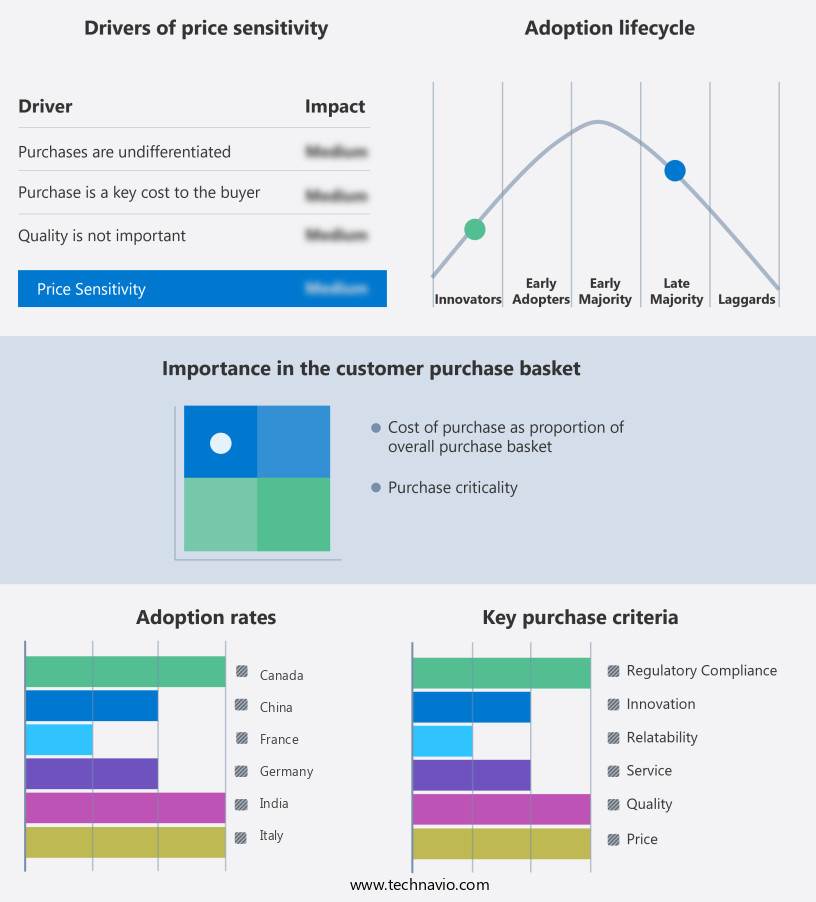
Customer Landscape
Key Companies & Market Insights
Companies are implementing various strategies, such as strategic alliances, generative AI in e-commerce market forecast, partnerships, mergers and acquisitions, geographical expansion, and product/service launches, to enhance their presence in the industry.
A Mad Street Den - The company revolutionizes e-commerce with Adobe Sensei GenAI and Firefly, delivering AI-driven product descriptions, image generation, and personalized shopping experiences through advanced generative AI technology.
The industry research and growth report includes detailed analyses of the competitive landscape of the market and information about key companies, including:
- A Mad Street Den
- Adobe Inc.
- Alibaba Group Holding Ltd.
- Amazon Web Services Inc.
- BigCommerce Holdings Inc.
- COVEO
- Dynamic Yield Ltd.
- Google LLC
- International Business Machines Corp.
- Klevu
- Meta Platforms Inc.
- Microsoft Corp.
- Oracle Corp.
- Salesforce Inc.
- SAP SE
- Shopify Inc.
- ViSenze Pte. Ltd.
- Zebra Technologies Corp.
Qualitative and quantitative analysis of companies has been conducted to help clients understand the wider business environment as well as the strengths and weaknesses of key industry players. Data is qualitatively analyzed to categorize companies as pure play, category-focused, industry-focused, and diversified; it is quantitatively analyzed to categorize companies as dominant, leading, strong, tentative, and weak.
Recent Development and News in Generative AI In E-Commerce Market
- In January 2024, leading e-commerce platform Shopify announced the integration of Mistral AI's generative AI technology into its platform, enabling merchants to create personalized product descriptions and marketing content (Shopify Press Release, 2024).
- In March 2024, Adidas and SAP collaborated to deploy SAP's generative AI solution, which creates personalized product recommendations for customers based on their shopping history and preferences (Adidas Press Release, 2024).
- In April 2024, OpenAI, the creators of ChatGPT, raised a USD 100 million Series C funding round, bringing the total investment to USD 300 million, to further develop and commercialize their generative AI technology for various industries, including e-commerce (OpenAI Press Release, 2024).
- In May 2025, Amazon announced the acquisition of Mythic AI, a generative AI startup specializing in on-chip AI processing, to enhance its e-commerce offerings and improve product recommendations (Amazon Press Release, 2025).
Research Analyst Overview
The market for generative AI in e-commerce continues to evolve, with applications spanning various sectors. AI-enhanced site search and AI-powered visual merchandising optimize the shopping experience, while AI-driven business intelligence and customer insights enable data-driven decision-making. Personalized offers generation, AI-based risk management, and AI-driven customer retention enhance customer engagement. AI-powered fraud prevention, campaign optimization, return prediction, and loyalty programs ensure trust and repeat business. Dynamic pricing optimization, predictive maintenance AI, automated marketing campaigns, and personalized email campaigns boost sales. An e-commerce analytics dashboard, AI-driven ad targeting, and customer behavior prediction offer real-time insights.
Operational advancements like AI for e-commerce operations, AI-driven logistics optimization, AI for e-commerce logistics optimization, and AI for automated order fulfillment processes enable scalable, end-to-end automation of order and delivery processes. Security and risk are addressed with AI-powered fraud detection systems, ensuring safe transactions. Lastly, e-commerce data visualization, AI-enhanced customer journey mapping tools, and AI-powered customer churn prediction model provide actionable intelligence to continually optimize the customer lifecycle and drive sustainable growth. By using AI for personalized shopping experiences, the market continues to evolve toward a more intuitive, efficient, and customer-centric future.
Enhanced personalization is achieved with a personalized product recommendations algorithm, deep learning for personalization, deep learning application in e-commerce personalization, and smart recommendations engine, which collectively ensure more relevant product offerings. According to recent studies, the global e-commerce AI market is projected to grow by 25% annually, underpinned by the increasing adoption of AI technologies to streamline operations and improve customer experience. For instance, a major retailer reported a 15% increase in sales due to AI-powered website personalization.
Dive into Technavio's robust research methodology, blending expert interviews, extensive data synthesis, and validated models for unparalleled Generative AI In E-Commerce Market insights. See full methodology.
|
Market Scope |
|
|
Report Coverage |
Details |
|
Page number |
227 |
|
Base year |
2024 |
|
Forecast period |
2025-2029 |
|
Growth momentum & CAGR |
Accelerate at a CAGR of 29.1% |
|
Market growth 2025-2029 |
USD 2.22 billion |
|
Market structure |
Fragmented |
|
YoY growth 2024-2025(%) |
24.8 |
|
Key countries |
China, Japan, India, UK, Germany, France, Italy, US, Canada, and Mexico |
|
Competitive landscape |
Leading Companies, Market Positioning of Companies, Competitive Strategies, and Industry Risks |
What are the Key Data Covered in this Generative AI In E-Commerce Market Research and Growth Report?
- CAGR of the Generative AI In E-Commerce industry during the forecast period
- Detailed information on factors that will drive the growth and forecasting between 2025 and 2029
- Precise estimation of the size of the market and its contribution of the industry in focus to the parent market
- Accurate predictions about upcoming growth and trends and changes in consumer behaviour
- Growth of the market across North America, Europe, APAC, South America, and Middle East and Africa
- Thorough analysis of the market's competitive landscape and detailed information about companies
- Comprehensive analysis of factors that will challenge the generative AI in e-commerce market growth of industry companies
We can help! Our analysts can customize this generative AI in e-commerce market research report to meet your requirements.
 RIA -
RIA - 
