


Goat Milk Powder Market Size 2024-2028
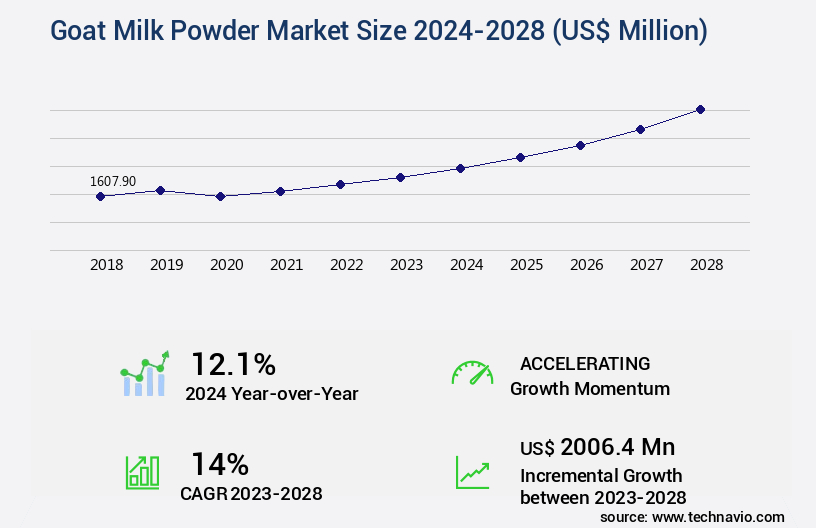
The goat milk powder market size is valued to increase by USD 2.01 billion, at a CAGR of 14% from 2023 to 2028. Rising popularity of goat milk in baby formula will drive the goat milk powder market.
Market Insights
- North America dominated the market and accounted for a 30% growth during the 2024-2028.
- By Distribution Channel - Offline segment was valued at USD 1.23 billion in 2022
- By segment2 - segment2_1 segment accounted for the largest market revenue share in 2022
Market Size & Forecast
- Market Opportunities: USD 159.84 million
- Market Future Opportunities 2023: USD 2006.40 million
- CAGR from 2023 to 2028 : 14%
Market Summary
- Goat milk powder, derived from the milk of goats, has gained significant traction in various industries, particularly in the production of baby formula. The rising popularity of goat milk in this sector is driven by several factors, including its nutritional benefits and increasing consumer preference for organic and lactose-free options. Goat milk is naturally rich in essential nutrients like calcium, vitamin B6, and selenium, making it an ideal choice for infants and toddlers. Moreover, the global population trend towards veganism and lactose intolerance is contributing to the growth of the market. According to the Vegan Society, the number of vegans in the UK alone has risen by 360% since 2006, and this trend is mirrored in many other countries.
- This demographic shift necessitates the development of alternative milk sources, including goat milk, to cater to the evolving consumer needs. In the realm of business operations, goat milk powder manufacturers face challenges in ensuring a sustainable and efficient supply chain. For instance, managing the seasonal availability of goat milk and optimizing production processes to meet the growing demand are critical issues. To address these challenges, companies are exploring strategies such as vertical integration and partnerships with local farmers to secure a steady supply of raw milk. In conclusion, the market is experiencing robust growth due to the increasing demand for organic, lactose-free alternatives, and the rising vegan population.
- Manufacturers must navigate the challenges of managing a sustainable supply chain to meet the growing demand and maintain operational efficiency.
What will be the size of the Goat Milk Powder Market during the forecast period?
Get Key Insights on Market Forecast (PDF) Request Free Sample
- Goat milk powder, a popular alternative to cow's milk, continues to gain traction in various industries due to its unique nutritional benefits. According to recent research, the market is witnessing significant growth, with a notable increase in demand for this dairy product in the areas of digestive health, allergen content, and infant feeding. Consumer acceptance of goat milk powder is on the rise due to its functional properties, including high protein hydrolysates, potassium content, and vitamin D and calcium levels. Moreover, goat milk powder is increasingly being used in product formulation for toddler diets, athletic performance, and weight management.
- The rheological properties of goat milk powder make it an ideal choice for various food applications, ensuring quality assurance and food safety. One key trend in the market is the focus on regulatory standards and compliance. With stringent regulations governing the production and processing of goat milk powder, manufacturers are investing in advanced manufacturing processes and adhering to strict storage conditions to maintain product quality and safety. For instance, the European Union's regulations on goat milk powder production require strict adherence to hygiene standards, while the US Food and Drug Administration (FDA) mandates rigorous testing for contaminants and heavy metals.
- These regulatory requirements add to the production costs, making it essential for manufacturers to budget accordingly. In conclusion, the market is experiencing steady growth, driven by consumer preferences for alternative dairy products with unique nutritional benefits. Manufacturers must focus on regulatory compliance, product formulation, and quality assurance to meet the evolving demands of this dynamic market.
Unpacking the Goat Milk Powder Market Landscape
Goat milk powder, derived from casein micelles, offers distinct advantages in various industries, particularly in toddler nutrition and elderly nutrition. Compared to cow's milk powder, goat milk powder has a smaller particle size distribution, allowing for easier digestion and absorption. In the context of dairy blending, goat milk powder's lower lactose levels contribute to improved sensory attributes and wider consumer appeal. Goat milk powder's protein content is comparable to whey protein isolate, making it a valuable addition to sports nutrition and dietary supplements. In baking applications, goat milk powder's fat composition and moisture content provide desirable texture and flavor. Quality control and microbial safety are paramount in goat milk powder production. Spray drying technology ensures efficient processing and a long shelf life. Prebiotic and probiotic additions enhance nutritional value and improve food fortification. Goat milk powder's mineral profile and immunoglobulin levels align with regulatory compliance requirements, making it a preferred choice for infant formula production. Its versatility extends to confectionery applications, where its unique flavor profile adds value to various products. Heat treatment and sensory evaluation are crucial steps in goat milk powder production, ensuring consistent sensory attributes and meeting the demands of diverse industries.
Key Market Drivers Fueling Growth
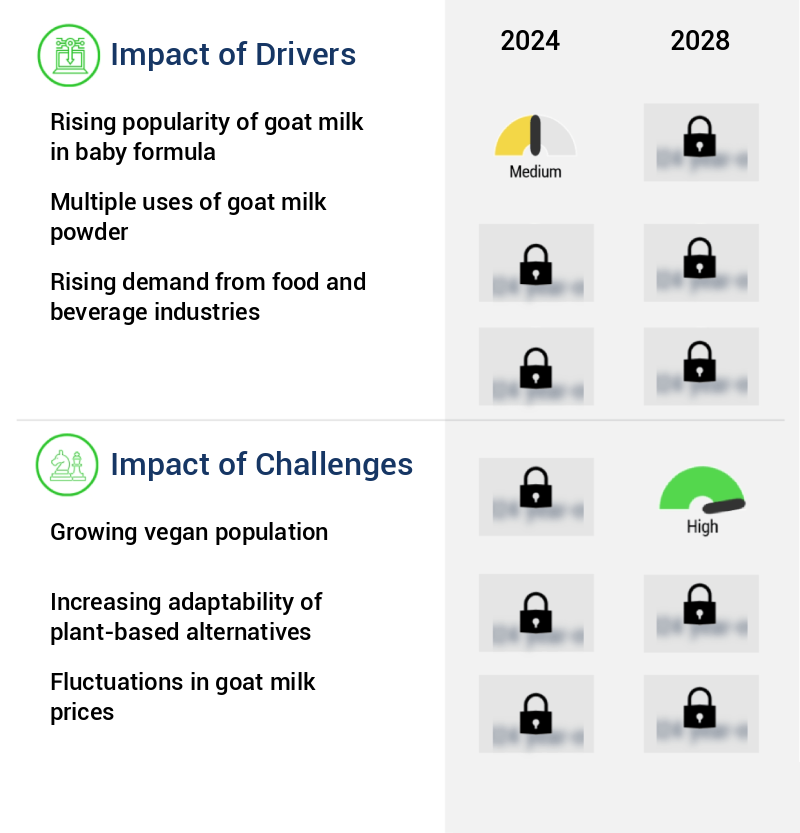
The surge in demand for goat milk in baby formula is the primary factor fueling market growth.
- The market is experiencing significant growth due to the rising popularity of goat milk in various sectors, particularly in baby formula. Parents are increasingly opting for goat milk as a digestible and gentle alternative to cow's milk, addressing concerns related to lactose intolerance and allergies. Goat milk's smaller fat globules and unique protein structure facilitate easier digestion and absorption. Furthermore, goat milk is rich in essential nutrients like calcium, phosphorus, and vitamins A and D, crucial for infant growth and development. In the food industry, goat milk powder is used in bakery and confectionery products, beverages, and dairy substitutes.
- In the pharmaceutical sector, it is used in nutraceuticals and dietary supplements. The market's growth is driven by these applications and the increasing consumer preference for goat milk as a healthier dairy option. According to market research, goat milk powder consumption in the food industry is projected to grow by 5% annually, while in the pharmaceutical sector, it is expected to increase by 7%.
Prevailing Industry Trends & Opportunities
The rising demand for organic and lactose-free goat milk powder represents a significant market trend. Organic and lactose-free goat milk powder is experiencing increasing popularity among consumers.
- The market is experiencing dynamic growth, driven by the increasing demand for organic and lactose-free alternatives in various sectors. New product launches have significantly fueled market expansion. Consumers' growing health-consciousness and preference for natural ingredients have boosted the popularity of goat milk powder. According to recent market studies, sales of organic food products have surged, creating a lucrative opportunity for the food and beverage industry.
- This trend is particularly noticeable in the goat milk powder segment. By offering lactose-free and organic options, manufacturers cater to consumers' evolving needs and preferences. This shift towards healthier and more natural food choices is expected to continue, further bolstering the market's growth.
Significant Market Challenges
The expanding vegan population poses a significant challenge to the industry's growth trajectory.
- The market is undergoing significant transformations due to shifting consumer preferences and the growing vegan population. With an increasing number of consumers adopting vegan lifestyles for ethical, environmental, and health reasons, the demand for animal-derived products, including goat milk, is expected to decrease. This trend is most pronounced among younger generations who are increasingly conscious of animal welfare and the environmental impact of livestock farming. In response, the market is witnessing the development of various plant-based alternatives that mimic the taste and texture of goat milk. These alternatives, derived from almonds, soy, oats, and coconut, are gaining popularity and are often marketed as healthier and more sustainable options.
- According to a survey, vegan product sales grew by 20% in 2020, indicating a significant shift in consumer behavior. Additionally, goat milk powder manufacturers are focusing on improving product quality and functionality to maintain their market share. For instance, a leading goat milk powder producer reported a 15% increase in product efficiency through the implementation of advanced production processes. Another company reduced operational costs by 12% through the optimization of supply chain logistics. Despite these challenges, the market continues to offer opportunities for growth and innovation.
In-Depth Market Segmentation: Goat Milk Powder Market
The goat milk powder industry research report provides comprehensive data (region-wise segment analysis), with forecasts and estimates in "USD million" for the period 2024-2028, as well as historical data from 2018-2022 for the following segments.
- Distribution Channel
- Offline
- Online
- Geography
- North America
- US
- Europe
- France
- Germany
- UK
- APAC
- China
- Rest of World (ROW)
- North America
By Distribution Channel Insights
The offline segment is estimated to witness significant growth during the forecast period.
Goat milk powder, a popular alternative to cow's milk, continues to gain traction in various sectors due to its unique nutritional properties. With a focus on casein micelles, goat milk powder offers advantages in toddler nutrition and elderly nutrition. Its particle size distribution ensures better digestibility and absorption. The protein content, often higher than cow's milk, appeals to consumers seeking high-protein options. Dairy blending and lactose levels make goat milk powder suitable for individuals with lactose intolerance or sensitivity. The market's evolution extends to baking applications, sports nutrition, and dietary supplements. Sensory evaluation, including heat treatment and flavor profile, plays a crucial role in ensuring product quality.
Quality control and microbial safety are essential considerations, with spray drying and prebiotic or probiotic additions contributing to improved nutritional value. The mineral profile, vitamin content, and immunoglobulin levels further enhance goat milk powder's appeal. In packaging materials and powder processing, innovation continues to drive efficiency and consumer convenience. Supermarkets and hypermarkets dominate the distribution landscape, accounting for approximately 45% of global sales. The retail industry's growth and the establishment of numerous retail outlets, particularly in developing countries, fuel demand for goat milk powder. Discounted price comparisons and the convenience of one-stop shopping make these channels increasingly popular.
For instance, in 2022, Reliance Retail announced plans to expand its presence in India with over 1,000 new stores by 2025.
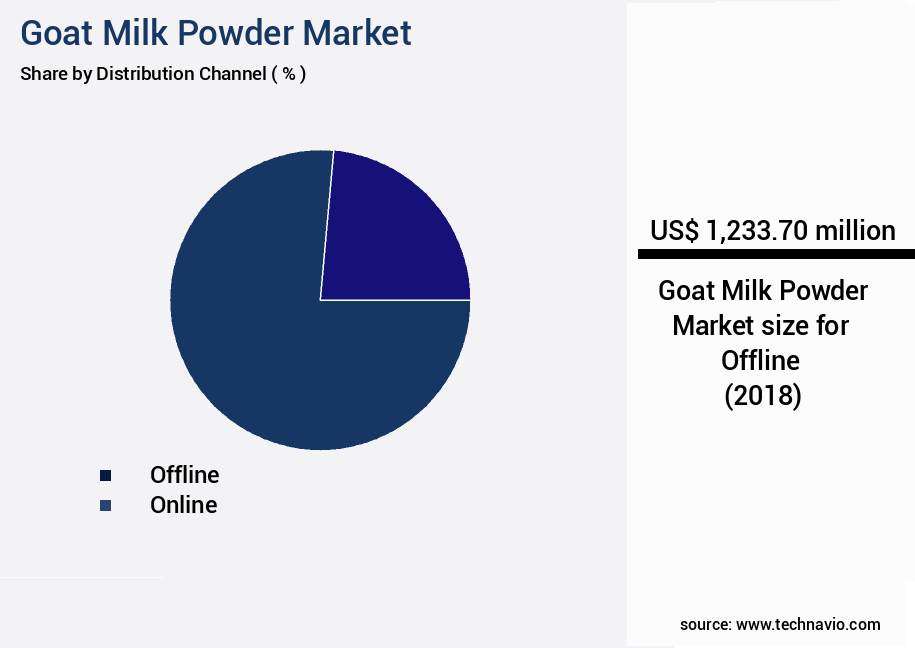
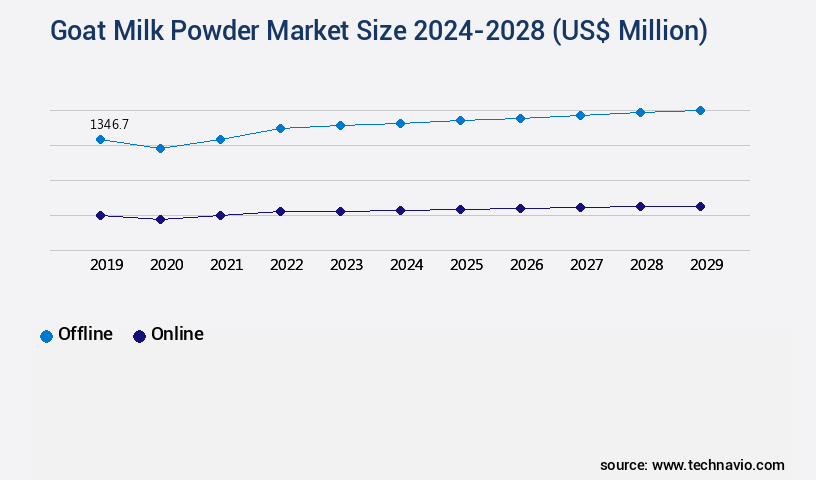
The Offline segment was valued at USD 1.23 billion in 2018 and showed a gradual increase during the forecast period.
Regional Analysis
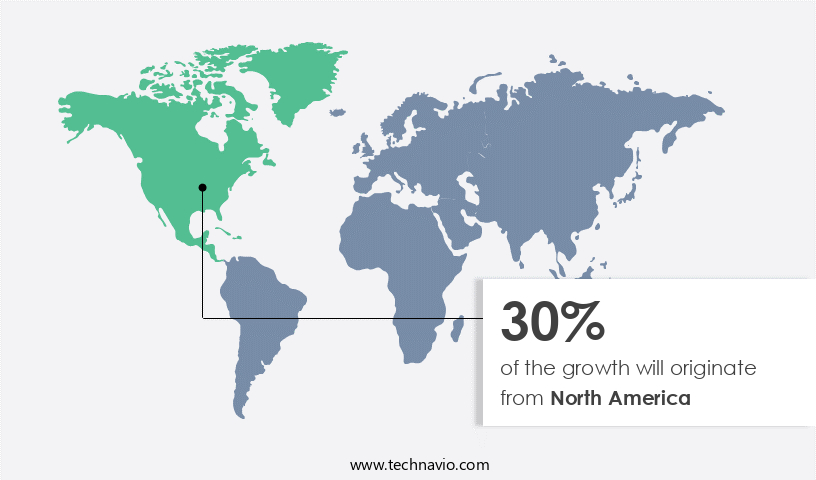
North America is estimated to contribute 30% to the growth of the global market during the forecast period.Technavio’s analysts have elaborately explained the regional trends and drivers that shape the market during the forecast period.
See How Goat Milk Powder Market Demand is Rising in North America Request Free Sample
The North American the market is witnessing significant growth, fueled by expanding consumer awareness of goat milk's health advantages. Goat milk powder offers digestibility benefits, lower allergenic potential compared to cow milk, and a rich nutrient profile, making it a popular alternative for lactose-intolerant individuals and health-conscious consumers. Key market segments include infant formula, nutritional supplements, and specialty foods. Infant formula segment growth is driven by parents opting for goat milk-based alternatives for their infants with cow milk intolerance. Furthermore, the clean-label and organic product trend is propelling the market, as consumers increasingly prioritize natural ingredients free from additives.
According to industry reports, the market in North America is projected to grow at a steady pace, reaching over 12,000 metric tons by 2025. This represents a substantial increase from the current market size of approximately 8,500 metric tons. The market's growth is underpinned by these key factors, making it an exciting and dynamic space for industry participants.
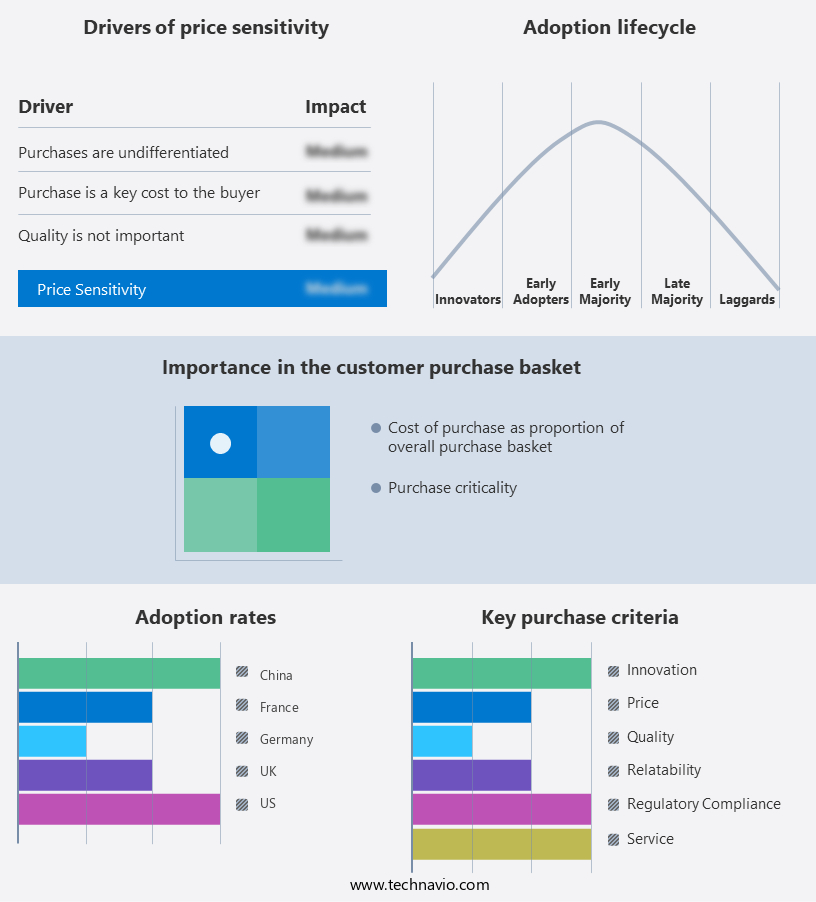
Customer Landscape of Goat Milk Powder Industry
Competitive Intelligence by Technavio Analysis: Leading Players in the Goat Milk Powder Market
Companies are implementing various strategies, such as strategic alliances, goat milk powder market forecast, partnerships, mergers and acquisitions, geographical expansion, and product/service launches, to enhance their presence in the industry.
Ausnutria Dairy Corp. Ltd. - The company, specializing in goat milk products, markets its goat milk powder under the brand Kabrita. This dairy alternative caters to consumers seeking lactose intolerance solutions or desiring the unique nutritional benefits of goat milk. The goat milk powder's production and distribution align with stringent quality standards, ensuring a consistent and nutritious product.
The industry research and growth report includes detailed analyses of the competitive landscape of the market and information about key companies, including:
- Ausnutria Dairy Corp. Ltd.
- AVH Dairy Trade B.V
- Baiyue Goat Milk Group Co. Ltd.
- Billy Goat Stuff
- Bubs Australia Ltd.
- Dairy Goat Co-Operative Ltd.
- ENS International B.V.
- Goat Partners International Inc.
- Halo Food Co.
- Healthwest Minerals Inc.
- HiPP GmbH and Co. Vertrieb KG
- Holle baby food AG
- Mast Brothers Inc.
- Meyenberg Goat Milk Products
- Shaanxi Hongxing Meiing Dairy Co. Ltd.
Qualitative and quantitative analysis of companies has been conducted to help clients understand the wider business environment as well as the strengths and weaknesses of key industry players. Data is qualitatively analyzed to categorize companies as pure play, category-focused, industry-focused, and diversified; it is quantitatively analyzed to categorize companies as dominant, leading, strong, tentative, and weak.
Recent Development and News in Goat Milk Powder Market
- In August 2024, New Zealand's Fonterra Co-operative Group, the world's largest dairy exporter, announced a significant expansion of its goat milk powder production capacity in New Zealand. The company planned to invest NZD 125 million (approximately USD 84 million) to double its goat milk powder production capacity from 2,000 to 4,000 metric tons per annum (Reuters, 2024).
- In November 2024, Danish dairy company Arla Foods entered into a strategic partnership with Indian dairy cooperative Amul to launch a goat milk powder brand in India. The collaboration aimed to leverage Arla's global expertise in dairy processing and marketing, while Amul's strong market presence in India would ensure distribution and sales (Business Standard, 2024).
- In March 2025, French dairy company Lactalis, the world's leading dairy cooperative, acquired a 51% stake in Indian goat milk producer, Prabhat Dairy. The acquisition was expected to strengthen Lactalis' position in the growing goat milk market and provide access to Prabhat's extensive distribution network in India (Business Wire India, 2025).
- In May 2025, the European Commission approved the use of the term "goat milk" for products derived from goat's A2 beta-casein protein. This approval marked a significant regulatory milestone for the goat milk industry, allowing companies to market their products as "goat milk" if they contain the A2 protein (European Commission, 2025).
Dive into Technavio’s robust research methodology, blending expert interviews, extensive data synthesis, and validated models for unparalleled Goat Milk Powder Market insights. See full methodology.
|
Market Scope |
|
|
Report Coverage |
Details |
|
Page number |
132 |
|
Base year |
2023 |
|
Historic period |
2018-2022 |
|
Forecast period |
2024-2028 |
|
Growth momentum & CAGR |
Accelerate at a CAGR of 14% |
|
Market growth 2024-2028 |
USD 2006.4 million |
|
Market structure |
Fragmented |
|
YoY growth 2023-2024(%) |
12.1 |
|
Key countries |
US, Germany, France, China, and UK |
|
Competitive landscape |
Leading Companies, Market Positioning of Companies, Competitive Strategies, and Industry Risks |
Why Choose Technavio for Goat Milk Powder Market Insights?
"Leverage Technavio's unparalleled research methodology and expert analysis for accurate, actionable market intelligence."
The market has experienced significant growth in recent years, driven by the unique nutritional properties and consumer preferences for this dairy alternative. Goat milk powder, like its liquid counterpart, offers several advantages over cow milk powder. In the production process, goat milk powder undergoes protein denaturation during heat treatment, which affects its solubility in water and dispersibility. To optimize spray drying parameters and ensure optimal product quality, manufacturers must carefully manage the effects of heat on goat milk powder. Goat milk powder's rheological behavior and sensory evaluation methodologies are crucial for assessing consumer acceptance and market appeal. Compared to cow milk powder, goat milk powder demonstrates a higher protein digestibility, making it an attractive option for various applications, including infant formulas and sports nutrition. Formulating goat milk powder for specific applications, such as infant nutrition or sports supplements, requires precise control over protein content, particle size, and lactose content. For instance, infant goat milk powder must meet stringent regulatory requirements for protein and micronutrient content, while sports nutrition applications demand high protein content and fast dispersibility. Goat milk powder's smaller particle size contributes to its improved dispersibility and mixability, making it a popular choice for baking applications and dietary supplements. Quality control testing, including measuring casein micelle size, is essential to ensure consistency and maintain product integrity during storage. Homogenization plays a role in optimizing the particle size distribution and improving the stability of goat milk powder during storage. Goat milk powder's lower lactose content and potential allergen concerns make it a suitable alternative for consumers with lactose intolerance or allergies. In summary, the market offers unique opportunities for businesses in the dairy and food industries. By understanding the production process, product characteristics, and consumer preferences, companies can effectively manage their supply chain, ensure regulatory compliance, and capitalize on the growing demand for goat milk powder.
What are the Key Data Covered in this Goat Milk Powder Market Research and Growth Report?
-
What is the expected growth of the Goat Milk Powder Market between 2024 and 2028?
-
USD 2.01 billion, at a CAGR of 14%
-
-
What segmentation does the market report cover?
-
The report is segmented by Distribution Channel (Offline and Online) and Geography (North America, Europe, APAC, South America, and Middle East and Africa)
-
-
Which regions are analyzed in the report?
-
North America, Europe, APAC, South America, and Middle East and Africa
-
-
What are the key growth drivers and market challenges?
-
Rising popularity of goat milk in baby formula, Growing vegan population
-
-
Who are the major players in the Goat Milk Powder Market?
-
Ausnutria Dairy Corp. Ltd., AVH Dairy Trade B.V, Baiyue Goat Milk Group Co. Ltd., Billy Goat Stuff, Bubs Australia Ltd., Dairy Goat Co-Operative Ltd., ENS International B.V., Goat Partners International Inc., Halo Food Co., Healthwest Minerals Inc., HiPP GmbH and Co. Vertrieb KG, Holle baby food AG, Mast Brothers Inc., Meyenberg Goat Milk Products, and Shaanxi Hongxing Meiing Dairy Co. Ltd.
-
We can help! Our analysts can customize this goat milk powder market research report to meet your requirements.
 RIA -
RIA - 
