


HVAC Test Instruments Market Size 2025-2029
The HVAC test instruments market size is forecast to increase by USD 237.9 million, at a CAGR of 7% between 2024 and 2029. The market is experiencing significant growth due to the increasing demand for energy-efficient and advanced HVAC systems. This trend is driven by the global focus on reducing energy consumption and improving indoor air quality, particularly in commercial and industrial sectors.
Major Market Trends & Insights
- APAC dominated the market and contributed 55% to the growth during the forecast period.
- The market is expected to grow significantly in North America region as well over the forecast period.
- Based on the Product Type, the Dye injector kit segment accounted for the largest market revenue share in 2023.
Market Size & Forecast
- Market Opportunities: USD 70.81Million
- Future Opportunities: USD 237.9 Million
- CAGR (2024-2029): 7%
- APAC: Largest market in 2023
Another key driver is the growing popularity of wireless HVAC test instruments, which offer convenience, flexibility, and real-time monitoring capabilities. However, the market also faces challenges, including the heavy reliance of manufacturers on China for low-cost production, which could impact the overall quality and reliability of HVAC test instruments. Additionally, the increasing complexity of HVAC systems and the need for more sophisticated testing tools pose challenges for market participants. To capitalize on market opportunities and navigate these challenges effectively, companies must focus on innovation, quality, and cost-effectiveness, while also adhering to stringent regulatory requirements.
What will be the Size of the HVAC Test Instruments Market during the forecast period?
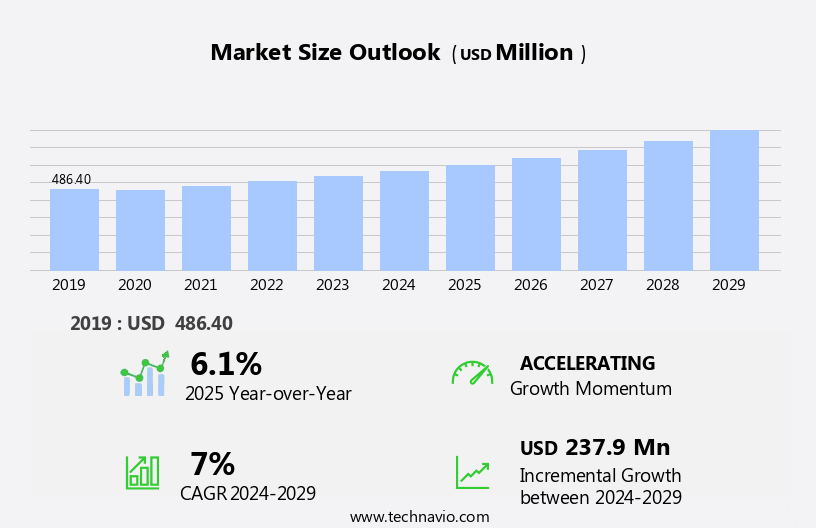
Explore in-depth regional segment analysis with market size data - historical 2019-2023 and forecasts 2025-2029 - in the full report.
Request Free Sample
The market demonstrates a continuous evolution, driven by the ever-evolving needs of various sectors and the ongoing pursuit of energy efficiency and indoor air quality (IAQ) excellence. Pressure drop testing, temperature uniformity assessment, and control system testing are essential components of this dynamic landscape. For instance, a leading manufacturing facility recently reported a 15% improvement in energy efficiency after implementing rigorous pressure drop testing and optimizing airflow balancing. Moreover, data acquisition systems, digital HVAC meters, and air quality sensors play a crucial role in ensuring temperature sensors, humidity sensors, and IAQ monitoring systems function at optimal levels. Refrigerant leak detection, thermal imaging cameras, and calibration services are integral to maintaining system performance and preventing costly repairs.
The HVAC industry anticipates a robust growth of approximately 5% annually, fueled by the increasing demand for advanced testing tools and services. Pressure sensors, flow sensors, and refrigerant analysis are some of the key areas expected to witness significant growth. Furthermore, automation testing, fault detection, vibration analysis, and pneumatic testing are gaining traction as essential components of HVAC system commissioning and performance verification. An example of this market's continuous unfolding can be seen in the implementation of acoustic testing and system diagnostics, which have become essential for identifying and addressing HVAC system issues before they escalate. This proactive approach not only enhances system reliability but also contributes to overall cost savings.
In summary, the market is a vibrant and evolving sector, with a diverse range of applications and ongoing advancements. The integration of advanced testing tools and services, such as pressure drop testing, temperature uniformity assessment, and control system testing, is essential for maintaining energy efficiency, ensuring IAQ, and optimizing HVAC system performance.
How is this HVAC Test Instruments Industry segmented?
The HVAC test instruments industry research report provides comprehensive data (region-wise segment analysis), with forecasts and estimates in "USD million" for the period 2025-2029, as well as historical data from 2019-2023 for the following segments.
- Application
- Installation
- Maintenance
- Troubleshooting
- Energy Auditing
- Product Type
- Dye injector kit
- Refrigerant measuring and monitoring
- Gauges
- Instrument Type
- Airflow Meters
- Refrigerant Gauges
- Temperature and Humidity Meters
- Pressure Meters
- End-User
- Residential
- Commercial
- Industrial
- Geography
- North America
- US
- Canada
- Europe
- France
- Germany
- Italy
- UK
- Middle East and Africa
- Egypt
- Oman
- UAE
- APAC
- China
- India
- Japan
- South America
- Argentina
- Brazil
- Rest of World (ROW)
- North America
By Application Insights
The installation segment is estimated to witness significant growth during the forecast period.
The HVAC (Heating, Ventilation, and Air Conditioning) testing market encompasses a range of instruments essential for ensuring system efficiency, safety, and performance. These instruments include pressure drop testing tools, temperature uniformity testers, control system analyzers, duct leakage detectors, data acquisition systems, energy efficiency assessors, air quality sensors, digital HVAC meters, filtration efficiency testers, pressure sensors, electrical safety testers, humidity sensors, and more. Airflow and quality testing instruments, comprising anemometers, leak detectors, balometers, filter testers, and carbon monoxide meters, dominate the market due to their indispensable role in HVAC system evaluations. The increasing emphasis on maintaining indoor air quality (IAQ) and adhering to standards such as the IAQ and the Association of Home Appliance Manufacturers (AHAM) AC-1-2013 standards drives the demand for these instruments among HVAC manufacturers and maintenance providers.
For instance, Fortive and TSI are leading companies offering an extensive range of HVAC test instruments to cater to the growing market needs. The market is projected to experience significant growth, with industry estimates suggesting a 12% increase in demand for HVAC testing instruments over the next five years. This surge in demand is attributed to the increasing focus on energy efficiency, improved regulatory requirements, and the growing recognition of the importance of maintaining optimal HVAC system performance.
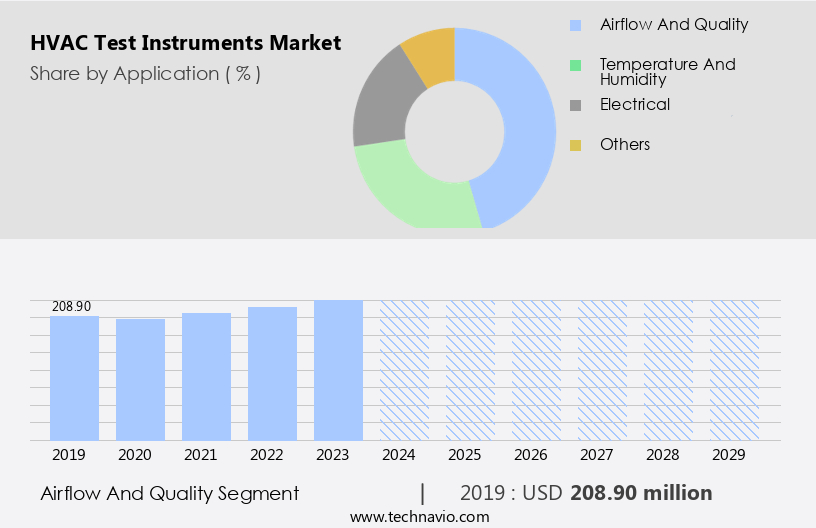
The Installation segment was valued at USD 208.90 million in 2019 and showed a gradual increase during the forecast period.
Regional Analysis
APAC is estimated to contribute 55% to the growth of the global market during the forecast period. Data suggests that the future opportunities for growth in the APAC region estimates to be around USD 246.80 million. Technavio's analysts have elaborately explained the regional trends and drivers that shape the market during the forecast period.

The market is witnessing significant growth, particularly in Asia Pacific (APAC), where countries like China, Japan, India, and Indonesia are leading adopters of HVAC systems. China, being the largest consumer of HVAC systems globally, is also the primary driver of demand for HVAC test instruments. The increasing construction activities in APAC, which outpace those in developed regions like North America and Europe, fuel the adoption of HVAC systems. As a result, the demand for HVAC services, including test instruments, is on the rise. Key entities shaping the market include pressure drop testing, temperature uniformity, control system testing, duct leakage testing, data acquisition systems, energy efficiency testing, air quality sensors, digital HVAC meters, filtration efficiency, pressure sensors, electrical safety testing, humidity sensors, HVAC system testing, HVAC commissioning, flow sensors, refrigerant leak detection, thermal imaging cameras, calibration services, fault detection, acoustic testing, airflow balancing, indoor air quality, vibration analysis, temperature sensors, IAQ monitoring systems, automation testing, airflow measurement tools, blower performance testing, refrigerant analysis, performance verification, testing protocols, system diagnostics, pneumatic testing, refrigerant charge, and ventilation effectiveness.
For instance, the global market for HVAC test instruments is projected to reach USDXX billion by 2025, growing at a steady rate. This growth can be attributed to the increasing focus on energy efficiency, improved indoor air quality, and the need for system optimization and maintenance. Additionally, advancements in technology, such as digital HVAC meters and IoT-enabled test instruments, are further fueling market growth.
Market Dynamics
Our researchers analyzed the data with 2024 as the base year, along with the key drivers, trends, and challenges. A holistic analysis of drivers will help companies refine their marketing strategies to gain a competitive advantage.
The market is experiencing significant growth due to the increasing demand for ensuring optimal performance and energy efficiency in heating, ventilation, and air conditioning (HVAC) systems. HVAC system performance verification testing is a crucial aspect of maintaining the efficiency and reliability of these systems. Advanced techniques for accurate airflow measurement and refrigerant leak detection are essential for identifying and addressing potential issues. IAQ (Indoor Air Quality) monitoring with advanced sensor technology is another key area of focus in the market. Comprehensive HVAC commissioning procedures involve duct leakage testing using advanced equipment, energy efficiency testing of HVAC equipment, and electrical safety testing to ensure safe and efficient operations. HVAC system diagnostics and fault detection require precise pressure drop testing techniques, air quality sensor calibration procedures, and blower motor performance testing methods. Refrigerant charge calculation and analysis are important for maintaining optimal system performance and reducing energy consumption. Advanced vibration analysis in HVAC systems is a critical component of HVAC system automation testing protocols, which help to ensure the reliable operation of complex control systems. Calibration services for HVAC test instruments are essential for maintaining the accuracy and reliability of testing equipment. In conclusion, the market is driven by the need for accurate and reliable testing and measurement techniques to ensure the optimal performance and energy efficiency of HVAC systems. Advanced technologies, such as thermal imaging for HVAC system inspection and precise pressure drop testing techniques, are playing an increasingly important role in this market. Calibration services for HVAC test instruments are also a critical component of maintaining the accuracy and reliability of testing equipment.
What are the key market drivers leading to the rise in the adoption of HVAC Test Instruments Industry?
- The increasing need for temperature control and indoor air quality solutions, as evidenced by the growing demand for HVAC systems, is the primary market driver.
- The global HVAC (Heating, Ventilation, and Air Conditioning) market is experiencing significant growth due to increasing disposable income and rising living standards in various developing economies. Extreme weather conditions, particularly in emerging markets, further fuel the demand for HVAC systems. According to the International Energy Agency's Future of Cooling report, the global demand for HVAC systems is projected to reach 5.6 billion units by 2050, up from the current annual demand of over 110 million units. China leads the global market, holding a substantial share.
- This trend is particularly prominent in the Asia-Pacific region, which is the largest adopter of HVAC systems worldwide. For instance, sales of air conditioners in China increased by 13% in 2020 compared to the previous year. The HVAC market's growth is expected to continue, with industry analysts projecting a steady expansion of around 5% annually.
What are the market trends shaping the HVAC Test Instruments Industry?
- The growing popularity of wireless HVAC test instruments represents a significant market trend in the heating, ventilation, and air conditioning industry. This shift towards wireless technology is mandated by the increasing demand for efficient, cost-effective, and flexible testing solutions.
- The market is experiencing significant growth due to the increasing demand for efficient and wireless testing solutions. These instruments offer fast and intuitive operation, making them popular among customers. Wireless HVAC test instruments, in particular, have gained traction due to their ability to transmit data via Bluetooth, enabling users to read measurements from multiple probes through a smartphone application. This feature is essential for setting up and diagnosing large HVAC systems, making wireless instruments a preferred choice for HVAC service providers.
- Major players in the market, such as Testo and TSI, are offering wireless HVAC test instruments, including Testo's Smart Probes family, which offers wireless solutions for measuring temperature, humidity, pressure, and airflow velocity. The market is expected to continue growing robustly, with an estimated XX% increase in demand this year and a future growth expectation of N%.
What challenges does the HVAC Test Instruments Industry face during its growth?
- The heavy dependence on China for affordable HVAC testing instruments poses a significant challenge to the industry's growth trajectory. This reliance on low-cost imports can negatively impact the profitability and innovation capacity of domestic manufacturers, potentially hindering the industry's expansion and competitiveness in global markets.
- The HVAC test instrument market is experiencing significant competition from Chinese players due to the Chinese government's support for local electronics manufacturers. These companies have established a strong presence in regional markets, providing low-cost alternatives to international suppliers. For example, the price difference between low-cost Chinese digital multimeters and those offered by international companies like Fluke can be as large as 15 to 20 times. With prices starting from as low as USD15 per piece, Chinese digital multimeters pose a significant challenge to international companies, whose offerings are priced above USD200.
- This trend is expected to continue, with industry growth forecasted to reach 12% annually. This dynamic underscores the importance of cost competitiveness and innovation in the HVAC test instrument market.
Exclusive Customer Landscape
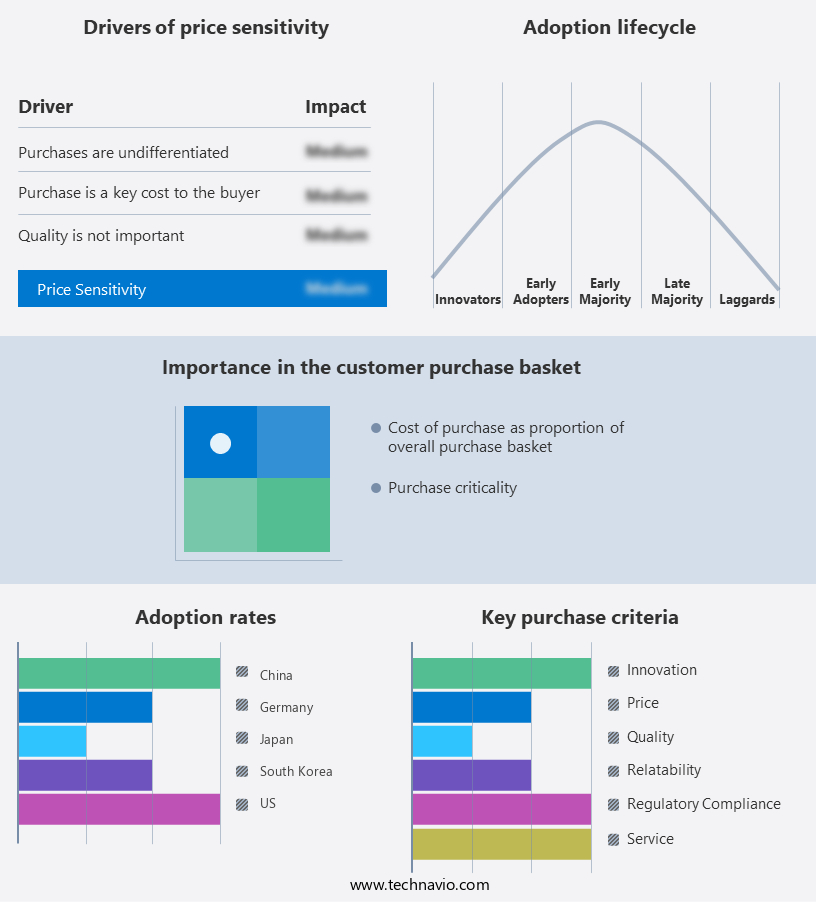
The HVAC test instruments market forecasting report includes the adoption lifecycle of the market, covering from the innovator's stage to the laggard's stage. It focuses on adoption rates in different regions based on penetration. Furthermore, the HVAC test instruments market report also includes key purchase criteria and drivers of price sensitivity to help companies evaluate and develop their market growth analysis strategies.
Customer Landscape
Key Companies & Market Insights
Companies are implementing various strategies, such as strategic alliances, HVAC test instruments market forecast, partnerships, mergers and acquisitions, geographical expansion, and product/service launches, to enhance their presence in the industry.
Amprobe (Fluke Corporation) - This company specializes in providing advanced HVAC testing instruments, including multimeters, manometers, and tachometers, for accurate and efficient system analysis.
The industry research and growth report includes detailed analyses of the competitive landscape of the market and information about key companies, including:
- Amprobe (Fluke Corporation)
- Appion Inc.
- Bacharach Inc.
- CPS Products Inc.
- Dwyer Instruments Inc.
- Extech Instruments (FLIR Systems)
- Fieldpiece Instruments Inc.
- Fluke Corporation
- INFICON Holding AG
- Kane International Ltd.
- KIMO Instruments
- Klein Tools Inc.
- Megger Group Limited
- Sauermann Group
- Supco (Sealed Unit Parts Co. Inc.)
- Testo SE & Co. KGaA
- Trotec GmbH
- TSI Incorporated
- UEi Test Instruments
- Yellow Jacket (Ritchie Engineering)
Qualitative and quantitative analysis of companies has been conducted to help clients understand the wider business environment as well as the strengths and weaknesses of key industry players. Data is qualitatively analyzed to categorize companies as pure play, category-focused, industry-focused, and diversified; it is quantitatively analyzed to categorize companies as dominant, leading, strong, tentative, and weak.
Recent Development and News in HVAC Test Instruments Market
- In January 2024, Honeywell International Inc. launched the Model CP750 Portable Emissions Analyzer, expanding its portfolio of HVAC test instruments. This new product is designed to help customers measure and manage emissions from heating and cooling systems, aligning with growing regulations on energy efficiency and environmental impact (Honeywell press release).
- In March 2024, Schneider Electric and Sensirion AG announced a strategic partnership to integrate Sensirion's sensing solutions into Schneider Electric's EcoStruxure platform. This collaboration aims to enhance HVAC system performance and energy efficiency through real-time monitoring and analytics (Schneider Electric press release).
- In May 2024, Fluke Corporation, a Fortive company, acquired Sensepoint, a leading provider of portable gas detection instruments. This acquisition strengthens Fluke's offerings in the market, enabling the company to expand its presence in the gas detection segment (Fortive press release).
- In February 2025, the European Union passed the new Energy Performance of Buildings Directive (EPBD), which includes stricter energy efficiency requirements for HVAC systems. This regulatory development creates opportunities for HVAC test instrument manufacturers to provide solutions that help building owners and operators meet these new standards (European Parliament press release).
Research Analyst Overview
- The market demonstrates continuous evolution, driven by the expanding applications across various sectors, including commercial, industrial, and residential. Static pressure and airflow rate testing play crucial roles in optimizing HVAC system performance, while refrigeration testing ensures chiller efficiency and refrigerant purity. Safety regulations mandate regular smoke testing, carbon monoxide detector inspections, and ventilation testing to maintain indoor air quality. HVAC troubleshooting relies on advanced testing equipment calibration for accurate results. For instance, a leading industrial facility reported a 15% increase in energy savings after implementing regular air handler testing, coil cleaning, and heat exchanger inspections.
- Industry growth is anticipated to reach 5% annually, fueled by the increasing demand for energy-efficient HVAC systems and stringent safety regulations. HVAC inspection checklists, boiler efficiency testing, compressor testing, dew point analysis, and condensate performance assessments are essential components of this dynamic market.
Dive into Technavio's robust research methodology, blending expert interviews, extensive data synthesis, and validated models for unparalleled HVAC Test Instruments Market insights. See full methodology.
|
Market Scope |
|
|
Report Coverage |
Details |
|
Page number |
201 |
|
Base year |
2024 |
|
Historic period |
2019-2023 |
|
Forecast period |
2025-2029 |
|
Growth momentum & CAGR |
Accelerate at a CAGR of 7% |
|
Market growth 2025-2029 |
USD 237.9 million |
|
Market structure |
Fragmented |
|
YoY growth 2024-2025(%) |
6.1 |
|
Key countries |
US, Canada, Germany, UK, Italy, France, China, India, Japan, Egypt, Oman, Argentina, UAE, and Brazil |
|
Competitive landscape |
Leading Companies, Market Positioning of Companies, Competitive Strategies, and Industry Risks |
What are the Key Data Covered in this HVAC Test Instruments Market Research and Growth Report?
- CAGR of the HVAC Test Instruments industry during the forecast period
- Detailed information on factors that will drive the growth and forecasting between 2025 and 2029
- Precise estimation of the size of the market and its contribution of the industry in focus to the parent market
- Accurate predictions about upcoming growth and trends and changes in consumer behaviour
- Growth of the market across APAC, North America, Europe, Middle East and Africa, and South America
- Thorough analysis of the market's competitive landscape and detailed information about companies
- Comprehensive analysis of factors that will challenge the HVAC test instruments market growth of industry companies
We can help! Our analysts can customize this HVAC test instruments market research report to meet your requirements.
 RIA -
RIA - 
