



Peptide Therapeutics Market Size 2024-2028
The peptide therapeutics market size is forecast to increase by USD 17.85 billion at a CAGR of 10.03% between 2023 and 2028.
- Peptide therapeutics represent a significant segment of the pharmaceutical industry, driven by the increasing prevalence of various diseases and the resulting demand for innovative treatments. One of the key trends in this market is the rising number of collaborations between industry players and research institutions for research and development (R&D) activities. However, the market also faces challenges such as complexities in manufacturing, storage conditions, distribution policies, and high costs.
- These factors necessitate the need for advanced technologies and strategies to address these challenges and ensure the successful commercialization of peptide-based therapies. Additionally, the increasing burden of chronic diseases, particularly in North America, is expected to fuel market growth Overall, the market is poised for steady growth, driven by these trends and challenges.
What will be the Size of the Peptide Therapeutics Market During the Forecast Period?
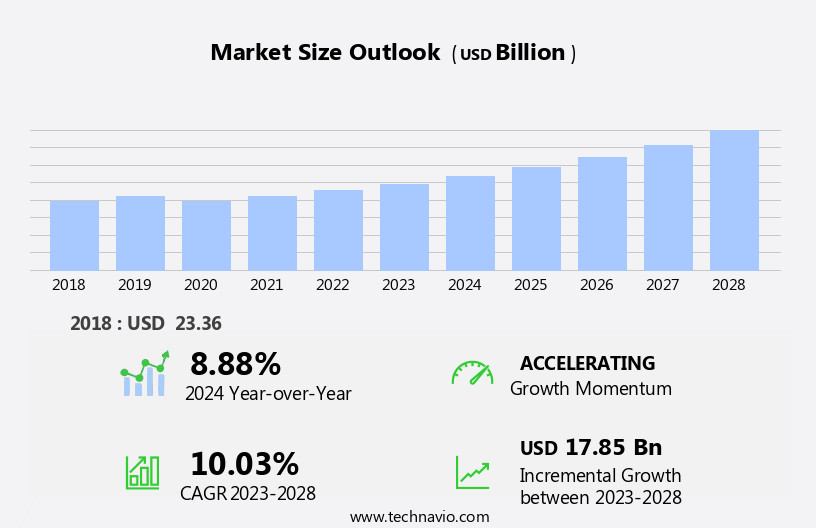
- The market encompasses a diverse range of applications, including oral peptide delivery systems, peptide-based therapeutic vaccines, and various disease indications such as cancer, metabolic disorders like diabetes and obesity, hormonal therapy, osteoarthritis, and osteoporosis. This market caters to the growing demand for novel drugs and interventions in managing chronic diseases, particularly in areas like oncology and biologics. Peptide-based therapeutics offer several advantages, including target specificity and low toxicity, making them attractive alternatives to small molecule-based interventions. Peptide therapeutics are increasingly being explored for the treatment of conditions like smoking, alcohol abuse, and high cholesterol. The market is witnessing significant growth due to the clinical benefits of peptide-based drugs, which can improve patient outcomes and quality of life.
- Clinical investigation continues to uncover new leads and potential applications for peptide therapeutics, making this an exciting and dynamic area of research and development In the pharmaceutical industry.
How is this Peptide Therapeutics Industry segmented and which is the largest segment?
The peptide therapeutics industry research report provides comprehensive data (region-wise segment analysis), with forecasts and estimates in "USD billion" for the period 2024-2028, as well as historical data from 2018-2022 for the following segments.
- Route Of Administration
- Parenteral
- Oral
- Others
- Geography
- North America
- Canada
- US
- Europe
- Germany
- UK
- Asia
- China
- Rest of World (ROW)
- North America
By Route Of Administration Insights
- The parenteral segment is estimated to witness significant growth during the forecast period.
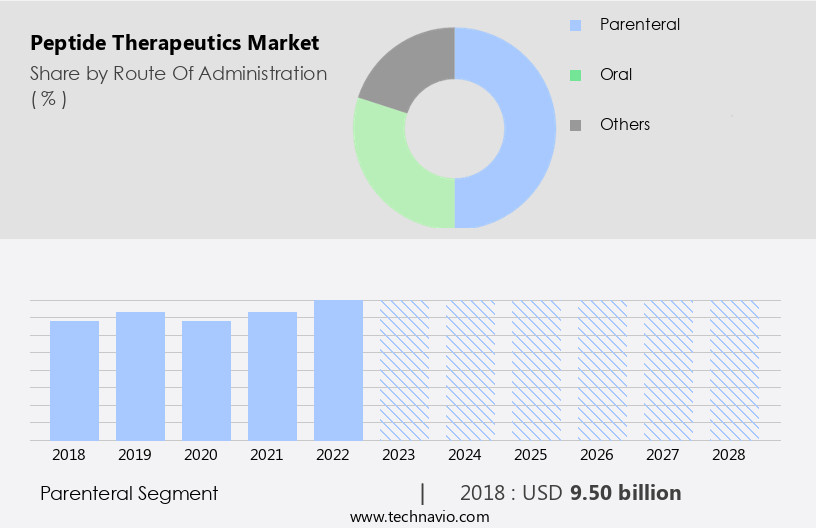
The parenteral segment is estimated to witness significant growth during the forecast period. Peptide therapeutics have gained significant attention in the healthcare industry due to their potential to treat various chronic diseases, including cancer, metabolic disorders, hormonal therapy for diabetes and obesity, osteoarthritis, and osteoporosis. The oral delivery of peptide-based therapeutics remains a challenge due to their instability and degradation in the gastrointestinal tract. Consequently, the parenteral route, which involves administering drugs through injectable routes, has emerged as the most popular route of administration for peptide therapeutics.
Further, the market for peptide therapeutics is expected to grow significantly due to the increasing prevalence of chronic diseases and the development of novel drugs for their treatment. In the field of oncology, peptide therapeutics have shown potential in treating infectious diseases. The development of peptide therapeutics for infectious diseases is a growing area of research, with a focus on overcoming insolubility issues and improving stability. The use of peptide therapeutics in disease management is expected to expand, offering new treatment options for patients.
Get a glance at the Peptide Therapeutics Industry report of share of various segments Request Free Sample
The Parenteral segment was valued at USD 9.50 billion in 2018 and showed a gradual increase during the forecast period.
Regional Analysis
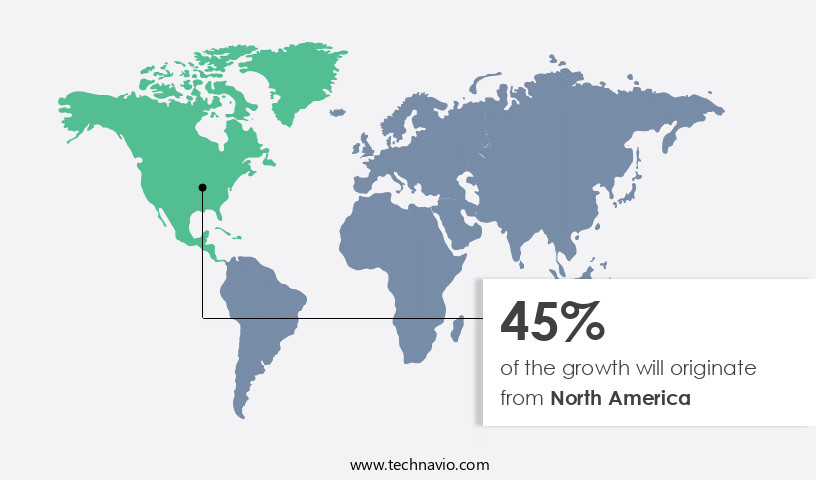
- North America is estimated to contribute 45% to the growth of the global market during the forecast period.
Technavio's analysts have elaborately explained the regional trends and drivers that shape the market during the forecast period.
For more insights on the market share of various regions, Request Free Sample
Peptide therapeutics represent a significant segment withIn the biotech sector, with North America leading the global market due to a high number of FDA approvals, an increasing pipeline of peptide-based drugs, and advanced healthcare infrastructure. Notable disease indications include cancer, metabolic disorders such as Type 2 diabetes and obesity, hormonal therapy, and chronic diseases. Innovative approaches like peptide-drug conjugates, oral peptide delivery, and peptide-based therapeutic vaccines are driving market growth. Peptide synthesis advancements, such as solid-phase reactors, chemical functionalization, and 3D conformational structures, enable the production of long peptides and recombinant peptides. Challenges like insolubility issues and expensive manufacturing equipment are being addressed through creative solutions.
The market caters to various segments, including oncology, infectious diseases, metabolic, and cardiovascular disorders. Clinical trials are underway for novel drugs like Adlyxin, Ozempic, and Xultophy, which target the GLP-1 receptor. The market also includes parenteral and pulmonary delivery routes, hybrid technology, and parenteral and oral peptide delivery systems. CROs and CMOs play a crucial role In the development and manufacturing process.
Market Dynamics
Our researchers analyzed the data with 2023 as the base year, along with the key drivers, trends, and challenges. A holistic analysis of drivers will help companies refine their marketing strategies to gain a competitive advantage.
What are the key market drivers leading to the rise In the adoption of Peptide Therapeutics Industry?
Increasing prevalence of infectious diseases is the key driver of the market.
- Peptide therapeutics have gained significant attention In the biotech sector due to their potential in treating various chronic diseases, including cancer, metabolic disorders, hormonal therapy for diabetes and obesity, osteoarthritis, and osteoporosis. The development of oral peptide delivery systems and peptide-based therapeutic vaccines has expanded the application scope of peptide therapeutics. The metabolic segment, specifically for type 2 diabetes, has seen the approval of several peptide therapeutics, such as Adlyxin, Ozempic, and Xultophy, which act as GLP-1 receptor agonists. Peptide drug conjugates and cell penetrating peptides are innovative approaches In the market. Manufacturing peptides involves synthesis using solid-phase reactors, chemical functionalization on resins, and purification processes, which can generate waste.
- Novel drugs In the pipeline include peptide therapy products from drug developers for various disease indications. The clinical benefits of peptide-based drugs include high target specificity and low toxicity profiles. The manufacturing process, however, can be expensive due to the need for manufacturing equipment and the insolubility issues associated with long peptides. The market caters to various segments, including oncology, infectious diseases, and cardiovascular and respiratory disorders. Clinical trials are ongoing for pipeline molecules, and CROs and CMOs are involved In the manufacturing process. The FDA has granted orphan drug designation for several peptide therapeutics, highlighting their potential impact on disease management. Despite the clinical benefits, challenges remain, such as dosing frequency and API stability. The market is expected to grow as innovative approaches are developed to address these challenges.
What are the market trends shaping the Peptide Therapeutics Industry?
Collaborations for R and D is the upcoming market trend.
- The market has experienced significant growth due to the increasing number of FDA approvals for peptide-based drugs In the treatment of various chronic diseases. In the metabolic segment, drugs like Adlyxin, Ozempic, and Xultophy, which are GLP-1 receptor agonists, have gained approval for the treatment of Type 2 diabetes. Peptide-drug conjugates have also gained popularity In the cancer segment, with innovative companies developing these conjugates for improved target specificity and low toxicity. In the oncology sector, peptide-based therapeutic vaccines are being explored for their potential in cancer treatment. The biotech sector is also investing heavily In the development of peptide therapeutics for the treatment of metabolic disorders, hormonal therapy for diabetes and obesity, osteoarthritis, and osteoporosis.
- The use of oral peptide delivery systems is gaining traction to overcome insolubility issues and improve patient compliance. The manufacturing process of peptide therapeutics involves synthesizing long peptides using solid-phase reactors and purification through chemical functionalization on resins. The purification process can generate significant waste, making it essential to optimize the synthesis and purification process to minimize waste generation. Creative Peptides, a leading player In the peptide therapeutics industry, employs advanced technologies to ensure API stability and target affinity while maintaining low toxicity profiles. The high cost of manufacturing peptide therapeutics using expensive manufacturing equipment and the complex nature of the synthesis process have led some companies to outsource manufacturing to contract research organizations (CROs) and contract manufacturing organizations (CMOs) to reduce costs and improve efficiency.
- The hybrid technology segment, which combines peptide therapeutics with small molecule-based interventions and pharmacological interventions, is expected to offer significant clinical benefits In the treatment of cardiovascular disorders and respiratory diseases. The development of novel drugs In the market is a collaborative effort between drug developers and academic institutions. The use of cell penetrating peptides and peptide drug conjugates is also gaining popularity In the market due to their potential to overcome insolubility issues and improve drug delivery methods. The clinical investigation of these novel leads is ongoing, with several pipeline molecules in various stages of clinical trials. In conclusion, the market is expected to continue its growth trajectory due to the increasing number of clinical benefits, target specificity, and low toxicity profiles of peptide-based drugs. The market dynamics are driven by the collaboration between market players, the development of novel drugs, and the increasing focus on disease management for various chronic diseases, including cancer, metabolic disorders, and cardiovascular disorders.
What challenges does the Peptide Therapeutics Industry face during its growth?
Complexities in manufacturing, storage conditions, distribution policies, and high cost is a key challenge affecting the industry growth.
- Peptide therapeutics, derived from proteins, offer innovative solutions for managing various chronic diseases, including cancer, metabolic disorders like diabetes and obesity, osteoarthritis, and osteoporosis. The complex manufacturing process involves steps such as fermentation, clarification, separation, and purification. The purification process is particularly challenging due to the subtle differences among molecules and the high risk of contamination. Advanced analytical methods like high-performance liquid chromatography (HPLC) and spectroscopy are employed to ensure product quality. Long peptides require chemical functionalization using solid-phase reactors and resins for synthesis, which can generate significant waste. Novel drugs like Adlyxin, Ozempic, and Xultophy, which target the GLP-1 receptor, have received FDA approvals In the diabetes segment.
- Peptide-drug conjugates, cell penetrating peptides, and peptide-based therapeutic vaccines are other innovative segments in this market. Despite the challenges, the biotech sector continues to invest in peptide therapeutics due to their target specificity, low toxicity, and clinical benefits. However, expensive manufacturing equipment and insolubility issues remain significant hurdles. The metabolic segment dominates the market, but the oncology and infectious diseases segments are expected to grow rapidly. CROs and CMOs play a crucial role in outsourcing manufacturing to ensure API stability, target affinity, and toxicity profiles meet regulatory requirements.
Exclusive Customer Landscape
The peptide therapeutics market forecasting report includes the adoption lifecycle of the market, covering from the innovator's stage to the laggard's stage. It focuses on adoption rates in different regions based on penetration. Furthermore, the peptide therapeutics market report also includes key purchase criteria and drivers of price sensitivity to help companies evaluate and develop their market growth analysis strategies.

Customer Landscape
Key Companies & Market Insights
Companies are implementing various strategies, such as strategic alliances, peptide therapeutics market forecast, partnerships, mergers and acquisitions, geographical expansion, and product/service launches, to enhance their presence In the industry.
Almac Group Ltd. - Peptide therapeutics, a specialized category of therapeutic proteins, play a pivotal role in treating various diseases, including cancer and HIV. These proteins, derived from natural sources or synthetically produced, exhibit high specificity and efficacy in modulating biological processes. Their unique properties enable them to interact with specific targets, making them promising candidates for developing novel therapeutics. The global market for peptide therapeutics continues to expand, driven by advancements in protein engineering, production technologies, and increasing demand for effective treatments for complex diseases.
The industry research and growth report includes detailed analyses of the competitive landscape of the market and information about key companies, including:
- Almac Group Ltd.
- AmbioPharm Inc.
- Amgen Inc.
- AstraZeneca Plc
- Bachem AG
- Bristol Myers Squibb Co.
- Corden Pharma International GmbH
- Eli Lilly and Co.
- Ever Pharma
- F. Hoffmann La Roche Ltd.
- GlaxoSmithKline Plc
- Ipsen Pharma
- Lonza Group Ltd.
- Novartis AG
- Novo Nordisk AS
- PeptiDream Inc.
- Pfizer Inc.
- PolyPeptide Group
- Sanofi SA
- Takeda Pharmaceutical Co. Ltd.
- Teva Pharmaceutical Industries Ltd.
- Worg pharma
Qualitative and quantitative analysis of companies has been conducted to help clients understand the wider business environment as well as the strengths and weaknesses of key industry players. Data is qualitatively analyzed to categorize companies as pure play, category-focused, industry-focused, and diversified; it is quantitatively analyzed to categorize companies as dominant, leading, strong, tentative, and weak.
Research Analyst Overview
Peptide therapeutics have emerged as a promising area of research and development In the biotech sector, offering potential solutions for various chronic diseases. These short-chain proteins, derived from natural sources or synthesized chemically, exhibit unique properties such as high target specificity and low toxicity, making them attractive candidates for treating metabolic disorders, hormonal therapy, oncology, and infectious diseases, among others. Peptide-based therapeutic vaccines and oral peptide delivery systems are two innovative approaches in peptide therapeutics. The former involves using peptides to stimulate an immune response against specific antigens, while the latter aims to deliver peptides orally for systemic absorption, bypassing the need for parenteral injections.
Cancer, metabolic disorders, diabetes, obesity, osteoarthritis, and osteoporosis are some of the major disease areas where peptide therapeutics are being explored. Peptides have shown potential in managing chronic diseases like type 2 diabetes, with drugs like Adlyxin, Ozempic, and Xultophy demonstrating clinical benefits. The biologics market, which includes peptide therapeutics, is experiencing significant growth due to the increasing demand for personalized medicine and targeted treatments. Peptide therapeutics offer several advantages over small molecule-based interventions and pharmacological interventions, such as improved target specificity and reduced side effects. The synthesis of peptides involves several steps, including solid-phase reactors, purification, chemical functionalization, resins, and synthesizing peptides.
The purification process is crucial to ensure API stability and target affinity, while waste generation is a concern due to the large quantities of peptides produced. Long peptides, which can be challenging to synthesize and purify, are a focus of ongoing research. Novel drugs like peptide-drug conjugates and cell penetrating peptides are being developed to address insolubility issues and improve drug delivery methods. The market comprises several segments, including the metabolic segment, cancer segment, innovative segment, generic segment, and in-house manufacturing segment. Outsourcing manufacturing segment is also gaining popularity due to the expensive manufacturing equipment required for peptide production.
The pulmonary route segment and hybrid technology segment are emerging areas in peptide therapeutics, with potential applications in cardiovascular disorders and respiratory diseases. Peptide-based drugs are undergoing clinical investigation for various target disease indications, with a growing pipeline of molecules in different stages of development. The FDA approvals for peptide therapeutics have been increasing, reflecting the growing interest and confidence in this field. Peptide drug conjugates and cell penetrating peptides are some of the innovative approaches that have received recent approvals. The clinical benefits of peptide therapeutics are significant, with potential to revolutionize disease management in various therapeutic areas.
The low toxicity and high target specificity make peptide-based drugs an attractive alternative to traditional small molecule drugs. Despite the promising potential, peptide therapeutics face challenges, including toxicity profiles, dosing frequency, and CROs. Addressing these challenges will be crucial to unlocking the full potential of peptide therapeutics and bringing new treatments to market.
|
Market Scope |
|
|
Report Coverage |
Details |
|
Page number |
148 |
|
Base year |
2023 |
|
Historic period |
2018-2022 |
|
Forecast period |
2024-2028 |
|
Growth momentum & CAGR |
Accelerate at a CAGR of 10.03% |
|
Market growth 2024-2028 |
USD 17.85 billion |
|
Market structure |
Fragmented |
|
YoY growth 2023-2024(%) |
8.88 |
|
Key countries |
US, Germany, China, UK, and Canada |
|
Competitive landscape |
Leading Companies, Market Positioning of Companies, Competitive Strategies, and Industry Risks |
What are the Key Data Covered in this Peptide Therapeutics Market Research and Growth Report?
- CAGR of the Peptide Therapeutics industry during the forecast period
- Detailed information on factors that will drive the growth and forecasting between 2024 and 2028
- Precise estimation of the size of the market and its contribution of the industry in focus to the parent market
- Accurate predictions about upcoming growth and trends and changes in consumer behaviour
- Growth of the market across North America, Europe, Asia, and Rest of World (ROW)
- Thorough analysis of the market's competitive landscape and detailed information about companies
- Comprehensive analysis of factors that will challenge the peptide therapeutics market growth of industry companies
We can help! Our analysts can customize this peptide therapeutics market research report to meet your requirements.