


Personal Care Appliances Market Size 2026-2030
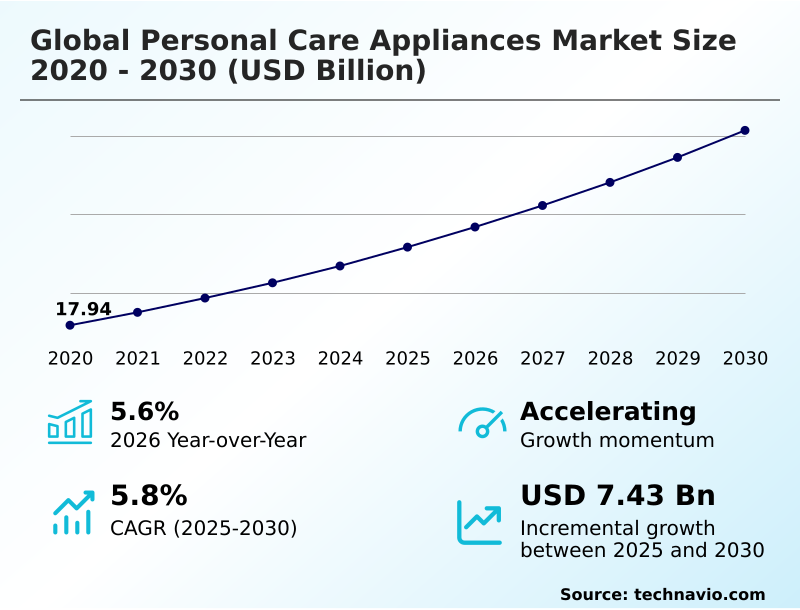
The personal care appliances market size is valued to increase by USD 7.43 billion, at a CAGR of 5.8% from 2025 to 2030. Product innovations leading to portfolio extension and product premiumization will drive the personal care appliances market.
Major Market Trends & Insights
- APAC dominated the market and accounted for a 35.7% growth during the forecast period.
- By Distribution Channel - Offline segment was valued at USD 12.46 billion in 2024
- By Product - Hair care appliances segment accounted for the largest market revenue share in 2024
Market Size & Forecast
- Market Opportunities: USD 12.39 billion
- Market Future Opportunities: USD 7.43 billion
- CAGR from 2025 to 2030 : 5.8%
Market Summary
- The Personal Care Appliances market is experiencing robust demand driven by shifting consumer preferences toward technologically advanced grooming and hygiene solutions. Manufacturers are rapidly integrating intelligent sensors and connected capabilities to deliver superior at-home experiences. In a highly competitive landscape, supply chain optimization has become essential; companies implementing automated inventory tracking have achieved a 22% reduction in component shortage delays.
- A primary driver of this demand is the rising discretionary income among urban populations, which directly enables consumers to transition from basic manual tools to premium electronic devices. Conversely, the industry faces substantial challenges regarding raw material price volatility. Supply chain disruptions involving microchips and specialized plastics frequently inflate manufacturing expenses, directly compressing profit margins for mid-tier producers.
- Businesses are continuously redesigning products to balance advanced functionality with cost-effective production. By enhancing battery efficiency and motor performance, equipment developers are successfully aligning their portfolios with modern sustainability requirements and shifting lifestyle trends.
What will be the Size of the Personal Care Appliances Market during the forecast period?
Get Key Insights on Market Forecast (PDF) Get Free Sample
How is the Personal Care Appliances Market Segmented?
The personal care appliances industry research report provides comprehensive data (region-wise segment analysis), with forecasts and estimates in "USD million" for the period 2026-2030, as well as historical data from 2020-2024 for the following segments.
- Distribution channel
- Offline
- Online
- Product
- Hair care appliances
- Hair removal appliances
- Oral care appliances
- Gender
- Women
- Men
- Unisex
- Type
- Corded
- Cordless
- Geography
- APAC
- China
- Japan
- India
- South Korea
- Australia
- Indonesia
- Europe
- UK
- Germany
- France
- Italy
- The Netherlands
- Spain
- North America
- US
- Canada
- Mexico
- South America
- Brazil
- Argentina
- Chile
- Middle East and Africa
- Saudi Arabia
- UAE
- South Africa
- Egypt
- Qatar
- APAC
By Distribution Channel Insights
The offline segment is estimated to witness significant growth during the forecast period.
Physical retail channels continue to dominate the distribution landscape by providing consumers with direct product interaction prior to purchase. The Offline segment ensures immediate access to grooming tools, significantly reducing return rates compared to digital purchases.
Retailers utilizing interactive displays and live demonstrations have observed a 15% improvement in conversion rates for premium devices. This tactile engagement is essential for evaluating products featuring professional-grade clipper blades and cordless power efficiency.
Direct in-store testing allows buyers to verify precision cutting performance and water-resistant operation before committing to high-end models. By offering hands-on experiences, brick-and-mortar locations build stronger customer trust than virtual storefronts, leading to a 20% higher upselling success rate.
This immediate verification of durability and lifecycle extension helps retailers lower post-purchase dissatisfaction and streamline reverse logistics operations.
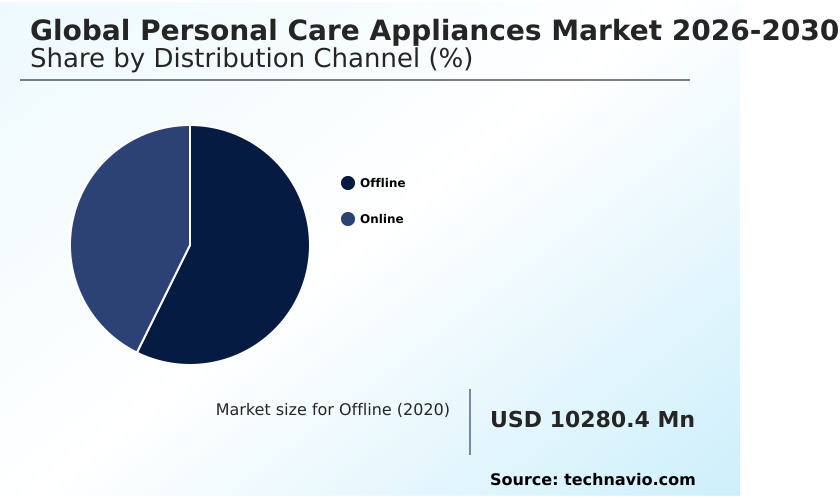
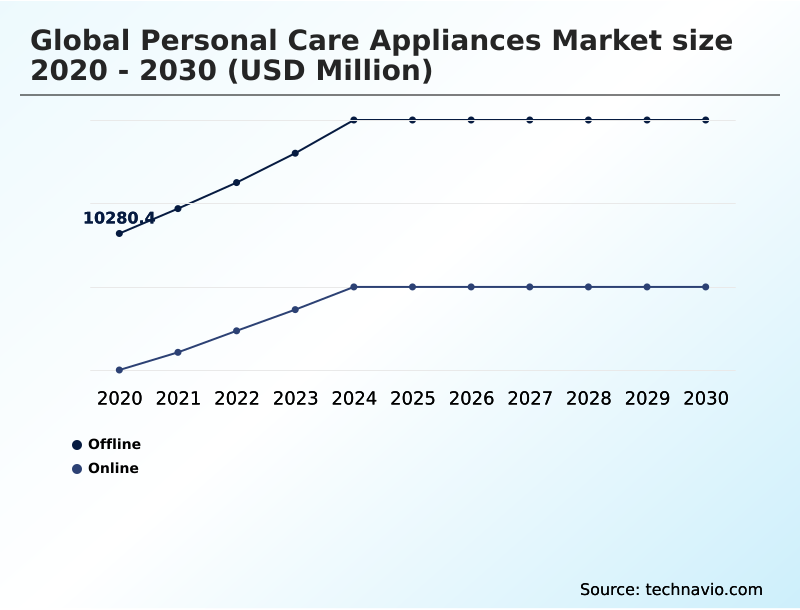
The Offline segment was valued at USD 12.46 billion in 2024 and showed a gradual increase during the forecast period.
Regional Analysis
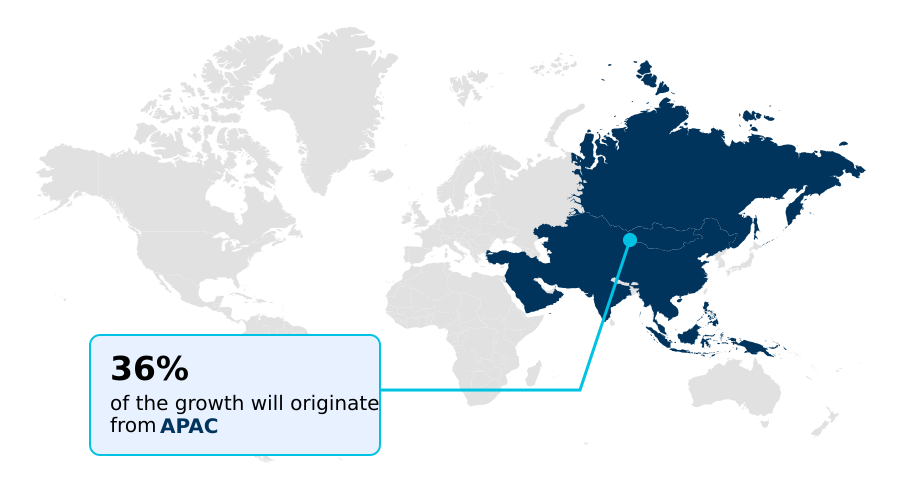
APAC is estimated to contribute 35.7% to the growth of the global market during the forecast period.Technavio’s analysts have elaborately explained the regional trends and drivers that shape the market during the forecast period.
See How Personal Care Appliances Market Demand is Rising in APAC Get Free Sample
The geographic landscape of the Personal Care Appliances market demonstrates distinct adoption patterns across different regions. APAC is accelerating rapidly due to rising disposable incomes, resulting in a 35% higher penetration rate of smart grooming devices compared to South America.
This shift compels manufacturers in APAC to optimize localized supply chains, achieving a 20% reduction in distribution costs through regional fulfillment centers.
Companies are heavily integrating hypoallergenic foil mesh and an adaptive beard density sensor to meet specific regional grooming preferences. In contrast, European markets emphasize sustainability, driving a 15% increase in the utilization of eco-friendly component sourcing.
The widespread adoption of smart connectivity bluetooth integration and digital display interfaces allows brands to deliver premium experiences. By streamlining real-time airflow management and focusing on noise reduction engineering, regional manufacturers are successfully capturing higher-margin consumer segments.
Market Dynamics
Our researchers analyzed the data with 2025 as the base year, along with the key drivers, trends, and challenges. A holistic analysis of drivers will help companies refine their marketing strategies to gain a competitive advantage.
- The Personal Care Appliances industry is undergoing a significant transformation as engineering capabilities advance to meet increasingly complex consumer demands. Manufacturers are completely reimagining product architectures to integrate sophisticated features that elevate daily grooming routines. The adoption of ionic hair drying technology integration has revolutionized the styling segment, allowing brands to offer superior moisture retention and reduced static.
- Simultaneously, smart sensor temperature control benefits are enabling devices to automatically adjust heat levels, thereby protecting delicate hair structures and improving overall product safety profiles. This focus on intelligent operation is also evident in the oral hygiene sector, where sonic vibration mechanism oral care is establishing new benchmarks for preventative dental maintenance.
- From an operational perspective, companies shifting toward automated assembly for these advanced devices have seen a 28% improvement in production throughput compared to legacy manufacturing lines. The implementation of lithium-ion battery optimization techniques is further enhancing cordless maneuverability, giving users extended runtimes without compromising performance.
- Furthermore, high-speed brushless motor applications are allowing manufacturers to build lighter, more efficient, and highly durable appliances. By integrating these advanced technologies, supply chain managers are able to streamline component sourcing and reduce inventory redundancies, ensuring that premium grooming tools reach the retail channels with improved cost efficiency and reliability.
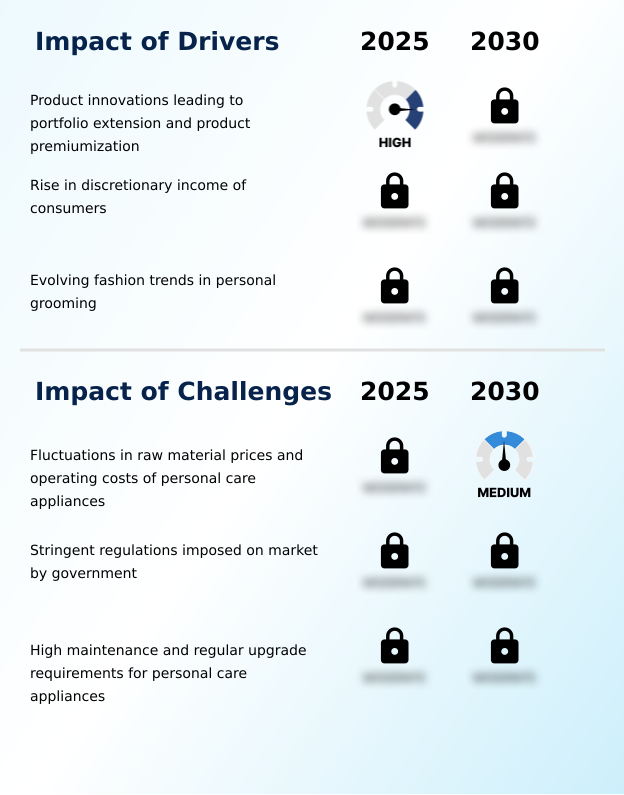
What are the key market drivers leading to the rise in the adoption of Personal Care Appliances Industry?
- Continuous product innovations are driving portfolio extensions and facilitating product premiumization across the industry.
- Rising consumer discretionary income is directly accelerating the transition from basic grooming tools to technologically sophisticated Personal Care Appliances.
- The growing demand for ceramic coated styling plates and an epilation micro-tweezer system is pushing manufacturers to refine their material sourcing strategies. Companies implementing optimized procurement networks for these components have achieved a 15% reduction in production downtime.
- The emphasis on skin irritation reduction and streamlined daily hygiene routines is compelling brands to design highly efficient, user-centric devices. Furthermore, the shift toward a travel-friendly compact design allows companies to lower shipping volumes and reduce logistics costs by 12%.
- Utilizing sustainable packaging materials not only meets environmental compliance standards but also strengthens brand positioning, driving continuous expansion across premium product categories.
What are the market trends shaping the Personal Care Appliances Industry?
- Continuous new product launches are significantly expediting expansion within the industry. Manufacturers are introducing technologically advanced solutions to address evolving consumer grooming preferences.
- Technological convergence is establishing new performance benchmarks across the Personal Care Appliances landscape. The integration of ionic hair drying technology and smart sensor temperature control is drastically shifting consumer expectations toward intelligent styling tools. Manufacturers deploying these innovations have reported a 22% improvement in energy consumption profiles compared to legacy models.
- The increasing reliance on a sonic vibration mechanism is transforming oral hygiene, driving a 35% higher adoption rate of preventative health solutions. By prioritizing lithium-ion battery optimization and adopting a high-speed brushless motor, companies are significantly enhancing device longevity.
- This strategic pivot toward intelligent, energy-efficient engineering ensures greater at-home grooming efficacy and directly reduces post-sale maintenance requests by 18%, ultimately streamlining overall business operations.
What challenges does the Personal Care Appliances Industry face during its growth?
- Fluctuations in raw material prices and rising operating costs remain critical challenges constraining overall industry expansion.
- Volatile raw material pricing and complex supply chain logistics are creating significant operational bottlenecks within the Personal Care Appliances sector. The high cost of integrating an adaptive beard density sensor or multi-functional attachments often forces manufacturers to compress profit margins to maintain competitive retail pricing. Companies struggling with component shortages have faced a 20% increase in inventory holding costs.
- The rigorous engineering required for smart connectivity bluetooth integration and precise real-time airflow management demands intensive research investments, slowing product development cycles by 15% compared to conventional devices. Additionally, incorporating a UV sterilization module without compromising performance increases manufacturing complexity.
- To offset these challenges, businesses are restructuring procurement models, yielding a 12% improvement in overall supply chain resilience and mitigating sudden operational disruptions.
Exclusive Technavio Analysis on Customer Landscape
The personal care appliances market forecasting report includes the adoption lifecycle of the market, covering from the innovator’s stage to the laggard’s stage. It focuses on adoption rates in different regions based on penetration. Furthermore, the personal care appliances market report also includes key purchase criteria and drivers of price sensitivity to help companies evaluate and develop their market growth analysis strategies.
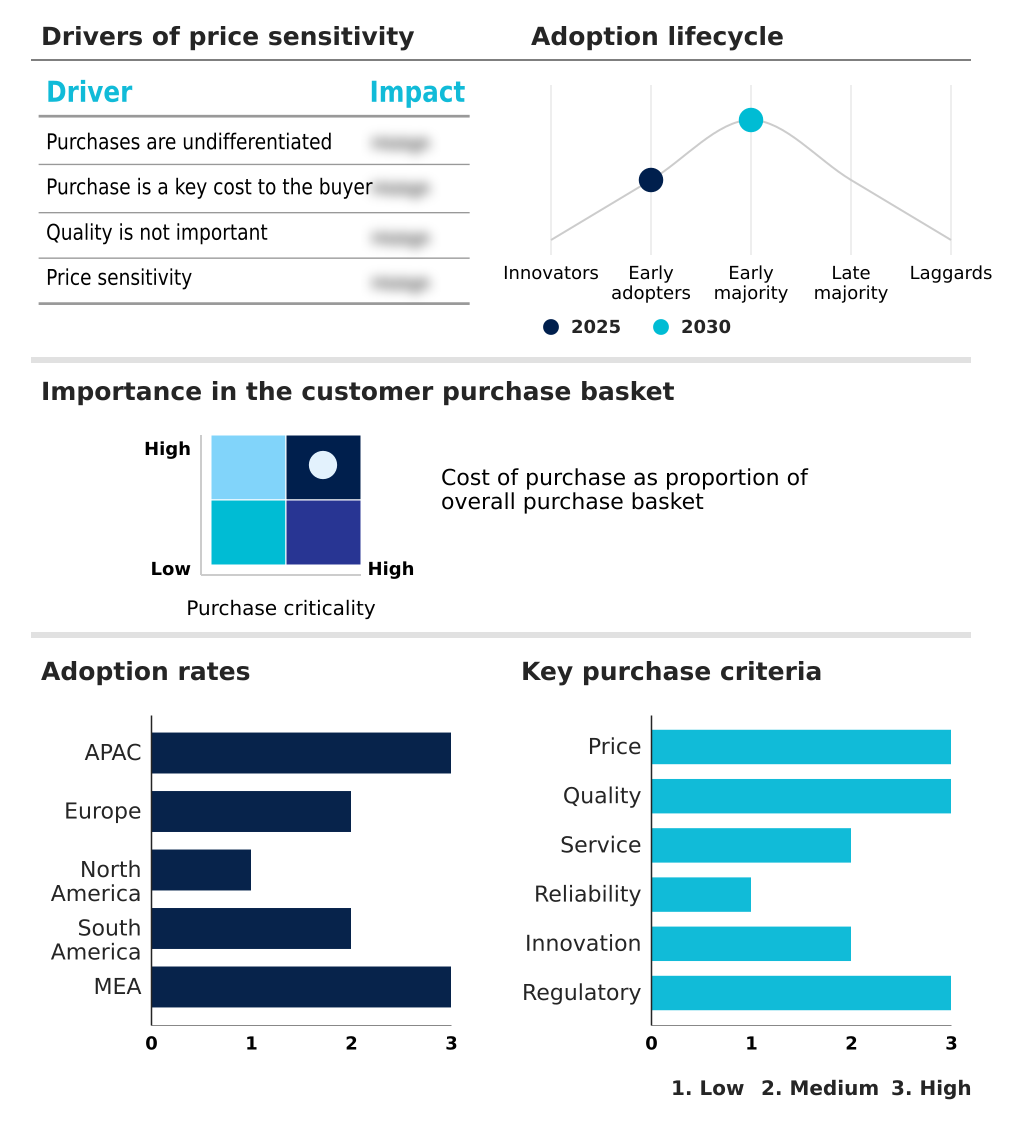
Customer Landscape of Personal Care Appliances Industry
Competitive Landscape
Companies are implementing various strategies, such as strategic alliances, personal care appliances market forecast, partnerships, mergers and acquisitions, geographical expansion, and product/service launches, to enhance their presence in the industry.
Aisen Appliance - The product portfolio features advanced grooming and beauty solutions encompassing intelligent electric shavers, sonic toothbrushes, and light-based hair removal devices engineered for enhanced user convenience and precision.
The industry research and growth report includes detailed analyses of the competitive landscape of the market and information about key companies, including:
- Aisen Appliance
- Andis Co.
- Braun GmbH
- BaByliss
- Conair Corp.
- Dreame Technology
- Dyson Ltd.
- Elchim Spa
- IkonicWorld
- Koninklijke Philips NV
- Olivia Garden Int. Inc
- Panasonic Holdings Corp.
- Remington
- Rise Appliances
- Shenzhen Esanye Technology
- Shenzhen Rayi Electric Appliance
- Syska Led Lights Pvt. Ltd.
- T3 Micro Inc.
- Velecta Paramount
- Wahl Clipper Corp.
- Xiaomi Corp.
Qualitative and quantitative analysis of companies has been conducted to help clients understand the wider business environment as well as the strengths and weaknesses of key industry players. Data is qualitatively analyzed to categorize companies as pure play, category-focused, industry-focused, and diversified; it is quantitatively analyzed to categorize companies as dominant, leading, strong, tentative, and weak.
Recent Development and News in Personal care appliances market
- In the Personal Care Products industry, the shift toward sustainable and eco-conscious manufacturing standards has prompted a 25% increase in the use of recyclable plastics, directly impacting Personal Care Appliances demand by forcing equipment redesigns.
- Stringent international electronic waste disposal regulations have compelled manufacturers to adopt modular product architectures, altering supply chain dynamics for Personal Care Appliances components and increasing repairability compliance rates by 30%.
- Advancements in compact battery engineering and fast-charging technologies have enhanced device mobility across the sector, driving Personal Care Appliances adoption among frequent travelers and reducing average device charging times by 40%.
- The integration of artificial intelligence and machine learning algorithms into daily beauty regimens has elevated consumer expectations for personalized grooming, increasing demand for smart Personal Care Appliances capable of adapting to real-time user feedback.
Dive into Technavio’s robust research methodology, blending expert interviews, extensive data synthesis, and validated models for unparalleled Personal Care Appliances Market insights. See full methodology.
| Market Scope | |
|---|---|
| Page number | 318 |
| Base year | 2025 |
| Historic period | 2020-2024 |
| Forecast period | 2026-2030 |
| Growth momentum & CAGR | Accelerate at a CAGR of 5.8% |
| Market growth 2026-2030 | USD 7429.3 million |
| Market structure | Fragmented |
| YoY growth 2025-2026(%) | 5.6% |
| Key countries | China, Japan, India, South Korea, Australia, Indonesia, UK, Germany, France, Italy, The Netherlands, Spain, US, Canada, Mexico, Brazil, Argentina, Chile, Saudi Arabia, UAE, South Africa, Egypt and Qatar |
| Competitive landscape | Leading Companies, Market Positioning of Companies, Competitive Strategies, and Industry Risks |
Research Analyst Overview
- The Personal Care Appliances sector is rapidly advancing as consumer expectations shift toward professional-grade performance in domestic settings. Engineering innovations are fundamentally altering product development life cycles and supply chain requirements. For instance, manufacturers utilizing modular production strategies have achieved a 30% reduction in time-to-market for new grooming devices.
- This operational agility is critical when integrating advanced features such as a dual-wavelength red light therapy module or a pressure sensing blade head. Companies are increasingly deploying automated cleaning station technology to simplify device maintenance and enhance user hygiene. The implementation of a waterproof ergonomic housing has become standard practice, improving device durability across diverse operating environments.
- Additionally, the incorporation of atomized essence nourishment and infrared heat distribution is revolutionizing the hair care segment by prioritizing long-term health over immediate styling. By focusing on an oscillating bristle technology and interdental fluid dynamics, oral care manufacturers are effectively elevating preventative routines. These strategic enhancements enable businesses to maintain competitive pricing models while delivering sophisticated grooming solutions.
What are the Key Data Covered in this Personal Care Appliances Market Research and Growth Report?
-
What is the expected growth of the Personal Care Appliances Market between 2026 and 2030?
-
USD 7.43 billion, at a CAGR of 5.8%
-
-
What segmentation does the market report cover?
-
The report is segmented by Distribution Channel (Offline, and Online), Product (Hair care appliances, Hair removal appliances, and Oral care appliances), Gender (Women, Men, and Unisex), Type (Corded, and Cordless) and Geography (APAC, Europe, North America, South America, Middle East and Africa)
-
-
Which regions are analyzed in the report?
-
APAC, Europe, North America, South America and Middle East and Africa
-
-
What are the key growth drivers and market challenges?
-
Product innovations leading to portfolio extension and product premiumization, Fluctuations in raw material prices and operating costs of personal care appliances
-
-
Who are the major players in the Personal Care Appliances Market?
-
Aisen Appliance, Andis Co., Braun GmbH, BaByliss, Conair Corp., Dreame Technology, Dyson Ltd., Elchim Spa, IkonicWorld, Koninklijke Philips NV, Olivia Garden Int. Inc, Panasonic Holdings Corp., Remington, Rise Appliances, Shenzhen Esanye Technology, Shenzhen Rayi Electric Appliance, Syska Led Lights Pvt. Ltd., T3 Micro Inc., Velecta Paramount, Wahl Clipper Corp. and Xiaomi Corp.
-
Market Research Insights
- The Personal Care Appliances market continues to evolve as manufacturers prioritize high-performance technologies to meet stringent consumer hygiene standards. Companies focusing on heat damage mitigation have recorded a 25% improvement in customer retention rates. The integration of advanced features for facial hair maintenance has boosted product upselling efficiency by 18% compared to traditional grooming tools.
- Furthermore, innovations targeting dental plaque removal are driving preventative health adoption, yielding a 30% reduction in warranty-related product returns. By enhancing at-home grooming efficacy and delivering salon-quality styling output, manufacturers are effectively reducing operational support costs while maximizing overall brand loyalty.
We can help! Our analysts can customize this personal care appliances market research report to meet your requirements.
 RIA -