


Polyamide Market Analysis APAC, Europe, North America, South America, Middle East and Africa - China, US, Japan, Germany, India - Size and Forecast 2024-2028

Polyamide Market Analysis APAC, Europe, North America, South America, Middle East and Africa - China, US, Japan, Germany, India - Size and Forecast 2024-2028

Published: Jul 2024 187 Pages SKU: IRTNTR74045

Market Overview at a Glance

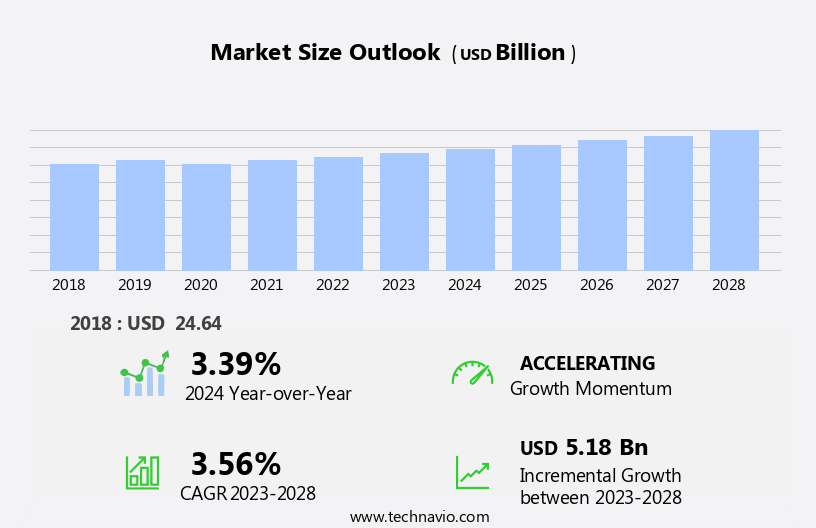
$5.18 B
Market Opportunity
3.56%
CAGR
3.39
YoY growth 2023-2024(%)

Polyamide Market Size 2024-2028

The polyamide market size is forecast to increase by USD 5.18 billion at a CAGR of 3.56% between 2023 and 2028.

  • The market is witnessing significant growth due to the superior properties and versatile nature of polyamides (PAs). These high-performance polymers offer excellent strength, toughness, and resistance to heat, chemicals, and abrasion, making them ideal for various industries such as automotive, electrical and electronics, and textiles. Furthermore, the increasing adoption of additive manufacturing technology In the production of complex parts is driving the demand for PAs. However, the market is also facing challenges from the volatility in raw material prices and its impact on the overall cost structure. Producers must closely monitor these trends and adapt their strategies to maintain competitiveness In the market.
  • In summary, the market is experiencing robust growth driven by its superior properties and expanding applications, while the challenge of price volatility in raw materials remains a significant concern.
  • What will be the Size of the Polyamide Market During the Forecast Period?
    Polyamide Market Size

     Request Free Sample

  • The market encompasses a diverse range of macromolecules, including nylons and aramids, which are widely used in various industries due to their superior mechanical and chemical properties. Engineering thermoplastics, such as polyamide 66, offer excellent wear resistance, making them indispensable in textile markets and consumer goods. In the industrial sector, polyamides find applications in electrical appliances, aerospace, building and construction, electrical and electronics, and industrial and machinery. Aramids, known for their high strength and gas permeability, are utilized in protective clothing and lightweight automobiles. Bio-based polyamides are gaining traction due to their eco-friendly nature, providing a sustainable alternative to traditional polyamides.
  • Nylons, with their silk-like feel and silk-like properties, are used in consumer goods and textiles, while wool and silk alternatives offer enhanced durability and versatility. The market is driven by the increasing demand for lightweight, high-performance materials in various industries.
  • How is this Polyamide Industry segmented and which is the largest segment?

    The polyamide industry research report provides comprehensive data (region-wise segment analysis), with forecasts and estimates in "USD billion" for the period 2024-2028, as well as historical data from 2018-2022 for the following segments.

    • Type
      • PA6
      • PA66
      • Bio-based PA
      • Specialty PA
    • End-user
      • Automotive sector
      • Electrical and electronics sector
      • Packaging sector
      • Others
    • Geography
      • APAC
        • China
        • India
        • Japan
      • Europe
        • Germany
      • North America
        • US
      • South America
        • Middle East and Africa

        By Type Insights

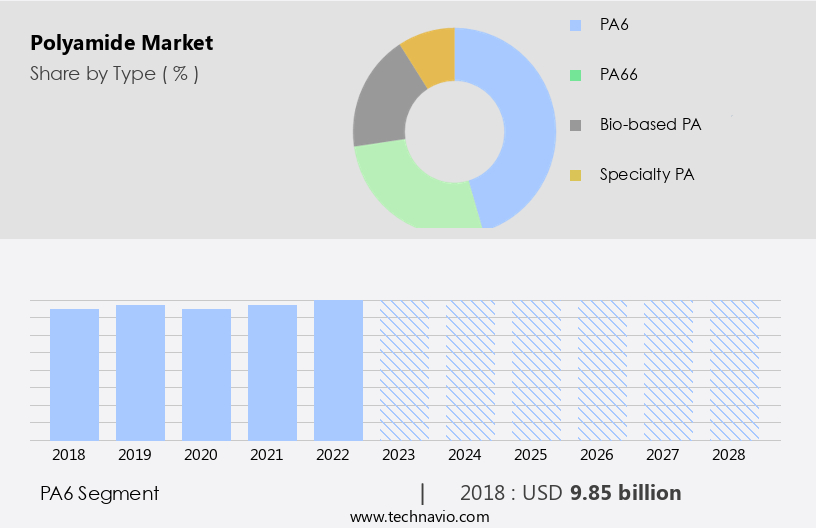
        • The pa6 segment is estimated to witness significant growth during the forecast period.

        The market is driven by the production of PA 6, primarily from caprolactam (CPL). CPL is produced through a hydrolytic polymerization process, which ensures large-scale production and control parameters. Market participants have developed proprietary methods to cater to specific end-uses, granting them a competitive edge. APAC is witnessing an increase in CPL production, fueled by the growing demand for polyamides, particularly PA 6. This trend is observed across various industries, including engineering, textiles, consumer goods, electrical appliances, and aerospace. The demand for lightweight, high-performance materials with excellent chemical resistance and mechanical qualities is driving market growth. Key applications include vehicle production, electrical insulation, and aerospace components.

        Bio-based polyamides are also gaining traction due to environmental awareness and industry life cycle considerations. The market is expected to reach significant revenue in USD, with steady growth in emerging nations.
        Polyamide Market Size

        Get a glance at the  Polyamide Industry report of share of various segments Request Free Sample

        The PA6 segment was valued at USD 9.85 billion in 2018 and showed a gradual increase during the forecast period.

        Regional Analysis

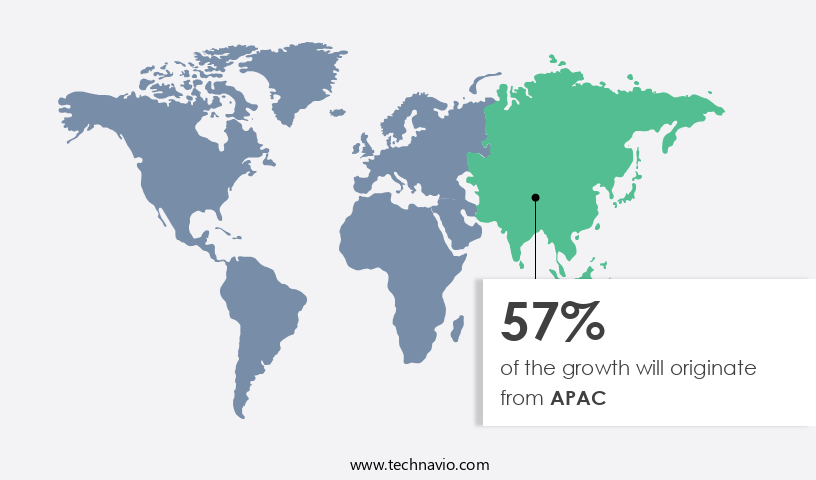
        • APAC is estimated to contribute 57% to the growth of the global market during the forecast period.

        Technavio’s analysts have elaborately explained the regional trends and drivers that shape the market during the forecast period.
        Polyamide Market Share by Geography

        For more insights on the market share of various regions, Request Free Sample

        The APAC region holds a significant position In the market, accounting for the third-largest share in 2023. China is a major producer and consumer of polyamides (PAs) in this region, with increasing production capacity and above-average consumption forecasted during the upcoming years. Among various PA applications, fibers are projected to exhibit moderate growth. The automotive industry's expanding demand in APAC, coupled with China and India's emergence as global hubs for electrical and electronics manufacturing, will drive PA consumption In the region. These trends are expected to continue during the forecast period. Polyamides are widely used in engineering plastics, textiles, consumer goods, electrical appliances, and various industries due to their high-temperature resistance, chemical resistance, and excellent mechanical qualities.

        The growing demand for lightweight automobiles, electric vehicles, and increasing environmental awareness are also contributing factors to the market's growth.

        Market Dynamics

        Our  researchers analyzed the data with 2023 as the base year, along with the key drivers, trends, and challenges. A holistic analysis of drivers will help companies refine their marketing strategies to gain a competitive advantage.

        What are the key market drivers leading to the rise In the adoption of Polyamide Industry?

        Superior properties and versatile nature of PAs is the key driver of the market.

      • Polyamide, or PA, is a versatile macromolecule used in various industries due to its high melting temperatures and adaptability. With the availability of PA variants such as Nylons, Aramids, Polyphthalamide, and aliphatic and aromatic polyamides, this material caters to diverse applications. In engineering, thermoplastics made from PA are utilized In the automotive industry for engine covers, fuel systems, electrical connectors, and interior parts. In the electrical and electronics sector, PAs are essential for electrical insulation properties in components like lead-free soldering and electronics manufacturing. Moreover, PA's low friction and wear resistance make it suitable for large-volume standard products In the textile markets, consumer goods, and building and construction industries.
      • Bio-based polyamides are gaining popularity due to environmental awareness and recyclable items. In the aerospace and defense sector, PAs contribute to lightweight automobiles, passenger car sales, and emerging nations' automotive applications. PA's technological innovation is evident in its use in electrical appliances, such as microwavable food products and radiator fans, and in industrial and machinery applications, including pumps and valves. The growth of digitalization, robotics, virtual reality, augmented reality, IoT, and 5G connectivity is driving the demand for PAs in various applications. In summary, PA's unique properties make it an indispensable material in numerous industries, including automotive, electrical and electronics, textile markets, consumer goods, and building and construction.
      • Its high melting temperatures, low friction, wear resistance, and versatility contribute to its widespread use and increasing global revenue, estimated to reach USD billions by 2027.
      • What are the market trends shaping the Polyamide Industry?

        Wide usage of PAs in additive manufacturing industry is the upcoming market trend.

      • Polyamide, a high-performance macromolecule, is widely used in various industries due to its unique properties. Nylons and Aramids, two popular types of polyamides, are extensively employed in engineering thermoplastics, textile markets, consumer goods, electrical appliances, and more. In the engineering sector, these materials offer excellent mechanical qualities, such as high temperatures resistance, chemical resistance, and wear resistance. Bio-based polyamides are gaining popularity due to the increasing focus on raw materials sustainability. Coatings, films, precursors, and other applications in electronics & electrical, building & construction, aerospace, and industrial and machinery sectors benefit from the non-adhesive and low-friction properties of polyamides.
      • In the automotive industry, lightweight vehicles and passenger car sales in emerging nations are driving the demand for polyamides in engine covers, fuel systems, electrical connectors, and interior parts. The aerospace sector, particularly In the production of electrical insulation properties, is another significant market for polyamides. The additive manufacturing industry is witnessing a wide usage of polyamides, particularly in 3D printing techniques such as slurry and powder-based 3D printing, laser sintering, stereolithography, laminated object manufacturing, and direct deposition additive manufacturing. The versatility of polyamides in various applications, including microwavable food products, radiator fans, gasoline tanks, oil filter housing, and speedometer gears, further expands its market potential.
      • The global revenue for polyamides is projected to grow significantly In the coming years, driven by technological innovation, digitalization, robotics, virtual reality, augmented reality, IoT, and 5G connectivity. The industry is currently In the growth stabilization phase, with increasing demand from various sectors and ongoing R&D activity. Volume growth In the LAMEA region, particularly In the textile industry, is expected to contribute to the market expansion. However, the pandemic has caused disruptions In the supply chain, leading to challenges In the production and distribution of raw materials. Human health and industry life cycle considerations are essential factors influencing the market dynamics.
      • What challenges does the Polyamide Industry face during its growth?

        Volatility in raw material prices and its impact is a key challenge affecting the industry growth.

      • The Polyamide (PA) market, comprised of macromolecules including Nylons and Aramids, has experienced challenges in terms of value growth in recent years. Market fluctuations are significantly influenced by crude oil prices, which have experienced a sharp decline, reaching an all-time low in April 2020 due to the global economic contraction caused by the COVID-19 pandemic and an oil market collapse. This crude oil price decrease directly impacts the cost of Crude Petroleum Liquids (CPL) and derivative benzene through cyclohexane, ultimately determining the final PA product cost. The engineering thermoplastics sector, which includes PA, is utilized extensively in various industries such as textiles, consumer goods, electrical appliances, building & construction, aerospace, and electronics & electrical.
      • In these sectors, PA offers desirable properties such as high temperatures resistance, corrosive environments endurance, non-adhesive and low friction qualities. In the automotive industry, PA is used in lightweight automobiles, engine covers, fuel systems, electrical connectors, and interior parts. In the electronics sector, PA is utilized in lead-free soldering, electronics manufacturing, and R&D activity. In the aerospace sector, PA's high-performance qualities are essential for aircraft engine components, electrical insulation, and other critical applications. The PA market encompasses bio-based polyamides, aliphatic and aromatic polyamides, and polyamide fibers & films. The market's growth is influenced by technological innovation, global revenue, and emerging trends such as digitalization, robotics, virtual reality, augmented reality, IoT, and 5G connectivity.
      • The market's future potential is promising, with applications in microwavable food products, radiator fans, gasoline tanks, oil filter housing, and speedometer gears. The PA industry life cycle is currently In the growth stabilization phase, with recyclable items and environmental awareness driving market expansion. Despite the challenges, the PA market's future looks bright, with continued research and development and the potential for new applications in various industries.
      • Exclusive Customer Landscape

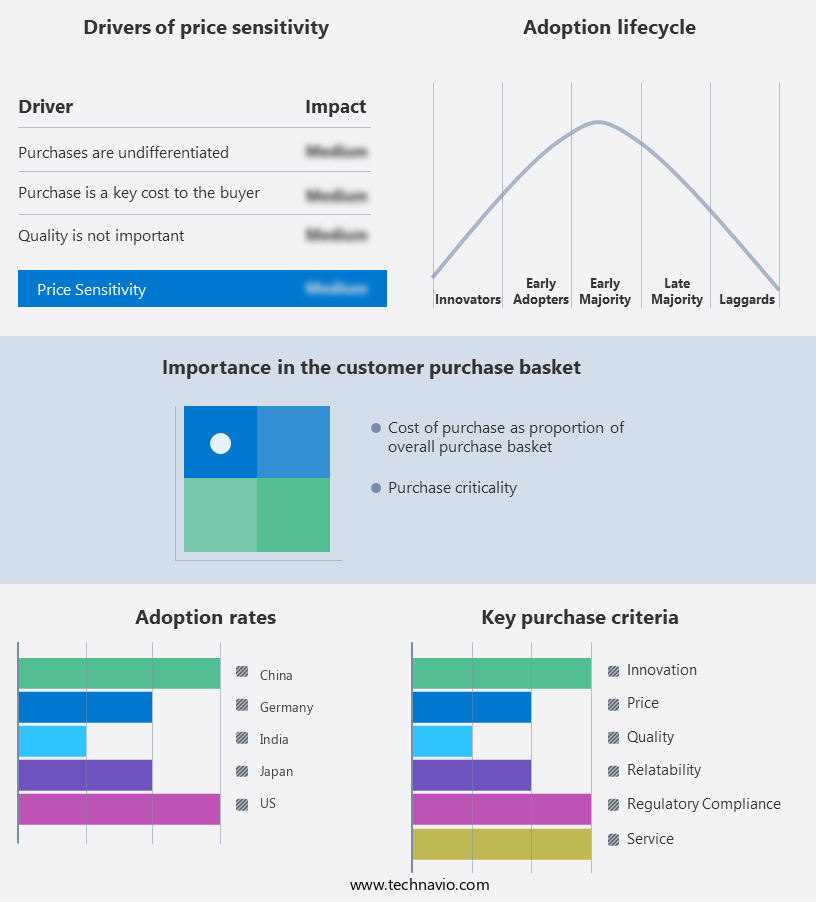
        The polyamide market forecasting report includes the adoption lifecycle of the market, covering from the innovator’s stage to the laggard’s stage. It focuses on adoption rates in different regions based on penetration. Furthermore, the polyamide market report also includes key purchase criteria and drivers of price sensitivity to help companies evaluate and develop their market growth analysis strategies.
        Polyamide Market Share by Geography

         Customer Landscape

        Key Companies & Market Insights

        Companies are implementing various strategies, such as strategic alliances, polyamide market forecast, partnerships, mergers and acquisitions, geographical expansion, and product/service launches, to enhance their presence In the industry.

        AdvanSix Inc. - Polyamide, a high-performance material offered by the company, exhibits exceptional toughness, abrasion resistance, and impact resistance. Renewable sourcing options are available for this versatile polymer, contributing to its eco-friendly appeal. By combining durability with sustainability, this material caters to various industries, including automotive, construction, and textiles, among others.

        The industry research and growth report includes detailed analyses of the competitive landscape of the market and information about key companies, including:

        • AdvanSix Inc.
        • Arkema SA
        • Ascend Performance Materials
        • BASF SE
        • Domo Chemicals GmbH
        • DuPont de Nemours Inc.
        • Evonik Industries AG
        • Formosa Chemicals and Fibre Corp.
        • Goodfellow Cambridge Ltd.
        • Huntsman Corp
        • Invista
        • Koninklijke DSM NV
        • Lanxess AG
        • Lealea Group
        • Radici Partecipazioni Spa
        • Shenma Industrial Co. Ltd.
        • Solvay SA
        • Toray Industries Inc.
        • Toyobo Co. Ltd.
        • Ube Corp.

        Qualitative and quantitative analysis of companies has been conducted to help clients understand the wider business environment as well as the strengths and weaknesses of key industry players. Data is qualitatively analyzed to categorize companies as pure play, category-focused, industry-focused, and diversified; it is quantitatively analyzed to categorize companies as dominant, leading, strong, tentative, and weak.

        Research Analyst Overview

        Polyamides, also known as nylons, are a type of macromolecule used extensively in various industries due to their unique properties. These thermoplastic materials exhibit excellent mechanical qualities, including high tensile strength, wear resistance, and gas permeability. They also offer chemical resistance, making them suitable for use in corrosive environments and high-temperature applications. Polyamides find extensive use in engineering applications, particularly In the manufacturing of consumer goods, electrical appliances, and industrial machinery. In the textile industry, they are used to produce fibers and films. In the electrical and electronics sector, they are utilized In the production of components for building and construction, aerospace, and automotive applications.

        The demand for polyamides is driven by their versatility and superior performance in various applications. For instance, In the automotive industry, they are used in vehicle production to manufacture engine covers, fuel systems, electrical connectors, and interior parts. In the aerospace sector, they are used In the production of lightweight components for aircraft, including engine parts and electrical insulation. The global revenue generated from the sales of polyamides is significant, with the market size estimated to be in billions of USD. The growth of this market can be attributed to technological innovation and the increasing demand for lightweight and high-performance materials in various industries.

        The market for polyamides is influenced by several factors, including the demand for bio-based polyamides, the shift towards digitalization and automation, and the growing trend towards sustainability and environmental awareness. The pandemic has also had an impact on the supply chain, leading to disruptions and delays in production and delivery. The market for polyamides is expected to continue growing, driven by the increasing demand for polyamides in emerging nations and the growing popularity of electric vehicles (EVs). The use of polyamides in EVs is expected to increase due to their excellent electrical insulation properties and design flexibility. The market for polyamides is highly competitive, with several players offering a range of products to meet the diverse needs of various industries.

        The market is also witnessing significant R&D activity, with companies investing In the development of new and innovative polyamide products to meet the evolving needs of their customers. Polyamides are also used in various industries outside of engineering and electronics. For instance, they are used In the production of coatings, films, precursors, and adhesives. In the textile industry, they are used to produce fibers and films for use in clothing and other textile products. The market for polyamides is expected to remain strong, driven by the increasing demand for high-performance materials in various industries. The market is also expected to be influenced by several trends, including the growing popularity of bio-based polyamides, the shift towards digitalization and automation, and the increasing focus on sustainability and environmental awareness.

        In conclusion, the market for polyamides is a dynamic and growing one, driven by the increasing demand for high-performance materials in various industries. The market is expected to be influenced by several trends, including the growing popularity of bio-based polyamides, the shift towards digitalization and automation, and the increasing focus on sustainability and environmental awareness. The market is highly competitive, with several players offering a range of products to meet the diverse needs of various industries.

        Market Scope

        Report Coverage

        Details

        Page number

        187

        Base year

        2023

        Historic period

        2018-2022

        Forecast period

        2024-2028

        Growth momentum & CAGR

        Accelerate at a CAGR of 3.56%

        Market growth 2024-2028

        USD 5.18 billion

        Market structure

        Fragmented

        YoY growth 2023-2024(%)

        3.39

        Key countries

        China, US, Japan, Germany, and India

        Competitive landscape

        Leading Companies, Market Positioning of Companies, Competitive Strategies, and Industry Risks

        Request Free Sample

        What are the Key Data Covered in this Polyamide Market Research and Growth Report?

        • CAGR of the Polyamide industry during the forecast period
        • Detailed information on factors that will drive the growth and forecasting between 2024 and 2028
        • Precise estimation of the size of the market and its contribution of the industry in focus to the parent market
        • Accurate predictions about upcoming growth and trends and changes in consumer behaviour
        • Growth of the market across APAC, Europe, North America, South America, and Middle East and Africa
        • Thorough analysis of the market’s competitive landscape and detailed information about companies
        • Comprehensive analysis of factors that will challenge the polyamide market growth of industry companies

        We can help! Our analysts can customize this polyamide market research report to meet your requirements.

        Get in touch


        1 Executive Summary

        • 1.1 Market overview
          • Executive Summary - Chart on Market Overview
          • Executive Summary - Data Table on Market Overview
          • Executive Summary - Chart on Global Market Characteristics
          • Executive Summary - Chart on Market by Geography
          • Executive Summary - Chart on Market Segmentation by Type
          • Executive Summary - Chart on Market Segmentation by End-user
          • Executive Summary - Chart on Incremental Growth
          • Executive Summary - Data Table on Incremental Growth
          • Executive Summary - Chart on Company Market Positioning

        2 Market Landscape

        • 2.1 Market ecosystem
          • Parent Market
          • Data Table on - Parent Market
        • 2.2 Market characteristics
          • Market characteristics analysis
        • 2.3 Value chain analysis
          • Value Chain Analysis

        3 Market Sizing

        • 3.1 Market definition
          • Offerings of companies included in the market definition
        • 3.2 Market segment analysis
          • Market segments
        • 3.3 Market size 2023
          • 3.4 Market outlook: Forecast for 2023-2028
            • Chart on Global - Market size and forecast 2023-2028 ($ million)
            • Data Table on Global - Market size and forecast 2023-2028 ($ million)
            • Chart on Global Market: Year-over-year growth 2023-2028 (%)
            • Data Table on Global Market: Year-over-year growth 2023-2028 (%)

          4 Historic Market Size

          • 4.1 Global Polyamide Market 2018 - 2022
            • Historic Market Size - Data Table on Global Polyamide Market 2018 - 2022 ($ million)
          • 4.2 Type segment analysis 2018 - 2022
            • Historic Market Size - Type Segment 2018 - 2022 ($ million)
          • 4.3 End-user segment analysis 2018 - 2022
            • Historic Market Size - End-user Segment 2018 - 2022 ($ million)
          • 4.4 Geography segment analysis 2018 - 2022
            • Historic Market Size - Geography Segment 2018 - 2022 ($ million)
          • 4.5 Country segment analysis 2018 - 2022
            • Historic Market Size - Country Segment 2018 - 2022 ($ million)

          5 Five Forces Analysis

          • 5.1 Five forces summary
            • Five forces analysis - Comparison between 2023 and 2028
          • 5.2 Bargaining power of buyers
            • Bargaining power of buyers - Impact of key factors 2023 and 2028
          • 5.3 Bargaining power of suppliers
            • Bargaining power of suppliers - Impact of key factors in 2023 and 2028
          • 5.4 Threat of new entrants
            • Threat of new entrants - Impact of key factors in 2023 and 2028
          • 5.5 Threat of substitutes
            • Threat of substitutes - Impact of key factors in 2023 and 2028
          • 5.6 Threat of rivalry
            • Threat of rivalry - Impact of key factors in 2023 and 2028
          • 5.7 Market condition
            • Chart on Market condition - Five forces 2023 and 2028

          6 Market Segmentation by Type

          • 6.1 Market segments
            • Chart on Type - Market share 2023-2028 (%)
            • Data Table on Type - Market share 2023-2028 (%)
          • 6.2 Comparison by Type
            • Chart on Comparison by Type
            • Data Table on Comparison by Type
          • 6.3 PA6 - Market size and forecast 2023-2028
            • Chart on PA6 - Market size and forecast 2023-2028 ($ million)
            • Data Table on PA6 - Market size and forecast 2023-2028 ($ million)
            • Chart on PA6 - Year-over-year growth 2023-2028 (%)
            • Data Table on PA6 - Year-over-year growth 2023-2028 (%)
          • 6.4 PA66 - Market size and forecast 2023-2028
            • Chart on PA66 - Market size and forecast 2023-2028 ($ million)
            • Data Table on PA66 - Market size and forecast 2023-2028 ($ million)
            • Chart on PA66 - Year-over-year growth 2023-2028 (%)
            • Data Table on PA66 - Year-over-year growth 2023-2028 (%)
          • 6.5 Bio-based PA - Market size and forecast 2023-2028
            • Chart on Bio-based PA - Market size and forecast 2023-2028 ($ million)
            • Data Table on Bio-based PA - Market size and forecast 2023-2028 ($ million)
            • Chart on Bio-based PA - Year-over-year growth 2023-2028 (%)
            • Data Table on Bio-based PA - Year-over-year growth 2023-2028 (%)
          • 6.6 Specialty PA - Market size and forecast 2023-2028
            • Chart on Specialty PA - Market size and forecast 2023-2028 ($ million)
            • Data Table on Specialty PA - Market size and forecast 2023-2028 ($ million)
            • Chart on Specialty PA - Year-over-year growth 2023-2028 (%)
            • Data Table on Specialty PA - Year-over-year growth 2023-2028 (%)
          • 6.7 Market opportunity by Type
            • Market opportunity by Type ($ million)
            • Data Table on Market opportunity by Type ($ million)

          7 Market Segmentation by End-user

          • 7.1 Market segments
            • Chart on End-user - Market share 2023-2028 (%)
            • Data Table on End-user - Market share 2023-2028 (%)
          • 7.2 Comparison by End-user
            • Chart on Comparison by End-user
            • Data Table on Comparison by End-user
          • 7.3 Automotive sector - Market size and forecast 2023-2028
            • Chart on Automotive sector - Market size and forecast 2023-2028 ($ million)
            • Data Table on Automotive sector - Market size and forecast 2023-2028 ($ million)
            • Chart on Automotive sector - Year-over-year growth 2023-2028 (%)
            • Data Table on Automotive sector - Year-over-year growth 2023-2028 (%)
          • 7.4 Electrical and electronics sector - Market size and forecast 2023-2028
            • Chart on Electrical and electronics sector - Market size and forecast 2023-2028 ($ million)
            • Data Table on Electrical and electronics sector - Market size and forecast 2023-2028 ($ million)
            • Chart on Electrical and electronics sector - Year-over-year growth 2023-2028 (%)
            • Data Table on Electrical and electronics sector - Year-over-year growth 2023-2028 (%)
          • 7.5 Packaging sector - Market size and forecast 2023-2028
            • Chart on Packaging sector - Market size and forecast 2023-2028 ($ million)
            • Data Table on Packaging sector - Market size and forecast 2023-2028 ($ million)
            • Chart on Packaging sector - Year-over-year growth 2023-2028 (%)
            • Data Table on Packaging sector - Year-over-year growth 2023-2028 (%)
          • 7.6 Others - Market size and forecast 2023-2028
            • Chart on Others - Market size and forecast 2023-2028 ($ million)
            • Data Table on Others - Market size and forecast 2023-2028 ($ million)
            • Chart on Others - Year-over-year growth 2023-2028 (%)
            • Data Table on Others - Year-over-year growth 2023-2028 (%)
          • 7.7 Market opportunity by End-user
            • Market opportunity by End-user ($ million)
            • Data Table on Market opportunity by End-user ($ million)

          8 Customer Landscape

          • 8.1 Customer landscape overview
            • Analysis of price sensitivity, lifecycle, customer purchase basket, adoption rates, and purchase criteria

          9 Geographic Landscape

          • 9.1 Geographic segmentation
            • Chart on Market share by geography 2023-2028 (%)
            • Data Table on Market share by geography 2023-2028 (%)
          • 9.2 Geographic comparison
            • Chart on Geographic comparison
            • Data Table on Geographic comparison
          • 9.3 APAC - Market size and forecast 2023-2028
            • Chart on APAC - Market size and forecast 2023-2028 ($ million)
            • Data Table on APAC - Market size and forecast 2023-2028 ($ million)
            • Chart on APAC - Year-over-year growth 2023-2028 (%)
            • Data Table on APAC - Year-over-year growth 2023-2028 (%)
          • 9.4 Europe - Market size and forecast 2023-2028
            • Chart on Europe - Market size and forecast 2023-2028 ($ million)
            • Data Table on Europe - Market size and forecast 2023-2028 ($ million)
            • Chart on Europe - Year-over-year growth 2023-2028 (%)
            • Data Table on Europe - Year-over-year growth 2023-2028 (%)
          • 9.5 North America - Market size and forecast 2023-2028
            • Chart on North America - Market size and forecast 2023-2028 ($ million)
            • Data Table on North America - Market size and forecast 2023-2028 ($ million)
            • Chart on North America - Year-over-year growth 2023-2028 (%)
            • Data Table on North America - Year-over-year growth 2023-2028 (%)
          • 9.6 South America - Market size and forecast 2023-2028
            • Chart on South America - Market size and forecast 2023-2028 ($ million)
            • Data Table on South America - Market size and forecast 2023-2028 ($ million)
            • Chart on South America - Year-over-year growth 2023-2028 (%)
            • Data Table on South America - Year-over-year growth 2023-2028 (%)
          • 9.7 Middle East and Africa - Market size and forecast 2023-2028
            • Chart on Middle East and Africa - Market size and forecast 2023-2028 ($ million)
            • Data Table on Middle East and Africa - Market size and forecast 2023-2028 ($ million)
            • Chart on Middle East and Africa - Year-over-year growth 2023-2028 (%)
            • Data Table on Middle East and Africa - Year-over-year growth 2023-2028 (%)
          • 9.8 China - Market size and forecast 2023-2028
            • Chart on China - Market size and forecast 2023-2028 ($ million)
            • Data Table on China - Market size and forecast 2023-2028 ($ million)
            • Chart on China - Year-over-year growth 2023-2028 (%)
            • Data Table on China - Year-over-year growth 2023-2028 (%)
          • 9.9 US - Market size and forecast 2023-2028
            • Chart on US - Market size and forecast 2023-2028 ($ million)
            • Data Table on US - Market size and forecast 2023-2028 ($ million)
            • Chart on US - Year-over-year growth 2023-2028 (%)
            • Data Table on US - Year-over-year growth 2023-2028 (%)
          • 9.10 Japan - Market size and forecast 2023-2028
            • Chart on Japan - Market size and forecast 2023-2028 ($ million)
            • Data Table on Japan - Market size and forecast 2023-2028 ($ million)
            • Chart on Japan - Year-over-year growth 2023-2028 (%)
            • Data Table on Japan - Year-over-year growth 2023-2028 (%)
          • 9.11 Germany - Market size and forecast 2023-2028
            • Chart on Germany - Market size and forecast 2023-2028 ($ million)
            • Data Table on Germany - Market size and forecast 2023-2028 ($ million)
            • Chart on Germany - Year-over-year growth 2023-2028 (%)
            • Data Table on Germany - Year-over-year growth 2023-2028 (%)
          • 9.12 India - Market size and forecast 2023-2028
            • Chart on India - Market size and forecast 2023-2028 ($ million)
            • Data Table on India - Market size and forecast 2023-2028 ($ million)
            • Chart on India - Year-over-year growth 2023-2028 (%)
            • Data Table on India - Year-over-year growth 2023-2028 (%)
          • 9.13 Market opportunity by geography
            • Market opportunity by geography ($ million)
            • Data Tables on Market opportunity by geography ($ million)

          10 Drivers, Challenges, and Opportunity/Restraints

          • 10.1 Market drivers
            • 10.2 Market challenges
              • 10.3 Impact of drivers and challenges
                • Impact of drivers and challenges in 2023 and 2028
              • 10.4 Market opportunities/restraints

                11 Competitive Landscape

                • 11.1 Overview
                  • 11.2 Competitive Landscape
                    • Overview on criticality of inputs and factors of differentiation
                  • 11.3 Landscape disruption
                    • Overview on factors of disruption
                  • 11.4 Industry risks
                    • Impact of key risks on business

                  12 Competitive Analysis

                  • 12.1 Companies profiled
                    • Companies covered
                  • 12.2 Market positioning of companies
                    • Matrix on companies position and classification
                  • 12.3 Arkema SA
                    • Arkema SA - Overview
                    • Arkema SA - Business segments
                    • Arkema SA - Key news
                    • Arkema SA - Key offerings
                    • Arkema SA - Segment focus
                  • 12.4 BASF SE
                    • BASF SE - Overview
                    • BASF SE - Business segments
                    • BASF SE - Key news
                    • BASF SE - Key offerings
                    • BASF SE - Segment focus
                  • 12.5 DuPont de Nemours Inc.
                    • DuPont de Nemours Inc. - Overview
                    • DuPont de Nemours Inc. - Business segments
                    • DuPont de Nemours Inc. - Key news
                    • DuPont de Nemours Inc. - Key offerings
                    • DuPont de Nemours Inc. - Segment focus
                  • 12.6 Evonik Industries AG
                    • Evonik Industries AG - Overview
                    • Evonik Industries AG - Business segments
                    • Evonik Industries AG - Key news
                    • Evonik Industries AG - Key offerings
                    • Evonik Industries AG - Segment focus
                  • 12.7 Huntsman Corp
                    • Huntsman Corp - Overview
                    • Huntsman Corp - Business segments
                    • Huntsman Corp - Key news
                    • Huntsman Corp - Key offerings
                    • Huntsman Corp - Segment focus
                  • 12.8 Invista
                    • Invista - Overview
                    • Invista - Product / Service
                    • Invista - Key offerings
                  • 12.9 Koninklijke DSM NV
                    • Koninklijke DSM NV - Overview
                    • Koninklijke DSM NV - Business segments
                    • Koninklijke DSM NV - Key news
                    • Koninklijke DSM NV - Key offerings
                    • Koninklijke DSM NV - Segment focus
                  • 12.10 Lanxess AG
                    • Lanxess AG - Overview
                    • Lanxess AG - Business segments
                    • Lanxess AG - Key news
                    • Lanxess AG - Key offerings
                    • Lanxess AG - Segment focus
                  • 12.11 Solvay SA
                    • Solvay SA - Overview
                    • Solvay SA - Business segments
                    • Solvay SA - Key news
                    • Solvay SA - Key offerings
                    • Solvay SA - Segment focus
                  • 12.12 Toray Industries Inc.
                    • Toray Industries Inc. - Overview
                    • Toray Industries Inc. - Business segments
                    • Toray Industries Inc. - Key news
                    • Toray Industries Inc. - Key offerings
                    • Toray Industries Inc. - Segment focus

                  13 Appendix

                  • 13.1 Scope of the report
                    • 13.2 Inclusions and exclusions checklist
                      • Inclusions checklist
                      • Exclusions checklist
                    • 13.3 Currency conversion rates for US$
                      • Currency conversion rates for US$
                    • 13.4 Research methodology
                      • Research methodology
                    • 13.5 Data procurement
                      • Information sources
                    • 13.6 Data validation
                      • Data validation
                    • 13.7 Validation techniques employed for market sizing
                      • Validation techniques employed for market sizing
                    • 13.8 Data synthesis
                      • Data synthesis
                    • 13.9 360 degree market analysis
                      • 360 degree market analysis
                    • 13.10 List of abbreviations
                      • List of abbreviations

                    Research Methodology

                    Technavio presents a detailed picture of the market by way of study, synthesis, and summation of data from multiple sources. The analysts have presented the various facets of the market with a particular focus on identifying the key industry influencers. The data thus presented is comprehensive, reliable, and the result of extensive research, both primary and secondary.

                    INFORMATION SOURCES

                    Primary sources

                    • Manufacturers and suppliers
                    • Channel partners
                    • Industry experts
                    • Strategic decision makers

                    Secondary sources

                    • Industry journals and periodicals
                    • Government data
                    • Financial reports of key industry players
                    • Historical data
                    • Press releases

                    DATA ANALYSIS

                    Data Synthesis

                    • Collation of data
                    • Estimation of key figures
                    • Analysis of derived insights

                    Data Validation

                    • Triangulation with data models
                    • Reference against proprietary databases
                    • Corroboration with industry experts

                    REPORT WRITING

                    Qualitative

                    • Market drivers
                    • Market challenges
                    • Market trends
                    • Five forces analysis

                    Quantitative

                    • Market size and forecast
                    • Market segmentation
                    • Geographical insights
                    • Competitive landscape

                    Interested in this report?

                    Get your sample now to see our research methodology and insights!

                    Download Now

                    Frequently Asked Questions

                    Polyamide market growth will increase by $ 5.18 bn during 2024-2028 .

                    The Polyamide market is expected to grow at a CAGR of 3.56% during 2024-2028 .

                    Polyamide market is segmented by Type( PA6, PA66, Bio-based PA, Specialty PA) End-user( Automotive sector, Electrical and electronics sector, Packaging sector, Others)

                    AdvanSix Inc., Arkema SA, Ascend Performance Materials, BASF SE, Domo Chemicals GmbH, DuPont de Nemours Inc., Evonik Industries AG, Formosa Chemicals and Fibre Corp., Goodfellow Cambridge Ltd., Huntsman Corp, Invista, Koninklijke DSM NV, Lanxess AG, Lealea Group, Radici Partecipazioni Spa, Shenma Industrial Co. Ltd., Solvay SA, Toray Industries Inc., Toyobo Co. Ltd., Ube Corp. are a few of the key vendors in the Polyamide market.

                    APAC will register the highest growth rate of 57% among the other regions. Therefore, the Polyamide market in APAC is expected to garner significant business opportunities for the vendors during the forecast period.

                    China, US, Japan, Germany, India

                    • Superior properties and versatile nature of PAsPA polymer is useful for a wide range of applications that require plastic materials with high melting temperatures. It is diverse and adaptable to suit varied applications due to the availability of PA variants. It is a highly flexible material that can be combined with different materials is the driving factor this market.
                    • such as additives and other polymers. The low-friction property of PAs allows its use for many large-volume standard products in addition to gears is the driving factor this market.
                    • bushings is the driving factor this market.
                    • and plastic bearings. In addition is the driving factor this market.
                    • applications that undergo a lot of wear prefer PAs over other engineering plastics. Apart from the automotive and electrical and electronics industries is the driving factor this market.
                    • some of the largest applications of PAs are in consumer products such as toys is the driving factor this market.
                    • furniture is the driving factor this market.
                    • components for high-heat applications is the driving factor this market.
                    • and gears for mechanism transmissions.PA 66 is one of the popularly used thermoplastic materials. It offers extreme heat resistance and strength. Some of the key applications of PA 66 are carpet fibers is the driving factor this market.
                    • electro-insulating elements is the driving factor this market.
                    • bearings is the driving factor this market.
                    • gears is the driving factor this market.
                    • and conveyor belts. Non-woven fabric manufacturing is the key application area for PA 6. The properties of PA 6 include ductility and resistance to abrasion. PA 6 is used for applications such as threads is the driving factor this market.
                    • nets is the driving factor this market.
                    • ropes is the driving factor this market.
                    • and knitted garments. PA 6-10 is widely used in making filaments of brushes is the driving factor this market.
                    • electric insulators is the driving factor this market.
                    • hosiery is the driving factor this market.
                    • and zip fasteners as monofilaments. It is one of the strongest nylon types available with low-moisture absorption. PA 11 offers resistance to ultraviolet (UV) compared with other types. Its applications include mechanical components is the driving factor this market.
                    • automotive-fuel lines is the driving factor this market.
                    • sports shoes is the driving factor this market.
                    • tool handles is the driving factor this market.
                    • gears is the driving factor this market.
                    • hydraulic fluid is the driving factor this market.
                    • and powder coatings. PA 6-12 is one of the most expensive among the available PAs. It has excellent resistance to heat is the driving factor this market.
                    • a low water absorption rate is the driving factor this market.
                    • and high dimensional stability. The key applications of PA 6-12 include electrical components is the driving factor this market.
                    • gears is the driving factor this market.
                    • cams is the driving factor this market.
                    • seals for spark plug tubes is the driving factor this market.
                    • and lock casings. Some of the other widely used PAs include PA 69 and PA 46. The low melting point and low moisture absorption of PA 69 make it suitable for electrical connectors is the driving factor this market.
                    • banners is the driving factor this market.
                    • luggage bags is the driving factor this market.
                    • furniture is the driving factor this market.
                    • and automotive upholstery applications. PA 46 offers the maximum fatigue-resistant and thermal dimensional stability among all the PAs. Aromatic PA has unique properties such as non-conductive nature is the driving factor this market.
                    • good resistance to organic solvents is the driving factor this market.
                    • and abrasion. Aromatic PA is widely used in hot-air filtration fabrics is the driving factor this market.
                    • optical-fiber cable is the driving factor this market.
                    • heat-protective clothing is the driving factor this market.
                    • helmets is the driving factor this market.
                    • jet-engine enclosures is the driving factor this market.
                    • and reinforced-thermoplastic products. Thus is the driving factor this market.
                    • the superior properties and the versatile nature of PAs will fuel the growth of the global PA market during the forecast period. is the driving factor this market.

                    The Polyamide market vendors should focus on grabbing business opportunities from the PA6 segment as it accounted for the largest market share in the base year.
