


Polyetheramine Market Size 2024-2028
The polyetheramine market size is forecast to increase by USD 742.71 million, at a CAGR of 9.06% between 2023 and 2028.
- The market is driven by the increasing demand for this versatile chemical in water treatment applications. Its unique properties, such as high pH stability and excellent emulsification capabilities, make it an ideal choice for enhancing the performance of water treatment chemicals. Furthermore, the emergence of green and sustainable polyetheramine coatings is a significant trend in the market, as there is a growing emphasis on eco-friendly solutions. However, the market faces challenges related to the technical limitations in manufacturing and applying polyetheramines. These challenges include the high production costs and the need for specialized equipment, which can hinder the widespread adoption of this chemical.
- Companies seeking to capitalize on the opportunities in the market must focus on overcoming these challenges through innovation and collaboration. By developing cost-effective production methods and expanding their application scope, they can differentiate themselves and gain a competitive edge. Additionally, partnerships with water treatment companies and research institutions can help companies stay informed about the latest industry trends and advancements, enabling them to respond effectively to market demands.
What will be the Size of the Polyetheramine Market during the forecast period?
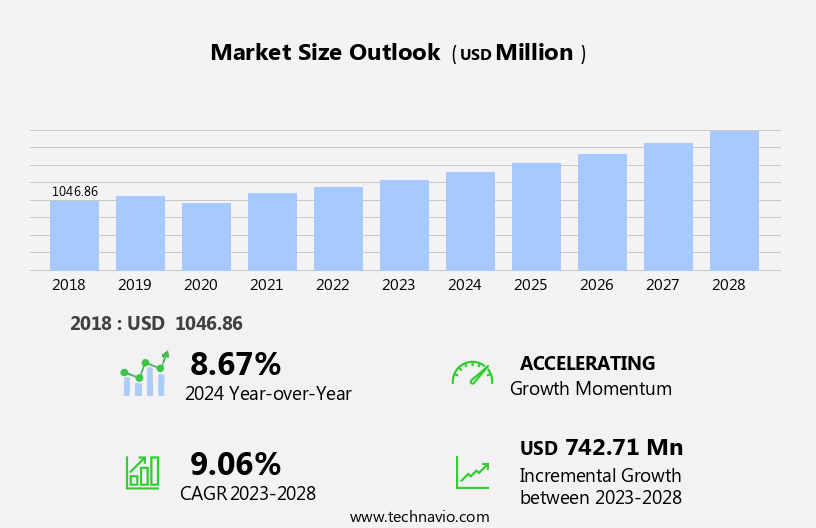
Explore in-depth regional segment analysis with market size data - historical 2018-2022 and forecasts 2024-2028 - in the full report.
Request Free Sample
The market continues to evolve, driven by the ongoing research and development in the realm of thermosetting polymers. Hydrophilic polyetheramines, with their unique chemical structures, have gained significant attention due to their exceptional coating properties. The intricacies of polyamine branching and degradation continue to be explored, leading to advancements in surface modification and chemical resistance. Chemical modification plays a pivotal role in the market, with secondary amine content and polyamine synthesis being key areas of focus. The viscosity of polyetheramines and optimization of cure time are critical factors in polyurethane production, where cationic polymerization and pot life extension are essential techniques.
In the realm of epoxy resin hardeners, low viscosity amines are increasingly preferred for their improved adhesive performance and impact resistance. Amine end-capping and reactive amine groups are crucial in polyetheramine crosslinking, contributing to flexibility improvement. The market dynamics of this sector are continually unfolding, with ongoing research and innovation shaping the future of amine curing agents and high reactivity amines. The molecular weight distribution and functionality testing of amines remain essential aspects of ensuring optimal performance in various applications. Hydrophobic polyetheramines have shown promise in enhancing tensile strength, adding another layer of complexity to the evolving the market. As the industry continues to progress, the focus on improving chemical resistance and optimizing performance across various sectors will remain a top priority.
How is this Polyetheramine Industry segmented?
The polyetheramine industry research report provides comprehensive data (region-wise segment analysis), with forecasts and estimates in "USD million" for the period 2024-2028, as well as historical data from 2018-2022 for the following segments.
- Type
- Diamine
- Monoamine
- Triamine
- Application
- Epoxy coatings
- Polyurea
- Adhesives and sealants
- Composites
- Others
- Geography
- North America
- US
- Europe
- Germany
- APAC
- China
- India
- Japan
- Rest of World (ROW)
- North America
By Type Insights
The diamine segment is estimated to witness significant growth during the forecast period.
The diamine market is driven by its extensive applications in various industries, particularly in the production of nylon plastics and the manufacture of hydrophilic polyetheramines. The shift in diamine production methods significantly influences nylon production, thereby boosting demand. Notably, the D series polyetheramine, a type of diamine on a copolymer backbone, is water-soluble and increases diamine usage in the detergent industry. Additionally, diamine's role as an antiepileptic agent in the healthcare sector, used as an adjuvant treatment for partial-onset seizures, further expands its market reach. In the polymer industry, diamine's thermosetting properties contribute to the production of epoxy resin hardeners and polyurethanes.
The polyamine branching and degradation play crucial roles in determining coating properties and chemical resistance. Surface modification and chemical functionalities, such as secondary amine content and reactive amine groups, are essential for adhesive performance, impact resistance, and flexibility improvement. The optimization of cure time and pot life extension are essential considerations for manufacturers. The synthesis of diamine involves cationic polymerization, and its molecular weight distribution and amine functionality testing are crucial factors in ensuring product quality. Hydrophobic polyetheramines and high reactivity amines are also significant in the market. The diamine market is dynamic, with ongoing research and development focusing on improving tensile strength, primary amine content, and other properties to meet evolving industry demands.
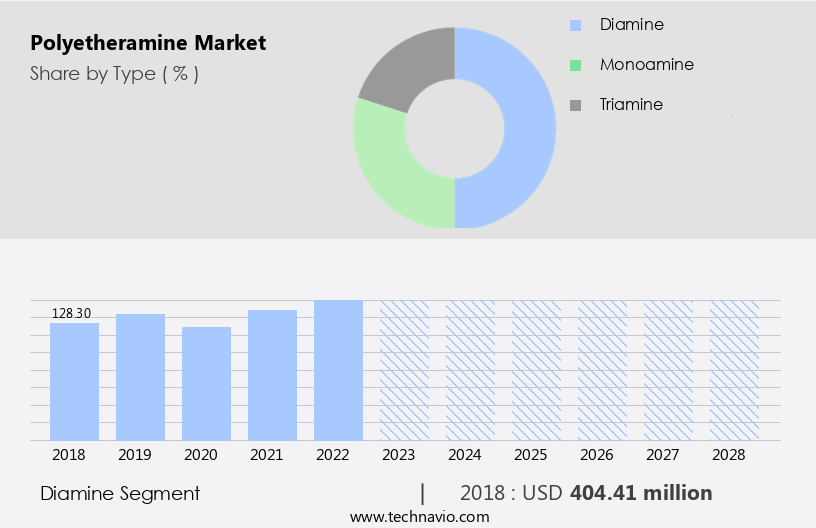
The Diamine segment was valued at USD 404.41 million in 2018 and showed a gradual increase during the forecast period.
Regional Analysis
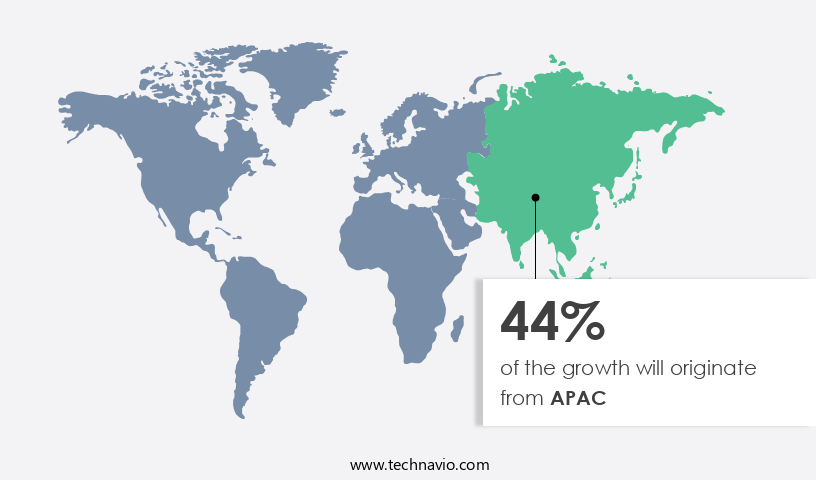
APAC is estimated to contribute 44% to the growth of the global market during the forecast period.Technavio's analysts have elaborately explained the regional trends and drivers that shape the market during the forecast period.
The market is experiencing notable growth due to its extensive applications in various industries. The unique properties of polyetheramines, including their hydrophilic nature, chemical resistance, and high reactivity, make them an ideal choice for coatings, adhesives, and thermosetting polymers. The market is driven by factors such as the increasing demand for surface modification and the need for improved flexibility and impact resistance in end products. Polyetheramines are synthesized through cationic polymerization, resulting in a wide molecular weight distribution and various functionalities. The secondary amine content and viscosity of polyetheramines can be adjusted through chemical modification, enabling their use as epoxy resin hardeners, low viscosity amines, and amine curing agents.
The market is also witnessing trends such as pot life extension and amine end-capping to optimize cure time and enhance adhesive performance. The growing construction industry, particularly in Asia Pacific, is a significant contributor to the market's growth.
The region's population growth and increasing industrialization have led to an increase in the production capacities of end-user industries such as automotive and electronics. Additionally, the adoption of better farming techniques in countries like China, Malaysia, Indonesia, Vietnam, Japan, South Korea, and India, is expected to further boost demand for polyetheramines during the forecast period. Despite the advantages of polyetheramines, challenges such as polyamine degradation and the need for careful handling during synthesis remain. However, ongoing research in polyamine branching, hydrophobic polyetheramines, and amine functionality testing is addressing these concerns, ensuring the continued growth and evolution of the market.
Market Dynamics
Our researchers analyzed the data with 2023 as the base year, along with the key drivers, trends, and challenges. A holistic analysis of drivers will help companies refine their marketing strategies to gain a competitive advantage. The Polyetheramine Market is expanding due to advancements in polyetheramine epoxy resin curing kinetics and polyurethane elastomer synthesis optimization. Key research focuses on the polyetheramine molecular weight distribution impact and amine functionality effect on crosslinking density, directly influencing product performance. Enhanced polyetheramine reactivity with isocyanates and high reactivity polyetheramine for epoxy systems improve structural integrity. Innovations in polyetheramine chemical modification for improved adhesion and low viscosity polyetheramine for coating applications are boosting demand. Mechanical strength benefits from polyetheramine impact on polyurethane mechanical properties and polyetheramine thermal stability and degradation. Strategies for polyetheramine cure time optimization, rheological properties influence, and surface modification techniques are critical. Industry uses include polyetheramine applications in adhesives and sealants, with considerations like polyetheramine catalyst selection, primary and secondary amine content analysis, hydrophilic and hydrophobic polyetheramine comparison, characterization methods, and polyamine branching influence on crosslink density.
What are the key market drivers leading to the rise in the adoption of Polyetheramine Industry?
- The significant growth in the demand for polyetheramine in various water treatment applications serves as the primary market driver. The market experiences steady growth due to its extensive application in water treatment processes. As hydrophilic thermosetting polymers, polyetheramines offer superior coating properties, making them indispensable in water treatment chemicals. Their unique polyamine branching structure facilitates excellent surface modification, enhancing their ability to form protective layers on metal surfaces for corrosion inhibition. This not only extends the life of infrastructure, such as pipelines, tanks, and water treatment equipment, but also ensures water quality standards are met.
- In wastewater treatment, polyetheramines contribute to the removal of contaminants and the prevention of scale formation. Moreover, their exceptional chemical resistance makes them a preferred choice for various industries and municipalities, further fueling market expansion.
What are the market trends shaping the Polyetheramine Industry?
- Green and sustainable polyetheramine coatings are gaining increasing market traction as the trend towards eco-friendly and efficient protective coatings continues to grow. The emergence of these coatings, which offer superior performance and reduced environmental impact, is a significant development in the industry.
- The market is witnessing a notable shift towards eco-friendly, chemically modified polyetheramines. This trend is driven by growing environmental consciousness and regulatory pressures. Traditional petroleum-based polyetheramines are being replaced with bio-based alternatives, derived from renewable sources such as plant oils. These sustainable polyetheramines offer comparable performance characteristics while reducing reliance on fossil fuels and mitigating greenhouse gas emissions. Advancements in polyamine synthesis methods have enabled the large-scale production of bio-based polyetheramines. These innovations have extended the pot life of the polymers, allowing for optimization of cure times during polyurethane production. Moreover, water-based formulations using polyetheramine hardeners are gaining popularity due to their low volatile organic compound (VOC) emissions and compliance with stringent environmental regulations. Cationic polymerization, a common process in the production of polyetheramines, is being refined to enhance the efficiency and sustainability of the manufacturing process. Overall, The market is witnessing significant advancements in both technology and sustainability, positioning it for continued growth.
What challenges does the Polyetheramine Industry face during its growth?
- The growth of the industry is significantly hindered by concerns surrounding the technical limitations in both manufacturing processes and applications of polyetheramines.
- The market faces technical challenges that impact formulation, application, and performance. One significant hurdle is controlling viscosity, as these materials often exhibit high viscosities, which can hinder handling and processing in manufacturing and application processes. Balancing viscosity control with other desirable properties, such as reactivity and cure rate, necessitates meticulous formulation optimization. Another challenge is the cure rate, particularly in fast-curing applications, where polyetheramines may exhibit limited reactivity or prolonged curing times.
- This can negatively affect production efficiency and throughput, leading to increased costs and potential bottlenecks in supply chains. Furthermore, ensuring compatibility with other components in formulations, such as epoxy resins and additives, can be challenging due to the reactive amine groups and polyetheramine crosslinking involved.
Exclusive Customer Landscape
The polyetheramine market forecasting report includes the adoption lifecycle of the market, covering from the innovator's stage to the laggard's stage. It focuses on adoption rates in different regions based on penetration. Furthermore, the polyetheramine market report also includes key purchase criteria and drivers of price sensitivity to help companies evaluate and develop their market growth analysis strategies.
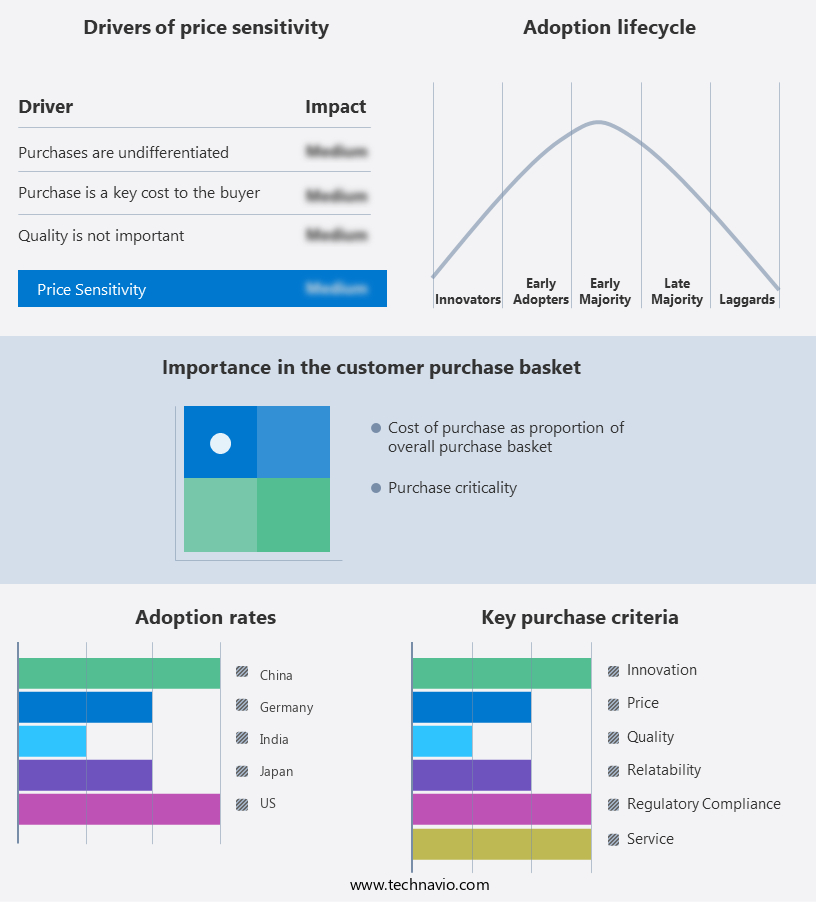
Customer Landscape
Key Companies & Market Insights
Companies are implementing various strategies, such as strategic alliances, polyetheramine market forecast, partnerships, mergers and acquisitions, geographical expansion, and product/service launches, to enhance their presence in the industry.
BASF SE - The company specializes in the production and distribution of various polytheramines, including 3 Methoxypropylamine, Baxxodur EC 302, Baxxodur EC 130, and Baxxodur EC 311. These chemical compounds are widely used in industries for applications such as curing agents, intermediates, and surfactants. As a research analyst, I observe the company's significant market presence and innovative approach to polytheramine production.
The industry research and growth report includes detailed analyses of the competitive landscape of the market and information about key companies, including:
- BASF SE
- Clariant International Ltd.
- Huntsman International LLC
- Merck KGaA
- Oriental Union Chemical Corp.
- DHALOP CHEMICALS
- Evonik Industries AG
- Hebei Houfa New Materials Co. Ltd.
- Henan GP Chemicals Co. Ltd.
- IRO Group Inc.
- TIANJIN ZHONGXIN CHEMTECH CO. LTD.
- Yangzhou Chenhua New Materials Co. Ltd.
- Yantai Dasteck Chemicals Co. Ltd.
- Yantai Kaisheng Environmental Technology Co. Ltd.
- Zhangjiagang Tuopu Chemical Co. Ltd.
- Zibo Zhengda Polyurethane Co. Ltd.
Qualitative and quantitative analysis of companies has been conducted to help clients understand the wider business environment as well as the strengths and weaknesses of key industry players. Data is qualitatively analyzed to categorize companies as pure play, category-focused, industry-focused, and diversified; it is quantitatively analyzed to categorize companies as dominant, leading, strong, tentative, and weak.
Recent Development and News in Polyetheramine Market
- In January 2024, BASF SE, a leading chemical producer, announced the expansion of its production capacity for polyetheramines at its site in Ludwigshafen, Germany. The investment of â¬100 million is aimed at meeting the growing demand for these versatile chemicals in various industries, including coatings, adhesives, and construction (BASF press release, 2024).
- In March 2024, Huntsman Corporation entered into a strategic partnership with Covestro AG to jointly develop and commercialize new polyetheramine-based products. This collaboration is expected to leverage Huntsman's expertise in specialty chemicals and Covestro's know-how in polyurethanes, creating innovative solutions for the automotive, construction, and electronics industries (Huntsman press release, 2024).
- In July 2024, Dow Inc. Completed the acquisition of DuPont's Specialty Products Division, which included the polyetheramines business. This transaction expanded Dow's portfolio in high-growth markets and strengthened its position as a leading global materials science company (Dow press release, 2024).
- In May 2025, the European Chemicals Agency (ECHA) approved the renewal of the Polyetheramine Registration, Evaluation, Authorization and Restriction of Chemicals (REACH) registration for Evonik Industries AG. This approval ensures the continued production and use of polyetheramines in Europe, underlining their safety and environmental compatibility (Evonik press release, 2025).
Research Analyst Overview
- The market is characterized by ongoing research and development in enhancing the rheological properties and crosslinking efficiency of these materials for use in polyurethane elastomers. Chemical reactivity and thermal stability are crucial factors in the polymer synthesis process, with surface energy and cure cycle optimization playing significant roles in material characterization. Reaction kinetics and isocyanate reactivity are essential in optimizing the process for producing high-performance elastomers. Mechanical properties, such as elongation at break and hardness, are key performance indicators for various applications. Degradative pathways and end-group analysis are essential in understanding the polymer's behavior under different conditions. Polyamine derivatives and catalyst selection significantly impact the final product's properties.
- Epoxy resin curing and application temperature are critical factors in film formation and polymer synthesis. Polyester polyol and amine branching density also influence the material's properties and application potential. Overall, the market is focused on optimizing the synthesis process and enhancing the mechanical and thermal properties of polyetheramines for diverse applications.
Dive into Technavio's robust research methodology, blending expert interviews, extensive data synthesis, and validated models for unparalleled Polyetheramine Market insights. See full methodology.
|
Market Scope |
|
|
Report Coverage |
Details |
|
Page number |
177 |
|
Base year |
2023 |
|
Historic period |
2018-2022 |
|
Forecast period |
2024-2028 |
|
Growth momentum & CAGR |
Accelerate at a CAGR of 9.06% |
|
Market growth 2024-2028 |
USD 742.71 million |
|
Market structure |
Fragmented |
|
YoY growth 2023-2024(%) |
8.67 |
|
Key countries |
US, China, Japan, India, and Germany |
|
Competitive landscape |
Leading Companies, Market Positioning of Companies, Competitive Strategies, and Industry Risks |
What are the Key Data Covered in this Polyetheramine Market Research and Growth Report?
- CAGR of the Polyetheramine industry during the forecast period
- Detailed information on factors that will drive the growth and forecasting between 2024 and 2028
- Precise estimation of the size of the market and its contribution of the industry in focus to the parent market
- Accurate predictions about upcoming growth and trends and changes in consumer behaviour
- Growth of the market across APAC, Europe, North America, South America, and Middle East and Africa
- Thorough analysis of the market's competitive landscape and detailed information about companies
- Comprehensive analysis of factors that will challenge the polyetheramine market growth of industry companies
We can help! Our analysts can customize this polyetheramine market research report to meet your requirements.
 RIA -
RIA - 
